

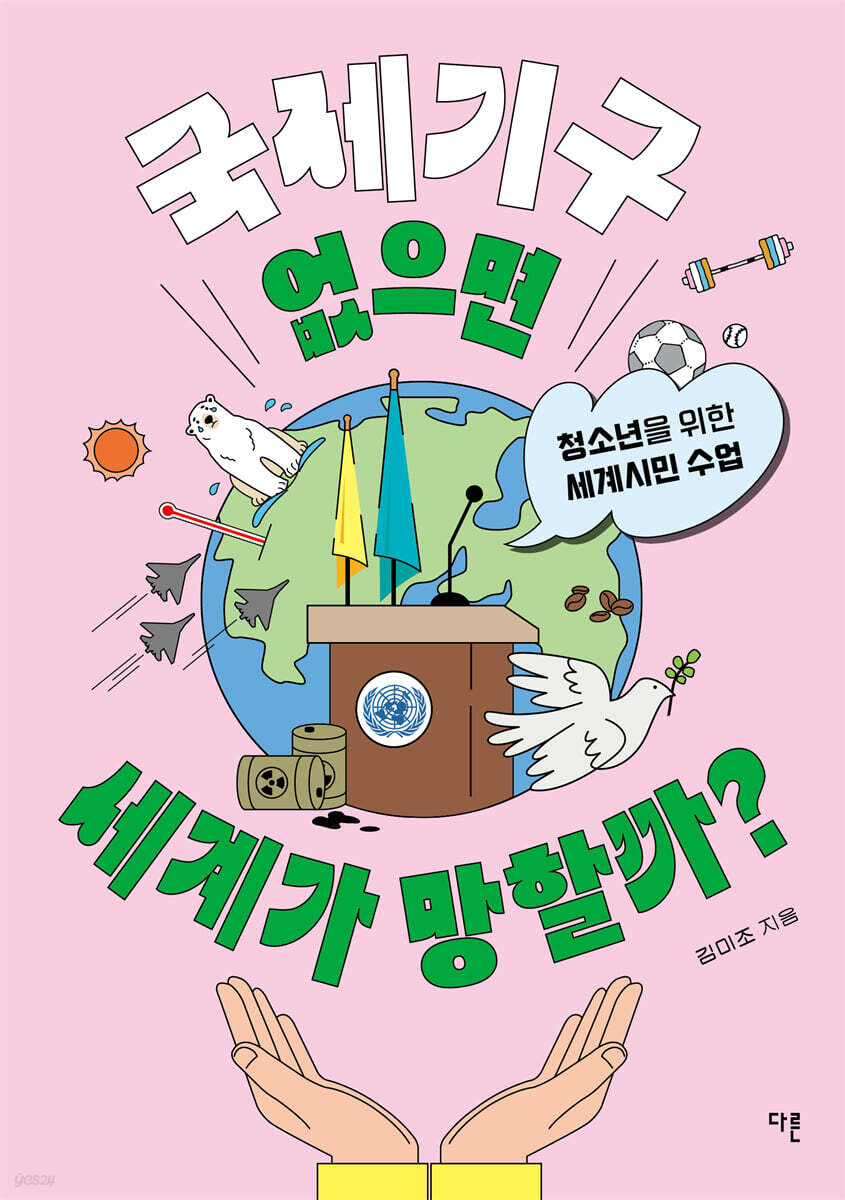
Would the world perish without international organizations?
 |
Description
Book Introduction
"That international organization I saw on the news—what on earth does it do?"
In the age of globalization, 10 things questioning teenagers need to know
A story of global conflict and coexistence
There is something that appears frequently in the news.
It is an international organization.
During the COVID-19 pandemic, announcements from the World Health Organization (WHO) made daily headlines, and the Russian invasion of Ukraine led to reports on the responses of various international organizations, including the World Trade Organization (WTO), the European Union (EU), and the United Nations Children's Fund (UNICEF).
Recently, the Olympic Committee (IOC) has been the subject of media scrutiny due to the controversy surrounding the opening ceremony of the 2024 Paris Olympics.
As conflicts arise around the world, such as trade, cultural exchange, poverty, refugees, and climate issues, international organizations step in and act as mediators.
But we don't really know what international organizations exist for, what they do, or why so many countries become member countries.
There are probably more people who never even thought to ask the question in the first place.
This is a humanities book for young adults that answers the simple question in its title: "Will the world perish without international organizations?"
In this age of globalization, we take a deep dive into international organizations as essential knowledge to understand the global village where we live.
It is essential to introduce the background, goals, and main activities of international organizations, and it also looks back on international issues from the past to the present.
There is also a critical evaluation of whether international organizations are performing their assigned roles well.
For teenagers growing into mature global citizens, this book goes beyond the empty cry of "world peace" and reminds us of the value of "coexistence," which humanity needs most now.
In the age of globalization, 10 things questioning teenagers need to know
A story of global conflict and coexistence
There is something that appears frequently in the news.
It is an international organization.
During the COVID-19 pandemic, announcements from the World Health Organization (WHO) made daily headlines, and the Russian invasion of Ukraine led to reports on the responses of various international organizations, including the World Trade Organization (WTO), the European Union (EU), and the United Nations Children's Fund (UNICEF).
Recently, the Olympic Committee (IOC) has been the subject of media scrutiny due to the controversy surrounding the opening ceremony of the 2024 Paris Olympics.
As conflicts arise around the world, such as trade, cultural exchange, poverty, refugees, and climate issues, international organizations step in and act as mediators.
But we don't really know what international organizations exist for, what they do, or why so many countries become member countries.
There are probably more people who never even thought to ask the question in the first place.
This is a humanities book for young adults that answers the simple question in its title: "Will the world perish without international organizations?"
In this age of globalization, we take a deep dive into international organizations as essential knowledge to understand the global village where we live.
It is essential to introduce the background, goals, and main activities of international organizations, and it also looks back on international issues from the past to the present.
There is also a critical evaluation of whether international organizations are performing their assigned roles well.
For teenagers growing into mature global citizens, this book goes beyond the empty cry of "world peace" and reminds us of the value of "coexistence," which humanity needs most now.
- You can preview some of the book's contents.
Preview
index
Entering_International Organizations Intervene in the World
Front Page Politics & Economy
IMF: Korea's economic growth rate forecast to decline
[A Brief Brief] What is a reserve currency?
World Bank: Global inflation at record highs
[A little common sense] Is Bitcoin a currency?
Brexit: Divorce between the UK and the EU
[A quick tip] Why do EU member states use the euro?
WTO World Trade Organization: Trade halved due to Russia's invasion of Ukraine
[A Brief Fact] The Difference Between Protectionism and Free Trade
OECD_Korea's working-age population will rank last among OECD countries in 25 years.
[A Brief Fact] The Strengths and Limitations of OECD Statistics
Page 2 Environment & Science
WHO Changes Name from Wuhan Pneumonia to COVID-19
[A Brief Brief] Inequality Seen Through Vaccines
UNEP Releases Report on Climate Change
[A Brief Fact] International Organizations to Combat Climate Change
IAEA: Fukushima contaminated water discharge meets safety standards
[A Brief Fact] Radiation Fear and the Chernobyl Nuclear Accident
WMO World Meteorological Organization: Global climate disasters have increased fivefold.
[A Brief Bit of Common Sense] Changes Brought About by Climate Change
ISO International Organization for Standardization_Korea ranks first in global standard patent share
[A Brief Fact] The Difference Between Patents and Standard Patents
Page 3 Society & Culture
UNESCO, the United Nations Educational, Scientific and Cultural Organization, expresses regret over Japan's distortion of history.
[A Brief Fact] UNESCO Global Geopark and Danyang
UNICEF_BTS raises 4.3 billion won in donations
[A Brief Brief] From the Declaration of the Rights of the Child to the Convention on the Rights of the Child
IOC International Olympic Committee: Gold medalist makes bombshell statement: "In fact, I tested positive for doping."
[A Brief Fact] The Paralympics: The Olympics for People with Disabilities
ILO International Labor Organization_Large-scale rallies to be held on Labor Day
[A quick tip] Is a strike illegal?
WFP: 1.9 billion people at risk of hunger due to food shortages
[A Bit of Common Sense] Zero Waste: A Life Without Waste, the Zero Waste Movement
Front Page Politics & Economy
IMF: Korea's economic growth rate forecast to decline
[A Brief Brief] What is a reserve currency?
World Bank: Global inflation at record highs
[A little common sense] Is Bitcoin a currency?
Brexit: Divorce between the UK and the EU
[A quick tip] Why do EU member states use the euro?
WTO World Trade Organization: Trade halved due to Russia's invasion of Ukraine
[A Brief Fact] The Difference Between Protectionism and Free Trade
OECD_Korea's working-age population will rank last among OECD countries in 25 years.
[A Brief Fact] The Strengths and Limitations of OECD Statistics
Page 2 Environment & Science
WHO Changes Name from Wuhan Pneumonia to COVID-19
[A Brief Brief] Inequality Seen Through Vaccines
UNEP Releases Report on Climate Change
[A Brief Fact] International Organizations to Combat Climate Change
IAEA: Fukushima contaminated water discharge meets safety standards
[A Brief Fact] Radiation Fear and the Chernobyl Nuclear Accident
WMO World Meteorological Organization: Global climate disasters have increased fivefold.
[A Brief Bit of Common Sense] Changes Brought About by Climate Change
ISO International Organization for Standardization_Korea ranks first in global standard patent share
[A Brief Fact] The Difference Between Patents and Standard Patents
Page 3 Society & Culture
UNESCO, the United Nations Educational, Scientific and Cultural Organization, expresses regret over Japan's distortion of history.
[A Brief Fact] UNESCO Global Geopark and Danyang
UNICEF_BTS raises 4.3 billion won in donations
[A Brief Brief] From the Declaration of the Rights of the Child to the Convention on the Rights of the Child
IOC International Olympic Committee: Gold medalist makes bombshell statement: "In fact, I tested positive for doping."
[A Brief Fact] The Paralympics: The Olympics for People with Disabilities
ILO International Labor Organization_Large-scale rallies to be held on Labor Day
[A quick tip] Is a strike illegal?
WFP: 1.9 billion people at risk of hunger due to food shortages
[A Bit of Common Sense] Zero Waste: A Life Without Waste, the Zero Waste Movement
Detailed image

Into the book
Countries with different values and interests need their own standards to coexist on Earth.
This applies to almost every area, including trade, cultural exchange, poverty, refugees, and climate issues.
This could also be seen as the reason why so many international organizations exist today.
--- p.7 From “Introduction”
Where does the money the IMF lends come from? The answer lies with the IMF's member countries.
When member countries pay money, the International Monetary Fund uses that money as a fund.
So, the money that Korea, which was on the verge of bankruptcy, received from the International Monetary Fund in 1997 was money collected by member countries.
--- p.18 From the International Monetary Fund (IMF)
Economic imbalances hinder the growth and solidarity of the European Union.
The European Union has been trying to strike that balance.
But then Brexit happened.
It was a significant shock to the EU member states.
The issues that led to Brexit, such as the conflict between EU and domestic law, restrictions on trade agreements with non-EU countries, and immigration and refugees, are not actually unique to the UK.
Naturally, it will inevitably have an impact on other member states as well.
This also means that the European Union will soon need to reorganize.
--- p.46 From "EU European Union"
The OECD has a strong image as a ‘gathering of advanced countries.’
This is why, when Korea joined, most media outlets published articles saying, "Korea has joined the ranks of advanced countries."
--- p.61 From the OECD Organization for Economic Co-operation and Development
Environmental problems cannot be overcome by the efforts of a few developed countries.
There needs to be an organization that supports this at an international level.
The place that does that work is the United Nations Environment Programme.
--- p.86 From 「UNEP United Nations Environment Programme」
Many media outlets around the world said that Japan had manipulated the International Atomic Energy Agency's verification with money, but in reality, there was no way to stop Japan.
But if the International Atomic Energy Agency had included in its report that "radioactive contaminated water is unsafe and should not be discharged into the ocean," wouldn't Japan be able to dump the radioactive contaminated water into the ocean? No, it wouldn't.
--- p.96 From the International Atomic Energy Agency (IAEA)
The process of becoming a UNESCO World Heritage site is very difficult and rigorous.
It must pass the exam from various perspectives, including culture, academics, and technology.
Why go through such a complex and rigorous process to have our cultural heritage listed as a UNESCO World Heritage Site? Because UNESCO World Heritage status provides support for restoration costs and the technology needed for preservation.
Additionally, the influx of tourists greatly contributes to the development of the local economy.
Above all, it has the meaning of becoming a common heritage of humanity, beyond being a cultural heritage of a country.
--- p.127 From “UNESCO United Nations Educational, Scientific and Cultural Organization”
There are countries that have been embroiled in controversy over human rights violations during the preparations for the Olympics.
China oppressed ethnic minorities in preparation for the 2008 Beijing Olympics.
France has been criticized for pushing for the forced relocation of homeless people from Paris to the countryside as it prepares for the 2024 Paris Olympics.
--- p.147 From the “IOC International Olympic Committee”
Korea has labor laws and well-established systems for workers.
However, in reality, it is evaluated that it is not well maintained.
South Korea also received a 5th place in the 2023 Global Rights Index report, citing a lack of freedom of speech and assembly and the frequent occurrence of violence against workers.
This applies to almost every area, including trade, cultural exchange, poverty, refugees, and climate issues.
This could also be seen as the reason why so many international organizations exist today.
--- p.7 From “Introduction”
Where does the money the IMF lends come from? The answer lies with the IMF's member countries.
When member countries pay money, the International Monetary Fund uses that money as a fund.
So, the money that Korea, which was on the verge of bankruptcy, received from the International Monetary Fund in 1997 was money collected by member countries.
--- p.18 From the International Monetary Fund (IMF)
Economic imbalances hinder the growth and solidarity of the European Union.
The European Union has been trying to strike that balance.
But then Brexit happened.
It was a significant shock to the EU member states.
The issues that led to Brexit, such as the conflict between EU and domestic law, restrictions on trade agreements with non-EU countries, and immigration and refugees, are not actually unique to the UK.
Naturally, it will inevitably have an impact on other member states as well.
This also means that the European Union will soon need to reorganize.
--- p.46 From "EU European Union"
The OECD has a strong image as a ‘gathering of advanced countries.’
This is why, when Korea joined, most media outlets published articles saying, "Korea has joined the ranks of advanced countries."
--- p.61 From the OECD Organization for Economic Co-operation and Development
Environmental problems cannot be overcome by the efforts of a few developed countries.
There needs to be an organization that supports this at an international level.
The place that does that work is the United Nations Environment Programme.
--- p.86 From 「UNEP United Nations Environment Programme」
Many media outlets around the world said that Japan had manipulated the International Atomic Energy Agency's verification with money, but in reality, there was no way to stop Japan.
But if the International Atomic Energy Agency had included in its report that "radioactive contaminated water is unsafe and should not be discharged into the ocean," wouldn't Japan be able to dump the radioactive contaminated water into the ocean? No, it wouldn't.
--- p.96 From the International Atomic Energy Agency (IAEA)
The process of becoming a UNESCO World Heritage site is very difficult and rigorous.
It must pass the exam from various perspectives, including culture, academics, and technology.
Why go through such a complex and rigorous process to have our cultural heritage listed as a UNESCO World Heritage Site? Because UNESCO World Heritage status provides support for restoration costs and the technology needed for preservation.
Additionally, the influx of tourists greatly contributes to the development of the local economy.
Above all, it has the meaning of becoming a common heritage of humanity, beyond being a cultural heritage of a country.
--- p.127 From “UNESCO United Nations Educational, Scientific and Cultural Organization”
There are countries that have been embroiled in controversy over human rights violations during the preparations for the Olympics.
China oppressed ethnic minorities in preparation for the 2008 Beijing Olympics.
France has been criticized for pushing for the forced relocation of homeless people from Paris to the countryside as it prepares for the 2024 Paris Olympics.
--- p.147 From the “IOC International Olympic Committee”
Korea has labor laws and well-established systems for workers.
However, in reality, it is evaluated that it is not well maintained.
South Korea also received a 5th place in the 2023 Global Rights Index report, citing a lack of freedom of speech and assembly and the frequent occurrence of violence against workers.
--- p.161 From the International Labor Organization (ILO)
Publisher's Review
“Why will Britain regret leaving the EU?”
“Why do countries around the world use ‘OECD statistics’?”
“Why did the International Olympic Committee (IOC) invite North Korea to the Olympics?”
Knowing about international organizations makes the world seem complex!
Why does the news feel so difficult? Because it conveys fragmentary facts, it's difficult to understand the context in which things have developed.
This is why we tend to remember the world only in terms of immediate events rather than understanding it in a larger context.
The author says, “Knowing international organizations directly leads to understanding how the world works.”
This means that if you have background knowledge about international organizations, you can naturally understand the international situation.
This book carefully unravels complex international issues, focusing on international organizations frequently mentioned in news about politics, economics, environment, science, society, and culture.
Why does the UK regret its Brexit referendum? To explain, I'll walk through the history of the European Union (EU)'s transformation into a single market, the Brexit process, the British public's discontent with the EU, and the reasons for the UK's current economic downturn, all within a single narrative.
As we explore why countries around the world utilize statistics from the Organisation for Economic Co-operation and Development (OECD), we revisit the image of the OECD as a "gathering of advanced countries."
As a result, we find that the OECD is highly credible because it is an organization comprised of developed countries.
Let's also look at the background behind the International Olympic Committee (IOC) sending an invitation to North Korea ahead of the 2024 Paris Olympics.
Let's start by exploring the Olympic spirit, going back to the first Olympic Games, in ancient Greece, at Olympia.
And it is natural that the IOC, which aims to 'bring the world together as one', sent an invitation to North Korea.
In today's world, where negative news is inundated, this book helps us develop the power of critical thinking instead of complaining, "Why is the world the way it is?"
It also helps develop writing and debate skills on international issues.
“Why do countries around the world use ‘OECD statistics’?”
“Why did the International Olympic Committee (IOC) invite North Korea to the Olympics?”
Knowing about international organizations makes the world seem complex!
Why does the news feel so difficult? Because it conveys fragmentary facts, it's difficult to understand the context in which things have developed.
This is why we tend to remember the world only in terms of immediate events rather than understanding it in a larger context.
The author says, “Knowing international organizations directly leads to understanding how the world works.”
This means that if you have background knowledge about international organizations, you can naturally understand the international situation.
This book carefully unravels complex international issues, focusing on international organizations frequently mentioned in news about politics, economics, environment, science, society, and culture.
Why does the UK regret its Brexit referendum? To explain, I'll walk through the history of the European Union (EU)'s transformation into a single market, the Brexit process, the British public's discontent with the EU, and the reasons for the UK's current economic downturn, all within a single narrative.
As we explore why countries around the world utilize statistics from the Organisation for Economic Co-operation and Development (OECD), we revisit the image of the OECD as a "gathering of advanced countries."
As a result, we find that the OECD is highly credible because it is an organization comprised of developed countries.
Let's also look at the background behind the International Olympic Committee (IOC) sending an invitation to North Korea ahead of the 2024 Paris Olympics.
Let's start by exploring the Olympic spirit, going back to the first Olympic Games, in ancient Greece, at Olympia.
And it is natural that the IOC, which aims to 'bring the world together as one', sent an invitation to North Korea.
In today's world, where negative news is inundated, this book helps us develop the power of critical thinking instead of complaining, "Why is the world the way it is?"
It also helps develop writing and debate skills on international issues.
GOODS SPECIFICS
- Date of issue: August 30, 2024
- Page count, weight, size: 176 pages | 288g | 148*210*11mm
- ISBN13: 9791156336280
You may also like
카테고리
korean


korean

![GQ KOREA Mark (Monthly): December [2025]](http://librairie.coreenne.fr/cdn/shop/files/8ef265dbbfbf186523ed75ba7319009d.jpg?v=1765340328&width=3840)


