

World Funeral Tour
 |
Description
Book Introduction
How has humanity remembered the dead?
A very special death journey across the world and history.
Death will surely come to all of us someday.
But how should we face death? What should we do with the body of the deceased, and how should we mourn and honor the passing of a loved one?
From the mummies of ancient Egypt to the outdoor cremations of India, the fantasy coffins of Ghana, and the embalming industry in the United States.
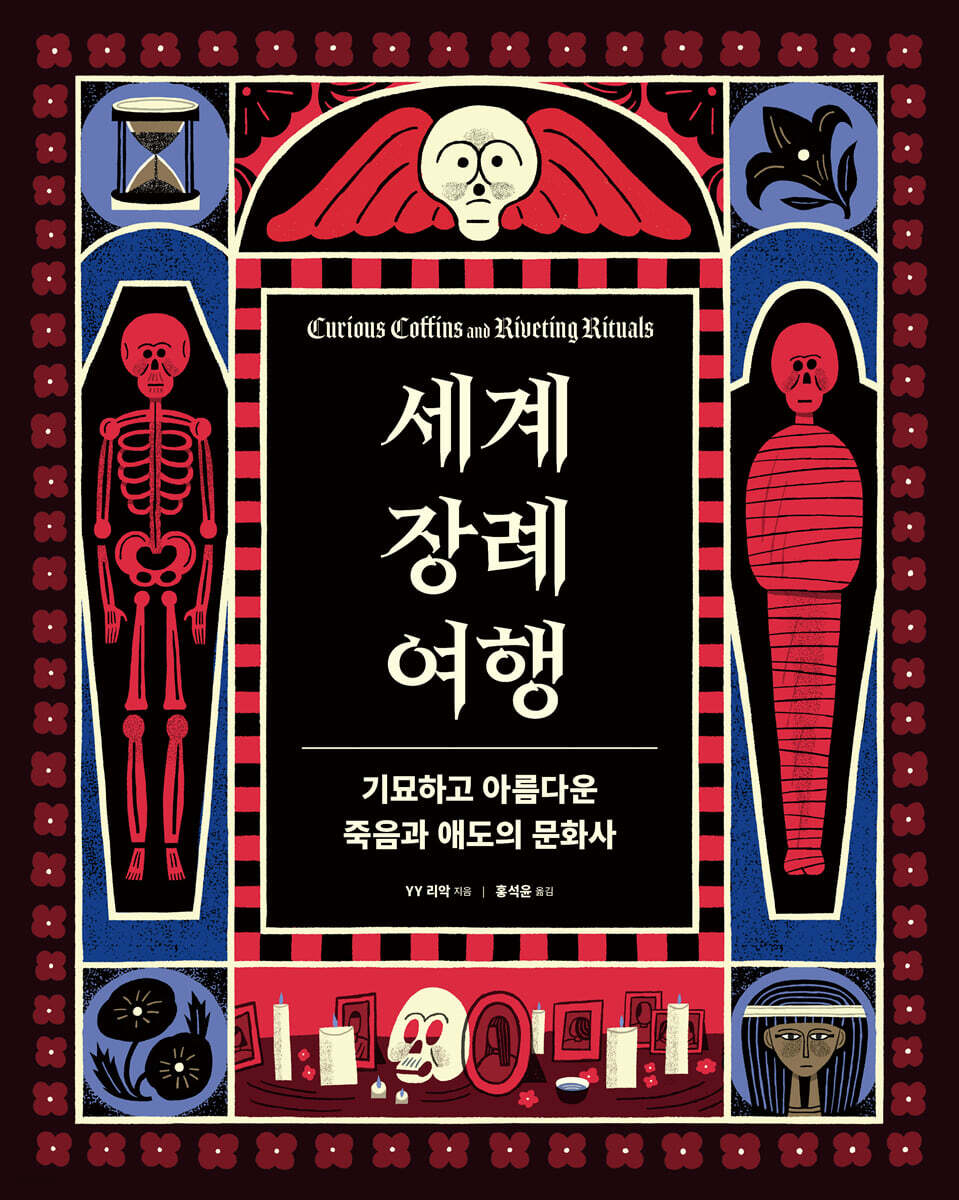
This book explores diverse funeral customs from around the world, illustrated with colorful and vibrant illustrations, and examines how human interest in death and the afterlife has been expressed across diverse cultures.
This book, which seeks to respect and understand death as an integral part of humanity, will stimulate interesting and thoughtful thought.
After all, funerals are not for the dead, but for us, the living.
A very special death journey across the world and history.
Death will surely come to all of us someday.
But how should we face death? What should we do with the body of the deceased, and how should we mourn and honor the passing of a loved one?
From the mummies of ancient Egypt to the outdoor cremations of India, the fantasy coffins of Ghana, and the embalming industry in the United States.
This book explores diverse funeral customs from around the world, illustrated with colorful and vibrant illustrations, and examines how human interest in death and the afterlife has been expressed across diverse cultures.
This book, which seeks to respect and understand death as an integral part of humanity, will stimulate interesting and thoughtful thought.
After all, funerals are not for the dead, but for us, the living.
- You can preview some of the book's contents.
Preview
index
Death.
Death: A Thought on Death
Dance of Death
A Brief History of Death
Definition of death
Death, the god with a thousand faces
Words related to death
Dead.
When People Die: What Happens When We Die
Part 1: The Store
Verified facts
6 feet below
Adding fun to a funeral
coffin hanging from a cliff
The horrific experiences of Native Americans
About Sorrow and God
The road to Hades, the underworld
Stairway to Heaven
Highway to Hell
Turn your face towards the house of God
War and Peace
Last Voyage
Viking ship Oseberg
The path of the dead
Part 2: Makeup
The meaning of fire
Put the body nearby
City of the Dead
Journey of Bone
Into the crematorium
Part 3: Intake
Eat, be eaten, love
Understanding Cannibalism
cycle of life
Death in Heaven
Evolution of body disposal methods
Part 4: Preservation
In pursuit of immortality
Miracle Makers
The Life and Times of Saint Catherine
The real reason for exhibiting remains
Gift of God, Skull
The rise and decline of mummification technology
Making a mummy
Revolution is eternal
A very special case, Eva Perón
sopor
A corpse treated as a living person
Diet of Death
Why did preservatives become popular in the United States?
To preserve it for later
Very Dead.
Missing Someone: How to Remember the Dead
Part 1: The Memorial Service
The true meaning of mourning rituals
Theater of Sorrow
Clothing that expresses sadness
Visiting the grave
Flowers offered at the grave
Don't forget me
Dance with the Dead
Spring cleaning
Hungry Ghost
Day of the Dead
The dead live together in the house
psychic
Famous Ghosts of the World
From dust to dust
Part 2: The Memorial
If you don't want to be forgotten forever
statue
Collapsing memorial
The meaning behind the name
God knows
Old lie
Living.
Life: A Record of Death
A Beginner's Guide to Death
Dying well
Doula, a doula
Countdown
Last time
The Last Supper
Preceding relay
Is this the end?
References
Acknowledgements
About the Author and Translator
Death: A Thought on Death
Dance of Death
A Brief History of Death
Definition of death
Death, the god with a thousand faces
Words related to death
Dead.
When People Die: What Happens When We Die
Part 1: The Store
Verified facts
6 feet below
Adding fun to a funeral
coffin hanging from a cliff
The horrific experiences of Native Americans
About Sorrow and God
The road to Hades, the underworld
Stairway to Heaven
Highway to Hell
Turn your face towards the house of God
War and Peace
Last Voyage
Viking ship Oseberg
The path of the dead
Part 2: Makeup
The meaning of fire
Put the body nearby
City of the Dead
Journey of Bone
Into the crematorium
Part 3: Intake
Eat, be eaten, love
Understanding Cannibalism
cycle of life
Death in Heaven
Evolution of body disposal methods
Part 4: Preservation
In pursuit of immortality
Miracle Makers
The Life and Times of Saint Catherine
The real reason for exhibiting remains
Gift of God, Skull
The rise and decline of mummification technology
Making a mummy
Revolution is eternal
A very special case, Eva Perón
sopor
A corpse treated as a living person
Diet of Death
Why did preservatives become popular in the United States?
To preserve it for later
Very Dead.
Missing Someone: How to Remember the Dead
Part 1: The Memorial Service
The true meaning of mourning rituals
Theater of Sorrow
Clothing that expresses sadness
Visiting the grave
Flowers offered at the grave
Don't forget me
Dance with the Dead
Spring cleaning
Hungry Ghost
Day of the Dead
The dead live together in the house
psychic
Famous Ghosts of the World
From dust to dust
Part 2: The Memorial
If you don't want to be forgotten forever
statue
Collapsing memorial
The meaning behind the name
God knows
Old lie
Living.
Life: A Record of Death
A Beginner's Guide to Death
Dying well
Doula, a doula
Countdown
Last time
The Last Supper
Preceding relay
Is this the end?
References
Acknowledgements
About the Author and Translator
Detailed image

Into the book
The beings who were once here with us are no longer there.
Where did they go? This interest in a world beyond what we see, this concept of an afterlife for which we must prepare, is, as far as we know, found in no other animal than humans.
All living things are mortal, but only humans have a symbolic and philosophical understanding of death, or the inescapable fate of death.
--- From "The Dance of Death"
For the ancient Greeks, burial was much more than just an expression of grief.
Not burying the dead was considered a great insult to human dignity and an insult to God.
In fact, not properly burying someone was considered so disrespectful that only the most heinous criminals were permitted to do so, and not properly burying a fallen soldier during war, whether friendly or enemy, was considered a crime punishable by death.
--- From "On Sorrow and God"
As cremation became more and more widespread, people began to take it for granted that bodies would be burned in crematoria.
Cremation as we know it today began to emerge in earnest in the late 19th century as urban cemeteries became overflowing with bodies, raising concerns about public health and disease control.
The first modern crematorium, featuring an industrial furnace invented by Italian inventor Lodovico Brunetti, was first introduced to the European public in the 1870s, and was soon adopted by the United States.
Even today, 150 years later, the makeup machine appears to have remained virtually unchanged.
But what exactly is going on inside?
--- From "Into the Crematorium"
Fortunately, as the climate crisis becomes increasingly serious, more people are starting to adopt eco-friendly funeral arrangements.
A survey by the American Funeral Directors Association found that more than half of Americans believe more environmentally friendly funerals are needed, and the funeral industry is responding.
Except where prohibited by state and federal law today, remains can be encased in artificial coral reefs, placed in biodegradable coffins woven from willow or bamboo, detoxified with mushroom shrouds, or dissolved through alkaline hydrolysis.
Alkaline hydrolysis, also known as 'water cremation', turns the body into a can of tea-colored juice that can be safely used as fertilizer or, if preferred, simply disposed of down the drain.
--- From "Evolution of Corpse Disposal Methods"
Overcoming grief is not as easy as it sounds.
Even if the body of a loved one is buried 1.2 meters deep in the ground or neatly preserved in a beautiful ceramic jar, thoughts of that person will not disappear.
Because love is remembered for a long time, sadness is bound to last a long time too.
This is why many funeral ceremonies today continue long after the final arrangements for the body have been made.
No discussion of the culture of death can be complete without talking about how we mourn and honor our loved ones.
--- From "The True Meaning of Mourning Rituals"
Death does not necessarily take away life.
In fact, we can live more fully when we accept that we are destined to die.
Where did they go? This interest in a world beyond what we see, this concept of an afterlife for which we must prepare, is, as far as we know, found in no other animal than humans.
All living things are mortal, but only humans have a symbolic and philosophical understanding of death, or the inescapable fate of death.
--- From "The Dance of Death"
For the ancient Greeks, burial was much more than just an expression of grief.
Not burying the dead was considered a great insult to human dignity and an insult to God.
In fact, not properly burying someone was considered so disrespectful that only the most heinous criminals were permitted to do so, and not properly burying a fallen soldier during war, whether friendly or enemy, was considered a crime punishable by death.
--- From "On Sorrow and God"
As cremation became more and more widespread, people began to take it for granted that bodies would be burned in crematoria.
Cremation as we know it today began to emerge in earnest in the late 19th century as urban cemeteries became overflowing with bodies, raising concerns about public health and disease control.
The first modern crematorium, featuring an industrial furnace invented by Italian inventor Lodovico Brunetti, was first introduced to the European public in the 1870s, and was soon adopted by the United States.
Even today, 150 years later, the makeup machine appears to have remained virtually unchanged.
But what exactly is going on inside?
--- From "Into the Crematorium"
Fortunately, as the climate crisis becomes increasingly serious, more people are starting to adopt eco-friendly funeral arrangements.
A survey by the American Funeral Directors Association found that more than half of Americans believe more environmentally friendly funerals are needed, and the funeral industry is responding.
Except where prohibited by state and federal law today, remains can be encased in artificial coral reefs, placed in biodegradable coffins woven from willow or bamboo, detoxified with mushroom shrouds, or dissolved through alkaline hydrolysis.
Alkaline hydrolysis, also known as 'water cremation', turns the body into a can of tea-colored juice that can be safely used as fertilizer or, if preferred, simply disposed of down the drain.
--- From "Evolution of Corpse Disposal Methods"
Overcoming grief is not as easy as it sounds.
Even if the body of a loved one is buried 1.2 meters deep in the ground or neatly preserved in a beautiful ceramic jar, thoughts of that person will not disappear.
Because love is remembered for a long time, sadness is bound to last a long time too.
This is why many funeral ceremonies today continue long after the final arrangements for the body have been made.
No discussion of the culture of death can be complete without talking about how we mourn and honor our loved ones.
--- From "The True Meaning of Mourning Rituals"
Death does not necessarily take away life.
In fact, we can live more fully when we accept that we are destined to die.
--- From "A Beginner's Guide to Death"
Publisher's Review
“A loving and cheerful look at the fate that awaits us all.”
- Kirkus Review
There is something that every human being born on Earth must experience without exception.
It is death.
Rich or poor, good or bad, young or old, we all die someday.
No one can escape death, yet no one knows what lies beyond it. This ironic yet obvious truth has fueled humankind's enduring interest in death and the afterlife.
Talking about death is often taboo because it causes anxiety and fear, but in fact, death is not a special experience at all.
According to statistics, about 60 million people die in this world every year.
That means 178,000 people die every day, 7,425 per hour, and 120 per minute.
YY Riak, author of "A Funeral Journey Around the World," is an illustrator and writer, and works as a book designer for Grand Central Publishing and other publications.
He noted that although the fate of death is the same, the way in which each person accepts that fate varies greatly.
Death is sometimes seen as simply the end of life, but it is also understood as a transition to another state of existence.
Some believe that reincarnation awaits us or that there will be divine judgment.
Some people believe that the dead live in a world separate from ours, while others believe that the boundary between the living and the dead is vague.
All these ideas are codified in that community's own appropriate way of dealing with death: the funeral ritual.
In other words, by looking at the funeral culture of a community, we can understand the lives and values of its members.
From the mummies of ancient Egypt to the embalming industry in the United States,
From Mexico's Day of the Dead celebrations to Korea's ancestral rites culture,
Meet the sensational full-color illustrations
A fascinating and serious reflection on death and beyond.
Through this book, readers will encounter a variety of death rituals that transcend historical and geographical boundaries.
Chapter 1 begins by exploring the definition of 'death', while also examining a brief history of death, the motifs of death appearing in folktales, and various superstitions surrounding death.
Chapter 2 covers body disposal practices from around the world, including mummification in ancient Egypt, outdoor cremation in India, and the embalming industry in the United States.
In addition to the most representative methods of burial and cremation, the exhibition also covers a wide range of burial practices, including the cannibalistic rituals of the Wari people, burial in the Tibetan mountainous regions, Catholic relics, and eco-friendly funerals emerging as an alternative to the climate crisis.
Sometimes some rituals can seem strange and terrifying.
But if we remember that there is no right or wrong way to approach death, merely a cultural difference, we will find that the ultimate goal of sending off the deceased with dignity, while still retaining the precious meaning within each of us, is ultimately the same.
Chapter 3 deals with various memorial and mourning rituals to remember the dead.
Just as love is remembered for a long time, so too is grief, and every culture has its own mourning rituals to allow time to grieve and to cleanse and finalize oneself to some extent.
Let's explore the diverse ways in which the dead are remembered and honored in this world, including funeral attire, grave-visiting and ancestral rites, historical memorials, posthumous photographs from Victorian England, Mexico's major holiday, the Day of the Dead, and spiritualism that was popular in the late 19th century.
The story of Korean ancestral rites as seen from a foreigner's perspective will also be interesting.
The theme of the last four chapters is 'life'.
Through various contemporary topics surrounding death, such as hospice care, assisted dying, the death penalty, and body donation, the book raises questions about what it means to die "well" and how we can lead a good life based on our understanding of death.
Filled with vibrant, sensuous color illustrations, this book tackles this challenging subject head-on, drawing on a deep empathy for the universal experience of loss and grief and an interest in the unique funeral practices of different cultures.
This book, which seeks to respect and understand death as an integral part of humanity, will stimulate interesting and thoughtful thought.
I hope this book will serve as an introduction that provides a small insight into death and life.
Of course, funeral rites are not for the dead, but for the living.
- Kirkus Review
There is something that every human being born on Earth must experience without exception.
It is death.
Rich or poor, good or bad, young or old, we all die someday.
No one can escape death, yet no one knows what lies beyond it. This ironic yet obvious truth has fueled humankind's enduring interest in death and the afterlife.
Talking about death is often taboo because it causes anxiety and fear, but in fact, death is not a special experience at all.
According to statistics, about 60 million people die in this world every year.
That means 178,000 people die every day, 7,425 per hour, and 120 per minute.
YY Riak, author of "A Funeral Journey Around the World," is an illustrator and writer, and works as a book designer for Grand Central Publishing and other publications.
He noted that although the fate of death is the same, the way in which each person accepts that fate varies greatly.
Death is sometimes seen as simply the end of life, but it is also understood as a transition to another state of existence.
Some believe that reincarnation awaits us or that there will be divine judgment.
Some people believe that the dead live in a world separate from ours, while others believe that the boundary between the living and the dead is vague.
All these ideas are codified in that community's own appropriate way of dealing with death: the funeral ritual.
In other words, by looking at the funeral culture of a community, we can understand the lives and values of its members.
From the mummies of ancient Egypt to the embalming industry in the United States,
From Mexico's Day of the Dead celebrations to Korea's ancestral rites culture,
Meet the sensational full-color illustrations
A fascinating and serious reflection on death and beyond.
Through this book, readers will encounter a variety of death rituals that transcend historical and geographical boundaries.
Chapter 1 begins by exploring the definition of 'death', while also examining a brief history of death, the motifs of death appearing in folktales, and various superstitions surrounding death.
Chapter 2 covers body disposal practices from around the world, including mummification in ancient Egypt, outdoor cremation in India, and the embalming industry in the United States.
In addition to the most representative methods of burial and cremation, the exhibition also covers a wide range of burial practices, including the cannibalistic rituals of the Wari people, burial in the Tibetan mountainous regions, Catholic relics, and eco-friendly funerals emerging as an alternative to the climate crisis.
Sometimes some rituals can seem strange and terrifying.
But if we remember that there is no right or wrong way to approach death, merely a cultural difference, we will find that the ultimate goal of sending off the deceased with dignity, while still retaining the precious meaning within each of us, is ultimately the same.
Chapter 3 deals with various memorial and mourning rituals to remember the dead.
Just as love is remembered for a long time, so too is grief, and every culture has its own mourning rituals to allow time to grieve and to cleanse and finalize oneself to some extent.
Let's explore the diverse ways in which the dead are remembered and honored in this world, including funeral attire, grave-visiting and ancestral rites, historical memorials, posthumous photographs from Victorian England, Mexico's major holiday, the Day of the Dead, and spiritualism that was popular in the late 19th century.
The story of Korean ancestral rites as seen from a foreigner's perspective will also be interesting.
The theme of the last four chapters is 'life'.
Through various contemporary topics surrounding death, such as hospice care, assisted dying, the death penalty, and body donation, the book raises questions about what it means to die "well" and how we can lead a good life based on our understanding of death.
Filled with vibrant, sensuous color illustrations, this book tackles this challenging subject head-on, drawing on a deep empathy for the universal experience of loss and grief and an interest in the unique funeral practices of different cultures.
This book, which seeks to respect and understand death as an integral part of humanity, will stimulate interesting and thoughtful thought.
I hope this book will serve as an introduction that provides a small insight into death and life.
Of course, funeral rites are not for the dead, but for the living.
GOODS SPECIFICS
- Date of issue: December 1, 2025
- Page count, weight, size: 192 pages | 974g | 210*260*21mm
- ISBN13: 9791168624238
- ISBN10: 1168624231
You may also like
카테고리
korean


korean

![GQ KOREA Mark (Monthly): December [2025]](http://librairie.coreenne.fr/cdn/shop/files/8ef265dbbfbf186523ed75ba7319009d.jpg?v=1765340328&width=3840)


