

Biography of Cod
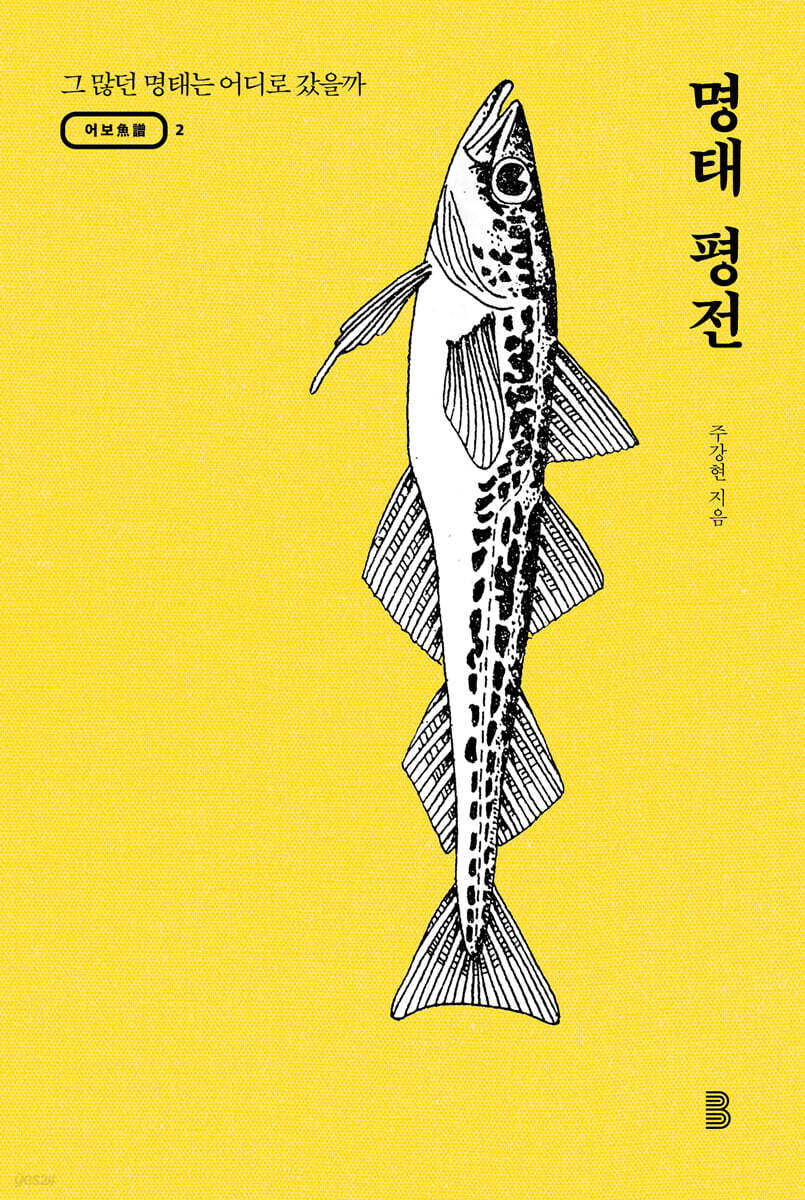 |
Description
Book Introduction
This book disappeared from our side one day.
'A tribute to a fish'
This book is the first modern guide to cod.
Unlike other geographic books such as [Jasaneobo], it describes one fish in one book.
It covers the history of pollack in modern and contemporary times, including the historical changes surrounding pollack in the 18th to 20th centuries, especially the appearance of foreign powers in our fishing grounds and the division of the North and South that led to the division of our fishing grounds.
Above all, it includes the environmental disaster of the disappearance of pollack from the East Sea.
Because a single fish combines many historical and ecological issues.
The disappearance of pollack symbolizes the cosmic shaking caused by global warming.
It is based on oral records of disappearing pollack, which were collected through on-site investigations of fishermen in Gangwon-do and Vietnamese people in Hamgyeong-do starting in the 1990s when pollack was disappearing.
I am reminded of Changdae, an indigenous oral historian who Jeong Yak-jeon of the Jasaneobo relied on.
This book also features countless narrators, and a list of narrators is provided at the end.
From Hamgyeong-do to Gangwon-do, and especially the Abai who settled in Gangwon-do, they are the Changdae who lived in the 19th and 20th centuries, but most of them have now passed away.
It covers the traditional knowledge of cod fishing techniques, such as fishing nets, fishing rods, boatmen, and captains.
This is a complete edition of pollack culture, including pollack that crossed the Military Demarcation Line, based on unpublished data collected by the North Korean Folklore Research Institute in the 1950s and 1960s.
Beginning with the narrative, genealogy, and life history surrounding the fish, we investigate the path of capitalism that the fish took.
As commercial capital accumulated in the late Joseon Dynasty, dried pollack became popular nationwide.
We also take a look at the capital and labor relations of the pollack industry, which continued until 1910 and was centered around the exploitation of pollack taxes and the ownership of boats.
From the late 19th century, Japanese people began interfering with the East Sea pollack catch.
Various archives were utilized, including Japanese materials from the late 19th century, the “Korean Fisheries Journal,” “Joseon Fisheries Report,” and the Joseon Governor-General’s Fisheries Experiment Station from the early 20th century.
Cod is our people's favorite fish.
There is no 'national fish' that can surpass that spot.
Cod is raw, frozen, and dried.
As many as 50 names have been confirmed, including Hwangtae, Meoktae, and Nogari, which is also evidence that it has become firmly established in our daily lives with various uses.
It is also a ‘fish that receives bows’ and a ‘fish that wards off evil.’
Now, pollack has disappeared from the East Sea and only deep-sea pollack is served on the table.
I felt obligated to leave a 'final record' of the extinction of pollack, which was caused by various relationships between climate, humans, and fish species.
This is the biggest reason why I wrote this book. - From the text
'A tribute to a fish'
This book is the first modern guide to cod.
Unlike other geographic books such as [Jasaneobo], it describes one fish in one book.
It covers the history of pollack in modern and contemporary times, including the historical changes surrounding pollack in the 18th to 20th centuries, especially the appearance of foreign powers in our fishing grounds and the division of the North and South that led to the division of our fishing grounds.
Above all, it includes the environmental disaster of the disappearance of pollack from the East Sea.
Because a single fish combines many historical and ecological issues.
The disappearance of pollack symbolizes the cosmic shaking caused by global warming.
It is based on oral records of disappearing pollack, which were collected through on-site investigations of fishermen in Gangwon-do and Vietnamese people in Hamgyeong-do starting in the 1990s when pollack was disappearing.
I am reminded of Changdae, an indigenous oral historian who Jeong Yak-jeon of the Jasaneobo relied on.
This book also features countless narrators, and a list of narrators is provided at the end.
From Hamgyeong-do to Gangwon-do, and especially the Abai who settled in Gangwon-do, they are the Changdae who lived in the 19th and 20th centuries, but most of them have now passed away.
It covers the traditional knowledge of cod fishing techniques, such as fishing nets, fishing rods, boatmen, and captains.
This is a complete edition of pollack culture, including pollack that crossed the Military Demarcation Line, based on unpublished data collected by the North Korean Folklore Research Institute in the 1950s and 1960s.
Beginning with the narrative, genealogy, and life history surrounding the fish, we investigate the path of capitalism that the fish took.
As commercial capital accumulated in the late Joseon Dynasty, dried pollack became popular nationwide.
We also take a look at the capital and labor relations of the pollack industry, which continued until 1910 and was centered around the exploitation of pollack taxes and the ownership of boats.
From the late 19th century, Japanese people began interfering with the East Sea pollack catch.
Various archives were utilized, including Japanese materials from the late 19th century, the “Korean Fisheries Journal,” “Joseon Fisheries Report,” and the Joseon Governor-General’s Fisheries Experiment Station from the early 20th century.
Cod is our people's favorite fish.
There is no 'national fish' that can surpass that spot.
Cod is raw, frozen, and dried.
As many as 50 names have been confirmed, including Hwangtae, Meoktae, and Nogari, which is also evidence that it has become firmly established in our daily lives with various uses.
It is also a ‘fish that receives bows’ and a ‘fish that wards off evil.’
Now, pollack has disappeared from the East Sea and only deep-sea pollack is served on the table.
I felt obligated to leave a 'final record' of the extinction of pollack, which was caused by various relationships between climate, humans, and fish species.
This is the biggest reason why I wrote this book. - From the text
- You can preview some of the book's contents.
Preview
index
Prologue: The Traces of the Disappearing East Sea Fish
1 Cod dialect
The Narrative of the Pollack Fish
Genealogy of pollack
Life history of pollack
2 The Way of the North Pole, the Way of Capital
Accumulation and nationalization of North Korean capital
The exploitation of the North Korean fish tax that lasted until 1910
Capital and labor relations in pollack management
3 Koreans and Japanese in the East Sea
Japanese pollack fishing and pollack farmers
Cod invited to exhibitions and research labs
The home of dried pollack, Wonsan's long-term sustainability
4 Ecology, Technology, and Fishermen's Heritage
Codfish Fishing Technician I: Fishing Barley
Cod Fishing Technique II: Net Barri
Traditional knowledge of boatmen and captains
5 Modern Narratives of Cod
Dried pollack that crossed the Military Demarcation Line
The birth of dried pollack and dried pollack
The long-term sustainability of northern tastes
Epilogue: The End of Cod Fishing
Appendix List of Speakers
main
Search
1 Cod dialect
The Narrative of the Pollack Fish
Genealogy of pollack
Life history of pollack
2 The Way of the North Pole, the Way of Capital
Accumulation and nationalization of North Korean capital
The exploitation of the North Korean fish tax that lasted until 1910
Capital and labor relations in pollack management
3 Koreans and Japanese in the East Sea
Japanese pollack fishing and pollack farmers
Cod invited to exhibitions and research labs
The home of dried pollack, Wonsan's long-term sustainability
4 Ecology, Technology, and Fishermen's Heritage
Codfish Fishing Technician I: Fishing Barley
Cod Fishing Technique II: Net Barri
Traditional knowledge of boatmen and captains
5 Modern Narratives of Cod
Dried pollack that crossed the Military Demarcation Line
The birth of dried pollack and dried pollack
The long-term sustainability of northern tastes
Epilogue: The End of Cod Fishing
Appendix List of Speakers
main
Search
Publisher's Review
Where did all that pollack go?
Cod first appeared in records in the 17th century.
The scenery of Geumjin Port in the 1970s, 60 years after 1912, was the same.
The dock was piled high with pollack.
Since the 1990s, the catch of pollack has declined rapidly and has completely disappeared.
It's because of global warming.
This is because if the water temperature rises by just one degree, the pollack limit moves at least several hundred kilometers.
As their main habitat has moved north due to changes in water temperature, they have now disappeared from the Gangwon waters south of the Military Demarcation Line, and it has been confirmed that pollack resources in North Korea's Hamgyeong Province have also decreased.
The pollack that we eat on our tables today is imported from Okhotsk.
Why cod became the national fish
According to legend, the Myeong clan of Myeongcheon first caught pollack.
Through analysis of the process by which scholars of Silhak (a study of Korean history) mentioned pollack in literature and the time when pollack appeared in local history books, it is revealed that pollack was caught in huge quantities in the East Sea starting at some point in the 18th century.
The pollack was sent to the market and transformed into dried pollack, which was easy to distribute, and dried pollack was then sent to the oil markets of the country through the power of commercial capital.
Hamgyeong-do pollack was loaded onto ships and distributed to Busan, Ganggyeong-do, and Incheon.
With the creation of the Gyeongbu Railway and Gyeongwon Line, it became nationwide in a very short period of time.
The practice of exorcising pollack that continues to this day
There are several factors that led to the regular use of dried pollack in ceremonies.
This is because it is the only fish that was distributed most widely during the Joseon Dynasty and swept the entire country.
The long-term use of cod as a fish to ward off evil spirits continues to this day, and it is now used in shamanistic rituals, ancestral rites, and even as a decoration for housewarming parties.
Although there are many 'good luck fish' such as the West Sea croaker, Jeju Island sea bream, Gyeongsang Province octopus and shark, there is no fish that is as universal and common as the dried pollack.
It's been over 100 years since the Japanese began to take an interest in pollack.
He was a Japanese fisherman who had no interest in pollack.
However, in the late 19th century, when it was discovered that pollack was profitable, they jumped into the business of catching and processing pollack.
In particular, as cod roe (明太子, mentaiko) became deeply entrenched in Japanese food culture, the value of cod was belatedly recognized.
By the mid-1920s, trade in pollack began between Hokkaido and Korea.
Japanese pollack was brought to the Korean Peninsula.
Even today, pollack from Hokkaido is sold in Korean restaurants under the name "saengtae," and this import tradition goes back at least 100 years.
Memories and songs of Hamgyeongdo fathers
Cod live in deep waters over 200 meters deep in the summer, and come to the coast in schools to spawn in the winter.
The distribution density (spawning season) is the highest in the sea off Sinpo, Hamgyeong-do.
According to the survey map of the Joseon Governor-General's Fisheries Research Institute, they are concentrated in Hamgyeong-do and are distributed in some areas as far as Gangwon-do.
Today, Vietnamese people living in Abai Village in Sokcho remember their hometowns, such as Sinpo, Sinchang, Chaho, and Dancheon.
The coastal areas of South and North Hamgyong Provinces, including the unique pollack distribution center of Malyangdo, were major pollack production areas, and Wonsan was a gathering place for dried pollack.
As the lyrics of the song, “I will become the pollack of the Wonsan Sea,” say, even though pollack has disappeared, the memory of the North Sea of the Korean Peninsula remains strong.
Fishermen, speak of pollack
Whether or not you catch a fish with this drop depends on the dropper's hands.
The person who drops the water is the dropper, and the captain goes to a certain location and stops the boat.
There are a lot of ships here because there is a northern limit line.
This is a lonely road.
Boats from Sokcho, Jumunjin, and the south can go 'Ma' (south) or north, but Geumjin has nowhere to go.
There is no place for Sokcho or Ayajin boats to go in this direction.
Almost always single.
I went to the single road and turned on the heavenly light and went out.
I leave here at 3:30 in the morning.
Go out and spend 40 minutes to an hour.
Anyway, 40~50 ships, 70~80 ships are standing there._Geujinhang Naksagong oral statement
Future fisheries work
The author conducted a field survey of fishing ports in Goseong, Yangyang, and Sokcho in Gangwon-do long ago, when pollack was disappearing, and left behind a record of the data.
In addition, based on the field research data from the 1950s and 1960s, which was collected with great difficulty by the North Korean Folklore Research Institute, we were able to vividly show the pollack fishing in the Hamgyeong Province area, a major pollack producing region.
It is a modern fishery book built on the basis of accumulated knowledge from long-term research on the sea and based on oral and documentary sources.
The work on the royal seal that connects the 《Early Bird Biography》 and the 《Myeongtae Biography》 is expected to continue.
I don't know how far it will progress, but it will be the first time since the "Jasaneobo" that a book will be published for each fish.
Cod first appeared in records in the 17th century.
The scenery of Geumjin Port in the 1970s, 60 years after 1912, was the same.
The dock was piled high with pollack.
Since the 1990s, the catch of pollack has declined rapidly and has completely disappeared.
It's because of global warming.
This is because if the water temperature rises by just one degree, the pollack limit moves at least several hundred kilometers.
As their main habitat has moved north due to changes in water temperature, they have now disappeared from the Gangwon waters south of the Military Demarcation Line, and it has been confirmed that pollack resources in North Korea's Hamgyeong Province have also decreased.
The pollack that we eat on our tables today is imported from Okhotsk.
Why cod became the national fish
According to legend, the Myeong clan of Myeongcheon first caught pollack.
Through analysis of the process by which scholars of Silhak (a study of Korean history) mentioned pollack in literature and the time when pollack appeared in local history books, it is revealed that pollack was caught in huge quantities in the East Sea starting at some point in the 18th century.
The pollack was sent to the market and transformed into dried pollack, which was easy to distribute, and dried pollack was then sent to the oil markets of the country through the power of commercial capital.
Hamgyeong-do pollack was loaded onto ships and distributed to Busan, Ganggyeong-do, and Incheon.
With the creation of the Gyeongbu Railway and Gyeongwon Line, it became nationwide in a very short period of time.
The practice of exorcising pollack that continues to this day
There are several factors that led to the regular use of dried pollack in ceremonies.
This is because it is the only fish that was distributed most widely during the Joseon Dynasty and swept the entire country.
The long-term use of cod as a fish to ward off evil spirits continues to this day, and it is now used in shamanistic rituals, ancestral rites, and even as a decoration for housewarming parties.
Although there are many 'good luck fish' such as the West Sea croaker, Jeju Island sea bream, Gyeongsang Province octopus and shark, there is no fish that is as universal and common as the dried pollack.
It's been over 100 years since the Japanese began to take an interest in pollack.
He was a Japanese fisherman who had no interest in pollack.
However, in the late 19th century, when it was discovered that pollack was profitable, they jumped into the business of catching and processing pollack.
In particular, as cod roe (明太子, mentaiko) became deeply entrenched in Japanese food culture, the value of cod was belatedly recognized.
By the mid-1920s, trade in pollack began between Hokkaido and Korea.
Japanese pollack was brought to the Korean Peninsula.
Even today, pollack from Hokkaido is sold in Korean restaurants under the name "saengtae," and this import tradition goes back at least 100 years.
Memories and songs of Hamgyeongdo fathers
Cod live in deep waters over 200 meters deep in the summer, and come to the coast in schools to spawn in the winter.
The distribution density (spawning season) is the highest in the sea off Sinpo, Hamgyeong-do.
According to the survey map of the Joseon Governor-General's Fisheries Research Institute, they are concentrated in Hamgyeong-do and are distributed in some areas as far as Gangwon-do.
Today, Vietnamese people living in Abai Village in Sokcho remember their hometowns, such as Sinpo, Sinchang, Chaho, and Dancheon.
The coastal areas of South and North Hamgyong Provinces, including the unique pollack distribution center of Malyangdo, were major pollack production areas, and Wonsan was a gathering place for dried pollack.
As the lyrics of the song, “I will become the pollack of the Wonsan Sea,” say, even though pollack has disappeared, the memory of the North Sea of the Korean Peninsula remains strong.
Fishermen, speak of pollack
Whether or not you catch a fish with this drop depends on the dropper's hands.
The person who drops the water is the dropper, and the captain goes to a certain location and stops the boat.
There are a lot of ships here because there is a northern limit line.
This is a lonely road.
Boats from Sokcho, Jumunjin, and the south can go 'Ma' (south) or north, but Geumjin has nowhere to go.
There is no place for Sokcho or Ayajin boats to go in this direction.
Almost always single.
I went to the single road and turned on the heavenly light and went out.
I leave here at 3:30 in the morning.
Go out and spend 40 minutes to an hour.
Anyway, 40~50 ships, 70~80 ships are standing there._Geujinhang Naksagong oral statement
Future fisheries work
The author conducted a field survey of fishing ports in Goseong, Yangyang, and Sokcho in Gangwon-do long ago, when pollack was disappearing, and left behind a record of the data.
In addition, based on the field research data from the 1950s and 1960s, which was collected with great difficulty by the North Korean Folklore Research Institute, we were able to vividly show the pollack fishing in the Hamgyeong Province area, a major pollack producing region.
It is a modern fishery book built on the basis of accumulated knowledge from long-term research on the sea and based on oral and documentary sources.
The work on the royal seal that connects the 《Early Bird Biography》 and the 《Myeongtae Biography》 is expected to continue.
I don't know how far it will progress, but it will be the first time since the "Jasaneobo" that a book will be published for each fish.
GOODS SPECIFICS
- Date of issue: January 30, 2025
- Page count, weight, size: 400 pages | 127*188*30mm
- ISBN13: 9791199118003
- ISBN10: 1199118001
You may also like
카테고리
korean


korean

![GQ KOREA Mark (Monthly): December [2025]](http://librairie.coreenne.fr/cdn/shop/files/8ef265dbbfbf186523ed75ba7319009d.jpg?v=1765340328&width=3840)


