

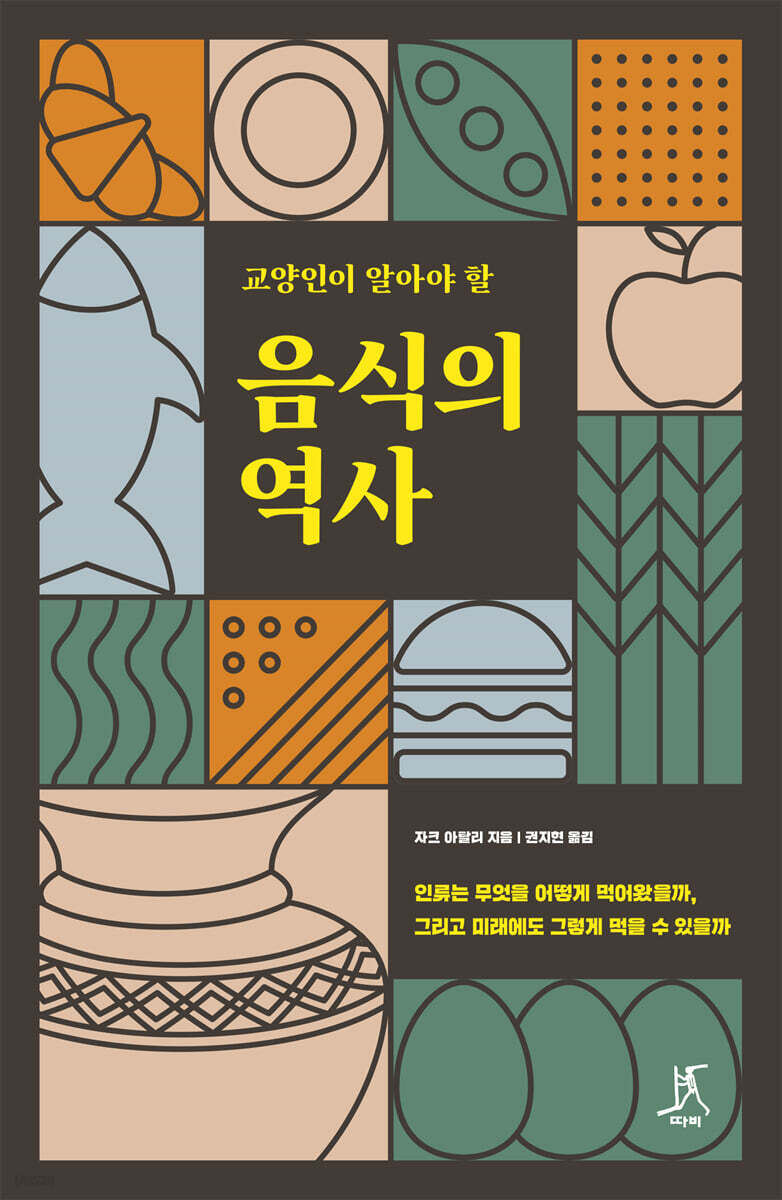
The history of food that cultured people should know
 |
Description
Book Introduction
“Eating food is more central to history than any other human activity.
So, in order to understand and prepare for the future,
The answer to all the riddles that permeate food
“You have to be able to find it.”
“If humanity wants to survive, to live a full, natural life, a truly human life, we must take a close look at how our ancestors ate, how much time they spent on it, what social relationships they formed through eating, how much money they spent on food, and what power was built and then destroyed by food.
Eating food should be a source of enjoyment, sharing, creation, joy, and self-transcendence for all.
Not only that, we must make it a way to save the planet and life.”
Jacques Attali, an economist and futurist who has studied and written about the long history of music, medicine, time, property, nomadism, love, death, geopolitics, technology, Judaism, modernity, labyrinths, predictions, and the oceans, has now explored the history of food.
In Tabi Publishing's new book, "The History of Food That Cultured People Should Know - What and How Did Humanity Eat, and Will We Be Able to Eat That Way in the Future?", Atali seeks the answer to the question, "What does eating mean in the past, present, and future?"
So, in order to understand and prepare for the future,
The answer to all the riddles that permeate food
“You have to be able to find it.”
“If humanity wants to survive, to live a full, natural life, a truly human life, we must take a close look at how our ancestors ate, how much time they spent on it, what social relationships they formed through eating, how much money they spent on food, and what power was built and then destroyed by food.
Eating food should be a source of enjoyment, sharing, creation, joy, and self-transcendence for all.
Not only that, we must make it a way to save the planet and life.”
Jacques Attali, an economist and futurist who has studied and written about the long history of music, medicine, time, property, nomadism, love, death, geopolitics, technology, Judaism, modernity, labyrinths, predictions, and the oceans, has now explored the history of food.
In Tabi Publishing's new book, "The History of Food That Cultured People Should Know - What and How Did Humanity Eat, and Will We Be Able to Eat That Way in the Future?", Atali seeks the answer to the question, "What does eating mean in the past, present, and future?"
- You can preview some of the book's contents.
Preview
index
Introduction 25
Chapter 1: Walking into the World
From Animals to Humans: Chewing While Walking 35 · Homo habilis, Homo ergaster, and Homo erectus: Eating Raw While Mumbling 38 · From Raw to Cooked: Chatting While Eating 41 · The First Europeans, Neanderthals: Meat-Eating Unfairly Blamed 43 · Homo sapiens, or the Humans Who Made Food the Topic of Conversation 44 · Eating the Whole Earth 46
Chapter 2: Taming Nature for Food
Settling in the Middle East to Farm 51 · Meteorology, Astronomy, and Astrology: From the Sky to the Harvest 53 · Cannibalism Becomes a Trouble Again in Europe 54 · Asia Grows Rice, Wheat's Competitor 55 · Mesopotamia: The First Grain, the First Empire 58 · The First Banquet: A Dialogue for Better Governance 60 · China: The First Diet 63 · Vegetarianism Begins in India 66 · Mesoamerican Empires That Persisted in Cannibalism 68 · Egypt: Eating and Speaking Are One 70 · Sub-Saharan Africa: Nature's Abundance Prevented Empires 74 · Cannibalism, Everywhere 76 · Judaism: 'Eating the Bible' 77 · Greece: Eating to Rule 82 · Rome: Eating to Rule 88
Chapter 3: The Birth and Glory of European Cuisine: From the 1st Century to the Mid-17th Century
The Great Change in Christianity: Eating God 96 · Early Middle Ages: Carnival and Lent 99 · The Islamic World: Eating is God's Mercy 100 · Late Middle Ages: Spices and Lost Paradise 103 · Hotels and Inns: Eating While Traveling 107 · The 14th to 16th Centuries: The Golden Age of Italian Cuisine 108 · The French Exception 113 · The 17th Century: France Gains the Dominance 116 · Revolutions from America: Potatoes, Corn, and Chocolate 117
Chapter 4 French Dining, Glory and Famine: From the Mid-17th to the 18th Century
The Sun King's Table: The Epitome of French Distinction 125 · 'Bourgeois Cuisine' Heralds Revolution 130 · Drink Soda Water Instead of Alcohol 133 · Meanwhile, Asia Had Banquets and Famines... 134 · America: Colonial Pioneers Who Fed Better Than the British 136 · France: Restaurants as Places of Conversation and Subversion 137 · Famine, Riots, and Revolution 139 · Revolution and the Bourgeois Banquet 142 · Gastronomic Diplomacy 144
Chapter 5: Palace Cuisine and Processed Foods: The 19th Century
Industrialization Started with Food 150 · Fertilizers and Pasteurization 153 · Feeding Children 158 · American Products Arrive: Soda and Vending Machines 159 · When Ritz and Escoffier Invented the Luxury Hotel 162 · Commoners in Europe: Still Eating Bread and Potatoes 167 · Elsewhere in the World: Diversity Persists 169
Chapter 6: Diets for Food Capitalism: The 20th Century
The Tricks of American Capitalism: Processed Food 174 · Calories and Corn Flakes 177 · Forgetting the Table for Capitalism 179 · Masking Taste 181 · Mass Production Begins in the Chicago Slaughterhouses 182 · Mass-Producing Food 183 · Eating Fast: Fast Food 186 · America's Invasion of the World's Foods 189 · Famine and 20th-Century Geopolitics 192 · Eating Hunger 194 · The Increasing Power of the Global Agri-Food Industry 198 · Replacing Sugar 200 · Eating More Bad Food 201 · Sugar: The Impossible Battle for Consumers 202 · Fewer Meals, More Consumption 204 · France Stands Alone: Nouvelle Cuisine 207
Chapter 7: The Rich, the Poor, and the Hungry World: Present
The State of the Global Agriculture and Agri-Food Industry 211 · Even the Rich Have Left the Table 216 · The Middle Class Eats Mixed Food 218 · The Poorest Are Starving or Eating to Death 220 · The Almost Disappearance of Family Meals 222 · What Babies Eat 225 · Eating at School 226 · Eating at Work 227 · Vegetarianism Becomes a Global Trend 229 · Eating Religiously 231 · Eating Insects 232 · The French Exception Continues 235 · Sugar, Obesity, and Death 237 · Sugar Isn't the Only Thing That Kills Us 239 · Overproduction of Vegetables, Meat, and Fish 243 · Eating Them Emit Excessive Greenhouse Gases 245 · Soil Destruction 246 · Biodiversity Loss 249 · The Big Secret 250 · Consumer Perception 254 · Teenagers Who Say They Might Be Making the Best Choices 256
Chapter 8: Insects, Robots, and Humans: The Next 30 Years
Demand above all else 262 · Can we feed 9 billion people? 263 · Asian and mixed cultural choices 268 · Decreasing meat and fish consumption 269 · New vegetarianism 271 · Increased insect consumption 274 · Decreasing sugar consumption 278 · Eating for healing 280 · Mimicking nature 282 · Artificial things that eat artificial things 283
Chapter 9: Eating Alone Under Quiet Surveillance
Breaking Up with Cooking 290 · Packaging for the Nomad: Powdered Foods 292 · Towards the Solitude of Food 294 · A Surveilled Silent Society 297 · Boredom Will Reach Its Worst 300
Chapter 10: Is Eating Still Meaningful?
The best agriculture for all will come from well-educated small farmers 306 · Let's impose much stricter rules on agri-food companies around the world 311 · The best diet for all: Altruism about food 314 · Much less meat, much more vegetables 316 · Cut down on sugar 318 · Consume local food 320 · Eat slowly 322 · Know what we eat 323 · For food education 324 · Eat less 326 · 'Positive cooking' for a positive life and the planet 328 · Rediscover the joy of eating together through conversation 329
Appendix: Scientific Principles Related to Food
Taste 333 · How much food do humans need 334 · The intestines 338 · How food affects our brain 339 · What influences our appetite 341 · Dietary habits related to international environmental goals 342 · The world's top 10 agri-food companies 343 · Maximum human population according to diet 344 · Sources of average per capita calorie consumption 344
Reference 345
Photo copyright 383
Search 385
Acknowledgments 392
Translator's Note 393
Chapter 1: Walking into the World
From Animals to Humans: Chewing While Walking 35 · Homo habilis, Homo ergaster, and Homo erectus: Eating Raw While Mumbling 38 · From Raw to Cooked: Chatting While Eating 41 · The First Europeans, Neanderthals: Meat-Eating Unfairly Blamed 43 · Homo sapiens, or the Humans Who Made Food the Topic of Conversation 44 · Eating the Whole Earth 46
Chapter 2: Taming Nature for Food
Settling in the Middle East to Farm 51 · Meteorology, Astronomy, and Astrology: From the Sky to the Harvest 53 · Cannibalism Becomes a Trouble Again in Europe 54 · Asia Grows Rice, Wheat's Competitor 55 · Mesopotamia: The First Grain, the First Empire 58 · The First Banquet: A Dialogue for Better Governance 60 · China: The First Diet 63 · Vegetarianism Begins in India 66 · Mesoamerican Empires That Persisted in Cannibalism 68 · Egypt: Eating and Speaking Are One 70 · Sub-Saharan Africa: Nature's Abundance Prevented Empires 74 · Cannibalism, Everywhere 76 · Judaism: 'Eating the Bible' 77 · Greece: Eating to Rule 82 · Rome: Eating to Rule 88
Chapter 3: The Birth and Glory of European Cuisine: From the 1st Century to the Mid-17th Century
The Great Change in Christianity: Eating God 96 · Early Middle Ages: Carnival and Lent 99 · The Islamic World: Eating is God's Mercy 100 · Late Middle Ages: Spices and Lost Paradise 103 · Hotels and Inns: Eating While Traveling 107 · The 14th to 16th Centuries: The Golden Age of Italian Cuisine 108 · The French Exception 113 · The 17th Century: France Gains the Dominance 116 · Revolutions from America: Potatoes, Corn, and Chocolate 117
Chapter 4 French Dining, Glory and Famine: From the Mid-17th to the 18th Century
The Sun King's Table: The Epitome of French Distinction 125 · 'Bourgeois Cuisine' Heralds Revolution 130 · Drink Soda Water Instead of Alcohol 133 · Meanwhile, Asia Had Banquets and Famines... 134 · America: Colonial Pioneers Who Fed Better Than the British 136 · France: Restaurants as Places of Conversation and Subversion 137 · Famine, Riots, and Revolution 139 · Revolution and the Bourgeois Banquet 142 · Gastronomic Diplomacy 144
Chapter 5: Palace Cuisine and Processed Foods: The 19th Century
Industrialization Started with Food 150 · Fertilizers and Pasteurization 153 · Feeding Children 158 · American Products Arrive: Soda and Vending Machines 159 · When Ritz and Escoffier Invented the Luxury Hotel 162 · Commoners in Europe: Still Eating Bread and Potatoes 167 · Elsewhere in the World: Diversity Persists 169
Chapter 6: Diets for Food Capitalism: The 20th Century
The Tricks of American Capitalism: Processed Food 174 · Calories and Corn Flakes 177 · Forgetting the Table for Capitalism 179 · Masking Taste 181 · Mass Production Begins in the Chicago Slaughterhouses 182 · Mass-Producing Food 183 · Eating Fast: Fast Food 186 · America's Invasion of the World's Foods 189 · Famine and 20th-Century Geopolitics 192 · Eating Hunger 194 · The Increasing Power of the Global Agri-Food Industry 198 · Replacing Sugar 200 · Eating More Bad Food 201 · Sugar: The Impossible Battle for Consumers 202 · Fewer Meals, More Consumption 204 · France Stands Alone: Nouvelle Cuisine 207
Chapter 7: The Rich, the Poor, and the Hungry World: Present
The State of the Global Agriculture and Agri-Food Industry 211 · Even the Rich Have Left the Table 216 · The Middle Class Eats Mixed Food 218 · The Poorest Are Starving or Eating to Death 220 · The Almost Disappearance of Family Meals 222 · What Babies Eat 225 · Eating at School 226 · Eating at Work 227 · Vegetarianism Becomes a Global Trend 229 · Eating Religiously 231 · Eating Insects 232 · The French Exception Continues 235 · Sugar, Obesity, and Death 237 · Sugar Isn't the Only Thing That Kills Us 239 · Overproduction of Vegetables, Meat, and Fish 243 · Eating Them Emit Excessive Greenhouse Gases 245 · Soil Destruction 246 · Biodiversity Loss 249 · The Big Secret 250 · Consumer Perception 254 · Teenagers Who Say They Might Be Making the Best Choices 256
Chapter 8: Insects, Robots, and Humans: The Next 30 Years
Demand above all else 262 · Can we feed 9 billion people? 263 · Asian and mixed cultural choices 268 · Decreasing meat and fish consumption 269 · New vegetarianism 271 · Increased insect consumption 274 · Decreasing sugar consumption 278 · Eating for healing 280 · Mimicking nature 282 · Artificial things that eat artificial things 283
Chapter 9: Eating Alone Under Quiet Surveillance
Breaking Up with Cooking 290 · Packaging for the Nomad: Powdered Foods 292 · Towards the Solitude of Food 294 · A Surveilled Silent Society 297 · Boredom Will Reach Its Worst 300
Chapter 10: Is Eating Still Meaningful?
The best agriculture for all will come from well-educated small farmers 306 · Let's impose much stricter rules on agri-food companies around the world 311 · The best diet for all: Altruism about food 314 · Much less meat, much more vegetables 316 · Cut down on sugar 318 · Consume local food 320 · Eat slowly 322 · Know what we eat 323 · For food education 324 · Eat less 326 · 'Positive cooking' for a positive life and the planet 328 · Rediscover the joy of eating together through conversation 329
Appendix: Scientific Principles Related to Food
Taste 333 · How much food do humans need 334 · The intestines 338 · How food affects our brain 339 · What influences our appetite 341 · Dietary habits related to international environmental goals 342 · The world's top 10 agri-food companies 343 · Maximum human population according to diet 344 · Sources of average per capita calorie consumption 344
Reference 345
Photo copyright 383
Search 385
Acknowledgments 392
Translator's Note 393
Into the book
The intense, even cosmic, relationship humans have with food is the origin of the emergence of Homo sapiens.
Since then, food has been the origin of most of the important changes that humanity has experienced, from the emergence of language to the use of fire.
Later innovations such as the lever, the arrow, the wheel, farming, and animal husbandry were also made possible by the need to eat.
The rise of city-states, empires, and nations can all be explained by food.
Because history and geopolitics were, above all, the history of food.
--- p.28
The connection with language was most obvious.
British Egyptologist Alan Gardiner systematized Egyptian writing, and the hieroglyph 'A2' represents a man sitting with his hand over his mouth.
This character has all the meanings of “eat, drink, speak, shut up, think, love, hate” depending on the arrangement of other hieroglyphs next to it.
--- p.74
In keeping with Jewish precepts, the bloody sacrifices of the Romans were replaced by a ceremony of blessing with bread and wine.
However, they did not pray as much as Judaism.
--- p.97
In Europe, the word 'hotel' first appeared in the 12th century with the emergence of religious groups engaged in charitable hospitality activities.
--- p.107
Even after taking control of the Bastille, the famine was not resolved.
The food shortages of the Great Revolution still affect our dinner tables.
People ate mainly cabbage, turnips, beans, pork skin, and offal from sheep and cattle.
Jean-Paul Marat had potatoes planted in the green spaces of Paris, including the Tuileries Garden, but Robespierre opposed his idea, claiming that potatoes were poisonous, and ordered all the potatoes to be pulled out.
--- p.141
In late 19th-century America, the focus was on making people less concerned with taste, eating tasteless, filling food more quickly, and thus spending less time at the table.
--- p.179
Even Europeans eat insects without knowing it.
In 2010, Dutch entomologist Marcel Dickey estimated that Europeans unknowingly eat between 500 grams and 1 kilogram of insects per person each year.
Insects are found as residue in products made from fruits and vegetables (juices, soups, canned goods, etc.).
--- p.234
What is most shocking is that when stem cells can be used to create plants, animals, organs, and new life forms, humans will be eating themselves as a final form of cannibalism.
In the immortal illusion, and in the silence of death.
--- p.285~286
Because each of us eating the best we can is the most effective way to save the planet.
In other words, it is beneficial for me to eat the healthiest food that others eat.
Since then, food has been the origin of most of the important changes that humanity has experienced, from the emergence of language to the use of fire.
Later innovations such as the lever, the arrow, the wheel, farming, and animal husbandry were also made possible by the need to eat.
The rise of city-states, empires, and nations can all be explained by food.
Because history and geopolitics were, above all, the history of food.
--- p.28
The connection with language was most obvious.
British Egyptologist Alan Gardiner systematized Egyptian writing, and the hieroglyph 'A2' represents a man sitting with his hand over his mouth.
This character has all the meanings of “eat, drink, speak, shut up, think, love, hate” depending on the arrangement of other hieroglyphs next to it.
--- p.74
In keeping with Jewish precepts, the bloody sacrifices of the Romans were replaced by a ceremony of blessing with bread and wine.
However, they did not pray as much as Judaism.
--- p.97
In Europe, the word 'hotel' first appeared in the 12th century with the emergence of religious groups engaged in charitable hospitality activities.
--- p.107
Even after taking control of the Bastille, the famine was not resolved.
The food shortages of the Great Revolution still affect our dinner tables.
People ate mainly cabbage, turnips, beans, pork skin, and offal from sheep and cattle.
Jean-Paul Marat had potatoes planted in the green spaces of Paris, including the Tuileries Garden, but Robespierre opposed his idea, claiming that potatoes were poisonous, and ordered all the potatoes to be pulled out.
--- p.141
In late 19th-century America, the focus was on making people less concerned with taste, eating tasteless, filling food more quickly, and thus spending less time at the table.
--- p.179
Even Europeans eat insects without knowing it.
In 2010, Dutch entomologist Marcel Dickey estimated that Europeans unknowingly eat between 500 grams and 1 kilogram of insects per person each year.
Insects are found as residue in products made from fruits and vegetables (juices, soups, canned goods, etc.).
--- p.234
What is most shocking is that when stem cells can be used to create plants, animals, organs, and new life forms, humans will be eating themselves as a final form of cannibalism.
In the immortal illusion, and in the silence of death.
--- p.285~286
Because each of us eating the best we can is the most effective way to save the planet.
In other words, it is beneficial for me to eat the healthiest food that others eat.
--- p.306
Publisher's Review
Food, the origin of almost everything
Language arose because our ancestors needed communication to find, catch, share, steal, and protect food (the use of fire to cook food also allowed us to conserve the energy needed for digestion, which allowed us to increase brain capacity).
As early as 6000 BC, Mesopotamian farmers built dams and irrigation systems to mitigate flooding and increase yields.
To do that better, they had to come together into a larger organization, which soon became an empire.
Empires were created because of food.
Later innovations such as the lever, the arrow, the wheel, farming, and animal husbandry were also made possible by the need to eat.
Emperors and kings ate to rule in city-states, empires, and nations created for food.
One emperor had his meals served twenty-two times, while another king ate alone while two hundred ministers stood silently and watched.
Those in power hosted banquets and dinners for show, co-optation, and diplomacy.
For thousands of years, national identity has been defined not only by its territory, its landscape, the plants and animals that grow there, but also by its recipes and table manners.
For thousands of years, food has also shaped the rules of conversation and the structure of social relationships.
There were those who could eat dinner with God, those who could eat lunch with their families, those who begged for food, and those who would not put food in their mouths.
There were also people who made the food and people who got it from others.
Humans wandered around in search of grasses and fruits that grew naturally, and hunted animals ranging from small to larger ones.
During this time, they learned to distinguish between edible and poisonous grasses and began to cooperate.
As people began to grow crops, they settled down and domesticated certain animals for food.
To obtain more food, we first turned to God, and later to science.
Now, food is a 'product' produced in factories rather than in kitchens and is served on tables around the world.
In the past, people died because they didn't eat enough, but now, more and more people are dying because they eat too much.
In the past, religion dictated what foods could and could not be eaten, and when not to eat them, but now food company advertising and nutrition science recommend some foods and prohibit others.
While the power of religion remains, some people have begun to adopt new ethical norms, such as vegetarianism, by setting their own food abstinences.
Will we be able to eat like we do now in the future?
Attali traced tens of thousands of years of human history and confirmed that “eating food is more central to history than any other human activity.”
But knowing the past in this way is to understand and prepare for the future.
Because the history of food faces new challenges.
We've long consumed a rich and diverse diet of natural foods, so why has everyone around the world, especially the poor, come to consume standardized, homogenized processed foods that are harmful to humans and the environment? How will human relationships change as the dining hall, where conversations unfolded across diverse topics, disappears, and more and more people eat alone, in silence, anywhere? How can science and technology address the new food needs triggered by environmental destruction and climate change, and the need to feed a growing population?
Futurist Jacques Attali explored the history of food to find answers to these questions.
“Because without a thorough and detailed knowledge of the past, no theory can be developed that is worth explaining the present or predicting the future.”
If we want to continue to lead our eating habits, eat healthy and delicious food, and save nature, which is the very foundation of human survival, we must understand the history of food described in this book.
Language arose because our ancestors needed communication to find, catch, share, steal, and protect food (the use of fire to cook food also allowed us to conserve the energy needed for digestion, which allowed us to increase brain capacity).
As early as 6000 BC, Mesopotamian farmers built dams and irrigation systems to mitigate flooding and increase yields.
To do that better, they had to come together into a larger organization, which soon became an empire.
Empires were created because of food.
Later innovations such as the lever, the arrow, the wheel, farming, and animal husbandry were also made possible by the need to eat.
Emperors and kings ate to rule in city-states, empires, and nations created for food.
One emperor had his meals served twenty-two times, while another king ate alone while two hundred ministers stood silently and watched.
Those in power hosted banquets and dinners for show, co-optation, and diplomacy.
For thousands of years, national identity has been defined not only by its territory, its landscape, the plants and animals that grow there, but also by its recipes and table manners.
For thousands of years, food has also shaped the rules of conversation and the structure of social relationships.
There were those who could eat dinner with God, those who could eat lunch with their families, those who begged for food, and those who would not put food in their mouths.
There were also people who made the food and people who got it from others.
Humans wandered around in search of grasses and fruits that grew naturally, and hunted animals ranging from small to larger ones.
During this time, they learned to distinguish between edible and poisonous grasses and began to cooperate.
As people began to grow crops, they settled down and domesticated certain animals for food.
To obtain more food, we first turned to God, and later to science.
Now, food is a 'product' produced in factories rather than in kitchens and is served on tables around the world.
In the past, people died because they didn't eat enough, but now, more and more people are dying because they eat too much.
In the past, religion dictated what foods could and could not be eaten, and when not to eat them, but now food company advertising and nutrition science recommend some foods and prohibit others.
While the power of religion remains, some people have begun to adopt new ethical norms, such as vegetarianism, by setting their own food abstinences.
Will we be able to eat like we do now in the future?
Attali traced tens of thousands of years of human history and confirmed that “eating food is more central to history than any other human activity.”
But knowing the past in this way is to understand and prepare for the future.
Because the history of food faces new challenges.
We've long consumed a rich and diverse diet of natural foods, so why has everyone around the world, especially the poor, come to consume standardized, homogenized processed foods that are harmful to humans and the environment? How will human relationships change as the dining hall, where conversations unfolded across diverse topics, disappears, and more and more people eat alone, in silence, anywhere? How can science and technology address the new food needs triggered by environmental destruction and climate change, and the need to feed a growing population?
Futurist Jacques Attali explored the history of food to find answers to these questions.
“Because without a thorough and detailed knowledge of the past, no theory can be developed that is worth explaining the present or predicting the future.”
If we want to continue to lead our eating habits, eat healthy and delicious food, and save nature, which is the very foundation of human survival, we must understand the history of food described in this book.
GOODS SPECIFICS
- Date of issue: September 15, 2024
- Page count, weight, size: 396 pages | 140*215*23mm
- ISBN13: 9791192169408
You may also like
카테고리
korean


korean

![GQ KOREA Mark (Monthly): December [2025]](http://librairie.coreenne.fr/cdn/shop/files/8ef265dbbfbf186523ed75ba7319009d.jpg?v=1765340328&width=3840)


