

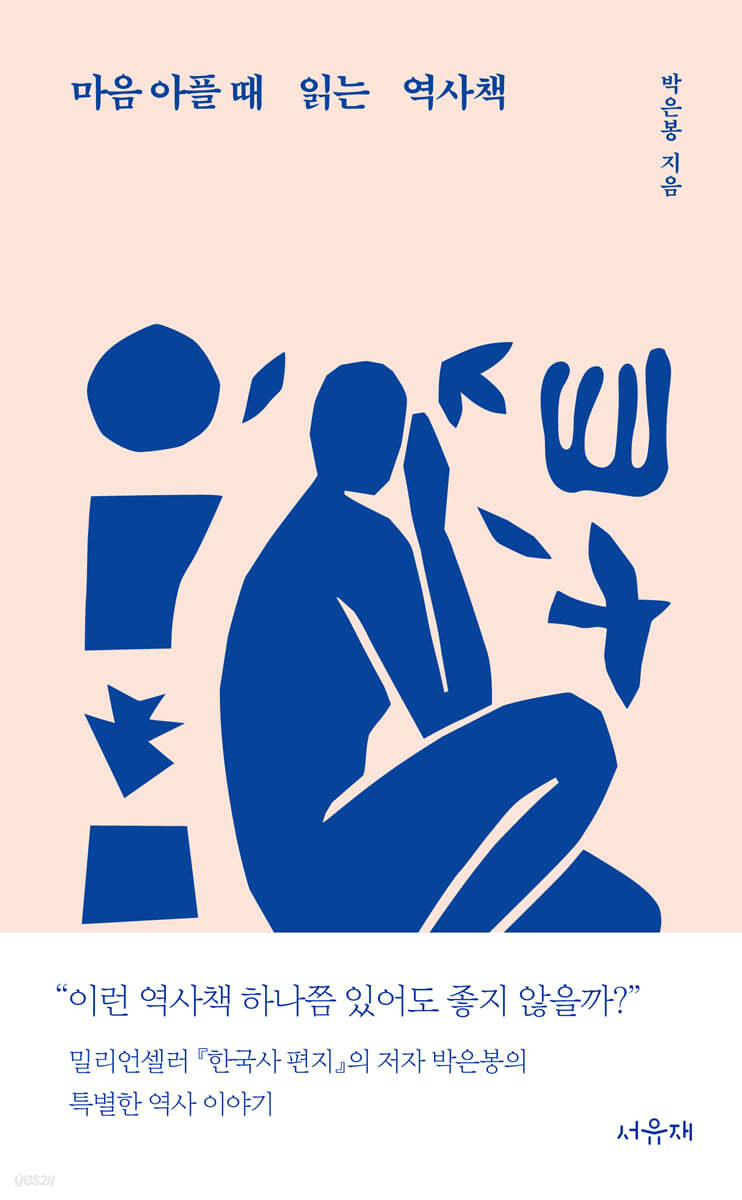
History books to read when you're feeling down
 |
Description
Book Introduction
“Wouldn’t it be nice to have a history book like this?” A special historical story from Park Eun-bong, author of the million-seller "Letters on Korean History." The first book that comes to mind when thinking of Korean history, a million-seller with over 4 million copies sold, the first reference book since the publication of the national social studies textbook, a book that has held the undisputed number one spot in the children's history book category for over 10 years, winner of the Baeksang Publishing Culture Award... The records set by 『Letters on Korean History』, which celebrated its 20th anniversary this year since its first publication in 2002, are still valid. As is widely known, the reason why Park Eun-bong, a historian who majored in Korean history and led the popular history book market in the 2000s, wrote “Letters on Korean History” was to tell it to his daughter. "A History Book to Read When Your Heart is Aching" is a book that uses history to comfort the hearts of readers who grew up reading "Letters on Korean History" and the generation of parents who still read it with their children today. The author believes that “knowing history makes you love people and understand the world,” and this is what he says about this book, “History Books to Read When Your Heart Hurts.” “Wouldn’t it be nice to have a history book like this?” |
- You can preview some of the book's contents.
Preview
index
p.010 - A 40-Year Battle with a Mysterious Disease | Charles Darwin
: Darwin became a recluse in his early 30s due to an unknown illness.
The illness changed his life completely.
The theory of evolution was born out of that changed life.
p.050 - A Lifelong Struggle with Complexes | Hans Christian Andersen
: Andersen, who suffered from a lifelong need for recognition and complex between a duck and a swan.
The 160 or so fairy tales he left behind are also his own stories.
p.102 - Two Lives Facing Death | Paul Kalanithi and Jin Soo-ok
: A deep reflection and realization on the lives of two people who suddenly faced death one day, and the stories they left behind.
p.158 - We are all born to be happy.
: A beautiful journey of five bullying middle school girls and a teacher at the education welfare center.
A truly happy ending story that teaches us that we are born to be happy and that we have a responsibility to be happier.
Author's Note · 225 | Note · 228
: Darwin became a recluse in his early 30s due to an unknown illness.
The illness changed his life completely.
The theory of evolution was born out of that changed life.
p.050 - A Lifelong Struggle with Complexes | Hans Christian Andersen
: Andersen, who suffered from a lifelong need for recognition and complex between a duck and a swan.
The 160 or so fairy tales he left behind are also his own stories.
p.102 - Two Lives Facing Death | Paul Kalanithi and Jin Soo-ok
: A deep reflection and realization on the lives of two people who suddenly faced death one day, and the stories they left behind.
p.158 - We are all born to be happy.
: A beautiful journey of five bullying middle school girls and a teacher at the education welfare center.
A truly happy ending story that teaches us that we are born to be happy and that we have a responsibility to be happier.
Author's Note · 225 | Note · 228
Into the book
Why Darwin suffered for so long without falling into severe depression or showing suicidal thoughts, and why his life was so difficult
There may be a secret to maintaining it without becoming a monster.
By consistently observing and recording one's illness, one may be able to distance oneself from the illness and view it objectively.
--- p.34
Research into Darwin's disease is ongoing.
Research on humans and diseases will continue to advance in the future, and Darwin's disease
New lighting will continue to emerge.
Will there be a conclusion? I don't know.
Maybe it will never be concluded.
--- p.41
Andersen, who received nine compliments and one boo, struggles, remembering only the one boo and putting aside the nine compliments.
Even after he grew older and became famous, this psychological state held him back and would not let him go.
--- p.59
Enter their fence.
Andersen fought for it all his life.
--- p.66
I didn't know how much time was left, so I didn't know what to do.
All the existing plans were in disarray, and the future was too uncertain to make new ones.
It would be nice to know exactly how much time is left.
--- p.106
The next day, March 9th.
The whole family gathered.
Paul said goodbye to his parents and wife Lucy.
It was a greeting full of gratitude and love.
And he insisted that his writing be published to the world.
Kady said her final goodbyes to her father.
Finally, Paul spoke quietly and softly.
“It’s done now.”
--- p.119
People usually feel anger first when they are diagnosed with cancer, but he said he felt no anger at all, only reflection.
She describes herself as a "person in reflective mode."
Whenever something happened, I would blame myself, wondering what I did wrong and why I did it wrong. I was generous to others, but I was stingy when it came to acknowledging myself.
--- p.123
Everything alive is precious, valuable, and meaningful.
The nameless wildflowers that I had never noticed before, the short blades of grass that seemed to barely touch the ground, the wrinkled fruits that looked like they would fall off at any moment… … All of these things felt precious simply because they were alive.
--- p.129
Anyone who has ever lost their daily life knows.
How wonderful it is to be able to wake up in the morning, go to bed at night, eat, wash the dishes, work, and drink tea.
The miracle wasn't flying in the sky or walking on water, it was living a day.
There may be a secret to maintaining it without becoming a monster.
By consistently observing and recording one's illness, one may be able to distance oneself from the illness and view it objectively.
--- p.34
Research into Darwin's disease is ongoing.
Research on humans and diseases will continue to advance in the future, and Darwin's disease
New lighting will continue to emerge.
Will there be a conclusion? I don't know.
Maybe it will never be concluded.
--- p.41
Andersen, who received nine compliments and one boo, struggles, remembering only the one boo and putting aside the nine compliments.
Even after he grew older and became famous, this psychological state held him back and would not let him go.
--- p.59
Enter their fence.
Andersen fought for it all his life.
--- p.66
I didn't know how much time was left, so I didn't know what to do.
All the existing plans were in disarray, and the future was too uncertain to make new ones.
It would be nice to know exactly how much time is left.
--- p.106
The next day, March 9th.
The whole family gathered.
Paul said goodbye to his parents and wife Lucy.
It was a greeting full of gratitude and love.
And he insisted that his writing be published to the world.
Kady said her final goodbyes to her father.
Finally, Paul spoke quietly and softly.
“It’s done now.”
--- p.119
People usually feel anger first when they are diagnosed with cancer, but he said he felt no anger at all, only reflection.
She describes herself as a "person in reflective mode."
Whenever something happened, I would blame myself, wondering what I did wrong and why I did it wrong. I was generous to others, but I was stingy when it came to acknowledging myself.
--- p.123
Everything alive is precious, valuable, and meaningful.
The nameless wildflowers that I had never noticed before, the short blades of grass that seemed to barely touch the ground, the wrinkled fruits that looked like they would fall off at any moment… … All of these things felt precious simply because they were alive.
--- p.129
Anyone who has ever lost their daily life knows.
How wonderful it is to be able to wake up in the morning, go to bed at night, eat, wash the dishes, work, and drink tea.
The miracle wasn't flying in the sky or walking on water, it was living a day.
--- p.133
Publisher's Review
Everyone faces a crisis in life at least once.
I did the same.
At that time, when I felt like I was trapped in a dark tunnel, I faced a question.
There are countless history books about systems, politics, kings, and great people.
Why is there no history book about the mind?
What is history to a person with a broken heart?
This book began with the questions I had at that time.
-In the text
“Wouldn’t it be nice to have a history book like this?”
A special historical story from Park Eun-bong, author of the million-seller "Letters on Korean History."
The first book that comes to mind when thinking of Korean history, a million-seller with over 4 million copies sold, the first reference book since the publication of the national social studies textbook, a book that has held the undisputed number one spot in the children's history book category for over 10 years, winner of the Baeksang Publishing Culture Award...
The records set by 『Letters on Korean History』, which celebrated its 20th anniversary this year since its first publication in 2002, are still valid.
As is widely known, the reason why Park Eun-bong, a historian who majored in Korean history and led the popular history book market in the 2000s, wrote “Letters on Korean History” was to tell it to his daughter.
"A History Book to Read When Your Heart is Aching" is a book that uses history to comfort the hearts of readers who grew up reading "Letters on Korean History" and the generation of parents who still read it with their children today.
The author believes that “knowing history makes you love people and understand the world,” and this is what he says about this book, “History Books to Read When Your Heart Hurts.”
“Wouldn’t it be nice to have a history book like this?”
"We are all protagonists of our own lives and history, and we have a responsibility to do our best to be happy."
A great journey to find a truly happy ending,
A history book for everyone living today
When you open the first page, you see something like a confession written in the place where a dedication usually goes.
However, the meaning and character of this book seem to be entirely contained within this short text.
Everyone faces a crisis in life at least once.
I did the same.
At that time, when I felt like I was trapped in a dark tunnel, I faced a question.
There are countless history books about institutions, politics, kings, and great men, but why are there no history books about the mind?
What is history to a person with a broken heart?
This book began with the questions I had at that time.
(In the text)
This book is divided into four parts.
This is the story of Charles Darwin, who wrote the theory of evolution while fighting a disease for 40 years with an unknown cause, treatment, and even name; Hans Christian Andersen, a world-renowned children's author who suffered from a lifelong need for recognition and complexes; Paul Kalanithi and Jin Su-ok, who faced death suddenly in the prime of their lives; and Mr. Go Jeong-won, a current librarian and reading activist, who worked with five youths as a teacher at an educational welfare center.
The author does not focus on their achievements or reputation.
We look into and trace the life crises and pain they faced, and the times they survived despite them.
Darwin, who continued his research even while fighting an unidentified disease that suddenly struck and destroyed his life with unbearable pain; Andersen, who sublimated the complex that tormented him while struggling with an unfulfilled longing throughout his life with the sole purpose of 'becoming famous' into his works; the story of Paul Kalanithi, widely known to us for his best-selling essay 'When Breath Becomes Air', and former MBC reporter Jin Su-ok after receiving a terminal diagnosis; and the story of five juvenile delinquents who intensively show the dark sides of today's Korean society, such as the gap between the rich and the poor, discrimination and injustice, and the division of the nation. The four stories may seem completely independent, but they once again confirm how closely individual lives are connected to society and history.
At the same time, in the stories of people from different eras and backgrounds, we find a common thread: 'a desperate desire to be happy despite everything.'
As Darwin once said in his theory of evolution, “All sentient beings are made to enjoy happiness.”
“No matter how much time seems to never end, it does end.
“Someday.”
A profound reflection on life and death, suffering and hope, and happiness.
"Healing Diary," published in November 2020 with the subtitle "A 9-year story of rebuilding a broken life," can also be seen as the starting point of this book, nearly 10 years after the author stopped writing.
What was history to the author as he endured the life crisis he faced one day and the long period of suffering that followed?
As the author goes through a time when even the history books he wrote were of no comfort, he asks himself questions.
“What is history to someone who is heartbroken?” Perhaps it was a natural progression that, after fully recording and revealing personal pain, it would expand into universal human emotions of life and death, pain and hope, and happiness.
Thus, this book is the answer to the question the author asked himself while passing through a long, dark tunnel: “What is history to a person with a broken heart?”
At the same time, it is a record of profound reflection, a positive affirmation that “if someone has done it, someone else can do it,” and a hopeful reflection that “just as anyone can get sick, anyone can get well,” through stories that have already become or will remain in history, whether great or ordinary, stories that share the commonality of history.
This book contains stories of people who have faced crises and difficulties in their lives.
It could be an illness or an accident, an internal psychological problem, or a conflict with one's family or the society to which one belongs.
Any kind of thing comes as absolute pain to the person involved.
I don't think suffering is relative. It's not just about past people, it's about present people.
Because history doesn't just deal with the distant past.
There are not only so-called great people or celebrities, but also people like your neighbors whom you might have encountered on an afternoon walk.
Everyone is a protagonist.
Although they do not appear in this book, I believe that all those who did not give up hope even in the midst of suffering are the protagonists of life and history.
(In the text)
『History Books to Read When You're Feeling Heartbroken』 appears relatively light compared to the author's previous books, but upon closer inspection, it is heavier than any other book.
As can be guessed from the over 200 meticulously organized notes, it took two years of reporting, interviews, and research.
Even so, I spent nearly a year writing and revising, conducting supplementary research and interviews. I sincerely hope, as the author wishes, that this book "can provide hope and courage to someone facing a harsh life crisis at this very moment."
“No matter how much time seems to never end, it does end.
“Someday.”
Author's Note
If history is the story of people's lives, it will contain not only success, joy, and delight, but also failure, pain, and tears.
Depending on where you focus your attention, many different stories can emerge.
This book, which seeks to answer the question I faced during my time of suffering, "What does history mean to a person in pain?", is a message I want to convey: "Wouldn't it be nice to have a history book like this?"
If it had been on the bookshelf at the time, I probably would have taken it out.
I hope that the stories in this book can provide hope and courage to someone facing a harsh life crisis right now. Even time, no matter how seemingly endless, will eventually end.
Someday.
I did the same.
At that time, when I felt like I was trapped in a dark tunnel, I faced a question.
There are countless history books about systems, politics, kings, and great people.
Why is there no history book about the mind?
What is history to a person with a broken heart?
This book began with the questions I had at that time.
-In the text
“Wouldn’t it be nice to have a history book like this?”
A special historical story from Park Eun-bong, author of the million-seller "Letters on Korean History."
The first book that comes to mind when thinking of Korean history, a million-seller with over 4 million copies sold, the first reference book since the publication of the national social studies textbook, a book that has held the undisputed number one spot in the children's history book category for over 10 years, winner of the Baeksang Publishing Culture Award...
The records set by 『Letters on Korean History』, which celebrated its 20th anniversary this year since its first publication in 2002, are still valid.
As is widely known, the reason why Park Eun-bong, a historian who majored in Korean history and led the popular history book market in the 2000s, wrote “Letters on Korean History” was to tell it to his daughter.
"A History Book to Read When Your Heart is Aching" is a book that uses history to comfort the hearts of readers who grew up reading "Letters on Korean History" and the generation of parents who still read it with their children today.
The author believes that “knowing history makes you love people and understand the world,” and this is what he says about this book, “History Books to Read When Your Heart Hurts.”
“Wouldn’t it be nice to have a history book like this?”
"We are all protagonists of our own lives and history, and we have a responsibility to do our best to be happy."
A great journey to find a truly happy ending,
A history book for everyone living today
When you open the first page, you see something like a confession written in the place where a dedication usually goes.
However, the meaning and character of this book seem to be entirely contained within this short text.
Everyone faces a crisis in life at least once.
I did the same.
At that time, when I felt like I was trapped in a dark tunnel, I faced a question.
There are countless history books about institutions, politics, kings, and great men, but why are there no history books about the mind?
What is history to a person with a broken heart?
This book began with the questions I had at that time.
(In the text)
This book is divided into four parts.
This is the story of Charles Darwin, who wrote the theory of evolution while fighting a disease for 40 years with an unknown cause, treatment, and even name; Hans Christian Andersen, a world-renowned children's author who suffered from a lifelong need for recognition and complexes; Paul Kalanithi and Jin Su-ok, who faced death suddenly in the prime of their lives; and Mr. Go Jeong-won, a current librarian and reading activist, who worked with five youths as a teacher at an educational welfare center.
The author does not focus on their achievements or reputation.
We look into and trace the life crises and pain they faced, and the times they survived despite them.
Darwin, who continued his research even while fighting an unidentified disease that suddenly struck and destroyed his life with unbearable pain; Andersen, who sublimated the complex that tormented him while struggling with an unfulfilled longing throughout his life with the sole purpose of 'becoming famous' into his works; the story of Paul Kalanithi, widely known to us for his best-selling essay 'When Breath Becomes Air', and former MBC reporter Jin Su-ok after receiving a terminal diagnosis; and the story of five juvenile delinquents who intensively show the dark sides of today's Korean society, such as the gap between the rich and the poor, discrimination and injustice, and the division of the nation. The four stories may seem completely independent, but they once again confirm how closely individual lives are connected to society and history.
At the same time, in the stories of people from different eras and backgrounds, we find a common thread: 'a desperate desire to be happy despite everything.'
As Darwin once said in his theory of evolution, “All sentient beings are made to enjoy happiness.”
“No matter how much time seems to never end, it does end.
“Someday.”
A profound reflection on life and death, suffering and hope, and happiness.
"Healing Diary," published in November 2020 with the subtitle "A 9-year story of rebuilding a broken life," can also be seen as the starting point of this book, nearly 10 years after the author stopped writing.
What was history to the author as he endured the life crisis he faced one day and the long period of suffering that followed?
As the author goes through a time when even the history books he wrote were of no comfort, he asks himself questions.
“What is history to someone who is heartbroken?” Perhaps it was a natural progression that, after fully recording and revealing personal pain, it would expand into universal human emotions of life and death, pain and hope, and happiness.
Thus, this book is the answer to the question the author asked himself while passing through a long, dark tunnel: “What is history to a person with a broken heart?”
At the same time, it is a record of profound reflection, a positive affirmation that “if someone has done it, someone else can do it,” and a hopeful reflection that “just as anyone can get sick, anyone can get well,” through stories that have already become or will remain in history, whether great or ordinary, stories that share the commonality of history.
This book contains stories of people who have faced crises and difficulties in their lives.
It could be an illness or an accident, an internal psychological problem, or a conflict with one's family or the society to which one belongs.
Any kind of thing comes as absolute pain to the person involved.
I don't think suffering is relative. It's not just about past people, it's about present people.
Because history doesn't just deal with the distant past.
There are not only so-called great people or celebrities, but also people like your neighbors whom you might have encountered on an afternoon walk.
Everyone is a protagonist.
Although they do not appear in this book, I believe that all those who did not give up hope even in the midst of suffering are the protagonists of life and history.
(In the text)
『History Books to Read When You're Feeling Heartbroken』 appears relatively light compared to the author's previous books, but upon closer inspection, it is heavier than any other book.
As can be guessed from the over 200 meticulously organized notes, it took two years of reporting, interviews, and research.
Even so, I spent nearly a year writing and revising, conducting supplementary research and interviews. I sincerely hope, as the author wishes, that this book "can provide hope and courage to someone facing a harsh life crisis at this very moment."
“No matter how much time seems to never end, it does end.
“Someday.”
Author's Note
If history is the story of people's lives, it will contain not only success, joy, and delight, but also failure, pain, and tears.
Depending on where you focus your attention, many different stories can emerge.
This book, which seeks to answer the question I faced during my time of suffering, "What does history mean to a person in pain?", is a message I want to convey: "Wouldn't it be nice to have a history book like this?"
If it had been on the bookshelf at the time, I probably would have taken it out.
I hope that the stories in this book can provide hope and courage to someone facing a harsh life crisis right now. Even time, no matter how seemingly endless, will eventually end.
Someday.
GOODS SPECIFICS
- Publication date: September 20, 2022
- Page count, weight, size: 240 pages | 306g | 130*210*15mm
- ISBN13: 9791189034665
- ISBN10: 1189034662
You may also like
카테고리
korean


korean

![GQ KOREA Mark (Monthly): December [2025]](http://librairie.coreenne.fr/cdn/shop/files/8ef265dbbfbf186523ed75ba7319009d.jpg?v=1765340328&width=3840)


