

Outline of Civilization Theory
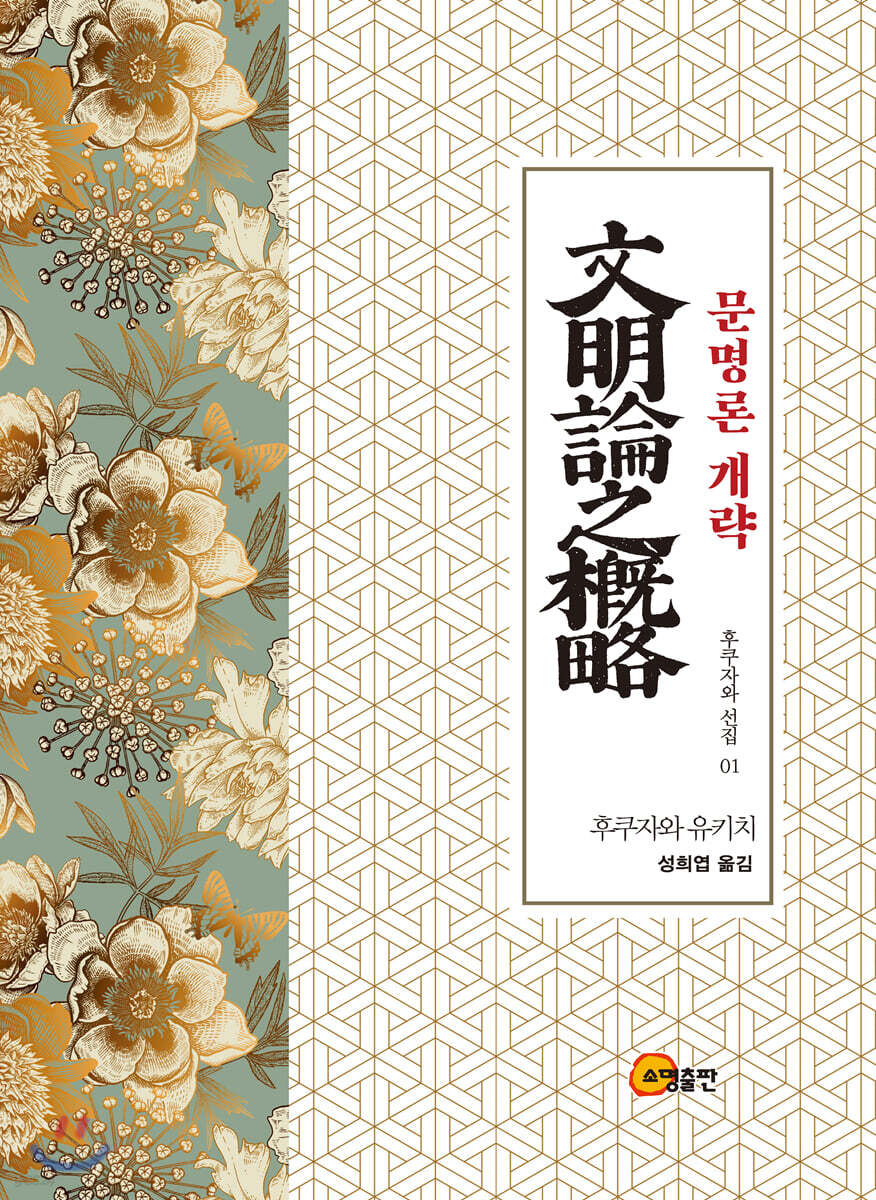 |
Description
Book Introduction
Japanese teacher, Yukichi Fukuzawa
Complete translation of 『An Outline of Civilization』!
Aggressor or Liberal Reformer?
It is true that Yukichi Fukuzawa, the founder of Keio University, a prestigious Japanese university, the first president of the Japanese Academy of Sciences, and ranked 7th among the “most respected people in Japan,” is only known in Korea as an aggressor who advocated for the Seikanron.
However, this book is so essential for understanding not only Yukichi Fukuzawa but also modern Japan that any evaluation of him would be meaningless without understanding 『Outline of a Theory of Civilization』.
This book is based on the original 『Outline of a Theory of Civilization』 by Yukichi Fukuzawa, which shaped modern Japanese thought. It accurately preserves the Chinese character translations (new Chinese language) of Western concepts from the early Meiji period that cannot be found in modern Japanese translations, and vividly translates Yukichi Fukuzawa's unique writing style and sentence style.
Not only does it reflect the research results of Japanese researchers on Fukuzawa Yukichi, but it also includes abundant annotations on Eastern and Western classics cited by Fukuzawa, the meaning between the lines, and historical anecdotes.
Complete translation of 『An Outline of Civilization』!
Aggressor or Liberal Reformer?
It is true that Yukichi Fukuzawa, the founder of Keio University, a prestigious Japanese university, the first president of the Japanese Academy of Sciences, and ranked 7th among the “most respected people in Japan,” is only known in Korea as an aggressor who advocated for the Seikanron.
However, this book is so essential for understanding not only Yukichi Fukuzawa but also modern Japan that any evaluation of him would be meaningless without understanding 『Outline of a Theory of Civilization』.
This book is based on the original 『Outline of a Theory of Civilization』 by Yukichi Fukuzawa, which shaped modern Japanese thought. It accurately preserves the Chinese character translations (new Chinese language) of Western concepts from the early Meiji period that cannot be found in modern Japanese translations, and vividly translates Yukichi Fukuzawa's unique writing style and sentence style.
Not only does it reflect the research results of Japanese researchers on Fukuzawa Yukichi, but it also includes abundant annotations on Eastern and Western classics cited by Fukuzawa, the meaning between the lines, and historical anecdotes.
- You can preview some of the book's contents.
Preview
index
Note 3
Translator's Preface_ 1875, At the Crossroads of Revolution and Civilization 6
Translator's Note 15
Preface 71
Volume 1
Chapter 1: Determining the Main Point of Discussion 87
Chapter 2: The Purpose of Western Civilization 108
Chapter 3: Discussing the Essence of Civilization 163
Volume 2
Chapter 4: Discussing the Wisdom and Virtue of a Nation's People 193
Chapter 5 Continuation of the Previous Discussion 233
Volume 3
Chapter 6: The Distinction Between Wisdom and Virtue 267
Volume 4
Chapter 7: Discussing the Time and Place Where Wisdom and Virtue Can Be Practiced 337
Chapter 8: The Origins of Western Civilization 373
Volume 5
Chapter 9: The Origins of Japanese Civilization 401
Volume 6
Chapter 10: Discussing National Independence 485
Reference 541
Appendix 1_Yukichi Fukuzawa Chronology 553
Appendix 2: Genealogy of Emperors 556
Appendix 3: Key Chronological Tables of Modern Japanese History (1853–1911) 569
Appendix 4-1_Netherlands Books Mentioned in the Nanhak Gyeje (1783) 573
Appendix 4-2_Current Status of Western Translations Mentioned in 『Nanghak Sashi』 (1815) 576
Appendix 5: Book Classification System and List of Western Translations in 『Translation and Reading Method』(1883) 580
Appendix 6_Yang Hyeon-dang List of Books (1868) Status 586
Search 589
Translator's Preface_ 1875, At the Crossroads of Revolution and Civilization 6
Translator's Note 15
Preface 71
Volume 1
Chapter 1: Determining the Main Point of Discussion 87
Chapter 2: The Purpose of Western Civilization 108
Chapter 3: Discussing the Essence of Civilization 163
Volume 2
Chapter 4: Discussing the Wisdom and Virtue of a Nation's People 193
Chapter 5 Continuation of the Previous Discussion 233
Volume 3
Chapter 6: The Distinction Between Wisdom and Virtue 267
Volume 4
Chapter 7: Discussing the Time and Place Where Wisdom and Virtue Can Be Practiced 337
Chapter 8: The Origins of Western Civilization 373
Volume 5
Chapter 9: The Origins of Japanese Civilization 401
Volume 6
Chapter 10: Discussing National Independence 485
Reference 541
Appendix 1_Yukichi Fukuzawa Chronology 553
Appendix 2: Genealogy of Emperors 556
Appendix 3: Key Chronological Tables of Modern Japanese History (1853–1911) 569
Appendix 4-1_Netherlands Books Mentioned in the Nanhak Gyeje (1783) 573
Appendix 4-2_Current Status of Western Translations Mentioned in 『Nanghak Sashi』 (1815) 576
Appendix 5: Book Classification System and List of Western Translations in 『Translation and Reading Method』(1883) 580
Appendix 6_Yang Hyeon-dang List of Books (1868) Status 586
Search 589
Into the book
Therefore, I say that in order to save European civilization, we must first do the difficult things and then the easy things, first reform the human mind, then expand it with the spirit, and finally reach tangible things.
Although it may be difficult to do things in this order, there is actually a way to achieve them without obstacles.
If you reverse this order, the task may seem easy, but the path will suddenly become blocked, as if you were standing in front of a wall, unable to advance even a single step. You will either hesitate in front of the wall, or, if you advance an inch, you will end up taking a step back or even a foot in extreme cases.
--- p.124
In human relations, whether it be government, people, scholars, or officials, regardless of their status, if they possess power, whether it be intellectual or physical strength, then anything that can be called power must be restricted.
All the power that mankind possesses can never be pure.
It is inevitable that there are inherent evils within it, and we can see from the actual experiences of the world that sometimes things go wrong due to cowardice and sometimes things are harmed due to extremes.
This is called the disaster of bias.
Those in power must always be on their guard.
Although it may be difficult to do things in this order, there is actually a way to achieve them without obstacles.
If you reverse this order, the task may seem easy, but the path will suddenly become blocked, as if you were standing in front of a wall, unable to advance even a single step. You will either hesitate in front of the wall, or, if you advance an inch, you will end up taking a step back or even a foot in extreme cases.
--- p.124
In human relations, whether it be government, people, scholars, or officials, regardless of their status, if they possess power, whether it be intellectual or physical strength, then anything that can be called power must be restricted.
All the power that mankind possesses can never be pure.
It is inevitable that there are inherent evils within it, and we can see from the actual experiences of the world that sometimes things go wrong due to cowardice and sometimes things are harmed due to extremes.
This is called the disaster of bias.
Those in power must always be on their guard.
--- p.402
Publisher's Review
The famous book, “An Outline of a Theory of Civilization,” by Yukichi Fukuzawa, featured on the Japanese 10,000 yen note, has been fully translated and published.
It is true that Yukichi Fukuzawa, the founder of Keio University, a prestigious Japanese university, the first president of the Japanese Academy of Sciences, and ranked 7th among the “most respected people in Japan,” is only known in Korea as an aggressor who advocated for the Seikanron.
However, this book is so essential for understanding not only Yukichi Fukuzawa but also modern Japan that any evaluation of him would be meaningless without understanding 『Outline of a Theory of Civilization』.
In 1875, when 『Outline of a Theory of Civilization』 was published, Japan was truly at the crossroads of revolution and civilization.
In such a tense and chaotic situation, Yukichi Fukuzawa resolutely rejects the methods of the Todoshoki.
He argued that in order to establish a new, independent nation, it was necessary to actively embrace not only Western technology, but also Western ideas, culture, and above all, the concepts of 'freedom' and 'independence.'
His argument, which emphasized the independent and self-reliant individual and called for a political and ideological transition from the feudal system to a modern state system, had a great influence on Joseon reformers such as Kim Ok-gyun, Seo Jae-pil, and Yun Chi-ho, and it cannot be denied that it was a major step forward for Japan toward modernization.
This book is based on the original 『Outline of a Theory of Civilization』 by Yukichi Fukuzawa, which shaped modern Japanese thought. It accurately preserves the Chinese character translations (new Chinese language) of Western concepts from the early Meiji period that cannot be found in modern Japanese translations, and vividly translates Yukichi Fukuzawa's unique writing style and sentence style.
Not only does it reflect the research results of Japanese researchers on Fukuzawa Yukichi, but it also includes abundant annotations on Eastern and Western classics cited by Fukuzawa, the meaning between the lines, and historical anecdotes.
The annotations in this book alone clearly demonstrate the painstaking efforts of modern Japanese intellectuals of the time, including Yukichi Fukuzawa, to understand Western ideas, values, social structure, and operating principles.
It is safe to say that 『Outlines of Civilization』 is the only book that most deeply reflected on Western history, culture, and thought in East Asia in the 1800s.
This book is the first and most systematic presentation of Western modern values—liberty, republic, and independence—to the East, in order to achieve long-term, sustained national development, in other words, to guarantee individual freedom and creativity.
This book is crucial not only for understanding Yukichi Fukuzawa, but also for understanding modern Japanese history and the history of modern Japanese thought. It will be of great help to domestic readers interested in modern Japanese history since the Meiji period, the history of modern thought, and the history of modern concepts in East Asia, as well as those studying Yukichi Fukuzawa.
It is true that Yukichi Fukuzawa, the founder of Keio University, a prestigious Japanese university, the first president of the Japanese Academy of Sciences, and ranked 7th among the “most respected people in Japan,” is only known in Korea as an aggressor who advocated for the Seikanron.
However, this book is so essential for understanding not only Yukichi Fukuzawa but also modern Japan that any evaluation of him would be meaningless without understanding 『Outline of a Theory of Civilization』.
In 1875, when 『Outline of a Theory of Civilization』 was published, Japan was truly at the crossroads of revolution and civilization.
In such a tense and chaotic situation, Yukichi Fukuzawa resolutely rejects the methods of the Todoshoki.
He argued that in order to establish a new, independent nation, it was necessary to actively embrace not only Western technology, but also Western ideas, culture, and above all, the concepts of 'freedom' and 'independence.'
His argument, which emphasized the independent and self-reliant individual and called for a political and ideological transition from the feudal system to a modern state system, had a great influence on Joseon reformers such as Kim Ok-gyun, Seo Jae-pil, and Yun Chi-ho, and it cannot be denied that it was a major step forward for Japan toward modernization.
This book is based on the original 『Outline of a Theory of Civilization』 by Yukichi Fukuzawa, which shaped modern Japanese thought. It accurately preserves the Chinese character translations (new Chinese language) of Western concepts from the early Meiji period that cannot be found in modern Japanese translations, and vividly translates Yukichi Fukuzawa's unique writing style and sentence style.
Not only does it reflect the research results of Japanese researchers on Fukuzawa Yukichi, but it also includes abundant annotations on Eastern and Western classics cited by Fukuzawa, the meaning between the lines, and historical anecdotes.
The annotations in this book alone clearly demonstrate the painstaking efforts of modern Japanese intellectuals of the time, including Yukichi Fukuzawa, to understand Western ideas, values, social structure, and operating principles.
It is safe to say that 『Outlines of Civilization』 is the only book that most deeply reflected on Western history, culture, and thought in East Asia in the 1800s.
This book is the first and most systematic presentation of Western modern values—liberty, republic, and independence—to the East, in order to achieve long-term, sustained national development, in other words, to guarantee individual freedom and creativity.
This book is crucial not only for understanding Yukichi Fukuzawa, but also for understanding modern Japanese history and the history of modern Japanese thought. It will be of great help to domestic readers interested in modern Japanese history since the Meiji period, the history of modern thought, and the history of modern concepts in East Asia, as well as those studying Yukichi Fukuzawa.
GOODS SPECIFICS
- Date of issue: September 10, 2020
- Format: Hardcover book binding method guide
- Page count, weight, size: 604 pages | 898g | 160*230*32mm
- ISBN13: 9791159055461
- ISBN10: 1159055467
You may also like
카테고리
korean


korean

![GQ KOREA Mark (Monthly): December [2025]](http://librairie.coreenne.fr/cdn/shop/files/8ef265dbbfbf186523ed75ba7319009d.jpg?v=1765340328&width=3840)


