

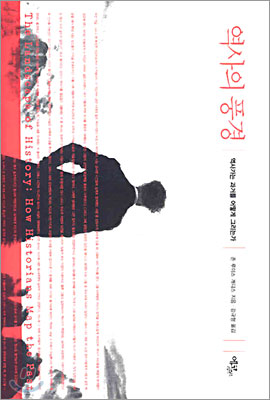
Landscape of History
 |
Description
Book Introduction
A recent trend in historical scholarship can be summarized as follows: "Objectivity is impossible, and there is no single truth."
For example, there are views such as depicting Cao Cao of the Romance of the Three Kingdoms, who was portrayed as vulgar, as a decisive and bold leader, or viewing King Gwanghaegun as a monarch who pursued a pragmatic diplomatic line rather than a tyrant.
Looking at this phenomenon, the author develops his argument using the example of a mapmaker.
There is a map.
No matter how elaborate and detailed a map is, it cannot capture everything that is real.
Moreover, if a map is made to be the same size as the area it is intended to depict, it is no longer a map.
The author compares historians and cartographers.
Historians cannot retell the past as it was.
It's just a description.
By doing so, we get closer to the truth as much as possible.
Therefore, the author argues that, contrary to what postmodernists and deconstructionists say, the truth of history exists.
This is an introductory book to history for beginners, and it is a worthy successor to Marc Bloch's Apology for History and EH Carr's What is History?, which effectively refute the postmodern view of history.
For example, there are views such as depicting Cao Cao of the Romance of the Three Kingdoms, who was portrayed as vulgar, as a decisive and bold leader, or viewing King Gwanghaegun as a monarch who pursued a pragmatic diplomatic line rather than a tyrant.
Looking at this phenomenon, the author develops his argument using the example of a mapmaker.
There is a map.
No matter how elaborate and detailed a map is, it cannot capture everything that is real.
Moreover, if a map is made to be the same size as the area it is intended to depict, it is no longer a map.
The author compares historians and cartographers.
Historians cannot retell the past as it was.
It's just a description.
By doing so, we get closer to the truth as much as possible.
Therefore, the author argues that, contrary to what postmodernists and deconstructionists say, the truth of history exists.
This is an introductory book to history for beginners, and it is a worthy successor to Marc Bloch's Apology for History and EH Carr's What is History?, which effectively refute the postmodern view of history.
index
On the publication of the Korean edition
1.
Landscape of History
2.
Time and space
3.
Structure and Process
4.
Interdependence of variables
5.
Chaos and Complexity
6.
Causality, contingency, and counterfactual reasoning
7.
Molecules that possess minds
8.
Through the eyes of a historian
Translator's Note
main
Search
1.
Landscape of History
2.
Time and space
3.
Structure and Process
4.
Interdependence of variables
5.
Chaos and Complexity
6.
Causality, contingency, and counterfactual reasoning
7.
Molecules that possess minds
8.
Through the eyes of a historian
Translator's Note
main
Search
Publisher's Review
In recent decades, new challenges to historiography have arisen.
In particular, postmodernist theory holds that objectivity is impossible and therefore truth does not exist (relativism).
Moreover, if we apply Heisenberg's uncertainty principle to this problem, it becomes useless to objectively and scientifically determine what happened in the past.
Therefore, the author, Gaddis, takes Marc Bloch and E.
H, with due respect to Ka (whose respect is more conditional than that of Marc Bloch), answers these two questions in his own way.
In this book, he argues that, contrary to what postmodernists and deconstructionists claim, it is natural that there is truth in history, and that even if we make concessions and cannot be completely certain of such facts, we can still arrive at the truth very closely, like a curve in a function.
But what we should pay attention to here is the components of this book, and the guidelines the author presents for historical narrative are common-sense ones that we can easily follow.
He makes us aware of the inner workings of these common sense things, that is, it is an act of transforming passive and intuitive knowledge into an active and practical one.
His work, which deconstructs the theories of the influential deconstructionists in universities, is therefore extremely timely and important.
Therefore, in this book, he allows us to discuss how history can either imprison us in false dogmas or awaken us to the possibility of liberating us from the past.
In this sense, historians must become social critics.
Because the past becomes liberating to the extent that it binds the present and the future, and therefore the historian's purpose in thinking is to achieve an optimal balance between the poles of oppression and liberation.
He then moves on to the central question: “Does historical truth exist?”
Here he uses several metaphors, one of which compares the historian to a cartographer.
Creating a map the same size as the area it is intended to depict is not only impossible but also impractical, a duplication of effort.
History, too, cannot simply recreate the past as it was.
It's just a description.
But historical truth is something that is extracted through description, and in doing so, it approaches the truth.
By doing this, we can reach an agreement that truly accepts the past.
So, is history a science? Gaddis introduces chaos theory and complexity theory to counter the common-sense notion that history uses the same methodology as the natural sciences.
He argues that history has not become more scientific, but rather science has become more historical.
Science has abandoned the Newtonian world, the linear theory that was taken for granted until then, in favor of new theories by Einstein and Heisenberg.
This means that scientists like Einstein cannot experiment in the laboratory, so they have to rely on speculative experiments.
This is similar to the position of a historian who cannot go to the site of a historical event.
In other words, as nonlinear scientific theories tell us, what determines cause in science or history is not just the independent variables, but the correlations among numerous dependent variables.
In addition, to explain the history of today and the essence of history, he introduces numerous theories, including concepts such as 'fractal' and 'phase transitions.'
But ultimately he was like his ancestors (Marc Bloch and E.
H. Ka) is following the example well.
In doing so, it reveals the historian's purpose of thinking.
It is about achieving an optimal balance, first among historians, then within society, and between the poles of oppression and liberation.
A newborn baby is completely oppressed in that it is completely dependent from the moment it steps into the world, but at the same time it is completely free in that it has no preconceptions, no constraints, no interest in anyone but itself.
But as we grow physically, we become more capable of taking care of ourselves, and through experience, lessons, and obligations, we learn a minimal balance between these two extremes.
But what happens when we become adults without achieving balance? Complete oppression and complete liberation manifest as slavery.
Freedom is only possible in the tension between these two opposing sides.
The tension here refers to the balance between universal knowledge and concrete experience, dependence and autonomy, and revelation and concealment.
Therefore, there is no belief in the independence of variables in research methods or in the superiority of contingency theory (as claimed by the social sciences).
There is only mutual dependence.
However, from an individual perspective, there are many cases where people have successfully helped their children grow into adults without extensive historical knowledge.
So what about the roles of society and its individuals? Just as the balance between oppression and liberation shapes an individual's identity, the same holds true for social systems.
In the case of social systems, it is impossible without the discipline of history, because only through history can one see beyond a culture.
However, restoring and maintaining this balance has become a skill that must be learned.
Ultimately, this is where the most important thing we as historians do happens.
That is education.
What we can achieve through it is a harmonious coexistence of the present, future, and past.
This signifies a society that seeks to respect the past while holding it accountable, a society that is accustomed to improving rather than eradicating, and a society that values morality over moral insensitivity.
Although historical consciousness may not be the only way to build such a society, just as the scientific method has proven to be able to gather the most comprehensive consensus within the realm of things than any other method of research, the historical method can also be seen as having an advantageous position (relatively compared to the social sciences) in human affairs.
In particular, postmodernist theory holds that objectivity is impossible and therefore truth does not exist (relativism).
Moreover, if we apply Heisenberg's uncertainty principle to this problem, it becomes useless to objectively and scientifically determine what happened in the past.
Therefore, the author, Gaddis, takes Marc Bloch and E.
H, with due respect to Ka (whose respect is more conditional than that of Marc Bloch), answers these two questions in his own way.
In this book, he argues that, contrary to what postmodernists and deconstructionists claim, it is natural that there is truth in history, and that even if we make concessions and cannot be completely certain of such facts, we can still arrive at the truth very closely, like a curve in a function.
But what we should pay attention to here is the components of this book, and the guidelines the author presents for historical narrative are common-sense ones that we can easily follow.
He makes us aware of the inner workings of these common sense things, that is, it is an act of transforming passive and intuitive knowledge into an active and practical one.
His work, which deconstructs the theories of the influential deconstructionists in universities, is therefore extremely timely and important.
Therefore, in this book, he allows us to discuss how history can either imprison us in false dogmas or awaken us to the possibility of liberating us from the past.
In this sense, historians must become social critics.
Because the past becomes liberating to the extent that it binds the present and the future, and therefore the historian's purpose in thinking is to achieve an optimal balance between the poles of oppression and liberation.
He then moves on to the central question: “Does historical truth exist?”
Here he uses several metaphors, one of which compares the historian to a cartographer.
Creating a map the same size as the area it is intended to depict is not only impossible but also impractical, a duplication of effort.
History, too, cannot simply recreate the past as it was.
It's just a description.
But historical truth is something that is extracted through description, and in doing so, it approaches the truth.
By doing this, we can reach an agreement that truly accepts the past.
So, is history a science? Gaddis introduces chaos theory and complexity theory to counter the common-sense notion that history uses the same methodology as the natural sciences.
He argues that history has not become more scientific, but rather science has become more historical.
Science has abandoned the Newtonian world, the linear theory that was taken for granted until then, in favor of new theories by Einstein and Heisenberg.
This means that scientists like Einstein cannot experiment in the laboratory, so they have to rely on speculative experiments.
This is similar to the position of a historian who cannot go to the site of a historical event.
In other words, as nonlinear scientific theories tell us, what determines cause in science or history is not just the independent variables, but the correlations among numerous dependent variables.
In addition, to explain the history of today and the essence of history, he introduces numerous theories, including concepts such as 'fractal' and 'phase transitions.'
But ultimately he was like his ancestors (Marc Bloch and E.
H. Ka) is following the example well.
In doing so, it reveals the historian's purpose of thinking.
It is about achieving an optimal balance, first among historians, then within society, and between the poles of oppression and liberation.
A newborn baby is completely oppressed in that it is completely dependent from the moment it steps into the world, but at the same time it is completely free in that it has no preconceptions, no constraints, no interest in anyone but itself.
But as we grow physically, we become more capable of taking care of ourselves, and through experience, lessons, and obligations, we learn a minimal balance between these two extremes.
But what happens when we become adults without achieving balance? Complete oppression and complete liberation manifest as slavery.
Freedom is only possible in the tension between these two opposing sides.
The tension here refers to the balance between universal knowledge and concrete experience, dependence and autonomy, and revelation and concealment.
Therefore, there is no belief in the independence of variables in research methods or in the superiority of contingency theory (as claimed by the social sciences).
There is only mutual dependence.
However, from an individual perspective, there are many cases where people have successfully helped their children grow into adults without extensive historical knowledge.
So what about the roles of society and its individuals? Just as the balance between oppression and liberation shapes an individual's identity, the same holds true for social systems.
In the case of social systems, it is impossible without the discipline of history, because only through history can one see beyond a culture.
However, restoring and maintaining this balance has become a skill that must be learned.
Ultimately, this is where the most important thing we as historians do happens.
That is education.
What we can achieve through it is a harmonious coexistence of the present, future, and past.
This signifies a society that seeks to respect the past while holding it accountable, a society that is accustomed to improving rather than eradicating, and a society that values morality over moral insensitivity.
Although historical consciousness may not be the only way to build such a society, just as the scientific method has proven to be able to gather the most comprehensive consensus within the realm of things than any other method of research, the historical method can also be seen as having an advantageous position (relatively compared to the social sciences) in human affairs.
GOODS SPECIFICS
- Date of issue: March 5, 2004
- Format: Hardcover book binding method guide
- Page count, weight, size: 275 pages | 486g | 153*224*20mm
- ISBN13: 9788990048271
- ISBN10: 8990048273
You may also like
카테고리
korean


korean

![GQ KOREA Mark (Monthly): December [2025]](http://librairie.coreenne.fr/cdn/shop/files/8ef265dbbfbf186523ed75ba7319009d.jpg?v=1765340328&width=3840)


