

A walk through Gyeongseong's best restaurants
 |
Description
Book Introduction
“This place probably has the best coffee in Gyeongseong.”
A luxurious table decorated in wine color,
Between the narrow, low tables where flies fly,
The dining scene that decorates the downtown area of Gyeongseong
Chasing the shadow of colonialism that fell over it
Where was the restaurant that brought back memories for author Park Wan-seo and her older brother to celebrate her acceptance to Sookmyung Girls' High School? Where was the café where Lee Sang ordered a cup of coffee and spent a weary afternoon? Of course, Gyeongseong had its share of delicious restaurants.
People wait in line all day to try the popular menu, and the restaurants that are talked about by the rich for their unique interiors and facilities.
But for us in modern times, the combination of the two words ‘Gyeongseong’ and ‘matjib’ feels unfamiliar.
This is because not only are the remaining data scarce, but related research has not been conducted in depth.
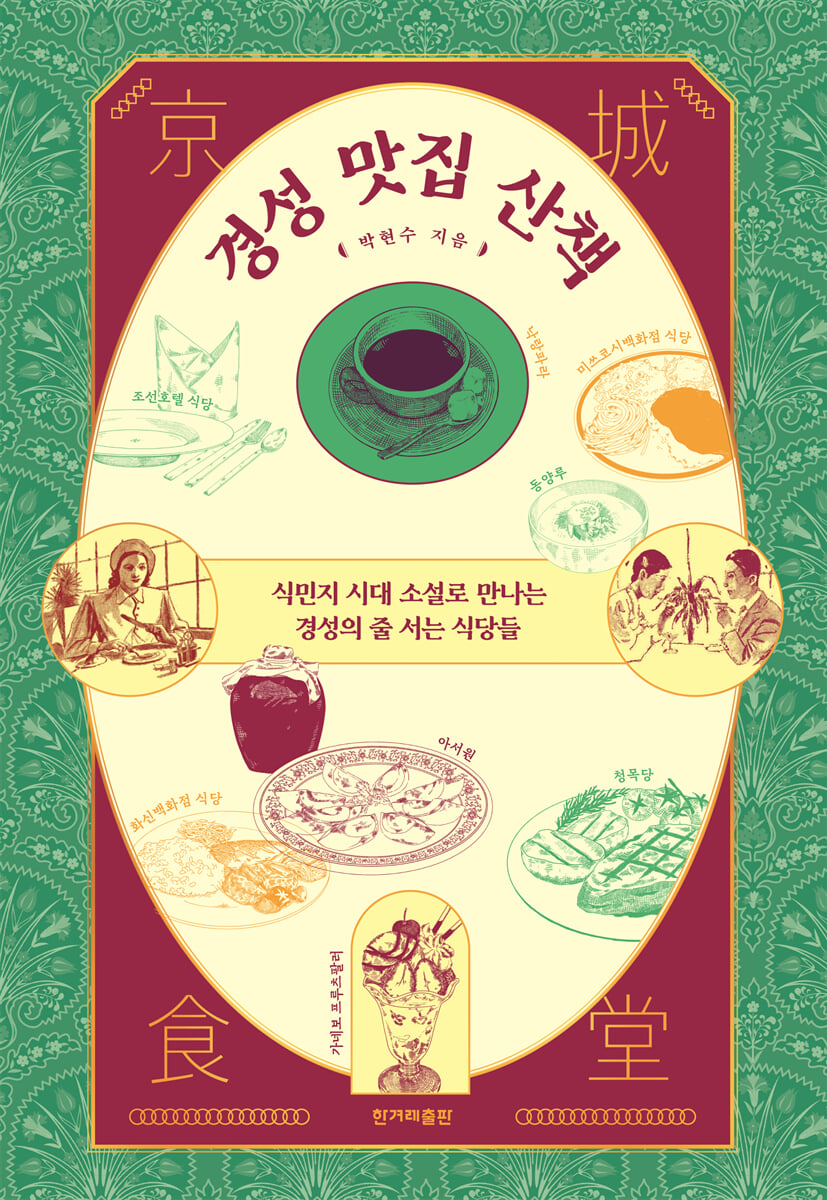
"A Walk Through Gyeongseong's Gourmet Restaurants" is the result of restoring the "Gyeongseong's Gourmet Restaurants," a trace of modernity that clearly existed but has been neglected until now, and the dining scene of colonial Korea in the 1920s and 1930s, through a wealth of data.
Professor Park Hyeon-su, the only 'food literature researcher' in Korea, explored the food culture of colonial Joseon through novels in his previous work, 'The Colonial Table'. This time, he focuses on restaurants that appear in modern and contemporary Korean novels.
The book vividly captures each restaurant's menu, prices, main customer base, unique interior and exterior, and unique system, as well as the splendid history of their birth and demise.
In particular, the enjoyment of reading was enhanced by the use of map illustrations recreating the scenery of the time, numerous photographs, article materials, novel illustrations, and quotes.
The colonial era was the period when the ten restaurants covered in the book emerged and flourished, including the 'Chosun Hotel Restaurant', which first introduced authentic French cuisine; 'Nakrangpara', a cafe frequented by Lee Sang and Park Tae-won and a place for artists to hang out; and 'Imun Restaurant', a seolleongtang restaurant frequented by Kim Du-han that is still in business.
Therefore, this is an effort to view Gyeongseong as a vanguard where colonial Joseon and Western civilization met and clashed, and to focus on and uncover the shadow of colonialism that hung over the food culture of the time.
Through "Gyeongseong Gourmet Stroll," readers will explore various parts of Gyeongseong and vividly experience the excitement and joy Koreans felt when confronted with new landscapes and unfamiliar foods, as well as the burden of life and the yoke of colonialism they had to endure afterwards.
A luxurious table decorated in wine color,
Between the narrow, low tables where flies fly,
The dining scene that decorates the downtown area of Gyeongseong
Chasing the shadow of colonialism that fell over it
Where was the restaurant that brought back memories for author Park Wan-seo and her older brother to celebrate her acceptance to Sookmyung Girls' High School? Where was the café where Lee Sang ordered a cup of coffee and spent a weary afternoon? Of course, Gyeongseong had its share of delicious restaurants.
People wait in line all day to try the popular menu, and the restaurants that are talked about by the rich for their unique interiors and facilities.
But for us in modern times, the combination of the two words ‘Gyeongseong’ and ‘matjib’ feels unfamiliar.
This is because not only are the remaining data scarce, but related research has not been conducted in depth.
"A Walk Through Gyeongseong's Gourmet Restaurants" is the result of restoring the "Gyeongseong's Gourmet Restaurants," a trace of modernity that clearly existed but has been neglected until now, and the dining scene of colonial Korea in the 1920s and 1930s, through a wealth of data.
Professor Park Hyeon-su, the only 'food literature researcher' in Korea, explored the food culture of colonial Joseon through novels in his previous work, 'The Colonial Table'. This time, he focuses on restaurants that appear in modern and contemporary Korean novels.
The book vividly captures each restaurant's menu, prices, main customer base, unique interior and exterior, and unique system, as well as the splendid history of their birth and demise.
In particular, the enjoyment of reading was enhanced by the use of map illustrations recreating the scenery of the time, numerous photographs, article materials, novel illustrations, and quotes.
The colonial era was the period when the ten restaurants covered in the book emerged and flourished, including the 'Chosun Hotel Restaurant', which first introduced authentic French cuisine; 'Nakrangpara', a cafe frequented by Lee Sang and Park Tae-won and a place for artists to hang out; and 'Imun Restaurant', a seolleongtang restaurant frequented by Kim Du-han that is still in business.
Therefore, this is an effort to view Gyeongseong as a vanguard where colonial Joseon and Western civilization met and clashed, and to focus on and uncover the shadow of colonialism that hung over the food culture of the time.
Through "Gyeongseong Gourmet Stroll," readers will explore various parts of Gyeongseong and vividly experience the excitement and joy Koreans felt when confronted with new landscapes and unfamiliar foods, as well as the burden of life and the yoke of colonialism they had to endure afterwards.
- You can preview some of the book's contents.
Preview
index
Part 1
Chapter 1: Cheongmokdang, Joseon's First Western Restaurant
1.
Gyeongseong's hot places
2.
The mystical specialties of Cheongmokdang
Electric drinking glasses and screw-shaped stools / Separate lounge and clock room
3.
Taste strange food
Making a splash with orange liqueur Curaçao / Luxurious or extravagant menus
4.
'Western food' finally arrives in Joseon
Read more: Cheongmokdang has reopened.
Chapter 2: A Place for a Harmonious Family Outing: Mitsukoshi Department Store's Restaurant
1.
The throne of Bonjeong Department Store
2.
Encountering sophisticated new culture
Flashing neon signs and another iconic elevator / Melon and ice cream float
3.
Well, I don't eat 'lunch'
Department store restaurant's signature menu / Mitsukoshi Department Store's regular customers
4.
The shadow of colonialism cast over department stores
The birth of a modern department store / A branch office for Japanese people
Further Reading: Tracing the Traces of Mitsukoshi Department Store
Chapter 3: Gyeongseong's Best Japanese Restaurant, Hwawol
1.
On a good night to whisper love
2.
A space for elegant banquets and entertainment
Rooftop, Irasshaimase! / A quiet eight-room apartment connected to the sponsorship
3.
The most tender house with tempura
Mouth-watering Jeongjong and seasonal menu / A simple and elegant table setting
4.
backroom politics or a hotbed of pleasure
Further Reading: Famous Japanese Restaurants in Gyeongseong
Chapter 4: The Sound of Southern Waves at Kanebo Fruit Parlor
1.
A must-see course for 'Honbura'
2.
Seducing modern boys and girls
Coffee is probably the best in Gyeongseong / SNS, messenger during the colonial era
3.
A fragrant and exotic fruit dessert cafe
Beach umbrellas on the sand / The taste of unforgettable fruit desserts
4.
Kanebo's hidden side hidden in sweetness
Further Reading: Kanebo Service Station and Messenger
Part 2 Jongno
Chapter 5: Gyeongseong's only refined Korean restaurant, Hwashin Department Store Restaurant
1.
The first department store run by a Korean
2.
The extraordinary grandeur of Hwasing Department Store
Chocolate-colored shadows blanket Jongno / An unfamiliar space where sophistication and coolness intertwine
3.
The taste of refined Korean cuisine
You bought a meal ticket, so what else do you choose? / 'Joseon Lunch', which I waited in line for all day
4.
For Koreans? Or to attract Korean guests?
From Hwasin Sanghoe to Hwasin Department Store / A system no different from the department stores in Namchon
Further Reading: Hwasing Department Store and Dong-A Department Store's Giveaway Competition
Chapter 6: Kim Du-han's regular Seolleongtang restaurant, Imun Restaurant
1.
Still open for business!
2.
Soul food of colonial Koreans
Even the smell was attractive / Taste beef at a low price
3.
Unclean and extremely uncomfortable
A narrow table with low chairs / A trash can-like interior with flies flying around
4.
The origin of Seolleongtang, sacred or common
Further Reading: The Two Faces of Seolleongtang
Chapter 7: Gyeongseong Naengmyeon, comparable to Pyongyang Naengmyeon, Dongyangru
1.
Controversial food, naengmyeon
2.
The reeds that were fluttering all over Gyeongseong
Another soul food of Koreans / Dongyangru, a landmark of Jongno 3-dong
3.
Colonial life, its weight engraved
Bicycles that roamed Gyeongseong carrying plates of meat, pork belly, and yellow mustard
4.
From kimchi soup to soy sauce soup, from noodles to cold noodles
Further Reading: The Mouthwatering History of Naengmyeon
Part 3: Janggokcheonjeong and Hwanggeumjeong
Chapter 8: A fairytale world decorated in wine-colored tones, the Chosun Hotel restaurant
1.
The most luxurious restaurant in Joseon
2.
Even though I am the only son of a millionaire
The room rate is only 12 won per day / I'm eating with the Yangkobaegi guys in the 'sun room'
3.
Serving authentic French cuisine
A table filled with ornate chandeliers and seafood / The pride of the Chosun Hotel restaurant, the "Jeongsik" (Korean meal)
4.
Light and Darkness at the Chosun Hotel
Authentic Western cuisine and fusion cuisine / Place names such as the Railway Hotel and Janggokcheonjeong
More to read: Rose Garden Grand Opening
Chapter 9: Nakrangpara, the playground of struggling artists
1.
Something different from a regular teahouse
2.
A hideout for those without any official affiliation
You might greet me as if you were waiting for me / The graffiti left by Lee Sang and the scent of coffee
3.
Drinking hot milk while listening to Volga songs
The menus of Nakrangpara drawn by Lee Sang / Coffee prices, cigarette prices, and gatherings
4.
The shadow of the name 'Nakrangpara'
Further Reading: An Exotic Teahouse Where Artists Gather
Chapter 10: Arthur One, a Chinese restaurant with a large number of luxury cars
1.
Where the founding general meeting of the Korean Communist Party was held
2.
Thriving amid historical upheaval
Duck eggs and rice wine in a separate room / The honor of working in Arthur's kitchen
3.
Razogi, lamb skin, japchae, and beer!
No mala-tang, lamb skewers, or hot pot / A delivery man carrying a wooden crate
4.
The signature menu items are udon and tempura.
More to read: Let's make Dongpa Pork and Palbochae
Chapter 1: Cheongmokdang, Joseon's First Western Restaurant
1.
Gyeongseong's hot places
2.
The mystical specialties of Cheongmokdang
Electric drinking glasses and screw-shaped stools / Separate lounge and clock room
3.
Taste strange food
Making a splash with orange liqueur Curaçao / Luxurious or extravagant menus
4.
'Western food' finally arrives in Joseon
Read more: Cheongmokdang has reopened.
Chapter 2: A Place for a Harmonious Family Outing: Mitsukoshi Department Store's Restaurant
1.
The throne of Bonjeong Department Store
2.
Encountering sophisticated new culture
Flashing neon signs and another iconic elevator / Melon and ice cream float
3.
Well, I don't eat 'lunch'
Department store restaurant's signature menu / Mitsukoshi Department Store's regular customers
4.
The shadow of colonialism cast over department stores
The birth of a modern department store / A branch office for Japanese people
Further Reading: Tracing the Traces of Mitsukoshi Department Store
Chapter 3: Gyeongseong's Best Japanese Restaurant, Hwawol
1.
On a good night to whisper love
2.
A space for elegant banquets and entertainment
Rooftop, Irasshaimase! / A quiet eight-room apartment connected to the sponsorship
3.
The most tender house with tempura
Mouth-watering Jeongjong and seasonal menu / A simple and elegant table setting
4.
backroom politics or a hotbed of pleasure
Further Reading: Famous Japanese Restaurants in Gyeongseong
Chapter 4: The Sound of Southern Waves at Kanebo Fruit Parlor
1.
A must-see course for 'Honbura'
2.
Seducing modern boys and girls
Coffee is probably the best in Gyeongseong / SNS, messenger during the colonial era
3.
A fragrant and exotic fruit dessert cafe
Beach umbrellas on the sand / The taste of unforgettable fruit desserts
4.
Kanebo's hidden side hidden in sweetness
Further Reading: Kanebo Service Station and Messenger
Part 2 Jongno
Chapter 5: Gyeongseong's only refined Korean restaurant, Hwashin Department Store Restaurant
1.
The first department store run by a Korean
2.
The extraordinary grandeur of Hwasing Department Store
Chocolate-colored shadows blanket Jongno / An unfamiliar space where sophistication and coolness intertwine
3.
The taste of refined Korean cuisine
You bought a meal ticket, so what else do you choose? / 'Joseon Lunch', which I waited in line for all day
4.
For Koreans? Or to attract Korean guests?
From Hwasin Sanghoe to Hwasin Department Store / A system no different from the department stores in Namchon
Further Reading: Hwasing Department Store and Dong-A Department Store's Giveaway Competition
Chapter 6: Kim Du-han's regular Seolleongtang restaurant, Imun Restaurant
1.
Still open for business!
2.
Soul food of colonial Koreans
Even the smell was attractive / Taste beef at a low price
3.
Unclean and extremely uncomfortable
A narrow table with low chairs / A trash can-like interior with flies flying around
4.
The origin of Seolleongtang, sacred or common
Further Reading: The Two Faces of Seolleongtang
Chapter 7: Gyeongseong Naengmyeon, comparable to Pyongyang Naengmyeon, Dongyangru
1.
Controversial food, naengmyeon
2.
The reeds that were fluttering all over Gyeongseong
Another soul food of Koreans / Dongyangru, a landmark of Jongno 3-dong
3.
Colonial life, its weight engraved
Bicycles that roamed Gyeongseong carrying plates of meat, pork belly, and yellow mustard
4.
From kimchi soup to soy sauce soup, from noodles to cold noodles
Further Reading: The Mouthwatering History of Naengmyeon
Part 3: Janggokcheonjeong and Hwanggeumjeong
Chapter 8: A fairytale world decorated in wine-colored tones, the Chosun Hotel restaurant
1.
The most luxurious restaurant in Joseon
2.
Even though I am the only son of a millionaire
The room rate is only 12 won per day / I'm eating with the Yangkobaegi guys in the 'sun room'
3.
Serving authentic French cuisine
A table filled with ornate chandeliers and seafood / The pride of the Chosun Hotel restaurant, the "Jeongsik" (Korean meal)
4.
Light and Darkness at the Chosun Hotel
Authentic Western cuisine and fusion cuisine / Place names such as the Railway Hotel and Janggokcheonjeong
More to read: Rose Garden Grand Opening
Chapter 9: Nakrangpara, the playground of struggling artists
1.
Something different from a regular teahouse
2.
A hideout for those without any official affiliation
You might greet me as if you were waiting for me / The graffiti left by Lee Sang and the scent of coffee
3.
Drinking hot milk while listening to Volga songs
The menus of Nakrangpara drawn by Lee Sang / Coffee prices, cigarette prices, and gatherings
4.
The shadow of the name 'Nakrangpara'
Further Reading: An Exotic Teahouse Where Artists Gather
Chapter 10: Arthur One, a Chinese restaurant with a large number of luxury cars
1.
Where the founding general meeting of the Korean Communist Party was held
2.
Thriving amid historical upheaval
Duck eggs and rice wine in a separate room / The honor of working in Arthur's kitchen
3.
Razogi, lamb skin, japchae, and beer!
No mala-tang, lamb skewers, or hot pot / A delivery man carrying a wooden crate
4.
The signature menu items are udon and tempura.
More to read: Let's make Dongpa Pork and Palbochae
Detailed image
.jpg)
Into the book
The Mitsukoshi Department Store restaurant sold various dishes as well as fruits and drinks.
It is said that not only Western and Japanese cuisine, but also coffee was ranked first and second in Gyeongseong.
Customers visiting the restaurant were able to enjoy their meals leisurely while being served by teenage female employees dressed in uniforms.
Jazz and classical music flowed from the restaurant's gramophone, adding an elegant atmosphere to the space.
If we think back to the current department store restaurant district, which feels a bit crowded, we can see that the department store restaurants of that time had a much more upscale atmosphere.
However, among the foods sold here, there were Western food, Japanese food, and even Chinese food, but there was no Korean food.
Although the restaurant was located in a fancy and luxurious department store, the yoke of colonialism was still at work here.
--- p.70
During the colonial era, there was a trend called 'Honbura' for modern boys and girls.
The term "Honbura" comes from "Ginbura", which means "ginza", and refers to the young people of Tokyo at the time who would wander around Ginza Street without any particular reason.
Accordingly, in Gyeongseong, the Japanese name for the main town, 'Honmachi', and 'Bura' were combined to call the act of walking around the main town streets without any special purpose 'Honbura'.
Kanebo Fruit Parlor was also one of the courses in Honbura.
--- p.154
The Kanebo Service Station, which has been renovated into a splendid and sophisticated space at the first block of the main building, appears to be a far cry from the shabby and dark appearance seen above.
This is because the place was filled with only stylish and luxurious clothes and accessories that would seduce modern boys and girls who came out of Honbura.
However, the products displayed there were actually made with great difficulty by female workers in colonial Korea who suffered from poor working conditions and low wages.
No matter how luxurious the product was, it contained the sweat and tears of the workers who had to work 12 hours a day for 30 to 35 cents.
--- p.189
As mentioned earlier, the appearance of the Hwasin Department Store restaurant in the late 1930s also appears in Park Wan-seo's autobiographical novel, "Who Ate Up All Those Singa?"
When Park Wan-seo is accepted into Sookmyung Girls' High School, her older brother takes her to Hwashim Department Store, offering to buy her a meal.
However, it is said that at the time, the restaurant at Hwasing Department Store was so popular that people lined up all day long from the lower floor to eat there.
The author says he remembers the Hwasing Department Store restaurant as a place with a long wait, clean tablecloths, soup on a plate, and two fist-sized buns.
--- p.227
“The driver stopped the car and turned around, saying, ‘Please show your ticket.’
Sunho jumped down and said, “Cold noodles!”
“Hello!” the driver called out gently.
Then, he looked down at Sunho as if to say, “Why are you asking me to pass but I’m only going to eat cold noodles?” Sunho was about to get off the train in a hurry with the thought of eating cold noodles, but he mistakenly said “pass” as “cold noodles.”
Sunho gives up eating the cold noodles due to the shame that is washing over him and just heads home.
The 'pass' that Sunho originally wanted to talk about was something like a press ID, but it allowed him to ride the tram for free and use the upper class car when riding the train.
Sunho was about to say that he would pay the fare with a pass, but ended up shouting out 'cold noodles'.
--- p.304
A look at the average salary Koreans received during the colonial era will give you a better sense of the price.
How much salary would it take to afford a full meal at the Chosun Hotel restaurant? Based on dinner at the Chosun Hotel restaurant, a reporter or banker could eat 20 meals on their salary, while a teacher would lose all their salary after eating about 15 meals.
The salary that a cosmetics salesperson or store clerk earned in a month was only enough to eat three or four meals a day.
If we limit it to food expenses rather than salary, we can see the price more clearly.
(…) In that case, the regular price of a meal at the Chosun Hotel restaurant would be more than the monthly food cost of ordinary people.
--- p.367
It was especially famous as a gathering place for artists called Nakrangpa.
If you enter Nakrangpara, you might run into one or two artists.
Artists who frequently visited this place included painters Gu Bon-woong, Gil Jin-seop, and Kim Yong-jun, who belonged to the 'Mokilhoe' (Mokilhoe), and writers Lee Tae-jun, Park Tae-won, and Lee Sang, who were members of the 'Guinhoe' (Nine People's Society).
It is said that among them, those who did not have decent jobs attended the Nakrang Para almost every day.
Rather than calling it a ‘gathering space’ for artists, it was a space more fitting to call it a ‘spending time space.’
Nakrangpa also served as a haven for artists who had nowhere else to go.
--- p.379
It was also in Nakrangpara that Kim So-woon first met Lee Sang through an introduction by Gu Bon-woong.
Kim So-woon tells an anecdote related to Lee Sang about the price of tea.
Until then, it was customary for one person to pay for everyone's tea, but Lee Sang is said to have stood up after chatting happily and paying only 10 cents for the tea he had consumed.
Kim So-woon sees this as a result of Lee Sang being a visionary who broke away from the customs and practices of the time.
However, rather than being an act of breaking away from customs or bad habits, I think it was an act of courtesy by Lee Sang, who had always suffered from poverty.
--- p.392
Even now, if you go to a Chinese restaurant, radish kimchi is served as a basic side dish.
It may have become so commonplace that we don't even think, "Why is that?"
There is much controversy over the origins of danmuji, so it is difficult to discuss it in detail here, but it is clear that it is inconsistent for Chinese restaurants to serve danmuji, a Japanese dish, as a basic dish.
This may also be related to the process by which Chinese restaurants, which we have been looking into, established themselves in colonial Joseon.
It is said that not only Western and Japanese cuisine, but also coffee was ranked first and second in Gyeongseong.
Customers visiting the restaurant were able to enjoy their meals leisurely while being served by teenage female employees dressed in uniforms.
Jazz and classical music flowed from the restaurant's gramophone, adding an elegant atmosphere to the space.
If we think back to the current department store restaurant district, which feels a bit crowded, we can see that the department store restaurants of that time had a much more upscale atmosphere.
However, among the foods sold here, there were Western food, Japanese food, and even Chinese food, but there was no Korean food.
Although the restaurant was located in a fancy and luxurious department store, the yoke of colonialism was still at work here.
--- p.70
During the colonial era, there was a trend called 'Honbura' for modern boys and girls.
The term "Honbura" comes from "Ginbura", which means "ginza", and refers to the young people of Tokyo at the time who would wander around Ginza Street without any particular reason.
Accordingly, in Gyeongseong, the Japanese name for the main town, 'Honmachi', and 'Bura' were combined to call the act of walking around the main town streets without any special purpose 'Honbura'.
Kanebo Fruit Parlor was also one of the courses in Honbura.
--- p.154
The Kanebo Service Station, which has been renovated into a splendid and sophisticated space at the first block of the main building, appears to be a far cry from the shabby and dark appearance seen above.
This is because the place was filled with only stylish and luxurious clothes and accessories that would seduce modern boys and girls who came out of Honbura.
However, the products displayed there were actually made with great difficulty by female workers in colonial Korea who suffered from poor working conditions and low wages.
No matter how luxurious the product was, it contained the sweat and tears of the workers who had to work 12 hours a day for 30 to 35 cents.
--- p.189
As mentioned earlier, the appearance of the Hwasin Department Store restaurant in the late 1930s also appears in Park Wan-seo's autobiographical novel, "Who Ate Up All Those Singa?"
When Park Wan-seo is accepted into Sookmyung Girls' High School, her older brother takes her to Hwashim Department Store, offering to buy her a meal.
However, it is said that at the time, the restaurant at Hwasing Department Store was so popular that people lined up all day long from the lower floor to eat there.
The author says he remembers the Hwasing Department Store restaurant as a place with a long wait, clean tablecloths, soup on a plate, and two fist-sized buns.
--- p.227
“The driver stopped the car and turned around, saying, ‘Please show your ticket.’
Sunho jumped down and said, “Cold noodles!”
“Hello!” the driver called out gently.
Then, he looked down at Sunho as if to say, “Why are you asking me to pass but I’m only going to eat cold noodles?” Sunho was about to get off the train in a hurry with the thought of eating cold noodles, but he mistakenly said “pass” as “cold noodles.”
Sunho gives up eating the cold noodles due to the shame that is washing over him and just heads home.
The 'pass' that Sunho originally wanted to talk about was something like a press ID, but it allowed him to ride the tram for free and use the upper class car when riding the train.
Sunho was about to say that he would pay the fare with a pass, but ended up shouting out 'cold noodles'.
--- p.304
A look at the average salary Koreans received during the colonial era will give you a better sense of the price.
How much salary would it take to afford a full meal at the Chosun Hotel restaurant? Based on dinner at the Chosun Hotel restaurant, a reporter or banker could eat 20 meals on their salary, while a teacher would lose all their salary after eating about 15 meals.
The salary that a cosmetics salesperson or store clerk earned in a month was only enough to eat three or four meals a day.
If we limit it to food expenses rather than salary, we can see the price more clearly.
(…) In that case, the regular price of a meal at the Chosun Hotel restaurant would be more than the monthly food cost of ordinary people.
--- p.367
It was especially famous as a gathering place for artists called Nakrangpa.
If you enter Nakrangpara, you might run into one or two artists.
Artists who frequently visited this place included painters Gu Bon-woong, Gil Jin-seop, and Kim Yong-jun, who belonged to the 'Mokilhoe' (Mokilhoe), and writers Lee Tae-jun, Park Tae-won, and Lee Sang, who were members of the 'Guinhoe' (Nine People's Society).
It is said that among them, those who did not have decent jobs attended the Nakrang Para almost every day.
Rather than calling it a ‘gathering space’ for artists, it was a space more fitting to call it a ‘spending time space.’
Nakrangpa also served as a haven for artists who had nowhere else to go.
--- p.379
It was also in Nakrangpara that Kim So-woon first met Lee Sang through an introduction by Gu Bon-woong.
Kim So-woon tells an anecdote related to Lee Sang about the price of tea.
Until then, it was customary for one person to pay for everyone's tea, but Lee Sang is said to have stood up after chatting happily and paying only 10 cents for the tea he had consumed.
Kim So-woon sees this as a result of Lee Sang being a visionary who broke away from the customs and practices of the time.
However, rather than being an act of breaking away from customs or bad habits, I think it was an act of courtesy by Lee Sang, who had always suffered from poverty.
--- p.392
Even now, if you go to a Chinese restaurant, radish kimchi is served as a basic side dish.
It may have become so commonplace that we don't even think, "Why is that?"
There is much controversy over the origins of danmuji, so it is difficult to discuss it in detail here, but it is clear that it is inconsistent for Chinese restaurants to serve danmuji, a Japanese dish, as a basic dish.
This may also be related to the process by which Chinese restaurants, which we have been looking into, established themselves in colonial Joseon.
--- p.457
Publisher's Review
A neon sign shaped like a wine glass flashes, and a chocolate-scented shadow falls…
In the middle of the splendid Gyeongseong street, where you arrive following the novel
Sook-chae, the protagonist of Lee Sun-hee's novel "Women's Command," smells the scent of chocolate coming from the giant shadow that covers the Jongno intersection.
This expresses the sense of oppression and sophistication felt at the Hwashim Department Store, which opened in a six-story building in Jongno in 1937, and provides a glimpse into the thoughts of Koreans who strolled through Jongno at the time.
In this way, “Gyeongseong Gourmet Stroll” uses modern and contemporary Korean novels such as “A Day in the Life of Novelist Gubo” and “Three Generations” to vividly examine Gyeongseong’s gourmet restaurants and the food culture of the time.
Novels are the best source of information about the lifestyles and ways of thinking of the people of the time they were written, and they are the most effective tool for portraying the culture of the time in microscopic detail.
The reactions of people trying unfamiliar food for the first time, the conversations customers had in the restaurant, the restaurant's main customer base—these interesting and specific cultural history unfolds vividly before your eyes, something that would have been difficult to portray without the novel's sources.
For example, Yeom Sang-seop's masterpiece, "Three Generations," vividly depicts the atmosphere of "Cheongmokdang," the first Western restaurant in Joseon.
The suspenseful drinking spectacle of three women is interesting in itself, but at the same time, it showcases the various menu items sold at Cheongmokdang, including the orange-based liquor 'Curaçao'.
Also, "Phoenix," which is set in the Chosun Hotel and its restaurant, mentions that it would have cost 45 million won in today's money to live there for a month, revealing that the main customers who visited the hotel were a small number of very wealthy Chosun people and foreigners who had been residing in Korea.
Another novel, “The Daily Life of Novelist Gubo,” features the teahouse “Nakrangpara,” which was a regular haunt of Lee Sang and Park Tae-won and was known as a place for artists to pass time.
Through Mr. Gubo's description, you can feel the unique atmosphere and taste of coffee that flowed through Nakrangpara.
In this way, the history of Gyeongseong, which had been inferred only through fragmentary data, is finally brought to life before us through a story.
This is a unique achievement of the author, who has been exploring Korean food culture through literature for a long time.
“Maedang took a big sip of his glass and drank it down.
“The Joseon Dynasty’s female leaders knew about Brandy and Whiskey, but this was the first time they had seen a bottle of liquor shaped like a giraffe’s neck, so they drank it out of curiosity (…) From this, Maedang and Gyeongae began to drink together as two liquor merchants made a bet, giving and receiving from each other from the time they were kings.” (Page 44, quote from “Three Generations”)
“It’s 900 won a month, so it’s 1,000 won, which is 100 won less.
“Even if Gye-hoon is the only son of a so-called millionaire who has not been to Joseon for a long time, it is questionable how long he will continue to live in this expensive hotel, rubbing shoulders with the punks.” (Page 350, quote from “Phoenix”)
A love letter sent via messenger, ice cream poured into soda water…
A peek into strange foods and unique systems
In front of the vending machine on the first floor of a department store, a child is begging his father to buy him something, and the escalator is constantly carrying customers.
Although this is a common sight in department stores these days, the description above is about the 'Hwashin Department Store' during the colonial era.
Among the systems and foods that we are familiar with today, there are some that have been passed down from the colonial era.
The current practice of displaying food samples at the entrance of department store restaurants, selecting a menu, paying, and entering was not only the case in Gyeongseong's department stores, but also in famous cafes such as 'Kanebo Fruit Parlor'.
Also, the Western restaurant 'Cheongmokdang' operated a luggage storage room and waiting room, and the Chinese restaurant 'Arthurwon' delivered Jjajangmyeon in a wooden box.
In this way, examining Gyeongseong's famous restaurants is also an opportunity to look back at the roots and history of Korea's current dining culture.
Of course, there are also unique landscapes.
Kim Mal-bong's novel "The Rose" depicts a family eating at the Mitsukoshi Department Store restaurant.
They order ice cream and soda together and mix the two. Although the 'ice cream float', which is made by dropping ice cream into soda, is unfamiliar now, it was a common dessert at the time.
Also unique is the existence of 'Messenger', which served as a social network service during the colonial era.
Messengers were a profession that delivered letters and goods for a fixed amount of money, and they were always present at famous restaurants.
It was through them that the main character of "Hwasangbo", Kyeong-ah, sent a message to the man she loved, asking him to come to "Kanebo Fruit Parlor."
In this way, the book is filled with stories that are familiar and interesting, or unfamiliar and interesting, centered around the best restaurants in Gyeongseong.
“Kyung-ae mixes ice cream into ‘soda-su’ and drinks it.
Mr. Cho also poured ice cream into the soda water, and the soda water flowed out and soaked the tablecloth.
(…) The ‘soda-water’ that Jeong-sun took a sip of did not go straight down her throat, but rather rose up a little through her nostrils.
Because of that, tears well up in Jeong-sun's eyes and she feels like sneezing." (Page 81, quote from "The Rose of Sharon")
““Mr. Jang doesn’t understand my heart.
I'd like to meet you and give you a detailed explanation, so I'm sorry, but please come here.
“From Kanebo, Kyung-ah, come up.” I got some paper and an envelope from the store, wrote a short letter, and sent it to Si-young by messenger.” (Page 165, quote from “Hwasangbo”)
The shadow of colonialism hidden behind the splendid and fragrant table,
Notice the table engraved with the weight of life.
The gorgeous restaurants and mouth-watering dishes featured in the book.
In reality, only a very small number of Koreans were able to experience this.
This book focuses on the harsh colonial life and its yoke hidden behind tables decorated in wine-colored colors and filled with delicacies from all over the world.
Kanebo Fruit Parlor, a fruit dessert cafe that was a hot place for modern girls and boys, decorated its interior with partitioned seating called "Romance Box" to attract couples, and its exterior was decorated like a tropical beach that young people longed for, gaining explosive popularity.
But behind that sweet scent, there was something shabby and dark.
Kanebo Fruit Parlor was a cafe opened by the Kanebo Spinning Company, and was a leading restaurant run by a leading company.
Korean female workers at the spinning mill operated by Kanebo suffered from poor working conditions and low wages, and when the war system began, the factory was transformed into a military factory and produced military goods.
Another example is the 'Chosun Hotel Restaurant', which was famous for its splendid interior and luxurious course meals, but the price of one dinner was close to the monthly food expenses of poor people.
The name of 'Nakrangpara', which was considered an artists' salon, also has the origin of the war's justification of 'Greater East Asia Co-Prosperity' and Japan's desire for conquest.
In this way, this book does not stop at describing the interesting food culture and restaurant landscape of the time, but also faithfully examines the shadows and scars of colonialism that fell there.
The realistic dining tables of colonial Koreans are similar to those of the Seolleongtang restaurant ‘Imun Restaurant’ discussed in Chapter 6 and the Naengmyeon restaurant ‘Dongyangru’ discussed in Chapter 7.
Seolleongtang and naengmyeon were inexpensive foods enjoyed by ordinary people.
However, 'Imun Restaurant' was also famous for its trash can-like interior and narrow, low, and uncomfortable tables.
Even the Seolleongtang sold here was said to have been popular despite its strong smell of cow dung.
Through this, we can get a glimpse of the weight of the lives of the Joseon people of that time, which was engraved on dirty and uncomfortable tables.
The unique charm of seolleongtang was its low price, made with cheap beef bones, unclean tables, and old utensils, and the taste of meat that was not commonly found.
For the Korean people, for whom starvation was a daily occurrence, the smell of cow dung was not a big problem.
Among the ten restaurants, 'Imun Restaurant' is the only one still in business. It may not be classy or sophisticated, but it is the only one that has captured the hearts of the common people and has survived until now. It is no mere coincidence.
“The Kanebo Service Station, which has been renovated into a splendid and sophisticated space in the first section of the main building, appears to be a far cry from the shabby and dark appearance seen above.
This is because the place was filled with only stylish and luxurious clothes and accessories that would seduce modern boys and girls who came out of Honbura.
However, the products displayed there were actually the sweat and tears of the female workers of colonial Korea who suffered from poor working conditions and low wages.” (p. 188)
“The cement floor is thoroughly dirty, the floor looks like it has never been mopped, and the trash is overflowing, so it is more than enough to be a large trash can.
“Thousands of swarms of flies greet the hand of their master, and in the rooms where the doors are open, three-year-old rags hang black and tattered, and rags swell with energy and sniffle.” (Pages 271-272, quoted from “The Passion of Gold”)
As you follow the walking course suggested in the book and explore the bustling streets of Gyeongseong at the time, such as 'Bonjeong', 'Jongno', 'Janggokcheonjeong', and 'Hwanggeumjeong', you will realize that the scenery of the ten restaurants and the faces of the customers who visited them are by no means identical.
The most realistic way to explore and restore Gyeongseong's culinary scene would be to walk between the clean and splendid tables and the dirty and shabby tables and examine the relationship between the two.
In the middle of the splendid Gyeongseong street, where you arrive following the novel
Sook-chae, the protagonist of Lee Sun-hee's novel "Women's Command," smells the scent of chocolate coming from the giant shadow that covers the Jongno intersection.
This expresses the sense of oppression and sophistication felt at the Hwashim Department Store, which opened in a six-story building in Jongno in 1937, and provides a glimpse into the thoughts of Koreans who strolled through Jongno at the time.
In this way, “Gyeongseong Gourmet Stroll” uses modern and contemporary Korean novels such as “A Day in the Life of Novelist Gubo” and “Three Generations” to vividly examine Gyeongseong’s gourmet restaurants and the food culture of the time.
Novels are the best source of information about the lifestyles and ways of thinking of the people of the time they were written, and they are the most effective tool for portraying the culture of the time in microscopic detail.
The reactions of people trying unfamiliar food for the first time, the conversations customers had in the restaurant, the restaurant's main customer base—these interesting and specific cultural history unfolds vividly before your eyes, something that would have been difficult to portray without the novel's sources.
For example, Yeom Sang-seop's masterpiece, "Three Generations," vividly depicts the atmosphere of "Cheongmokdang," the first Western restaurant in Joseon.
The suspenseful drinking spectacle of three women is interesting in itself, but at the same time, it showcases the various menu items sold at Cheongmokdang, including the orange-based liquor 'Curaçao'.
Also, "Phoenix," which is set in the Chosun Hotel and its restaurant, mentions that it would have cost 45 million won in today's money to live there for a month, revealing that the main customers who visited the hotel were a small number of very wealthy Chosun people and foreigners who had been residing in Korea.
Another novel, “The Daily Life of Novelist Gubo,” features the teahouse “Nakrangpara,” which was a regular haunt of Lee Sang and Park Tae-won and was known as a place for artists to pass time.
Through Mr. Gubo's description, you can feel the unique atmosphere and taste of coffee that flowed through Nakrangpara.
In this way, the history of Gyeongseong, which had been inferred only through fragmentary data, is finally brought to life before us through a story.
This is a unique achievement of the author, who has been exploring Korean food culture through literature for a long time.
“Maedang took a big sip of his glass and drank it down.
“The Joseon Dynasty’s female leaders knew about Brandy and Whiskey, but this was the first time they had seen a bottle of liquor shaped like a giraffe’s neck, so they drank it out of curiosity (…) From this, Maedang and Gyeongae began to drink together as two liquor merchants made a bet, giving and receiving from each other from the time they were kings.” (Page 44, quote from “Three Generations”)
“It’s 900 won a month, so it’s 1,000 won, which is 100 won less.
“Even if Gye-hoon is the only son of a so-called millionaire who has not been to Joseon for a long time, it is questionable how long he will continue to live in this expensive hotel, rubbing shoulders with the punks.” (Page 350, quote from “Phoenix”)
A love letter sent via messenger, ice cream poured into soda water…
A peek into strange foods and unique systems
In front of the vending machine on the first floor of a department store, a child is begging his father to buy him something, and the escalator is constantly carrying customers.
Although this is a common sight in department stores these days, the description above is about the 'Hwashin Department Store' during the colonial era.
Among the systems and foods that we are familiar with today, there are some that have been passed down from the colonial era.
The current practice of displaying food samples at the entrance of department store restaurants, selecting a menu, paying, and entering was not only the case in Gyeongseong's department stores, but also in famous cafes such as 'Kanebo Fruit Parlor'.
Also, the Western restaurant 'Cheongmokdang' operated a luggage storage room and waiting room, and the Chinese restaurant 'Arthurwon' delivered Jjajangmyeon in a wooden box.
In this way, examining Gyeongseong's famous restaurants is also an opportunity to look back at the roots and history of Korea's current dining culture.
Of course, there are also unique landscapes.
Kim Mal-bong's novel "The Rose" depicts a family eating at the Mitsukoshi Department Store restaurant.
They order ice cream and soda together and mix the two. Although the 'ice cream float', which is made by dropping ice cream into soda, is unfamiliar now, it was a common dessert at the time.
Also unique is the existence of 'Messenger', which served as a social network service during the colonial era.
Messengers were a profession that delivered letters and goods for a fixed amount of money, and they were always present at famous restaurants.
It was through them that the main character of "Hwasangbo", Kyeong-ah, sent a message to the man she loved, asking him to come to "Kanebo Fruit Parlor."
In this way, the book is filled with stories that are familiar and interesting, or unfamiliar and interesting, centered around the best restaurants in Gyeongseong.
“Kyung-ae mixes ice cream into ‘soda-su’ and drinks it.
Mr. Cho also poured ice cream into the soda water, and the soda water flowed out and soaked the tablecloth.
(…) The ‘soda-water’ that Jeong-sun took a sip of did not go straight down her throat, but rather rose up a little through her nostrils.
Because of that, tears well up in Jeong-sun's eyes and she feels like sneezing." (Page 81, quote from "The Rose of Sharon")
““Mr. Jang doesn’t understand my heart.
I'd like to meet you and give you a detailed explanation, so I'm sorry, but please come here.
“From Kanebo, Kyung-ah, come up.” I got some paper and an envelope from the store, wrote a short letter, and sent it to Si-young by messenger.” (Page 165, quote from “Hwasangbo”)
The shadow of colonialism hidden behind the splendid and fragrant table,
Notice the table engraved with the weight of life.
The gorgeous restaurants and mouth-watering dishes featured in the book.
In reality, only a very small number of Koreans were able to experience this.
This book focuses on the harsh colonial life and its yoke hidden behind tables decorated in wine-colored colors and filled with delicacies from all over the world.
Kanebo Fruit Parlor, a fruit dessert cafe that was a hot place for modern girls and boys, decorated its interior with partitioned seating called "Romance Box" to attract couples, and its exterior was decorated like a tropical beach that young people longed for, gaining explosive popularity.
But behind that sweet scent, there was something shabby and dark.
Kanebo Fruit Parlor was a cafe opened by the Kanebo Spinning Company, and was a leading restaurant run by a leading company.
Korean female workers at the spinning mill operated by Kanebo suffered from poor working conditions and low wages, and when the war system began, the factory was transformed into a military factory and produced military goods.
Another example is the 'Chosun Hotel Restaurant', which was famous for its splendid interior and luxurious course meals, but the price of one dinner was close to the monthly food expenses of poor people.
The name of 'Nakrangpara', which was considered an artists' salon, also has the origin of the war's justification of 'Greater East Asia Co-Prosperity' and Japan's desire for conquest.
In this way, this book does not stop at describing the interesting food culture and restaurant landscape of the time, but also faithfully examines the shadows and scars of colonialism that fell there.
The realistic dining tables of colonial Koreans are similar to those of the Seolleongtang restaurant ‘Imun Restaurant’ discussed in Chapter 6 and the Naengmyeon restaurant ‘Dongyangru’ discussed in Chapter 7.
Seolleongtang and naengmyeon were inexpensive foods enjoyed by ordinary people.
However, 'Imun Restaurant' was also famous for its trash can-like interior and narrow, low, and uncomfortable tables.
Even the Seolleongtang sold here was said to have been popular despite its strong smell of cow dung.
Through this, we can get a glimpse of the weight of the lives of the Joseon people of that time, which was engraved on dirty and uncomfortable tables.
The unique charm of seolleongtang was its low price, made with cheap beef bones, unclean tables, and old utensils, and the taste of meat that was not commonly found.
For the Korean people, for whom starvation was a daily occurrence, the smell of cow dung was not a big problem.
Among the ten restaurants, 'Imun Restaurant' is the only one still in business. It may not be classy or sophisticated, but it is the only one that has captured the hearts of the common people and has survived until now. It is no mere coincidence.
“The Kanebo Service Station, which has been renovated into a splendid and sophisticated space in the first section of the main building, appears to be a far cry from the shabby and dark appearance seen above.
This is because the place was filled with only stylish and luxurious clothes and accessories that would seduce modern boys and girls who came out of Honbura.
However, the products displayed there were actually the sweat and tears of the female workers of colonial Korea who suffered from poor working conditions and low wages.” (p. 188)
“The cement floor is thoroughly dirty, the floor looks like it has never been mopped, and the trash is overflowing, so it is more than enough to be a large trash can.
“Thousands of swarms of flies greet the hand of their master, and in the rooms where the doors are open, three-year-old rags hang black and tattered, and rags swell with energy and sniffle.” (Pages 271-272, quoted from “The Passion of Gold”)
As you follow the walking course suggested in the book and explore the bustling streets of Gyeongseong at the time, such as 'Bonjeong', 'Jongno', 'Janggokcheonjeong', and 'Hwanggeumjeong', you will realize that the scenery of the ten restaurants and the faces of the customers who visited them are by no means identical.
The most realistic way to explore and restore Gyeongseong's culinary scene would be to walk between the clean and splendid tables and the dirty and shabby tables and examine the relationship between the two.
GOODS SPECIFICS
- Date of issue: September 10, 2023
- Page count, weight, size: 468 pages | 706g | 152*220*28mm
- ISBN13: 9791160405675
You may also like
카테고리
korean


korean

![GQ KOREA Mark (Monthly): December [2025]](http://librairie.coreenne.fr/cdn/shop/files/8ef265dbbfbf186523ed75ba7319009d.jpg?v=1765340328&width=3840)


