

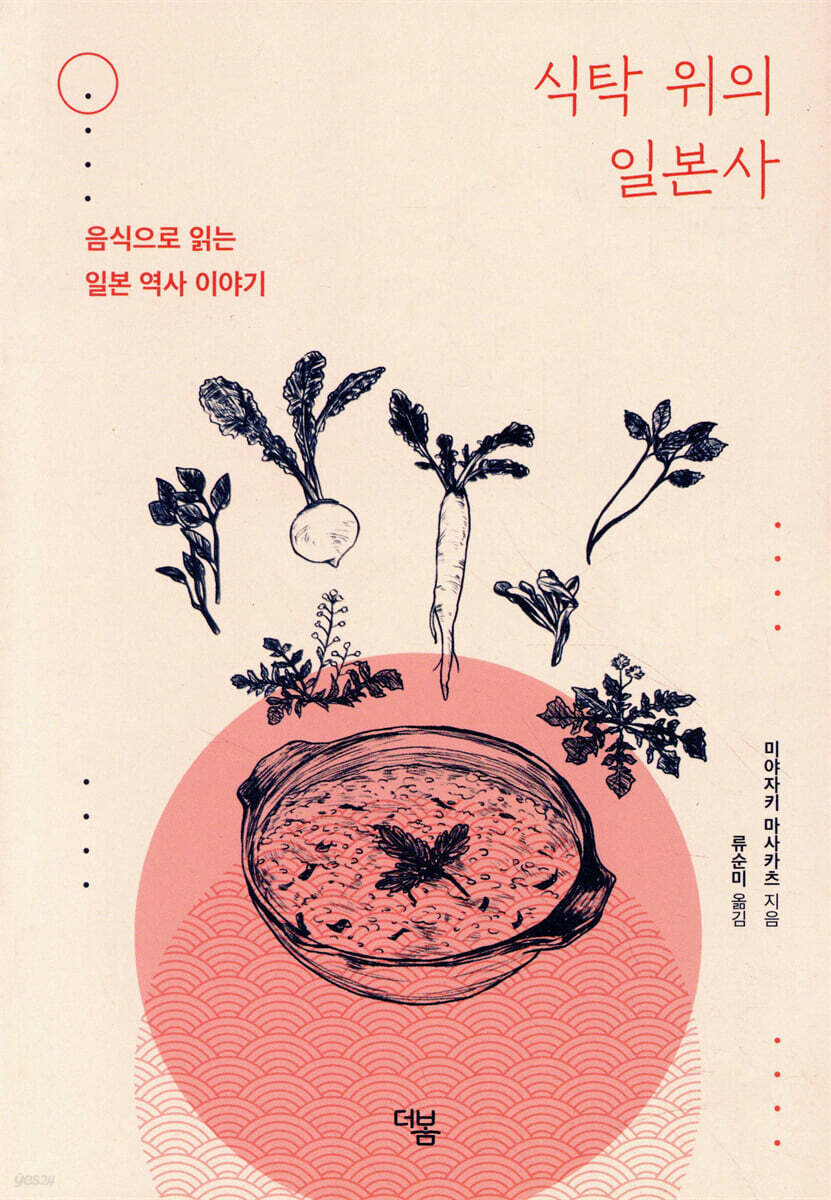
Japanese history on the dining table
 |
Description
Book Introduction
Learn about sushi, udon, miso soup, and sukiyaki.
An exciting story about the food and history of Japan, a country that is both close and far away!
Kentaku and meatballs, natto and dango and udon, buckwheat and konjac and sardines and burdock, kaiseki cuisine and dim sum, miso soup and kelp and dried bonito, okonomiyaki and manju, the great leap forward of sake, tempura and kanmodoki, the first bonito and saury from Meguro, Edo's confectionery culture and Kashiwamochi, enlightenment and sukiyaki and gyu-nabe, curry rice loved by the Japanese, gyoza brought by the Second Sino-Japanese War... ...and so on, useful stories about Japanese ingredients and cuisine that will make you say "Wow! Is that real?" without realizing it.
It explains the history and evolution of various Japanese foods that are more delicious and cool when you know about them in an easy and fun way, so as you read, you will naturally transform from an 'otaku' to an expert.
An exciting story about the food and history of Japan, a country that is both close and far away!
Kentaku and meatballs, natto and dango and udon, buckwheat and konjac and sardines and burdock, kaiseki cuisine and dim sum, miso soup and kelp and dried bonito, okonomiyaki and manju, the great leap forward of sake, tempura and kanmodoki, the first bonito and saury from Meguro, Edo's confectionery culture and Kashiwamochi, enlightenment and sukiyaki and gyu-nabe, curry rice loved by the Japanese, gyoza brought by the Second Sino-Japanese War... ...and so on, useful stories about Japanese ingredients and cuisine that will make you say "Wow! Is that real?" without realizing it.
It explains the history and evolution of various Japanese foods that are more delicious and cool when you know about them in an easy and fun way, so as you read, you will naturally transform from an 'otaku' to an expert.
- You can preview some of the book's contents.
Preview
index
Entering _5
Chapter 1: A Rich Food Culture Beginning in Ancient Times _11
1.
Seasonal Ingredients: A Gift from Nature - 13
2.
The Beginning of Rice Culture_19
3.
Porridge, Red Bean Rice, and Sushi _24
4.
Precious Salt _31
5.
Sea bream, salmon, and silver carp _34
Chapter 2: Food Culture Transmitted from the Continent _41
1.
Jian Tang Dynasty and Food Culture _43
2.
The Origin of Modern Chopsticks _47
3.
The Taste of Dairy Products: The Taste of Nomads _52
4.
Natto, Rice Cakes, and Udon _55
5.
The Unexpected Introduction of Sugar, Broad Beans, and Lotus Root _64
6.
From fish sauce to soybean paste _72
7.
Buckwheat, Konjac, Mackerel, and Burdock _78
Chapter 3: The Revival of Food Culture: The Muromachi Period _83
1.
Changes in Food Culture during the Muromachi Period _85
2.
New Food Culture and the Tea Ceremony _92
3.
Kaiseki Cuisine and Dim Sum _99
4.
Tofu in full swing _103
5.
Miso Soup and Sesame Seeds _109
6.
Soy sauce, kelp, and dried bonito flakes _114
7.
Okonomiyaki and Manju, Rooted in Dim Sum _120
8.
The Origin of Yanggaeng and Uiro_125
9.
The Great Leap Forward of Sake _129
Chapter 4: Food Cultures Brought to You by Portugal and the Netherlands _133
1.
Food Culture Brought by the Portuguese _135
2.
Pepper and Chili Peppers Across the Sea _141
3.
Sugar, a Luxury Good _147
4.
The Origin of Bread and Biscuits _151
5.
Tempura and Ganmodoki _154
6.
How to Eat Cucumbers and Pumpkins _160
7.
Foods Called 'Oranda' _165
Chapter 5: Food Culture Created in the Edo Period _169
1.
The Perfection of Japanese Cuisine and Edo and Osaka _171
2.
Wealthy Merchants and Kaiseki Cuisine, Makunouchi Bento Box _177
3.
Edo Commoners' Fast Food _181
4.
Asakusa Kimchi and Tsukudani, a Nationalized Food _189
5.
From Shinko to Danmuji _194
6.
Watermelon, kidney beans, sweet potatoes _199
7.
First Tuna and Mackerel from Meguro _207
8.
Edo's Sweets Culture: Kashiwamochi, Kintsuba, and Daifuku _213
Chapter 6: The Birth of "Style" and the Globalized Table _221
1.
Japanese-style 'Western Cuisine' _223
2.
Civilization and Sukiyaki, Gyunabe _227
3.
Curry Rice Loved by the Japanese _232
4.
The Taste of First Love is from Mongolia _236
5.
Sausages brought by German prisoners of war during World War I _239
6.
Dumplings from the Second Sino-Japanese War _243
7.
Salad and lettuce supplied by the US military _247
8.
Hamburger Steak and the Globalization of the 'Hamburger' _251
9.
Table and Doraemon's Pocket _257
References _262
Chapter 1: A Rich Food Culture Beginning in Ancient Times _11
1.
Seasonal Ingredients: A Gift from Nature - 13
2.
The Beginning of Rice Culture_19
3.
Porridge, Red Bean Rice, and Sushi _24
4.
Precious Salt _31
5.
Sea bream, salmon, and silver carp _34
Chapter 2: Food Culture Transmitted from the Continent _41
1.
Jian Tang Dynasty and Food Culture _43
2.
The Origin of Modern Chopsticks _47
3.
The Taste of Dairy Products: The Taste of Nomads _52
4.
Natto, Rice Cakes, and Udon _55
5.
The Unexpected Introduction of Sugar, Broad Beans, and Lotus Root _64
6.
From fish sauce to soybean paste _72
7.
Buckwheat, Konjac, Mackerel, and Burdock _78
Chapter 3: The Revival of Food Culture: The Muromachi Period _83
1.
Changes in Food Culture during the Muromachi Period _85
2.
New Food Culture and the Tea Ceremony _92
3.
Kaiseki Cuisine and Dim Sum _99
4.
Tofu in full swing _103
5.
Miso Soup and Sesame Seeds _109
6.
Soy sauce, kelp, and dried bonito flakes _114
7.
Okonomiyaki and Manju, Rooted in Dim Sum _120
8.
The Origin of Yanggaeng and Uiro_125
9.
The Great Leap Forward of Sake _129
Chapter 4: Food Cultures Brought to You by Portugal and the Netherlands _133
1.
Food Culture Brought by the Portuguese _135
2.
Pepper and Chili Peppers Across the Sea _141
3.
Sugar, a Luxury Good _147
4.
The Origin of Bread and Biscuits _151
5.
Tempura and Ganmodoki _154
6.
How to Eat Cucumbers and Pumpkins _160
7.
Foods Called 'Oranda' _165
Chapter 5: Food Culture Created in the Edo Period _169
1.
The Perfection of Japanese Cuisine and Edo and Osaka _171
2.
Wealthy Merchants and Kaiseki Cuisine, Makunouchi Bento Box _177
3.
Edo Commoners' Fast Food _181
4.
Asakusa Kimchi and Tsukudani, a Nationalized Food _189
5.
From Shinko to Danmuji _194
6.
Watermelon, kidney beans, sweet potatoes _199
7.
First Tuna and Mackerel from Meguro _207
8.
Edo's Sweets Culture: Kashiwamochi, Kintsuba, and Daifuku _213
Chapter 6: The Birth of "Style" and the Globalized Table _221
1.
Japanese-style 'Western Cuisine' _223
2.
Civilization and Sukiyaki, Gyunabe _227
3.
Curry Rice Loved by the Japanese _232
4.
The Taste of First Love is from Mongolia _236
5.
Sausages brought by German prisoners of war during World War I _239
6.
Dumplings from the Second Sino-Japanese War _243
7.
Salad and lettuce supplied by the US military _247
8.
Hamburger Steak and the Globalization of the 'Hamburger' _251
9.
Table and Doraemon's Pocket _257
References _262
Into the book
The nature of the Japanese archipelago can be broadly divided into the oak zone in the lowlands of Kyushu and central Kanto, and the beech zone in the mountainous regions of the central Kanto region and Hokkaido.
Later, when rice was introduced, the former became the 'country of Mizuho (瑞?, fat rice ears)'.
The latter has been a field farm for a long time.
Meanwhile, fishing took place in areas near the sea or rivers, and hunting of animals such as wild boar and deer took place in mountainous areas.
The diversity of East and West and high and low gave birth to a complex world of 'food' in the Japanese archipelago.
--- p.14
Sushi is aged sushi made by placing fish or meat between salt and rice, fermenting the rice, and eating it after the meat or meat has aged to a white color.
Since the purpose was to preserve fish and meat, they did not eat rice and only ate aged meat and fish.
--- p.29
Buddhism greatly regressed the meat-eating culture of the Japanese archipelago.
Emperor Tenmu (673-686) issued an edict prohibiting the killing of animals, strictly prohibiting the consumption of meat such as cows, horses, monkeys, and chickens.
Since then, successive emperors have continued the 'meat-eating ban'.
--- p.44
When people say natto, they usually mean 'Itohikinatto'.
Itohiki Natto is said to have originated during the Later Three Years' War (a war between the Mutsu and Dewa provinces of the Tohoku region during the Heian period in the 11th century to control the region). While on his way to Oshu, the warlord Minamoto Yoshiie was staying at the Hitara (Ibaraki Prefecture) camp when he discovered boiled soybeans that had been left on straw for horse feed, hanging like threads and fermenting.
As such, this Itohikinatto is a food that was created by chance in everyday life.
--- p.56
When Silla, allied with the Tang Dynasty on the Korean Peninsula, destroyed Baekje in 660, many Baekje people migrated to the Japanese archipelago.
It is speculated that there may have been many craftsmen among the immigrants who made soybean paste.
So, a long time ago in Japan, doenjang was also called ‘Goryeojang (高麗醬)’.
Doenjang is called 'miso' in Japanese, and there is a theory that it originated from Korean.
--- p.76
The tea ceremony not only popularized the sound of tea, but also pioneered a new category of food called kaiseki cuisine. Kaiseki cuisine was originally a simple dish consisting of one soup and two or three side dishes, and the table was served on a simple tray called an oshiki without legs.
However, as kaiseki cuisine was integrated with the tea ceremony, it became a cuisine that was not only simple but also filled with sincerity.
--- p.99
Okonomiyaki was born in Tokyo in the 1930s during a period of economic depression.
Then, after World War II, it caught the eye of Osaka merchants and was transplanted to Osaka, where it became popular as a commoner dish.
Unlike the Kanto method, which mixes ingredients into a wheat flour dough, the Kansai method is characterized by placing a variety of ingredients such as vegetables, seafood, and meat on top of the dough and grilling it on an iron plate.
--- p.121
In the 16th century, many Ming merchants visited the Japanese archipelago, and active trade took place, and Portuguese trade activities also became active.
As a result, Japanese food culture underwent a period of great transformation, with the introduction of New World crops such as sweet potatoes, pumpkins, and peppers, as well as Chinese tofu, burdock, and shiitake mushrooms, which were seasoned by frying them in oil, such as kenchin, egg noodles, and Nanban sweets.
It was during this period that tempura also joined Japanese cuisine.
--- p.158
As restaurants serving both alcohol and food became popular, haiku gatherings began to be held in these restaurants along with tea ceremonies, and from the mid-Edo period onwards, tea ceremonies and haiku gatherings came to be combined and called "kaiseki."
Since then, kaiseki cuisine has gradually become a name for high-class cuisine served in restaurants.
--- p.178
Kashiwamochi is a glutinous rice cake filled with red bean paste wrapped in oak leaves called "kashiwa."
It has been eaten since the mid-Edo period, and is a representative Japanese confectionery eaten on Dano in May.
--- p.215
Sukiyaki is one of Japan's representative international dishes.
Beef is a new addition to the multifaceted Japanese hot pot dish.
In the Kanto region, it is called gyu-nabe, and in the Kansai region, it is called sukiyaki.
Later, when rice was introduced, the former became the 'country of Mizuho (瑞?, fat rice ears)'.
The latter has been a field farm for a long time.
Meanwhile, fishing took place in areas near the sea or rivers, and hunting of animals such as wild boar and deer took place in mountainous areas.
The diversity of East and West and high and low gave birth to a complex world of 'food' in the Japanese archipelago.
--- p.14
Sushi is aged sushi made by placing fish or meat between salt and rice, fermenting the rice, and eating it after the meat or meat has aged to a white color.
Since the purpose was to preserve fish and meat, they did not eat rice and only ate aged meat and fish.
--- p.29
Buddhism greatly regressed the meat-eating culture of the Japanese archipelago.
Emperor Tenmu (673-686) issued an edict prohibiting the killing of animals, strictly prohibiting the consumption of meat such as cows, horses, monkeys, and chickens.
Since then, successive emperors have continued the 'meat-eating ban'.
--- p.44
When people say natto, they usually mean 'Itohikinatto'.
Itohiki Natto is said to have originated during the Later Three Years' War (a war between the Mutsu and Dewa provinces of the Tohoku region during the Heian period in the 11th century to control the region). While on his way to Oshu, the warlord Minamoto Yoshiie was staying at the Hitara (Ibaraki Prefecture) camp when he discovered boiled soybeans that had been left on straw for horse feed, hanging like threads and fermenting.
As such, this Itohikinatto is a food that was created by chance in everyday life.
--- p.56
When Silla, allied with the Tang Dynasty on the Korean Peninsula, destroyed Baekje in 660, many Baekje people migrated to the Japanese archipelago.
It is speculated that there may have been many craftsmen among the immigrants who made soybean paste.
So, a long time ago in Japan, doenjang was also called ‘Goryeojang (高麗醬)’.
Doenjang is called 'miso' in Japanese, and there is a theory that it originated from Korean.
--- p.76
The tea ceremony not only popularized the sound of tea, but also pioneered a new category of food called kaiseki cuisine. Kaiseki cuisine was originally a simple dish consisting of one soup and two or three side dishes, and the table was served on a simple tray called an oshiki without legs.
However, as kaiseki cuisine was integrated with the tea ceremony, it became a cuisine that was not only simple but also filled with sincerity.
--- p.99
Okonomiyaki was born in Tokyo in the 1930s during a period of economic depression.
Then, after World War II, it caught the eye of Osaka merchants and was transplanted to Osaka, where it became popular as a commoner dish.
Unlike the Kanto method, which mixes ingredients into a wheat flour dough, the Kansai method is characterized by placing a variety of ingredients such as vegetables, seafood, and meat on top of the dough and grilling it on an iron plate.
--- p.121
In the 16th century, many Ming merchants visited the Japanese archipelago, and active trade took place, and Portuguese trade activities also became active.
As a result, Japanese food culture underwent a period of great transformation, with the introduction of New World crops such as sweet potatoes, pumpkins, and peppers, as well as Chinese tofu, burdock, and shiitake mushrooms, which were seasoned by frying them in oil, such as kenchin, egg noodles, and Nanban sweets.
It was during this period that tempura also joined Japanese cuisine.
--- p.158
As restaurants serving both alcohol and food became popular, haiku gatherings began to be held in these restaurants along with tea ceremonies, and from the mid-Edo period onwards, tea ceremonies and haiku gatherings came to be combined and called "kaiseki."
Since then, kaiseki cuisine has gradually become a name for high-class cuisine served in restaurants.
--- p.178
Kashiwamochi is a glutinous rice cake filled with red bean paste wrapped in oak leaves called "kashiwa."
It has been eaten since the mid-Edo period, and is a representative Japanese confectionery eaten on Dano in May.
--- p.215
Sukiyaki is one of Japan's representative international dishes.
Beef is a new addition to the multifaceted Japanese hot pot dish.
In the Kanto region, it is called gyu-nabe, and in the Kansai region, it is called sukiyaki.
--- p.230
Publisher's Review
Knowing the history of food makes food and travel more enjoyable!
Due to the coronavirus crisis, domestic and international travel has been at a standstill for a while.
However, with the lifting of the ban on overseas travel in the second half of 2022, demand for overseas travel has skyrocketed, with the number of people visiting Japan in particular increasing significantly.
It is said that one in three foreign tourists visiting Tokyo, Osaka, and Kyoto is Korean.
It appears that the number of Koreans visiting Japan will continue to increase day by day.
Why is there such a high demand for travel to Japan? Part of it can be attributed to its "cost-effectiveness."
Because the distances are short, you can enjoy overseas travel at a low cost.
But is that really the only reason? The true joy of travel lies in the sights and the food.
Among them, the desire for Japanese cuisine and food that one wants to enjoy locally is exploding in a diverse and passionate way, especially among the younger generation.
And food often tastes even better when you know its origins and history.
Because food is a pleasure and a comfort.
We've all probably had the experience of finding comfort in delicious food when we're tired of everyday life and life is difficult.
While reading this book, “Japanese History on the Table,” the movie “Little Forest,” starring Kim Tae-ri, comes to mind.
The protagonist, tired of city life, returns to his hometown and spends the four seasons cooking with the crops he grew himself. The process of healing his heart with simple food made with seasonal ingredients is impressive.
It is a remake of the original Japanese manga [Little Forest], and in the Japanese film, the young protagonist returns to his hometown and gains the strength to survive by cooking and eating food made with rice and vegetables that he has harvested from his own farm.
Besides these, [Midnight Diner] and [The Solitary Gourmet] are also famous works that deal with Japanese food.
Of course, even if you don't go to Japan, Japanese food is common in our culture, especially our food culture.
Japanese food is common among everyday foods such as udon, sushi, tonkatsu, oden, and curry rice.
Besides Korean food, the most commonly eaten food is Japanese food.
So, the more you know about the origin and culture of food, the more you can enjoy it.
The history of Japanese food culture, centered on the changes in world history!
In short, this book is a fascinating story of Japanese food culture unfolding around the dining table.
An easy and fun introduction to the history of various Japanese foods.
The author describes the origins and culture of Japanese food, focusing on the stages of historical development.
So, as you read, it becomes fun and interesting, and you find yourself nodding along.
In particular, it provides an easy explanation of how Japanese food culture has changed and been reorganized in response to changes in world history.
Kanto cuisine, a transformation from tofu, kanmo-daki, originally an Islamic confectionery; salmon, originally considered cheap and shunned? What cuisines did the Sino-Japanese War bring to Japan? Beyond these familiar Japanese dishes, such as sushi, soba, miso soup, tempura, and sukiyaki, we can rediscover Japan, the world's third-largest economy and our closest neighbor.
You can fully enjoy the meaning of Japanese history, which is centered around the history of Japanese food culture created by various ingredients and dishes, as well as the food culture that was transmitted to Japan from around the world.
It is full of exciting stories that are familiar to us, as it is a steady seller on Amazon Japan and has also become a bestseller in its category in Taiwan and China.
Author's Note
Just as humans have individuality, civilizations and cultures also have individuality.
In some ways, history can be said to be an investigation of the individuality of civilization and culture.
Civilization and culture change through 'recombination', but in Japan's circular civilization and culture based on rice farming, the utility of 'recombination' is likely to be forgotten.
That may be a personality trait, but there are times when personality is beneficial and times when it is detrimental.
This "Japanese History on the Table" aims not to be a history simply "memorized," but a history of "reconstruction," one that will make you exclaim, "Wow! Is that real?"
It is a history of 'thinking' about processes, a history that is easy to read.
'Recombination' is a new perspective that makes life enjoyable and turns 'otaku' into experts.
If you think about it, not only objects, but also human relationships, life, and even systems, regions, and organizations are subject to 'recombination'.
Daily life with the idea of 'recombination' fosters a positive attitude.
“Wow! Is that real?” has the same utility as “Wow! It’s real!”
Due to the coronavirus crisis, domestic and international travel has been at a standstill for a while.
However, with the lifting of the ban on overseas travel in the second half of 2022, demand for overseas travel has skyrocketed, with the number of people visiting Japan in particular increasing significantly.
It is said that one in three foreign tourists visiting Tokyo, Osaka, and Kyoto is Korean.
It appears that the number of Koreans visiting Japan will continue to increase day by day.
Why is there such a high demand for travel to Japan? Part of it can be attributed to its "cost-effectiveness."
Because the distances are short, you can enjoy overseas travel at a low cost.
But is that really the only reason? The true joy of travel lies in the sights and the food.
Among them, the desire for Japanese cuisine and food that one wants to enjoy locally is exploding in a diverse and passionate way, especially among the younger generation.
And food often tastes even better when you know its origins and history.
Because food is a pleasure and a comfort.
We've all probably had the experience of finding comfort in delicious food when we're tired of everyday life and life is difficult.
While reading this book, “Japanese History on the Table,” the movie “Little Forest,” starring Kim Tae-ri, comes to mind.
The protagonist, tired of city life, returns to his hometown and spends the four seasons cooking with the crops he grew himself. The process of healing his heart with simple food made with seasonal ingredients is impressive.
It is a remake of the original Japanese manga [Little Forest], and in the Japanese film, the young protagonist returns to his hometown and gains the strength to survive by cooking and eating food made with rice and vegetables that he has harvested from his own farm.
Besides these, [Midnight Diner] and [The Solitary Gourmet] are also famous works that deal with Japanese food.
Of course, even if you don't go to Japan, Japanese food is common in our culture, especially our food culture.
Japanese food is common among everyday foods such as udon, sushi, tonkatsu, oden, and curry rice.
Besides Korean food, the most commonly eaten food is Japanese food.
So, the more you know about the origin and culture of food, the more you can enjoy it.
The history of Japanese food culture, centered on the changes in world history!
In short, this book is a fascinating story of Japanese food culture unfolding around the dining table.
An easy and fun introduction to the history of various Japanese foods.
The author describes the origins and culture of Japanese food, focusing on the stages of historical development.
So, as you read, it becomes fun and interesting, and you find yourself nodding along.
In particular, it provides an easy explanation of how Japanese food culture has changed and been reorganized in response to changes in world history.
Kanto cuisine, a transformation from tofu, kanmo-daki, originally an Islamic confectionery; salmon, originally considered cheap and shunned? What cuisines did the Sino-Japanese War bring to Japan? Beyond these familiar Japanese dishes, such as sushi, soba, miso soup, tempura, and sukiyaki, we can rediscover Japan, the world's third-largest economy and our closest neighbor.
You can fully enjoy the meaning of Japanese history, which is centered around the history of Japanese food culture created by various ingredients and dishes, as well as the food culture that was transmitted to Japan from around the world.
It is full of exciting stories that are familiar to us, as it is a steady seller on Amazon Japan and has also become a bestseller in its category in Taiwan and China.
Author's Note
Just as humans have individuality, civilizations and cultures also have individuality.
In some ways, history can be said to be an investigation of the individuality of civilization and culture.
Civilization and culture change through 'recombination', but in Japan's circular civilization and culture based on rice farming, the utility of 'recombination' is likely to be forgotten.
That may be a personality trait, but there are times when personality is beneficial and times when it is detrimental.
This "Japanese History on the Table" aims not to be a history simply "memorized," but a history of "reconstruction," one that will make you exclaim, "Wow! Is that real?"
It is a history of 'thinking' about processes, a history that is easy to read.
'Recombination' is a new perspective that makes life enjoyable and turns 'otaku' into experts.
If you think about it, not only objects, but also human relationships, life, and even systems, regions, and organizations are subject to 'recombination'.
Daily life with the idea of 'recombination' fosters a positive attitude.
“Wow! Is that real?” has the same utility as “Wow! It’s real!”
GOODS SPECIFICS
- Date of issue: January 16, 2023
- Page count, weight, size: 264 pages | 364g | 145*210*15mm
- ISBN13: 9791192386041
- ISBN10: 1192386043
You may also like
카테고리
korean


korean

![GQ KOREA Mark (Monthly): December [2025]](http://librairie.coreenne.fr/cdn/shop/files/8ef265dbbfbf186523ed75ba7319009d.jpg?v=1765340328&width=3840)


