

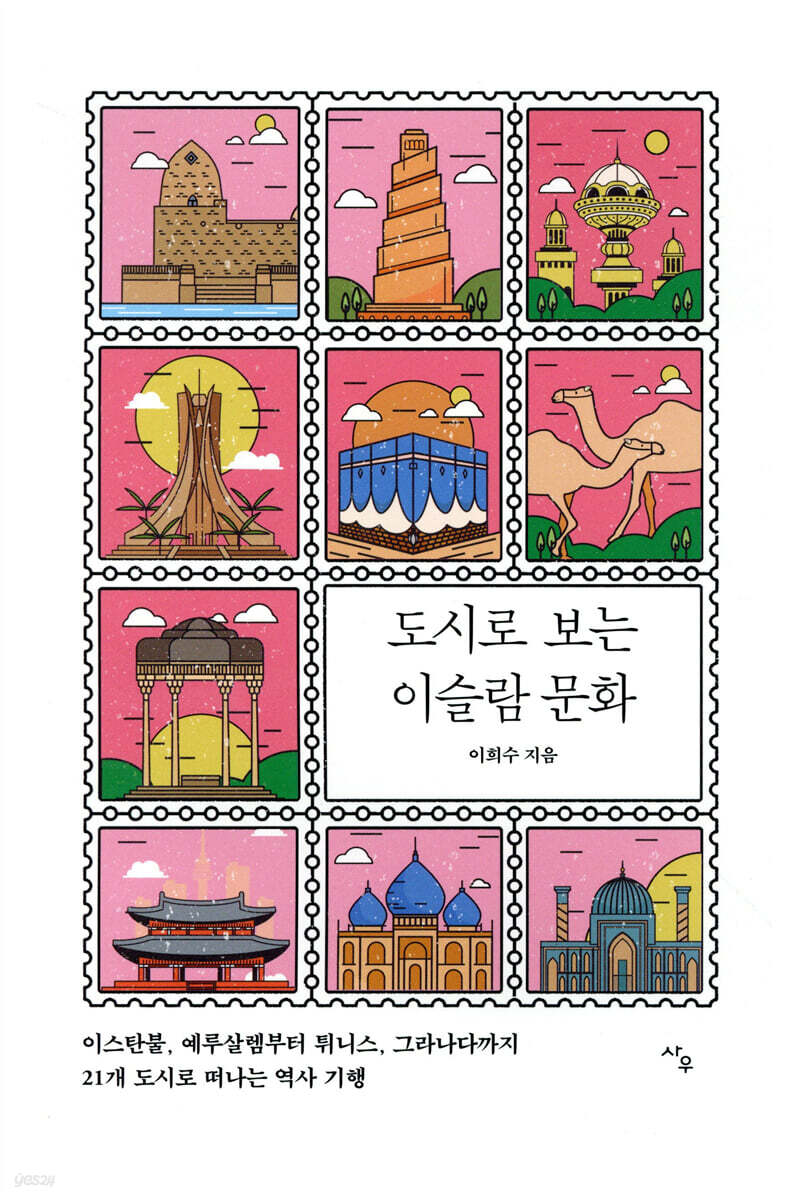
Islamic Culture in Cities
 |
Description
Book Introduction
Learn about Islamic history and culture while traveling through 21 cities.
Professor Lee Hee-soo, the leading authority on the Middle East and Islam, tells us
Misconceptions and Truths About Islam
“Are Muslims who believe in Islam potential terrorists?”
In this book, Professor Lee Hee-soo, the author, helps us see the Islamic world as it really is by visiting the major cities where Islam was born and spread.
The author, who has conducted field research for 40 years as a leading authority on the Middle East and Islam, emphasizes that “there is no religion with as distorted an image as Islam.”
Islam, like other established religions, seeks peace of mind and worldly peace.
But why has Islam, in particular, developed such a violent image? Two billion people in 57 countries believe in Islam.
That's a quarter of the world's population, and it's growing.
How can a 'violent' religion continue to grow?
There are several reasons why Islam has acquired a violent image.
Examples include the long wars of conquest between the West and the Islamic world, the selfishness of the great powers that indiscriminately intervened in the Middle East, and the Arab dictatorships that protected Islamic fundamentalist groups to maintain their power.
In reality, terrorist groups do not have popular support in the Islamic world.
Currently, the countries that are hostile to the Islamic world in the Middle East are the United States and Israel.
We are left with little contact with Islam, and we are forced to view Islam solely through the information and perspectives provided by the United States and Israel.
As a result, I naturally developed a negative image of Islam.
Even within the same Islamic country, the actual appearance varies greatly.
While some countries force women to wear the hijab by law, others leave it up to women to decide whether to wear it.
While some countries insist on stoning to death for adultery, others have abolished it, calling it anachronistic.
As more and more countries outlaw polygamy, this evil practice is likely to disappear soon.
In this way, Islam is not a single entity, and is constantly changing.
But when we think of Muslims, we perceive them as “scary and to be avoided,” “potential terrorists.”
Because we don't meet and try to get to know others, stereotypes and prejudices become more and more entrenched.
The author emphasizes that in this global age, especially with its high dependence on foreign countries, Korea must no longer allow itself to be mired in misunderstandings and prejudices, leading it to antagonize the largest single cultural sphere.
The way to break free from prejudice is to meet and talk.
The author becomes a travel guide and guides readers through 21 major Islamic cities.
Islam, which began as a religion that valued commerce, took root in cities.
The city is the root of Islamic civilization.
You will encounter Islam not only in the splendid buildings that decorate the city, but also in the markets and back alleys.
“I tried to faithfully convey the history and present-day appearance of each city, as well as the inner lives of the people living there.
Above all, we strive to dispel distorted historical perceptions and return human history to a more fair and balanced direction.”
As the author journeys with the reader, they learn about the birth and flourishing of the Islamic world and appreciate the splendid cultural heritage it cultivated.
It also allows us to look at the causes of war and terrorism in the Middle East from a balanced perspective, rather than a one-sided one.
Professor Lee Hee-soo, the leading authority on the Middle East and Islam, tells us
Misconceptions and Truths About Islam
“Are Muslims who believe in Islam potential terrorists?”
In this book, Professor Lee Hee-soo, the author, helps us see the Islamic world as it really is by visiting the major cities where Islam was born and spread.
The author, who has conducted field research for 40 years as a leading authority on the Middle East and Islam, emphasizes that “there is no religion with as distorted an image as Islam.”
Islam, like other established religions, seeks peace of mind and worldly peace.
But why has Islam, in particular, developed such a violent image? Two billion people in 57 countries believe in Islam.
That's a quarter of the world's population, and it's growing.
How can a 'violent' religion continue to grow?
There are several reasons why Islam has acquired a violent image.
Examples include the long wars of conquest between the West and the Islamic world, the selfishness of the great powers that indiscriminately intervened in the Middle East, and the Arab dictatorships that protected Islamic fundamentalist groups to maintain their power.
In reality, terrorist groups do not have popular support in the Islamic world.
Currently, the countries that are hostile to the Islamic world in the Middle East are the United States and Israel.
We are left with little contact with Islam, and we are forced to view Islam solely through the information and perspectives provided by the United States and Israel.
As a result, I naturally developed a negative image of Islam.
Even within the same Islamic country, the actual appearance varies greatly.
While some countries force women to wear the hijab by law, others leave it up to women to decide whether to wear it.
While some countries insist on stoning to death for adultery, others have abolished it, calling it anachronistic.
As more and more countries outlaw polygamy, this evil practice is likely to disappear soon.
In this way, Islam is not a single entity, and is constantly changing.
But when we think of Muslims, we perceive them as “scary and to be avoided,” “potential terrorists.”
Because we don't meet and try to get to know others, stereotypes and prejudices become more and more entrenched.
The author emphasizes that in this global age, especially with its high dependence on foreign countries, Korea must no longer allow itself to be mired in misunderstandings and prejudices, leading it to antagonize the largest single cultural sphere.
The way to break free from prejudice is to meet and talk.
The author becomes a travel guide and guides readers through 21 major Islamic cities.
Islam, which began as a religion that valued commerce, took root in cities.
The city is the root of Islamic civilization.
You will encounter Islam not only in the splendid buildings that decorate the city, but also in the markets and back alleys.
“I tried to faithfully convey the history and present-day appearance of each city, as well as the inner lives of the people living there.
Above all, we strive to dispel distorted historical perceptions and return human history to a more fair and balanced direction.”
As the author journeys with the reader, they learn about the birth and flourishing of the Islamic world and appreciate the splendid cultural heritage it cultivated.
It also allows us to look at the causes of war and terrorism in the Middle East from a balanced perspective, rather than a one-sided one.
- You can preview some of the book's contents.
Preview
index
1.
Mecca/Saudi Arabia: A sacred city visited by 2 billion Muslims.
2.
Jerusalem/Israel: A Holy Land for Three Religions, a Place of Common Repentance
3.
Damascus/Syria: A 5,000-year-old city where Christian and Islamic civilizations coexist
4 Baghdad/Iraq: A medieval cosmopolitan city with everything from cafes to bathhouses.
5.
Dubai/UAE: A cutting-edge desert city that makes the impossible possible.
6.
Salalah/Oman: The Scent of Spice That Changed Human Lifestyles
7.
Istanbul/Turkiye: A Vast Open-Air Museum of Human Civilization
8.
Konya/Turkiye: The Birthplace of Islamic Mysticism
9.
Tehran/Iran: Heirs of the Great Persian Culture
10.
Isfahan/Iran: "Half the World": A Glamorous and Magnificent City
11.
Samarkand/Uzbekistan: A Silk Road Hotspot Brimming with Knowledge and Culture
12.
Lahore/Pakistan: "If you haven't seen Lahore, you've never been born."
13.
Agra, India: The Mecca of Love, the City of the Taj Mahal
14.
Cairo/Egypt: "The only thing humans can learn from ancient civilizations is humility."
15.
Tripoli/Libya: An ancient city that still retains its Roman-era structure.
16.
Tunis/Tunisia: The most beautiful Arab city in the Mediterranean
17.
Algiers/Algeria: The Spiritual Home of Camus and Gide
18.
Marrakech/Morocco: A city that is impressive just by looking at El Fna Square.
19.
Cordoba/Spain: Islamic Wisdom and Knowledge That Made Andalusia Blossom
20.
Granada/Spain: The city of the Alhambra, whose name alone is enchanting.
21.
Timbuktu/Mali: The Enigmatic City That Led the African Renaissance
22.
Itaewon, Seoul: The Mecca of Korean Islam
Mecca/Saudi Arabia: A sacred city visited by 2 billion Muslims.
2.
Jerusalem/Israel: A Holy Land for Three Religions, a Place of Common Repentance
3.
Damascus/Syria: A 5,000-year-old city where Christian and Islamic civilizations coexist
4 Baghdad/Iraq: A medieval cosmopolitan city with everything from cafes to bathhouses.
5.
Dubai/UAE: A cutting-edge desert city that makes the impossible possible.
6.
Salalah/Oman: The Scent of Spice That Changed Human Lifestyles
7.
Istanbul/Turkiye: A Vast Open-Air Museum of Human Civilization
8.
Konya/Turkiye: The Birthplace of Islamic Mysticism
9.
Tehran/Iran: Heirs of the Great Persian Culture
10.
Isfahan/Iran: "Half the World": A Glamorous and Magnificent City
11.
Samarkand/Uzbekistan: A Silk Road Hotspot Brimming with Knowledge and Culture
12.
Lahore/Pakistan: "If you haven't seen Lahore, you've never been born."
13.
Agra, India: The Mecca of Love, the City of the Taj Mahal
14.
Cairo/Egypt: "The only thing humans can learn from ancient civilizations is humility."
15.
Tripoli/Libya: An ancient city that still retains its Roman-era structure.
16.
Tunis/Tunisia: The most beautiful Arab city in the Mediterranean
17.
Algiers/Algeria: The Spiritual Home of Camus and Gide
18.
Marrakech/Morocco: A city that is impressive just by looking at El Fna Square.
19.
Cordoba/Spain: Islamic Wisdom and Knowledge That Made Andalusia Blossom
20.
Granada/Spain: The city of the Alhambra, whose name alone is enchanting.
21.
Timbuktu/Mali: The Enigmatic City That Led the African Renaissance
22.
Itaewon, Seoul: The Mecca of Korean Islam
Detailed image
Publisher's Review
The city is the root of Islamic civilization!
Learn about Islamic history and culture while traveling through 21 cities.
Professor Lee Hee-soo, an authority on the Middle East and Islam, tells us:
Misconceptions and Truths About Islam
“Are Muslims who believe in Islam potential terrorists?”
In February of this year, there was a protest in Ulsan demanding that children of Muslim naturalized citizens of Afghan descent be prevented from entering a nearby elementary school.
This incident also made headlines in major foreign news outlets.
Parents who participated in the protest said, “We cannot allow our children to study in the same classroom as potential terrorists.
“I’m scared to send my child to school,” he claimed.
Are all Muslims potential terrorists, as parents claim? The author explores the major cities where Islam emerged and spread, helping us see the Islamic world as it truly is.
The author, who has conducted field research for 40 years as a leading authority on the Middle East and Islam, emphasizes that “there is no religion with as distorted an image as Islam.”
Why has Islam acquired such a violent image?
2 billion people in 57 countries believe in Islam.
This is equivalent to one quarter of the world's population.
Moreover, the number of Muslims continues to grow.
How can we explain the irony that a "violent" religion continues to grow? Like other established religions, Islam seeks inner peace and world peace.
However, there are several reasons why Islam has come to have such a violent image.
Examples include the long wars of conquest between the West and the Islamic world, the selfishness of the great powers that indiscriminately intervened in the Middle East, and the Arab dictatorships that protected Islamic fundamentalist groups to maintain their power.
In reality, terrorist groups do not have popular support in the Islamic world.
Due to the frequent occurrence of wars and terrorism in the Middle East for various reasons, we tend to associate Islam, Arabs, and terrorism together, but more than 70 percent of Muslims are located in Asia.
Indonesia, India, Pakistan, and several Central Asian countries that use 'ㅇㅇstan' are Islamic countries.
The very notion that ‘Arab = Islam’ is incorrect.
The countries that are hostile to the Islamic world in the Middle East are the United States and Israel.
We are left with little contact with Islam, and we are forced to view Islam through the lens of information and perspectives provided by the United States and Israel.
As a result, I naturally developed a negative image of Islam.
Even within the same Islamic country, its appearance is diverse and constantly changing.
While some countries force women to wear the hijab by law, others leave it up to women to decide whether to wear it.
While some countries insist on stoning to death for adultery, others have abolished it.
As more and more countries outlaw polygamy, this evil practice is likely to disappear soon.
But when we think of Muslims, we only perceive them as “scary and to be avoided” and “potential terrorists.”
Because we don't meet and try to get to know others, stereotypes and prejudices become more and more entrenched.
The author emphasizes that in today's globalized world, and especially with its high dependence on foreign countries, Korea must no longer perpetuate the error of being antagonistic toward the largest single cultural group, mired in misunderstandings and prejudices.
The way to break free from prejudice is to meet and talk.
The author becomes a travel guide and guides readers through 21 major Islamic cities.
Islam, which began as a religion that valued commerce, took root in cities.
The city is the root of Islamic civilization.
From the splendid cultural heritage that decorates the city to the markets and back alleys, you will encounter Islam.
“I tried to faithfully convey the history and present-day appearance of each city, as well as the inner lives of the people living there.
Above all, we strive to dispel distorted historical perceptions and return human history to a more fair and balanced direction.”
As the author journeys with the reader, they learn about the birth and flourishing of the Islamic world and appreciate the splendid cultural heritage it cultivated.
It also provides a balanced perspective on the causes of the conflicts and disputes that are rampant in the Middle East.
The charm of an Islamic city where a thousand years of history live and breathe
The Real Face of Muslims in Back Alleys, Markets, and Cafes
This journey begins in Mecca (Saudi Arabia), the birthplace of Islam, and passes through India, Central Asia, West Asia, North Africa, the Iberian Peninsula, and West Africa, ending in Itaewon, Seoul.
As readers travel through these cities, they naturally come to understand how Islam spread so rapidly that it was able to build a millennial empire.
Islam enjoyed the world's greatest science, technology and culture while Europe was going through the Dark Ages.
As we tour ancient cities like Istanbul, Damascus, Baghdad, Isfahan, Lahore, Agra, Samarkand, and Timbuktu, we realize how wrong it is to regard Western history as world history.
These cities came to the forefront of history when Islamic dynasties made them their capitals.
In these cities, various civilizations interacted and mixed for thousands of years, creating a splendid culture.
Most of them are registered as World Cultural Heritage sites and receive attention and praise from people around the world.
Wherever you go in the cities covered in this book, you'll encounter dazzling cultural heritage sites.
There is a saying that goes, “If you haven’t seen Lahore (Pakistan), it’s like you’ve never been born, and if you miss Isfahan (Iran), it’s like you’ve missed half the world.”
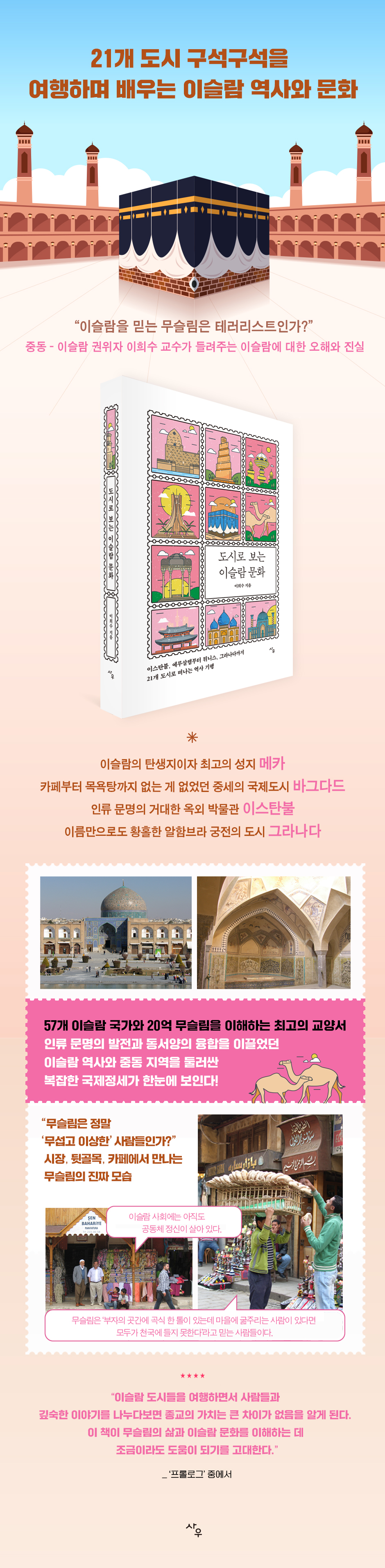
Surrounding the magnificent mosque is a market that sells everything.
The author, who has traveled to Islamic countries more than 200 times, never misses visiting markets and back alleys when traveling to a city.
The first people to drink coffee as a beverage and spread cafe culture to Europe were Muslims.
There is also the pleasure of sitting in a cafe, drinking strong Turkish coffee, and meeting friendly locals.
“Muslims are people just like us.
The spirit of community is still alive among them.
They are the people who 'do not turn away customers or people who come to visit today even if it means starving tomorrow.'
“They are the people who believe that if there is even a single grain left in the rich man’s granary and someone in the village goes hungry, the entire community will not be able to enter heaven.”
Now, let us delve into the unique charm of the Islamic city, which preserves something unchanging, as if time has stood still.
Let's meet Muslim people who live similarly to us, or rather, who still preserve the values of life that we have lost.
Learn about Islamic history and culture while traveling through 21 cities.
Professor Lee Hee-soo, an authority on the Middle East and Islam, tells us:
Misconceptions and Truths About Islam
“Are Muslims who believe in Islam potential terrorists?”
In February of this year, there was a protest in Ulsan demanding that children of Muslim naturalized citizens of Afghan descent be prevented from entering a nearby elementary school.
This incident also made headlines in major foreign news outlets.
Parents who participated in the protest said, “We cannot allow our children to study in the same classroom as potential terrorists.
“I’m scared to send my child to school,” he claimed.
Are all Muslims potential terrorists, as parents claim? The author explores the major cities where Islam emerged and spread, helping us see the Islamic world as it truly is.
The author, who has conducted field research for 40 years as a leading authority on the Middle East and Islam, emphasizes that “there is no religion with as distorted an image as Islam.”
Why has Islam acquired such a violent image?
2 billion people in 57 countries believe in Islam.
This is equivalent to one quarter of the world's population.
Moreover, the number of Muslims continues to grow.
How can we explain the irony that a "violent" religion continues to grow? Like other established religions, Islam seeks inner peace and world peace.
However, there are several reasons why Islam has come to have such a violent image.
Examples include the long wars of conquest between the West and the Islamic world, the selfishness of the great powers that indiscriminately intervened in the Middle East, and the Arab dictatorships that protected Islamic fundamentalist groups to maintain their power.
In reality, terrorist groups do not have popular support in the Islamic world.
Due to the frequent occurrence of wars and terrorism in the Middle East for various reasons, we tend to associate Islam, Arabs, and terrorism together, but more than 70 percent of Muslims are located in Asia.
Indonesia, India, Pakistan, and several Central Asian countries that use 'ㅇㅇstan' are Islamic countries.
The very notion that ‘Arab = Islam’ is incorrect.
The countries that are hostile to the Islamic world in the Middle East are the United States and Israel.
We are left with little contact with Islam, and we are forced to view Islam through the lens of information and perspectives provided by the United States and Israel.
As a result, I naturally developed a negative image of Islam.
Even within the same Islamic country, its appearance is diverse and constantly changing.
While some countries force women to wear the hijab by law, others leave it up to women to decide whether to wear it.
While some countries insist on stoning to death for adultery, others have abolished it.
As more and more countries outlaw polygamy, this evil practice is likely to disappear soon.
But when we think of Muslims, we only perceive them as “scary and to be avoided” and “potential terrorists.”
Because we don't meet and try to get to know others, stereotypes and prejudices become more and more entrenched.
The author emphasizes that in today's globalized world, and especially with its high dependence on foreign countries, Korea must no longer perpetuate the error of being antagonistic toward the largest single cultural group, mired in misunderstandings and prejudices.
The way to break free from prejudice is to meet and talk.
The author becomes a travel guide and guides readers through 21 major Islamic cities.
Islam, which began as a religion that valued commerce, took root in cities.
The city is the root of Islamic civilization.
From the splendid cultural heritage that decorates the city to the markets and back alleys, you will encounter Islam.
“I tried to faithfully convey the history and present-day appearance of each city, as well as the inner lives of the people living there.
Above all, we strive to dispel distorted historical perceptions and return human history to a more fair and balanced direction.”
As the author journeys with the reader, they learn about the birth and flourishing of the Islamic world and appreciate the splendid cultural heritage it cultivated.
It also provides a balanced perspective on the causes of the conflicts and disputes that are rampant in the Middle East.
The charm of an Islamic city where a thousand years of history live and breathe
The Real Face of Muslims in Back Alleys, Markets, and Cafes
This journey begins in Mecca (Saudi Arabia), the birthplace of Islam, and passes through India, Central Asia, West Asia, North Africa, the Iberian Peninsula, and West Africa, ending in Itaewon, Seoul.
As readers travel through these cities, they naturally come to understand how Islam spread so rapidly that it was able to build a millennial empire.
Islam enjoyed the world's greatest science, technology and culture while Europe was going through the Dark Ages.
As we tour ancient cities like Istanbul, Damascus, Baghdad, Isfahan, Lahore, Agra, Samarkand, and Timbuktu, we realize how wrong it is to regard Western history as world history.
These cities came to the forefront of history when Islamic dynasties made them their capitals.
In these cities, various civilizations interacted and mixed for thousands of years, creating a splendid culture.
Most of them are registered as World Cultural Heritage sites and receive attention and praise from people around the world.
Wherever you go in the cities covered in this book, you'll encounter dazzling cultural heritage sites.
There is a saying that goes, “If you haven’t seen Lahore (Pakistan), it’s like you’ve never been born, and if you miss Isfahan (Iran), it’s like you’ve missed half the world.”
Surrounding the magnificent mosque is a market that sells everything.
The author, who has traveled to Islamic countries more than 200 times, never misses visiting markets and back alleys when traveling to a city.
The first people to drink coffee as a beverage and spread cafe culture to Europe were Muslims.
There is also the pleasure of sitting in a cafe, drinking strong Turkish coffee, and meeting friendly locals.
“Muslims are people just like us.
The spirit of community is still alive among them.
They are the people who 'do not turn away customers or people who come to visit today even if it means starving tomorrow.'
“They are the people who believe that if there is even a single grain left in the rich man’s granary and someone in the village goes hungry, the entire community will not be able to enter heaven.”
Now, let us delve into the unique charm of the Islamic city, which preserves something unchanging, as if time has stood still.
Let's meet Muslim people who live similarly to us, or rather, who still preserve the values of life that we have lost.
GOODS SPECIFICS
- Publication date: October 27, 2022
- Page count, weight, size: 376 pages | 652g | 152*224*23mm
- ISBN13: 9791187332794
- ISBN10: 1187332798
You may also like
카테고리
korean


korean

![GQ KOREA Mark (Monthly): December [2025]](http://librairie.coreenne.fr/cdn/shop/files/8ef265dbbfbf186523ed75ba7319009d.jpg?v=1765340328&width=3840)


