

War and Drugs: A Long History of Strife
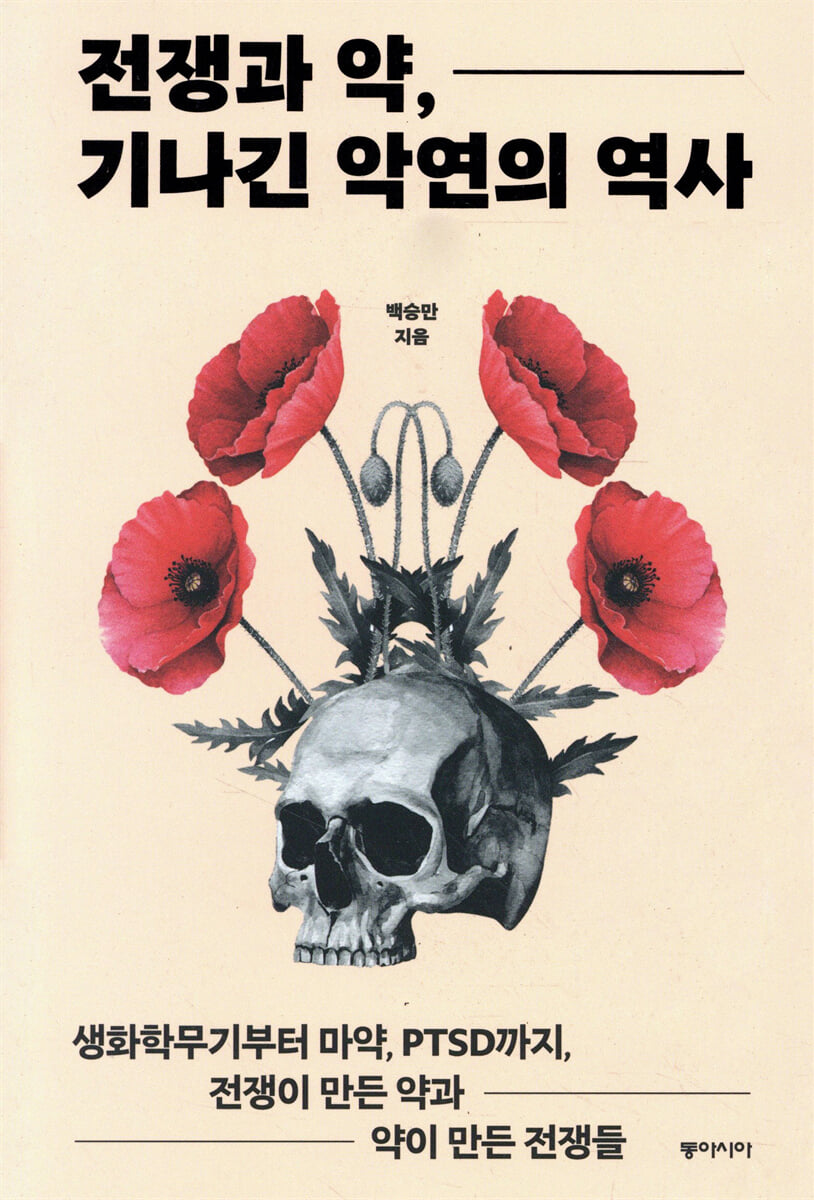 |
Description
Book Introduction
From biochemical weapons to drugs and PTSD,
Medicine made by war and war made by medicine!
*Popular liberal arts lectures at the College of Pharmacy*
Morphine | Fentanyl | Aspirin | Methamphetamine | Chemical weapons | Antibiotics
Plague | Smallpox | Scurvy | Malaria | Spanish Flu | PTSD
For centuries, war, disease, and medicine have driven history like three interlocking wheels.
Fentanyl, which was used for painless childbirth but caused over 28,000 deaths in the United States alone in 2017, parasite medication given to African explorers during the imperialist era, penicillin developed during World War II, and narcotic stimulants used to enhance soldiers' combat capabilities were not the result of mere coincidence.
Opium, the raw material for morphine, which was used as a painkiller invaluable during the American Civil War, was the direct cause of the Opium Wars, and the Spanish flu, which spread around the world during World War I, paradoxically helped bring an end to World War I.
Why did an American woman become paralyzed after picking up a fallen bill? Why did cardinals die one by one during the election of a symphony director? Why did the Tokyo subway system become paralyzed by people carrying black plastic bags and umbrellas? Why did kamikaze pilots drink tea offered by the Emperor just before taking off? Why did the US military bomb friendly bases during the Afghanistan War?
The author, a popular professor whose classes sell out in a minute and a pharmacologist, weaves in a variety of provocative but fascinating anecdotes, exploring the shadows of history and the origins of everyday life from the perspective of medicine, from opium to fentanyl, from methamphetamine to ADHD medications, and from physostigmine to PTSD medications.
“The countless wars, diseases, medicines, and people introduced in this book will boast a crazy presence in history.
Welcome to the long history of their ill-fated relationship.”
Medicine made by war and war made by medicine!
*Popular liberal arts lectures at the College of Pharmacy*
Morphine | Fentanyl | Aspirin | Methamphetamine | Chemical weapons | Antibiotics
Plague | Smallpox | Scurvy | Malaria | Spanish Flu | PTSD
For centuries, war, disease, and medicine have driven history like three interlocking wheels.
Fentanyl, which was used for painless childbirth but caused over 28,000 deaths in the United States alone in 2017, parasite medication given to African explorers during the imperialist era, penicillin developed during World War II, and narcotic stimulants used to enhance soldiers' combat capabilities were not the result of mere coincidence.
Opium, the raw material for morphine, which was used as a painkiller invaluable during the American Civil War, was the direct cause of the Opium Wars, and the Spanish flu, which spread around the world during World War I, paradoxically helped bring an end to World War I.
Why did an American woman become paralyzed after picking up a fallen bill? Why did cardinals die one by one during the election of a symphony director? Why did the Tokyo subway system become paralyzed by people carrying black plastic bags and umbrellas? Why did kamikaze pilots drink tea offered by the Emperor just before taking off? Why did the US military bomb friendly bases during the Afghanistan War?
The author, a popular professor whose classes sell out in a minute and a pharmacologist, weaves in a variety of provocative but fascinating anecdotes, exploring the shadows of history and the origins of everyday life from the perspective of medicine, from opium to fentanyl, from methamphetamine to ADHD medications, and from physostigmine to PTSD medications.
“The countless wars, diseases, medicines, and people introduced in this book will boast a crazy presence in history.
Welcome to the long history of their ill-fated relationship.”
- You can preview some of the book's contents.
Preview
index
Entering
Part 1: Using the War: Those Who Crossed the Line
Chapter 1: Biological Weapons: Plague and Smallpox
Silent Flight | The Devil's Legion | The Black Death and the Pandemics | Biological Weapons | Stop the Plague | A Gift from First Love | The Spreaders | The Plague and Smallpox | Has Smallpox Disappeared? | A New Drug Developed Without a Single Patient in 40 Years
Read more: What did South Americans fight Europeans with?
Chapter 2: Drugs Rule the War
Forests and Blitzkrieg | Methamphetamine | The Miracle of Bern | Psychotropic Drugs Infiltrating Everyday Life | Opium and Morphine | Heroin | The Rise of Synthetic Drugs | The Moscow Theater Terror
Read more: How Does Methamphetamine Make People Addicted?
Chapter 3: Chemical Weapons and Antidotes
Desert Storm | Chemical Weapons | Autonomic Nervous System | Gulf War Syndrome | Highway of Death | Chemical Weapons Used in Terrorism and Assassination | Alexei Navalny Poisoning | The Ongoing War | Vaccine Operation
Read more: Afghanistan, the world's largest opium producer
Ending the War Part 2: Those Who Seek Answers
Chapter 4: The Vitamin Wars
Capture Hill 203 | A Watershed in the Russo-Japanese War | Why Were Spice So Expensive? | The Spice Wars | The Spice Trade and Scurvy | Defeat Scurvy | Defeat Beriberi | The Role of Curry Rice | The End of Overconfidence | The Battle of Port Arthur | After the Russo-Japanese War
Read more: How Does Vitamin C Prevent Scurvy?
Chapter 5: Malaria, the Scourge of War
The Battle of the Kokoda Track | Natural Enemies | Efforts to Eradicate Malaria | Cinchona Powder | Quinine | A Cheap and Effective Quinine Derivative | The Work of Military Doctors | A Time When Humanity Briefly Overcame Malaria | The Vietnam War | Learning from the Past | Artemisinin | The Endless War
Read more: How did Africans survive malaria?
Chapter 6: The Spanish Flu: Its Beginning and End
Patient One | The Dragging War and America's Entry | The Unjust 'Influenza Virus' | Panic | Stopping Mutations | Identification of the Influenza Virus and Vaccine Production | The Spanish Flu and Biological Weapons | Johan Hultin | A Remarkable Opponent | A Passion That Never Fade | Verification and Confirmation
Read More: How Far Are We from Virus Treatments?
Part 3: The Legacies of War: Gifts and Bills
Chapter 7: The Continental Blockade, Aspirin, and Tylenol
Moments of Battle: The Battle of Trafalgar | The Continental Blockade and the Antipyretic Shortage | Salicylic Acid | Acetylsalicylic Acid | War and the Aspirin Crisis | The Limits of Aspirin and the Emergence of Substitutes | The Fate of Tylenol | The Right Dosage for Tylenol
Read more: How does aspirin work?
Chapter 8: The Magic Bullet
Cooperation Across Continents | 100 Years | Arsenic, the Medicine of Salvation | The Miraculous Red Pill | 40 Divided by 9 | A Jackpot Hit During Vacation | Super-Special Treatment | Clear Limitations | Towards a New Continent | Towards the World | Forward
Read more: What were chemists doing to produce penicillin?
Chapter 9: The War of Terror, the Terror of War
Dunkirk Evacuation | Artificial Hibernation | Veteran Sergeant Syndrome | The Story of a Young Man Who Didn't Want to Join the Military | Post-Traumatic Stress Disorder | PTSD Treatment | The US Military's Secret Weapon | Superhero PTSD
In conclusion
Without war, can we not make medicine? | Our stance on preparing for war and disease
References
Part 1: Using the War: Those Who Crossed the Line
Chapter 1: Biological Weapons: Plague and Smallpox
Silent Flight | The Devil's Legion | The Black Death and the Pandemics | Biological Weapons | Stop the Plague | A Gift from First Love | The Spreaders | The Plague and Smallpox | Has Smallpox Disappeared? | A New Drug Developed Without a Single Patient in 40 Years
Read more: What did South Americans fight Europeans with?
Chapter 2: Drugs Rule the War
Forests and Blitzkrieg | Methamphetamine | The Miracle of Bern | Psychotropic Drugs Infiltrating Everyday Life | Opium and Morphine | Heroin | The Rise of Synthetic Drugs | The Moscow Theater Terror
Read more: How Does Methamphetamine Make People Addicted?
Chapter 3: Chemical Weapons and Antidotes
Desert Storm | Chemical Weapons | Autonomic Nervous System | Gulf War Syndrome | Highway of Death | Chemical Weapons Used in Terrorism and Assassination | Alexei Navalny Poisoning | The Ongoing War | Vaccine Operation
Read more: Afghanistan, the world's largest opium producer
Ending the War Part 2: Those Who Seek Answers
Chapter 4: The Vitamin Wars
Capture Hill 203 | A Watershed in the Russo-Japanese War | Why Were Spice So Expensive? | The Spice Wars | The Spice Trade and Scurvy | Defeat Scurvy | Defeat Beriberi | The Role of Curry Rice | The End of Overconfidence | The Battle of Port Arthur | After the Russo-Japanese War
Read more: How Does Vitamin C Prevent Scurvy?
Chapter 5: Malaria, the Scourge of War
The Battle of the Kokoda Track | Natural Enemies | Efforts to Eradicate Malaria | Cinchona Powder | Quinine | A Cheap and Effective Quinine Derivative | The Work of Military Doctors | A Time When Humanity Briefly Overcame Malaria | The Vietnam War | Learning from the Past | Artemisinin | The Endless War
Read more: How did Africans survive malaria?
Chapter 6: The Spanish Flu: Its Beginning and End
Patient One | The Dragging War and America's Entry | The Unjust 'Influenza Virus' | Panic | Stopping Mutations | Identification of the Influenza Virus and Vaccine Production | The Spanish Flu and Biological Weapons | Johan Hultin | A Remarkable Opponent | A Passion That Never Fade | Verification and Confirmation
Read More: How Far Are We from Virus Treatments?
Part 3: The Legacies of War: Gifts and Bills
Chapter 7: The Continental Blockade, Aspirin, and Tylenol
Moments of Battle: The Battle of Trafalgar | The Continental Blockade and the Antipyretic Shortage | Salicylic Acid | Acetylsalicylic Acid | War and the Aspirin Crisis | The Limits of Aspirin and the Emergence of Substitutes | The Fate of Tylenol | The Right Dosage for Tylenol
Read more: How does aspirin work?
Chapter 8: The Magic Bullet
Cooperation Across Continents | 100 Years | Arsenic, the Medicine of Salvation | The Miraculous Red Pill | 40 Divided by 9 | A Jackpot Hit During Vacation | Super-Special Treatment | Clear Limitations | Towards a New Continent | Towards the World | Forward
Read more: What were chemists doing to produce penicillin?
Chapter 9: The War of Terror, the Terror of War
Dunkirk Evacuation | Artificial Hibernation | Veteran Sergeant Syndrome | The Story of a Young Man Who Didn't Want to Join the Military | Post-Traumatic Stress Disorder | PTSD Treatment | The US Military's Secret Weapon | Superhero PTSD
In conclusion
Without war, can we not make medicine? | Our stance on preparing for war and disease
References
Detailed image
.jpg)
Into the book
Then, at dusk on October 27, 1940, Crouch witnessed a rather strange scene.
A plane that appeared to be belonging to the Japanese military was circling overhead.
'What's going on at this hour?' If you want to bomb people, it's natural to choose a time and place where many people gather.
In reality, the Japanese military usually led bomber groups and bombed between 10 AM and 3 PM.
But a plane at this hour?
There was even only one plane.
'What kind of operation can one perform with just one plane?' Crouch looked on curiously.
Three days later, a death from the plague occurred in Ningbo.
--- p.17-18
I'm sometimes asked, "How did the plague disappear?" and I always give the same answer.
The plague did not go away.
Although other infectious diseases, such as tuberculosis, polio, pneumonia, syphilis, and malaria, became more prevalent in the 1800s and diminished the authority of the plague, it never truly disappeared.
Even now, the plague continues to break out.
We just got stronger.
But the plague has also become stronger recently.
Although the cause is unknown, some antibiotic-resistant strains of Yersinia pestis have been reported.
In Madagascar, there were 2,417 cases of plague in four months in 2017, including 209 deaths.
If that African island seems too far away for us, I would like to mention the death of a suspected plague patient in Inner Mongolia, China, in 2020, or the discovery of a squirrel infected with the plague in April 2021.
We are always at war.
--- p.25-26
By the way, tubocurarine also appears in the Sherlock Holmes series.
Arthur Conan Doyle, the author of Sherlock Holmes, was a doctor practicing in London. He had few patients, so he tried various things.
He conducted basic research and published a paper on arsenic, but later became interested in novels and created the character Sherlock Holmes in 1887.
Robert Koch was one of them, and for a doctor who didn't have many patients in those days, he did a truly amazing job.
However, despite being well-versed in poisons, Doyle made a mistake regarding tubocurarine.
--- p.50
The final, dubbed the 'Miracle of Bern', saw West Germany, in their first World Cup appearance, defy many people's expectations and win the tournament.
However, in 2010, it was reported that West Germany had taken Pervitin during the World Cup in Switzerland.
It has been revealed that the state has actively encouraged the use of drugs not only at the World Cup in Switzerland but also at other international competitions.
In 2013, Humboldt University in Germany also announced the same thing.
The German players' open eyes, as witnessed by the Hungarian players, were due to Pervitin.
They took the medicine and won.
--- p.59-60
The love of stimulants isn't limited to European or American soldiers. It's been revealed that ISIS members have also used stimulants while fighting, which isn't particularly surprising given their track record.
But what's noteworthy is its ingredients.
They call it the 'Jihad pill', meaning holy medicine, but its main ingredient is a substance called fenethylline.
The structure of phenethylline has been elucidated and is a link between amphetamine and theophylline.
Amphetamine, yes, but what about theophylline? It's a drug that acts similarly to caffeine.
In other words, before embarking on an operation, the ISIS fighters began by taking two terrifying stimulants, which can be thought of as amphetamines mixed with strong coffee.
--- p.61
In 2012, a patient in a rehabilitation medicine department who was receiving painkiller prescriptions continued to complain of pain, so the doctor prescribed a fentanyl patch.
The reason this patient fell into a coma was because of a fentanyl overdose.
When a patient using fentanyl for the first time was supposed to use a low-dose patch (25 micrograms per hour), the doctor prescribed a regular-dose patch (50 micrograms per hour).
A difference of 25 micrograms might seem like a very small amount, but doubling the effective concentration of a narcotic painkiller is incredibly dangerous for drug users.
Fentanyl is a very dangerous substance.
--- p.74-75
Even aspirin, a synonym for successful pharmaceuticals and a super blockbuster, had its share of difficult times.
It was during World War I.
The process of producing salicylic acid from phenol by the Kolbe-Schmidt reaction and producing aspirin was so simple that it could be produced in sufficient quantities.
However, with the outbreak of World War I, the shortcomings of this process were exposed.
It was the starting material, phenol.
Today, it is one of those petroleum products that can be obtained in a day by contacting a chemical company, but in 1914, the German company Bayer was importing most of its phenol from England.
As the war began, the supply of phenol naturally began to be disrupted.
Attempts were made to secure British phenol by importing it from other countries, but that proved impossible.
Britain considered phenol a strategic material and was managing it with special care.
This is because phenol was used as a starting material in the production of picric acid, the raw material for bombs.
--- p.230
Labori then heard news of an antihistamine that was being researched at the time.
Antihistamines are excellent for calming people, even though they have nothing to do with body temperature.
Antihistamines are still sold in pharmacies as sleep aids because of their sedative properties.
So, wouldn't administering this drug immediately before surgery improve its effectiveness? Labori began administering antihistamines.
But unfortunately, it had little to do with the success rate of the surgery.
But then, a surprising result caught Labori's eye, who was frustrated.
A psychiatric patient who was taking antihistamines and was scheduled to undergo surgery showed improvement in his psychiatric symptoms regardless of the surgery.
A plane that appeared to be belonging to the Japanese military was circling overhead.
'What's going on at this hour?' If you want to bomb people, it's natural to choose a time and place where many people gather.
In reality, the Japanese military usually led bomber groups and bombed between 10 AM and 3 PM.
But a plane at this hour?
There was even only one plane.
'What kind of operation can one perform with just one plane?' Crouch looked on curiously.
Three days later, a death from the plague occurred in Ningbo.
--- p.17-18
I'm sometimes asked, "How did the plague disappear?" and I always give the same answer.
The plague did not go away.
Although other infectious diseases, such as tuberculosis, polio, pneumonia, syphilis, and malaria, became more prevalent in the 1800s and diminished the authority of the plague, it never truly disappeared.
Even now, the plague continues to break out.
We just got stronger.
But the plague has also become stronger recently.
Although the cause is unknown, some antibiotic-resistant strains of Yersinia pestis have been reported.
In Madagascar, there were 2,417 cases of plague in four months in 2017, including 209 deaths.
If that African island seems too far away for us, I would like to mention the death of a suspected plague patient in Inner Mongolia, China, in 2020, or the discovery of a squirrel infected with the plague in April 2021.
We are always at war.
--- p.25-26
By the way, tubocurarine also appears in the Sherlock Holmes series.
Arthur Conan Doyle, the author of Sherlock Holmes, was a doctor practicing in London. He had few patients, so he tried various things.
He conducted basic research and published a paper on arsenic, but later became interested in novels and created the character Sherlock Holmes in 1887.
Robert Koch was one of them, and for a doctor who didn't have many patients in those days, he did a truly amazing job.
However, despite being well-versed in poisons, Doyle made a mistake regarding tubocurarine.
--- p.50
The final, dubbed the 'Miracle of Bern', saw West Germany, in their first World Cup appearance, defy many people's expectations and win the tournament.
However, in 2010, it was reported that West Germany had taken Pervitin during the World Cup in Switzerland.
It has been revealed that the state has actively encouraged the use of drugs not only at the World Cup in Switzerland but also at other international competitions.
In 2013, Humboldt University in Germany also announced the same thing.
The German players' open eyes, as witnessed by the Hungarian players, were due to Pervitin.
They took the medicine and won.
--- p.59-60
The love of stimulants isn't limited to European or American soldiers. It's been revealed that ISIS members have also used stimulants while fighting, which isn't particularly surprising given their track record.
But what's noteworthy is its ingredients.
They call it the 'Jihad pill', meaning holy medicine, but its main ingredient is a substance called fenethylline.
The structure of phenethylline has been elucidated and is a link between amphetamine and theophylline.
Amphetamine, yes, but what about theophylline? It's a drug that acts similarly to caffeine.
In other words, before embarking on an operation, the ISIS fighters began by taking two terrifying stimulants, which can be thought of as amphetamines mixed with strong coffee.
--- p.61
In 2012, a patient in a rehabilitation medicine department who was receiving painkiller prescriptions continued to complain of pain, so the doctor prescribed a fentanyl patch.
The reason this patient fell into a coma was because of a fentanyl overdose.
When a patient using fentanyl for the first time was supposed to use a low-dose patch (25 micrograms per hour), the doctor prescribed a regular-dose patch (50 micrograms per hour).
A difference of 25 micrograms might seem like a very small amount, but doubling the effective concentration of a narcotic painkiller is incredibly dangerous for drug users.
Fentanyl is a very dangerous substance.
--- p.74-75
Even aspirin, a synonym for successful pharmaceuticals and a super blockbuster, had its share of difficult times.
It was during World War I.
The process of producing salicylic acid from phenol by the Kolbe-Schmidt reaction and producing aspirin was so simple that it could be produced in sufficient quantities.
However, with the outbreak of World War I, the shortcomings of this process were exposed.
It was the starting material, phenol.
Today, it is one of those petroleum products that can be obtained in a day by contacting a chemical company, but in 1914, the German company Bayer was importing most of its phenol from England.
As the war began, the supply of phenol naturally began to be disrupted.
Attempts were made to secure British phenol by importing it from other countries, but that proved impossible.
Britain considered phenol a strategic material and was managing it with special care.
This is because phenol was used as a starting material in the production of picric acid, the raw material for bombs.
--- p.230
Labori then heard news of an antihistamine that was being researched at the time.
Antihistamines are excellent for calming people, even though they have nothing to do with body temperature.
Antihistamines are still sold in pharmacies as sleep aids because of their sedative properties.
So, wouldn't administering this drug immediately before surgery improve its effectiveness? Labori began administering antihistamines.
But unfortunately, it had little to do with the success rate of the surgery.
But then, a surprising result caught Labori's eye, who was frustrated.
A psychiatric patient who was taking antihistamines and was scheduled to undergo surgery showed improvement in his psychiatric symptoms regardless of the surgery.
--- p.292
Publisher's Review
From biochemical weapons to drugs and PTSD,
Medicine made by war and war made by medicine!
★Popular Liberal Arts Courses at the College of Pharmacy★
Morphine | Fentanyl | Aspirin | Methamphetamine | Chemical weapons | Antibiotics
Plague | Smallpox | Scurvy | Malaria | Spanish Flu | PTSD
For centuries, war, disease, and medicine have driven history like three interlocking wheels.
Fentanyl, which was used for painless childbirth but caused over 28,000 deaths in the United States alone in 2017, parasite medication given to African explorers during the imperialist era, penicillin developed during World War II, and narcotic stimulants used to enhance soldiers' combat capabilities were not the result of mere coincidence.
Opium, the raw material for morphine, which was used as a painkiller invaluable during the American Civil War, was the direct cause of the Opium Wars, and the Spanish flu, which spread around the world during World War I, paradoxically helped bring an end to World War I.
Why did an American woman become paralyzed after picking up a fallen bill? Why did cardinals die one by one during the election of a symphony director? Why did the Tokyo subway system become paralyzed by people carrying black plastic bags and umbrellas? Why did kamikaze pilots drink tea offered by the Emperor just before taking off? Why did the US military bomb friendly bases during the Afghanistan War?
The author, a popular professor whose classes sell out in a minute and a pharmacologist, weaves in a variety of provocative but fascinating anecdotes, exploring the shadows of history and the origins of everyday life from the perspective of medicine, from opium to fentanyl, from methamphetamine to ADHD medications, and from physostigmine to PTSD medications.
“The countless wars, diseases, medicines, and people introduced in this book will boast a crazy presence in history.
Welcome to the long history of their ill-fated relationship.”
Medicine is parasitic on war
War grows on drugs!
War makes medicine.
When World War II began and opium imports were blocked, Germany developed a drug called pethidine, which is still widely used as a painkiller today.
Fentanyl, which we often see in the news these days, is a drug developed in the 1960s based on the structure of pethidine. In the United States, in 2017 alone, more than 28,000 people died from fentanyl poisoning.
A substance called tubocurane, which was used by South American natives to make poison arrows against Europeans, was also used for general anesthesia until the 1950s.
In war, poison is sometimes taken as a preventative measure against biochemical weapons.
It is also a story about the US military during the Iraq War in 1990. Just like the protagonist of a martial arts novel takes poison little by little, they took an antidote called pyridostigmine bromide little by little.
However, Iraq did not actually use chemical weapons, and American soldiers ended up becoming addicted to the antidote they took every day, and after the war, the veterans suffered from post-traumatic stress disorder (PTSD), also known as Gulf War Syndrome.
Medicine can also cause war.
Methamphetamine, used as a stimulant, is a representative example.
Methamphetamine, synthesized by Nagayoshi Nagai in 1893, was widely used as a fatigue recovery drug called "philopon" among the Japanese, but was used by German soldiers on night marches during World War II.
It was especially distributed to tank crews of armored units, keeping them awake for three days without sleep in cramped, hot tanks.
The last thing the kamikaze pilots drank before their suicide mission was the Philopon tea given to them by the Emperor.
Meanwhile, in the 2001 Afghanistan War, a US military pilot saw a flashing light and dropped a bomb on his own troops.
It was a disaster caused by excessively fast reaction speed and aggression due to the stimulant drug amphetamine.
Morphine was also an extremely valuable drug used as a painkiller during the Civil War, but opium, the raw material for morphine, was also a direct cause of the Opium War.
Tragically, the sleeping gas that killed 67 hostages in the 2002 Moscow theater attack by Chechen rebels was also made of none other than fentanyl.
"War and Medicine, a Long History of Evil" tells the story of how war created disease and medicine, and medicine in turn created war, and how this "dark history" is not simply a thing of the past, but how it permeates our daily lives today.
“War and disease have been constantly interacting and tormenting humanity.
The history of mankind is a history of war, but it is also a history of disease.
Right now, we are witnessing vividly how COVID-19 has brought the world to a standstill and then shifted it in a different direction.
Wouldn't it be strange if these dangerous villains, whose influence on human history is second to none, didn't influence each other? And the situation becomes even more complicated when pharmaceuticals intervene in the history of war and disease.
Medicines are sometimes at the forefront of war, and sometimes they are used to comfort wounded soldiers.
“We spend our days with war, the diseases it leaves behind, and the medicines it uses.” – From “Introduction”
Those who cross the line and the bill left by war,
The never-ending war on terrorists and drugs
The war between Russia and Ukraine is in full swing.
As the war drags on, the prospect that Russia might deploy weapons of mass destruction is becoming openly discussed.
These lethal weapons are none other than biochemical weapons, that is, biological weapons and chemical weapons.
But Vladimir Putin has already used chemical weapons against Russian opposition leader and political opponent Alexei Navalny.
The 2020 Novichok poisoning incident.
Novichok, which has been secretly used since the 1980s, even in small doses disrupted Navalny's autonomic nervous system, putting his life in danger.
A similar incident occurred at Kuala Lumpur Airport in February 2017.
Two women rubbed the face of a man standing at a ticket counter with their hands, and despite the man quickly washing his face, he died on the way to the hospital.
The man who died from parasympathetic nerve activation due to VX, one of the most potent organophosphate poisons, was identified as Kim Jong-nam, the half-brother of North Korean leader Kim Jong-un.
Our daily lives are not safe enough either.
In June 2022, a woman in Tennessee, USA, became paralyzed after picking up a dollar bill on the street, and the bill was found to contain a lethal dose of just 2 milligrams of fentanyl.
It was an act of terrorism directed at an unspecified number of people.
Meanwhile, not long after this, something even more extreme happened in Tokyo, Japan.
Several Aum Shinrikyo believers sprayed sarin gas on the subway while poking black plastic bags with umbrellas on their way to work.
Likewise, it was an indiscriminate terrorist attack targeting an unspecified number of people.
Fortunately, the author also examines in detail how far our health care system stands today in the face of war and disease.
To name a few prime examples, Navalny was able to overcome his Novichok poisoning thanks to obidoxime and atropine, which was developed based on research on this drug, and many passengers who were poisoned by sarin gas on their way to work were saved by pralidoxime.
Tennessee state banknotes were also found containing another substance called methamphetamine, the structure of which is the basis for the development of one of the most promising ADHD treatments, and narcotic tranquilizers given to US troops during the Iraq War are being modified to treat depression and PTSD, and are being used to alleviate the condition.
Nevertheless, the author urges us not to forget that while all poisons are medicines, all medicines are also poisons.
“We dream of a world without war and disease, but it never has been like that.
No matter how hard we try, it will be difficult to expect such a day in our generation.
This is also the reason why we must constantly prepare.”─From “In Closing”
Medicine made by war and war made by medicine!
★Popular Liberal Arts Courses at the College of Pharmacy★
Morphine | Fentanyl | Aspirin | Methamphetamine | Chemical weapons | Antibiotics
Plague | Smallpox | Scurvy | Malaria | Spanish Flu | PTSD
For centuries, war, disease, and medicine have driven history like three interlocking wheels.
Fentanyl, which was used for painless childbirth but caused over 28,000 deaths in the United States alone in 2017, parasite medication given to African explorers during the imperialist era, penicillin developed during World War II, and narcotic stimulants used to enhance soldiers' combat capabilities were not the result of mere coincidence.
Opium, the raw material for morphine, which was used as a painkiller invaluable during the American Civil War, was the direct cause of the Opium Wars, and the Spanish flu, which spread around the world during World War I, paradoxically helped bring an end to World War I.
Why did an American woman become paralyzed after picking up a fallen bill? Why did cardinals die one by one during the election of a symphony director? Why did the Tokyo subway system become paralyzed by people carrying black plastic bags and umbrellas? Why did kamikaze pilots drink tea offered by the Emperor just before taking off? Why did the US military bomb friendly bases during the Afghanistan War?
The author, a popular professor whose classes sell out in a minute and a pharmacologist, weaves in a variety of provocative but fascinating anecdotes, exploring the shadows of history and the origins of everyday life from the perspective of medicine, from opium to fentanyl, from methamphetamine to ADHD medications, and from physostigmine to PTSD medications.
“The countless wars, diseases, medicines, and people introduced in this book will boast a crazy presence in history.
Welcome to the long history of their ill-fated relationship.”
Medicine is parasitic on war
War grows on drugs!
War makes medicine.
When World War II began and opium imports were blocked, Germany developed a drug called pethidine, which is still widely used as a painkiller today.
Fentanyl, which we often see in the news these days, is a drug developed in the 1960s based on the structure of pethidine. In the United States, in 2017 alone, more than 28,000 people died from fentanyl poisoning.
A substance called tubocurane, which was used by South American natives to make poison arrows against Europeans, was also used for general anesthesia until the 1950s.
In war, poison is sometimes taken as a preventative measure against biochemical weapons.
It is also a story about the US military during the Iraq War in 1990. Just like the protagonist of a martial arts novel takes poison little by little, they took an antidote called pyridostigmine bromide little by little.
However, Iraq did not actually use chemical weapons, and American soldiers ended up becoming addicted to the antidote they took every day, and after the war, the veterans suffered from post-traumatic stress disorder (PTSD), also known as Gulf War Syndrome.
Medicine can also cause war.
Methamphetamine, used as a stimulant, is a representative example.
Methamphetamine, synthesized by Nagayoshi Nagai in 1893, was widely used as a fatigue recovery drug called "philopon" among the Japanese, but was used by German soldiers on night marches during World War II.
It was especially distributed to tank crews of armored units, keeping them awake for three days without sleep in cramped, hot tanks.
The last thing the kamikaze pilots drank before their suicide mission was the Philopon tea given to them by the Emperor.
Meanwhile, in the 2001 Afghanistan War, a US military pilot saw a flashing light and dropped a bomb on his own troops.
It was a disaster caused by excessively fast reaction speed and aggression due to the stimulant drug amphetamine.
Morphine was also an extremely valuable drug used as a painkiller during the Civil War, but opium, the raw material for morphine, was also a direct cause of the Opium War.
Tragically, the sleeping gas that killed 67 hostages in the 2002 Moscow theater attack by Chechen rebels was also made of none other than fentanyl.
"War and Medicine, a Long History of Evil" tells the story of how war created disease and medicine, and medicine in turn created war, and how this "dark history" is not simply a thing of the past, but how it permeates our daily lives today.
“War and disease have been constantly interacting and tormenting humanity.
The history of mankind is a history of war, but it is also a history of disease.
Right now, we are witnessing vividly how COVID-19 has brought the world to a standstill and then shifted it in a different direction.
Wouldn't it be strange if these dangerous villains, whose influence on human history is second to none, didn't influence each other? And the situation becomes even more complicated when pharmaceuticals intervene in the history of war and disease.
Medicines are sometimes at the forefront of war, and sometimes they are used to comfort wounded soldiers.
“We spend our days with war, the diseases it leaves behind, and the medicines it uses.” – From “Introduction”
Those who cross the line and the bill left by war,
The never-ending war on terrorists and drugs
The war between Russia and Ukraine is in full swing.
As the war drags on, the prospect that Russia might deploy weapons of mass destruction is becoming openly discussed.
These lethal weapons are none other than biochemical weapons, that is, biological weapons and chemical weapons.
But Vladimir Putin has already used chemical weapons against Russian opposition leader and political opponent Alexei Navalny.
The 2020 Novichok poisoning incident.
Novichok, which has been secretly used since the 1980s, even in small doses disrupted Navalny's autonomic nervous system, putting his life in danger.
A similar incident occurred at Kuala Lumpur Airport in February 2017.
Two women rubbed the face of a man standing at a ticket counter with their hands, and despite the man quickly washing his face, he died on the way to the hospital.
The man who died from parasympathetic nerve activation due to VX, one of the most potent organophosphate poisons, was identified as Kim Jong-nam, the half-brother of North Korean leader Kim Jong-un.
Our daily lives are not safe enough either.
In June 2022, a woman in Tennessee, USA, became paralyzed after picking up a dollar bill on the street, and the bill was found to contain a lethal dose of just 2 milligrams of fentanyl.
It was an act of terrorism directed at an unspecified number of people.
Meanwhile, not long after this, something even more extreme happened in Tokyo, Japan.
Several Aum Shinrikyo believers sprayed sarin gas on the subway while poking black plastic bags with umbrellas on their way to work.
Likewise, it was an indiscriminate terrorist attack targeting an unspecified number of people.
Fortunately, the author also examines in detail how far our health care system stands today in the face of war and disease.
To name a few prime examples, Navalny was able to overcome his Novichok poisoning thanks to obidoxime and atropine, which was developed based on research on this drug, and many passengers who were poisoned by sarin gas on their way to work were saved by pralidoxime.
Tennessee state banknotes were also found containing another substance called methamphetamine, the structure of which is the basis for the development of one of the most promising ADHD treatments, and narcotic tranquilizers given to US troops during the Iraq War are being modified to treat depression and PTSD, and are being used to alleviate the condition.
Nevertheless, the author urges us not to forget that while all poisons are medicines, all medicines are also poisons.
“We dream of a world without war and disease, but it never has been like that.
No matter how hard we try, it will be difficult to expect such a day in our generation.
This is also the reason why we must constantly prepare.”─From “In Closing”
GOODS SPECIFICS
- Publication date: September 13, 2022
- Page count, weight, size: 332 pages | 396g | 135*200*17mm
- ISBN13: 9788962624465
- ISBN10: 896262446X
You may also like
카테고리
korean


korean

![GQ KOREA Mark (Monthly): December [2025]](http://librairie.coreenne.fr/cdn/shop/files/8ef265dbbfbf186523ed75ba7319009d.jpg?v=1765340328&width=3840)


