

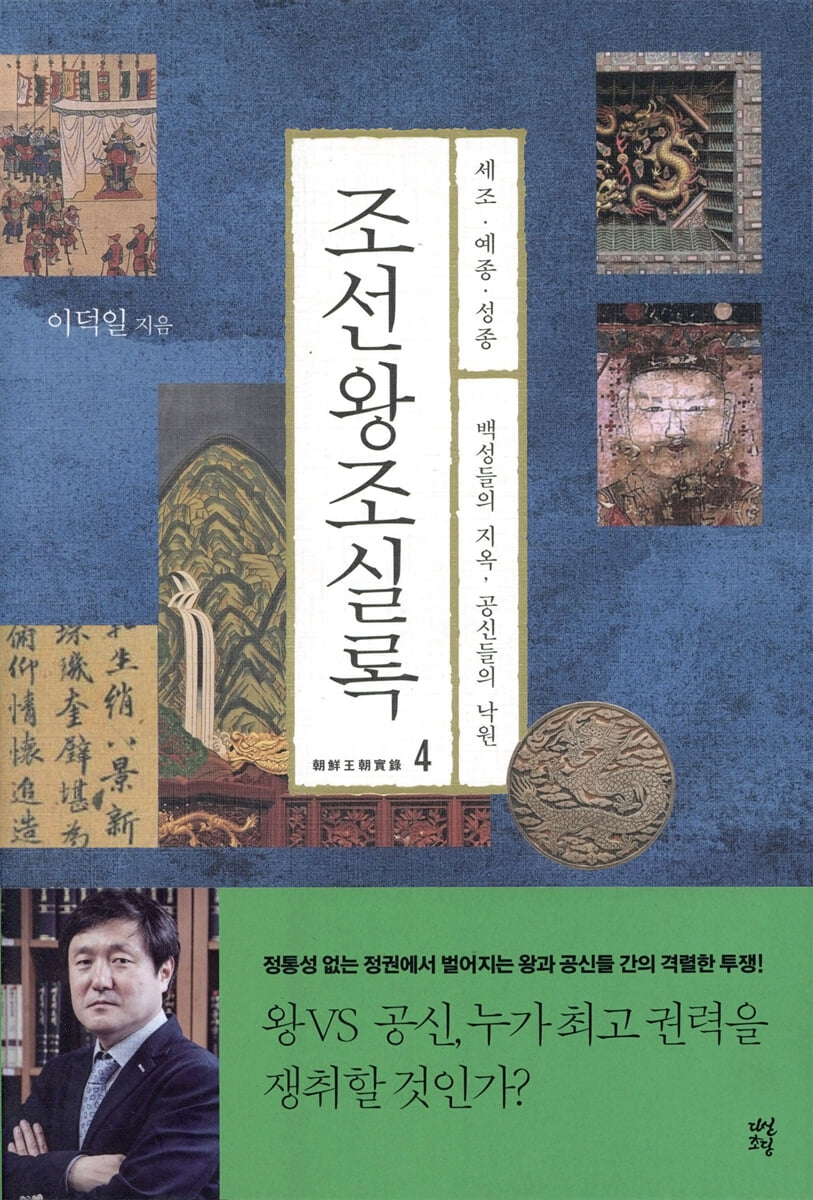
Annals of the Joseon Dynasty, Volume 4, King Sejo, King Yejong, and King Seongjong
 |
Description
Book Introduction
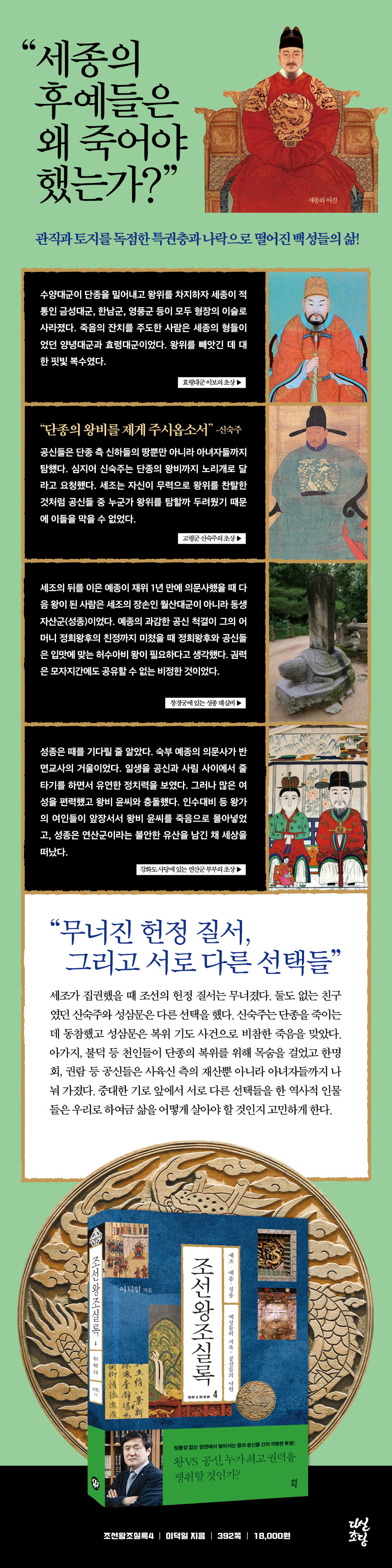
“Why did Sejong’s descendants have to die?”
The lives of the privileged class who monopolized government positions and land and the people who fell into the abyss!
The limitations of the Sejo regime, which usurped the throne from King Danjong, were clear.
Because the royal authority lacked legitimacy, Sejo had no choice but to receive help from his meritorious retainers.
In other words, it was a coalition government with the meritorious subjects.
Prince Yangnyeong and Prince Hyoryeong, who had been dethroned by Sejong, took the lead in killing Sejong's family and Danjong.
Sejo granted his meritorious subjects the right to buy and sell official posts, land, and the wives of King Danjong and the six loyal ministers.
Even Shin Suk-ju asked to be given King Danjong's queen as a slave, and Jeong In-ji called Sejo "you."
The perception that anyone could seize the throne with just force was widespread, leading to incidents such as the Bongseokju Rebellion, and because the regime lacked legitimacy, it had no choice but to consistently pursue tributary diplomacy to gain the support of the Ming Dynasty.
King Yejong, who succeeded Sejo, attempted to strengthen royal authority by keeping the meritorious retainers in check, but died under suspicious circumstances after only one year.
Although Seongjong reigned for 26 years, he had no notable achievements, and the fact that he was known as a good king was a great windfall compared to the chaotic times of Sejo's reign.
Historical figures who made different choices at critical junctures make us ponder what kind of lives we should lead today.
The lives of the privileged class who monopolized government positions and land and the people who fell into the abyss!
The limitations of the Sejo regime, which usurped the throne from King Danjong, were clear.
Because the royal authority lacked legitimacy, Sejo had no choice but to receive help from his meritorious retainers.
In other words, it was a coalition government with the meritorious subjects.
Prince Yangnyeong and Prince Hyoryeong, who had been dethroned by Sejong, took the lead in killing Sejong's family and Danjong.
Sejo granted his meritorious subjects the right to buy and sell official posts, land, and the wives of King Danjong and the six loyal ministers.
Even Shin Suk-ju asked to be given King Danjong's queen as a slave, and Jeong In-ji called Sejo "you."
The perception that anyone could seize the throne with just force was widespread, leading to incidents such as the Bongseokju Rebellion, and because the regime lacked legitimacy, it had no choice but to consistently pursue tributary diplomacy to gain the support of the Ming Dynasty.
King Yejong, who succeeded Sejo, attempted to strengthen royal authority by keeping the meritorious retainers in check, but died under suspicious circumstances after only one year.
Although Seongjong reigned for 26 years, he had no notable achievements, and the fact that he was known as a good king was a great windfall compared to the chaotic times of Sejo's reign.
Historical figures who made different choices at critical junctures make us ponder what kind of lives we should lead today.
- You can preview some of the book's contents.
Preview
index
Introduction: Reading the Annals of the Joseon Dynasty
Part 1: Sejo, the magnanimous ruler who dreamed of becoming a virtuous king
Love the people, love the officials,
-Danbi and Giuje
-The king who beats his subjects
The incident of attempting to restore the former king
-The imprisoned king
-Ming Dynasty envoys from Joseon
-A fateful act
- Harsh political retaliation
-The exiled king
-The former king was murdered
There are no people in the country of the meritorious subjects.
-A petition to the reform bureaucrat Yang Seong-ji
-The country of meritorious subjects
-The murder of Lee Seok-san by public official Min Bal
- Meritorious subjects are never punished, Hong Yun-seong
-The officials who devour the flesh and bones of the people
-Jeong In-ji calls Sejo 'you'
-I can do it like Suyang, Bong Seok-ju.
Northern Whirlwind
-Did Lee Jing-ok call himself the Emperor of the Golden Age?
-The Sejo regime that turned the Jurchen people into enemies
-Yang Jeong being executed
-Ishiae's uprising and the birth of a new meritorious subject
Leaving behind legacies that could not be dismantled
- Original and original scenery allowed
Part 2: King Yeongjong, the young king who aimed his sword at the group of meritorious retainers
Should the throne be shared?
-Crown in a Comet
-Power struggle between the old and new meritorious subjects
-Nam-i's death, the downfall of Shin Gong-shin
King Yeongjong's restoration of royal power and downfall
-Yeongjong's unstoppable offensive
-Conflict between the Queen and King Yeongjong
- King Yeongjong, the reformist monarch who suddenly passed away
Part 3: King Seongjong, the tightrope walk between the meritorious retainers and the scholars
The throne that fell from the sky
-Collusion between Queen Jeonghui and her meritorious retainers
-The growing controversy over King Yeongjong's suspicious death
-Operation to eliminate Lee Jun of the Gwiseong Army
-The emergence of the royal officials and the Sarim faction
The natural history of the nine meritorious retainers and the advancement of the Sarim faction
-The challenge of the censors to the country of the original people
-Why did the Sarim oppose the Hun-gu?
-Sarim advocating for the restoration of the tomb of King Danjong's mother
-Lee Sim-won, a relative of the royal family who became the vanguard of the Sarim faction, and Im Sa-hong, a relative of the royal family who became the vanguard of the Hungu faction
-The world of Han Myeong-hoe is collapsing
-The debate between the scholars and the old officials
Leaving behind an unstable legacy
- Drive the mother of atoms to death
-The end of a life of compromise
Three different leaders create different histories.
Chronology
Search
Part 1: Sejo, the magnanimous ruler who dreamed of becoming a virtuous king
Love the people, love the officials,
-Danbi and Giuje
-The king who beats his subjects
The incident of attempting to restore the former king
-The imprisoned king
-Ming Dynasty envoys from Joseon
-A fateful act
- Harsh political retaliation
-The exiled king
-The former king was murdered
There are no people in the country of the meritorious subjects.
-A petition to the reform bureaucrat Yang Seong-ji
-The country of meritorious subjects
-The murder of Lee Seok-san by public official Min Bal
- Meritorious subjects are never punished, Hong Yun-seong
-The officials who devour the flesh and bones of the people
-Jeong In-ji calls Sejo 'you'
-I can do it like Suyang, Bong Seok-ju.
Northern Whirlwind
-Did Lee Jing-ok call himself the Emperor of the Golden Age?
-The Sejo regime that turned the Jurchen people into enemies
-Yang Jeong being executed
-Ishiae's uprising and the birth of a new meritorious subject
Leaving behind legacies that could not be dismantled
- Original and original scenery allowed
Part 2: King Yeongjong, the young king who aimed his sword at the group of meritorious retainers
Should the throne be shared?
-Crown in a Comet
-Power struggle between the old and new meritorious subjects
-Nam-i's death, the downfall of Shin Gong-shin
King Yeongjong's restoration of royal power and downfall
-Yeongjong's unstoppable offensive
-Conflict between the Queen and King Yeongjong
- King Yeongjong, the reformist monarch who suddenly passed away
Part 3: King Seongjong, the tightrope walk between the meritorious retainers and the scholars
The throne that fell from the sky
-Collusion between Queen Jeonghui and her meritorious retainers
-The growing controversy over King Yeongjong's suspicious death
-Operation to eliminate Lee Jun of the Gwiseong Army
-The emergence of the royal officials and the Sarim faction
The natural history of the nine meritorious retainers and the advancement of the Sarim faction
-The challenge of the censors to the country of the original people
-Why did the Sarim oppose the Hun-gu?
-Sarim advocating for the restoration of the tomb of King Danjong's mother
-Lee Sim-won, a relative of the royal family who became the vanguard of the Sarim faction, and Im Sa-hong, a relative of the royal family who became the vanguard of the Hungu faction
-The world of Han Myeong-hoe is collapsing
-The debate between the scholars and the old officials
Leaving behind an unstable legacy
- Drive the mother of atoms to death
-The end of a life of compromise
Three different leaders create different histories.
Chronology
Search
Detailed image
Into the book
At this time, something happened that no one expected.
The incident began with a quiet remark made by Lee Gye-jeon, the first-class contributor to the Jeongnan War and Minister of War.
“Your Majesty, it seems you have had too much to drink today. Please return to the inner court.” When told to go into the inner court and rest because you had had too much to drink, Sejo suddenly did as he was told.
“I will do as I please with my own actions, so why do you try to teach me?”
Sejo had Lee Gye-jeon remove his hat and had Hong Dal-son, the Minister of War, grab him by the hair and drag him into the courtyard.
Joseon, a country of Confucianism, had a strict hierarchy among government officials.
Among them, the Ministry of War, which oversees the military, had to have a particularly strict hierarchy between superiors and subordinates.
However, Sejo ordered Hong Dal-son, the Minister of Justice, to grab the hair of his superior, Minister Lee Gye-jeon, and drag him down.
He further called in the guards and ordered them to beat him with a stick.
Anyone who saw it would have to admit that it was an excessive gesture.
Lee Gye-jeon's words should have been taken as advice from a loyal subject worried that the drunken king might make a mistake, not as a reason to drag a subordinate by the hair and drag him into the courtyard.
---From "Love the people and love the officials"
When the loyal subjects, who always spoke of filial piety and loyalty, tried to kill King Danjong, the government slaves risked their lives to serve him.
On September 24, three days after Shin Suk-ju, Jeong In-ji, Jeong Chang-son, and Han Myeong-hoe requested to kill Danjong, the Ministry of Justice made the request to King Sejo.
“It is said that the servant Dokdong of the main palace and the servant Yunsaeng of the Jeonongsi brought food to meet Prince Nosan. There must be a reason for this.
“I request an interrogation (interrogation by beating with a stick).” The investigation revealed that Dokdong and Yunsaeng had attempted to meet with Nosangun with watermelon and walnuts.
Of course, he was stopped by the soldiers guarding Nosan-gun, dragged in, and subjected to harsh interrogation by the Ministry of Justice.
The Ministry of Justice demanded that the two be executed, their property confiscated, and their families be implicated.
Sejo ordered that Jang be beaten 100 times.
If he were to execute the king, rumors would spread that even the slaves were loyal to King Danjong.
---From "The Incident of the Prayer for the Restoration of the Former King"
Hong Yun-seong had caused so many problems that he could not get through them safely.
On July 11, 1468, the 4th year of King Sejo's reign, the Office of the Inspector General reported the matter of Hong Yun-seong.
“Hong Yun-seong forced himself to stay at Kim Han’s house on the 7th of this month in an attempt to rape his daughter, but Kim Han’s wife ran away with the daughter and hid in a neighbor’s house.
Hong Yun-seong, a great minister, attempted to marry while in mourning, thereby corrupting and destroying the order of things.
“Please, punish me thoroughly.”
As Hogun was a 4th rank official under the Owi, she was the daughter of a noble family.
If it is true that he attempted to rape the daughter of a noble family, then the crime was serious.
Besides, Hong Yun-seong was in mourning for his mother.
...
Kim Bun (金汾), the son of Kim Han, reported Hong Yun-seong's actions to the Office of the Inspector General. If it had been during the reigns of Taejong and Sejong, the Office of the Inspector General would have immediately launched an investigation and arrested him, but it was different during the reign of Sejo.
Rather, it was the officials of the Office of the Inspector General who reported the situation privately while visiting Hong Yun-seong's house.
What was even more serious was that the person who went to Hong Yun-seong's house and told him the details of the incident was Daesaheon Eo Hyo-cheom.
Things that would have been unthinkable during the reigns of King Taejong and King Sejong were brazenly carried out in the country of the meritorious subjects.
---From "The Meritorious Subjects Are Never Punished, Hong Yun-seong"
King Yeongjong thought it was a big problem that the governor of Hamgyong Province sent a bribe to Shin Suk-ju.
Hamgyong Province is where the Yi Si-ae Rebellion occurred a year ago.
At that time, there was testimony that Shin Suk-ju and Han Myeong-hoe were connected to Lee Si-ae, and the two were imprisoned.
King Yeongjong rebuked Kim Mi, citing this special characteristic of Hamgyong Province.
“What brings you to Seoul? How many influential people did you bribe?” “I came to Seoul with gifts to offer, and I simply sent a letter of thanks to Shin Suk-ju.
“There is no other place to give bribes.” “You knew that there was only one king and came here with tribute, so what other things do you have to serve the powerful? Last year, the people of Hamgyong Province said that Shin Suk-ju, Han Myeong-hoe, and others were secretly plotting treason, so many people became suspicious, and the governors, military commissioners, and magistrates were all killed, so public sentiment was not at ease. Even though you knew this, are you doing this again now to make public sentiment uneasy?” The form was to rebuke Kim Mi, but the content was to rebuke Shin Suk-ju and Han Myeong-hoe.
King Yeongjong arrested and interrogated the governor Park Seo-chang, and replaced him with Han Chi-hyeong.
---From "Yeongjong's Unstoppable Offensive"
Seongjong had no intention of acting as a puppet king for a long time.
So, in the 6th year of his reign (1475), he took advantage of the anonymous letter incident posted at the Royal Secretariat to win control of the government early the following year.
In a court where the new meritorious retainers had disappeared, King Seongjong intuitively sensed that the newly arrived Sarim would be a force that could keep the old meritorious retainers in check.
Seongjong consciously fostered the Sarim to control the power of the old meritorious retainers.
He took the incident of his uncle, King Yeongjong, who treated both old and new meritorious retainers as enemies and ended up being killed under suspicious circumstances as a lesson and strengthened the royal authority by creating a conflict between the meritorious retainers and the Sarim.
However, the Sarim were not recognized as a political force that could replace the old meritorious retainers.
King Seongjong's purpose was to check the old meritorious retainers and strengthen the royal authority, not to destroy it.
So, his reign continued the status quo between the old meritorious retainers and the Sarim.
Even here, extraordinary political power was maintained.
The incident began with a quiet remark made by Lee Gye-jeon, the first-class contributor to the Jeongnan War and Minister of War.
“Your Majesty, it seems you have had too much to drink today. Please return to the inner court.” When told to go into the inner court and rest because you had had too much to drink, Sejo suddenly did as he was told.
“I will do as I please with my own actions, so why do you try to teach me?”
Sejo had Lee Gye-jeon remove his hat and had Hong Dal-son, the Minister of War, grab him by the hair and drag him into the courtyard.
Joseon, a country of Confucianism, had a strict hierarchy among government officials.
Among them, the Ministry of War, which oversees the military, had to have a particularly strict hierarchy between superiors and subordinates.
However, Sejo ordered Hong Dal-son, the Minister of Justice, to grab the hair of his superior, Minister Lee Gye-jeon, and drag him down.
He further called in the guards and ordered them to beat him with a stick.
Anyone who saw it would have to admit that it was an excessive gesture.
Lee Gye-jeon's words should have been taken as advice from a loyal subject worried that the drunken king might make a mistake, not as a reason to drag a subordinate by the hair and drag him into the courtyard.
---From "Love the people and love the officials"
When the loyal subjects, who always spoke of filial piety and loyalty, tried to kill King Danjong, the government slaves risked their lives to serve him.
On September 24, three days after Shin Suk-ju, Jeong In-ji, Jeong Chang-son, and Han Myeong-hoe requested to kill Danjong, the Ministry of Justice made the request to King Sejo.
“It is said that the servant Dokdong of the main palace and the servant Yunsaeng of the Jeonongsi brought food to meet Prince Nosan. There must be a reason for this.
“I request an interrogation (interrogation by beating with a stick).” The investigation revealed that Dokdong and Yunsaeng had attempted to meet with Nosangun with watermelon and walnuts.
Of course, he was stopped by the soldiers guarding Nosan-gun, dragged in, and subjected to harsh interrogation by the Ministry of Justice.
The Ministry of Justice demanded that the two be executed, their property confiscated, and their families be implicated.
Sejo ordered that Jang be beaten 100 times.
If he were to execute the king, rumors would spread that even the slaves were loyal to King Danjong.
---From "The Incident of the Prayer for the Restoration of the Former King"
Hong Yun-seong had caused so many problems that he could not get through them safely.
On July 11, 1468, the 4th year of King Sejo's reign, the Office of the Inspector General reported the matter of Hong Yun-seong.
“Hong Yun-seong forced himself to stay at Kim Han’s house on the 7th of this month in an attempt to rape his daughter, but Kim Han’s wife ran away with the daughter and hid in a neighbor’s house.
Hong Yun-seong, a great minister, attempted to marry while in mourning, thereby corrupting and destroying the order of things.
“Please, punish me thoroughly.”
As Hogun was a 4th rank official under the Owi, she was the daughter of a noble family.
If it is true that he attempted to rape the daughter of a noble family, then the crime was serious.
Besides, Hong Yun-seong was in mourning for his mother.
...
Kim Bun (金汾), the son of Kim Han, reported Hong Yun-seong's actions to the Office of the Inspector General. If it had been during the reigns of Taejong and Sejong, the Office of the Inspector General would have immediately launched an investigation and arrested him, but it was different during the reign of Sejo.
Rather, it was the officials of the Office of the Inspector General who reported the situation privately while visiting Hong Yun-seong's house.
What was even more serious was that the person who went to Hong Yun-seong's house and told him the details of the incident was Daesaheon Eo Hyo-cheom.
Things that would have been unthinkable during the reigns of King Taejong and King Sejong were brazenly carried out in the country of the meritorious subjects.
---From "The Meritorious Subjects Are Never Punished, Hong Yun-seong"
King Yeongjong thought it was a big problem that the governor of Hamgyong Province sent a bribe to Shin Suk-ju.
Hamgyong Province is where the Yi Si-ae Rebellion occurred a year ago.
At that time, there was testimony that Shin Suk-ju and Han Myeong-hoe were connected to Lee Si-ae, and the two were imprisoned.
King Yeongjong rebuked Kim Mi, citing this special characteristic of Hamgyong Province.
“What brings you to Seoul? How many influential people did you bribe?” “I came to Seoul with gifts to offer, and I simply sent a letter of thanks to Shin Suk-ju.
“There is no other place to give bribes.” “You knew that there was only one king and came here with tribute, so what other things do you have to serve the powerful? Last year, the people of Hamgyong Province said that Shin Suk-ju, Han Myeong-hoe, and others were secretly plotting treason, so many people became suspicious, and the governors, military commissioners, and magistrates were all killed, so public sentiment was not at ease. Even though you knew this, are you doing this again now to make public sentiment uneasy?” The form was to rebuke Kim Mi, but the content was to rebuke Shin Suk-ju and Han Myeong-hoe.
King Yeongjong arrested and interrogated the governor Park Seo-chang, and replaced him with Han Chi-hyeong.
---From "Yeongjong's Unstoppable Offensive"
Seongjong had no intention of acting as a puppet king for a long time.
So, in the 6th year of his reign (1475), he took advantage of the anonymous letter incident posted at the Royal Secretariat to win control of the government early the following year.
In a court where the new meritorious retainers had disappeared, King Seongjong intuitively sensed that the newly arrived Sarim would be a force that could keep the old meritorious retainers in check.
Seongjong consciously fostered the Sarim to control the power of the old meritorious retainers.
He took the incident of his uncle, King Yeongjong, who treated both old and new meritorious retainers as enemies and ended up being killed under suspicious circumstances as a lesson and strengthened the royal authority by creating a conflict between the meritorious retainers and the Sarim.
However, the Sarim were not recognized as a political force that could replace the old meritorious retainers.
King Seongjong's purpose was to check the old meritorious retainers and strengthen the royal authority, not to destroy it.
So, his reign continued the status quo between the old meritorious retainers and the Sarim.
Even here, extraordinary political power was maintained.
---From "Outgoing Words"
Publisher's Review
The bloody revenge of Prince Yangnyeong, who was stripped of his throne
Prince Yangnyeong (李?) was the eldest son of King Taejong and was in line for the position of crown prince.
However, Taejong's choice was his third son, Prince Chungnyeong, Lee Do (李?), that is, Sejong.
In China, if a person was pushed out of the position of crown prince, he would immediately face death, but Sejong thoroughly protected his older brother, Prince Yangnyeong.
However, Prince Yangnyeong thought differently.
To Prince Yangnyeong, Sejong was not a benevolent king who protected his life, but rather a younger brother who had usurped the throne.
When Grand Prince Suyang killed Kim Jong-seo and Hwangbo In and pushed Danjong from the throne, Grand Prince Yangnyeong took the lead in killing Danjong.
In addition, they attempted to kill Sejong's descendants, including Prince Geumseong, Prince Hannam, and Prince Yeongpung.
It was a desperate revenge for having the throne taken away.
Not only Prince Yangnyeong, but also Prince Hyoryeong, the second son of King Taejong, set out for revenge.
He also participated in the assassination of King Danjong and exploited the people's tribute.
The royal relatives who killed Danjong and the six loyal ministers, as well as Jeong In-ji and Shin Suk-ju, coveted not only the lands of Danjong's subjects but also their women.
Even the new host requested that Danjong's queen be made a slave.
King Sejo could not stop those who committed unfilial acts that a Confucian scholar could never commit.
Not only did he seize the throne with the help of his retainers and royal relatives, but he was also afraid that some of them might covet his position, just as he had usurped the throne by force.
In reality, the perception that anyone could become king if they had the power was widespread, so Bong Seok-ju, who was a contributor to the Jeongnan Rebellion, plotted a treason together with Kim Cheo-ui, Choi Yun, and others.
In order to keep the power of the meritorious retainers in check, Sejo appointed Lee Jun, who had suppressed the rebellion of Yi Si-ae, as new meritorious retainers and placed them in the court, but he was unable to bring down the power of the old meritorious retainers.
Why did he abandon his eldest son, Prince Wolsan, and choose Prince Jaulsan?
When King Yejong, who succeeded King Sejo, died under suspicious circumstances after only one year on the throne, the successors to the throne were either King Yejong's eldest son, Prince Jean, who was three years old, or King Sejo's eldest grandson, Prince Wolsan, who was fifteen years old.
However, the person chosen as king by King Sejo's wife, Queen Jeonghui, and the nine meritorious retainers was Prince Jaulsan, the younger brother of Prince Wolsan.
Why did he abandon his eldest son and eldest grandson and choose Jaulsangun? The reason lay with King Yeongjong.
King Yejong, the eldest son of King Sejo, unlike his father, boldly took steps to purge the meritorious subjects.
King Yeongjong prohibited the buying and selling of official positions by royal relatives and meritorious retainers, and declared that if anyone violated this, the entire family would be punished.
King Yeongjong also took part in the tax payment system.
At that time, the public officials openly practiced tax payment, paying the taxes on behalf of the people and later receiving three or four times the amount in return.
King Yeongjong declared that anyone who paid the tax on his behalf, regardless of whether he was a meritorious subject, a relative of the royal family, or a prime minister, would be severely punished and his property would be confiscated from the government.
This bold measure even extended to Queen Jeonghui's maternal home.
When King Yeongjong died under suspicious circumstances, his body discolored within a day.
It was a typical symptom that appeared when poisoned.
However, Queen Jeonghui and her loyal subjects ignored this.
And they nominated the twelve-year-old Jaulsan-gun, who had weak legitimacy and whom they could handle well, as the next king.
King Yeongjong also made a painful mistake.
Nam Yi, a key figure in the Shin Gongshin faction, was killed on charges of treason after falling for Yu Ja-gwang's secret plan.
This was also due to the ill feelings that King Yeongjong had towards Nam-i.
King Yeongjong did not realize that it was a strategy of the old meritorious retainers to eliminate the new meritorious retainers.
Because of this, the balance between the new and old meritorious retainers was broken, and King Yeongjong lost the allies who could eliminate the old meritorious retainers.
And he died under suspicious circumstances after only one year on the throne.
King Seongjong, tightrope walking between the public officials and the scholars
The old officials thought they could control the twelve-year-old Seongjong as they pleased, but they were mistaken.
Seongjong knew how to wait for the right time.
The suspicious death of his uncle, King Yeongjong, was a mirror of negative lessons for him.
Seongjong initially followed the opinions of the old meritorious retainers, including allowing the sale of official positions through the use of Bungyeong and eliminating the new meritorious retainer, Gwiseonggun Lee Jun.
The old officials were a force that could replace the king at any time if they did not like him.
However, when Queen Jeonghui announced her intention to resign from the post of royal inspector due to the anonymous letter incident, he formally declined and immediately went to his hometown.
Seongjong was nineteen years old and the old meritorious retainers were passing away one by one.
Seongjong employed Sarim to keep the Hun-gu forces in check.
The Sarim faction, centered around Kim Jong-jik, was negative about Sejo's usurpation of the throne and petitioned for the restoration of the tomb of Danjong's mother.
Although the restoration of Soreung was not carried out, Nam Hyo-on, who advocated for it, was not punished.
He also ignored Han Myeong-hoe's request for a large tent to invite Chinese envoys to Apgujeong, and ordered all pavilions along the Han River to be destroyed.
The world of Han Myeong-hoe, who had wielded absolute power from the reign of King Sejo to the reign of King Seongjong, was ending.
Meanwhile, regarding the issue of Kim Jong-jik's posthumous name, it was changed from Mun-chung (文忠) to Mun-gan (文簡) in accordance with the opinion of the Hun-gu faction.
The old guard argued that his contributions were not great enough to deserve the posthumous title of Mun-Chung.
Seongjong, who displayed such flexibility in politics, was not able to do so when it came to women's issues.
Seongjong, who was as much a womanizer as he was a man of letters, had affairs with many women, and this led to conflict with Queen Yun, the mother of the Crown Prince.
Queen Insu and Queen Jeonghui, as well as other women of the royal family, took the lead in deposing Queen Yun and driving her to death, and King Seongjong passed away, leaving behind an unstable legacy called Yeonsangun.
The collapse of the constitutional order and the different choices
When Prince Suyang usurped the throne from King Danjong, the constitutional order of Joseon collapsed.
This was not the beginning of the founding of the country, as it was when Yi Bang-won started the Prince's Rebellion.
It was a time when the order of succession to the throne by the eldest son had already been established.
That is why King Sejong's eldest son, King Munjong, succeeded to the throne, and King Munjong's son, King Danjong, was able to become king.
When Joseon's constitutional order collapsed, Shin Suk-ju and Seong Sam-mun, who had been best friends, made different choices.
Shin Suk-ju participated in the assassination of King Danjong along with Jeong In-ji and others, and Seong Sam-mun met a tragic death while trying to restore King Danjong to the throne.
Agaji, Buldeok and other commoners risked their lives to restore Danjong to the throne, and slaves such as Dokdong and Yunsaeng risked their lives to protect Danjong.
On the other hand, Han Myeong-hoe, Kwon Ram and other meritorious retainers shared not only the property of the six loyal ministers but also their women.
Meanwhile, there were those who chose a third path, striving to appease public sentiment and reorganize the legal system even in situations where the constitutional order had collapsed, like Yang Seong-ji.
King Yeongjong also tried to restore royal authority by abolishing the buying and selling of official posts and the right of officials to pay taxes on behalf of others, but died a suspicious death.
Historical figures who made different choices at such crucial crossroads make us ponder how we should live our lives.
I recommend readers to read it.
Prince Yangnyeong (李?) was the eldest son of King Taejong and was in line for the position of crown prince.
However, Taejong's choice was his third son, Prince Chungnyeong, Lee Do (李?), that is, Sejong.
In China, if a person was pushed out of the position of crown prince, he would immediately face death, but Sejong thoroughly protected his older brother, Prince Yangnyeong.
However, Prince Yangnyeong thought differently.
To Prince Yangnyeong, Sejong was not a benevolent king who protected his life, but rather a younger brother who had usurped the throne.
When Grand Prince Suyang killed Kim Jong-seo and Hwangbo In and pushed Danjong from the throne, Grand Prince Yangnyeong took the lead in killing Danjong.
In addition, they attempted to kill Sejong's descendants, including Prince Geumseong, Prince Hannam, and Prince Yeongpung.
It was a desperate revenge for having the throne taken away.
Not only Prince Yangnyeong, but also Prince Hyoryeong, the second son of King Taejong, set out for revenge.
He also participated in the assassination of King Danjong and exploited the people's tribute.
The royal relatives who killed Danjong and the six loyal ministers, as well as Jeong In-ji and Shin Suk-ju, coveted not only the lands of Danjong's subjects but also their women.
Even the new host requested that Danjong's queen be made a slave.
King Sejo could not stop those who committed unfilial acts that a Confucian scholar could never commit.
Not only did he seize the throne with the help of his retainers and royal relatives, but he was also afraid that some of them might covet his position, just as he had usurped the throne by force.
In reality, the perception that anyone could become king if they had the power was widespread, so Bong Seok-ju, who was a contributor to the Jeongnan Rebellion, plotted a treason together with Kim Cheo-ui, Choi Yun, and others.
In order to keep the power of the meritorious retainers in check, Sejo appointed Lee Jun, who had suppressed the rebellion of Yi Si-ae, as new meritorious retainers and placed them in the court, but he was unable to bring down the power of the old meritorious retainers.
Why did he abandon his eldest son, Prince Wolsan, and choose Prince Jaulsan?
When King Yejong, who succeeded King Sejo, died under suspicious circumstances after only one year on the throne, the successors to the throne were either King Yejong's eldest son, Prince Jean, who was three years old, or King Sejo's eldest grandson, Prince Wolsan, who was fifteen years old.
However, the person chosen as king by King Sejo's wife, Queen Jeonghui, and the nine meritorious retainers was Prince Jaulsan, the younger brother of Prince Wolsan.
Why did he abandon his eldest son and eldest grandson and choose Jaulsangun? The reason lay with King Yeongjong.
King Yejong, the eldest son of King Sejo, unlike his father, boldly took steps to purge the meritorious subjects.
King Yeongjong prohibited the buying and selling of official positions by royal relatives and meritorious retainers, and declared that if anyone violated this, the entire family would be punished.
King Yeongjong also took part in the tax payment system.
At that time, the public officials openly practiced tax payment, paying the taxes on behalf of the people and later receiving three or four times the amount in return.
King Yeongjong declared that anyone who paid the tax on his behalf, regardless of whether he was a meritorious subject, a relative of the royal family, or a prime minister, would be severely punished and his property would be confiscated from the government.
This bold measure even extended to Queen Jeonghui's maternal home.
When King Yeongjong died under suspicious circumstances, his body discolored within a day.
It was a typical symptom that appeared when poisoned.
However, Queen Jeonghui and her loyal subjects ignored this.
And they nominated the twelve-year-old Jaulsan-gun, who had weak legitimacy and whom they could handle well, as the next king.
King Yeongjong also made a painful mistake.
Nam Yi, a key figure in the Shin Gongshin faction, was killed on charges of treason after falling for Yu Ja-gwang's secret plan.
This was also due to the ill feelings that King Yeongjong had towards Nam-i.
King Yeongjong did not realize that it was a strategy of the old meritorious retainers to eliminate the new meritorious retainers.
Because of this, the balance between the new and old meritorious retainers was broken, and King Yeongjong lost the allies who could eliminate the old meritorious retainers.
And he died under suspicious circumstances after only one year on the throne.
King Seongjong, tightrope walking between the public officials and the scholars
The old officials thought they could control the twelve-year-old Seongjong as they pleased, but they were mistaken.
Seongjong knew how to wait for the right time.
The suspicious death of his uncle, King Yeongjong, was a mirror of negative lessons for him.
Seongjong initially followed the opinions of the old meritorious retainers, including allowing the sale of official positions through the use of Bungyeong and eliminating the new meritorious retainer, Gwiseonggun Lee Jun.
The old officials were a force that could replace the king at any time if they did not like him.
However, when Queen Jeonghui announced her intention to resign from the post of royal inspector due to the anonymous letter incident, he formally declined and immediately went to his hometown.
Seongjong was nineteen years old and the old meritorious retainers were passing away one by one.
Seongjong employed Sarim to keep the Hun-gu forces in check.
The Sarim faction, centered around Kim Jong-jik, was negative about Sejo's usurpation of the throne and petitioned for the restoration of the tomb of Danjong's mother.
Although the restoration of Soreung was not carried out, Nam Hyo-on, who advocated for it, was not punished.
He also ignored Han Myeong-hoe's request for a large tent to invite Chinese envoys to Apgujeong, and ordered all pavilions along the Han River to be destroyed.
The world of Han Myeong-hoe, who had wielded absolute power from the reign of King Sejo to the reign of King Seongjong, was ending.
Meanwhile, regarding the issue of Kim Jong-jik's posthumous name, it was changed from Mun-chung (文忠) to Mun-gan (文簡) in accordance with the opinion of the Hun-gu faction.
The old guard argued that his contributions were not great enough to deserve the posthumous title of Mun-Chung.
Seongjong, who displayed such flexibility in politics, was not able to do so when it came to women's issues.
Seongjong, who was as much a womanizer as he was a man of letters, had affairs with many women, and this led to conflict with Queen Yun, the mother of the Crown Prince.
Queen Insu and Queen Jeonghui, as well as other women of the royal family, took the lead in deposing Queen Yun and driving her to death, and King Seongjong passed away, leaving behind an unstable legacy called Yeonsangun.
The collapse of the constitutional order and the different choices
When Prince Suyang usurped the throne from King Danjong, the constitutional order of Joseon collapsed.
This was not the beginning of the founding of the country, as it was when Yi Bang-won started the Prince's Rebellion.
It was a time when the order of succession to the throne by the eldest son had already been established.
That is why King Sejong's eldest son, King Munjong, succeeded to the throne, and King Munjong's son, King Danjong, was able to become king.
When Joseon's constitutional order collapsed, Shin Suk-ju and Seong Sam-mun, who had been best friends, made different choices.
Shin Suk-ju participated in the assassination of King Danjong along with Jeong In-ji and others, and Seong Sam-mun met a tragic death while trying to restore King Danjong to the throne.
Agaji, Buldeok and other commoners risked their lives to restore Danjong to the throne, and slaves such as Dokdong and Yunsaeng risked their lives to protect Danjong.
On the other hand, Han Myeong-hoe, Kwon Ram and other meritorious retainers shared not only the property of the six loyal ministers but also their women.
Meanwhile, there were those who chose a third path, striving to appease public sentiment and reorganize the legal system even in situations where the constitutional order had collapsed, like Yang Seong-ji.
King Yeongjong also tried to restore royal authority by abolishing the buying and selling of official posts and the right of officials to pay taxes on behalf of others, but died a suspicious death.
Historical figures who made different choices at such crucial crossroads make us ponder how we should live our lives.
I recommend readers to read it.
GOODS SPECIFICS
- Publication date: June 14, 2021
- Page count, weight, size: 392 pages | 688g | 153*225*25mm
- ISBN13: 9791130638058
- ISBN10: 1130638057
You may also like
카테고리
korean


korean

![GQ KOREA Mark (Monthly): December [2025]](http://librairie.coreenne.fr/cdn/shop/files/8ef265dbbfbf186523ed75ba7319009d.jpg?v=1765340328&width=3840)


