

Almost All of Private Life's History (Recovered Edition)
 |
Description
Book Introduction
A journey home with Bill Bryson, the world's funniest writer.
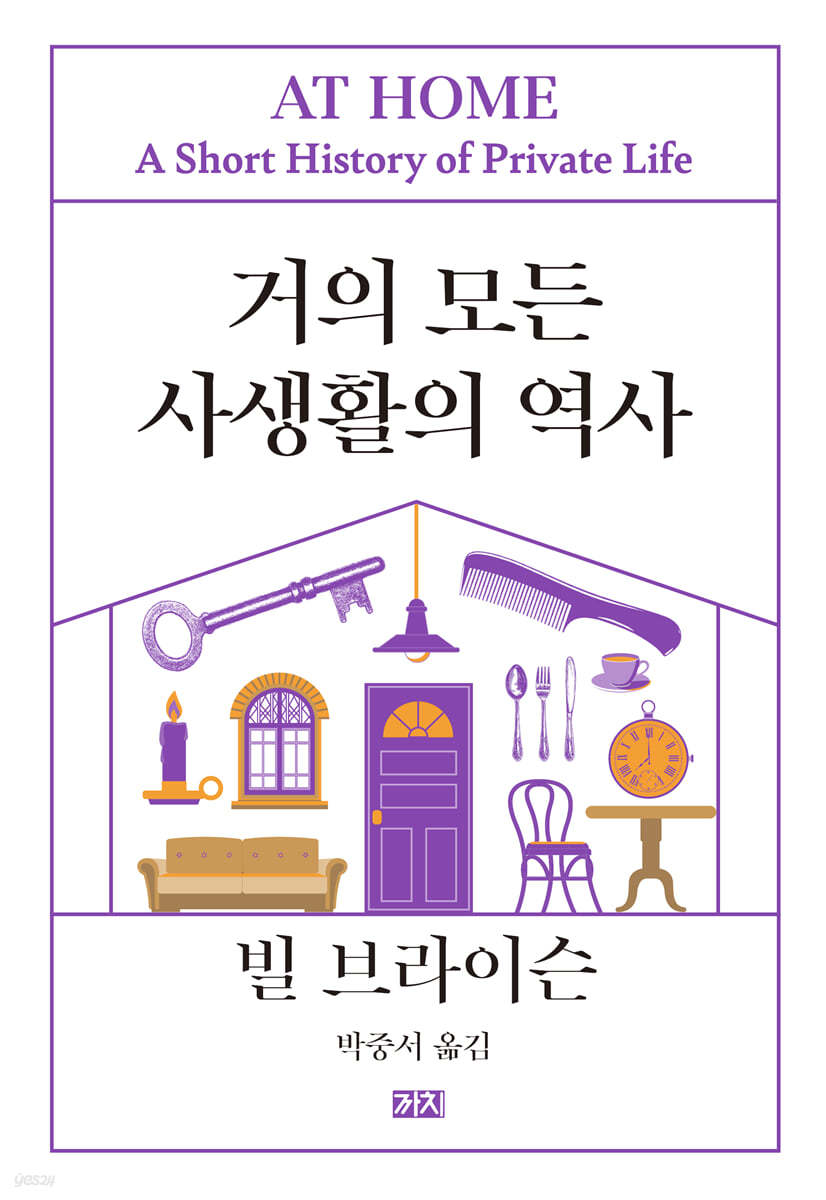
Bill Bryson, one of our most beloved authors for his irrepressible curiosity and humorous writing, returns with a new cover for his book, "A Brief History of Nearly Everything."
Bill Bryson's signature erudition, wit, sophisticated prose, and exceptional storytelling skills, which made "A Short History of Nearly Everything" one of the biggest bestsellers, are fully displayed in this book.
Bryson explores the place we call home, explaining the history of how our modern way of life came to be and how it became what it is today.
This book, which explores every nook and cranny of the house as if looking through a microscope, tells the origins of the various objects encountered there and the fascinating stories behind them. It not only allows us to see our daily lives from a new perspective, but also reveals the fascinating secrets hidden behind the scenes of the home.
After reading this book, you'll be amazed to discover that almost everything you encounter around your home has its own history and story.
Bill Bryson, one of our most beloved authors for his irrepressible curiosity and humorous writing, returns with a new cover for his book, "A Brief History of Nearly Everything."
Bill Bryson's signature erudition, wit, sophisticated prose, and exceptional storytelling skills, which made "A Short History of Nearly Everything" one of the biggest bestsellers, are fully displayed in this book.
Bryson explores the place we call home, explaining the history of how our modern way of life came to be and how it became what it is today.
This book, which explores every nook and cranny of the house as if looking through a microscope, tells the origins of the various objects encountered there and the fascinating stories behind them. It not only allows us to see our daily lives from a new perspective, but also reveals the fascinating secrets hidden behind the scenes of the home.
After reading this book, you'll be amazed to discover that almost everything you encounter around your home has its own history and story.
- You can preview some of the book's contents.
Preview
index
introduction
Chapter 1 Year
Chapter 2 Background
Chapter 3 Hall
Chapter 4 Kitchen
Chapter 5: Washroom and Pantry
Chapter 6: The Toad House
Chapter 7 Living Room
Chapter 8: Restaurants
Chapter 9 The Basement
Chapter 10: Hallway
Chapter 11 Office
Chapter 12 Garden
Chapter 13: The Purple Room
Chapter 14 Stairs
Chapter 15 Bedroom
Chapter 16: Toilet
Chapter 17: The Locker Room
Chapter 18: Nursery
Chapter 19 The Attic
Acknowledgements
References
Translator's Note
Biographical Index
Chapter 1 Year
Chapter 2 Background
Chapter 3 Hall
Chapter 4 Kitchen
Chapter 5: Washroom and Pantry
Chapter 6: The Toad House
Chapter 7 Living Room
Chapter 8: Restaurants
Chapter 9 The Basement
Chapter 10: Hallway
Chapter 11 Office
Chapter 12 Garden
Chapter 13: The Purple Room
Chapter 14 Stairs
Chapter 15 Bedroom
Chapter 16: Toilet
Chapter 17: The Locker Room
Chapter 18: Nursery
Chapter 19 The Attic
Acknowledgements
References
Translator's Note
Biographical Index
Publisher's Review
“A home is not a shelter separate from history.
“Home is where history ends.”
One day Bill Bryson realizes something strange.
Why do we study so diligently the various battles and wars of history, yet give so little serious thought to the true components of history? These, he says, are the everyday activities of people over the centuries.
Ultimately, I thought that most history is not something grand, but rather the everyday work of people over a long period of time.
Bill Bryson, who realized that most of the most important discoveries in human history can be found right here in the house we live in, embarks on a 'home tour' by wandering from room to room in his old parsonage in Norfolk, England, to explore the world inside the house.
We wander from room to room, observing the role each has played in the evolution of private life.
So the bathroom becomes the history of hygiene, the kitchen becomes the history of cooking, and the bedroom becomes the history of sex and sleep.
In the meantime, he studies the history of almost everything related to daily life.
From architecture to electricity, from food preservation to epidemics, from the spice trade to the Eiffel Tower, from the crinoline to the toilet, nothing happened by accident.
Bill Bryson also explores the brilliant, creative, and often eccentric people behind these events and inventions.
And we come to the following conclusion:
At first glance, nothing seems as trivial as our daily lives, but in fact, hidden in a corner of every home lies a tremendous amount of history, fun, excitement—and even a little danger.
The story begins with the year 1851, the year Joseph Paxton built the Crystal Palace and the Great Exhibition was held, and notes how little we know about the lifestyles and customs of the people who lived in the ancient times that serve as the setting.
Passing through the 1,600-year-old vestibule, where the hall was once considered a home, but now in its greatest decline, we head to the kitchen, where we learn about food preservation and consumption.
In the dishwashing room and pantry, we delve into the lives of servants in a time when class systems existed, and by looking inside the toad house, a small box hanging on the wall, we learn about the development of lighting, oil, and electricity.
The living room, once a benchmark for comfort, explores the history of architecture and furniture, while the dining room explores the spice trade and the age of discovery.
In the basement, we discover the evolution of building materials, in the hallway, the invention of the telephone, and in the office, the history of rats and epidemics.
Passing through gardens showcasing the advancements in landscaping and machinery, you arrive at the Purple Room, which references many architectural styles and architects.
On the stairs, we examine events and accidents through statistical data, and in the bedroom, we also explore historical perspectives on sexuality and medicine.
Passing through the bathroom, where you can learn about the history of hygiene and bathing, you reach the changing room, where you can learn about the history of textiles and clothing, and pass through the nursery, where the definition of childhood is redefined.
Finally, we conclude our journey by discussing the contemporary circumstances and agricultural depression that created the modern era in the attic where the story of the preface began.
This book contains almost every story about things that people have overlooked for a long time.
That doesn't mean I'm introducing boring history in a boring way.
This book, which meticulously unravels the past and history hidden in things we commonly see around us, is arguably the best educational book for the general public.
“Home is where history ends.”
One day Bill Bryson realizes something strange.
Why do we study so diligently the various battles and wars of history, yet give so little serious thought to the true components of history? These, he says, are the everyday activities of people over the centuries.
Ultimately, I thought that most history is not something grand, but rather the everyday work of people over a long period of time.
Bill Bryson, who realized that most of the most important discoveries in human history can be found right here in the house we live in, embarks on a 'home tour' by wandering from room to room in his old parsonage in Norfolk, England, to explore the world inside the house.
We wander from room to room, observing the role each has played in the evolution of private life.
So the bathroom becomes the history of hygiene, the kitchen becomes the history of cooking, and the bedroom becomes the history of sex and sleep.
In the meantime, he studies the history of almost everything related to daily life.
From architecture to electricity, from food preservation to epidemics, from the spice trade to the Eiffel Tower, from the crinoline to the toilet, nothing happened by accident.
Bill Bryson also explores the brilliant, creative, and often eccentric people behind these events and inventions.
And we come to the following conclusion:
At first glance, nothing seems as trivial as our daily lives, but in fact, hidden in a corner of every home lies a tremendous amount of history, fun, excitement—and even a little danger.
The story begins with the year 1851, the year Joseph Paxton built the Crystal Palace and the Great Exhibition was held, and notes how little we know about the lifestyles and customs of the people who lived in the ancient times that serve as the setting.
Passing through the 1,600-year-old vestibule, where the hall was once considered a home, but now in its greatest decline, we head to the kitchen, where we learn about food preservation and consumption.
In the dishwashing room and pantry, we delve into the lives of servants in a time when class systems existed, and by looking inside the toad house, a small box hanging on the wall, we learn about the development of lighting, oil, and electricity.
The living room, once a benchmark for comfort, explores the history of architecture and furniture, while the dining room explores the spice trade and the age of discovery.
In the basement, we discover the evolution of building materials, in the hallway, the invention of the telephone, and in the office, the history of rats and epidemics.
Passing through gardens showcasing the advancements in landscaping and machinery, you arrive at the Purple Room, which references many architectural styles and architects.
On the stairs, we examine events and accidents through statistical data, and in the bedroom, we also explore historical perspectives on sexuality and medicine.
Passing through the bathroom, where you can learn about the history of hygiene and bathing, you reach the changing room, where you can learn about the history of textiles and clothing, and pass through the nursery, where the definition of childhood is redefined.
Finally, we conclude our journey by discussing the contemporary circumstances and agricultural depression that created the modern era in the attic where the story of the preface began.
This book contains almost every story about things that people have overlooked for a long time.
That doesn't mean I'm introducing boring history in a boring way.
This book, which meticulously unravels the past and history hidden in things we commonly see around us, is arguably the best educational book for the general public.
GOODS SPECIFICS
- Date of issue: February 5, 2021
- Page count, weight, size: 671 pages | 966g | 155*225*35mm
- ISBN13: 9788972917311
- ISBN10: 8972917311
You may also like
카테고리
korean


korean

![GQ KOREA Mark (Monthly): December [2025]](http://librairie.coreenne.fr/cdn/shop/files/8ef265dbbfbf186523ed75ba7319009d.jpg?v=1765340328&width=3840)


