

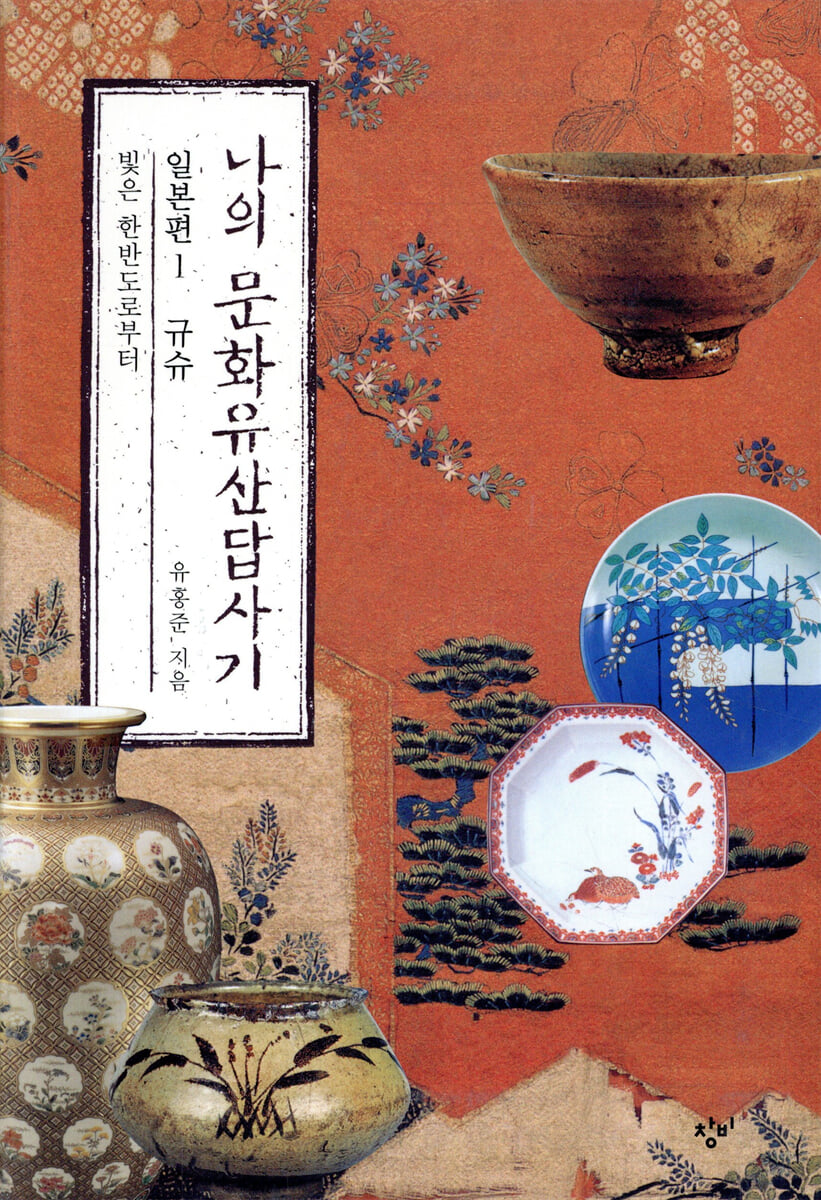
My Cultural Heritage Tour Japan Part 1: Kyushu
 |
Description
Book Introduction
Yoo Hong-jun's fresh perspective reveals the roots and essence of Japanese culture.
The 2020 revised edition of "My Cultural Heritage Tour" Japan Edition has been published!
Starting with the first volume, "Namdo Exploration No. 1" in 1993, and continuing with the seventh volume, "Jeju" in 2012, "Where is Dolhareubang, the Sensei Gwang?" in Jeju, Yoo Hong-jun's "My Cultural Heritage Exploration," which has been loved by 3.3 million readers for 20 years and recorded as the first million-seller in Korean humanities, is now heading to Japan in search of "Korean culture in Japan" and "the essence of Japanese culture."
The Japan edition of 'Research Report' began with the intention of approaching the issue of past history, which has been a major topic in Korea-Japan relations, from a cultural-historical perspective. It searches for traces of Korea's cultural influence on Japan and explores the process by which Japanese culture blossomed on that basis.
The author, who is well-versed in art history and cultural heritage, argues that it is future-oriented to shed the one-sided historical perceptions and complexes of Korea and Japan and to understand history from a bilateral perspective, and even from an East Asian perspective.
If the domestic edition of 'Dapjagi' contributed to promoting the cultural heritage of our country and encouraging appreciation for it, the recently published Japanese edition confirms the cultural excellence of our ancestors through Japan's cultural heritage and awakens us to the true nature of cultures that develop through mutual exchange and intermingling.
The Japanese edition of 'Dapsagi' has been consistently loved by many readers since its first publication in 2013.
However, many people said that the book was too large and heavy to be used as a practical guide for overseas field trips.
Accordingly, the new format applied from the ‘Dapsagi’ mountain temple pilgrimage section was also used in this revised Japanese edition, and the length of each volume was adjusted to re-edit it into 5 volumes.
The newly reborn "Travelogue" Japan edition, with its smaller size and hand-held design, is a vivid storybook that alleviates the regret of Japan, a place that has become difficult to visit recently for various reasons. It will approach readers as a guide that faithfully captures the historical awareness that forms the foundation of Korea-Japan relations, especially the consideration of cultural influence and exchange.
The 2020 revised edition of "My Cultural Heritage Tour" Japan Edition has been published!
Starting with the first volume, "Namdo Exploration No. 1" in 1993, and continuing with the seventh volume, "Jeju" in 2012, "Where is Dolhareubang, the Sensei Gwang?" in Jeju, Yoo Hong-jun's "My Cultural Heritage Exploration," which has been loved by 3.3 million readers for 20 years and recorded as the first million-seller in Korean humanities, is now heading to Japan in search of "Korean culture in Japan" and "the essence of Japanese culture."
The Japan edition of 'Research Report' began with the intention of approaching the issue of past history, which has been a major topic in Korea-Japan relations, from a cultural-historical perspective. It searches for traces of Korea's cultural influence on Japan and explores the process by which Japanese culture blossomed on that basis.
The author, who is well-versed in art history and cultural heritage, argues that it is future-oriented to shed the one-sided historical perceptions and complexes of Korea and Japan and to understand history from a bilateral perspective, and even from an East Asian perspective.
If the domestic edition of 'Dapjagi' contributed to promoting the cultural heritage of our country and encouraging appreciation for it, the recently published Japanese edition confirms the cultural excellence of our ancestors through Japan's cultural heritage and awakens us to the true nature of cultures that develop through mutual exchange and intermingling.
The Japanese edition of 'Dapsagi' has been consistently loved by many readers since its first publication in 2013.
However, many people said that the book was too large and heavy to be used as a practical guide for overseas field trips.
Accordingly, the new format applied from the ‘Dapsagi’ mountain temple pilgrimage section was also used in this revised Japanese edition, and the length of each volume was adjusted to re-edit it into 5 volumes.
The newly reborn "Travelogue" Japan edition, with its smaller size and hand-held design, is a vivid storybook that alleviates the regret of Japan, a place that has become difficult to visit recently for various reasons. It will approach readers as a guide that faithfully captures the historical awareness that forms the foundation of Korea-Japan relations, especially the consideration of cultural influence and exchange.
- You can preview some of the book's contents.
Preview
index
Publishing a new bound edition in the ‘Dapsagi format’
Beginning the Japan Travelogue: From a One-Sided Perspective to a Two-Sided Perspective
Kyushu Exploration: A Blend of Nature and Culture
Part 1 Northern Kyushu
Yoshinogari: Light from the Korean Peninsula
Hizen Nagoya Castle and the Genkai Sea: The waters of the Genkai Sea hide a painful history.
Karatsu: Traces of Our Culture Remain at Japan's Gateway
Arita: The God of Porcelain, Joseon Potter Yi Sam-pyeong
Arita and Imari: In the village of secret kilns, there is a potter's tower without a trace.
Takeo Dazaifu: So that's what happened back then?
Part 2 Southern Kyushu
Kagoshima: Sakurajima's volcanic ash is still flying
Satsuma ware from Misan Village: Forgetting one's hometown
Miyazaki Nanhyangchon: There it is, I go there.
supplement
Tour schedule and guide map
Beginning the Japan Travelogue: From a One-Sided Perspective to a Two-Sided Perspective
Kyushu Exploration: A Blend of Nature and Culture
Part 1 Northern Kyushu
Yoshinogari: Light from the Korean Peninsula
Hizen Nagoya Castle and the Genkai Sea: The waters of the Genkai Sea hide a painful history.
Karatsu: Traces of Our Culture Remain at Japan's Gateway
Arita: The God of Porcelain, Joseon Potter Yi Sam-pyeong
Arita and Imari: In the village of secret kilns, there is a potter's tower without a trace.
Takeo Dazaifu: So that's what happened back then?
Part 2 Southern Kyushu
Kagoshima: Sakurajima's volcanic ash is still flying
Satsuma ware from Misan Village: Forgetting one's hometown
Miyazaki Nanhyangchon: There it is, I go there.
supplement
Tour schedule and guide map
Publisher's Review
Japan and Korea, countries that are close yet distant
The most clichéd, yet most accurate, expression to describe Japan is "a country that is close yet far."
Not only has it left an indelible scar on our modern history, it is also a country that attempts to distort history at every opportunity.
They do not properly acknowledge the role of the 'immigrants' from the Korean peninsula who contributed decisively to the formation of the ancient nation and introduced rice farming and Chinese character culture, and instead explain that Chinese culture came 'through' Korea. Author Yoo Hong-jun criticizes that this is no different from "a son receiving allowance from his father saying, 'The company's money came through his father's hands. '"
On the other hand, although geographically closer than any other country, how much do we really know about Japan?
Even though Japan had emerged as a global economic powerhouse alongside the United States until the recent economic downturn, we, due to the painful emotions stemming from our modern colonial experience, turned away from Japan and harbored feelings of hatred rather than trying to see it properly.
It is true that in ancient history, we did not know much about the blood alliance between Baekje and Wa, and we did not have much interest in the lives and art of the potters who were taken to Japan during the Joseon Dynasty.
The Japan edition of 'Travelogue' is not simply a look back at Japan's cultural heritage, but is a book written after witnessing with one's own eyes the influence of Koreans on ancient Japanese culture.
Volume 1 of the Japan edition, "Light from the Korean Peninsula" (Kyushu), explores the historical flow of the influence of the civilization brought by immigrants from the Korean Peninsula on the development of Japan's ancient culture, and the moving story of how Joseon potters settled in Japan and created a dazzling porcelain culture.
Author Yoo Hong-jun wanted to answer the question of why we should read the Japan section of the "Travelogue" again now.
As can be seen from the titles of each volume, the cultural heritage introduced in the Japanese edition of 'Travelogue' is cultural heritage located in Japan and is Japanese cultural heritage, but the main theme of this book is to trace the traces and influence of our ancestors hidden within it.
Ultimately, it provides an important clue to interpreting what Japan means to us now and what kind of relationship we have with Japan.
A journey to discover the essence and roots of Japanese culture.
Volume 1 of the Japan edition, "Light from the Korean Peninsula," written after visiting the Kyushu region, explores historical sites related to ancient Japanese history and confirms the traces of our ancestors that remain in various places.
The survey will be divided into Northern Kyushu and Southern Kyushu.
The Northern Kyushu tour first visits the Yoshinogari ruins, a massive Bronze Age settlement; Hizen Nagoya Castle, now a ruin and an invasion base during the Imjin War; Kakarashima, said to be the birthplace of King Muryeong of Baekje; the old kiln site of Karatsuyaki, a Japanese version of Joseon Buncheong ware; Kagami Shrine, which houses magnificent Goryeo Buddhist paintings; Arita and Imari, where the spirit of Joseon potters is engraved; and the water castles built in the Baekje style by Baekje people who fled after the fall of Baekje.
In southern Kyushu, we will visit Misan Village, the hometown of Satsuma ware, created by the families of Joseon potters Park Pyeong-ui and Sim Dang-gil, who were taken away during the Imjin War; Oksan Palace, where a memorial service was held for Dangun; and Miyazaki Baekje Village, the site of the Saju Festival (Shiwasu Matsuri), which has been carried on by descendants of Baekje for 1,300 years.
Kyushu is not just a place to enjoy natural scenery, such as the active volcano Sakurajima, or go on a golf trip. You can also see the Kyushu region that breathes together with our history.
The author, who has been touring the Kyushu region, confirms that Japan's ceramic culture has developed remarkably under the influence of Baekje pottery and Joseon potters, and laments that our ceramic culture has declined in comparison.
When I see this vibrant Karatsuyaki, I feel a sense of regret and shame.
Japan adopted our ceramic technology and conquered the world market, developing into a ceramics kingdom. We, as the original creators, have not been able to do so, and this is a lament.
(…)
Then and now, we are almost indifferent to ceramics.
We only claim that Goryeo celadon, Joseon white porcelain, and Joseon buncheong sagi are excellent, but we do not enjoy them in our daily lives.
However, the Japanese recognized the value of Joseon porcelain early on and enjoyed it in their daily lives.
We had our own unique technology, but we didn't know how to use it, and Japan took that technology and created their own great ceramics culture.
The object of reflection is ourselves.
―From Volume 1 of the Japan edition, “Karatsu: Traces of our culture remaining at the gateway to Japan”
A declaration of intent for future-oriented Korea-Japan relations
As Jared Diamond, author of Guns, Germs, and Steel, put it, we are “like twin brothers who grew up together.” The complexes that arise from unilaterally misinterpreting or misunderstanding each other’s perspectives are obstacles to a correct understanding of Korea-Japan relations and the history of exchanges.
I believe that mutual recognition of each other's fundamentals and a correct understanding of history will serve as an important foundation not only for Korea-Japan relations but also for the cultural development of East Asia.
Author Yoo Hong-jun asserts that “Korea and Japan, along with China, are equal cultural shareholder countries with a fair share of East Asian culture,” and that properly recognizing this fact is the right attitude for coexistence in the international community.
Although physical borders still exist between countries, the development of various media and the Internet has made it possible for anyone, anywhere in the world, to interact with one another.
Even when politically sensitive issues are at stake, culture plays a significant and profound role in bridging the gap and conflict.
By following the journey of the Japan edition of the "Travelogue," which seeks out traces of cultural exchange between Korea and Japan that have been passed down through the ages in the form of bones, stones, pottery, and Buddhist statues, we will be able to find a starting point for a constructive recovery of Korea-Japan relations.
A friendly travel guide to Japan and a solid introduction to Japanese studies.
"Travelogue," which opened a new chapter in the comprehensive humanities and liberal arts by combining people, art, and history, continues to achieve this in this Japan edition, encompassing a wealth of content that truly helps us understand Japan, including its history, culture, people, and art.
Additionally, to help readers who wish to connect this understanding with actual experience, we have included a map for an actual field trip and an itinerary for a 3-night, 4-day trip to Northern Kyushu and a 2-night, 3-day trip to Southern Kyushu as an appendix.
As can be seen from the records created by the domestic edition of "Travelogue" over the past 20 years, as Professor Emeritus Baek Nak-cheong of Seoul National University, who wrote the recommendation, put it, "Travelogue" is by no means "a one-time bestseller that rises and falls with the times," but a towering steady seller that has been loved by readers for a long time, and this Japanese edition in particular is an important achievement that contains "a sincere desire to illuminate the darkness of Korea-Japan relations with the power of culture."
The most clichéd, yet most accurate, expression to describe Japan is "a country that is close yet far."
Not only has it left an indelible scar on our modern history, it is also a country that attempts to distort history at every opportunity.
They do not properly acknowledge the role of the 'immigrants' from the Korean peninsula who contributed decisively to the formation of the ancient nation and introduced rice farming and Chinese character culture, and instead explain that Chinese culture came 'through' Korea. Author Yoo Hong-jun criticizes that this is no different from "a son receiving allowance from his father saying, 'The company's money came through his father's hands. '"
On the other hand, although geographically closer than any other country, how much do we really know about Japan?
Even though Japan had emerged as a global economic powerhouse alongside the United States until the recent economic downturn, we, due to the painful emotions stemming from our modern colonial experience, turned away from Japan and harbored feelings of hatred rather than trying to see it properly.
It is true that in ancient history, we did not know much about the blood alliance between Baekje and Wa, and we did not have much interest in the lives and art of the potters who were taken to Japan during the Joseon Dynasty.
The Japan edition of 'Travelogue' is not simply a look back at Japan's cultural heritage, but is a book written after witnessing with one's own eyes the influence of Koreans on ancient Japanese culture.
Volume 1 of the Japan edition, "Light from the Korean Peninsula" (Kyushu), explores the historical flow of the influence of the civilization brought by immigrants from the Korean Peninsula on the development of Japan's ancient culture, and the moving story of how Joseon potters settled in Japan and created a dazzling porcelain culture.
Author Yoo Hong-jun wanted to answer the question of why we should read the Japan section of the "Travelogue" again now.
As can be seen from the titles of each volume, the cultural heritage introduced in the Japanese edition of 'Travelogue' is cultural heritage located in Japan and is Japanese cultural heritage, but the main theme of this book is to trace the traces and influence of our ancestors hidden within it.
Ultimately, it provides an important clue to interpreting what Japan means to us now and what kind of relationship we have with Japan.
A journey to discover the essence and roots of Japanese culture.
Volume 1 of the Japan edition, "Light from the Korean Peninsula," written after visiting the Kyushu region, explores historical sites related to ancient Japanese history and confirms the traces of our ancestors that remain in various places.
The survey will be divided into Northern Kyushu and Southern Kyushu.
The Northern Kyushu tour first visits the Yoshinogari ruins, a massive Bronze Age settlement; Hizen Nagoya Castle, now a ruin and an invasion base during the Imjin War; Kakarashima, said to be the birthplace of King Muryeong of Baekje; the old kiln site of Karatsuyaki, a Japanese version of Joseon Buncheong ware; Kagami Shrine, which houses magnificent Goryeo Buddhist paintings; Arita and Imari, where the spirit of Joseon potters is engraved; and the water castles built in the Baekje style by Baekje people who fled after the fall of Baekje.
In southern Kyushu, we will visit Misan Village, the hometown of Satsuma ware, created by the families of Joseon potters Park Pyeong-ui and Sim Dang-gil, who were taken away during the Imjin War; Oksan Palace, where a memorial service was held for Dangun; and Miyazaki Baekje Village, the site of the Saju Festival (Shiwasu Matsuri), which has been carried on by descendants of Baekje for 1,300 years.
Kyushu is not just a place to enjoy natural scenery, such as the active volcano Sakurajima, or go on a golf trip. You can also see the Kyushu region that breathes together with our history.
The author, who has been touring the Kyushu region, confirms that Japan's ceramic culture has developed remarkably under the influence of Baekje pottery and Joseon potters, and laments that our ceramic culture has declined in comparison.
When I see this vibrant Karatsuyaki, I feel a sense of regret and shame.
Japan adopted our ceramic technology and conquered the world market, developing into a ceramics kingdom. We, as the original creators, have not been able to do so, and this is a lament.
(…)
Then and now, we are almost indifferent to ceramics.
We only claim that Goryeo celadon, Joseon white porcelain, and Joseon buncheong sagi are excellent, but we do not enjoy them in our daily lives.
However, the Japanese recognized the value of Joseon porcelain early on and enjoyed it in their daily lives.
We had our own unique technology, but we didn't know how to use it, and Japan took that technology and created their own great ceramics culture.
The object of reflection is ourselves.
―From Volume 1 of the Japan edition, “Karatsu: Traces of our culture remaining at the gateway to Japan”
A declaration of intent for future-oriented Korea-Japan relations
As Jared Diamond, author of Guns, Germs, and Steel, put it, we are “like twin brothers who grew up together.” The complexes that arise from unilaterally misinterpreting or misunderstanding each other’s perspectives are obstacles to a correct understanding of Korea-Japan relations and the history of exchanges.
I believe that mutual recognition of each other's fundamentals and a correct understanding of history will serve as an important foundation not only for Korea-Japan relations but also for the cultural development of East Asia.
Author Yoo Hong-jun asserts that “Korea and Japan, along with China, are equal cultural shareholder countries with a fair share of East Asian culture,” and that properly recognizing this fact is the right attitude for coexistence in the international community.
Although physical borders still exist between countries, the development of various media and the Internet has made it possible for anyone, anywhere in the world, to interact with one another.
Even when politically sensitive issues are at stake, culture plays a significant and profound role in bridging the gap and conflict.
By following the journey of the Japan edition of the "Travelogue," which seeks out traces of cultural exchange between Korea and Japan that have been passed down through the ages in the form of bones, stones, pottery, and Buddhist statues, we will be able to find a starting point for a constructive recovery of Korea-Japan relations.
A friendly travel guide to Japan and a solid introduction to Japanese studies.
"Travelogue," which opened a new chapter in the comprehensive humanities and liberal arts by combining people, art, and history, continues to achieve this in this Japan edition, encompassing a wealth of content that truly helps us understand Japan, including its history, culture, people, and art.
Additionally, to help readers who wish to connect this understanding with actual experience, we have included a map for an actual field trip and an itinerary for a 3-night, 4-day trip to Northern Kyushu and a 2-night, 3-day trip to Southern Kyushu as an appendix.
As can be seen from the records created by the domestic edition of "Travelogue" over the past 20 years, as Professor Emeritus Baek Nak-cheong of Seoul National University, who wrote the recommendation, put it, "Travelogue" is by no means "a one-time bestseller that rises and falls with the times," but a towering steady seller that has been loved by readers for a long time, and this Japanese edition in particular is an important achievement that contains "a sincere desire to illuminate the darkness of Korea-Japan relations with the power of culture."
GOODS SPECIFICS
- Date of issue: September 20, 2020
- Page count, weight, size: 340 pages | 530g | 147*214*20mm
- ISBN13: 9788936477981
- ISBN10: 8936477986
You may also like
카테고리
korean


korean

![GQ KOREA Mark (Monthly): December [2025]](http://librairie.coreenne.fr/cdn/shop/files/8ef265dbbfbf186523ed75ba7319009d.jpg?v=1765340328&width=3840)


