

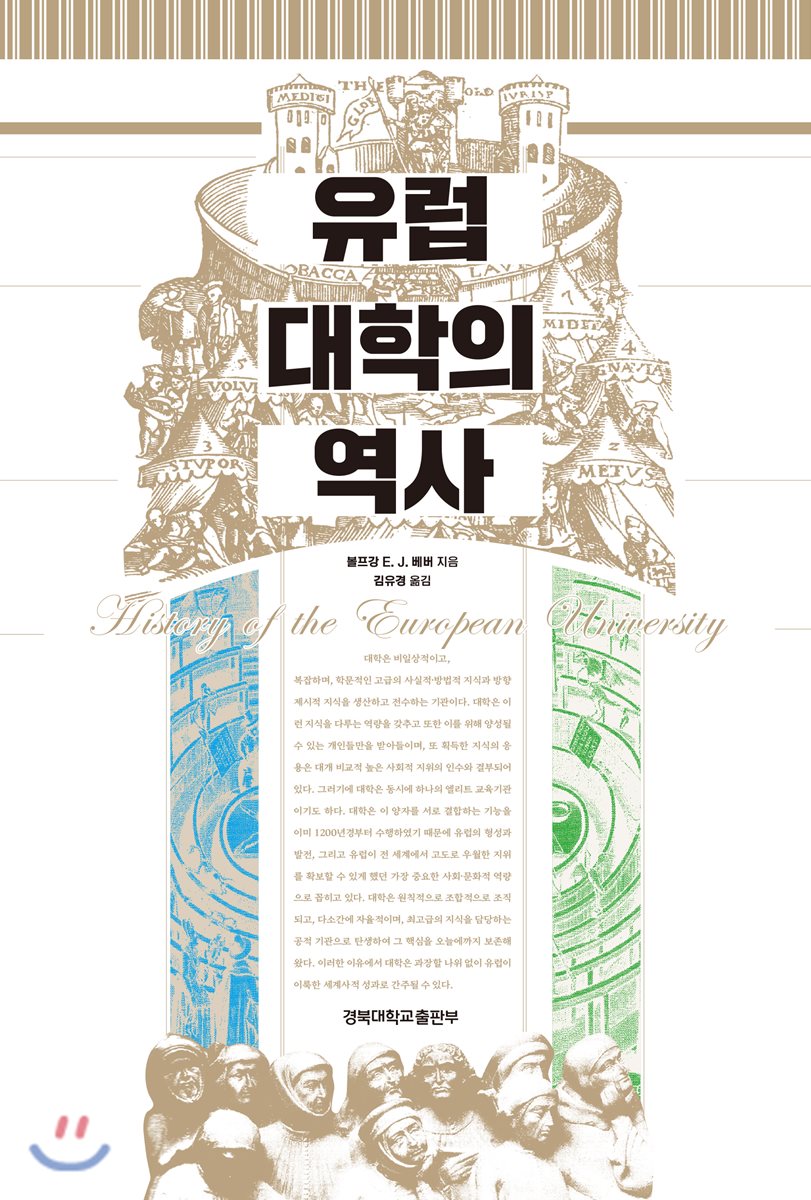
History of European Universities
 |
Description
Book Introduction
Universities are institutions that produce and impart quality knowledge, and are a type of elite educational institution that cultivates talent and helps them rise in social status.
Since their founding around 1200, universities have played a crucial role in shaping and developing modern-day Europe, ultimately serving as a socio-cultural force that has enabled Europe to achieve global preeminence.
As a result, countries around the world are now adopting the European-style university system into their higher education systems.
This book is a historical book that examines the entire process of establishment and development of European universities.
It is characteristic that it covers in relatively detail the development of individual academic disciplines incorporated into universities in each period since the Middle Ages.
Furthermore, by paying attention to the way universities interact with the external society as well as the internal systems and academic activities of the university, it also possesses the characteristics of European cultural history and ideological history viewed through the lens of the university.
Through this perspective, we explore the private significance of universities as major public knowledge institutions and further argue for the need for reforms suited to a knowledge-information society.
Since their founding around 1200, universities have played a crucial role in shaping and developing modern-day Europe, ultimately serving as a socio-cultural force that has enabled Europe to achieve global preeminence.
As a result, countries around the world are now adopting the European-style university system into their higher education systems.
This book is a historical book that examines the entire process of establishment and development of European universities.
It is characteristic that it covers in relatively detail the development of individual academic disciplines incorporated into universities in each period since the Middle Ages.
Furthermore, by paying attention to the way universities interact with the external society as well as the internal systems and academic activities of the university, it also possesses the characteristics of European cultural history and ideological history viewed through the lens of the university.
Through this perspective, we explore the private significance of universities as major public knowledge institutions and further argue for the need for reforms suited to a knowledge-information society.
index
introduction
Introduction
Chapter 1
[Middle Ages] Christian Europe and Scholastic Education (1180–1400)
1.
Foundation and Birth
2.
Diffusion and internal consolidation
3.
Teacher and student
4.
Structure and process of study
- Foundation: The establishment and development of scholastic learning
- Artes liberales
- Medicine
- Law
- Theology
5.
Major forms of knowledge pursuit and transmission
6.
The conclusion of an era
Chapter 2
[Early Modern Period] The Prince's University and the Challenges of Humanism, the Reformation, and the Enlightenment (1400–1790)
1.
Environmental conditions and basic characteristics
2.
Numerical increase in universities
3.
Institutions, social reputation and facilities
- policy
- Social reputation of students and professors
- facility
4.
Structure and process of study
- The Transformation, Innovation, and Beginning of the Collapse of Scholasticism
- Department of Philosophy
- Upper division
- Forms and conditions of knowledge pursuit and communication
5.
The conclusion of an era
Chapter 3
[Modern and Contemporary] Nation formation, national competition, development of technology and natural sciences, and national universities in the industrial society era (1790–1990)
1.
Premise and Comprehensive Development
2.
The global spread of universities
3.
System and Administration
4.
professor and student
5.
Facilities and equipment
6.
Structure and process of learning
- Department of Philosophy
- Law and Theology
- Medicine
- New faculty
7.
Communication and the pursuit of knowledge
8.
The conclusion of an era
Chapter 4
Current outlook and overall conclusion
abbreviation
Sources and literature
Bibliography and other materials
Chronology
Translator's Note
Introduction
Chapter 1
[Middle Ages] Christian Europe and Scholastic Education (1180–1400)
1.
Foundation and Birth
2.
Diffusion and internal consolidation
3.
Teacher and student
4.
Structure and process of study
- Foundation: The establishment and development of scholastic learning
- Artes liberales
- Medicine
- Law
- Theology
5.
Major forms of knowledge pursuit and transmission
6.
The conclusion of an era
Chapter 2
[Early Modern Period] The Prince's University and the Challenges of Humanism, the Reformation, and the Enlightenment (1400–1790)
1.
Environmental conditions and basic characteristics
2.
Numerical increase in universities
3.
Institutions, social reputation and facilities
- policy
- Social reputation of students and professors
- facility
4.
Structure and process of study
- The Transformation, Innovation, and Beginning of the Collapse of Scholasticism
- Department of Philosophy
- Upper division
- Forms and conditions of knowledge pursuit and communication
5.
The conclusion of an era
Chapter 3
[Modern and Contemporary] Nation formation, national competition, development of technology and natural sciences, and national universities in the industrial society era (1790–1990)
1.
Premise and Comprehensive Development
2.
The global spread of universities
3.
System and Administration
4.
professor and student
5.
Facilities and equipment
6.
Structure and process of learning
- Department of Philosophy
- Law and Theology
- Medicine
- New faculty
7.
Communication and the pursuit of knowledge
8.
The conclusion of an era
Chapter 4
Current outlook and overall conclusion
abbreviation
Sources and literature
Bibliography and other materials
Chronology
Translator's Note
GOODS SPECIFICS
- Date of issue: January 31, 2020
- Page count, weight, size: 332 pages | 486g | 153*224*30mm
- ISBN13: 9788971805312
- ISBN10: 8971805315
You may also like
카테고리
korean


korean

![GQ KOREA Mark (Monthly): December [2025]](http://librairie.coreenne.fr/cdn/shop/files/8ef265dbbfbf186523ed75ba7319009d.jpg?v=1765340328&width=3840)


