

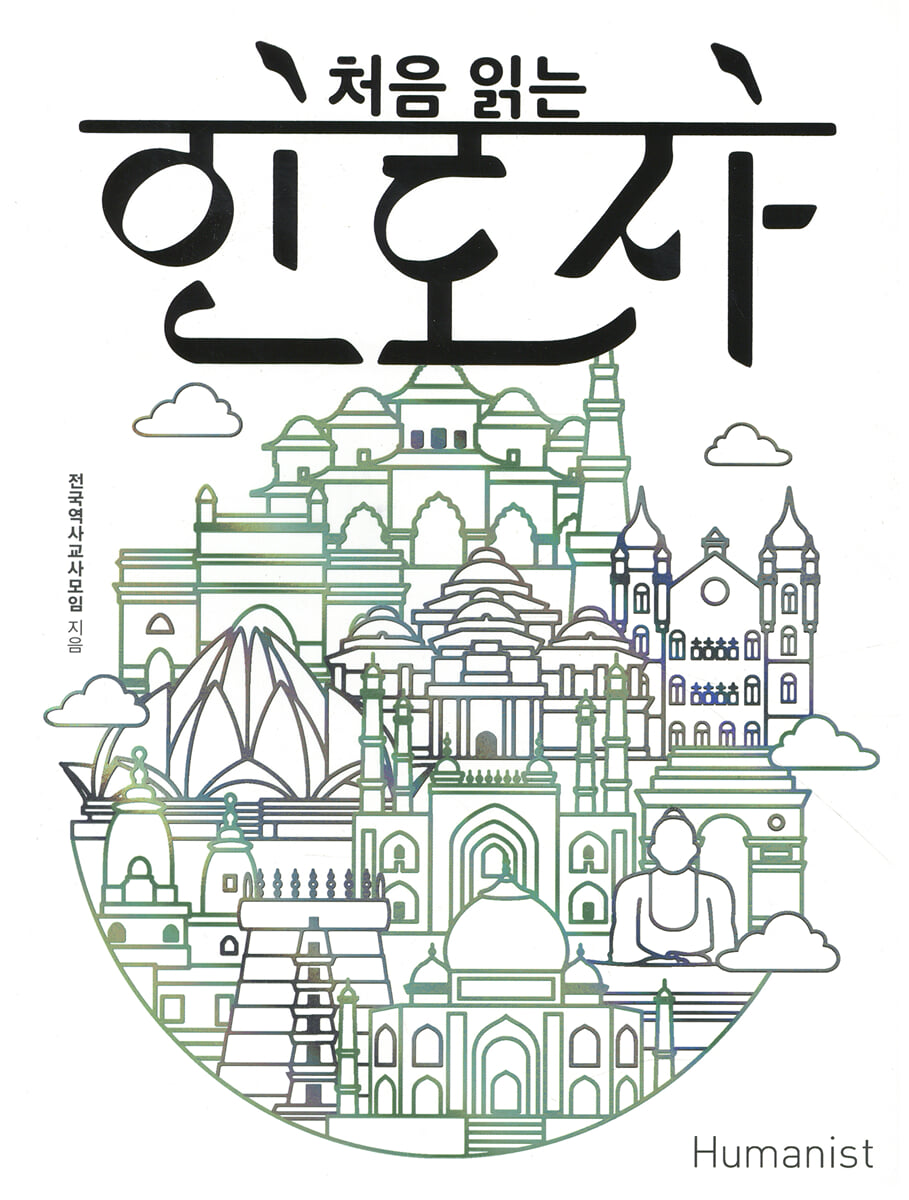
Reading Indian history for the first time
 |
Description
Book Introduction
Discover India, a mysterious land of diversity and integration.
India is a fascinating country with a long history and a history of constant, dynamic change and development.
It was the core of a vast subcontinent where various races and ethnicities competed and fought frequent wars, but also coexisted and maintained peace.
It is true that for a long time, India was remembered by us as a fragmentary image of religion, caste system, and British colony.
Now, let's unveil India and embark on a journey to discover the history of a subcontinent that has autonomously integrated countless diverse and multifaceted nations, including races, languages, religions, and classes.
We must pay attention to the lives of these Indians, which are like two sides of a coin.
We will be able to gauge India's potential for further growth and clearly envision an India that will coexist with us in the world.
India is a fascinating country with a long history and a history of constant, dynamic change and development.
It was the core of a vast subcontinent where various races and ethnicities competed and fought frequent wars, but also coexisted and maintained peace.
It is true that for a long time, India was remembered by us as a fragmentary image of religion, caste system, and British colony.
Now, let's unveil India and embark on a journey to discover the history of a subcontinent that has autonomously integrated countless diverse and multifaceted nations, including races, languages, religions, and classes.
We must pay attention to the lives of these Indians, which are like two sides of a coin.
We will be able to gauge India's potential for further growth and clearly envision an India that will coexist with us in the world.
- You can preview some of the book's contents.
Preview
index
Publishing the first world history series
preface
Prologue - Meet India, a country that has continued to develop throughout its long history.
Chapter 1: The Birth of the Indus Civilization and the Birth of the Nation
1 The Birth of the Indus Civilization
2 Aryans Become New Masters of the North
3 Several countries entered the North
- India's great myth, the Mahabharata
4 The Kingdom of Magadha, Laying the Foundation for the Emergence of an Empire
- The Vedas, the scriptures of Brahmanism
· India's unique social system, caste
Chapter 2: The Establishment and Development of the Empire
1 Mauryan Dynasty, Founding the First Empire
2 The Kushan Empire developed in the north, and several countries developed in the south.
3 The Gupta Dynasty Unifies the North Again
- "Ramayana", capturing the true face of Indians
Hinduism and its gods boast diversity and unity.
Chapter 3: The Division of the Empire and the Invasion of Islamic Powers
1. Multiple forces coexist in various places.
- Ellora Caves Temple
2 Islamic forces establish a nation on Indian soil
3. In the South, the Chola and Vijayanagar kingdoms rise to power.
- Vasco da Gama comes to India
· Indian culture spreads to Southeast Asia
Chapter 4: The Rise of the Mughal Empire and the Emergence of Western Powers
1. The Mughals establish an empire in India.
Babur, showing the way forward for the Mughal Empire
2 The Mughal Empire reaches its peak
3 The Mughal Empire declines, and European powers approach.
- Another religion of Indians, Sikhism
· The flower of Indian Islamic culture, the Taj Mahal
Chapter 5 India under British Rule
1. The British East India Company expands its power.
2. The rise of modernization and social reform movements
3. The British government directly rules India.
- Lakshmi Bai, hero of the Sepoy Uprising
· Why did the Mughal Empire fall?
Chapter 6: The Struggle for Independence
1. Carry out an anti-British national movement
2. Claim complete independence
- Ambedkar, the father of the untouchables
3. Achieving independence
- Armed independence fighter, boss
· Great soul, 'Gandhi'
Chapter 7: Building a New Nation After Independence
1 India splits into two independent countries
- Gandhi, calling for one India to the end
- Language is diverse and complex.
2. Development toward parliamentary democracy and non-aligned diplomacy
3. State capitalism develops
· Other countries in the Indian subcontinent
Chapter 8: Towards a Hopeful Future
1. Diversification of political structures
The Limits of Indian Democracy: The Nehru Dynasty
2. Modifying the planned economic system
3. The public becomes the protagonist of social change.
- India, where various religions coexist
· Indian life also has its particularities and universalities.
· India and our country in history
Epilogue - Focusing on India's Diversity
Chronology
The evolution of Indian history
Search
preface
Prologue - Meet India, a country that has continued to develop throughout its long history.
Chapter 1: The Birth of the Indus Civilization and the Birth of the Nation
1 The Birth of the Indus Civilization
2 Aryans Become New Masters of the North
3 Several countries entered the North
- India's great myth, the Mahabharata
4 The Kingdom of Magadha, Laying the Foundation for the Emergence of an Empire
- The Vedas, the scriptures of Brahmanism
· India's unique social system, caste
Chapter 2: The Establishment and Development of the Empire
1 Mauryan Dynasty, Founding the First Empire
2 The Kushan Empire developed in the north, and several countries developed in the south.
3 The Gupta Dynasty Unifies the North Again
- "Ramayana", capturing the true face of Indians
Hinduism and its gods boast diversity and unity.
Chapter 3: The Division of the Empire and the Invasion of Islamic Powers
1. Multiple forces coexist in various places.
- Ellora Caves Temple
2 Islamic forces establish a nation on Indian soil
3. In the South, the Chola and Vijayanagar kingdoms rise to power.
- Vasco da Gama comes to India
· Indian culture spreads to Southeast Asia
Chapter 4: The Rise of the Mughal Empire and the Emergence of Western Powers
1. The Mughals establish an empire in India.
Babur, showing the way forward for the Mughal Empire
2 The Mughal Empire reaches its peak
3 The Mughal Empire declines, and European powers approach.
- Another religion of Indians, Sikhism
· The flower of Indian Islamic culture, the Taj Mahal
Chapter 5 India under British Rule
1. The British East India Company expands its power.
2. The rise of modernization and social reform movements
3. The British government directly rules India.
- Lakshmi Bai, hero of the Sepoy Uprising
· Why did the Mughal Empire fall?
Chapter 6: The Struggle for Independence
1. Carry out an anti-British national movement
2. Claim complete independence
- Ambedkar, the father of the untouchables
3. Achieving independence
- Armed independence fighter, boss
· Great soul, 'Gandhi'
Chapter 7: Building a New Nation After Independence
1 India splits into two independent countries
- Gandhi, calling for one India to the end
- Language is diverse and complex.
2. Development toward parliamentary democracy and non-aligned diplomacy
3. State capitalism develops
· Other countries in the Indian subcontinent
Chapter 8: Towards a Hopeful Future
1. Diversification of political structures
The Limits of Indian Democracy: The Nehru Dynasty
2. Modifying the planned economic system
3. The public becomes the protagonist of social change.
- India, where various religions coexist
· Indian life also has its particularities and universalities.
· India and our country in history
Epilogue - Focusing on India's Diversity
Chronology
The evolution of Indian history
Search
Detailed image

Publisher's Review
Let's focus on India's diversity and unity.
-Remove the veil and meet the real face of India.
When you think of 'India', the first things that come to mind are Buddhism, Hinduism, the caste system, and the Ganges River.
Since then, it has been approached with a sense of mystery, and countless people have gone backpacking there. Nowadays, it has been given the image of a new powerhouse with advanced mathematics and IT.
Although there are many images of India, there are few texts about India that the general public can easily and properly understand.
India is a truly fascinating country, a dynamic country that has constantly changed and developed throughout its long history.
During the Bronze Age, India created the world's greatest urban civilization, and in ancient times, empires such as the Mauryan and Gupta empires flourished with brilliant cultures based on Buddhism, Hinduism, and other religions.
Despite enduring the hardships of 200 years of British colonial rule, the country achieved independence on its own. While it failed to become a unified nation, it developed politically into the world's largest democratic nation, and recently, it has attracted the world's attention as the country with the greatest potential for economic growth.
India's diversity is the product of numerous ethnic groups coming together and adding their own cultures to India's, which has developed into a complex whole. While this has sometimes been a stumbling block for Indians, they have integrated it and continuously developed.
In this book, we will be able to see the 'real' India, which has been hidden behind a veil, without hiding anything.
A History of India for Koreans, Vividly Recording Modern and Contemporary History
-Looking into India's past, present and future
We know very little about India.
Among the world history covered in the curriculum, the history of South Asia, including India, is extremely limited, and the content is limited to a superficial look at religion, the caste system, etc.
Additionally, it focuses on the pre-modern period and is very lacking in content on the modern and contemporary period.
All that is left is to add a few lines about the British colonial rule, the nationalist movement led by Gandhi and Nehru, and the partition into India and Pakistan after World War II due to religious issues.
Accordingly, this book was planned as a full-fledged history book to properly understand India's past and present, and was written with a focus on Koreans who are encountering Indian history for the first time.
In order to introduce the history of other countries, which are comprised of unfamiliar spaces and unfamiliar events, in an easy and friendly manner, historical maps were placed appropriately where necessary to help readers fully visualize the country's natural environment and enhance their understanding of the space.
Additionally, a narrative structure was introduced to bring historical figures and major events to life based on historical materials, enabling the depiction of unfamiliar events.
With the idea that this book could be a first impression of the country, I did not forget to offer a warm perspective on the lives and culture of the people who shaped this country from ancient times to the present, as well as a sober historical critique.
At first glance, Korea and India may seem to have no common ground, but they have a long history of exchanges. In modern times, they share similar historical experiences: the pain of colonization by powerful nations, and the struggles with dictatorship and the struggle for democracy.
It might be fun to read it while comparing it to our history.
Since the 2000s, the two countries have been actively exchanging information in politics, economy, philosophy, art, and education, in an effort to become more genuine partners.
The reason why we should pay attention to India, which is attracting the world's attention, is very clear.
The National History Teachers Association's "World History for Beginners" series has been newly revised.
The 'First Reading of World History' series was planned with the aim of looking at world history through the 'eyes of Koreans', beyond the world history of 'Europe as the lead and China as a supporting role.'
Teachers from the National History Teachers Association selected five countries and began organizing their histories based on their field experience.
The books in this series cover each country's unique history, but they are written so that each country's history can be understood within the context of world history.
To help readers learn about major events, figures, and the historical significance of civilizations in world history, we've used timelines and maps to clearly connect the dots between the books in the series.
Another unique characteristic of this series is that it does not mechanically list political events in a chronological order, but vividly portrays the culture and history of the country.
Looking at the many reader reviews that poured in after the series was published in 2010, many praised the books, saying they chose them before traveling to Turkey, before going on a business trip to India, and before living in Japan to learn more about the country, and that the easy-to-read and three-dimensional descriptions led them to seek out and read books from other countries.
I hope that this series will continue to serve as a vivid introduction to the history of countries that cannot be fully understood through textbooks alone, or as an excellent guidebook for those planning a trip to those countries.
-Remove the veil and meet the real face of India.
When you think of 'India', the first things that come to mind are Buddhism, Hinduism, the caste system, and the Ganges River.
Since then, it has been approached with a sense of mystery, and countless people have gone backpacking there. Nowadays, it has been given the image of a new powerhouse with advanced mathematics and IT.
Although there are many images of India, there are few texts about India that the general public can easily and properly understand.
India is a truly fascinating country, a dynamic country that has constantly changed and developed throughout its long history.
During the Bronze Age, India created the world's greatest urban civilization, and in ancient times, empires such as the Mauryan and Gupta empires flourished with brilliant cultures based on Buddhism, Hinduism, and other religions.
Despite enduring the hardships of 200 years of British colonial rule, the country achieved independence on its own. While it failed to become a unified nation, it developed politically into the world's largest democratic nation, and recently, it has attracted the world's attention as the country with the greatest potential for economic growth.
India's diversity is the product of numerous ethnic groups coming together and adding their own cultures to India's, which has developed into a complex whole. While this has sometimes been a stumbling block for Indians, they have integrated it and continuously developed.
In this book, we will be able to see the 'real' India, which has been hidden behind a veil, without hiding anything.
A History of India for Koreans, Vividly Recording Modern and Contemporary History
-Looking into India's past, present and future
We know very little about India.
Among the world history covered in the curriculum, the history of South Asia, including India, is extremely limited, and the content is limited to a superficial look at religion, the caste system, etc.
Additionally, it focuses on the pre-modern period and is very lacking in content on the modern and contemporary period.
All that is left is to add a few lines about the British colonial rule, the nationalist movement led by Gandhi and Nehru, and the partition into India and Pakistan after World War II due to religious issues.
Accordingly, this book was planned as a full-fledged history book to properly understand India's past and present, and was written with a focus on Koreans who are encountering Indian history for the first time.
In order to introduce the history of other countries, which are comprised of unfamiliar spaces and unfamiliar events, in an easy and friendly manner, historical maps were placed appropriately where necessary to help readers fully visualize the country's natural environment and enhance their understanding of the space.
Additionally, a narrative structure was introduced to bring historical figures and major events to life based on historical materials, enabling the depiction of unfamiliar events.
With the idea that this book could be a first impression of the country, I did not forget to offer a warm perspective on the lives and culture of the people who shaped this country from ancient times to the present, as well as a sober historical critique.
At first glance, Korea and India may seem to have no common ground, but they have a long history of exchanges. In modern times, they share similar historical experiences: the pain of colonization by powerful nations, and the struggles with dictatorship and the struggle for democracy.
It might be fun to read it while comparing it to our history.
Since the 2000s, the two countries have been actively exchanging information in politics, economy, philosophy, art, and education, in an effort to become more genuine partners.
The reason why we should pay attention to India, which is attracting the world's attention, is very clear.
The National History Teachers Association's "World History for Beginners" series has been newly revised.
The 'First Reading of World History' series was planned with the aim of looking at world history through the 'eyes of Koreans', beyond the world history of 'Europe as the lead and China as a supporting role.'
Teachers from the National History Teachers Association selected five countries and began organizing their histories based on their field experience.
The books in this series cover each country's unique history, but they are written so that each country's history can be understood within the context of world history.
To help readers learn about major events, figures, and the historical significance of civilizations in world history, we've used timelines and maps to clearly connect the dots between the books in the series.
Another unique characteristic of this series is that it does not mechanically list political events in a chronological order, but vividly portrays the culture and history of the country.
Looking at the many reader reviews that poured in after the series was published in 2010, many praised the books, saying they chose them before traveling to Turkey, before going on a business trip to India, and before living in Japan to learn more about the country, and that the easy-to-read and three-dimensional descriptions led them to seek out and read books from other countries.
I hope that this series will continue to serve as a vivid introduction to the history of countries that cannot be fully understood through textbooks alone, or as an excellent guidebook for those planning a trip to those countries.
GOODS SPECIFICS
- Publication date: December 13, 2018
- Page count, weight, size: 268 pages | 502g | 165*220*20mm
- ISBN13: 9791160801835
- ISBN10: 1160801835
You may also like
카테고리
korean


korean

![GQ KOREA Mark (Monthly): December [2025]](http://librairie.coreenne.fr/cdn/shop/files/8ef265dbbfbf186523ed75ba7319009d.jpg?v=1765340328&width=3840)


