

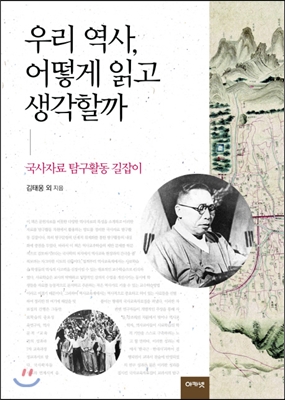
How should we read and think about our history?
 |
Description
Book Introduction
Step-by-step inquiry question creation guidelines for middle and high school history teachers.
Accordingly, this book proposes creating inquiry questions in stages as one way to effectively use textbook materials in inquiry-based classes.
When students encounter materials, we focus on creating step-by-step inquiry questions that help them first and most easily access the materials, starting with the first-step question that confirms the basic facts of the materials and distinguishes between facts and opinions, and then moving on to inference, criticism, and historical judgment.
The most notable feature of this book is that it selects various historical materials such as diaries, letters, and other life history materials, newspaper articles, modern and contemporary novels, newspaper cartoons, photographs, drawings, propaganda posters, maps, and statistical data as research materials, and introduces in detail the process of creating research questions using these materials.
It explains the characteristics of each material, presents in detail the criteria for material selection, and points to keep in mind when creating inquiry questions, as well as provides example questions and practice questions that will actually be helpful to history teachers.
Accordingly, this book proposes creating inquiry questions in stages as one way to effectively use textbook materials in inquiry-based classes.
When students encounter materials, we focus on creating step-by-step inquiry questions that help them first and most easily access the materials, starting with the first-step question that confirms the basic facts of the materials and distinguishes between facts and opinions, and then moving on to inference, criticism, and historical judgment.
The most notable feature of this book is that it selects various historical materials such as diaries, letters, and other life history materials, newspaper articles, modern and contemporary novels, newspaper cartoons, photographs, drawings, propaganda posters, maps, and statistical data as research materials, and introduces in detail the process of creating research questions using these materials.
It explains the characteristics of each material, presents in detail the criteria for material selection, and points to keep in mind when creating inquiry questions, as well as provides example questions and practice questions that will actually be helpful to history teachers.
- You can preview some of the book's contents.
Preview
index
At the publication of the book_ Kim Tae-woong
Part 1: Literature
Chapter 1: Life History Materials_Ha Myeong-jun and Kim Sang-gi
1.
Discoveries of everyday life: ancient documents, diaries, and letters
2.
Using life history data
3.
Creating an inquiry question | Yooje
Chapter 2 Newspaper Article_Park Ji-won
1.
Newspapers, the backbone of modern and contemporary history research
2.
Using newspaper articles
3.
Creating an inquiry question | Yooje
Chapter 3 Modern and Contemporary Novels_Kim Dae-ho
1.
Between Fact and Fiction: Modern and Contemporary Korean Novels
2.
Using Modern and Contemporary Novels: Reading Critical Novels Using "Historical Thinking" and "Historicization"
3.
Creating an inquiry question | Yooje
Part 2 Visual Materials
Chapter 4 Current Affairs Cartoons_Kim Eun-young, Park Ji-won, Kim Bo-min, Kim Jeong-hee
1.
The Birth of Newspaper Cartoons
2.
Using newspaper cartoons
3.
Creating an inquiry question | Yooje
Chapter 5: Photos by Kim Tae-woong, Jeong Jin-sook, and Lee Seon-sook
1.
Images of memories, photos
2.
Using photographic data
3.
Creating an inquiry question | Yooje
Chapter 6: Illustration_Choi Yun-je
1.
Art and History
2.
Using artwork
3.
Creating an inquiry question | Yooje
Chapter 7 Propaganda Poster_Kim Eun-young
1.
Portrait of an era, propaganda poster
2.
Using propaganda posters
3.
Creating an inquiry question | Yooje
Chapter 8 Map_Jo Min-ah, Jeong Jae-seon, Heo Du-won
1.
Information report, map
2.
Using the map
3.
Creating an inquiry question | Yooje
Part 3 Statistical Data
Chapter 9: Statistical Data_Kim Gwang-gyu
1.
The intersection of history and statistics
2.
Using statistical data
3.
Creating an inquiry question | Yooje
References
Author's profile
Part 1: Literature
Chapter 1: Life History Materials_Ha Myeong-jun and Kim Sang-gi
1.
Discoveries of everyday life: ancient documents, diaries, and letters
2.
Using life history data
3.
Creating an inquiry question | Yooje
Chapter 2 Newspaper Article_Park Ji-won
1.
Newspapers, the backbone of modern and contemporary history research
2.
Using newspaper articles
3.
Creating an inquiry question | Yooje
Chapter 3 Modern and Contemporary Novels_Kim Dae-ho
1.
Between Fact and Fiction: Modern and Contemporary Korean Novels
2.
Using Modern and Contemporary Novels: Reading Critical Novels Using "Historical Thinking" and "Historicization"
3.
Creating an inquiry question | Yooje
Part 2 Visual Materials
Chapter 4 Current Affairs Cartoons_Kim Eun-young, Park Ji-won, Kim Bo-min, Kim Jeong-hee
1.
The Birth of Newspaper Cartoons
2.
Using newspaper cartoons
3.
Creating an inquiry question | Yooje
Chapter 5: Photos by Kim Tae-woong, Jeong Jin-sook, and Lee Seon-sook
1.
Images of memories, photos
2.
Using photographic data
3.
Creating an inquiry question | Yooje
Chapter 6: Illustration_Choi Yun-je
1.
Art and History
2.
Using artwork
3.
Creating an inquiry question | Yooje
Chapter 7 Propaganda Poster_Kim Eun-young
1.
Portrait of an era, propaganda poster
2.
Using propaganda posters
3.
Creating an inquiry question | Yooje
Chapter 8 Map_Jo Min-ah, Jeong Jae-seon, Heo Du-won
1.
Information report, map
2.
Using the map
3.
Creating an inquiry question | Yooje
Part 3 Statistical Data
Chapter 9: Statistical Data_Kim Gwang-gyu
1.
The intersection of history and statistics
2.
Using statistical data
3.
Creating an inquiry question | Yooje
References
Author's profile
Publisher's Review
Read this book and answer the questions.
Step 1: Fact Check
What is the title of this book? How to Read and Think About Our History: A Guide to Exploring National Historical Materials
Step 2: Infer
When looking at the table of contents, let's think about what the book is about and who would benefit from reading it.
This book introduces the characteristics of various historical materials, such as life history materials, newspaper articles, novels, current affairs cartoons, photographs, drawings, posters, maps, and statistics, and intensively introduces methods for creating research questions step by step to fully utilize these materials in research activities.
I think it would be helpful not only for teachers but also for parents to read.
If you go to a museum with your children and don't just look at the artifacts with your eyes, but ask them questions step by step as described in this book, you can foster their curiosity and stimulate their imagination.
I think it will also be helpful to students.
These days, many college entrance exams require students to find the correct answer using only the given data, so training in analyzing and interpreting the given data is necessary.
The practice of analyzing historical data through the step-by-step inquiry questions in this book seems like an easy study method that can be done on one's own.
Step 3: Criticize
Let's talk about the reasons for creating this book, in relation to the historical background.
National Foundation Day is just a day off from school, and for today's children who know Ahn Jung-geun as the person who threw a lunchbox bomb, history is a boring and difficult subject to memorize that will make you yawn.
The history education community, feeling the seriousness of this kind of awareness and teaching method of history, proposed historical study as a teaching method that can nurture students as little historians who actively analyze and infer materials.
However, there is some skepticism about whether the study of historical materials based on the exploratory activities in textbooks has achieved the desired results in the educational field.
This is because the research activities that should have continued through the stages of basic fact-checking, distinguishing between facts and opinions, analysis, inference, and historical judgment were not properly conducted.
Above all, education that starts with historical curiosity is important.
Curiosity allows us to think actively and critically explore historical data.
These days, many college entrance exams require you to find the correct answer using only the provided information.
Therefore, training to analyze and interpret given data is necessary, and for this purpose, a step-by-step approach strategy to cultivate historical thinking skills was proposed.
Step 1: Fact Check
What is the title of this book? How to Read and Think About Our History: A Guide to Exploring National Historical Materials
Step 2: Infer
When looking at the table of contents, let's think about what the book is about and who would benefit from reading it.
This book introduces the characteristics of various historical materials, such as life history materials, newspaper articles, novels, current affairs cartoons, photographs, drawings, posters, maps, and statistics, and intensively introduces methods for creating research questions step by step to fully utilize these materials in research activities.
I think it would be helpful not only for teachers but also for parents to read.
If you go to a museum with your children and don't just look at the artifacts with your eyes, but ask them questions step by step as described in this book, you can foster their curiosity and stimulate their imagination.
I think it will also be helpful to students.
These days, many college entrance exams require students to find the correct answer using only the given data, so training in analyzing and interpreting the given data is necessary.
The practice of analyzing historical data through the step-by-step inquiry questions in this book seems like an easy study method that can be done on one's own.
Step 3: Criticize
Let's talk about the reasons for creating this book, in relation to the historical background.
National Foundation Day is just a day off from school, and for today's children who know Ahn Jung-geun as the person who threw a lunchbox bomb, history is a boring and difficult subject to memorize that will make you yawn.
The history education community, feeling the seriousness of this kind of awareness and teaching method of history, proposed historical study as a teaching method that can nurture students as little historians who actively analyze and infer materials.
However, there is some skepticism about whether the study of historical materials based on the exploratory activities in textbooks has achieved the desired results in the educational field.
This is because the research activities that should have continued through the stages of basic fact-checking, distinguishing between facts and opinions, analysis, inference, and historical judgment were not properly conducted.
Above all, education that starts with historical curiosity is important.
Curiosity allows us to think actively and critically explore historical data.
These days, many college entrance exams require you to find the correct answer using only the provided information.
Therefore, training to analyze and interpret given data is necessary, and for this purpose, a step-by-step approach strategy to cultivate historical thinking skills was proposed.
GOODS SPECIFICS
- Date of issue: March 3, 2014
- Page count, weight, size: 212 pages | 512g | 176*248*20mm
- ISBN13: 9788957333464
- ISBN10: 8957333460
You may also like
카테고리
korean


korean

![GQ KOREA Mark (Monthly): December [2025]](http://librairie.coreenne.fr/cdn/shop/files/8ef265dbbfbf186523ed75ba7319009d.jpg?v=1765340328&width=3840)


