

If you can't bite, don't bark.
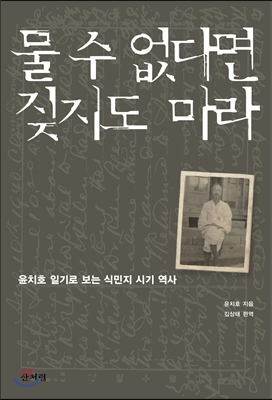 |
Description
Book Introduction
This book is a reorganization of Yun Chi-ho's diary, which has been neglected but has historical value comparable to Hwang Hyeon's Maecheon Diary or Kim Gu's Baekbeom Ilji in the study of modern Korean history.
Yun Chi-ho (1865-1945) was the greatest elder in Joseon during the Japanese colonial period, possessing knowledge, reputation, and wealth. He kept a diary for a full 60 years, from 1883 to 1943, although there were occasional interruptions.
Yun Chi-ho's original diary is recorded in about 30 volumes, including college notebooks and notebooks. It is written in Chinese characters from January 1, 1883, to November 24, 1887, in Korean from November 25, 1887, to December 7, 1889, and in English from December 7, 1889, when he was studying abroad in the United States.
This book vividly depicts colonial life and Yun Chi-ho's personal life.
Yun Chi-ho's perception of domestic and international affairs, his judgment of Japan's ruling policy toward Korea, his thoughts on various independence movements, and his perception of Korea's history, culture, traditions, and national character are recorded truthfully, even frankly.
There is also a wealth of information about the political trends during the Japanese colonial period and the social climate of Joseon.
It records in detail the movements and behind-the-scenes stories of all sectors of the Japanese colonial period, excluding the government-general, pro-Japanese forces, nationalist movements, intellectuals, and Christian circles, as well as trends in public sentiment.
It also confirms the reason why he became the godfather of pro-Japanese collaborators in the final days of Japanese colonial rule, and it is also an internal record showing how an intellectual under colonial rule at the time took the path of pro-Japanese collaborators.
Yun Chi-ho (1865-1945) was the greatest elder in Joseon during the Japanese colonial period, possessing knowledge, reputation, and wealth. He kept a diary for a full 60 years, from 1883 to 1943, although there were occasional interruptions.
Yun Chi-ho's original diary is recorded in about 30 volumes, including college notebooks and notebooks. It is written in Chinese characters from January 1, 1883, to November 24, 1887, in Korean from November 25, 1887, to December 7, 1889, and in English from December 7, 1889, when he was studying abroad in the United States.
This book vividly depicts colonial life and Yun Chi-ho's personal life.
Yun Chi-ho's perception of domestic and international affairs, his judgment of Japan's ruling policy toward Korea, his thoughts on various independence movements, and his perception of Korea's history, culture, traditions, and national character are recorded truthfully, even frankly.
There is also a wealth of information about the political trends during the Japanese colonial period and the social climate of Joseon.
It records in detail the movements and behind-the-scenes stories of all sectors of the Japanese colonial period, excluding the government-general, pro-Japanese forces, nationalist movements, intellectuals, and Christian circles, as well as trends in public sentiment.
It also confirms the reason why he became the godfather of pro-Japanese collaborators in the final days of Japanese colonial rule, and it is also an internal record showing how an intellectual under colonial rule at the time took the path of pro-Japanese collaborators.
- You can preview some of the book's contents.
Preview
index
In publishing the second edition of the book
In publishing the first edition of the book
Yun Chi-ho's inner world and modern Korean history during the Japanese colonial period
Note
Part 1: Before and After the March 1st Movement
Chapter 1: "Why I Oppose the March 1st Movement" (1919)
Chapter 2: "If You Can't Bark, Don't Bark" (1920-21)
Chapter 3: "Cultivate the Nation's Strength" (1922-30)
Part 2: Before and After the Manchurian Incident
Chapter 1: Might Makes Right (1931-32)
Chapter 2: I Do Not Believe in the Theory of Human Nature (1933-35)
Part 3: Before and After the Second Sino-Japanese War and the Pacific War
Chapter 1: In the midst of the Heungup Club incident (1938)
Chapter 2: "The Only Way to Survive is the Unity of Japan and Korea!" (1939-40)
Chapter 3: "For the Liberation of Colored People" (1941-43)
An Old Man's Meditations 1 - October 15, 1945
An Old Man's Meditations 2 - October 20, 1945
Yun Chi-ho's family tree
Yun Chi-ho and his era chronology
References
Find a person's name
Find details
In publishing the first edition of the book
Yun Chi-ho's inner world and modern Korean history during the Japanese colonial period
Note
Part 1: Before and After the March 1st Movement
Chapter 1: "Why I Oppose the March 1st Movement" (1919)
Chapter 2: "If You Can't Bark, Don't Bark" (1920-21)
Chapter 3: "Cultivate the Nation's Strength" (1922-30)
Part 2: Before and After the Manchurian Incident
Chapter 1: Might Makes Right (1931-32)
Chapter 2: I Do Not Believe in the Theory of Human Nature (1933-35)
Part 3: Before and After the Second Sino-Japanese War and the Pacific War
Chapter 1: In the midst of the Heungup Club incident (1938)
Chapter 2: "The Only Way to Survive is the Unity of Japan and Korea!" (1939-40)
Chapter 3: "For the Liberation of Colored People" (1941-43)
An Old Man's Meditations 1 - October 15, 1945
An Old Man's Meditations 2 - October 20, 1945
Yun Chi-ho's family tree
Yun Chi-ho and his era chronology
References
Find a person's name
Find details
Publisher's Review
If you can't bite, don't bark.
Colonial history as seen through Yun Chi-ho's diary
Yun Chi-ho's English diary,
Re-examining it as a source for research on modern Korean history
"If You Can't Ask, Don't Bark" is a book that reorganizes and publishes Yun Chi-ho's diary, which has been neglected but has historical value comparable to Hwang Hyeon's "Maecheon Diary" or Kim Gu's "Baekbeom Ilji" in the study of modern Korean history.
Yun Chi-ho (1865-1945), also known as Jwaong (佐翁), was the greatest elder in Joseon during the Japanese colonial period, possessing knowledge, reputation, and wealth. He kept a diary for a full 60 years, from 1883 to 1943, although he occasionally interrupted his writing.
Yun Chi-ho's original diary is recorded in about 30 volumes, including college notebooks and notebooks. It is written in Chinese characters from January 1, 1883, to November 24, 1887, in Korean from November 25, 1887, to December 7, 1889, and in English from December 7, 1889, when he was studying abroad in the United States.
Yun Chi-ho kept a diary in English for over 50 years. He started writing a diary in English while studying abroad in the United States for convenience and to study English. After returning to Korea, it seems that writing a diary in English became a habit and he continued to write in English to keep the diary confidential from his family and other people around him.
Until now, 『Yun Chi-ho's Diary』 has been difficult for researchers to access as a historical source due to its vast volume and the burden of reading it in Chinese or English.
Additionally, there were cases where its value as a historical source was underestimated due to the stereotype that an individual's diary could not be considered historical source and the prejudice that 'Yun Chi-ho = pro-Japanese collaborator'.
Yun Chi-ho meticulously recorded in his diary his daily life, his activities as a public figure, as well as his views and outlook on domestic and international affairs.
And he wrote in detail about the subtle circumstances of the various incidents he experienced, the development of the political situation and the trends of public sentiment, various rumors, and various information that could give a glimpse into the character, thoughts, and actions of many acquaintances.
Therefore, although it is a personal work, it is rich in stories that cannot be found in any official document, so it can be considered to have sufficient value as a historical source.
The Inner World of an Intellectual and the History of Colonialism as Seen Through Yun Chi-ho's Diary
『Yun Chi-ho's Diary』 contains vivid descriptions of colonial life and Yun Chi-ho's personal thoughts.
Yun Chi-ho's perception of domestic and international affairs, his judgment of Japan's ruling policy toward Korea, his thoughts on various independence movements, and his perception of Korea's history, culture, traditions, and national character are recorded truthfully, even frankly.
There is also a wealth of information about the political trends during the Japanese colonial period and the social climate of Joseon.
It records in detail the movements and behind-the-scenes stories of all sectors of the Japanese colonial period, excluding the government-general, pro-Japanese forces, nationalist movements, intellectuals, and Christian circles, as well as trends in public sentiment.
It also confirms the reason why he became the godfather of pro-Japanese collaborators in the final days of Japanese colonial rule, and it is also an internal record showing how an intellectual under colonial rule at the time took the path of pro-Japanese collaborators.
In particular, through Yun Chi-ho's diary, we can see in detail that among intellectuals and Christian figures who studied in the United States, generally classified as pro-American, there was a considerable level of emotional rejection of white people, specifically Anglo-Saxons, which served as a catalyst for collaboration with Japan, and that during the Japanese colonial period, regional sentiment (regional conflict) was extremely severe between the Pyeongan Province region and the Seoul/Gyeonggi region, centered around nationalist movements and Christian circles.
Also, the theory that Emperor Gojong was poisoned, the theory that Yu Gil-jun was involved in the Eulmi Incident, the theory that Park Yong-man and Ok Gwan-bin were spies, the theory that Choi Nam-seon 'betrayed' in the mid-1930s, and the theory that Shin Heung-woo promoted a fascist organization in the late 1930s are all things that deserve considerable attention, regardless of their truth or falsity.
And the title of the book, 'If you can't bite, don't bark', is a phrase that Yun Chi-ho sometimes wrote in his diary, and it vividly shows his outlook on life and worldly wisdom.
Moreover, it was the thing he most wanted to say to the Koreans who were suffering under colonial rule.
His firm belief was that Koreans should refrain from political and military struggles for independence and focus on developing their economic and moral capabilities until they had the capacity to govern an independent nation.
Yun Chi-ho, who is he?
Among the many modern Korean figures, Yun Chi-ho had a brilliant and colorful career.
Yun Chi-ho was the first modern intellectual in Korea to study abroad in Japan, China, and the United States in the 1880s and early 1890s. He was a key figure in the Enlightenment and Self-Strengthening Movement, serving as the president of the Independence Association and the Korean Self-Strengthening Association. He was also the first member of the American Methodist Episcopal Church in Korea and a leader of the YMCA movement, making him the most senior figure in the Christian community during the Japanese colonial period.
On the other hand, as soon as the March 1st Movement began, he stirred controversy by expressing his opinion that the independence movement was useless in an interview with the Government-General's organ, Gyeongseong Ilbo. After the outbreak of the Second Sino-Japanese War, he led the pro-Japanese movement in the Christian community and served as a high-ranking official in the National Spiritual Mobilization Association of Korea and the Joseon Wartime Patriotic Corps, playing the role of godfather of the pro-Japanese faction.
In short, regardless of whether one judges whether he played a positive or negative role, he was one of the most influential figures in modern Korean history.
The structure and features of this book
- This book is a translation of Yun Chi-ho's diary, which covers 60 years from 1883 to 1943, focusing only on the period of Japanese colonial rule (1919-1943).
Part 1 is divided into before and after the March 1st Movement, Part 2 is before and after the Manchurian Incident, and Part 3 is before and after the Sino-Japanese War and the Pacific War, and introduces parts that are considered important for understanding the political trends and Yun Chi-ho's inner world.
This division of time is because the March 1st Movement, the Manchurian Incident, the Second Sino-Japanese War, and the Pacific War, which brought about qualitative changes in the political situation under Japanese colonial rule, are believed to have brought great shock and distress to Yun Chi-ho personally.
In fact, it can be confirmed that the volume of diaries from 1919-21, 1931-35, and 1938-40 is overwhelmingly larger than that of other periods.
- To enable us to examine Yun Chi-ho's thoughts after liberation, we have included two English letters titled "An Old Man's Meditations" that Yun Chi-ho sent to Syngman Rhee and the US military government.
- Yun Chi-ho's family tree was included to provide a glimpse into the lives of the Haepyeong Yun clan, one of the most prestigious families of the 20th century.
- “Yun Chi-ho and his era chronology” was compiled and published.
We have compiled important domestic and international events by year during Yun Chi-ho's life to help you understand the times in which he lived at a glance.
Colonial history as seen through Yun Chi-ho's diary
Yun Chi-ho's English diary,
Re-examining it as a source for research on modern Korean history
"If You Can't Ask, Don't Bark" is a book that reorganizes and publishes Yun Chi-ho's diary, which has been neglected but has historical value comparable to Hwang Hyeon's "Maecheon Diary" or Kim Gu's "Baekbeom Ilji" in the study of modern Korean history.
Yun Chi-ho (1865-1945), also known as Jwaong (佐翁), was the greatest elder in Joseon during the Japanese colonial period, possessing knowledge, reputation, and wealth. He kept a diary for a full 60 years, from 1883 to 1943, although he occasionally interrupted his writing.
Yun Chi-ho's original diary is recorded in about 30 volumes, including college notebooks and notebooks. It is written in Chinese characters from January 1, 1883, to November 24, 1887, in Korean from November 25, 1887, to December 7, 1889, and in English from December 7, 1889, when he was studying abroad in the United States.
Yun Chi-ho kept a diary in English for over 50 years. He started writing a diary in English while studying abroad in the United States for convenience and to study English. After returning to Korea, it seems that writing a diary in English became a habit and he continued to write in English to keep the diary confidential from his family and other people around him.
Until now, 『Yun Chi-ho's Diary』 has been difficult for researchers to access as a historical source due to its vast volume and the burden of reading it in Chinese or English.
Additionally, there were cases where its value as a historical source was underestimated due to the stereotype that an individual's diary could not be considered historical source and the prejudice that 'Yun Chi-ho = pro-Japanese collaborator'.
Yun Chi-ho meticulously recorded in his diary his daily life, his activities as a public figure, as well as his views and outlook on domestic and international affairs.
And he wrote in detail about the subtle circumstances of the various incidents he experienced, the development of the political situation and the trends of public sentiment, various rumors, and various information that could give a glimpse into the character, thoughts, and actions of many acquaintances.
Therefore, although it is a personal work, it is rich in stories that cannot be found in any official document, so it can be considered to have sufficient value as a historical source.
The Inner World of an Intellectual and the History of Colonialism as Seen Through Yun Chi-ho's Diary
『Yun Chi-ho's Diary』 contains vivid descriptions of colonial life and Yun Chi-ho's personal thoughts.
Yun Chi-ho's perception of domestic and international affairs, his judgment of Japan's ruling policy toward Korea, his thoughts on various independence movements, and his perception of Korea's history, culture, traditions, and national character are recorded truthfully, even frankly.
There is also a wealth of information about the political trends during the Japanese colonial period and the social climate of Joseon.
It records in detail the movements and behind-the-scenes stories of all sectors of the Japanese colonial period, excluding the government-general, pro-Japanese forces, nationalist movements, intellectuals, and Christian circles, as well as trends in public sentiment.
It also confirms the reason why he became the godfather of pro-Japanese collaborators in the final days of Japanese colonial rule, and it is also an internal record showing how an intellectual under colonial rule at the time took the path of pro-Japanese collaborators.
In particular, through Yun Chi-ho's diary, we can see in detail that among intellectuals and Christian figures who studied in the United States, generally classified as pro-American, there was a considerable level of emotional rejection of white people, specifically Anglo-Saxons, which served as a catalyst for collaboration with Japan, and that during the Japanese colonial period, regional sentiment (regional conflict) was extremely severe between the Pyeongan Province region and the Seoul/Gyeonggi region, centered around nationalist movements and Christian circles.
Also, the theory that Emperor Gojong was poisoned, the theory that Yu Gil-jun was involved in the Eulmi Incident, the theory that Park Yong-man and Ok Gwan-bin were spies, the theory that Choi Nam-seon 'betrayed' in the mid-1930s, and the theory that Shin Heung-woo promoted a fascist organization in the late 1930s are all things that deserve considerable attention, regardless of their truth or falsity.
And the title of the book, 'If you can't bite, don't bark', is a phrase that Yun Chi-ho sometimes wrote in his diary, and it vividly shows his outlook on life and worldly wisdom.
Moreover, it was the thing he most wanted to say to the Koreans who were suffering under colonial rule.
His firm belief was that Koreans should refrain from political and military struggles for independence and focus on developing their economic and moral capabilities until they had the capacity to govern an independent nation.
Yun Chi-ho, who is he?
Among the many modern Korean figures, Yun Chi-ho had a brilliant and colorful career.
Yun Chi-ho was the first modern intellectual in Korea to study abroad in Japan, China, and the United States in the 1880s and early 1890s. He was a key figure in the Enlightenment and Self-Strengthening Movement, serving as the president of the Independence Association and the Korean Self-Strengthening Association. He was also the first member of the American Methodist Episcopal Church in Korea and a leader of the YMCA movement, making him the most senior figure in the Christian community during the Japanese colonial period.
On the other hand, as soon as the March 1st Movement began, he stirred controversy by expressing his opinion that the independence movement was useless in an interview with the Government-General's organ, Gyeongseong Ilbo. After the outbreak of the Second Sino-Japanese War, he led the pro-Japanese movement in the Christian community and served as a high-ranking official in the National Spiritual Mobilization Association of Korea and the Joseon Wartime Patriotic Corps, playing the role of godfather of the pro-Japanese faction.
In short, regardless of whether one judges whether he played a positive or negative role, he was one of the most influential figures in modern Korean history.
The structure and features of this book
- This book is a translation of Yun Chi-ho's diary, which covers 60 years from 1883 to 1943, focusing only on the period of Japanese colonial rule (1919-1943).
Part 1 is divided into before and after the March 1st Movement, Part 2 is before and after the Manchurian Incident, and Part 3 is before and after the Sino-Japanese War and the Pacific War, and introduces parts that are considered important for understanding the political trends and Yun Chi-ho's inner world.
This division of time is because the March 1st Movement, the Manchurian Incident, the Second Sino-Japanese War, and the Pacific War, which brought about qualitative changes in the political situation under Japanese colonial rule, are believed to have brought great shock and distress to Yun Chi-ho personally.
In fact, it can be confirmed that the volume of diaries from 1919-21, 1931-35, and 1938-40 is overwhelmingly larger than that of other periods.
- To enable us to examine Yun Chi-ho's thoughts after liberation, we have included two English letters titled "An Old Man's Meditations" that Yun Chi-ho sent to Syngman Rhee and the US military government.
- Yun Chi-ho's family tree was included to provide a glimpse into the lives of the Haepyeong Yun clan, one of the most prestigious families of the 20th century.
- “Yun Chi-ho and his era chronology” was compiled and published.
We have compiled important domestic and international events by year during Yun Chi-ho's life to help you understand the times in which he lived at a glance.
GOODS SPECIFICS
- Date of issue: January 5, 2013
- Page count, weight, size: 637 pages | 925g | 153*224*35mm
- ISBN13: 9788990062482
- ISBN10: 8990062489
You may also like
카테고리
korean


korean

![GQ KOREA Mark (Monthly): December [2025]](http://librairie.coreenne.fr/cdn/shop/files/8ef265dbbfbf186523ed75ba7319009d.jpg?v=1765340328&width=3840)


