

Roman Tales 11
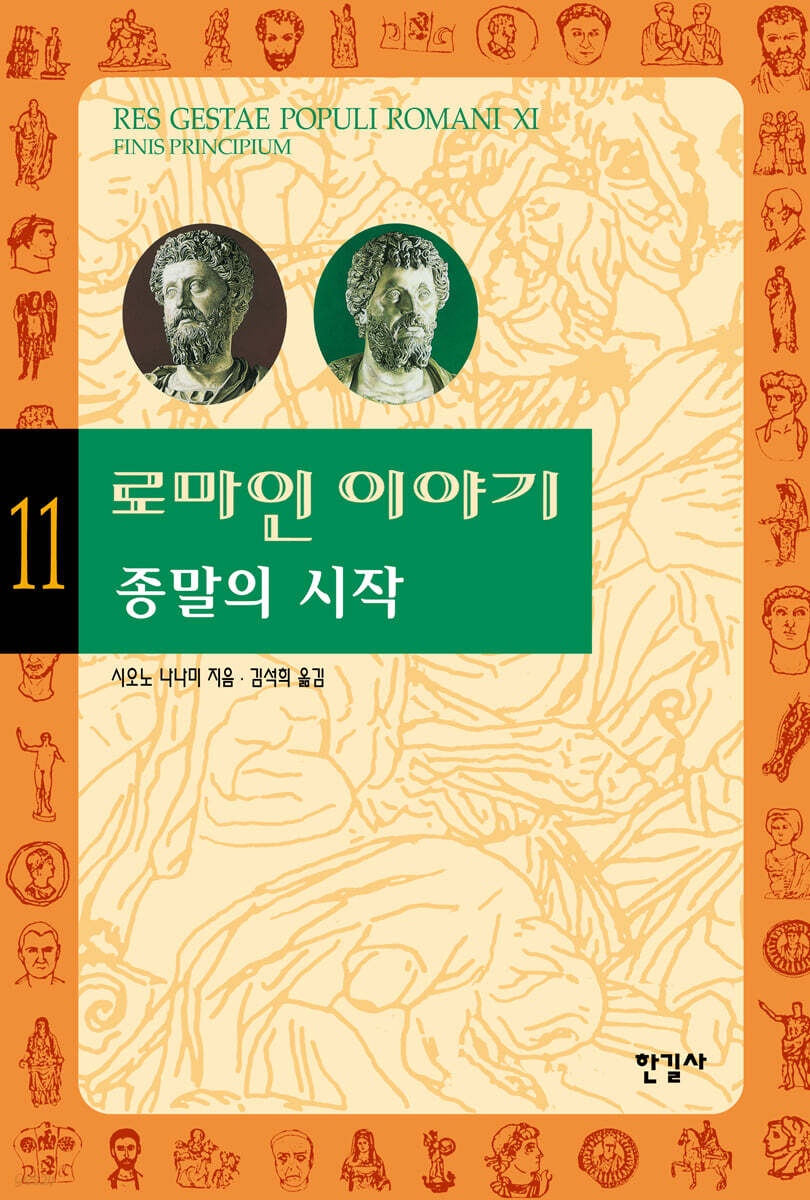 |
Description
Book Introduction
Historian Edmund Gibbon's view that 'the decline of the Roman Empire began with the end of the era of the Five Good Emperors' remains unchanged to this day.
Why did empires fall into decline during the era of the great iron emperors?
From the last emperor of the 'Era of the Five Good Emperors', Marcus Aurelius, to the soldier emperor Septimius Severus, the 'History of the Decline and Fall of the Roman Empire', written by Nanami Shiono, begins, slowly decaying from the 'head' onwards.
Why did empires fall into decline during the era of the great iron emperors?
From the last emperor of the 'Era of the Five Good Emperors', Marcus Aurelius, to the soldier emperor Septimius Severus, the 'History of the Decline and Fall of the Roman Empire', written by Nanami Shiono, begins, slowly decaying from the 'head' onwards.
- You can preview some of the book's contents.
Preview
index
Part 1: Emperor Marcus Aurelius
At the beginning/Growth period/Birthplace/Childhood/Boyhood/Coming of age ceremony/Imperial education/Roman philosophy/History of the security of the Roman Empire/The next emperor Marcus/A day in the life of a Roman/Teacher Fronto/Marriage/Certain questions/Emperor Marcus Aurelius/Two emperors/Emperor Lucius/Famine and flood/War clouds in the East/Parthian War/Emperor's expedition/Counterattack begins/The politics of the iron emperor/Plague/Christians/Germanic War/Death of Lucius/War begins/The defense line is broken!/Romans and barbarians/Changes in the times/Marcus Aurelius's cylinder/Danube River front/Front base/Domino effect of barbarians/Treason/General Cassius/Cleaning up/Establishment of hereditary succession/Second Germanic War/Death
Part 2: Emperor Commodus
Film and History/The End of the War/Sixty Years of Peace/Commodus the Man/Sister Lucilla/Conspiracy/The First Five Years/Croatia/Roman Hercules/Assassination
Part 3: The Age of Civil War
The Legion's Success Story/Emperor Pertinax/The Beginning of the Struggle for the Imperial Succession/The March on Rome/In the Capital City of Rome/The Rival Albinus/Another Success Story/The Plain of Issus
Part IV: Emperor Septimius Severus
The Soldier Emperor/An Unexpected Result/The Eastern Expedition and Its Consequences/Return in Gold/Britannia/Death
Chronology
References
At the beginning/Growth period/Birthplace/Childhood/Boyhood/Coming of age ceremony/Imperial education/Roman philosophy/History of the security of the Roman Empire/The next emperor Marcus/A day in the life of a Roman/Teacher Fronto/Marriage/Certain questions/Emperor Marcus Aurelius/Two emperors/Emperor Lucius/Famine and flood/War clouds in the East/Parthian War/Emperor's expedition/Counterattack begins/The politics of the iron emperor/Plague/Christians/Germanic War/Death of Lucius/War begins/The defense line is broken!/Romans and barbarians/Changes in the times/Marcus Aurelius's cylinder/Danube River front/Front base/Domino effect of barbarians/Treason/General Cassius/Cleaning up/Establishment of hereditary succession/Second Germanic War/Death
Part 2: Emperor Commodus
Film and History/The End of the War/Sixty Years of Peace/Commodus the Man/Sister Lucilla/Conspiracy/The First Five Years/Croatia/Roman Hercules/Assassination
Part 3: The Age of Civil War
The Legion's Success Story/Emperor Pertinax/The Beginning of the Struggle for the Imperial Succession/The March on Rome/In the Capital City of Rome/The Rival Albinus/Another Success Story/The Plain of Issus
Part IV: Emperor Septimius Severus
The Soldier Emperor/An Unexpected Result/The Eastern Expedition and Its Consequences/Return in Gold/Britannia/Death
Chronology
References
Into the book
Marcus Aurelius left behind a book that posterity called the
Thanks to this, he came to be called the 'Iron Emperor', but as the title suggests, it is not a book that discusses philosophy from an academic perspective.
For him, as the Roman Emperor, defeating the barbarians was his public duty, and the book was merely a small book in which he recorded his thoughts in his spare time on the battlefield while carrying out his official duties.
However, as expected from someone who enjoyed philosophy since childhood, the book is known to be full of reflection and contemplation.
The praise paid to the book by modern Western intellectuals was that it was 'the best expression of the ethics of the ancients' and 'the sincere cry of a noble soul.'
Plato also said that it is ideal for a country to have philosophers in charge of politics.
Leaving aside the debate about the validity of this statement, modern intellectuals who experienced the Enlightenment would consider Marcus Aurelius to be the only case in history where Plato's ideal was realized.
- It is unacceptable to endlessly repeat the debate about whether humans can be fair and good.
A time is coming when only fair and good behavior is required.
This was the 'voice' that came from the mouth of the supreme authority that ruled the great Roman Empire.
Thanks to this, he came to be called the 'Iron Emperor', but as the title suggests, it is not a book that discusses philosophy from an academic perspective.
For him, as the Roman Emperor, defeating the barbarians was his public duty, and the book was merely a small book in which he recorded his thoughts in his spare time on the battlefield while carrying out his official duties.
However, as expected from someone who enjoyed philosophy since childhood, the book is known to be full of reflection and contemplation.
The praise paid to the book by modern Western intellectuals was that it was 'the best expression of the ethics of the ancients' and 'the sincere cry of a noble soul.'
Plato also said that it is ideal for a country to have philosophers in charge of politics.
Leaving aside the debate about the validity of this statement, modern intellectuals who experienced the Enlightenment would consider Marcus Aurelius to be the only case in history where Plato's ideal was realized.
- It is unacceptable to endlessly repeat the debate about whether humans can be fair and good.
A time is coming when only fair and good behavior is required.
This was the 'voice' that came from the mouth of the supreme authority that ruled the great Roman Empire.
--- pp. 17-18
GOODS SPECIFICS
- Date of issue: January 30, 2003
- Page count, weight, size: 436 pages | 667g | 148*210*30mm
- ISBN13: 9788935654833
- ISBN10: 8935654833
You may also like
카테고리
korean


korean

![GQ KOREA Mark (Monthly): December [2025]](http://librairie.coreenne.fr/cdn/shop/files/8ef265dbbfbf186523ed75ba7319009d.jpg?v=1765340328&width=3840)


