

Sad Tropics
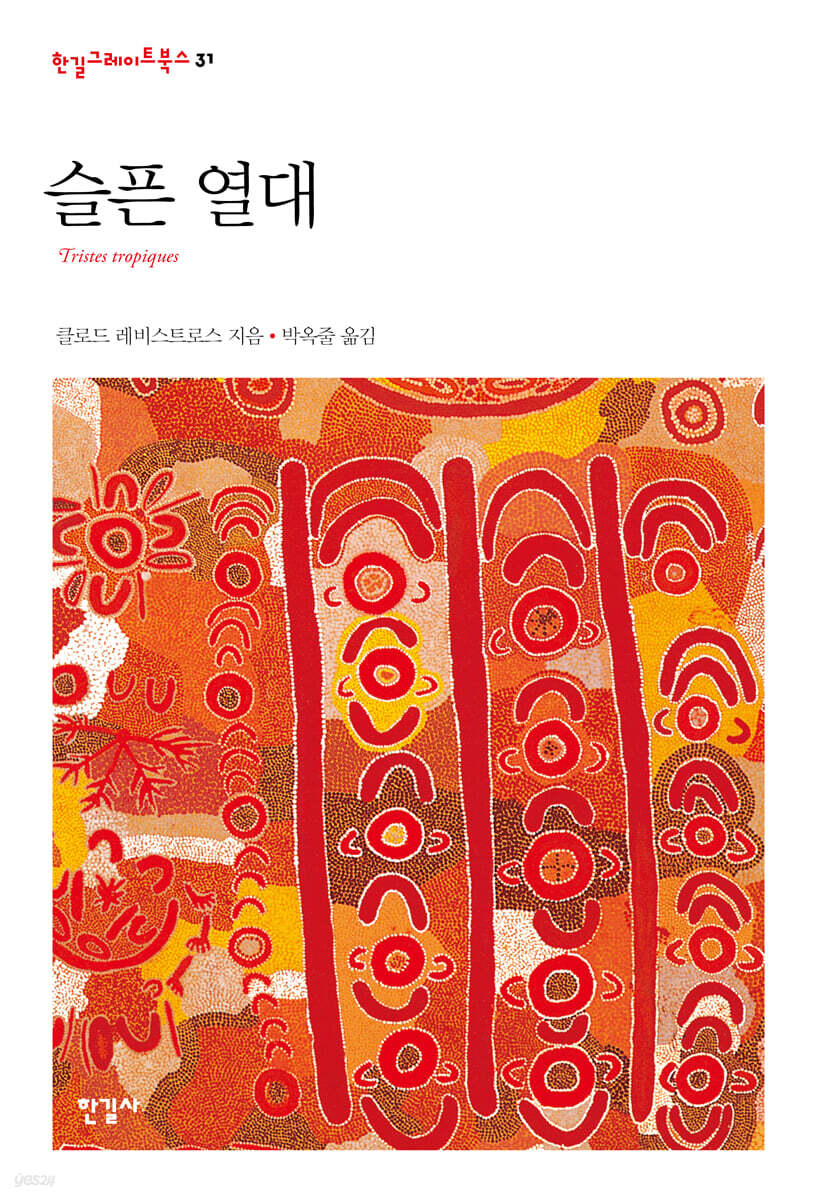 |
Description
Book Introduction
This work can be considered a kind of autobiography of the French author Levi-Strauss, who had a great influence on modern anthropology, and describes the author's intellectual journey from philosophy to anthropology.
By directly addressing the customs of Brazilian Indians, it contains comprehensive reflections on humanity and society, while also meaningfully suggesting various problems of modern civilization.
By directly addressing the customs of Brazilian Indians, it contains comprehensive reflections on humanity and society, while also meaningfully suggesting various problems of modern civilization.
index
Criticism of the dichotomous thinking of civilization and barbarism
1.
End of the trip
Departure / On Board / West Indies / The Quest for Power
2.
On the road
Reflections / How I Became an Ethnologist / Sunset
3.
New World
Agricultural area (Equatorial calm zone) / Guanabara / Tropic of Capricorn travel / São Paulo
4.
Earth and Man
City and Countryside / Frontier / Magic Carpet / Crowd / Marketplace
5.
Cadubeo people
Paraná / Pantanal / Nalike / Indigenous societies and their forms
6.
Bororo tribe
Gold and Diamonds / The Good Savage / The Dead and the Living
7.
Nambikwara people
The Lost World / In the Wilderness / Along the Telegraph Line / Family Life / Lessons from Letters / Man, Woman, and Chief
8.
Tupi Kawaib tribe
Canoeing / Robinson / In the Forest / Cricket Village / The Japim Bird's Farce / Amazonia / The Forest of Seringa Trees
9.
On the way home
Augustus Becomes a God / A Glass of Rum / Taxila Ruins / Visit to Chaong (Buddhist Temple)
Levi-Strauss's chronology
References
Translator's Note
Search
1.
End of the trip
Departure / On Board / West Indies / The Quest for Power
2.
On the road
Reflections / How I Became an Ethnologist / Sunset
3.
New World
Agricultural area (Equatorial calm zone) / Guanabara / Tropic of Capricorn travel / São Paulo
4.
Earth and Man
City and Countryside / Frontier / Magic Carpet / Crowd / Marketplace
5.
Cadubeo people
Paraná / Pantanal / Nalike / Indigenous societies and their forms
6.
Bororo tribe
Gold and Diamonds / The Good Savage / The Dead and the Living
7.
Nambikwara people
The Lost World / In the Wilderness / Along the Telegraph Line / Family Life / Lessons from Letters / Man, Woman, and Chief
8.
Tupi Kawaib tribe
Canoeing / Robinson / In the Forest / Cricket Village / The Japim Bird's Farce / Amazonia / The Forest of Seringa Trees
9.
On the way home
Augustus Becomes a God / A Glass of Rum / Taxila Ruins / Visit to Chaong (Buddhist Temple)
Levi-Strauss's chronology
References
Translator's Note
Search
Into the book
And it is also necessary to mention the whitish larvae, the koro, which swarm on some of the trunks of the decaying trees.
The Indians, offended by the white man's ridicule, are now unwilling to admit that they find the insects tasty, and they vehemently deny that they are even eating them.
But you only have to wander 20-30 meters into the forest to see the horrific sight of a huge pinheiro tree, blown to pieces by avid koru eaters, on the ground.
And if you happen to walk into any Indian's house - before they can hide it again - you'll see a cup swarming with larvae.
As a last resort, we told him that we ourselves wanted to eat the cork.
A whitish oil flowed from the insect's body, and I tasted it hesitantly.
It had a buttery, firm yet delicate texture and a juicy coconut flavor.
--- p.325-~326
The world began without humans, and it will end without humans.
The institutions, customs, and practices that I will spend my life cataloging and trying to understand are but temporary flowerings of a creative process that would be utterly meaningless if humanity were not allowed to play its destined role.
But that role does not assign any independent position to us humans.
Moreover, even if man himself were to be damned, his futile efforts would proceed in the direction of arresting a universal process of decline.
The Indians, offended by the white man's ridicule, are now unwilling to admit that they find the insects tasty, and they vehemently deny that they are even eating them.
But you only have to wander 20-30 meters into the forest to see the horrific sight of a huge pinheiro tree, blown to pieces by avid koru eaters, on the ground.
And if you happen to walk into any Indian's house - before they can hide it again - you'll see a cup swarming with larvae.
As a last resort, we told him that we ourselves wanted to eat the cork.
A whitish oil flowed from the insect's body, and I tasted it hesitantly.
It had a buttery, firm yet delicate texture and a juicy coconut flavor.
--- p.325-~326
The world began without humans, and it will end without humans.
The institutions, customs, and practices that I will spend my life cataloging and trying to understand are but temporary flowerings of a creative process that would be utterly meaningless if humanity were not allowed to play its destined role.
But that role does not assign any independent position to us humans.
Moreover, even if man himself were to be damned, his futile efforts would proceed in the direction of arresting a universal process of decline.
--- p.742
GOODS SPECIFICS
- Date of issue: June 30, 1998
- Format: Hardcover book binding method guide
- Page count, weight, size: 765 pages | 1,222g | 152*225*30mm
- ISBN13: 9788935651740
- ISBN10: 8935651745
You may also like
카테고리
korean


korean

![GQ KOREA Mark (Monthly): December [2025]](http://librairie.coreenne.fr/cdn/shop/files/8ef265dbbfbf186523ed75ba7319009d.jpg?v=1765340328&width=3840)


