

Latin America's open veins
 |
Description
Book Introduction
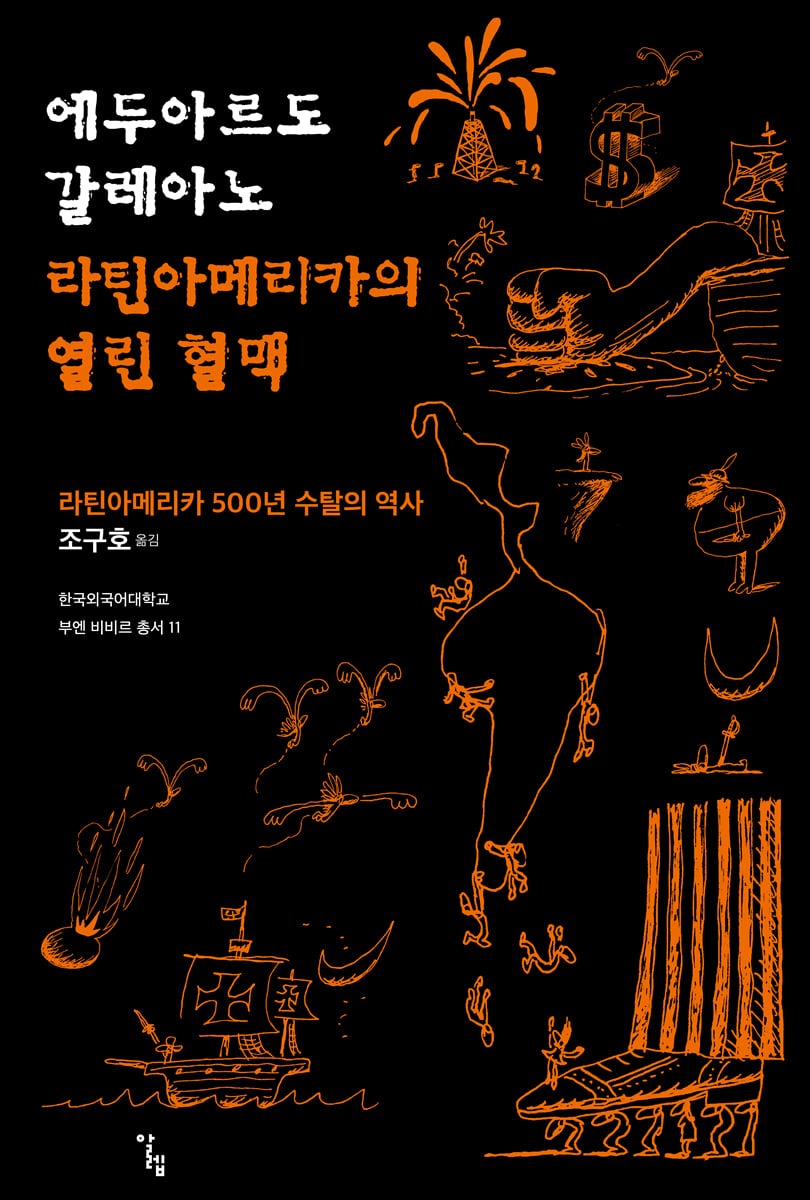
Galeano's famous work denouncing the colonization and plunder of Latin America
From banned to required reading!
The first complete Spanish translation based on the special edition commemorating the 50th anniversary of the publication
As soon as 『The Open Veins of Latin America』 was published in 1971, it was banned in many countries.
The military regime feared that the book would stimulate popular resistance.
But paradoxically, the banning of the book expanded its influence.
Since then, this book has been read as a 'book of awakening' and 'must-read' in the student movement and intellectual discourse of Latin America in the 1970s and 1980s.
On April 18, 2009, at the Organization of American States (OAS) summit, Venezuelan President Chávez presented this book to U.S. President Obama, saying, “This book is a monumental work in the history of our Latin America.
“It allowed us to learn history,” he said, and it rose to number two on Amazon’s bestseller list within a day.
Isabel Allende (Chilean novelist and journalist) said that this book “not only opened the ‘blood vessels’ of Latin America, but also opened people’s hearts, eyes, and minds to the injustices that have persisted for centuries.”
Arundhati Roy (Indian novelist and social activist) also said, “Galeano is a master at weaving together broken stories.
His book, "The Open Veins of Latin America," is truly a beautiful book.
“This book, written 30 years ago, still has profound implications for India today,” he said, emphasizing its influence.
Eduardo Galeano's book, "The Open Veins of Latin America," argues that Latin America's poverty and underdevelopment are not the result of chance or incompetence, but rather the direct result of the systematic exploitation of resources by the European-American-centered global capitalist system from the Age of Discovery in the 15th century to the present.
The core of this book is the metaphor of viewing the entire continent as a 'bleeding body'.
The term 'open veins' (venas abiertas) goes beyond mere literary expression; it exposes the essence of structural exploitation that has persisted for centuries.
In Korea, it has been introduced as 『The Exploited Land』 (Beomwoo Publishing, first published in 1988/currently out of print), which means ‘stolen land’ and has a different meaning from ‘land with open blood vessels’ or ‘continent that sheds blood.’
In other words, the 'open blood vessel' is a metaphor symbolizing the history of the Latin American continent shedding blood while continuously supplying the outside world with abundant resources such as gold, silver, sugar, rubber, copper, and oil.
Through this work, Galeano denounces the history of exploitation of Latin America that has continued for 500 years since the European conquest in the 16th century.
He describes the structural exploitation of the continent's resources and the blood (life and labor) of its people, which is constantly drained to the imperialist centers of Europe and North America.
This book is not simply a history book; it is liberation literature that practices the "politics of memory" by restoring the voices of the oppressed through a fragmented and poetic style.
Galeano traces a chronology of exploitation that began with the plunder of gold and silver, progressing to the sugar and slave trades, oil and tin, and monocultures like bananas and coffee.
This process deepened Latin America's dependence and laid the unequal foundations for the modern world capitalist system.
Galeano emphasizes that even in the history of exploitation, people's resistance and solidarity have continued without end, such as the Haitian Revolution, indigenous uprisings, and workers' strikes.
In today's world, where exploitative structures persist in new forms like neoliberalism and digital capitalism, this book serves as a valid mirror for reflecting on the inequalities of the global economy.
Therefore, this book is structured around the following key questions and their answers:
How did the exploitation of Latin America's resources contribute to the capital accumulation of external powers? How did economic dependence persist or deepen after independence in Latin American countries? What legacy did the exploitation and resistance experienced by indigenous peoples and workers leave behind in Latin American history?
This book breaks away from the traditional history book format.
The narrative develops around the flow of resources and the shift of power, rather than the chronology of events.
Galeano traces the relationships between production and consumption, North and South, and colonies and empires through each resource.
Although this book cites various statistics and historical facts, it does not present cold, hard data.
His analysis is economic-historical, but his writing is concise and literary.
In this respect, this book can be said to be a unique form of critical writing that crosses the boundaries between academic and literary works.
Galeano criticizes the logic of empire through irony and satire.
It exposes the hypocrisy of the discourse that describes resource exploitation while simultaneously justifying technological exploitation.
The analysis presented in this book is not a simple retrospective, but rather a historical framework that dissects the structures of inequality in the era of globalization.
From banned to required reading!
The first complete Spanish translation based on the special edition commemorating the 50th anniversary of the publication
As soon as 『The Open Veins of Latin America』 was published in 1971, it was banned in many countries.
The military regime feared that the book would stimulate popular resistance.
But paradoxically, the banning of the book expanded its influence.
Since then, this book has been read as a 'book of awakening' and 'must-read' in the student movement and intellectual discourse of Latin America in the 1970s and 1980s.
On April 18, 2009, at the Organization of American States (OAS) summit, Venezuelan President Chávez presented this book to U.S. President Obama, saying, “This book is a monumental work in the history of our Latin America.
“It allowed us to learn history,” he said, and it rose to number two on Amazon’s bestseller list within a day.
Isabel Allende (Chilean novelist and journalist) said that this book “not only opened the ‘blood vessels’ of Latin America, but also opened people’s hearts, eyes, and minds to the injustices that have persisted for centuries.”
Arundhati Roy (Indian novelist and social activist) also said, “Galeano is a master at weaving together broken stories.
His book, "The Open Veins of Latin America," is truly a beautiful book.
“This book, written 30 years ago, still has profound implications for India today,” he said, emphasizing its influence.
Eduardo Galeano's book, "The Open Veins of Latin America," argues that Latin America's poverty and underdevelopment are not the result of chance or incompetence, but rather the direct result of the systematic exploitation of resources by the European-American-centered global capitalist system from the Age of Discovery in the 15th century to the present.
The core of this book is the metaphor of viewing the entire continent as a 'bleeding body'.
The term 'open veins' (venas abiertas) goes beyond mere literary expression; it exposes the essence of structural exploitation that has persisted for centuries.
In Korea, it has been introduced as 『The Exploited Land』 (Beomwoo Publishing, first published in 1988/currently out of print), which means ‘stolen land’ and has a different meaning from ‘land with open blood vessels’ or ‘continent that sheds blood.’
In other words, the 'open blood vessel' is a metaphor symbolizing the history of the Latin American continent shedding blood while continuously supplying the outside world with abundant resources such as gold, silver, sugar, rubber, copper, and oil.
Through this work, Galeano denounces the history of exploitation of Latin America that has continued for 500 years since the European conquest in the 16th century.
He describes the structural exploitation of the continent's resources and the blood (life and labor) of its people, which is constantly drained to the imperialist centers of Europe and North America.
This book is not simply a history book; it is liberation literature that practices the "politics of memory" by restoring the voices of the oppressed through a fragmented and poetic style.
Galeano traces a chronology of exploitation that began with the plunder of gold and silver, progressing to the sugar and slave trades, oil and tin, and monocultures like bananas and coffee.
This process deepened Latin America's dependence and laid the unequal foundations for the modern world capitalist system.
Galeano emphasizes that even in the history of exploitation, people's resistance and solidarity have continued without end, such as the Haitian Revolution, indigenous uprisings, and workers' strikes.
In today's world, where exploitative structures persist in new forms like neoliberalism and digital capitalism, this book serves as a valid mirror for reflecting on the inequalities of the global economy.
Therefore, this book is structured around the following key questions and their answers:
How did the exploitation of Latin America's resources contribute to the capital accumulation of external powers? How did economic dependence persist or deepen after independence in Latin American countries? What legacy did the exploitation and resistance experienced by indigenous peoples and workers leave behind in Latin American history?
This book breaks away from the traditional history book format.
The narrative develops around the flow of resources and the shift of power, rather than the chronology of events.
Galeano traces the relationships between production and consumption, North and South, and colonies and empires through each resource.
Although this book cites various statistics and historical facts, it does not present cold, hard data.
His analysis is economic-historical, but his writing is concise and literary.
In this respect, this book can be said to be a unique form of critical writing that crosses the boundaries between academic and literary works.
Galeano criticizes the logic of empire through irony and satire.
It exposes the hypocrisy of the discourse that describes resource exploitation while simultaneously justifying technological exploitation.
The analysis presented in this book is not a simple retrospective, but rather a historical framework that dissects the structures of inequality in the era of globalization.
- You can preview some of the book's contents.
Preview
index
Introduction: 120 Million Children at the Heart of the Typhoon
Part 1: Human Poverty Born of the Abundant Earth
Gold fever, silver fever
Cross symbol engraved on the hilt
The gods have returned with their secret weapon.
“They craved gold like hungry pigs.”
Films of Potosi: The Silver Age
The cow belonged to Spain, but its milk was drunk by other countries.
Division of roles between horse and rider
The Fall of Potosí: The Silver Age
Blood and tears flowed: but the Pope decided that the Indians had souls.
Nostalgia for Tupac Amaru's militancy
The Indian Holy Week ends without the Resurrection.
Villa Rica de Ouro Preto is the photo of gold
Brazilian gold contributed to Britain's development
Sugar Kings and Other Agricultural Monarchs
Plantations, Latifundia, and Destiny
Land killings in northeastern Brazil
Sugar Castles on Burned Cuban Land
Revolution against a helpless structure
Sugar was the sword, and the empire was the murderer.
James Watt's steam engine and Washington's cannon were born thanks to the sacrifices of Caribbean slaves.
The rainbow is on its way back to Guinea
Farmers selling
The Rubber Age: Caruso opens a magnificent theater in the middle of the jungle.
Cocoa farmers lit cigarettes with 500,000 reais notes.
cheap labor to produce cotton
cheap labor to produce coffee
Coffee prices set harvests ablaze and determine the timing of marriages.
A Decade of Colombian Bloodshed
The magic wand of the global market awakens Central America.
Pirates raiding ships
The Crisis of the 1930s: "Killing an ant is a greater crime than killing a man."
Who is causing the violence in Guatemala?
Latin America's First Land Reform: A Century and a Half of Defeat for José Artigas
Artemio Cruz and the second death of Emiliano Zapata
The latifundium stretches the mouth, but the bread does not.
The 13 Colonies of the North and the Importance of Not Being Born Important
Hidden Sources of Power
Just as lungs need air, the U.S. economy needs Latin American minerals.
Subsoil creates stories of coups, revolutions, spies, and adventures in the Amazon jungle.
German chemists defeated the victors of the Pacific War.
Copper teeth biting Chile
Tin miners underground and above ground
Steel teeth biting Brazil
Oil: Its Curse and Achievement
Lake Maracaibo, inside the pouch of a giant metal buitre
Part 2: Development is a voyage with more castaways than sailors.
History of premature death
British warships welcomed independence on the river.
The scale of industrial infanticide
Protectionism and Free Trade in Latin America: A Brief Flight by Lucas Alamán
Montonera's spear and the hatred that survived against Juan Manuel de Rosas
The Triple Alliance's war against Paraguay destroyed the only successful example of independent development.
The loans and railroads that distorted Latin American economies
American Protectionism and Free Trade: Success Was Not the Work of an Invisible Hand
The modern structure of plunder
empty and ineffective amulet
The sentries open the gates: the reprehensible impotence of the national bourgeoisie.
What flag flutters above the machine?
The IMF's bombing campaign makes it easier for conquerors to land.
The United States protects its own savings, but it exploits other countries' savings by infiltrating their banks.
an empire that imports capital
Technocrats demand money and lives more efficiently than the Marines.
Industrialization does not change the structure of inequality in the global market.
The goddess of technology doesn't speak Spanish.
alienation of people and regions
Latin American integration under the stars and stripes
“We will never be happy, never!” predicted Simón Bolívar.
7 years later
Author's chronology
List of works
Translator's Note: Unclosing Wounds, Memories of Liberation
Search
Part 1: Human Poverty Born of the Abundant Earth
Gold fever, silver fever
Cross symbol engraved on the hilt
The gods have returned with their secret weapon.
“They craved gold like hungry pigs.”
Films of Potosi: The Silver Age
The cow belonged to Spain, but its milk was drunk by other countries.
Division of roles between horse and rider
The Fall of Potosí: The Silver Age
Blood and tears flowed: but the Pope decided that the Indians had souls.
Nostalgia for Tupac Amaru's militancy
The Indian Holy Week ends without the Resurrection.
Villa Rica de Ouro Preto is the photo of gold
Brazilian gold contributed to Britain's development
Sugar Kings and Other Agricultural Monarchs
Plantations, Latifundia, and Destiny
Land killings in northeastern Brazil
Sugar Castles on Burned Cuban Land
Revolution against a helpless structure
Sugar was the sword, and the empire was the murderer.
James Watt's steam engine and Washington's cannon were born thanks to the sacrifices of Caribbean slaves.
The rainbow is on its way back to Guinea
Farmers selling
The Rubber Age: Caruso opens a magnificent theater in the middle of the jungle.
Cocoa farmers lit cigarettes with 500,000 reais notes.
cheap labor to produce cotton
cheap labor to produce coffee
Coffee prices set harvests ablaze and determine the timing of marriages.
A Decade of Colombian Bloodshed
The magic wand of the global market awakens Central America.
Pirates raiding ships
The Crisis of the 1930s: "Killing an ant is a greater crime than killing a man."
Who is causing the violence in Guatemala?
Latin America's First Land Reform: A Century and a Half of Defeat for José Artigas
Artemio Cruz and the second death of Emiliano Zapata
The latifundium stretches the mouth, but the bread does not.
The 13 Colonies of the North and the Importance of Not Being Born Important
Hidden Sources of Power
Just as lungs need air, the U.S. economy needs Latin American minerals.
Subsoil creates stories of coups, revolutions, spies, and adventures in the Amazon jungle.
German chemists defeated the victors of the Pacific War.
Copper teeth biting Chile
Tin miners underground and above ground
Steel teeth biting Brazil
Oil: Its Curse and Achievement
Lake Maracaibo, inside the pouch of a giant metal buitre
Part 2: Development is a voyage with more castaways than sailors.
History of premature death
British warships welcomed independence on the river.
The scale of industrial infanticide
Protectionism and Free Trade in Latin America: A Brief Flight by Lucas Alamán
Montonera's spear and the hatred that survived against Juan Manuel de Rosas
The Triple Alliance's war against Paraguay destroyed the only successful example of independent development.
The loans and railroads that distorted Latin American economies
American Protectionism and Free Trade: Success Was Not the Work of an Invisible Hand
The modern structure of plunder
empty and ineffective amulet
The sentries open the gates: the reprehensible impotence of the national bourgeoisie.
What flag flutters above the machine?
The IMF's bombing campaign makes it easier for conquerors to land.
The United States protects its own savings, but it exploits other countries' savings by infiltrating their banks.
an empire that imports capital
Technocrats demand money and lives more efficiently than the Marines.
Industrialization does not change the structure of inequality in the global market.
The goddess of technology doesn't speak Spanish.
alienation of people and regions
Latin American integration under the stars and stripes
“We will never be happy, never!” predicted Simón Bolívar.
7 years later
Author's chronology
List of works
Translator's Note: Unclosing Wounds, Memories of Liberation
Search
Detailed image
.jpg)
Into the book
“This part of the world, which we call Latin America today, was precocious.
So, since the Renaissance, when Europeans crossed the seas and sunk their teeth into the region's neck, they have specialized in losing.
Centuries later, Latin America has matured into its own function.”
--- p.5
“The region where the blood vessels are open is Latin America.
From its discovery until the present day, everything in Latin America has always been transformed into European capital, and later into American capital, and in this way, such capital has been and is being accumulated in distant centers of power.”
--- p.7
“Latin America is a box full of surprises.
“This suffering part of the world never exhausts its ability to amaze.”
--- p.320
“Latin America’s sub-minimum wages help finance the high wages in the United States and Europe.”
--- p.394
“Latin America provides not only food but also shelter, while the United States only provides lip service.
“The denationalization of industry ultimately proved to be a gift.”
--- p.423
“The system has fostered hunger and fear.
Wealth continued to be concentrated, and poverty spread.
Even documents from professional international organizations acknowledge this, their cold language calling our oppressed regions 'developing countries' and labeling the relentless impoverishment of the working class 'regressive redistribution of income.'
--- p.497
“Underdevelopment is not a stage of development.
It is a result of development.
“Latin America’s underdevelopment stems from and continues to be fueled by external development.”
So, since the Renaissance, when Europeans crossed the seas and sunk their teeth into the region's neck, they have specialized in losing.
Centuries later, Latin America has matured into its own function.”
--- p.5
“The region where the blood vessels are open is Latin America.
From its discovery until the present day, everything in Latin America has always been transformed into European capital, and later into American capital, and in this way, such capital has been and is being accumulated in distant centers of power.”
--- p.7
“Latin America is a box full of surprises.
“This suffering part of the world never exhausts its ability to amaze.”
--- p.320
“Latin America’s sub-minimum wages help finance the high wages in the United States and Europe.”
--- p.394
“Latin America provides not only food but also shelter, while the United States only provides lip service.
“The denationalization of industry ultimately proved to be a gift.”
--- p.423
“The system has fostered hunger and fear.
Wealth continued to be concentrated, and poverty spread.
Even documents from professional international organizations acknowledge this, their cold language calling our oppressed regions 'developing countries' and labeling the relentless impoverishment of the working class 'regressive redistribution of income.'
--- p.497
“Underdevelopment is not a stage of development.
It is a result of development.
“Latin America’s underdevelopment stems from and continues to be fueled by external development.”
--- p.529
Publisher's Review
Chronicles of Exploitation: A History of Exploitation Through Resources
Latin America's abundant resources were a curse, not a blessing.
It's the paradox of wealth.
The prosperity of the Potosi silver mines led to extreme poverty in Bolivia, while Brazil's "Golden Age" enriched Portugal and Britain. "Our wealth has always created our own poverty to foster the prosperity of others," Galeano points out.
Exploitation began with direct plunder during the colonial era and evolved into more sophisticated forms after independence, including free trade, foreign investment, unfair trading conditions, and foreign debt.
Multinational corporations and international financial institutions (IMF, World Bank) are key actors in maintaining and strengthening this structure.
Economic exploitation has come at a tremendous cost: the massacre of indigenous peoples, the forced enslavement of Africans, and the miserable lives of modern workers.
The phrase “120 million children at the center of the storm” in the book’s introduction suggests that this tragedy will continue for future generations.
Throughout Latin American history, attempts at independent industrialization and social reform, such as the Francia-López regime in Paraguay, the Arbenz government in Guatemala, and the Allende government in Chile, were all destroyed by the intervention of external forces and the betrayal of the ruling class.
Moreover, rather than achieving genuine common development, modern economic integration efforts such as the Latin American Free Trade Association (LAFTA) are serving as platforms for multinational corporations that already dominate markets to maximize profits on a larger scale, and for regional powers like Brazil to play a "sub-imperial" role.
In conclusion, this book interprets Latin American history as a dialectic of subordination and resistance, arguing that true liberation is possible only through fundamental transformation that overthrows external structures of domination and resolves internal structural contradictions.
Gold, Silver, and Death
In the introduction to “The Open Veins of Latin America,” Eduardo Galeano describes the horrific scenes that European exploration and conquest left on human history.
It is a narrative of plunder and blood before it becomes a story of discovery.
In just a few decades after Columbus's arrival in 1492, the indigenous population of the Americas declined dramatically.
In Mexico, the indigenous population, which had numbered between 25 and 30 million, was reduced to one million in a century, and in the Caribbean islands, indigenous people were nearly wiped out.
The cause wasn't just war.
Forced labor, European-bred diseases, and constant humiliation ate away at their lives.
The conquerors followed the golden myth.
Potosí, in the Bolivian Andes, was a symbolic space of concentrated greed.
Cerro Rico, the mountain of wealth that stands at an altitude of 5,000 meters above sea level, was the heart of Europe's wealth for over 200 years since the 16th century.
Thousands of indigenous people were forced into a labyrinthine network of cramped tunnels under a forced labor system called mita, and many never saw the light of day again.
People from children to the elderly worked for over 12 hours a day, constantly digging for silver ore in the face of oxygen deprivation, cold, and the risk of collapse.
Their lives were worth less than a gram of silver.
Paradoxically, Potosí's prosperity meant its death.
The silver shipped to Europe supported the finances of the Spanish Empire and the development of early capitalism in Europe, but no wealth remained in the land of Bolivia where the silver was produced.
What was built with the blood of Potosí was the palace of Madrid and the financial district of London.
The same was true for gold.
The gold mines of Mexico and Peru filled the treasury of the Spanish crown, but those who mined the gold could not even satisfy their own hunger.
Gold became the décor of splendid cathedrals and palaces in Europe, but the names of those who sacrificed themselves to mine it were never recorded.
The brilliant civilizations of the Aztecs and Incas collapsed before European greed, and their temples were reduced to rubble.
Conquerors did not simply plunder resources; they transformed the world order.
The conquest that began 'in the name of God' continued 'in the name of the market and profit'.
Galeano did not simply view colonial plunder as a past violence, but read it as the structural origin of the world economy.
The gold and silver brought by Spain and Portugal made possible the accumulation of capital in Europe, and that capital became the basis for the Industrial Revolution and imperialism.
The inequality in today's world economy began with the bloody plunder that took place during this very period.
Much of the gold, silver, lithium and oil we consume today still comes from the Southern Hemisphere.
Resources still flow through 'open veins', just as they did in the days when the mountains of Potosi roared.
Galeano's writings speak of Latin America's past, but the bloodshed is ongoing.
The era of conquest is over, but the logic of exploitation still operates under different names.
Ultimately, 'Gold, Silver, and Death' is not just a story from the 16th century, but a metaphor that reveals the original sin of modern capitalism.
Sugar, Slaves, and the Triangular Trade
After the conquerors tore open the blood vessels of Latin America to extract gold and silver, the new 'blood' that flowed from the continent was sugar.
From the late 16th century to the early 19th century, sugar was the 'white gold' that dominated the world market.
Northeastern Brazil and the islands of the Caribbean were covered with sugarcane.
This land, rich in sun and rain, was ideal for growing sugarcane, but its abundance was a curse rather than a blessing for the local people.
European colonial powers forced indigenous people into forced labor, and they died, as in the silver mines mentioned above.
As its population plummeted, Europe began to search for a new 'labor force'.
The African slave trade began.
It is estimated that more than 12 million black slaves were brought from Africa, many of whom were sent to Brazil and the Caribbean.
The slave ship was hell itself.
Chained and confined in cramped holds for months, the slaves suffered from disease and starvation.
Slaves who died during the voyage were abandoned at sea.
Somewhere in the Atlantic Ocean today, countless lives are lost for the sweetness of sugar.
This horrific system was not simply human trafficking, but the triangular trade that formed the cornerstone of global capitalism.
European merchants 'bought' black Africans and shipped them to America.
And sugarcane, tobacco, cotton, coffee, and other crops grown by slaves in America were sent to Europe.
Profits were accumulated by European financial and industrial capital.
The essence of the cycle was clear.
Value production took place in the Southern Hemisphere, and profit accumulation took place in the Northern Hemisphere.
The modern world system was formed through the interplay of America's resources and labor, Africa's manpower, and Europe's capital and weapons.
The sugarcane plantations of the Caribbean were the prototype of the industrial plantation system.
Here, black slaves cut sugarcane from sunrise to sunset, squeezed the juice in a press, boiled it, and made lumps of sugar.
It was common for people to suffer wounds all over their bodies and to collapse and die from the heat and whipping.
Sugar wasn't just one commodity.
It was the prototype of capitalist modernity.
The sweetness of 'civilization' enjoyed by European aristocrats by adding sugar to their tea and coffee was built on the cries of black people who were whipped and forced to do hard labor on Latin American plantations.
Sugar has also left deep scars on the social fabric of Latin America.
Plantation owners amassed enormous wealth, which translated into political power.
On the other hand, farm workers and slaves were treated less than human.
This structure laid the foundation for the monoculture economy that later developed into coffee, cocoa, and bananas.
Ultimately, sugar made Latin America the "farm of the world market."
There was production, but no self-reliance.
The profits flowed out, leaving the community with only poverty and inequality.
Although sugar is no longer a central commodity in the global economy, the structures formed by sugar in the past are still repeated.
Even in the 21st century, farmers in the Global South still work for their survival, depending on the prices on the world market, while multinational corporations profit enormously from their labor.
Oil and tin
In the late 19th and early 20th centuries, Latin America was still on the periphery of global capitalism.
Europe's wealth, amassed through gold, silver, and sugar, was transformed into new forms through the Industrial Revolution and imperialist expansion.
At its heart were oil and mineral resources.
Mexico, Venezuela, and Brazil became new economic centers in the 20th century by supplying oil to the world market.
But as Galeano points out, control of production was never in local hands.
Multinational oil companies, including those from the United States, the United Kingdom, and the Netherlands, seized mining rights through preferential contracts and military pressure.
Modern capitalism in Europe began with gold, silver, and sugar, and was linked to an industrialized economic system and political subordination through oil.
Bolivia's tin industry is in the same vein.
In the late 19th century, tin emerged as an essential resource during the industrialization process in Europe and the United States.
The tin mines, similar to those in Potosí, were operated through forced labor and violence, with indigenous people and workers forced to work under extreme conditions.
Commentary also played a role in transferring Latin America's wealth out of the world as it flowed into the global market.
Tin was not just a simple metal; it was a key resource for electrical, communications, and industrial products, making the Southern Hemisphere's resources the "heartbeat" of the industrialized Northern Hemisphere's economy.
Gold, silver, sugar, oil and tin are all symbols of the blood Latin America shed for the development of world capitalism.
The bloodshed that began with the conquests of the 16th century continued with the industrialization of the 20th century, and continues in various forms today.
The resources of the Southern Hemisphere are still dependent on global capital.
Oil, lithium, copper, and rare metals occupy key positions in global supply chains, but producing countries remain vulnerable in terms of pricing power and profit distribution.
Single-crop economy and inequality
From the late 19th century to the early 20th century, Latin American economies were reorganized into single-crop economies.
After gold, silver, sugar, oil and tin, the market's main resources became agricultural products such as bananas, coffee and cocoa.
Central America, particularly Honduras, Costa Rica, and Guatemala, has seen rapid growth in banana exports, but this growth has been driven by foreign companies rather than national governments.
Multinational corporations such as the United Fruit Company in the United States controlled land, ports, and even railroads, exerting complete power over the production process.
Peasants worked long hours for ridiculously low wages under coercive and unfair contracts, while corporations controlled their governments through political lobbying and military pressure.
The result was the 'Banana Republic'.
National sovereignty was subordinated to corporations and foreign capital, and the government had difficulty gaining independent authority over production and revenue management.
Coffee and cocoa cultivation followed a similar pattern.
Brazil and Colombia were the centers of world coffee production, but most of the coffee produced was exported to foreign markets.
Workers still suffered from low wages, and the land remained under the control of large landowners and foreign merchants.
The banana, coffee, and cocoa economies were not simply agricultural production, but part of a system dependent on the world market.
Single-crop economies have exacerbated inequality within producing countries.
Wealthy landowners and a few merchants reaped enormous profits, while peasants and workers were trapped in poverty.
This combined economic inequality with political inequality and heightened social tensions.
Moreover, the single-crop economy deepened dependence on external capital and created political instability.
Multinational corporations and international finance often supported military coups or exerted pressure on government policies.
For example, in the early 20th century, military interventions were carried out in Honduras and Guatemala to protect the interests of the banana industry, and national policies were subordinated to the demands of foreign corporations.
The single-crop economy concentrated wealth, exacerbating social conflict and popular resistance.
The single-crop economy also brought ecological damage.
Large-scale farms deplete the soil and destroy biodiversity.
The use of pesticides and chemical fertilizers has threatened the health of local residents and exacerbated the imbalance between water and food.
The 'single-crop economy and deepening inequality' is directly linked to the exploitation of gold, silver, sugar, oil, and tin.
Latin America's land and people have been exploited as a driving force for global capitalism, and in the process, inequality, violence, and environmental destruction have been structured.
Galeano's analysis does not simply record historical facts from the 20th century, but also reveals structural repetitiveness in the modern world economy.
The drain of resources from the Global South, the accumulation of profits in the Global North, and the recurring popular resistance are not simply past events, but patterns that still appear in contemporary capitalism, the global financial system, and the economic flow centered on multinational corporations.
Latin American People's Solidarity Against Global Capitalism
The flow from gold and silver to sugar, oil, tin, and a monoculture economy illustrates how the peoples of the Global South have been left on the periphery of the global economy for more than a century.
Galeano summarizes this flow with the metaphor of an 'open vein'.
The structure in which the blood of the continent is constantly drained outward, the life and labor of the people are consumed as fuel for the global market, and the various inequalities and violence that arise in the process are interconnected like a single blood vessel.
Galeano does not see this as just an economic problem.
He emphasizes that exploitation and economic dependence are structural problems intertwined with social and political inequality.
Exploitation does not end in one era, but rather, in different forms, repeats itself and defines the lives of the people of the global South.
Galeano does not simply list the exploitative structures, but also records the resistance and solidarity that the people created even within the midst of exploitation.
The uprising of indigenous peoples oppressed by the Potosi silver mines in Bolivia, the slave revolts and Haitian revolutions in the Caribbean, the organizing and strikes of workers and farmers in Central and South America, the nationalization movements in the 20th century oil and tin industries, the coffee farmers' strikes in Brazil, the worker protests in Guatemala, and the peasant cooperatives in Central America are all examples of people fighting against the structural exploitation of capital and power.
This solidarity and resistance goes beyond the people's economic demands and is a historical act for self-sovereignty and social justice.
The people's resistance, solidarity, and sacrifices should not be read as mere records of the past, but as guidelines for present and future action.
Understanding the structural inequalities of the global economy and striving for solidarity, cooperation, and social justice resonate with the historical lessons of the Latin American people.
More than 50 years have passed since the publication of "The Open Veins of Latin America" in 1971, but its message remains relevant.
Global capitalism, in a different form, replicates the structural vulnerabilities of the countries and peoples of the Global South.
Oil, lithium, copper, rare metals, coffee, bananas, and other commodities still occupy key positions in global markets today, and producing countries remain vulnerable in terms of pricing power and profit distribution.
The global resource supply chain and financial structure are heavily concentrated in certain countries and companies, and industries and technologies are structurally dependent on external capital and markets.
Galeano's analysis is not limited to Latin America, but serves as a mirror for reflecting on the global economy and the structure of inequality.
The ethics of unclosing wounds and memory
Even today, Latin America's 'blood vessels' remain open.
New forms of exploitation persist, including neoliberal economics, multinational corporations, various extractive industries, digital capitalism, and data colonialism, and economic inequality and political subordination are largely structured.
Galeano's writing shows that these wounds are not just a human problem, but are also connected to ecological and global issues.
Resource exploitation entails environmental destruction and community suffering, and the issues of memory and liberation extend to the question of coexistence with non-human beings.
Ultimately, the core of 『Latin America's Open Veins』 lies in the 'ethics of remembering wounds that do not close.'
Understanding wounds through memory and reflecting on the people's solidarity and resistance opens a new path to liberation.
This book stands as a historical, literary, and ethical classic that connects past and present, remembers wounds, and explores the possibilities of solidarity with the people.
Understanding the blood that flows through those veins and seeking liberation through those memories are still relevant to us today.
Latin America's abundant resources were a curse, not a blessing.
It's the paradox of wealth.
The prosperity of the Potosi silver mines led to extreme poverty in Bolivia, while Brazil's "Golden Age" enriched Portugal and Britain. "Our wealth has always created our own poverty to foster the prosperity of others," Galeano points out.
Exploitation began with direct plunder during the colonial era and evolved into more sophisticated forms after independence, including free trade, foreign investment, unfair trading conditions, and foreign debt.
Multinational corporations and international financial institutions (IMF, World Bank) are key actors in maintaining and strengthening this structure.
Economic exploitation has come at a tremendous cost: the massacre of indigenous peoples, the forced enslavement of Africans, and the miserable lives of modern workers.
The phrase “120 million children at the center of the storm” in the book’s introduction suggests that this tragedy will continue for future generations.
Throughout Latin American history, attempts at independent industrialization and social reform, such as the Francia-López regime in Paraguay, the Arbenz government in Guatemala, and the Allende government in Chile, were all destroyed by the intervention of external forces and the betrayal of the ruling class.
Moreover, rather than achieving genuine common development, modern economic integration efforts such as the Latin American Free Trade Association (LAFTA) are serving as platforms for multinational corporations that already dominate markets to maximize profits on a larger scale, and for regional powers like Brazil to play a "sub-imperial" role.
In conclusion, this book interprets Latin American history as a dialectic of subordination and resistance, arguing that true liberation is possible only through fundamental transformation that overthrows external structures of domination and resolves internal structural contradictions.
Gold, Silver, and Death
In the introduction to “The Open Veins of Latin America,” Eduardo Galeano describes the horrific scenes that European exploration and conquest left on human history.
It is a narrative of plunder and blood before it becomes a story of discovery.
In just a few decades after Columbus's arrival in 1492, the indigenous population of the Americas declined dramatically.
In Mexico, the indigenous population, which had numbered between 25 and 30 million, was reduced to one million in a century, and in the Caribbean islands, indigenous people were nearly wiped out.
The cause wasn't just war.
Forced labor, European-bred diseases, and constant humiliation ate away at their lives.
The conquerors followed the golden myth.
Potosí, in the Bolivian Andes, was a symbolic space of concentrated greed.
Cerro Rico, the mountain of wealth that stands at an altitude of 5,000 meters above sea level, was the heart of Europe's wealth for over 200 years since the 16th century.
Thousands of indigenous people were forced into a labyrinthine network of cramped tunnels under a forced labor system called mita, and many never saw the light of day again.
People from children to the elderly worked for over 12 hours a day, constantly digging for silver ore in the face of oxygen deprivation, cold, and the risk of collapse.
Their lives were worth less than a gram of silver.
Paradoxically, Potosí's prosperity meant its death.
The silver shipped to Europe supported the finances of the Spanish Empire and the development of early capitalism in Europe, but no wealth remained in the land of Bolivia where the silver was produced.
What was built with the blood of Potosí was the palace of Madrid and the financial district of London.
The same was true for gold.
The gold mines of Mexico and Peru filled the treasury of the Spanish crown, but those who mined the gold could not even satisfy their own hunger.
Gold became the décor of splendid cathedrals and palaces in Europe, but the names of those who sacrificed themselves to mine it were never recorded.
The brilliant civilizations of the Aztecs and Incas collapsed before European greed, and their temples were reduced to rubble.
Conquerors did not simply plunder resources; they transformed the world order.
The conquest that began 'in the name of God' continued 'in the name of the market and profit'.
Galeano did not simply view colonial plunder as a past violence, but read it as the structural origin of the world economy.
The gold and silver brought by Spain and Portugal made possible the accumulation of capital in Europe, and that capital became the basis for the Industrial Revolution and imperialism.
The inequality in today's world economy began with the bloody plunder that took place during this very period.
Much of the gold, silver, lithium and oil we consume today still comes from the Southern Hemisphere.
Resources still flow through 'open veins', just as they did in the days when the mountains of Potosi roared.
Galeano's writings speak of Latin America's past, but the bloodshed is ongoing.
The era of conquest is over, but the logic of exploitation still operates under different names.
Ultimately, 'Gold, Silver, and Death' is not just a story from the 16th century, but a metaphor that reveals the original sin of modern capitalism.
Sugar, Slaves, and the Triangular Trade
After the conquerors tore open the blood vessels of Latin America to extract gold and silver, the new 'blood' that flowed from the continent was sugar.
From the late 16th century to the early 19th century, sugar was the 'white gold' that dominated the world market.
Northeastern Brazil and the islands of the Caribbean were covered with sugarcane.
This land, rich in sun and rain, was ideal for growing sugarcane, but its abundance was a curse rather than a blessing for the local people.
European colonial powers forced indigenous people into forced labor, and they died, as in the silver mines mentioned above.
As its population plummeted, Europe began to search for a new 'labor force'.
The African slave trade began.
It is estimated that more than 12 million black slaves were brought from Africa, many of whom were sent to Brazil and the Caribbean.
The slave ship was hell itself.
Chained and confined in cramped holds for months, the slaves suffered from disease and starvation.
Slaves who died during the voyage were abandoned at sea.
Somewhere in the Atlantic Ocean today, countless lives are lost for the sweetness of sugar.
This horrific system was not simply human trafficking, but the triangular trade that formed the cornerstone of global capitalism.
European merchants 'bought' black Africans and shipped them to America.
And sugarcane, tobacco, cotton, coffee, and other crops grown by slaves in America were sent to Europe.
Profits were accumulated by European financial and industrial capital.
The essence of the cycle was clear.
Value production took place in the Southern Hemisphere, and profit accumulation took place in the Northern Hemisphere.
The modern world system was formed through the interplay of America's resources and labor, Africa's manpower, and Europe's capital and weapons.
The sugarcane plantations of the Caribbean were the prototype of the industrial plantation system.
Here, black slaves cut sugarcane from sunrise to sunset, squeezed the juice in a press, boiled it, and made lumps of sugar.
It was common for people to suffer wounds all over their bodies and to collapse and die from the heat and whipping.
Sugar wasn't just one commodity.
It was the prototype of capitalist modernity.
The sweetness of 'civilization' enjoyed by European aristocrats by adding sugar to their tea and coffee was built on the cries of black people who were whipped and forced to do hard labor on Latin American plantations.
Sugar has also left deep scars on the social fabric of Latin America.
Plantation owners amassed enormous wealth, which translated into political power.
On the other hand, farm workers and slaves were treated less than human.
This structure laid the foundation for the monoculture economy that later developed into coffee, cocoa, and bananas.
Ultimately, sugar made Latin America the "farm of the world market."
There was production, but no self-reliance.
The profits flowed out, leaving the community with only poverty and inequality.
Although sugar is no longer a central commodity in the global economy, the structures formed by sugar in the past are still repeated.
Even in the 21st century, farmers in the Global South still work for their survival, depending on the prices on the world market, while multinational corporations profit enormously from their labor.
Oil and tin
In the late 19th and early 20th centuries, Latin America was still on the periphery of global capitalism.
Europe's wealth, amassed through gold, silver, and sugar, was transformed into new forms through the Industrial Revolution and imperialist expansion.
At its heart were oil and mineral resources.
Mexico, Venezuela, and Brazil became new economic centers in the 20th century by supplying oil to the world market.
But as Galeano points out, control of production was never in local hands.
Multinational oil companies, including those from the United States, the United Kingdom, and the Netherlands, seized mining rights through preferential contracts and military pressure.
Modern capitalism in Europe began with gold, silver, and sugar, and was linked to an industrialized economic system and political subordination through oil.
Bolivia's tin industry is in the same vein.
In the late 19th century, tin emerged as an essential resource during the industrialization process in Europe and the United States.
The tin mines, similar to those in Potosí, were operated through forced labor and violence, with indigenous people and workers forced to work under extreme conditions.
Commentary also played a role in transferring Latin America's wealth out of the world as it flowed into the global market.
Tin was not just a simple metal; it was a key resource for electrical, communications, and industrial products, making the Southern Hemisphere's resources the "heartbeat" of the industrialized Northern Hemisphere's economy.
Gold, silver, sugar, oil and tin are all symbols of the blood Latin America shed for the development of world capitalism.
The bloodshed that began with the conquests of the 16th century continued with the industrialization of the 20th century, and continues in various forms today.
The resources of the Southern Hemisphere are still dependent on global capital.
Oil, lithium, copper, and rare metals occupy key positions in global supply chains, but producing countries remain vulnerable in terms of pricing power and profit distribution.
Single-crop economy and inequality
From the late 19th century to the early 20th century, Latin American economies were reorganized into single-crop economies.
After gold, silver, sugar, oil and tin, the market's main resources became agricultural products such as bananas, coffee and cocoa.
Central America, particularly Honduras, Costa Rica, and Guatemala, has seen rapid growth in banana exports, but this growth has been driven by foreign companies rather than national governments.
Multinational corporations such as the United Fruit Company in the United States controlled land, ports, and even railroads, exerting complete power over the production process.
Peasants worked long hours for ridiculously low wages under coercive and unfair contracts, while corporations controlled their governments through political lobbying and military pressure.
The result was the 'Banana Republic'.
National sovereignty was subordinated to corporations and foreign capital, and the government had difficulty gaining independent authority over production and revenue management.
Coffee and cocoa cultivation followed a similar pattern.
Brazil and Colombia were the centers of world coffee production, but most of the coffee produced was exported to foreign markets.
Workers still suffered from low wages, and the land remained under the control of large landowners and foreign merchants.
The banana, coffee, and cocoa economies were not simply agricultural production, but part of a system dependent on the world market.
Single-crop economies have exacerbated inequality within producing countries.
Wealthy landowners and a few merchants reaped enormous profits, while peasants and workers were trapped in poverty.
This combined economic inequality with political inequality and heightened social tensions.
Moreover, the single-crop economy deepened dependence on external capital and created political instability.
Multinational corporations and international finance often supported military coups or exerted pressure on government policies.
For example, in the early 20th century, military interventions were carried out in Honduras and Guatemala to protect the interests of the banana industry, and national policies were subordinated to the demands of foreign corporations.
The single-crop economy concentrated wealth, exacerbating social conflict and popular resistance.
The single-crop economy also brought ecological damage.
Large-scale farms deplete the soil and destroy biodiversity.
The use of pesticides and chemical fertilizers has threatened the health of local residents and exacerbated the imbalance between water and food.
The 'single-crop economy and deepening inequality' is directly linked to the exploitation of gold, silver, sugar, oil, and tin.
Latin America's land and people have been exploited as a driving force for global capitalism, and in the process, inequality, violence, and environmental destruction have been structured.
Galeano's analysis does not simply record historical facts from the 20th century, but also reveals structural repetitiveness in the modern world economy.
The drain of resources from the Global South, the accumulation of profits in the Global North, and the recurring popular resistance are not simply past events, but patterns that still appear in contemporary capitalism, the global financial system, and the economic flow centered on multinational corporations.
Latin American People's Solidarity Against Global Capitalism
The flow from gold and silver to sugar, oil, tin, and a monoculture economy illustrates how the peoples of the Global South have been left on the periphery of the global economy for more than a century.
Galeano summarizes this flow with the metaphor of an 'open vein'.
The structure in which the blood of the continent is constantly drained outward, the life and labor of the people are consumed as fuel for the global market, and the various inequalities and violence that arise in the process are interconnected like a single blood vessel.
Galeano does not see this as just an economic problem.
He emphasizes that exploitation and economic dependence are structural problems intertwined with social and political inequality.
Exploitation does not end in one era, but rather, in different forms, repeats itself and defines the lives of the people of the global South.
Galeano does not simply list the exploitative structures, but also records the resistance and solidarity that the people created even within the midst of exploitation.
The uprising of indigenous peoples oppressed by the Potosi silver mines in Bolivia, the slave revolts and Haitian revolutions in the Caribbean, the organizing and strikes of workers and farmers in Central and South America, the nationalization movements in the 20th century oil and tin industries, the coffee farmers' strikes in Brazil, the worker protests in Guatemala, and the peasant cooperatives in Central America are all examples of people fighting against the structural exploitation of capital and power.
This solidarity and resistance goes beyond the people's economic demands and is a historical act for self-sovereignty and social justice.
The people's resistance, solidarity, and sacrifices should not be read as mere records of the past, but as guidelines for present and future action.
Understanding the structural inequalities of the global economy and striving for solidarity, cooperation, and social justice resonate with the historical lessons of the Latin American people.
More than 50 years have passed since the publication of "The Open Veins of Latin America" in 1971, but its message remains relevant.
Global capitalism, in a different form, replicates the structural vulnerabilities of the countries and peoples of the Global South.
Oil, lithium, copper, rare metals, coffee, bananas, and other commodities still occupy key positions in global markets today, and producing countries remain vulnerable in terms of pricing power and profit distribution.
The global resource supply chain and financial structure are heavily concentrated in certain countries and companies, and industries and technologies are structurally dependent on external capital and markets.
Galeano's analysis is not limited to Latin America, but serves as a mirror for reflecting on the global economy and the structure of inequality.
The ethics of unclosing wounds and memory
Even today, Latin America's 'blood vessels' remain open.
New forms of exploitation persist, including neoliberal economics, multinational corporations, various extractive industries, digital capitalism, and data colonialism, and economic inequality and political subordination are largely structured.
Galeano's writing shows that these wounds are not just a human problem, but are also connected to ecological and global issues.
Resource exploitation entails environmental destruction and community suffering, and the issues of memory and liberation extend to the question of coexistence with non-human beings.
Ultimately, the core of 『Latin America's Open Veins』 lies in the 'ethics of remembering wounds that do not close.'
Understanding wounds through memory and reflecting on the people's solidarity and resistance opens a new path to liberation.
This book stands as a historical, literary, and ethical classic that connects past and present, remembers wounds, and explores the possibilities of solidarity with the people.
Understanding the blood that flows through those veins and seeking liberation through those memories are still relevant to us today.
GOODS SPECIFICS
- Date of issue: November 20, 2025
- Page count, weight, size: 560 pages | 814g | 152*225*28mm
- ISBN13: 9791199403352
- ISBN10: 1199403350
You may also like
카테고리
korean


korean

![GQ KOREA Mark (Monthly): December [2025]](http://librairie.coreenne.fr/cdn/shop/files/8ef265dbbfbf186523ed75ba7319009d.jpg?v=1765340328&width=3840)


