

Hard Modernism and Hybrid Ecriture
 |
Description
Book Introduction
‘Gyeongseong Modernism’, born from the gap of unbalanced modernity
Explore three-dimensionally across three levels: space, language, and senses.
Books are being published that explore the colonial city of Gyeongseong from a new perspective.
The book examines the appearance of Gyeongseong in the 1930s in detail through maps and photographs, and reconstructs apartments, department stores, and other buildings in three dimensions based on newspaper and magazine articles from the time.
We visit popular places and restaurants featured in the works, and listen to the stories of artists who loved Gyeongseong.
Gyeongseong also provides a wealth of material for books for children and young adults.
In this way, 'Gyeongseong' is not a subject of temporary interest, but is considered a text and cultural phenomenon that needs to be newly discovered and reinterpreted.
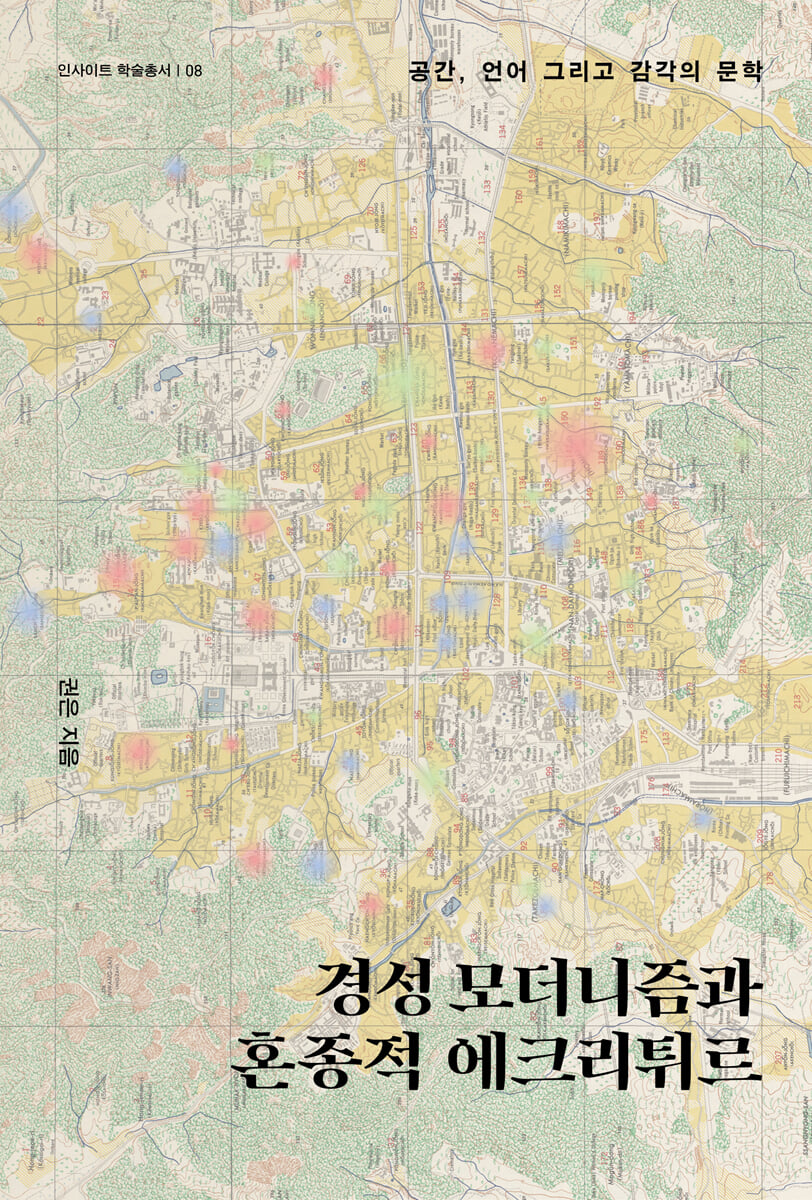
The eighth book in the Insight Academic Series published by History Space Publishing, 『Gyeongseong Modernism and Hybrid Ecriture』, is a literary approach to Gyeongseong.
In her previous book, 『Gyeongseong Modernism』, author Kwon Eun-eun focused on the background that allowed for the emergence of Gyeongseong Modernism during the colonial period and on its representative writers, such as Park Tae-won. In this book, she goes a step further and examines Gyeongseong Modernism from various angles along the three layers of space, language, and sense, allowing us to gauge how our literature blossomed and survived under the oppressive conditions of colonialism.
According to the author, hard modernism is not simply a delayed adoption or technological borrowing of Western modernism.
It was a concrete form of hybrid yet conditional écriture that arose under the dual conditions of colonialism, and a practical form formed amidst the tension between social oppression and literary aspirations faced by contemporary Joseon writers.
This book reveals that the urban space of Gyeongseong was not simply a setting or subject matter for a story, but rather functioned as a key device that organized the form, sensibility, and sensory structure of literature.
In particular, focusing on the keyword 'Dae-Gyeong-Seong', we explore three-dimensionally how Gyeong-Seong was spatialized in literary terms, and how its internal hierarchy, division, and control influenced literary genres, narrative structures, and forms of sensation.
Explore three-dimensionally across three levels: space, language, and senses.
Books are being published that explore the colonial city of Gyeongseong from a new perspective.
The book examines the appearance of Gyeongseong in the 1930s in detail through maps and photographs, and reconstructs apartments, department stores, and other buildings in three dimensions based on newspaper and magazine articles from the time.
We visit popular places and restaurants featured in the works, and listen to the stories of artists who loved Gyeongseong.
Gyeongseong also provides a wealth of material for books for children and young adults.
In this way, 'Gyeongseong' is not a subject of temporary interest, but is considered a text and cultural phenomenon that needs to be newly discovered and reinterpreted.
The eighth book in the Insight Academic Series published by History Space Publishing, 『Gyeongseong Modernism and Hybrid Ecriture』, is a literary approach to Gyeongseong.
In her previous book, 『Gyeongseong Modernism』, author Kwon Eun-eun focused on the background that allowed for the emergence of Gyeongseong Modernism during the colonial period and on its representative writers, such as Park Tae-won. In this book, she goes a step further and examines Gyeongseong Modernism from various angles along the three layers of space, language, and sense, allowing us to gauge how our literature blossomed and survived under the oppressive conditions of colonialism.
According to the author, hard modernism is not simply a delayed adoption or technological borrowing of Western modernism.
It was a concrete form of hybrid yet conditional écriture that arose under the dual conditions of colonialism, and a practical form formed amidst the tension between social oppression and literary aspirations faced by contemporary Joseon writers.
This book reveals that the urban space of Gyeongseong was not simply a setting or subject matter for a story, but rather functioned as a key device that organized the form, sensibility, and sensory structure of literature.
In particular, focusing on the keyword 'Dae-Gyeong-Seong', we explore three-dimensionally how Gyeong-Seong was spatialized in literary terms, and how its internal hierarchy, division, and control influenced literary genres, narrative structures, and forms of sensation.
- You can preview some of the book's contents.
Preview
index
At the beginning of the book
Opening Remarks: Gyeongseong Modernism and the Colonial Condition
Chapter 1: The Colonial City of Gyeongseong and the Foundations of Modernism
1.
The Age of Imperialism: The Crisis of Representation
2.
The specificity and constraints of Korean literature
3.
Drawing a Map of Modernist Literature
4.
A contrapuntal reading of the dual city of Gyeongseong
Chapter 2: Re-creating Gyeongseong by Japanese in Joseon: Imaginary Geography and the Dual City
1.
The mental geography and ambivalence of Japanese people in Joseon
2.
The Colonizer's Spatial Imagination Seen Through a Pilgrimage to Namchon
3.
Bukchon Adventure and Fictional Spatialization
4.
The two faces of Gyeongseong, the dual city
Chapter 3: Gyeongseong's Literary Map: Taboo, Expansion, and Reproduction
1.
Taboo Space and the Narrative of Namchon
2.
Expansion of Daegyeongseong and rezoning of urban space
3.
The Aquarium of Love and the Narrative of Urban Desire
4.
Modernism in Gyeongseong as depicted by Chae Man-sik
Chapter 4: Hybrid Ecriture and Hierarchical Language
1.
East Asian Transformations of "Stream of Consciousness" Narratives
2.
Linguistic Hybridity and the Space of Power
3.
The vicarious supplementary structure of hybrid écriture
4.
Urban sensibility and linguistic sense
Chapter 5: Negotiation of Genre, Image, and Sense
1.
The Dynamics of Empire and Colony: A Map of the Shifting Senses
2.
Gyeongseong's classical reproduction and modern visuality
3.
Image and Text: Newspaper Illustrations and Modernism in Chinese
4.
Expansion of sound and variation of sense
Closing Remarks: Gyeongseong Modernism in World Literature
Americas
References
Opening Remarks: Gyeongseong Modernism and the Colonial Condition
Chapter 1: The Colonial City of Gyeongseong and the Foundations of Modernism
1.
The Age of Imperialism: The Crisis of Representation
2.
The specificity and constraints of Korean literature
3.
Drawing a Map of Modernist Literature
4.
A contrapuntal reading of the dual city of Gyeongseong
Chapter 2: Re-creating Gyeongseong by Japanese in Joseon: Imaginary Geography and the Dual City
1.
The mental geography and ambivalence of Japanese people in Joseon
2.
The Colonizer's Spatial Imagination Seen Through a Pilgrimage to Namchon
3.
Bukchon Adventure and Fictional Spatialization
4.
The two faces of Gyeongseong, the dual city
Chapter 3: Gyeongseong's Literary Map: Taboo, Expansion, and Reproduction
1.
Taboo Space and the Narrative of Namchon
2.
Expansion of Daegyeongseong and rezoning of urban space
3.
The Aquarium of Love and the Narrative of Urban Desire
4.
Modernism in Gyeongseong as depicted by Chae Man-sik
Chapter 4: Hybrid Ecriture and Hierarchical Language
1.
East Asian Transformations of "Stream of Consciousness" Narratives
2.
Linguistic Hybridity and the Space of Power
3.
The vicarious supplementary structure of hybrid écriture
4.
Urban sensibility and linguistic sense
Chapter 5: Negotiation of Genre, Image, and Sense
1.
The Dynamics of Empire and Colony: A Map of the Shifting Senses
2.
Gyeongseong's classical reproduction and modern visuality
3.
Image and Text: Newspaper Illustrations and Modernism in Chinese
4.
Expansion of sound and variation of sense
Closing Remarks: Gyeongseong Modernism in World Literature
Americas
References
Publisher's Review
About 2,500 works by domestic authors and 130 Japanese texts
Extracted and analyzed colonial city Gyeongseong and Gyeongseong modernism
This book examines how modernism was formed and transformed within the specific context of the colonial city of Gyeongseong, focusing on numerous cases and discussions that reveal three layers: space, language, and sense.
To this end, we extracted neighborhood names and key spatial indicators from approximately 2,500 novels and essays set in Gyeongseong in the 1930s and compared and analyzed them with actual maps of the time.
Through this, we aimed to understand not only the distribution and aspects of visually reproduced space, but also literary tendencies that are concentrated in specific areas.
In addition, we collected about 130 Japanese texts written by Japanese writers who lived in Gyeongseong and compared and analyzed them with the works of Korean writers.
Beyond simply theoretically analyzing literary works, by drawing a literary map centered on Gyeongseong, we were able to view the dual city of Gyeongseong in a three-dimensional way.
This book is divided into five chapters.
Chapter 1 focuses on the process by which modernism was formed, going beyond the simple acceptance of Western literary theory and undergoing unique transformations and constraints within imperialist power relations and colonial conditions.
Chapter 2 follows the gaze of Japanese writers who recreated Gyeongseong as a "second home" and a "space of ambivalence," examining how the colonial city was shaped within a dualistic mental geography.
Chapter 3 shifts the focus to the narratives of Korean writers and delves into how Gyeongseong was spatialized literaryally.
Gyeongseong is not simply an administrative center for the management and control of imperialist power, but a stage where everyday life and literary imagination intersect.
In particular, Namchon functions as a taboo space and a place of encounter with others, forming a unique network of meanings within literary representation.
Chapter 4 focuses on issues of language and narrative technique.
The Western technique of stream of consciousness was transformed into long-distance sentences, disjointed structures, and fragmented inner psychology, and Japanese speech in particular revealed its cracks while simultaneously concealing them through indirect presentation or translation.
Gyeongseong's literature formed a 'hybrid écriture' where Korean and Japanese intersected, and this was closely intertwined with issues of translation, dieglossia, proper nouns, and place names.
Chapter 5 shows that modernism unfolded beyond formal experiments within texts, crossing genres and sensibilities.
Literature explored new aesthetic possibilities by being closely intertwined with contemporary media and art forms such as newspapers and magazines, illustrations and advertising, music and theatre.
In other words, modernism worked in a way that expanded the reader's senses by actively accepting visual images and auditory sounds, rather than remaining solely within the text.
In this respect, rigid modernism should not be limited to mere 'literature', but should be understood as a multi-layered phenomenon in which genres, media, and senses interact.
Extracted and analyzed colonial city Gyeongseong and Gyeongseong modernism
This book examines how modernism was formed and transformed within the specific context of the colonial city of Gyeongseong, focusing on numerous cases and discussions that reveal three layers: space, language, and sense.
To this end, we extracted neighborhood names and key spatial indicators from approximately 2,500 novels and essays set in Gyeongseong in the 1930s and compared and analyzed them with actual maps of the time.
Through this, we aimed to understand not only the distribution and aspects of visually reproduced space, but also literary tendencies that are concentrated in specific areas.
In addition, we collected about 130 Japanese texts written by Japanese writers who lived in Gyeongseong and compared and analyzed them with the works of Korean writers.
Beyond simply theoretically analyzing literary works, by drawing a literary map centered on Gyeongseong, we were able to view the dual city of Gyeongseong in a three-dimensional way.
This book is divided into five chapters.
Chapter 1 focuses on the process by which modernism was formed, going beyond the simple acceptance of Western literary theory and undergoing unique transformations and constraints within imperialist power relations and colonial conditions.
Chapter 2 follows the gaze of Japanese writers who recreated Gyeongseong as a "second home" and a "space of ambivalence," examining how the colonial city was shaped within a dualistic mental geography.
Chapter 3 shifts the focus to the narratives of Korean writers and delves into how Gyeongseong was spatialized literaryally.
Gyeongseong is not simply an administrative center for the management and control of imperialist power, but a stage where everyday life and literary imagination intersect.
In particular, Namchon functions as a taboo space and a place of encounter with others, forming a unique network of meanings within literary representation.
Chapter 4 focuses on issues of language and narrative technique.
The Western technique of stream of consciousness was transformed into long-distance sentences, disjointed structures, and fragmented inner psychology, and Japanese speech in particular revealed its cracks while simultaneously concealing them through indirect presentation or translation.
Gyeongseong's literature formed a 'hybrid écriture' where Korean and Japanese intersected, and this was closely intertwined with issues of translation, dieglossia, proper nouns, and place names.
Chapter 5 shows that modernism unfolded beyond formal experiments within texts, crossing genres and sensibilities.
Literature explored new aesthetic possibilities by being closely intertwined with contemporary media and art forms such as newspapers and magazines, illustrations and advertising, music and theatre.
In other words, modernism worked in a way that expanded the reader's senses by actively accepting visual images and auditory sounds, rather than remaining solely within the text.
In this respect, rigid modernism should not be limited to mere 'literature', but should be understood as a multi-layered phenomenon in which genres, media, and senses interact.
GOODS SPECIFICS
- Date of issue: October 31, 2025
- Page count, weight, size: 476 pages | 786g | 146*217*32mm
- ISBN13: 9791157076598
- ISBN10: 1157076599
You may also like
카테고리
korean


korean

![GQ KOREA Mark (Monthly): December [2025]](http://librairie.coreenne.fr/cdn/shop/files/8ef265dbbfbf186523ed75ba7319009d.jpg?v=1765340328&width=3840)


