

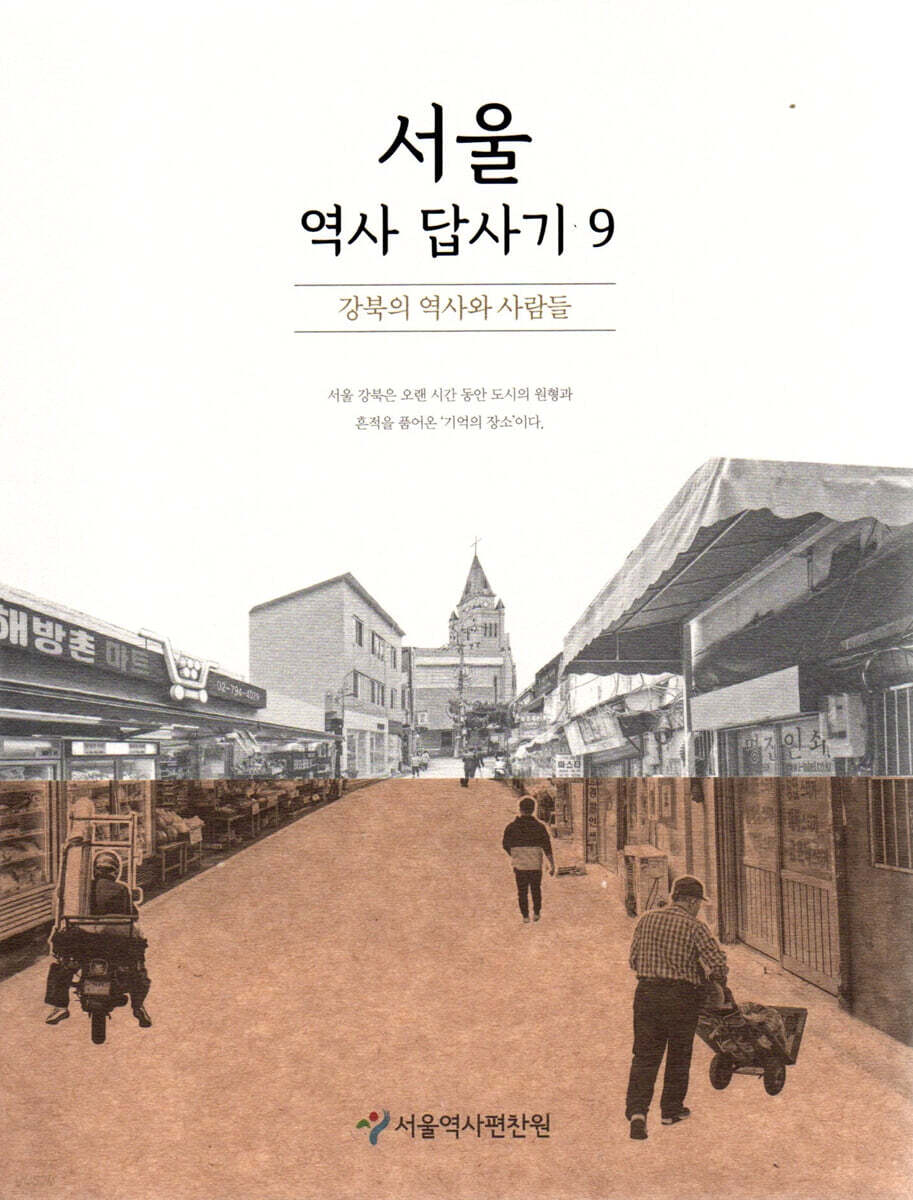
Seoul History Tour 9
 |
Description
index
General information
Seo Jun-seok - Exploring Old Seoul Neighborhoods - 14
First tour: Dongdaemun and Cheongnyangni
Choi In-young, the center of eastern Seoul, a city with connections in all directions
Traces and daily life outside Dongdaemun - 35
Korea's first tram to Cheongnyangni and a train to Ttukseom - 39
Racecourse close to the city center and convenient for transportation - 48
Intercity bus terminal in eastern Seoul in the 1970s and 1980s - 54
The starting station of the Gyeongchun Railway connecting Seoul and Chuncheon - 60
Traditional Markets Representing Eastern Seoul - 65
Apartment complex near Cheongnyangni Station, built in the 1970s - 72
Seoul's eastern transportation hub - 78
Second tour: Haebangchon and Itaewon
Lee Yeon-sik, the street where immigrants live and breathe
Before looking into the history of Yongsan - 87
Traces of the Japanese colonial period remaining in the areas of Namyeong-dong, Huam-dong, and Yongsan-dong 2-ga - 89
Traces of Gyeongseong Patriotic Shrine Remaining in Huam-dong - 99
Haebangchon, a tight-knit village of South Vietnamese refugees - 103
Traces of a Vietnamese village remaining on Haebangchon Hill - 112
The village is being moved mainly by foreigners - 119
Transforming into a Street Embracing World Culture - 124
Third tour: Dongdaemun and Changsin-dong
Kim Mi-seon, the starting point of Korea's modern clothing industry
The rise of Seoul's clothing industry after the Korean War - 133
Traces of Japanese colonial exploitation and development remain in Changsin-dong - 138
The sewing industry in Changsin-dong and its historical records - 145
Historical Changes and Spatial Characteristics of the Dongdaemun Area - 154
Modernized clothing stores in the Dongdaemun area since the 1970s - 157
The starting point of the labor movement during the industrialization period: Jeon Tae-il's self-immolation in 1970 - 163
Historical Workplaces of Female Garment Workers - 167
The Life of Martyr Jeon Tae-il and the Workers' World He Dreamed of - 172
True Story Lesson 1: The Forgotten Stories of the Women of Changsin-dong:
Space for Women's Education, Housing, and Care Movements - 180
Fourth Field Trip: Ttukseom Hangang Park and Hwayang-dong
Leisure Spaces for Seoulites by Yoon Hye-min
Ttukgo with the Han River and Salgot Ranch - 189
The Origin of Jayang-dong and the History of Ttukseom Hangang Park - 194
The Birth of Gwangjin-gu and the Transformation of its Commercial District - 200
Patriotic Movement Site Becomes a Landmark at Konkuk University - 204
Just as clear waves continue to flow, so too must learning be constantly renewed - 208
Traces of the Deokhu Reproduction Zone in the Ttukseom Full-Scale Development Plan - 212
True Story Learning 2 October Yushin Revolution Memorial Tower and October 28th Struggle Memorial Statue:
The Courage of University Students Who Made Democracy Blossom - 216
In Search of the Origins of Hwayang-dong - 220
From a Joseon Dynasty royal tomb to a golf course and then a children's park - 224
Fifth Field Trip: Shinsudong and Yonggangdong
The Life and Culture of Mapo Naru People, So Soon-gyu
Mapo, from the outskirts to the heart of the bustling city - 235
Gwanghungchang, the payroll warehouse for Joseon officials - 238
The Last Seat of the Ill-Fated Modern Poet Kim Su-yeong - 248
Prime Minister Park Je-chae, the great Korean leader whose tomb was entombed - 251
Starting point of Mapo - 257
Lee Ji-ham, the famous author of Tojeong Bigyeol - 262
Traces of Mapo residents' lives remaining in Yonggang-dong - 268
A Villa Showing the Life of Prince Hongseon Daewongun - 271
Sixth Field Trip: Changdong and Ssangmundong
Traces of history engraved on the northeastern outskirts of Seoul by Im Dong-hyeon
Modern and Contemporary Korean History from the Edge of Seoul - 281
Modern Leisure Activities That Arrived with the Train Station - 285
The Origin of Changdong's Name, Still Mysterious - 291
Nationalist activists who refused to cooperate and went into hiding in Changdong - 294
Ham Seok-heon Memorial Hall, where the idea of washing rice remains - 307
Jeon Tae-il, a giant in Korean labor history and eternal youth - 313
The Grass That Rised Before Anyone Else, Poet Kim Su-young - 320
True Story Lesson 3: Gansong Jeon Hyeong-pil's House: Guardian of National Cultural Heritage, Gansong Jeon Hyeong-pil - 325
True Story Lesson 4: Village Theater: The Unstoppable Hyun Gomusin, Gyehunje - 328
Seventh Field Trip: Inhyeon-dong Printing Alley
A Look at Seoul's Publishing Culture: Jeong Hye-in
Before exploring Inhyeon-dong Printing Alley - 333
Positive Cases of Discovery and Preservation of Urban Historic Sites - 336
Site responsible for publishing ethnographic journals during the Japanese colonial period - 341
Move the nation by loudly announcing foreign invasion - 346
The emergence of Korean-language journalism in 1920 - 351
Introducing New Cultures through Bookstores and Publishing - 355
Protecting our nation through the preservation and restoration of traditional cultural knowledge - 360
Korea's National Grain Printing Technology Center - 365
The center of the printing industry that dominated the 1980s and 1990s - 371
Real Story Learning 5 From Daehan Theater to Myeongbo Theater,
The theater district that dominated the Chungmuro film era - 378
supplement
References - 382
Image Assistance - 386
Search - 390
Seo Jun-seok - Exploring Old Seoul Neighborhoods - 14
First tour: Dongdaemun and Cheongnyangni
Choi In-young, the center of eastern Seoul, a city with connections in all directions
Traces and daily life outside Dongdaemun - 35
Korea's first tram to Cheongnyangni and a train to Ttukseom - 39
Racecourse close to the city center and convenient for transportation - 48
Intercity bus terminal in eastern Seoul in the 1970s and 1980s - 54
The starting station of the Gyeongchun Railway connecting Seoul and Chuncheon - 60
Traditional Markets Representing Eastern Seoul - 65
Apartment complex near Cheongnyangni Station, built in the 1970s - 72
Seoul's eastern transportation hub - 78
Second tour: Haebangchon and Itaewon
Lee Yeon-sik, the street where immigrants live and breathe
Before looking into the history of Yongsan - 87
Traces of the Japanese colonial period remaining in the areas of Namyeong-dong, Huam-dong, and Yongsan-dong 2-ga - 89
Traces of Gyeongseong Patriotic Shrine Remaining in Huam-dong - 99
Haebangchon, a tight-knit village of South Vietnamese refugees - 103
Traces of a Vietnamese village remaining on Haebangchon Hill - 112
The village is being moved mainly by foreigners - 119
Transforming into a Street Embracing World Culture - 124
Third tour: Dongdaemun and Changsin-dong
Kim Mi-seon, the starting point of Korea's modern clothing industry
The rise of Seoul's clothing industry after the Korean War - 133
Traces of Japanese colonial exploitation and development remain in Changsin-dong - 138
The sewing industry in Changsin-dong and its historical records - 145
Historical Changes and Spatial Characteristics of the Dongdaemun Area - 154
Modernized clothing stores in the Dongdaemun area since the 1970s - 157
The starting point of the labor movement during the industrialization period: Jeon Tae-il's self-immolation in 1970 - 163
Historical Workplaces of Female Garment Workers - 167
The Life of Martyr Jeon Tae-il and the Workers' World He Dreamed of - 172
True Story Lesson 1: The Forgotten Stories of the Women of Changsin-dong:
Space for Women's Education, Housing, and Care Movements - 180
Fourth Field Trip: Ttukseom Hangang Park and Hwayang-dong
Leisure Spaces for Seoulites by Yoon Hye-min
Ttukgo with the Han River and Salgot Ranch - 189
The Origin of Jayang-dong and the History of Ttukseom Hangang Park - 194
The Birth of Gwangjin-gu and the Transformation of its Commercial District - 200
Patriotic Movement Site Becomes a Landmark at Konkuk University - 204
Just as clear waves continue to flow, so too must learning be constantly renewed - 208
Traces of the Deokhu Reproduction Zone in the Ttukseom Full-Scale Development Plan - 212
True Story Learning 2 October Yushin Revolution Memorial Tower and October 28th Struggle Memorial Statue:
The Courage of University Students Who Made Democracy Blossom - 216
In Search of the Origins of Hwayang-dong - 220
From a Joseon Dynasty royal tomb to a golf course and then a children's park - 224
Fifth Field Trip: Shinsudong and Yonggangdong
The Life and Culture of Mapo Naru People, So Soon-gyu
Mapo, from the outskirts to the heart of the bustling city - 235
Gwanghungchang, the payroll warehouse for Joseon officials - 238
The Last Seat of the Ill-Fated Modern Poet Kim Su-yeong - 248
Prime Minister Park Je-chae, the great Korean leader whose tomb was entombed - 251
Starting point of Mapo - 257
Lee Ji-ham, the famous author of Tojeong Bigyeol - 262
Traces of Mapo residents' lives remaining in Yonggang-dong - 268
A Villa Showing the Life of Prince Hongseon Daewongun - 271
Sixth Field Trip: Changdong and Ssangmundong
Traces of history engraved on the northeastern outskirts of Seoul by Im Dong-hyeon
Modern and Contemporary Korean History from the Edge of Seoul - 281
Modern Leisure Activities That Arrived with the Train Station - 285
The Origin of Changdong's Name, Still Mysterious - 291
Nationalist activists who refused to cooperate and went into hiding in Changdong - 294
Ham Seok-heon Memorial Hall, where the idea of washing rice remains - 307
Jeon Tae-il, a giant in Korean labor history and eternal youth - 313
The Grass That Rised Before Anyone Else, Poet Kim Su-young - 320
True Story Lesson 3: Gansong Jeon Hyeong-pil's House: Guardian of National Cultural Heritage, Gansong Jeon Hyeong-pil - 325
True Story Lesson 4: Village Theater: The Unstoppable Hyun Gomusin, Gyehunje - 328
Seventh Field Trip: Inhyeon-dong Printing Alley
A Look at Seoul's Publishing Culture: Jeong Hye-in
Before exploring Inhyeon-dong Printing Alley - 333
Positive Cases of Discovery and Preservation of Urban Historic Sites - 336
Site responsible for publishing ethnographic journals during the Japanese colonial period - 341
Move the nation by loudly announcing foreign invasion - 346
The emergence of Korean-language journalism in 1920 - 351
Introducing New Cultures through Bookstores and Publishing - 355
Protecting our nation through the preservation and restoration of traditional cultural knowledge - 360
Korea's National Grain Printing Technology Center - 365
The center of the printing industry that dominated the 1980s and 1990s - 371
Real Story Learning 5 From Daehan Theater to Myeongbo Theater,
The theater district that dominated the Chungmuro film era - 378
supplement
References - 382
Image Assistance - 386
Search - 390
GOODS SPECIFICS
- Date of issue: September 30, 2025
- Page count, weight, size: 410 pages | 152*200*30mm
- ISBN13: 9791160712124
- ISBN10: 1160712123
You may also like
카테고리
korean


korean

![GQ KOREA Mark (Monthly): December [2025]](http://librairie.coreenne.fr/cdn/shop/files/8ef265dbbfbf186523ed75ba7319009d.jpg?v=1765340328&width=3840)


