

Such an ordinary innovation
 |
Description
Book Introduction
“Chance is the only condition for innovation that humans can design.”
The greatest invention born beyond planning
There is a technology that started as an invention by a movie star.
In the 1940s, Hollywood's golden age, actress Hedwig Kiesler heard about the problem of radio interference and devised her own solution.
Together with her friend, avant-garde composer George Antheil, she invented the 'Frequency Hopping Communication System', inspired by piano rolls.
They thought that if they transmitted the signal by changing the frequency at a regular cycle, the enemy would not be able to interfere with the signal.
Her invention, for which she had even patented it, was rejected by the U.S. Navy at the time.
Sixty years later, the invention was revived as the basis for modern Bluetooth and Wi-Fi.
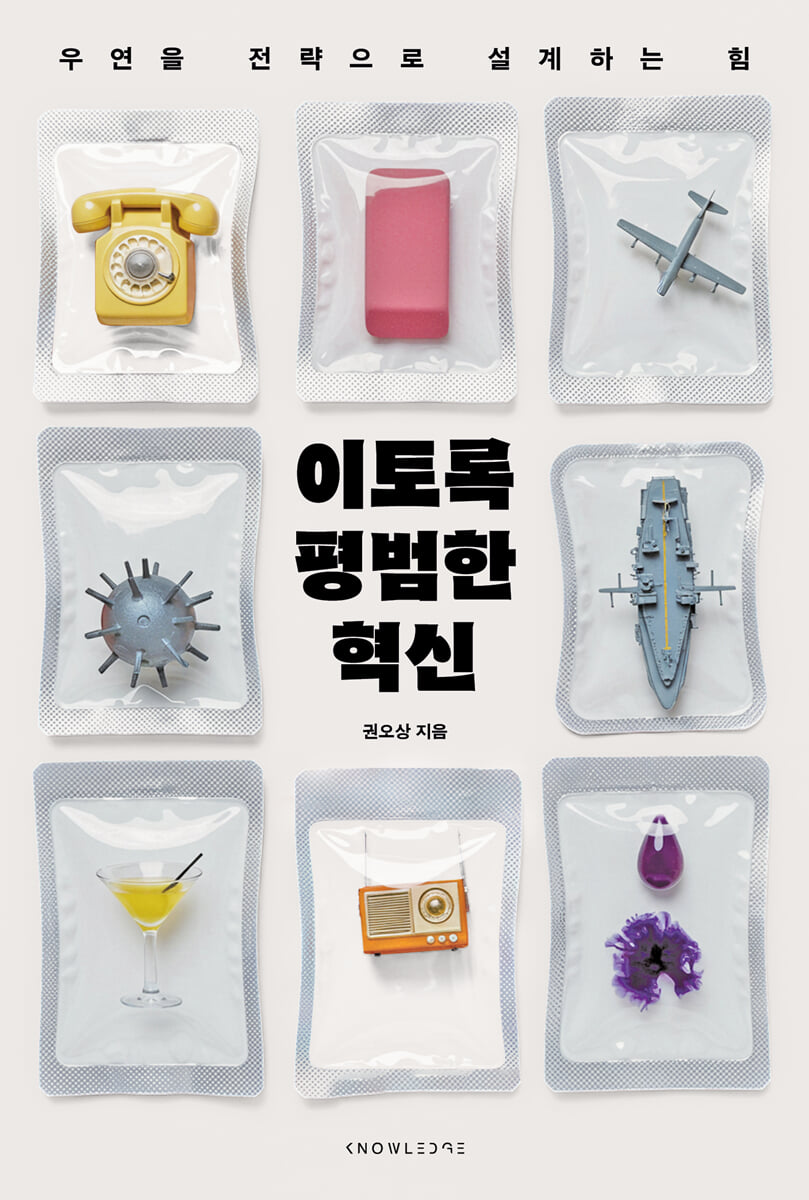
"This Ordinary Innovation" traces eight mistakes that left their mark on history's greatest achievements.
Refrigerants, telephones, rubber, dyes, telegraphs, medicines, airplanes, torpedoes.
It all started as an unintended byproduct of an experiment.
In the 19th century, a young British chemist named William Perkin accidentally obtained a purple substance while making a fever treatment.
Although what he saw in the test tube was a sign of failure, the purple dye 'Moverin' soon became the symbolic color of European royalty, and it was recorded as the birth of the chemical industry and a fashion revolution.
Austrian chemist Thomas Midgley discovered 'freon' while developing a safe refrigeration gas.
It was dedicated to the core cooling technology of the atomic bomb.
This book deals with the history of chance and failure, but beyond that, it talks about 'human possibility'.
Success is found in ordinary failure.
A laboratory error, a technician's mistake, an artist's quirky idea—those tiny cracks have changed the course of humanity.
The spark of innovation discovered in a small gap, that is, innovation does not begin as a result of challenge, but from the constant observation of 'ordinary failures'.
The greatest invention born beyond planning
There is a technology that started as an invention by a movie star.
In the 1940s, Hollywood's golden age, actress Hedwig Kiesler heard about the problem of radio interference and devised her own solution.
Together with her friend, avant-garde composer George Antheil, she invented the 'Frequency Hopping Communication System', inspired by piano rolls.
They thought that if they transmitted the signal by changing the frequency at a regular cycle, the enemy would not be able to interfere with the signal.
Her invention, for which she had even patented it, was rejected by the U.S. Navy at the time.
Sixty years later, the invention was revived as the basis for modern Bluetooth and Wi-Fi.
"This Ordinary Innovation" traces eight mistakes that left their mark on history's greatest achievements.
Refrigerants, telephones, rubber, dyes, telegraphs, medicines, airplanes, torpedoes.
It all started as an unintended byproduct of an experiment.
In the 19th century, a young British chemist named William Perkin accidentally obtained a purple substance while making a fever treatment.
Although what he saw in the test tube was a sign of failure, the purple dye 'Moverin' soon became the symbolic color of European royalty, and it was recorded as the birth of the chemical industry and a fashion revolution.
Austrian chemist Thomas Midgley discovered 'freon' while developing a safe refrigeration gas.
It was dedicated to the core cooling technology of the atomic bomb.
This book deals with the history of chance and failure, but beyond that, it talks about 'human possibility'.
Success is found in ordinary failure.
A laboratory error, a technician's mistake, an artist's quirky idea—those tiny cracks have changed the course of humanity.
The spark of innovation discovered in a small gap, that is, innovation does not begin as a result of challenge, but from the constant observation of 'ordinary failures'.
- You can preview some of the book's contents.
Preview
index
Introduction
Chapter 1.
Bluetooth's mother and father were film actors and avant-garde composers.
What the pioneers of wired communication have in common
The beginning of the first signal via wireless, invisible radio waves
Naval weapons derived from rays rather than rays of light
Fiume or Rijeka, which changed the course of naval battles
An Austrian actor perfects a torpedo guidance innovation.
Chapter 2.
What did the device that was intended to detect lightning and storms later become?
A teacher's college dropout who discovered another use for radio waves
Lockheed's Skunk Factory Demonstrates the Need for Breathless Innovation
“Flying Wings” that fly without a body
The Soviet Union's choice to ignore the principle of stealth
Another Use of Radar Discovered by Someone Who Didn't Even Finish Elementary School
Chapter 3.
Five people who sublimated their instinct for sweets into the power of chance.
US military combat rations from World War II
Why we ate sugar, the synonym for sweet foods, before the 19th century
Foods that replaced sweetness in the West when sugar was scarce
Our own unique sweetness found as an alternative to sugar and honey
The carelessness and oversight that brought sweet artificial sweeteners into the world.
Chapter 4.
Vulcanized rubber accidentally created by a man who went bankrupt while making farming tools
Uses of tree sap from the Amazon River basin
Another achievement of the British clergyman who first used an eraser
The name Macintosh is known all over the world, beyond computers and amplifiers.
A tire company that uses someone else's last name without permission, like Tesla
Solid rocket fuel, born instead of the intended automotive antifreeze material
Chapter 5.
A minor who accidentally made the king's dye while trying to make a fever remedy.
Why did Prince Amedeo, commander of the Italian forces in East Africa, die?
The tropical Andean plant that saved an Inca boy from malaria
The origins of purple dye, a symbol of European royalty
A cocktail born in the shadow of Indian colonial rule
Japanese broadcasts that fueled the spread of fever among American soldiers during the Pacific War
Chapter 6.
What became of the materials that were essential to the Allied war effort?
The British medical officer who led the spread of telegraphy and the innovation of the golf ball
Two Americans who tried to solve a small problem but ended up creating a bigger one.
How Refrigerant Became an Essential Material in Atomic Bomb Production
The British homeland air war would have been impossible without an unexpected invention.
Chapter 7.
Aspiring Pastor's Insights on the Captain's Mental Health
A major concern for a naval officer who was rapidly rising through the ranks
A pastor-to-be from a family of doctors who was appointed as the captain's companion
A civil engineer's thesis sparked the 'Origin of Species'
The naval admiral who provided the world's first weather forecast to a daily newspaper.
Chapter 8.
A former war correspondent who tried to build an unsinkable aircraft carrier
The common interests of Thomas Edison and Hiram Stevens Maxim
The U.S. Army was the first to purchase the Wright brothers' airplane.
Another interest of Alexander Bell, the patent holder of the telephone
The Strange Fate of the Ship Used in History's First Naval Air Raid
An “unsinkable ship” that could be called an artificial iceberg
References
Chapter 1.
Bluetooth's mother and father were film actors and avant-garde composers.
What the pioneers of wired communication have in common
The beginning of the first signal via wireless, invisible radio waves
Naval weapons derived from rays rather than rays of light
Fiume or Rijeka, which changed the course of naval battles
An Austrian actor perfects a torpedo guidance innovation.
Chapter 2.
What did the device that was intended to detect lightning and storms later become?
A teacher's college dropout who discovered another use for radio waves
Lockheed's Skunk Factory Demonstrates the Need for Breathless Innovation
“Flying Wings” that fly without a body
The Soviet Union's choice to ignore the principle of stealth
Another Use of Radar Discovered by Someone Who Didn't Even Finish Elementary School
Chapter 3.
Five people who sublimated their instinct for sweets into the power of chance.
US military combat rations from World War II
Why we ate sugar, the synonym for sweet foods, before the 19th century
Foods that replaced sweetness in the West when sugar was scarce
Our own unique sweetness found as an alternative to sugar and honey
The carelessness and oversight that brought sweet artificial sweeteners into the world.
Chapter 4.
Vulcanized rubber accidentally created by a man who went bankrupt while making farming tools
Uses of tree sap from the Amazon River basin
Another achievement of the British clergyman who first used an eraser
The name Macintosh is known all over the world, beyond computers and amplifiers.
A tire company that uses someone else's last name without permission, like Tesla
Solid rocket fuel, born instead of the intended automotive antifreeze material
Chapter 5.
A minor who accidentally made the king's dye while trying to make a fever remedy.
Why did Prince Amedeo, commander of the Italian forces in East Africa, die?
The tropical Andean plant that saved an Inca boy from malaria
The origins of purple dye, a symbol of European royalty
A cocktail born in the shadow of Indian colonial rule
Japanese broadcasts that fueled the spread of fever among American soldiers during the Pacific War
Chapter 6.
What became of the materials that were essential to the Allied war effort?
The British medical officer who led the spread of telegraphy and the innovation of the golf ball
Two Americans who tried to solve a small problem but ended up creating a bigger one.
How Refrigerant Became an Essential Material in Atomic Bomb Production
The British homeland air war would have been impossible without an unexpected invention.
Chapter 7.
Aspiring Pastor's Insights on the Captain's Mental Health
A major concern for a naval officer who was rapidly rising through the ranks
A pastor-to-be from a family of doctors who was appointed as the captain's companion
A civil engineer's thesis sparked the 'Origin of Species'
The naval admiral who provided the world's first weather forecast to a daily newspaper.
Chapter 8.
A former war correspondent who tried to build an unsinkable aircraft carrier
The common interests of Thomas Edison and Hiram Stevens Maxim
The U.S. Army was the first to purchase the Wright brothers' airplane.
Another interest of Alexander Bell, the patent holder of the telephone
The Strange Fate of the Ship Used in History's First Naval Air Raid
An “unsinkable ship” that could be called an artificial iceberg
References
Detailed image

Into the book
When studying innovation, one interesting fact stands out.
It is true that luck plays a big role in the field of innovation.
The common perception is that innovation is solely the result of planning, ability, and effort.
Of course, there are such innovations.
But most of the time, those are just improvements or refinements.
Surprisingly, many innovations come unintentionally.
The point is that there are many times when you try to do something else, but somehow you end up finding an unexpected solution.
The saying that “true innovation comes from outsiders or amateurs” is not without reason.
--- p.7, from “Introductory Remarks”
The conversation between Kistler and Antile somehow turned to the topic of torpedoes.
In his avant-garde music, Antile drew on his experience of playing multiple pianos simultaneously using piano rolls, perforated rolls of paper that told the piano which keys to play.
Kistler had the idea that if he made two identical piano rolls into smaller pieces and placed them in a torpedo and a radio transmitter, he could guide it across 88 frequencies, the number of piano keys, without fear of jamming.
Finally, in 1942, Kistler and Antheil received a U.S. patent for a “secret communication system.”
--- p.43~44, from “Innovation in Torpedo Guidance Perfected by an Austrian Actor”
European aristocrats did not eat cocoa in the solid form of chocolate as we do today.
Cocoa powder was mixed with water and drunk as an aphrodisiac.
The reason why chocolate chunks were not consumed was because they were too expensive to eat like that.
In the 18th century, if coffee symbolized the bourgeoisie and alcohol the proletariat, cocoa symbolized the nobility.
In other words, until then, cocoa was a luxury item that only a very few people could afford.
--- p.81, from “US Military Combat Rations Born of World War II”
That is why purple and violet, which can only be realized with porphyry, have become symbols representing the highest power in the West.
For example, in ancient Rome, only generals on triumphal processions, consuls, and emperors were allowed to wear togas dyed entirely in purple and decorated with gold thread.
Also, in the Eastern Roman Empire, being born as the child of an emperor was called “born in the color of porphyry.”
--- p.144, from “The Origin of Purple Dye, a Symbol of European Royalty”
Edison was a man who did not give up easily.
Edison, who concluded that the only solution was to create a more powerful internal combustion engine, took it upon himself to develop the engine.
Edison's fuel of choice was gunpowder, a type of explosive.
Edison's engine, which used gunpowder as fuel, had high output but was at great risk of explosion.
In fact, one of the engineers testing Edison's engine was burned when the engine exploded.
Edison, whose hair was singed in an engine explosion, gave up his dream of flying afterward.
It is true that luck plays a big role in the field of innovation.
The common perception is that innovation is solely the result of planning, ability, and effort.
Of course, there are such innovations.
But most of the time, those are just improvements or refinements.
Surprisingly, many innovations come unintentionally.
The point is that there are many times when you try to do something else, but somehow you end up finding an unexpected solution.
The saying that “true innovation comes from outsiders or amateurs” is not without reason.
--- p.7, from “Introductory Remarks”
The conversation between Kistler and Antile somehow turned to the topic of torpedoes.
In his avant-garde music, Antile drew on his experience of playing multiple pianos simultaneously using piano rolls, perforated rolls of paper that told the piano which keys to play.
Kistler had the idea that if he made two identical piano rolls into smaller pieces and placed them in a torpedo and a radio transmitter, he could guide it across 88 frequencies, the number of piano keys, without fear of jamming.
Finally, in 1942, Kistler and Antheil received a U.S. patent for a “secret communication system.”
--- p.43~44, from “Innovation in Torpedo Guidance Perfected by an Austrian Actor”
European aristocrats did not eat cocoa in the solid form of chocolate as we do today.
Cocoa powder was mixed with water and drunk as an aphrodisiac.
The reason why chocolate chunks were not consumed was because they were too expensive to eat like that.
In the 18th century, if coffee symbolized the bourgeoisie and alcohol the proletariat, cocoa symbolized the nobility.
In other words, until then, cocoa was a luxury item that only a very few people could afford.
--- p.81, from “US Military Combat Rations Born of World War II”
That is why purple and violet, which can only be realized with porphyry, have become symbols representing the highest power in the West.
For example, in ancient Rome, only generals on triumphal processions, consuls, and emperors were allowed to wear togas dyed entirely in purple and decorated with gold thread.
Also, in the Eastern Roman Empire, being born as the child of an emperor was called “born in the color of porphyry.”
--- p.144, from “The Origin of Purple Dye, a Symbol of European Royalty”
Edison was a man who did not give up easily.
Edison, who concluded that the only solution was to create a more powerful internal combustion engine, took it upon himself to develop the engine.
Edison's fuel of choice was gunpowder, a type of explosive.
Edison's engine, which used gunpowder as fuel, had high output but was at great risk of explosion.
In fact, one of the engineers testing Edison's engine was burned when the engine exploded.
Edison, whose hair was singed in an engine explosion, gave up his dream of flying afterward.
--- p.201, from “The Common Interests of Thomas Edison and Hiram Stevens Maxim”
Publisher's Review
“From unpredictable failures, unpredictable history is made.”
Every invention in the world is explained in the language of planning.
But if we look closely at history, most of the moments that changed civilization were born unplanned.
Since the Industrial Revolution in the 19th century, humanity has lived in a system of controllable prediction.
Nations make plans, businesses design strategies, and technology pursues efficiency.
But all these paradigm shifts happened outside that plan.
It was just a single mistake, or an exceptional failure, or a trace of careless observation.
In the 19th century, a young British chemist named William Perkin was trying to make a cure for malaria when he got a purple, tangled mess.
Although it seemed like a remnant of failure, Perkin didn't throw it away, but saw other possibilities.
As a result, the world's first synthetic dye, Moberlin, was born, which became the spark for the chemical industrial revolution.
In a similar era, another failure gave birth to another possibility.
Charles Goodyear, who was heating rubber, burned all the material due to an error in the laboratory.
However, in the burnt traces, the potential of vulcanized rubber was seen, and from that time on, the era of automobile tires and industrial rubber began.
What they had in common was not their failure, but their ability to observe failure meaningfully.
The author of this book refers to the turning point of that observation as the essence of innovation.
Innovation comes not from perfect planning, but from moments of imperfect observation.
If artificial intelligence predicts data, humans interpret failures.
"Such Ordinary Innovation" declares the power of interpretation as the innovative capital of humanity.
“Manage chance, design failure.”
A Chronicle of Great Innovations by Dr. Kwon Oh-sang, an Engineering PhD and author.
In the 1930s, Austrian actress Hedwig Kiesler learns through her husband's arms business that torpedo communication signals are being disrupted by enemy jamming.
She applied the principles of the piano roll together with avant-garde musician George Antheil.
The idea was that by constantly changing radio frequencies, like alternating between keys on a piano, interference could be avoided.
The frequency hopping communication she created became the basis for modern Bluetooth, Wi-Fi, and satellite communications.
But at the time, the US Navy dismissed her as “too beautiful an inventor to be taken seriously.”
Her ideas were forgotten for half a century, but were revived in the late 20th century as a core principle of digital communications.
Fleming's failure to clean up the mold contamination of penicillin gave mankind antibiotics, and Admiral Robert FitzRoy's failure to record the unpredictable weather gave birth to the world's first weather forecasting system.
His attempt was the first step toward transforming uncertainty into predictable order.
This book presents a new paradigm of innovation to businesses and individuals.
Innovation is not about achieving a goal, but about discovering by chance, and failure is not a risk to be avoided, but an asset to be managed.
Like observed innovation rather than planned innovation, a philosophy of failure rather than an economy of efficiency.
"This Ordinary Innovation" tells the story of how to achieve this transformation through empirical examples from history and human narratives.
As you follow the trajectory of this book, you will soon discover that the traces of failure were the algorithms that designed human progress.
Every invention in the world is explained in the language of planning.
But if we look closely at history, most of the moments that changed civilization were born unplanned.
Since the Industrial Revolution in the 19th century, humanity has lived in a system of controllable prediction.
Nations make plans, businesses design strategies, and technology pursues efficiency.
But all these paradigm shifts happened outside that plan.
It was just a single mistake, or an exceptional failure, or a trace of careless observation.
In the 19th century, a young British chemist named William Perkin was trying to make a cure for malaria when he got a purple, tangled mess.
Although it seemed like a remnant of failure, Perkin didn't throw it away, but saw other possibilities.
As a result, the world's first synthetic dye, Moberlin, was born, which became the spark for the chemical industrial revolution.
In a similar era, another failure gave birth to another possibility.
Charles Goodyear, who was heating rubber, burned all the material due to an error in the laboratory.
However, in the burnt traces, the potential of vulcanized rubber was seen, and from that time on, the era of automobile tires and industrial rubber began.
What they had in common was not their failure, but their ability to observe failure meaningfully.
The author of this book refers to the turning point of that observation as the essence of innovation.
Innovation comes not from perfect planning, but from moments of imperfect observation.
If artificial intelligence predicts data, humans interpret failures.
"Such Ordinary Innovation" declares the power of interpretation as the innovative capital of humanity.
“Manage chance, design failure.”
A Chronicle of Great Innovations by Dr. Kwon Oh-sang, an Engineering PhD and author.
In the 1930s, Austrian actress Hedwig Kiesler learns through her husband's arms business that torpedo communication signals are being disrupted by enemy jamming.
She applied the principles of the piano roll together with avant-garde musician George Antheil.
The idea was that by constantly changing radio frequencies, like alternating between keys on a piano, interference could be avoided.
The frequency hopping communication she created became the basis for modern Bluetooth, Wi-Fi, and satellite communications.
But at the time, the US Navy dismissed her as “too beautiful an inventor to be taken seriously.”
Her ideas were forgotten for half a century, but were revived in the late 20th century as a core principle of digital communications.
Fleming's failure to clean up the mold contamination of penicillin gave mankind antibiotics, and Admiral Robert FitzRoy's failure to record the unpredictable weather gave birth to the world's first weather forecasting system.
His attempt was the first step toward transforming uncertainty into predictable order.
This book presents a new paradigm of innovation to businesses and individuals.
Innovation is not about achieving a goal, but about discovering by chance, and failure is not a risk to be avoided, but an asset to be managed.
Like observed innovation rather than planned innovation, a philosophy of failure rather than an economy of efficiency.
"This Ordinary Innovation" tells the story of how to achieve this transformation through empirical examples from history and human narratives.
As you follow the trajectory of this book, you will soon discover that the traces of failure were the algorithms that designed human progress.
GOODS SPECIFICS
- Date of issue: November 11, 2025
- Page count, weight, size: 232 pages | 342g | 135*200*15mm
- ISBN13: 9791199184046
- ISBN10: 1199184047
You may also like
카테고리
korean


korean

![GQ KOREA Mark (Monthly): December [2025]](http://librairie.coreenne.fr/cdn/shop/files/8ef265dbbfbf186523ed75ba7319009d.jpg?v=1765340328&width=3840)


