

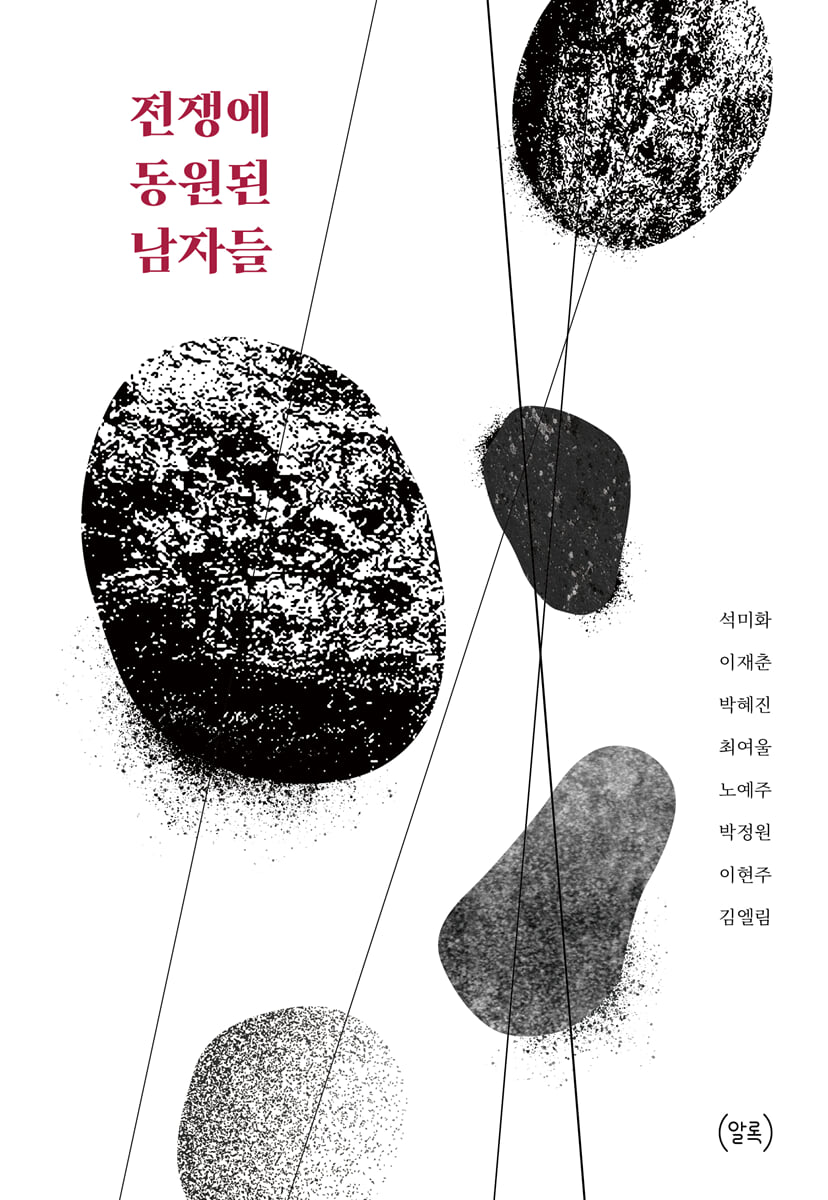
Men mobilized for war
 |
Description
Book Introduction
This book is a collection of records containing the stories of six Vietnam War veterans, their children, and their bereaved families.
It also contains the voices of eight citizens, including students, artists, and activists, who volunteered to meet with veterans.
Those who fought in the Vietnam War are now grandfathers in their seventies or eighties.
They tell the story of Korea's first overseas deployment and the return box, the Kim Shin-jo incident and the May 18th Democratization Movement, the Gyeongbu Expressway and the government-controlled demonstrations, the movement to uncover the truth about the civilian massacre and the damage caused by Agent Orange, and the veterans' honorary pension.
Their stories contain many clues that allow us to examine today's crisis of democracy, the military-style organizational culture, the harmful effects of patriarchal social structures, gender conflict, and generational conflict.
The stories of bereaved families who lost their families in the Vietnam War and the second-generation veterans are also noteworthy.
The existence and voices of these individuals, who have been hidden from our society for so long, clearly reveal what our nation and society have long ignored.
Another main character in this book is the presence and voice of those who volunteered to meet with veterans to hear their stories.
Rather than leaving veterans to remain in the position of perpetrators, they invite them to a place of conversation and attempt to reflect on war and peace, contradictions and divisions together with them.
I confess that I tried to meet and listen while feeling hesitant or distant.
It also contains the voices of eight citizens, including students, artists, and activists, who volunteered to meet with veterans.
Those who fought in the Vietnam War are now grandfathers in their seventies or eighties.
They tell the story of Korea's first overseas deployment and the return box, the Kim Shin-jo incident and the May 18th Democratization Movement, the Gyeongbu Expressway and the government-controlled demonstrations, the movement to uncover the truth about the civilian massacre and the damage caused by Agent Orange, and the veterans' honorary pension.
Their stories contain many clues that allow us to examine today's crisis of democracy, the military-style organizational culture, the harmful effects of patriarchal social structures, gender conflict, and generational conflict.
The stories of bereaved families who lost their families in the Vietnam War and the second-generation veterans are also noteworthy.
The existence and voices of these individuals, who have been hidden from our society for so long, clearly reveal what our nation and society have long ignored.
Another main character in this book is the presence and voice of those who volunteered to meet with veterans to hear their stories.
Rather than leaving veterans to remain in the position of perpetrators, they invite them to a place of conversation and attempt to reflect on war and peace, contradictions and divisions together with them.
I confess that I tried to meet and listen while feeling hesitant or distant.
- You can preview some of the book's contents.
Preview
index
Recommendation
Editor's Note - At the Crossroads of Resisting, Listening, and Speaking
Chapter 1: Grandfather Returns from War
- A drill instructor returning from Vietnam | Words by Yoo Seong-won - Text by Lee Jae-chun
-I still feel like I can hear the sounds and smells of 'war' | Words by Ahn Ik-sun - Text by Lee Jae-chun
The Sorrow of a Young Soldier and Spring in Seoul | Words by Oh Gyeong-yeol - Text by Park Hye-jin
- I went to a Vietnamese village once a week | Song Geum-sul's words - Written by Choi Yeo-ul
"I guess I was destined to live in a military uniform." Choi Hong-hui's words - Noh Yeo-ju, Park Jeong-won's writings
Chapter 2: Another Implicated Person: Second-Generation Veterans and Their Bereaved Families
Lee Jae-chun calls himself non-existent | Written by Seok Mi-hwa
- I am a second-generation veteran, a second-generation invisible war | Written by Jae-chun Lee
Who is the National Cemetery for? | Kang Seong-oh's words - Lee Hyeon-ju's writing
Chapter 3: A Heart that Hears War in the Face of Division and Contradiction
Hearing the War Through Body Memories | Kim Elim
- Met the Veterans | Park Hye-jin, Choi Yeo-ul, Noh Ye-ju, Park Jeong-won
Epilogue: A War Story to Unearth Peace | Seok Mi-hwa
Editor's Note - At the Crossroads of Resisting, Listening, and Speaking
Chapter 1: Grandfather Returns from War
- A drill instructor returning from Vietnam | Words by Yoo Seong-won - Text by Lee Jae-chun
-I still feel like I can hear the sounds and smells of 'war' | Words by Ahn Ik-sun - Text by Lee Jae-chun
The Sorrow of a Young Soldier and Spring in Seoul | Words by Oh Gyeong-yeol - Text by Park Hye-jin
- I went to a Vietnamese village once a week | Song Geum-sul's words - Written by Choi Yeo-ul
"I guess I was destined to live in a military uniform." Choi Hong-hui's words - Noh Yeo-ju, Park Jeong-won's writings
Chapter 2: Another Implicated Person: Second-Generation Veterans and Their Bereaved Families
Lee Jae-chun calls himself non-existent | Written by Seok Mi-hwa
- I am a second-generation veteran, a second-generation invisible war | Written by Jae-chun Lee
Who is the National Cemetery for? | Kang Seong-oh's words - Lee Hyeon-ju's writing
Chapter 3: A Heart that Hears War in the Face of Division and Contradiction
Hearing the War Through Body Memories | Kim Elim
- Met the Veterans | Park Hye-jin, Choi Yeo-ul, Noh Ye-ju, Park Jeong-won
Epilogue: A War Story to Unearth Peace | Seok Mi-hwa
Into the book
“When I went to the military, I realized how delicious the food was.
When we eat outside, the bark is ninety and the grain is ten.
(Omitted) When I go to the military and eat, I slowly melt away.
It's half rice and half grains.
“How delicious!”
--- From "The Drill Instructor Who Returned from Vietnam"
There was a superstition back then that if you took women's panties with you when you went into battle, you wouldn't die.
So when celebrities wash their panties in the evening and hang them out to dry, the next day all their panties are gone.
Then you will have a lot of complaints.
Because it happened so often, I explained the situation to them in advance when they came.
I also asked them to hang up some panties.
I'm doing this because I want to live, so what can I do?
I asked you to understand.”
--- From "The Drill Instructor Who Returned from Vietnam"
I was going to the cemetery to eat lunch, but the wind was blowing from this direction, so I went over there to eat.
No, the wind blew towards our soldiers and they smelled it once.
Just smelling that rotten smell made my nose bleed.
--- From "I still feel like I can hear the sound and smell of 'war'"
I felt a lot while watching 『Taebaek Mountains』.
Reading that book also made me realize that the Vietnam War I went through was nothing.
You just interfered in someone else's war for unification and caused trouble.
So I read all of Professor Jo Jeong-rae's books.
--- From "Does it make sense to commemorate war?"
When going on a mission, soldiers start to work hard to calm their minds for several days beforehand.
'I won't die' I promise myself every day.
But when we go on a big operation, a military chaplain comes and prays.
I hate that so much.
The pastor came and said, 'Let us all pray.
He tells them, 'You must live for your parents.'
I hate it so much, it's like the grim reaper comes and prays.
--- From "The Sorrow of a Young Soldier and Spring in Seoul"
Since I was at the dental clinic in the military hospital, I went to the village and pulled teeth and stuff.
Most Vietnamese people have bad teeth.
I don't know if you brush your teeth properly, but your body itself smells a lot.
Because it's mostly summer there, it's a hot country.
--- From "I went to a Vietnamese village once a week"
The story of Song Geum-sul was not a story of something being 'absent' or lacking, but rather a 'different' way of experiencing and speaking.
The unexpected, the difficult to interpret, the confusing, the more they connect to the truth of war, yet aren't we living in a society that hides or obscures these stories?
--- From "I went to a Vietnamese village once a week"
I'm confident I'd go to Vietnam again if I had to.
No, that's right.
It would be good if you went there for the country.
Now that our country is doing well, people talk badly about going to Vietnam. If we weren't doing well now, people wouldn't be talking like this.
--- From "I guess I was destined to live wearing a military uniform"
I listened to Choi Hong-hui's memories while facing this tension: that an unfamiliar history I had not experienced could not fully come to me as my own experience, that I could not fully follow the oral account because I had a different perspective.
--- From "I guess I was destined to live wearing a military uniform"
I am a student of modern Korean history and the son of a veteran who died from the aftereffects of Agent Orange.
He has symptoms and signs of brain damage believed to be caused by Agent Orange.
My 'sick body' shook up the way I experience my body, what I can do, and the space in which I live.
--- From "I am a second-generation veteran, a second-generation invisible war"
My younger brother has passed away and the funeral has been completed, but I still keep getting letters.
--- From "Who is the National Cemetery for?"
The problem is that no matter how well we try to record or reproduce the horrors of war, such 'body memories' cannot be conveyed through records.
Could it be that missing out on those 'body memories' that cannot be conveyed through words or writing, no matter how hard we try, is one reason why people think of war in an extremely simplistic way or easily romanticize it?
--- From "Hearing War Through the Memories of the Body"
We seem to live in a culture that easily dislikes things we don't know.
Therefore, meeting a veteran is no different from encountering the structure of violence.
How can I, you and I, who are different from me and whom I do not know well, find liberation together within this structure?
--- From "I Met a Veteran: Why I Want to Meet You"
It seems that accountability and reconciliation for any violence cannot occur solely between the perpetrator and the victim.
It would be impossible to speak if there were no one to listen, that is, if there were no place for testimony.
--- From "I Met a Veteran: How the Testimony of the Perpetrator Can Meet the Listening of the Future"
I expected words that could be understood.
But I encountered words that were not easily agreed upon, and it was at that point that the meeting found meaning.
This meeting was an incomprehensible event, a trip to meet a veteran.
--- From "Meeting a Veteran: Listening Hesitantly"
One thing was clear.
The veterans as victims who lost their individuality in life due to being mobilized by state violence, the veterans as perpetrators who participated in or watched the massacre of Vietnamese civilians, and the veterans as heads of households who had to take responsibility for their families' livelihoods under a patriarchal system are all experiences that remain in the body of one person, not in different people.
--- From "Meeting a Veteran: What I Realized Beyond Distance"
I have the ambition to turn the memories of war experienced by Korean society into an opportunity for peace.
When we eat outside, the bark is ninety and the grain is ten.
(Omitted) When I go to the military and eat, I slowly melt away.
It's half rice and half grains.
“How delicious!”
--- From "The Drill Instructor Who Returned from Vietnam"
There was a superstition back then that if you took women's panties with you when you went into battle, you wouldn't die.
So when celebrities wash their panties in the evening and hang them out to dry, the next day all their panties are gone.
Then you will have a lot of complaints.
Because it happened so often, I explained the situation to them in advance when they came.
I also asked them to hang up some panties.
I'm doing this because I want to live, so what can I do?
I asked you to understand.”
--- From "The Drill Instructor Who Returned from Vietnam"
I was going to the cemetery to eat lunch, but the wind was blowing from this direction, so I went over there to eat.
No, the wind blew towards our soldiers and they smelled it once.
Just smelling that rotten smell made my nose bleed.
--- From "I still feel like I can hear the sound and smell of 'war'"
I felt a lot while watching 『Taebaek Mountains』.
Reading that book also made me realize that the Vietnam War I went through was nothing.
You just interfered in someone else's war for unification and caused trouble.
So I read all of Professor Jo Jeong-rae's books.
--- From "Does it make sense to commemorate war?"
When going on a mission, soldiers start to work hard to calm their minds for several days beforehand.
'I won't die' I promise myself every day.
But when we go on a big operation, a military chaplain comes and prays.
I hate that so much.
The pastor came and said, 'Let us all pray.
He tells them, 'You must live for your parents.'
I hate it so much, it's like the grim reaper comes and prays.
--- From "The Sorrow of a Young Soldier and Spring in Seoul"
Since I was at the dental clinic in the military hospital, I went to the village and pulled teeth and stuff.
Most Vietnamese people have bad teeth.
I don't know if you brush your teeth properly, but your body itself smells a lot.
Because it's mostly summer there, it's a hot country.
--- From "I went to a Vietnamese village once a week"
The story of Song Geum-sul was not a story of something being 'absent' or lacking, but rather a 'different' way of experiencing and speaking.
The unexpected, the difficult to interpret, the confusing, the more they connect to the truth of war, yet aren't we living in a society that hides or obscures these stories?
--- From "I went to a Vietnamese village once a week"
I'm confident I'd go to Vietnam again if I had to.
No, that's right.
It would be good if you went there for the country.
Now that our country is doing well, people talk badly about going to Vietnam. If we weren't doing well now, people wouldn't be talking like this.
--- From "I guess I was destined to live wearing a military uniform"
I listened to Choi Hong-hui's memories while facing this tension: that an unfamiliar history I had not experienced could not fully come to me as my own experience, that I could not fully follow the oral account because I had a different perspective.
--- From "I guess I was destined to live wearing a military uniform"
I am a student of modern Korean history and the son of a veteran who died from the aftereffects of Agent Orange.
He has symptoms and signs of brain damage believed to be caused by Agent Orange.
My 'sick body' shook up the way I experience my body, what I can do, and the space in which I live.
--- From "I am a second-generation veteran, a second-generation invisible war"
My younger brother has passed away and the funeral has been completed, but I still keep getting letters.
--- From "Who is the National Cemetery for?"
The problem is that no matter how well we try to record or reproduce the horrors of war, such 'body memories' cannot be conveyed through records.
Could it be that missing out on those 'body memories' that cannot be conveyed through words or writing, no matter how hard we try, is one reason why people think of war in an extremely simplistic way or easily romanticize it?
--- From "Hearing War Through the Memories of the Body"
We seem to live in a culture that easily dislikes things we don't know.
Therefore, meeting a veteran is no different from encountering the structure of violence.
How can I, you and I, who are different from me and whom I do not know well, find liberation together within this structure?
--- From "I Met a Veteran: Why I Want to Meet You"
It seems that accountability and reconciliation for any violence cannot occur solely between the perpetrator and the victim.
It would be impossible to speak if there were no one to listen, that is, if there were no place for testimony.
--- From "I Met a Veteran: How the Testimony of the Perpetrator Can Meet the Listening of the Future"
I expected words that could be understood.
But I encountered words that were not easily agreed upon, and it was at that point that the meeting found meaning.
This meeting was an incomprehensible event, a trip to meet a veteran.
--- From "Meeting a Veteran: Listening Hesitantly"
One thing was clear.
The veterans as victims who lost their individuality in life due to being mobilized by state violence, the veterans as perpetrators who participated in or watched the massacre of Vietnamese civilians, and the veterans as heads of households who had to take responsibility for their families' livelihoods under a patriarchal system are all experiences that remain in the body of one person, not in different people.
--- From "Meeting a Veteran: What I Realized Beyond Distance"
I have the ambition to turn the memories of war experienced by Korean society into an opportunity for peace.
--- From "War Stories to Unearth Peace"
Publisher's Review
People who went to meet veterans
The old war stories they heard from their grandfathers
This book has its roots in the citizen participation oral history activity “I Met a War Veteran” by the peace organization “Archive Peace Memory.”
Seok Mi-hwa, a peace activist who has been working for a long time to 'investigate the truth about the massacre of civilians by the Korean military during the Vietnam War', opened the peace organization 'Archive Peace Memory' and began activities to meet with Vietnam War veterans to resist the Korean society that keeps veterans in the position of perpetrators and to seek a new path to peace.
We have been arranging meetings between veterans and citizens, and have been working to expand personal memories into social memories and make them public.
This book was created through the records and participation of various people seeking a place for peace, including peace activists, citizens, students, artists, and second-generation veterans.
There are six veterans who shared their stories in this book.
It contains the stories of various people, including a sergeant driver in his later years who chose to join the war to save money during his poor days, a soldier who joined the Marine Corps to emphasize his "manliness" and was seriously injured in the war, a dental hygiene non-commissioned officer who provided civil support to the Vietnamese people as part of a medical unit, and a military officer who joined the war to gain experience.
Although they share the common background of the Vietnam War, their thoughts, events, symptoms, and perceptions are all different.
In the lives of these people with different positions and experiences, such as soldiers and officers, sailors and army officers, major events in modern Korean history, such as the April 19 Revolution, the May 18 Democratization Movement, the Kim Shin-jo incident, the Gyeongbu Expressway, election fraud, and government-controlled demonstrations, appear as backgrounds.
The stories of individuals who were swept up in history without realizing it continue to include the construction of the Gyeongbu Expressway, dispatched labor to the Middle East, the student movement and the truth-finding movement about the civilian massacre in the Vietnam War, Agent Orange damage, and veterans' honorariums.
Their stories, which may sound like old tales of our grandfathers, provide many clues to examine Korea's current crisis of democracy, military-style organizational culture, the harmful effects of patriarchal social structures, gender conflict, and generational conflict.
Meanwhile, stories unfold that allow us to guess how nationalism and patriarchy regulate masculinity, and what perceptions, misunderstandings, distortions, and contradictions those who wage war reveal about the state, the military, and patriarchal culture.
Second-generation veterans, bereaved families who buried their loved ones at the National Cemetery
The sorrow and anger we have turned a blind eye to, the damage and suffering of the ongoing war.
Jae-chun Lee, the writer and narrator of this book, is a researcher of modern Korean history.
He is also the son of a veteran who died from the aftereffects of Agent Orange, and has symptoms and signs of brain damage believed to be secondary damage from Agent Orange.
One day, 10 years after his father passed away, he was taken to the emergency room.
I was diagnosed with a tumor in my head around the age of 10.
In this book, he calmly shares his experiences with illness, the Vietnam War, and the reality of being a second-generation victim of Agent Orange, as well as his perceptions, conflicts, sorrows, and outlook as a researcher and someone deeply involved in the Vietnam War.
This book also includes the story of the bereaved family member, Kang Seong-o.
He visited the National Cemetery several times a year for over 50 years after his younger brother, who lost his life in the Vietnam War, was buried there.
He tells of receiving his brother's remains without any explanation or comfort regarding his brother's death, and of the reasons why his questions about his death remain unresolved. He also expresses his regret over the discrimination of the state and the military, which do not even allow him to use a gravestone as he pleased after his death.
Do not let the veterans remain in the position of the perpetrators
An invitation to a place of conversation
Breaking down the narrow, state-centered narrative and flat perspective on war
The hope and challenge of using the memory of war and the experience of violence as a lever for peace
Another main character in this book is those who decided to listen to the stories of veterans.
They struggled with how to listen to the stories of their grandfathers who fought in the war, faced their own expectations and prejudices, and went through a time of sighs, questions, conflicts, and challenges.
Listeners change their positions and locations, adjust their distance, and sometimes succeed in listening and sometimes fail.
"Is it possible to hear about war without breaking the dichotomy between victim and perpetrator? Can we break down the hierarchy that exists between narrator and recorder?" While struggling, I propose this encounter to Korean society.
Listening to the voices of veterans is not about creating a narrative about the war and violence they were involved in, or inviting them to stand as conscientious witnesses.
It is an effort not to place all responsibility on the poverty of the past or the violence and deception of the Park Chung-hee regime, nor to view them merely as passive individuals sacrificed to nationalism and patriarchy.
In that sense, this book is a record of the will to confront, together with veterans, various issues in Korean society regarding class and ethnicity, military service and the military, generation and history, family and gender.
The old war stories they heard from their grandfathers
This book has its roots in the citizen participation oral history activity “I Met a War Veteran” by the peace organization “Archive Peace Memory.”
Seok Mi-hwa, a peace activist who has been working for a long time to 'investigate the truth about the massacre of civilians by the Korean military during the Vietnam War', opened the peace organization 'Archive Peace Memory' and began activities to meet with Vietnam War veterans to resist the Korean society that keeps veterans in the position of perpetrators and to seek a new path to peace.
We have been arranging meetings between veterans and citizens, and have been working to expand personal memories into social memories and make them public.
This book was created through the records and participation of various people seeking a place for peace, including peace activists, citizens, students, artists, and second-generation veterans.
There are six veterans who shared their stories in this book.
It contains the stories of various people, including a sergeant driver in his later years who chose to join the war to save money during his poor days, a soldier who joined the Marine Corps to emphasize his "manliness" and was seriously injured in the war, a dental hygiene non-commissioned officer who provided civil support to the Vietnamese people as part of a medical unit, and a military officer who joined the war to gain experience.
Although they share the common background of the Vietnam War, their thoughts, events, symptoms, and perceptions are all different.
In the lives of these people with different positions and experiences, such as soldiers and officers, sailors and army officers, major events in modern Korean history, such as the April 19 Revolution, the May 18 Democratization Movement, the Kim Shin-jo incident, the Gyeongbu Expressway, election fraud, and government-controlled demonstrations, appear as backgrounds.
The stories of individuals who were swept up in history without realizing it continue to include the construction of the Gyeongbu Expressway, dispatched labor to the Middle East, the student movement and the truth-finding movement about the civilian massacre in the Vietnam War, Agent Orange damage, and veterans' honorariums.
Their stories, which may sound like old tales of our grandfathers, provide many clues to examine Korea's current crisis of democracy, military-style organizational culture, the harmful effects of patriarchal social structures, gender conflict, and generational conflict.
Meanwhile, stories unfold that allow us to guess how nationalism and patriarchy regulate masculinity, and what perceptions, misunderstandings, distortions, and contradictions those who wage war reveal about the state, the military, and patriarchal culture.
Second-generation veterans, bereaved families who buried their loved ones at the National Cemetery
The sorrow and anger we have turned a blind eye to, the damage and suffering of the ongoing war.
Jae-chun Lee, the writer and narrator of this book, is a researcher of modern Korean history.
He is also the son of a veteran who died from the aftereffects of Agent Orange, and has symptoms and signs of brain damage believed to be secondary damage from Agent Orange.
One day, 10 years after his father passed away, he was taken to the emergency room.
I was diagnosed with a tumor in my head around the age of 10.
In this book, he calmly shares his experiences with illness, the Vietnam War, and the reality of being a second-generation victim of Agent Orange, as well as his perceptions, conflicts, sorrows, and outlook as a researcher and someone deeply involved in the Vietnam War.
This book also includes the story of the bereaved family member, Kang Seong-o.
He visited the National Cemetery several times a year for over 50 years after his younger brother, who lost his life in the Vietnam War, was buried there.
He tells of receiving his brother's remains without any explanation or comfort regarding his brother's death, and of the reasons why his questions about his death remain unresolved. He also expresses his regret over the discrimination of the state and the military, which do not even allow him to use a gravestone as he pleased after his death.
Do not let the veterans remain in the position of the perpetrators
An invitation to a place of conversation
Breaking down the narrow, state-centered narrative and flat perspective on war
The hope and challenge of using the memory of war and the experience of violence as a lever for peace
Another main character in this book is those who decided to listen to the stories of veterans.
They struggled with how to listen to the stories of their grandfathers who fought in the war, faced their own expectations and prejudices, and went through a time of sighs, questions, conflicts, and challenges.
Listeners change their positions and locations, adjust their distance, and sometimes succeed in listening and sometimes fail.
"Is it possible to hear about war without breaking the dichotomy between victim and perpetrator? Can we break down the hierarchy that exists between narrator and recorder?" While struggling, I propose this encounter to Korean society.
Listening to the voices of veterans is not about creating a narrative about the war and violence they were involved in, or inviting them to stand as conscientious witnesses.
It is an effort not to place all responsibility on the poverty of the past or the violence and deception of the Park Chung-hee regime, nor to view them merely as passive individuals sacrificed to nationalism and patriarchy.
In that sense, this book is a record of the will to confront, together with veterans, various issues in Korean society regarding class and ethnicity, military service and the military, generation and history, family and gender.
GOODS SPECIFICS
- Date of issue: July 1, 2025
- Page count, weight, size: 232 pages | 145*210*20mm
- ISBN13: 9791198988126
- ISBN10: 1198988126
You may also like
카테고리
korean


korean

![GQ KOREA Mark (Monthly): December [2025]](http://librairie.coreenne.fr/cdn/shop/files/8ef265dbbfbf186523ed75ba7319009d.jpg?v=1765340328&width=3840)


