

The Korean War You Didn't See, POWs, and Panmunjom
 |
Description
Book Introduction
The final installment of the "The Korean War You Didn't See" series is released on the 75th anniversary of the outbreak of the Korean War.
[US Attack on Iran] Could North Korea's Yongbyon Nuclear Weapons Be Attacked?
'Bunker Buster' Target: Iran Next, North Korea?
Could the US, which has launched an attack on Iran's nuclear facilities, also launch a precision strike on North Korea's Yongbyon nuclear facility?
Ahn Cheol-soo responds to US bombing of Iran: "If the Middle East quiets down, North Korea will be next."
This is the title of an article that was published by the Korean media immediately after the United States bombed Iran's nuclear facilities with bunker buster bombs using B2 stealth fighter-bombers.
June 2025 marks the 75th anniversary of the outbreak of the Korean War.
However, the reality is that we still have to worry that the sparks of the US's sudden intervention in a new war might fly to the Korean Peninsula.
To overcome the media landscape that fuels conflict, confrontation, and disputes and to practice journalism that pursues reconciliation and peace, the Korea Center for Investigative Journalism (KCJ)-Newstapa produced and aired a three-part documentary series titled "The Korean War You Didn't See," beginning in 2020, the 70th anniversary of the Korean War.
In addition, Newstapa Publishing has published one volume per year in the three-part photobook series, “The Korean War You Never Saw,” starting in 2023.
In 2023, the first installment of the series, “The Korean War You Didn’t See: Scorched Earth Bombing,” was published, in 2024, the second installment, “The Korean War You Didn’t See: Leaflet Psychological Warfare,” and in June 2025, the third and final installment of this trilogy, “The Korean War You Didn’t See: Prisoners of War and Panmunjom,” was published.
Like its predecessor, 『The Korean War You Didn't See: Prisoners of War and Panmunjom』 contains a selection of photos, videos, drawings, and maps related to prisoners of war and Panmunjom from the Korean War, collected by Newstapa's overseas data collection team from the U.S. National Archives and Records Administration (NARA).
Also, co-editor Professor Jeon Gap-saeng of Sungkonghoe University and Newstapa reporters Kim Yong-jin and Choi Yun-won added an explanatory note.
Every year, as June 25th approaches, each media outlet competes to release special articles or programs.
However, most of the content is similar, such as introductions to war situations or heroic tales.
The most concentrated area of force and firearms in the world is the border area between North and South Korea, bordering the Demilitarized Zone and the Military Demarcation Line.
There is no other place near the capital with such a concentration of firepower outside of the Korean Peninsula.
Through the illegal martial law incident involving Yoon Seok-yeol, we have confirmed that the rebel forces attempted to artificially instigate armed conflict before imposing illegal martial law.
When an undemocratic regime and a belligerent media collude, an unimaginable war situation can erupt again at any time.
This can only lead to the complete destruction of our people.
The "Korean War You Didn't See" series is the result of Newstapa's peace journalism efforts to warn against and prevent such incidents.
[US Attack on Iran] Could North Korea's Yongbyon Nuclear Weapons Be Attacked?
'Bunker Buster' Target: Iran Next, North Korea?
Could the US, which has launched an attack on Iran's nuclear facilities, also launch a precision strike on North Korea's Yongbyon nuclear facility?
Ahn Cheol-soo responds to US bombing of Iran: "If the Middle East quiets down, North Korea will be next."
This is the title of an article that was published by the Korean media immediately after the United States bombed Iran's nuclear facilities with bunker buster bombs using B2 stealth fighter-bombers.
June 2025 marks the 75th anniversary of the outbreak of the Korean War.
However, the reality is that we still have to worry that the sparks of the US's sudden intervention in a new war might fly to the Korean Peninsula.
To overcome the media landscape that fuels conflict, confrontation, and disputes and to practice journalism that pursues reconciliation and peace, the Korea Center for Investigative Journalism (KCJ)-Newstapa produced and aired a three-part documentary series titled "The Korean War You Didn't See," beginning in 2020, the 70th anniversary of the Korean War.
In addition, Newstapa Publishing has published one volume per year in the three-part photobook series, “The Korean War You Never Saw,” starting in 2023.
In 2023, the first installment of the series, “The Korean War You Didn’t See: Scorched Earth Bombing,” was published, in 2024, the second installment, “The Korean War You Didn’t See: Leaflet Psychological Warfare,” and in June 2025, the third and final installment of this trilogy, “The Korean War You Didn’t See: Prisoners of War and Panmunjom,” was published.
Like its predecessor, 『The Korean War You Didn't See: Prisoners of War and Panmunjom』 contains a selection of photos, videos, drawings, and maps related to prisoners of war and Panmunjom from the Korean War, collected by Newstapa's overseas data collection team from the U.S. National Archives and Records Administration (NARA).
Also, co-editor Professor Jeon Gap-saeng of Sungkonghoe University and Newstapa reporters Kim Yong-jin and Choi Yun-won added an explanatory note.
Every year, as June 25th approaches, each media outlet competes to release special articles or programs.
However, most of the content is similar, such as introductions to war situations or heroic tales.
The most concentrated area of force and firearms in the world is the border area between North and South Korea, bordering the Demilitarized Zone and the Military Demarcation Line.
There is no other place near the capital with such a concentration of firepower outside of the Korean Peninsula.
Through the illegal martial law incident involving Yoon Seok-yeol, we have confirmed that the rebel forces attempted to artificially instigate armed conflict before imposing illegal martial law.
When an undemocratic regime and a belligerent media collude, an unimaginable war situation can erupt again at any time.
This can only lead to the complete destruction of our people.
The "Korean War You Didn't See" series is the result of Newstapa's peace journalism efforts to warn against and prevent such incidents.
- You can preview some of the book's contents.
Preview
index
prolog
Chapter 1 Prisoner as Existence
Chapter 2: The Camp as a Place
Chapter 3: Prisoner Re-education
Chapter 4: Panmunjom and Prisoner Negotiations
Chapter 5: Panmunjom and the DMZ
Chapter 1 Prisoner as Existence
Chapter 2: The Camp as a Place
Chapter 3: Prisoner Re-education
Chapter 4: Panmunjom and Prisoner Negotiations
Chapter 5: Panmunjom and the DMZ
Into the book
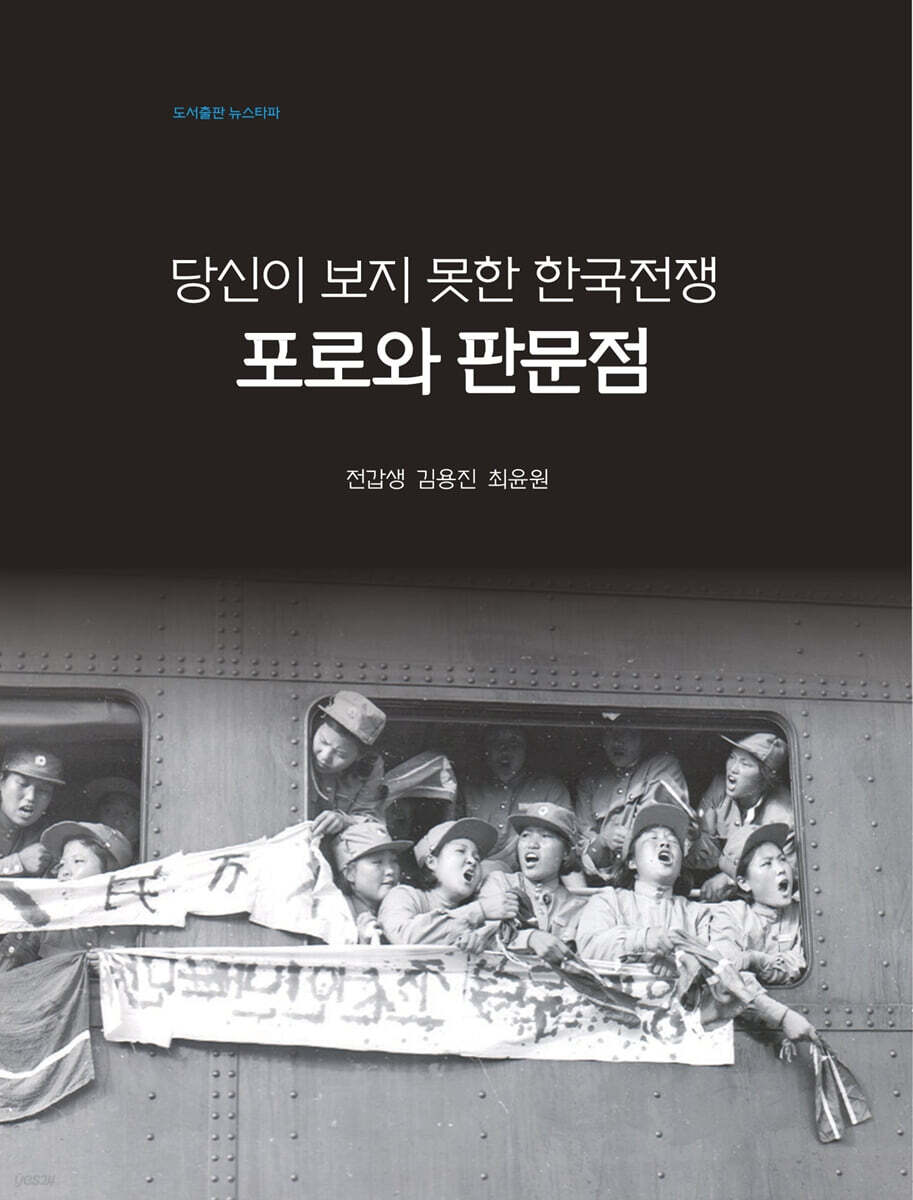
If you look at the handwriting, you can see that it was not written with a writing instrument such as a brush.
There are blood stains around the letters, so it appears to be a blood letter.
An image frozen in time at a moment in our modern history.
Who are the voices behind this silent scream? How did they end up on this train?
There were a total of 668 North Korean People's Army nursing officers and soldiers captured during the Korean War.
Since the armistice agreement, every single one of them has chosen to be repatriated to North Korea.
They were held in a group with 25 children (including 4 infants) in the 6th prisoner-of-war camp (2 tents) of the 2nd Busan (Hospital) prisoner-of-war camp.
--- From the "Prologue"
During the Korean War, approximately 170,000 people were registered with these cards in UN prisoner-of-war camps.
However, words such as ‘anti-communist prisoner of war’, ‘pro-communist prisoner of war’, or ‘malicious prisoner of war’, which define the characteristics of prisoners, cannot be found on this basic human record card.
Let's take a look at when, who, and why these adjectives were used to distinguish prisoners of war, and how the concept of prisoners of war was created during the Korean War.
--- 「Chapter 1.
From “Prisoner as Existence”
“From September to December of that year, South Korean and US counterintelligence and intelligence agency agents conducted two rounds of investigations of approximately 1,700 repatriated South Korean prisoners of war.
During this process, intense anti-communist ideological education and brainwashing programs were carried out in parallel.” “The educational content was structured around anti-communism, the superiority of the American-style liberal democratic system, and an emphasis on individual freedom, and in reality, it was a process close to one-sided brainwashing and political indoctrination.
“The re-education of prisoners of war by UN forces during the Korean War went beyond simply managing prisoners of war; it was used as a testing ground for ideological and psychological warfare, as well as a political tool.”
--- 「Chapter 3.
From “Prisoner Re-education”
The armistice talks held at Naebongjang in Kaesong from July 1951 were completely suspended due to security issues and unexpected situations such as the detention of South Korean troops.
Afterwards, both sides held working-level discussions on a new negotiation venue.
The new location of Panmunjom in Nolmun-ri, Kaesong City, Hwanghae Province was confirmed, and the first liaison officer meeting was held there on October 11, 1951.
Then, on October 25th, the first Panmunjom Armistice Talks plenary session was held.
This is the beginning of the second armistice talks.
--- 「Chapter 4.
From “Panmunjom and Prisoner Negotiations”
However, there were also unrepatriated prisoners who chose not to be repatriated to their home countries or to remain in South or North Korea.
There are 88 people, including 76 unrepatriated North Korean People's Army prisoners of war and 12 unrepatriated Chinese People's Volunteer Army prisoners of war.
They first went to India, a neutral country, according to the decision of the Neutral Nations Repatriation Commission.
There are blood stains around the letters, so it appears to be a blood letter.
An image frozen in time at a moment in our modern history.
Who are the voices behind this silent scream? How did they end up on this train?
There were a total of 668 North Korean People's Army nursing officers and soldiers captured during the Korean War.
Since the armistice agreement, every single one of them has chosen to be repatriated to North Korea.
They were held in a group with 25 children (including 4 infants) in the 6th prisoner-of-war camp (2 tents) of the 2nd Busan (Hospital) prisoner-of-war camp.
--- From the "Prologue"
During the Korean War, approximately 170,000 people were registered with these cards in UN prisoner-of-war camps.
However, words such as ‘anti-communist prisoner of war’, ‘pro-communist prisoner of war’, or ‘malicious prisoner of war’, which define the characteristics of prisoners, cannot be found on this basic human record card.
Let's take a look at when, who, and why these adjectives were used to distinguish prisoners of war, and how the concept of prisoners of war was created during the Korean War.
--- 「Chapter 1.
From “Prisoner as Existence”
“From September to December of that year, South Korean and US counterintelligence and intelligence agency agents conducted two rounds of investigations of approximately 1,700 repatriated South Korean prisoners of war.
During this process, intense anti-communist ideological education and brainwashing programs were carried out in parallel.” “The educational content was structured around anti-communism, the superiority of the American-style liberal democratic system, and an emphasis on individual freedom, and in reality, it was a process close to one-sided brainwashing and political indoctrination.
“The re-education of prisoners of war by UN forces during the Korean War went beyond simply managing prisoners of war; it was used as a testing ground for ideological and psychological warfare, as well as a political tool.”
--- 「Chapter 3.
From “Prisoner Re-education”
The armistice talks held at Naebongjang in Kaesong from July 1951 were completely suspended due to security issues and unexpected situations such as the detention of South Korean troops.
Afterwards, both sides held working-level discussions on a new negotiation venue.
The new location of Panmunjom in Nolmun-ri, Kaesong City, Hwanghae Province was confirmed, and the first liaison officer meeting was held there on October 11, 1951.
Then, on October 25th, the first Panmunjom Armistice Talks plenary session was held.
This is the beginning of the second armistice talks.
--- 「Chapter 4.
From “Panmunjom and Prisoner Negotiations”
However, there were also unrepatriated prisoners who chose not to be repatriated to their home countries or to remain in South or North Korea.
There are 88 people, including 76 unrepatriated North Korean People's Army prisoners of war and 12 unrepatriated Chinese People's Volunteer Army prisoners of war.
They first went to India, a neutral country, according to the decision of the Neutral Nations Repatriation Commission.
--- Chapter 5.
From "Panmunjom and DMZ"
From "Panmunjom and DMZ"
Publisher's Review
The prologue begins with a very intense image of a captive.
This photo was taken by Sergeant Naupt of the 1st Marine Division on August 6, 1953, ten days after the armistice agreement was signed.
The image of female North Korean prisoners of war on a US military repatriation train, captured in the angle, expresses the tragedy of war that must never be repeated more poignantly than any other subject.
Part 1, 'Prisoner as Existence', begins with the story of a North Korean People's Army prisoner named Lee Hwan Chon.
He is 5 feet 10 inches tall and weighs 150 pounds.
His hometown is Munwoo-ri, Wontan-myeon, Kangdong-gun, South Pyongan Province.
He left his wife, Lee Jeong-suk, and two children behind at his hometown.
The religion is Cheondogyo.
How can we possibly know such detailed personal information about a North Korean soldier captured on the Hongcheon front 75 years ago?
Part 2, 'The Camp as a Place', first guides readers to the world's sweetest 'home'.
Then, it unfolds into a 'hell island' where political indoctrination, brainwashing, violence, riots, murder, and arson run rampant.
Part 3, "Prisoner Re-education," vividly recreates the images of prisoners receiving training in knitting, woodworking, ironworking, ceramics, and sewing, the conversion efforts behind the training, and the riots that erupted in response, all through photos and videos.
Part 4, 'Panmunjom and Prisoner Negotiations', begins with a scene from Naebongjang in Kaesong City, where liaison officers from the UN forces and the Communist forces gathered to begin the Korean War armistice talks in July 1951.
Afterwards, the armistice talks continued at a tent set up in Nolmun-ri and moved to Panmunjom.
After hundreds of rounds of talks, the two sides finally signed an armistice agreement on July 27, 1953.
The main agenda of the armistice talks is the issue of handling prisoners of war.
As the talks progress, conflict in the prison camp reaches a peak.
Part 4 unfolds around the two axes of the armistice talks at Panmunjom and the conflict in the POW camp.
Part 5, 'Panmunjom and the DMZ', begins with the layout of the new Panmunjom buildings and the Joint Security Area, which have been relocated to 359 Josan-ri, Jinseo-myeon, Paju-si, Gyeonggi-do.
Next, there are images of the Military Demarcation Line with signs identifying the Demilitarized Zone installed immediately after the armistice agreement and written in English, Chinese, and Korean.
Furthermore, the images of prisoners returning to their home countries or choosing to go to third countries through Panmunjom symbolically show ideological conflict, violence, and the communities destroyed by war.
This photo was taken by Sergeant Naupt of the 1st Marine Division on August 6, 1953, ten days after the armistice agreement was signed.
The image of female North Korean prisoners of war on a US military repatriation train, captured in the angle, expresses the tragedy of war that must never be repeated more poignantly than any other subject.
Part 1, 'Prisoner as Existence', begins with the story of a North Korean People's Army prisoner named Lee Hwan Chon.
He is 5 feet 10 inches tall and weighs 150 pounds.
His hometown is Munwoo-ri, Wontan-myeon, Kangdong-gun, South Pyongan Province.
He left his wife, Lee Jeong-suk, and two children behind at his hometown.
The religion is Cheondogyo.
How can we possibly know such detailed personal information about a North Korean soldier captured on the Hongcheon front 75 years ago?
Part 2, 'The Camp as a Place', first guides readers to the world's sweetest 'home'.
Then, it unfolds into a 'hell island' where political indoctrination, brainwashing, violence, riots, murder, and arson run rampant.
Part 3, "Prisoner Re-education," vividly recreates the images of prisoners receiving training in knitting, woodworking, ironworking, ceramics, and sewing, the conversion efforts behind the training, and the riots that erupted in response, all through photos and videos.
Part 4, 'Panmunjom and Prisoner Negotiations', begins with a scene from Naebongjang in Kaesong City, where liaison officers from the UN forces and the Communist forces gathered to begin the Korean War armistice talks in July 1951.
Afterwards, the armistice talks continued at a tent set up in Nolmun-ri and moved to Panmunjom.
After hundreds of rounds of talks, the two sides finally signed an armistice agreement on July 27, 1953.
The main agenda of the armistice talks is the issue of handling prisoners of war.
As the talks progress, conflict in the prison camp reaches a peak.
Part 4 unfolds around the two axes of the armistice talks at Panmunjom and the conflict in the POW camp.
Part 5, 'Panmunjom and the DMZ', begins with the layout of the new Panmunjom buildings and the Joint Security Area, which have been relocated to 359 Josan-ri, Jinseo-myeon, Paju-si, Gyeonggi-do.
Next, there are images of the Military Demarcation Line with signs identifying the Demilitarized Zone installed immediately after the armistice agreement and written in English, Chinese, and Korean.
Furthermore, the images of prisoners returning to their home countries or choosing to go to third countries through Panmunjom symbolically show ideological conflict, violence, and the communities destroyed by war.
GOODS SPECIFICS
- Date of issue: June 25, 2025
- Page count, weight, size: 248 pages | 182*239*20mm
- ISBN13: 9791198933249
- ISBN10: 1198933240
You may also like
카테고리
korean


korean

![GQ KOREA Mark (Monthly): December [2025]](http://librairie.coreenne.fr/cdn/shop/files/8ef265dbbfbf186523ed75ba7319009d.jpg?v=1765340328&width=3840)


