

Joachim Ratkau
 |
Description
Book Introduction
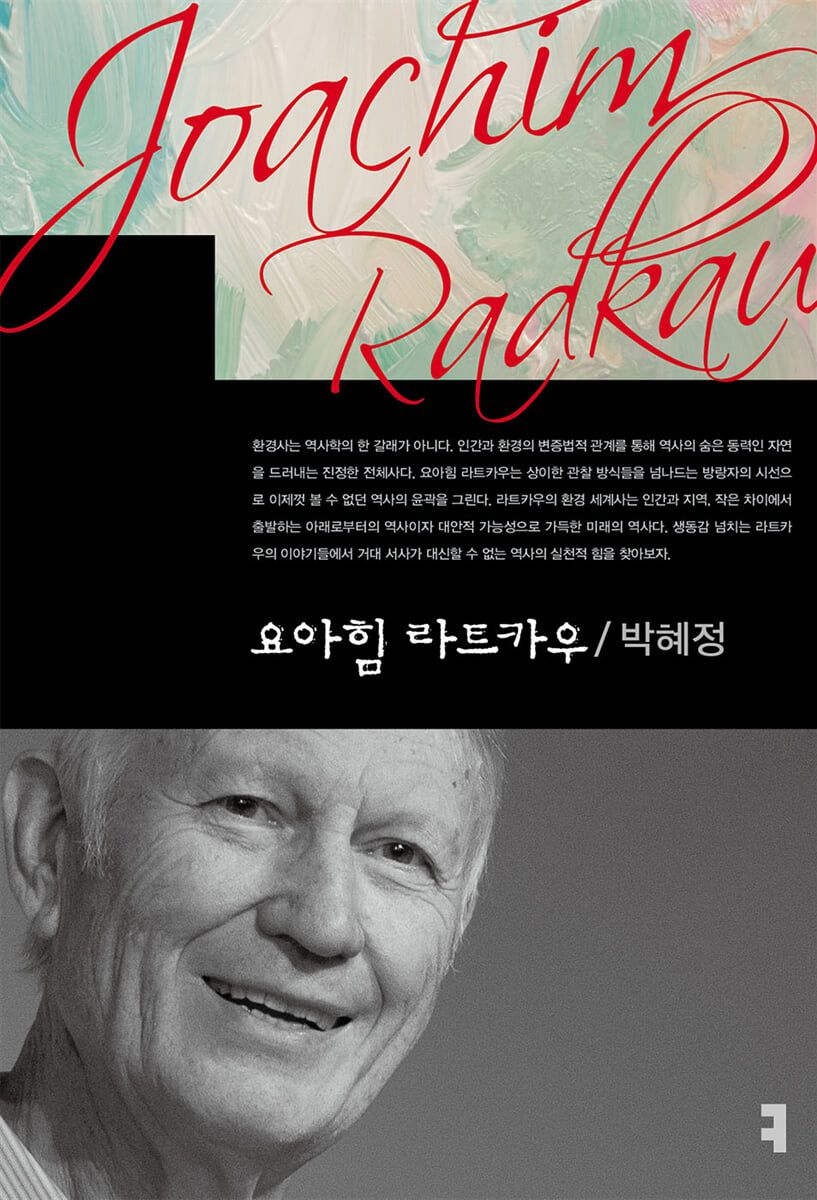
Joachim Ratkau is an environmental historian who pioneered the field of environmental world history.
By covering a wide range of topics, including nuclear weapons, trees, neurosis, and solar energy, it establishes environmental history as a truly comprehensive history.
Latkau's environmental world history is a history from below, starting from humans, regions, and small differences, and a history of a future filled with alternative possibilities.
In the vibrant stories of Ratkau, we discover the practical power of history that grand narratives cannot replace.
By covering a wide range of topics, including nuclear weapons, trees, neurosis, and solar energy, it establishes environmental history as a truly comprehensive history.
Latkau's environmental world history is a history from below, starting from humans, regions, and small differences, and a history of a future filled with alternative possibilities.
In the vibrant stories of Ratkau, we discover the practical power of history that grand narratives cannot replace.
- You can preview some of the book's contents.
Preview
index
Libido of History, In Search of Nature
01 Nuclear
02 Tree
03 Education
04 Nature
05 World History
06 Nervousness
07 Characters
08 Environmental Movement
09 Future
10 suns
01 Nuclear
02 Tree
03 Education
04 Nature
05 World History
06 Nervousness
07 Characters
08 Environmental Movement
09 Future
10 suns
Into the book
In the Korean historical community, where there is a lot of caution and hesitation in crossing disciplinary boundaries due to the partitioning system of Western, Eastern, and Korean history, it would be difficult for a historian like Ratkau to emerge anytime soon.
However, the big questions we face in the 21st century, including the climate crisis, desperately need future-oriented historians like Ratkau.
A historian is a professional who boldly breaks free from the framework of a priori assumptions, values, ideologies, and theories, and seriously explores the possibility of "change," a problem inherent in history, while never losing a practical ethical consciousness.
As a scholar and a human being, I hope that Ratkau's lifelong journey of adventurous exploration will provide a source of fresh stimulation and inspiration for general readers beyond academia.
--- From "The Libido of History, In Search of Nature"
Ultimately, the construction of nuclear power plants in Germany was not a carefully planned government program or policy decision driven by close consultation between the state and the energy sector, but rather a zigzagging process that “even the participants gradually came to a clear understanding of.”
The German nuclear power plant construction process vividly illustrates the fundamental vulnerability of modern society: the proliferation of expertise and the resulting unintended synergies that often lead to long-term paths for which no one can be held directly accountable.
--- From "01 Nuclear"
The solution to the ecological crisis that Ratkau presents is simple and clear.
As a Pisces, remember nature and build reserves within it to prepare for the unpredictable events of the future! In a climate crisis discourse dominated by the planet, the Anthropocene, the IPCC, and climate science, individuals are bound to fall into a deep sense of helplessness and despair.
It is time to recall the amazing resilience of small ecosystems that have maintained a balance between humans and nature.
Even if small ecosystems play at best a secondary role in a climate crisis unfolding on a geological scale, as Ratkau suggests, we can only change those secondary factors.
--- From "04 Nature"
Latkau proposes to rewrite world history from a 'wanderer's perspective', countering the bird's-eye view of the McNeils.
The wanderer's gaze is like the three distances in oriental landscape painting.
The horizontal perspective (水平視) of climbing a mountain and looking down on the whole, the up-close perspective (仰視) of looking up at a mountain and being in awe of the grandeur of the scenery, and the bird's-eye perspective (俯瞰視) of going deep into the mountain and observing the places that cannot be seen from the outside to cultivate insight are perspectives that only a wanderer who wanders freely can possess.
Through his world history of the environment, Nature and Power, and his world history of the environmental movement, The Age of Ecology, Ratkau took on the challenge of outlining a "new world history" that embraces innumerable diversity and possibilities through "the gaze of a wanderer anxiously moving between different modes of observation."
However, the big questions we face in the 21st century, including the climate crisis, desperately need future-oriented historians like Ratkau.
A historian is a professional who boldly breaks free from the framework of a priori assumptions, values, ideologies, and theories, and seriously explores the possibility of "change," a problem inherent in history, while never losing a practical ethical consciousness.
As a scholar and a human being, I hope that Ratkau's lifelong journey of adventurous exploration will provide a source of fresh stimulation and inspiration for general readers beyond academia.
--- From "The Libido of History, In Search of Nature"
Ultimately, the construction of nuclear power plants in Germany was not a carefully planned government program or policy decision driven by close consultation between the state and the energy sector, but rather a zigzagging process that “even the participants gradually came to a clear understanding of.”
The German nuclear power plant construction process vividly illustrates the fundamental vulnerability of modern society: the proliferation of expertise and the resulting unintended synergies that often lead to long-term paths for which no one can be held directly accountable.
--- From "01 Nuclear"
The solution to the ecological crisis that Ratkau presents is simple and clear.
As a Pisces, remember nature and build reserves within it to prepare for the unpredictable events of the future! In a climate crisis discourse dominated by the planet, the Anthropocene, the IPCC, and climate science, individuals are bound to fall into a deep sense of helplessness and despair.
It is time to recall the amazing resilience of small ecosystems that have maintained a balance between humans and nature.
Even if small ecosystems play at best a secondary role in a climate crisis unfolding on a geological scale, as Ratkau suggests, we can only change those secondary factors.
--- From "04 Nature"
Latkau proposes to rewrite world history from a 'wanderer's perspective', countering the bird's-eye view of the McNeils.
The wanderer's gaze is like the three distances in oriental landscape painting.
The horizontal perspective (水平視) of climbing a mountain and looking down on the whole, the up-close perspective (仰視) of looking up at a mountain and being in awe of the grandeur of the scenery, and the bird's-eye perspective (俯瞰視) of going deep into the mountain and observing the places that cannot be seen from the outside to cultivate insight are perspectives that only a wanderer who wanders freely can possess.
Through his world history of the environment, Nature and Power, and his world history of the environmental movement, The Age of Ecology, Ratkau took on the challenge of outlining a "new world history" that embraces innumerable diversity and possibilities through "the gaze of a wanderer anxiously moving between different modes of observation."
--- From "05 World History"
Publisher's Review
From nuclear economy to solar energy
A vibrant environmental history depicted through the eyes of a wanderer.
Environmental history is not a part of history.
It is a true holistic history that reveals nature, the hidden driving force of history, through the dialectical relationship between humans and the environment.
Joachim Ratkau, with his wandering gaze that crosses different modes of observation, draws a previously unseen outline of history.
Ratkau's 'Environmental World History' is a history from below, starting from humans, regions, and small differences, and a history of the future filled with alternative possibilities.
It is a history filled with vivid and diverse speakers who pour out their own testimonies, not explanations, judgments, theories, concepts, or structures.
In the stories Latkau tells, nature is present as a living human being and historical agent, something not found in grand narratives.
This book follows Ratkau's journey, which covers a wide range of research topics that are difficult to pinpoint as the work of a single scholar.
You can take a close look at every corner of Ratkau's environmental world history, including his research on the nuclear economy that revealed the "tyranny of small decisions" that characterizes modern society, the timber shortage debate that Ratkau sparked and made trees and forests a central topic of environmental history, his groundbreaking attempt to reinterpret the history of the German Empire with the keyword of neurosis, and three biographies that show a historical narrative based on vivid human beings.
Convergence is being talked about more than ever, but we don't know how to do it.
Let's learn about true convergence from Ratkau, who has cultivated the field of environmental history by crossing academic boundaries.
Joachim Radkau (1943∼)
German modern historian and environmental historian.
He studied history at the University of Münster and the Free University of Berlin, and received a doctorate in philosophy from the University of Hamburg.
After receiving his doctorate in immigration history, he studied nuclear economics and timber, and then began researching environmental history.
By leveraging his diverse research history, he has pioneered a unique path to approach the relationship between humans and the environment from a more fundamental perspective that encompasses industry, technology, and energy, beyond the political and social context.
After retirement, he was called the father of German environmental history, with the assessment that he completed a multidisciplinary and integrated environmental history that surpassed anyone else's by adding biographical research.
He worked as a professor of modern German history at Bielefeld University until his retirement in 2009.
The two most famous representative works in the world are 『Natur and Power (Natur und Macht)』, which pioneered the new field of global environmental history, and 『The Age of Ecology (Die Ara der Okologie)』, which challenged the study of the history of the global environmental movement based on 『Natur and Power (Natur und Macht)』.
Prior to this, his major works that clearly established his name as a scholar in Germany include 『The Rise and Crisis of the German Nuclear Economy 1945-1975 (Aufstieg und Krise der deutschen Atomwirtschaft 1945-1975)』 and 『Tree (Holz)』.
A vibrant environmental history depicted through the eyes of a wanderer.
Environmental history is not a part of history.
It is a true holistic history that reveals nature, the hidden driving force of history, through the dialectical relationship between humans and the environment.
Joachim Ratkau, with his wandering gaze that crosses different modes of observation, draws a previously unseen outline of history.
Ratkau's 'Environmental World History' is a history from below, starting from humans, regions, and small differences, and a history of the future filled with alternative possibilities.
It is a history filled with vivid and diverse speakers who pour out their own testimonies, not explanations, judgments, theories, concepts, or structures.
In the stories Latkau tells, nature is present as a living human being and historical agent, something not found in grand narratives.
This book follows Ratkau's journey, which covers a wide range of research topics that are difficult to pinpoint as the work of a single scholar.
You can take a close look at every corner of Ratkau's environmental world history, including his research on the nuclear economy that revealed the "tyranny of small decisions" that characterizes modern society, the timber shortage debate that Ratkau sparked and made trees and forests a central topic of environmental history, his groundbreaking attempt to reinterpret the history of the German Empire with the keyword of neurosis, and three biographies that show a historical narrative based on vivid human beings.
Convergence is being talked about more than ever, but we don't know how to do it.
Let's learn about true convergence from Ratkau, who has cultivated the field of environmental history by crossing academic boundaries.
Joachim Radkau (1943∼)
German modern historian and environmental historian.
He studied history at the University of Münster and the Free University of Berlin, and received a doctorate in philosophy from the University of Hamburg.
After receiving his doctorate in immigration history, he studied nuclear economics and timber, and then began researching environmental history.
By leveraging his diverse research history, he has pioneered a unique path to approach the relationship between humans and the environment from a more fundamental perspective that encompasses industry, technology, and energy, beyond the political and social context.
After retirement, he was called the father of German environmental history, with the assessment that he completed a multidisciplinary and integrated environmental history that surpassed anyone else's by adding biographical research.
He worked as a professor of modern German history at Bielefeld University until his retirement in 2009.
The two most famous representative works in the world are 『Natur and Power (Natur und Macht)』, which pioneered the new field of global environmental history, and 『The Age of Ecology (Die Ara der Okologie)』, which challenged the study of the history of the global environmental movement based on 『Natur and Power (Natur und Macht)』.
Prior to this, his major works that clearly established his name as a scholar in Germany include 『The Rise and Crisis of the German Nuclear Economy 1945-1975 (Aufstieg und Krise der deutschen Atomwirtschaft 1945-1975)』 and 『Tree (Holz)』.
GOODS SPECIFICS
- Date of issue: April 28, 2025
- Page count, weight, size: 150 pages | 128*188*6mm
- ISBN13: 9791143002518
You may also like
카테고리
korean


korean

![GQ KOREA Mark (Monthly): December [2025]](http://librairie.coreenne.fr/cdn/shop/files/8ef265dbbfbf186523ed75ba7319009d.jpg?v=1765340328&width=3840)


