

How to read Joseon, Dandan
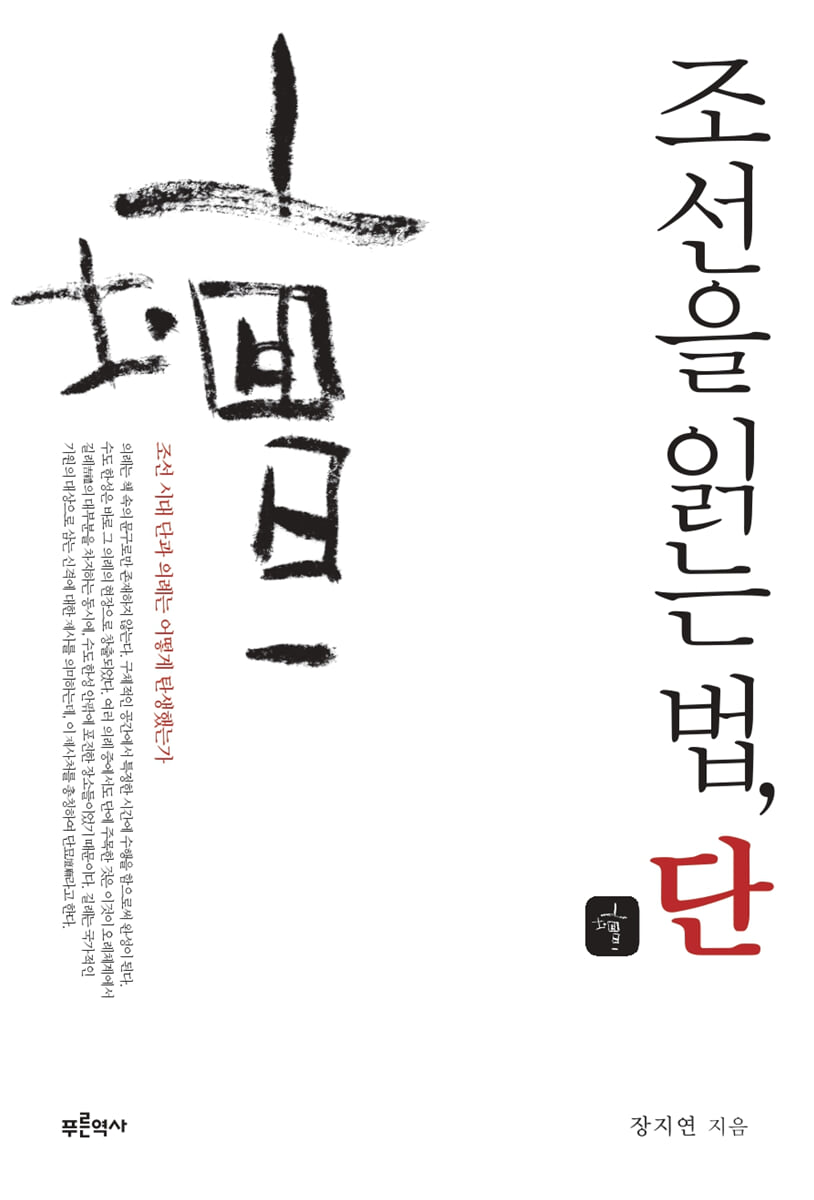 |
Description
Book Introduction
From national vision to governing ideology and normative gender image
Joseon's 'order' as seen through six altars
The ideal and reality of 'Yechi' (rites and government) as seen from the history of the establishment of the altar
We often define Joseon as a country of courtesy.
The numerous sacrificial rites established inside and outside the capital city, and the ceremonies meticulously organized in books such as the “National Oryeui,” seem to prove that Joseon was a vassal state that faithfully practiced sajedae (serving great deities) and a Confucian state that thoroughly abolished the practice of yin-yang shrines.
And this obsession with rituals seems to show the Joseon Dynasty's characteristic of 'ideological excess.'
However, this book questions this conventional wisdom and, through the history of the establishment of the Dandan, explores the dynamic relationship between the ideals pursued by Joseon's Yechi and the realities that gave rise to and constrained them.
Joseon's 'order' as seen through six altars
The ideal and reality of 'Yechi' (rites and government) as seen from the history of the establishment of the altar
We often define Joseon as a country of courtesy.
The numerous sacrificial rites established inside and outside the capital city, and the ceremonies meticulously organized in books such as the “National Oryeui,” seem to prove that Joseon was a vassal state that faithfully practiced sajedae (serving great deities) and a Confucian state that thoroughly abolished the practice of yin-yang shrines.
And this obsession with rituals seems to show the Joseon Dynasty's characteristic of 'ideological excess.'
However, this book questions this conventional wisdom and, through the history of the establishment of the Dandan, explores the dynamic relationship between the ideals pursued by Joseon's Yechi and the realities that gave rise to and constrained them.
- You can preview some of the book's contents.
Preview
index
At the beginning of the book
Introduction
1. The Road to the Land of Yes - Three Scenes on the Road
· First scene: 1369 (18th year of King Gongmin's reign) First diplomatic relations between Goryeo and Ming
· Second scene: The difficultly accomplished coronation of King U in 1385 (11th year of King U's reign)
· Third scene: 1412 (12th year of King Taejong's reign) Request for Uiju, a vassal state of Joseon
[Part I Sky]
2 The Wind, Cloud, and Rain Mountains and the Heavenly Stars - Jeon Yu in the Crisis of the Dynasty Transition
· A unit with a fundamental contradiction
· The Goryeo tradition of offering sacrifices to each individual
· Hongwu Emperor's declaration of unification of the world
· Goryeo's rejection and caution against mountain and river ancestral rites
· Unrecorded mountain and river rituals after the founding of Joseon
· What was Jeong Do-jeon's Pungunroeudan?
· Is it Jecheon or Sancheon? - Wind, Cloud, and Rain and Sancheon
· Become the standard for the sergeant major
· The usefulness of 'Siwangjije'
· Finally became a place of worship
3 Usadan - A substitute for Jecheon discovered by Taejong
· The dilemma of Jecheon
· 1414 (14th year of King Taejong's reign) A year when frost fell in midsummer
· A unique system of unity, a location called Donggyo
· After Usadan, the shadow of Jecheon
[Part II Land]
4. Jeokjeon Seonnongdan - From Land to Farming, From Painting Style to Tradition
· January, the New Year opened by the ceremonies of heaven and earth
· Goryeo's kinship - Chinese style or Confucian etiquette?
· Late Goryeo Dynasty, from painting style to tradition
· Joseon, from enemy to good farmer
· A step that is pushed down in priority
· The ideal and reality of the rule of etiquette as shown by Danje
5 Sajikdan - The Ritual of the 'Feudal Lords' and the Ideal of Unification
· Altar, Yu?, Juwon, outer wall
· The origin of Sajikdan and the evolution of its form
· Joseon, halving the size of the unit
· Taejong, Yu, and Juwon build a fortress
· Contradictions pointed out by Park Yeon and Jeong Cho during the reign of King Sejong
· Weaknesses in the investigation of Jiphyeonjeon and the direction of its reconstruction
· How was the issue of courtesy resolved?
· The Sajikdan of the 'feudal lords' created by Joseon
· A new link connecting the central and local governments
· How unified is the province?
[Part III Gender]
6. The Binary Contrast of Space and Gender
· A mountain and river ritual called Byeolgi-eun (a separate prayer for grace)
· Abolition of the mountain and river lord system, new ancestral rite system
· Expansion of objects of sacrifice, and unbroken statues of gods
· A royal woman who took upon herself the role of guardian of tradition
· Inertia of the old capital city of Kaesong
7. Sleeping in a den and sleeping in a den - the normative gender image presented by the state
· Men farm and women weave.
· King Seongjong of Joseon enforces the policy of chinkyung and chinjam
· A small, built platform located on a hill
· Conclusion
· main
· References
· Included figures and diagrams
· Search
Introduction
1. The Road to the Land of Yes - Three Scenes on the Road
· First scene: 1369 (18th year of King Gongmin's reign) First diplomatic relations between Goryeo and Ming
· Second scene: The difficultly accomplished coronation of King U in 1385 (11th year of King U's reign)
· Third scene: 1412 (12th year of King Taejong's reign) Request for Uiju, a vassal state of Joseon
[Part I Sky]
2 The Wind, Cloud, and Rain Mountains and the Heavenly Stars - Jeon Yu in the Crisis of the Dynasty Transition
· A unit with a fundamental contradiction
· The Goryeo tradition of offering sacrifices to each individual
· Hongwu Emperor's declaration of unification of the world
· Goryeo's rejection and caution against mountain and river ancestral rites
· Unrecorded mountain and river rituals after the founding of Joseon
· What was Jeong Do-jeon's Pungunroeudan?
· Is it Jecheon or Sancheon? - Wind, Cloud, and Rain and Sancheon
· Become the standard for the sergeant major
· The usefulness of 'Siwangjije'
· Finally became a place of worship
3 Usadan - A substitute for Jecheon discovered by Taejong
· The dilemma of Jecheon
· 1414 (14th year of King Taejong's reign) A year when frost fell in midsummer
· A unique system of unity, a location called Donggyo
· After Usadan, the shadow of Jecheon
[Part II Land]
4. Jeokjeon Seonnongdan - From Land to Farming, From Painting Style to Tradition
· January, the New Year opened by the ceremonies of heaven and earth
· Goryeo's kinship - Chinese style or Confucian etiquette?
· Late Goryeo Dynasty, from painting style to tradition
· Joseon, from enemy to good farmer
· A step that is pushed down in priority
· The ideal and reality of the rule of etiquette as shown by Danje
5 Sajikdan - The Ritual of the 'Feudal Lords' and the Ideal of Unification
· Altar, Yu?, Juwon, outer wall
· The origin of Sajikdan and the evolution of its form
· Joseon, halving the size of the unit
· Taejong, Yu, and Juwon build a fortress
· Contradictions pointed out by Park Yeon and Jeong Cho during the reign of King Sejong
· Weaknesses in the investigation of Jiphyeonjeon and the direction of its reconstruction
· How was the issue of courtesy resolved?
· The Sajikdan of the 'feudal lords' created by Joseon
· A new link connecting the central and local governments
· How unified is the province?
[Part III Gender]
6. The Binary Contrast of Space and Gender
· A mountain and river ritual called Byeolgi-eun (a separate prayer for grace)
· Abolition of the mountain and river lord system, new ancestral rite system
· Expansion of objects of sacrifice, and unbroken statues of gods
· A royal woman who took upon herself the role of guardian of tradition
· Inertia of the old capital city of Kaesong
7. Sleeping in a den and sleeping in a den - the normative gender image presented by the state
· Men farm and women weave.
· King Seongjong of Joseon enforces the policy of chinkyung and chinjam
· A small, built platform located on a hill
· Conclusion
· main
· References
· Included figures and diagrams
· Search
Into the book
The altar is a place where sacrifices are made to nature belonging to heaven and earth or to a deity that has been stripped of its personality.
The architectural structure is very simple, with the earth leveled to a certain size and a ceremonial table and a ancestral tablet placed on top to perform rituals. These platforms are positioned inside and outside the city walls, and represent the normative nature of the capital.
The numerous altars, such as Sajikdan located within the city walls, Seonnongdan to the east outside the city walls, Yeojedan and Seonjamdan to the north, and Pungunroewoosancheonseonghwangdan and Usadan to the south… were places where national aspirations were presented and put into practice through the means of ritual.
--- p.8
In order to understand the historical significance of the rhetoric of "vassal states" that Goryeo and Joseon espoused, and the reasons for its normalization, it is necessary to face reality more directly than just ideology.
This is because Joseon's national rituals are not simply a product of ideas, but rather a product of reality that emerged after much deliberation in the midst of fierce political and diplomatic battles.
--- p.24
The first diplomatic relations (with the Ming Dynasty) during the reign of King Gongmin are significant in that they served as a model for Joseon.
The request for the national title of 'Joseon' after the founding of the dynasty, mentioning Gija, and requesting official uniforms and musical instruments at the time of investiture were not decisions made for the first time by the new dynasty, but were strategies with a history dating back over 20 years.
--- p.39
The ‘Shiwang’s system’ was not an authority or standard that the Joseon people blindly followed, but a means of providing the logic that Joseon needed.
In that respect, the old view that 'the understanding of ancient systems deepened and the rites were organized based on ancient systems rather than the Hongwu Rituals during the reign of King Sejong' needs to be reconsidered.
--- p.112
The establishment of an altar for the Usajeon, the creation of six deities equivalent to the rank of Sanggong as objects of sacrifice, the installation of them in the Donggyo, and the determination of the size of the altar were all unprecedented or already forgotten traditions.
In that sense, Joseon's Usadan is in fact a tradition that was created.
--- p.136
The Joseon monarchs… sometimes had to create statues of themselves as a proxy for the people in desperate situations.
The moment he gave up on the supreme being called Hocheonsangje, Taejong, in order to become a monarch who puts prayers into practice for the people, created a new place for 'proper rites', and Seongjong renovated it and moved its location.
--- p.142
Under the goal of reforming the Yuan system, Confucian rituals were no longer perceived as a different culture from the original culture, but rather as a 'tradition' to be pursued.
In it, the exclusive establishment of Confucian rituals was absolutely necessary for the ideological transformation of society, and the Jeokjeon Seonnongdan system was given meaning in terms of being a Confucian ritual for the land.
--- p.164
The gap between the accuracy of the precedents and the reality shown may be a barometer showing the extent of Joseon's national practical ability to practice the rites.
--- p.182
The system of the Taejo era that would have been in the 《Joseon Gyeonggukjeon》 does not remain, but the 〈Sacrificial Rites〉 of the Taejong era are from the Sejong era.
It was maintained for generations until the reign of King Seongjong, when it was called the “National Five Rites.”
Joseon's auspicious rites were established during the reign of King Taejong.
--- p.224
As a result, Joseon's Sajikdan became a very unique altar in its own right.
It is a form of altar that cannot be found in any dynasty in Chinese history, nor in our history or the history of neighboring countries.
While maintaining the principle of halving the Sajikdan of the vassal states, the central Sajikdan of the vassal states, which was different from the local Sajikdan of China, was born in a unique form through the coordination of degree and power.
--- p.231
Since the reign of King Seongjong, royal women have taken upon themselves the duty of remembering and protecting the tradition of the Jojong Law System.
While Confucian dictionaries were based on written records, non-Confucian rituals were based on oral memory and custom.
They responded to criticism of the abuses by actively utilizing the human affection of family love and the discourse of public and private affairs. They also actively accepted Confucian gender roles and created roles and spaces for women in the Joseon royal family.
--- p.288
As mountain and river rites became gender-segregated and royal women took the lead in offering sacrifices, this easily became associated with misogyny within the Confucian patriarchal structure.
Within a complementary structure, male Confucian scholars, who implicitly derived psychological comfort from the female-led shamanistic beliefs, reduced the social responsibility and repercussions of these religious practices by placing the blame entirely on a few female subjects whenever they felt that such practices were problematic.
--- p.299
In 1477 (the 8th year of King Seongjong's reign), King Seongjong performed the first Chinjamrye ceremony.
Here, ‘first’ means not only the first in Joseon, but also the first in our history.
Not only was it never performed in Goryeo, but it was also a ritual that had been discontinued since the Southern Song Dynasty in the Central Plains, the home of the Chinjamrye.
It took about 50 years for the Ming Dynasty in China to establish the Chinjamrye ceremony.
Even considering the Central Plains, the Chinjamrye ceremony of King Seongjong's reign was a rediscovery and re-creation of a tradition that had been cut off for more than two centuries.
--- p.305
In Joseon, the Chinjamrye ceremony was established to actively promote normative gender roles through rituals.
In Joseon society, gender was strictly divided into male and female, and each gender was assigned a unique role and job. The chin-gyeong-rye and chin-jam-rye were examples of this gender division of labor.
--- p.313
In the early Joseon Dynasty, understanding of Neo-Confucianism and ancient Confucianism did not develop gradually or step by step.
As can be seen in the debate over the Sajikdan during the reign of King Sejong, all participants in the debate were already aware of the problems and limitations of the Hongwu Yeje.
It is not that the ministers who participated in the creation of the Taejo era were unaware of the ancient emperors, and they sufficiently considered the ancient emperors, but they simply used the Hongwu era as a means of detour when it was unavoidable.
--- p.330
More important than the power or differential order that proclaimed it here is that it presents a model of legitimacy, and that many people participated in building this model.
This strengthened the legitimacy of the order by making it more natural for those participating in the ritual to accept the model.… It created a political culture in which there was strong pressure to agree on and adhere to norms, even if there were limitations in reality.
The architectural structure is very simple, with the earth leveled to a certain size and a ceremonial table and a ancestral tablet placed on top to perform rituals. These platforms are positioned inside and outside the city walls, and represent the normative nature of the capital.
The numerous altars, such as Sajikdan located within the city walls, Seonnongdan to the east outside the city walls, Yeojedan and Seonjamdan to the north, and Pungunroewoosancheonseonghwangdan and Usadan to the south… were places where national aspirations were presented and put into practice through the means of ritual.
--- p.8
In order to understand the historical significance of the rhetoric of "vassal states" that Goryeo and Joseon espoused, and the reasons for its normalization, it is necessary to face reality more directly than just ideology.
This is because Joseon's national rituals are not simply a product of ideas, but rather a product of reality that emerged after much deliberation in the midst of fierce political and diplomatic battles.
--- p.24
The first diplomatic relations (with the Ming Dynasty) during the reign of King Gongmin are significant in that they served as a model for Joseon.
The request for the national title of 'Joseon' after the founding of the dynasty, mentioning Gija, and requesting official uniforms and musical instruments at the time of investiture were not decisions made for the first time by the new dynasty, but were strategies with a history dating back over 20 years.
--- p.39
The ‘Shiwang’s system’ was not an authority or standard that the Joseon people blindly followed, but a means of providing the logic that Joseon needed.
In that respect, the old view that 'the understanding of ancient systems deepened and the rites were organized based on ancient systems rather than the Hongwu Rituals during the reign of King Sejong' needs to be reconsidered.
--- p.112
The establishment of an altar for the Usajeon, the creation of six deities equivalent to the rank of Sanggong as objects of sacrifice, the installation of them in the Donggyo, and the determination of the size of the altar were all unprecedented or already forgotten traditions.
In that sense, Joseon's Usadan is in fact a tradition that was created.
--- p.136
The Joseon monarchs… sometimes had to create statues of themselves as a proxy for the people in desperate situations.
The moment he gave up on the supreme being called Hocheonsangje, Taejong, in order to become a monarch who puts prayers into practice for the people, created a new place for 'proper rites', and Seongjong renovated it and moved its location.
--- p.142
Under the goal of reforming the Yuan system, Confucian rituals were no longer perceived as a different culture from the original culture, but rather as a 'tradition' to be pursued.
In it, the exclusive establishment of Confucian rituals was absolutely necessary for the ideological transformation of society, and the Jeokjeon Seonnongdan system was given meaning in terms of being a Confucian ritual for the land.
--- p.164
The gap between the accuracy of the precedents and the reality shown may be a barometer showing the extent of Joseon's national practical ability to practice the rites.
--- p.182
The system of the Taejo era that would have been in the 《Joseon Gyeonggukjeon》 does not remain, but the 〈Sacrificial Rites〉 of the Taejong era are from the Sejong era.
It was maintained for generations until the reign of King Seongjong, when it was called the “National Five Rites.”
Joseon's auspicious rites were established during the reign of King Taejong.
--- p.224
As a result, Joseon's Sajikdan became a very unique altar in its own right.
It is a form of altar that cannot be found in any dynasty in Chinese history, nor in our history or the history of neighboring countries.
While maintaining the principle of halving the Sajikdan of the vassal states, the central Sajikdan of the vassal states, which was different from the local Sajikdan of China, was born in a unique form through the coordination of degree and power.
--- p.231
Since the reign of King Seongjong, royal women have taken upon themselves the duty of remembering and protecting the tradition of the Jojong Law System.
While Confucian dictionaries were based on written records, non-Confucian rituals were based on oral memory and custom.
They responded to criticism of the abuses by actively utilizing the human affection of family love and the discourse of public and private affairs. They also actively accepted Confucian gender roles and created roles and spaces for women in the Joseon royal family.
--- p.288
As mountain and river rites became gender-segregated and royal women took the lead in offering sacrifices, this easily became associated with misogyny within the Confucian patriarchal structure.
Within a complementary structure, male Confucian scholars, who implicitly derived psychological comfort from the female-led shamanistic beliefs, reduced the social responsibility and repercussions of these religious practices by placing the blame entirely on a few female subjects whenever they felt that such practices were problematic.
--- p.299
In 1477 (the 8th year of King Seongjong's reign), King Seongjong performed the first Chinjamrye ceremony.
Here, ‘first’ means not only the first in Joseon, but also the first in our history.
Not only was it never performed in Goryeo, but it was also a ritual that had been discontinued since the Southern Song Dynasty in the Central Plains, the home of the Chinjamrye.
It took about 50 years for the Ming Dynasty in China to establish the Chinjamrye ceremony.
Even considering the Central Plains, the Chinjamrye ceremony of King Seongjong's reign was a rediscovery and re-creation of a tradition that had been cut off for more than two centuries.
--- p.305
In Joseon, the Chinjamrye ceremony was established to actively promote normative gender roles through rituals.
In Joseon society, gender was strictly divided into male and female, and each gender was assigned a unique role and job. The chin-gyeong-rye and chin-jam-rye were examples of this gender division of labor.
--- p.313
In the early Joseon Dynasty, understanding of Neo-Confucianism and ancient Confucianism did not develop gradually or step by step.
As can be seen in the debate over the Sajikdan during the reign of King Sejong, all participants in the debate were already aware of the problems and limitations of the Hongwu Yeje.
It is not that the ministers who participated in the creation of the Taejo era were unaware of the ancient emperors, and they sufficiently considered the ancient emperors, but they simply used the Hongwu era as a means of detour when it was unavoidable.
--- p.330
More important than the power or differential order that proclaimed it here is that it presents a model of legitimacy, and that many people participated in building this model.
This strengthened the legitimacy of the order by making it more natural for those participating in the ritual to accept the model.… It created a political culture in which there was strong pressure to agree on and adhere to norms, even if there were limitations in reality.
--- p.335
Publisher's Review
Six stages examined under the unique categories of heaven, earth, and gender
The altar is a place where sacrifices are made to deities such as the gods of heaven, earth, mountains and rivers, and agriculture.
Representative examples include Sajikdan and Seonnongdan, and in Joseon, these altars were divided into three levels: Dae, Jung, and Sosa, and sacrifices were offered there.
The author selects six of these, including the Pungunroewoosancheonseonghwangdan, Usadan, Jeokjeon Seonnongdan, Sajikdan, Akhaedodan, and Seonjamdan, and explains them by dividing them into three categories: heaven, earth, and gender.
The Pungunryeowoosancheonseonghwangdan and Usadan, which are explained in the category of heaven, and the Seonnongdan and Sajikdan, which are explained in the category of earth, show the chain reaction and problems that occurred when Wongudan, the place of worship for heaven, was abandoned.
In the most unique category, gender, the book meticulously analyzes how women in Joseon were incorporated into the new order of gender division of labor, and sometimes even cooperated with it, focusing on the Seonjamdan and the Akhaedogdan.
Traces of the 'order' Joseon fiercely devised
Why did Joseon abandon its ancestral rites to heaven and strive to create rites befitting the vassal state system? Did rites for vassal states even exist? Joseon did not directly adopt the rites of the Ming Dynasty or any other dynasty.
By setting the impossible goal of realizing the ancient system, he created a new vassal state ritual that had never existed before and had never been considered before.
This article explains that Joseon's Confucianization was not simply the importation of "ideology," but rather a strategy for addressing the urgent challenges of diplomatic reality—the upheaval of the international order—providing a model of legitimate power and establishing social norms.
Beginning with the diplomatic history of Chapter 1, this book covers the monarchs' bewilderment at the repeated climatic disasters, the contemporary popularity of shamanistic shamanism, and the establishment of a gender division of labor. It reads the traces of the order fiercely conceived by Joseon, which advanced as a "Confucian state," through the space of Dan.
A Challenge to the Conventional Beliefs Surrounding the Sejong-Yeong Controversy
Analyzing the debate over the institution of the Sajikdan during the reign of King Sejong, the author challenges the conventional wisdom that early Joseon Dynasty understanding of ancient rites and Neo-Confucianism developed and deepened gradually and step by step.
Gilrye had already been completed during the reign of King Taejong, and the issues raised by Park Yeon and Jiphyeonjeon during the reign of King Sejong were already familiar to the previous generation.
By carefully reading the contemporary officials' comments on 'Shiwangjije' and 'Goje' in context, I believe that these were not objects that the people of the time blindly followed.
Through this analysis, the author argues that the understanding of early Joseon Dynasty's Goje and Neo-Confucianism should be viewed as an expansion of the scope of application rather than a structure of development or deepening.
The Reality of Deposits, the Paradox of the Field
The actual state of the unit shown in this article is at first glance baffling.
Contrary to the image of Joseon as a country obsessed with rituals, no dan was established according to the regulations of the “National Oryeui.”
Even the local shrines had no established regulations and each had its own size and shape, and neither local officials nor the highest-ranking central officials knew exactly how to build them.
Moreover, despite the government's repeated declaration of intent to abolish the Confucian system, the various shamanistic shrines that became popular raise questions about whether Confucianism was truly achieved in Joseon.
However, the author does not claim that Joseon rituals were meaningless or illusory based solely on these aspects.
Joseon, which valued the reform of ceremonies, created a political culture that valued logic and legitimacy over the physical force of power, and placed strong pressure on agreeing on and adhering to norms.
Comprehensive writing that crosses multiple fields
Beginning with the history of politics and diplomacy during the dynastic transition, it uses CAD drawings and ends with gender, including women's history.
Through the window of ritual, the author reads the times flexibly, without being limited to a specific field.
Furthermore, through precise definitions of major architectural structures such as Dan, Yu, Juwon, and Hwanjang, and meticulous examination of sources such as 《Munheon Tonggo》 and 《Yegi》, it corrects misunderstandings arising from previous research and points out what meaning and status they had in the contemporary era.
Rather than presenting a simplified image of Joseon, this book depicts a complex and three-dimensional society, suggesting a new way to read the past and empowering us to reflect on our lives here and now.
The altar is a place where sacrifices are made to deities such as the gods of heaven, earth, mountains and rivers, and agriculture.
Representative examples include Sajikdan and Seonnongdan, and in Joseon, these altars were divided into three levels: Dae, Jung, and Sosa, and sacrifices were offered there.
The author selects six of these, including the Pungunroewoosancheonseonghwangdan, Usadan, Jeokjeon Seonnongdan, Sajikdan, Akhaedodan, and Seonjamdan, and explains them by dividing them into three categories: heaven, earth, and gender.
The Pungunryeowoosancheonseonghwangdan and Usadan, which are explained in the category of heaven, and the Seonnongdan and Sajikdan, which are explained in the category of earth, show the chain reaction and problems that occurred when Wongudan, the place of worship for heaven, was abandoned.
In the most unique category, gender, the book meticulously analyzes how women in Joseon were incorporated into the new order of gender division of labor, and sometimes even cooperated with it, focusing on the Seonjamdan and the Akhaedogdan.
Traces of the 'order' Joseon fiercely devised
Why did Joseon abandon its ancestral rites to heaven and strive to create rites befitting the vassal state system? Did rites for vassal states even exist? Joseon did not directly adopt the rites of the Ming Dynasty or any other dynasty.
By setting the impossible goal of realizing the ancient system, he created a new vassal state ritual that had never existed before and had never been considered before.
This article explains that Joseon's Confucianization was not simply the importation of "ideology," but rather a strategy for addressing the urgent challenges of diplomatic reality—the upheaval of the international order—providing a model of legitimate power and establishing social norms.
Beginning with the diplomatic history of Chapter 1, this book covers the monarchs' bewilderment at the repeated climatic disasters, the contemporary popularity of shamanistic shamanism, and the establishment of a gender division of labor. It reads the traces of the order fiercely conceived by Joseon, which advanced as a "Confucian state," through the space of Dan.
A Challenge to the Conventional Beliefs Surrounding the Sejong-Yeong Controversy
Analyzing the debate over the institution of the Sajikdan during the reign of King Sejong, the author challenges the conventional wisdom that early Joseon Dynasty understanding of ancient rites and Neo-Confucianism developed and deepened gradually and step by step.
Gilrye had already been completed during the reign of King Taejong, and the issues raised by Park Yeon and Jiphyeonjeon during the reign of King Sejong were already familiar to the previous generation.
By carefully reading the contemporary officials' comments on 'Shiwangjije' and 'Goje' in context, I believe that these were not objects that the people of the time blindly followed.
Through this analysis, the author argues that the understanding of early Joseon Dynasty's Goje and Neo-Confucianism should be viewed as an expansion of the scope of application rather than a structure of development or deepening.
The Reality of Deposits, the Paradox of the Field
The actual state of the unit shown in this article is at first glance baffling.
Contrary to the image of Joseon as a country obsessed with rituals, no dan was established according to the regulations of the “National Oryeui.”
Even the local shrines had no established regulations and each had its own size and shape, and neither local officials nor the highest-ranking central officials knew exactly how to build them.
Moreover, despite the government's repeated declaration of intent to abolish the Confucian system, the various shamanistic shrines that became popular raise questions about whether Confucianism was truly achieved in Joseon.
However, the author does not claim that Joseon rituals were meaningless or illusory based solely on these aspects.
Joseon, which valued the reform of ceremonies, created a political culture that valued logic and legitimacy over the physical force of power, and placed strong pressure on agreeing on and adhering to norms.
Comprehensive writing that crosses multiple fields
Beginning with the history of politics and diplomacy during the dynastic transition, it uses CAD drawings and ends with gender, including women's history.
Through the window of ritual, the author reads the times flexibly, without being limited to a specific field.
Furthermore, through precise definitions of major architectural structures such as Dan, Yu, Juwon, and Hwanjang, and meticulous examination of sources such as 《Munheon Tonggo》 and 《Yegi》, it corrects misunderstandings arising from previous research and points out what meaning and status they had in the contemporary era.
Rather than presenting a simplified image of Joseon, this book depicts a complex and three-dimensional society, suggesting a new way to read the past and empowering us to reflect on our lives here and now.
GOODS SPECIFICS
- Date of issue: March 30, 2025
- Page count, weight, size: 416 pages | 596g | 152*224*21mm
- ISBN13: 9791156122913
- ISBN10: 1156122910
You may also like
카테고리
korean


korean

![GQ KOREA Mark (Monthly): December [2025]](http://librairie.coreenne.fr/cdn/shop/files/8ef265dbbfbf186523ed75ba7319009d.jpg?v=1765340328&width=3840)


