

The price of confession
 |
Description
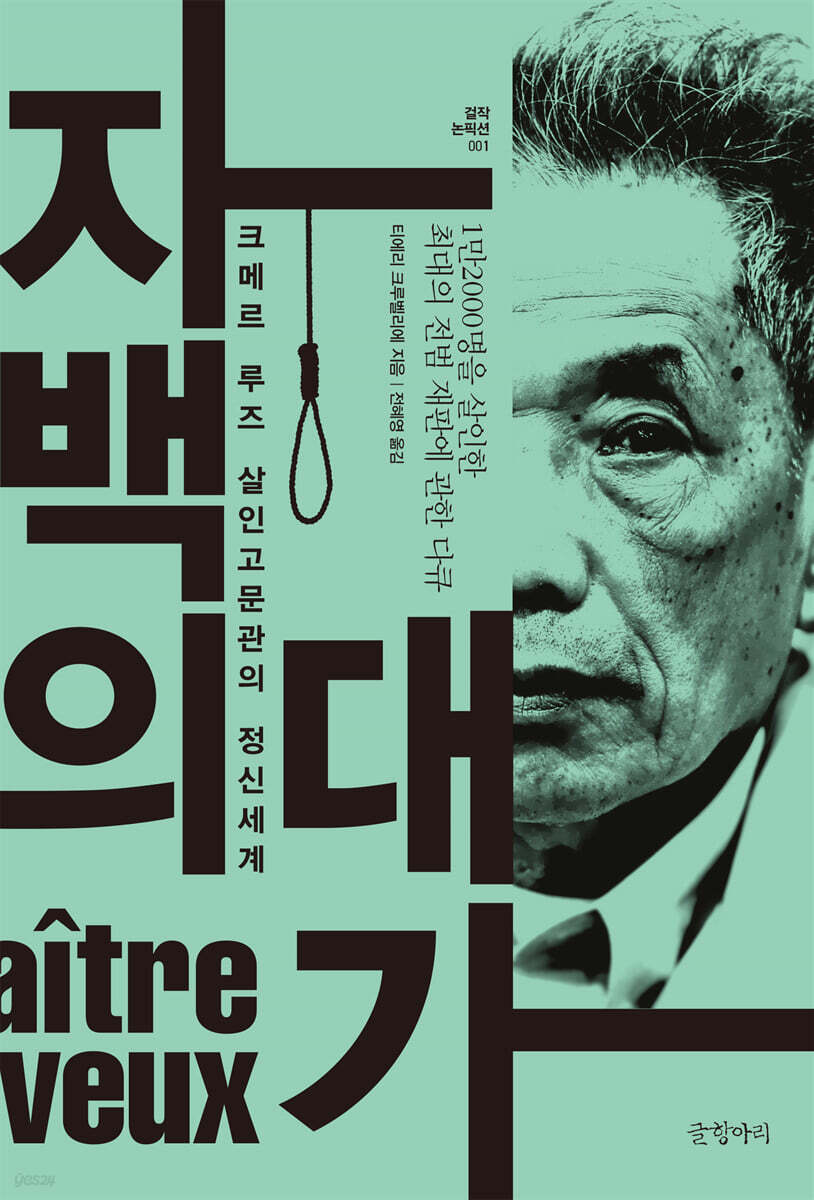
Book Introduction
The warden of S-21 prison, who killed 12,000 people
Is he human or devil?
A documentary, or rather a thriller, that reveals the strange nature of humanity and the truth of the times!
A work by a French journalist who specializes in covering international war crimes trials.
“Back then, revolution meant eliminating prisoners one by one.
I sacrificed everything for the revolution and did my best in everything I did.
“I have lived my entire life by the principle of doing everything with certainty.”
_From Dooku's court statement
“With over 12,000 people dead in S-21 prison, the number of eyes will double.
I believe there are at least 24,000 eyes following the defendant.
“Where in the world would he hide?”
_From the testimonies of the victims' families
March 2009, Phnom Penh.
The torturer and executioner, better known by his nickname, Duq, killed more than 12,000 people at Tuol Sleng S-21.
The moment has finally arrived for him to stand alone before an international court.
Alone before the victims' families and himself, Duke began to tell the story of a massacre whose exact numbers were difficult to quantify, a crime of such gravity that it could never be forgiven.
The Price of Confession tells the extraordinary fate of an executioner who joined Pol Pot's Khmer Rouge.
But as the trial progresses, an unexpected and surprising episode emerges at each hearing, creating a 'human comedy'.
Author Thierry Cruvelier, with his keen observation and writing skills as a journalist, and above all, his theatrical sensibility, tells us about a drama that unfolds in a courtroom.
Is he human or devil?
A documentary, or rather a thriller, that reveals the strange nature of humanity and the truth of the times!
A work by a French journalist who specializes in covering international war crimes trials.
“Back then, revolution meant eliminating prisoners one by one.
I sacrificed everything for the revolution and did my best in everything I did.
“I have lived my entire life by the principle of doing everything with certainty.”
_From Dooku's court statement
“With over 12,000 people dead in S-21 prison, the number of eyes will double.
I believe there are at least 24,000 eyes following the defendant.
“Where in the world would he hide?”
_From the testimonies of the victims' families
March 2009, Phnom Penh.
The torturer and executioner, better known by his nickname, Duq, killed more than 12,000 people at Tuol Sleng S-21.
The moment has finally arrived for him to stand alone before an international court.
Alone before the victims' families and himself, Duke began to tell the story of a massacre whose exact numbers were difficult to quantify, a crime of such gravity that it could never be forgiven.
The Price of Confession tells the extraordinary fate of an executioner who joined Pol Pot's Khmer Rouge.
But as the trial progresses, an unexpected and surprising episode emerges at each hearing, creating a 'human comedy'.
Author Thierry Cruvelier, with his keen observation and writing skills as a journalist, and above all, his theatrical sensibility, tells us about a drama that unfolds in a courtroom.
- You can preview some of the book's contents.
Preview
index
1.
A trial that caught the world's attention
2.
The birth of Kang Kyeok Lee Woo
3.
Being dragged away while harvesting vegetables
4.
S-21, a murder factory converted from a high school
5.
Cold torture and hot torture
6.
Shepherd dog
7.
Beat him until his body breaks
8.
Great workaholic
9.
The Murderer's Investigation
10.
Pol Pot was noble
11.
The day I was dragged to the execution ground
12.
A hot iron bar is inserted into the nostrils.
13.
In a dictatorship, being a murderer is the ultimate profession.
14.
Cambodian mindset
15.
78 foreigners killed in S-21
16.
Truong Ek or Killing Fields
17.
Why? Why? Why?
18.
Artists Save Their Lives
19.
Duke's youth
20.
Duke's days as a teacher
21.
The S-21's predecessor, the M-13
22. CIA or KGB
23.
Go to the ruins
24.
Anlongbeng, the killers' last hideout
25.
Other types of awards
26.
Death Line
27.
Escape from Phnom Penh
28.
Duke's subordinate, the silence of the body age
29.
The scandal caused by Professor Pung Tan
30.
Please don't be afraid of death
31.
The tragic fate of intellectuals
32.
The death of an elite
33.
Why didn't they kill him right away?
34.
Duke is not mentally ill
35.
Water Festival
36.
The Paradox of Democratic Kampuchea
37.
Duke's Sin
38.
The Price of Defense vs. the Price of Confession
39.
Fluent oratory that gave a damn good impression
40.
Sentence
Historical indicators
Acknowledgements
Translator's Note
time
A trial that caught the world's attention
2.
The birth of Kang Kyeok Lee Woo
3.
Being dragged away while harvesting vegetables
4.
S-21, a murder factory converted from a high school
5.
Cold torture and hot torture
6.
Shepherd dog
7.
Beat him until his body breaks
8.
Great workaholic
9.
The Murderer's Investigation
10.
Pol Pot was noble
11.
The day I was dragged to the execution ground
12.
A hot iron bar is inserted into the nostrils.
13.
In a dictatorship, being a murderer is the ultimate profession.
14.
Cambodian mindset
15.
78 foreigners killed in S-21
16.
Truong Ek or Killing Fields
17.
Why? Why? Why?
18.
Artists Save Their Lives
19.
Duke's youth
20.
Duke's days as a teacher
21.
The S-21's predecessor, the M-13
22. CIA or KGB
23.
Go to the ruins
24.
Anlongbeng, the killers' last hideout
25.
Other types of awards
26.
Death Line
27.
Escape from Phnom Penh
28.
Duke's subordinate, the silence of the body age
29.
The scandal caused by Professor Pung Tan
30.
Please don't be afraid of death
31.
The tragic fate of intellectuals
32.
The death of an elite
33.
Why didn't they kill him right away?
34.
Duke is not mentally ill
35.
Water Festival
36.
The Paradox of Democratic Kampuchea
37.
Duke's Sin
38.
The Price of Defense vs. the Price of Confession
39.
Fluent oratory that gave a damn good impression
40.
Sentence
Historical indicators
Acknowledgements
Translator's Note
time
Into the book
When I look back on the past, I get goosebumps all over my body.
“My real name is Kaing Guek Eav, but I started using the name Duch when I joined the revolutionary army.
I joined the revolutionary army with the pretext of freeing my parents, family, and the people of my homeland.
But ultimately, my country suffered a terrible tragedy, with over 1.7 million people losing their lives.
As a human being, as a person who believes in justice, I acknowledge that the Communist Party of Kampuchea, of which I was a member, was the cause of all this misfortune.
But at the time, it was impossible to even acknowledge that fact.
Because I couldn't run away and had to unconditionally obey the orders of the higher authorities.
My main job was interrogating people in prison.
I have never killed anyone with my own hands.
But even if I didn't kill him myself, it was definitely something that someone else had to do instead.
I just had a pen in my hand, and my hand movements determined the life or death of a person.
Because I reported my evaluation of the prisoners I interrogated to my superiors.
I tried to write the evaluation from as objective a standpoint as possible.
But above, they were obsessed with arresting new criminals based on the confessions of prisoners.
I sacrificed everything for the revolution and did my best in everything I did.
To be honest, I think at the time I was proud of the regime established by the revolutionary forces.
But now, after so much time has passed, looking back on those days gives me goosebumps all over.
“I am deeply ashamed that I participated in the murder of over 12,000 people.”
--- p.23~24
The fake fun act is exposed
Of course, Duke has also acted out of line.
Standing before what he considered a weak and foolish opponent, he felt an excessive sense of superiority and ended up behaving in two ways that a defendant should not do in court: acting rudely and appearing to mock the opponent.
There are also times when I act clumsily, like a bean sprout growing in a drought.
He once tried to force a show of camaraderie on one of the three survivors of the prison where he worked, but it didn't go as well as he had hoped, and his fake joy was exposed.
People at the scene were puzzled by Duke's nervous laughter.
At some point, Duke, who had realized the situation, quickly covered his mouth with his hand and calmed down.
--- p.29~30
Continued electric torture until confession
The interrogator told him out of the blue, “You are a traitor.”
He then asked how many secret meetings had been held.
The man said to Wan Nat.
“You must remember the number of times.
“Ankar can’t make a mistake, so you must be a traitor.” The interrogator pulled out an electric cord to extract a confession.
A plastic bag hanging on the wall caught Wan Nat's eye.
There was a clear blood stain on the bag.
"Now, tell me! How many meetings have you held?" When I couldn't answer, the first electrical discharge began.
In the end, Wan Nat fainted on the spot.
Wan Nat came to his senses when the interrogator poured water on his face.
A second round of electric torture followed, and he passed out again.
The electric torture continued like this several times.
Wan Nat couldn't even remember what he had said to his torturers.
--- p.52~53
Inmates who couldn't eat because there were no geckos or insects
I endured such an unbearable and inhumane life for a month.
You couldn't even sit down without the strict permission of the guards.
There were rules written on the blackboard that prisoners were not allowed to speak or listen to others.
A meager meal of oats was served at 8 a.m. and 8 p.m.
Prisoners locked in one room were fed food contained in a single, 15-centimeter-deep square iron container.
Wan Nat suffered from a skin disease and scratched his skin frequently.
He would wait with bated breath for a gecko (a type of small lizard) clinging to the ceiling to fall.
But the key was to quickly catch and eat it while avoiding the guard's eyes when it fell.
Because if you got caught by mistake, you would be beaten to death.
Unfortunately, Wan Nat's seat was far from the window.
So it was far from being able to catch lizards and various insects.
--- p.63
The 'cold' and 'hot' torture teams
“Understanding the psychology of prisoners is what the ‘cold team’ does.
I don't know if other interrogators questioned as persistently as I did to get a confession.
Anyway, when I was training interrogators, I taught them that the principle was to first elicit answers verbally.
The next step is torture.
“But many interrogators focused more on physical torture than on verbal questioning,” Duke explained.
Meanwhile, interrogators on the "hot team" inflicted torture on prisoners other than electric shock, which they considered effective.
According to Prak Khan, who was part of the writing team, the writing team conducted oral interrogations that were extremely persistent.
But Dance May's perspective was different.
He summarized the situation as follows:
“On every day that a prisoner saw an interrogator, physical torture continued.
There has never been an oral examination alone.
“It was always hot, there was never a single time when the interrogation was cold or lukewarm.”
--- p.77
At least 700 children died
Judge Cartwright asked Duke if it was true that children who died at S-21 prison accounted for 1 percent of all deaths.
In doing so, he presented data that cast doubt on these statistics.
Records show that 160 children were taken to the execution grounds each day.
“It’s definitely more than 1 percent,” replied Duke, a mathematician by training.
“I think so too,” the judge agreed.
The discomfort in his voice was evident.
--- p.175~176
Duke, who also executed two of his brothers-in-law
Two of Duke's brothers-in-law were executed in prison while he was managing S-21 Prison.
One of the brothers-in-law even had the Duke personally intervene and manage the execution.
He was deputy chief of political police in Kampong Thom province and also served as an executioner for the Khmer Rouge.
It was like being hit by the same group.
Duke took charge of the first interrogation, with his brother-in-law in front of him.
His intention was to deal with it himself before being reprimanded by his superior, Son Sen.
He tried not to reveal his personal feelings as he described the situation at the time.
“I treated my brother-in-law very calmly.
But when my brother-in-law kept making new mistakes, I couldn't stand it anymore.
If I had saved him, I would have been in a dangerous situation.
It felt like not only me, but my entire family was in danger.
So I had no choice but to arrest my brother-in-law, imprison him, and order the interrogators to interrogate and torture him.”
--- p.179
78 foreigners also executed… “I even imagined being forced to eat the shit you made, Duke.”
At least 78 foreigners, excluding Vietnamese, have died in S-21 Prison.
One Arab, five Indians and 29 Thais were killed.
In addition, one Javanese Indonesian, one Laotian, three Americans, three French, two Australians, one Briton and one New Zealander were reported dead, but the identities of the others have not been released.
(…) “Carey Hamill, who was in S-21 prison, was the coolest brother in the world to me.
I first saw the photo taken in prison when I was sixteen, and that scene has been stuck in my head ever since.
I couldn't even sleep because of that picture.
(…) Duke, there have been more than a few times when I wanted to crush your body.
I've even imagined giving you an electric shock to your scrotum and then force-feeding you my shit.
I even imagined waterboarding them until they were about to drown and then having their throats slashed with a knife.
I wanted you to experience that pain yourself.
Please, I beg you, answer the questions I'm asking you right now honestly.
“Do you remember my brother?” “There were four Westerners.
But I only remember the British John.
He was a very kind person.
I've never met Mr. Hamilton in person.
He confessed in great detail and I believed him exactly as he wrote.
John and Kerry died around the same time.
The body was cremated and reduced to ashes, but I don't remember the exact date.
“I just remember it was right after the two people confessed.”
--- p.195~201
If you hit the back of the neck with a hammer, you will die without even making a sound.
The convoy left for Truong Ek at around 6 p.m.
It is located about 30 minutes away from the prison, where executions are held.
Upon arriving at Truong Ek, the prisoners were transported one by one into wooden houses.
Some people recalled that the motor was turned on to make a loud noise, not to turn on the light, but to prevent the sound from being heard outside.
Meanwhile, the executioners gathered at the edge of the circular pit, carrying torches and the instruments of execution.
The ground was hollow, as if it had been bombed.
The executioner dragged the prisoners from the house to the execution ground one by one.
Before that, he reassured the death row inmate by telling him that he had been brought to a new residence.
That way, the prisoner could be killed in a quiet atmosphere.
“First, order the prisoner to kneel down next to the pit.
Then he strikes the back of the prisoner's neck with a hammer.
“Finally, cut off his neck, then take off his clothes and take off his handcuffs.” (…) Of course, Duke could have described in detail how he would cut off the condemned man’s neck.
His voice lowered to a low pitch as he spoke.
--- p.205~208
Duke's two fatal mistakes: failing to burn the documents and letting the artist live.
Duke made two fatal mistakes when he left S-21 Prison.
One is that he did not destroy all the documents, and the other is that he spared one prisoner who was working as a painter.
He left prison leaving behind thousands of pages of documents related to the criminal activities he was involved in.
He also did not kill the very dangerous painter who turned his back on him.
All the drawings that Wan Nat made while he was at S-21 have disappeared.
However, after liberation, the paintings he drew were exhibited in museums, helping later generations to imagine horrors.
The horrors of S-21, the torture and brutal punishments suffered by the prisoners, are depicted in 14 paintings over 30 years later.
What testimony could be more powerful than the work of an artist who has survived?
Visitors to the museum today find the paintings on display imprinting indelible images in their minds.
--- p.308
A genius at avoiding heartbreaking conversations
Duke is a man who knows how to lead and control a conversation.
He chose a good mix of nervous and commanding voices, both accepting and rejecting the other side's arguments.
By doing so, I was able to avoid conversations that would hurt my feelings.
(…) That afternoon, questions poured in about the medical experiments conducted at S-21.
Su Thi and Prak Khan, who were Duke's subordinates, spoke about that part.
Evidence of medical experiments was also found in the archives.
But Duke countered that he wasn't entirely involved in the matter.
Judge Neil Non asked the defendant whether he knew the experiment was being conducted.
Duke answered calmly, without even raising an eyebrow.
“Yes, I knew that.
Some of the prisoners were once used as subjects for surgical experiments.
There are also cases where blood was drawn.
However, there are different opinions on the fact of blood transfusion.
As I mentioned during the preliminary examination, blood transfusion is a matter involving the sickle, and I have no knowledge of that matter.
As I keep thinking about the past, I remember receiving a phone call from my superior.
They said that when they gave blood transfusions to the fighters, they caused skin inflammation.
“I guess that would be true if it were a criminal act I committed.”
--- p.388~389
Sexual assault, beatings, electric shocks, feeding feces… …
Keo Kim Hut, the first mentor who opened his eyes to the revolution, and his revolutionary comrade wife eventually lost their lives in S-21, their bodies damaged by brutal torture.
In addition to severe beatings and electric shocks, Keum-Kim-Hot was also tortured by being forced to swallow excrement.
And his wife was raped with a stick while she was in prison.
“We will agree that Duke did not shy away from causing pain to others.
He felt that it was absolutely necessary and that he had to do something to help the organization, even if it meant resorting to evil means.
You will know this if you look at the defendant's handwritten writing.
A note was found containing instructions to kill the prisoner.
Looking at the document, you can see no trace of human emotion or regret, only a cold attitude and consistent efficiency in work.
A list of 17 prisoners was examined, and nine of them were children.
Nevertheless, Duke wrote down only the simple instructions: 'Peng, kill everyone on the list.'"
“My real name is Kaing Guek Eav, but I started using the name Duch when I joined the revolutionary army.
I joined the revolutionary army with the pretext of freeing my parents, family, and the people of my homeland.
But ultimately, my country suffered a terrible tragedy, with over 1.7 million people losing their lives.
As a human being, as a person who believes in justice, I acknowledge that the Communist Party of Kampuchea, of which I was a member, was the cause of all this misfortune.
But at the time, it was impossible to even acknowledge that fact.
Because I couldn't run away and had to unconditionally obey the orders of the higher authorities.
My main job was interrogating people in prison.
I have never killed anyone with my own hands.
But even if I didn't kill him myself, it was definitely something that someone else had to do instead.
I just had a pen in my hand, and my hand movements determined the life or death of a person.
Because I reported my evaluation of the prisoners I interrogated to my superiors.
I tried to write the evaluation from as objective a standpoint as possible.
But above, they were obsessed with arresting new criminals based on the confessions of prisoners.
I sacrificed everything for the revolution and did my best in everything I did.
To be honest, I think at the time I was proud of the regime established by the revolutionary forces.
But now, after so much time has passed, looking back on those days gives me goosebumps all over.
“I am deeply ashamed that I participated in the murder of over 12,000 people.”
--- p.23~24
The fake fun act is exposed
Of course, Duke has also acted out of line.
Standing before what he considered a weak and foolish opponent, he felt an excessive sense of superiority and ended up behaving in two ways that a defendant should not do in court: acting rudely and appearing to mock the opponent.
There are also times when I act clumsily, like a bean sprout growing in a drought.
He once tried to force a show of camaraderie on one of the three survivors of the prison where he worked, but it didn't go as well as he had hoped, and his fake joy was exposed.
People at the scene were puzzled by Duke's nervous laughter.
At some point, Duke, who had realized the situation, quickly covered his mouth with his hand and calmed down.
--- p.29~30
Continued electric torture until confession
The interrogator told him out of the blue, “You are a traitor.”
He then asked how many secret meetings had been held.
The man said to Wan Nat.
“You must remember the number of times.
“Ankar can’t make a mistake, so you must be a traitor.” The interrogator pulled out an electric cord to extract a confession.
A plastic bag hanging on the wall caught Wan Nat's eye.
There was a clear blood stain on the bag.
"Now, tell me! How many meetings have you held?" When I couldn't answer, the first electrical discharge began.
In the end, Wan Nat fainted on the spot.
Wan Nat came to his senses when the interrogator poured water on his face.
A second round of electric torture followed, and he passed out again.
The electric torture continued like this several times.
Wan Nat couldn't even remember what he had said to his torturers.
--- p.52~53
Inmates who couldn't eat because there were no geckos or insects
I endured such an unbearable and inhumane life for a month.
You couldn't even sit down without the strict permission of the guards.
There were rules written on the blackboard that prisoners were not allowed to speak or listen to others.
A meager meal of oats was served at 8 a.m. and 8 p.m.
Prisoners locked in one room were fed food contained in a single, 15-centimeter-deep square iron container.
Wan Nat suffered from a skin disease and scratched his skin frequently.
He would wait with bated breath for a gecko (a type of small lizard) clinging to the ceiling to fall.
But the key was to quickly catch and eat it while avoiding the guard's eyes when it fell.
Because if you got caught by mistake, you would be beaten to death.
Unfortunately, Wan Nat's seat was far from the window.
So it was far from being able to catch lizards and various insects.
--- p.63
The 'cold' and 'hot' torture teams
“Understanding the psychology of prisoners is what the ‘cold team’ does.
I don't know if other interrogators questioned as persistently as I did to get a confession.
Anyway, when I was training interrogators, I taught them that the principle was to first elicit answers verbally.
The next step is torture.
“But many interrogators focused more on physical torture than on verbal questioning,” Duke explained.
Meanwhile, interrogators on the "hot team" inflicted torture on prisoners other than electric shock, which they considered effective.
According to Prak Khan, who was part of the writing team, the writing team conducted oral interrogations that were extremely persistent.
But Dance May's perspective was different.
He summarized the situation as follows:
“On every day that a prisoner saw an interrogator, physical torture continued.
There has never been an oral examination alone.
“It was always hot, there was never a single time when the interrogation was cold or lukewarm.”
--- p.77
At least 700 children died
Judge Cartwright asked Duke if it was true that children who died at S-21 prison accounted for 1 percent of all deaths.
In doing so, he presented data that cast doubt on these statistics.
Records show that 160 children were taken to the execution grounds each day.
“It’s definitely more than 1 percent,” replied Duke, a mathematician by training.
“I think so too,” the judge agreed.
The discomfort in his voice was evident.
--- p.175~176
Duke, who also executed two of his brothers-in-law
Two of Duke's brothers-in-law were executed in prison while he was managing S-21 Prison.
One of the brothers-in-law even had the Duke personally intervene and manage the execution.
He was deputy chief of political police in Kampong Thom province and also served as an executioner for the Khmer Rouge.
It was like being hit by the same group.
Duke took charge of the first interrogation, with his brother-in-law in front of him.
His intention was to deal with it himself before being reprimanded by his superior, Son Sen.
He tried not to reveal his personal feelings as he described the situation at the time.
“I treated my brother-in-law very calmly.
But when my brother-in-law kept making new mistakes, I couldn't stand it anymore.
If I had saved him, I would have been in a dangerous situation.
It felt like not only me, but my entire family was in danger.
So I had no choice but to arrest my brother-in-law, imprison him, and order the interrogators to interrogate and torture him.”
--- p.179
78 foreigners also executed… “I even imagined being forced to eat the shit you made, Duke.”
At least 78 foreigners, excluding Vietnamese, have died in S-21 Prison.
One Arab, five Indians and 29 Thais were killed.
In addition, one Javanese Indonesian, one Laotian, three Americans, three French, two Australians, one Briton and one New Zealander were reported dead, but the identities of the others have not been released.
(…) “Carey Hamill, who was in S-21 prison, was the coolest brother in the world to me.
I first saw the photo taken in prison when I was sixteen, and that scene has been stuck in my head ever since.
I couldn't even sleep because of that picture.
(…) Duke, there have been more than a few times when I wanted to crush your body.
I've even imagined giving you an electric shock to your scrotum and then force-feeding you my shit.
I even imagined waterboarding them until they were about to drown and then having their throats slashed with a knife.
I wanted you to experience that pain yourself.
Please, I beg you, answer the questions I'm asking you right now honestly.
“Do you remember my brother?” “There were four Westerners.
But I only remember the British John.
He was a very kind person.
I've never met Mr. Hamilton in person.
He confessed in great detail and I believed him exactly as he wrote.
John and Kerry died around the same time.
The body was cremated and reduced to ashes, but I don't remember the exact date.
“I just remember it was right after the two people confessed.”
--- p.195~201
If you hit the back of the neck with a hammer, you will die without even making a sound.
The convoy left for Truong Ek at around 6 p.m.
It is located about 30 minutes away from the prison, where executions are held.
Upon arriving at Truong Ek, the prisoners were transported one by one into wooden houses.
Some people recalled that the motor was turned on to make a loud noise, not to turn on the light, but to prevent the sound from being heard outside.
Meanwhile, the executioners gathered at the edge of the circular pit, carrying torches and the instruments of execution.
The ground was hollow, as if it had been bombed.
The executioner dragged the prisoners from the house to the execution ground one by one.
Before that, he reassured the death row inmate by telling him that he had been brought to a new residence.
That way, the prisoner could be killed in a quiet atmosphere.
“First, order the prisoner to kneel down next to the pit.
Then he strikes the back of the prisoner's neck with a hammer.
“Finally, cut off his neck, then take off his clothes and take off his handcuffs.” (…) Of course, Duke could have described in detail how he would cut off the condemned man’s neck.
His voice lowered to a low pitch as he spoke.
--- p.205~208
Duke's two fatal mistakes: failing to burn the documents and letting the artist live.
Duke made two fatal mistakes when he left S-21 Prison.
One is that he did not destroy all the documents, and the other is that he spared one prisoner who was working as a painter.
He left prison leaving behind thousands of pages of documents related to the criminal activities he was involved in.
He also did not kill the very dangerous painter who turned his back on him.
All the drawings that Wan Nat made while he was at S-21 have disappeared.
However, after liberation, the paintings he drew were exhibited in museums, helping later generations to imagine horrors.
The horrors of S-21, the torture and brutal punishments suffered by the prisoners, are depicted in 14 paintings over 30 years later.
What testimony could be more powerful than the work of an artist who has survived?
Visitors to the museum today find the paintings on display imprinting indelible images in their minds.
--- p.308
A genius at avoiding heartbreaking conversations
Duke is a man who knows how to lead and control a conversation.
He chose a good mix of nervous and commanding voices, both accepting and rejecting the other side's arguments.
By doing so, I was able to avoid conversations that would hurt my feelings.
(…) That afternoon, questions poured in about the medical experiments conducted at S-21.
Su Thi and Prak Khan, who were Duke's subordinates, spoke about that part.
Evidence of medical experiments was also found in the archives.
But Duke countered that he wasn't entirely involved in the matter.
Judge Neil Non asked the defendant whether he knew the experiment was being conducted.
Duke answered calmly, without even raising an eyebrow.
“Yes, I knew that.
Some of the prisoners were once used as subjects for surgical experiments.
There are also cases where blood was drawn.
However, there are different opinions on the fact of blood transfusion.
As I mentioned during the preliminary examination, blood transfusion is a matter involving the sickle, and I have no knowledge of that matter.
As I keep thinking about the past, I remember receiving a phone call from my superior.
They said that when they gave blood transfusions to the fighters, they caused skin inflammation.
“I guess that would be true if it were a criminal act I committed.”
--- p.388~389
Sexual assault, beatings, electric shocks, feeding feces… …
Keo Kim Hut, the first mentor who opened his eyes to the revolution, and his revolutionary comrade wife eventually lost their lives in S-21, their bodies damaged by brutal torture.
In addition to severe beatings and electric shocks, Keum-Kim-Hot was also tortured by being forced to swallow excrement.
And his wife was raped with a stick while she was in prison.
“We will agree that Duke did not shy away from causing pain to others.
He felt that it was absolutely necessary and that he had to do something to help the organization, even if it meant resorting to evil means.
You will know this if you look at the defendant's handwritten writing.
A note was found containing instructions to kill the prisoner.
Looking at the document, you can see no trace of human emotion or regret, only a cold attitude and consistent efficiency in work.
A list of 17 prisoners was examined, and nine of them were children.
Nevertheless, Duke wrote down only the simple instructions: 'Peng, kill everyone on the list.'"
--- p.471
Publisher's Review
Published in 2011 by Gallimard in France, Le Maitre Des Aveux provides a deeper understanding of the horrific genocide committed by the Khmer Rouge, who ruled Cambodia for four years from 1975 to 1979.
The heartbreaking testimonies of survivors who barely survived the S-21 prison and the so-called "Killing Fields" of Truong Ek make readers watch the war criminal trial process as if they were witnesses.
The title of this book, 'The Price of Confession', was used in an ambiguous sense.
First, Duke is a character with a natural talent for extracting confessions.
Of course, the confession was a false confession, and it was obtained through extremely cruel torture and threats.
His aptitude was a psychopathic trait that allowed him to abandon all human emotions and push prison inmates into the mud of death.
Secondly, the meaning of 'the price of confession' also refers to the outstanding talent that this Duke showed in court and surprised people.
He had an extraordinary memory, recalling events from over 30 years ago, and while admitting to his actions, he consistently delivered political confessions that deftly evaded the legal net.
The title, 'The Price of Confession', contains the image of this devilish maestro.
French author Thierry Crouvelier, who wrote this book, participated in the war crimes trial in Phnom Penh that tried Doukran, the chief director of the S-21 prison, and wrote this book based on what he saw and heard firsthand.
The author served as senior editor of the legal magazine International Justice Tribune and has worked as a reporter, covering international trials of crimes against humanity and genocide committed not only in Cambodia but also in Rwanda, Sierra Leone, Colombia, and Bosnia.
Thierry Crouvelier was the only French journalist to attend the Phnom Penh war crimes trials.
This trial had special meaning to him.
This was the first time that an international tribunal under the United Nations had been charged with a mass murder committed by a totalitarian communist regime.
Translator Jeon Hye-young said, “While translating this book, I doubted whether a book could exist that would provide such detailed information about the defendant, Doukran.”
To that extent, I couldn't help but be amazed by the French author's ability to gather information.
The author's extensive collection of information about the life of Duke is evident throughout the book.
The book unfolds like a continuous panorama with each page, depicting his turbulent life: from his youth as a math teacher before joining the Khmer Rouge, to his time as a revolutionary for Democratic Kampuchea, to his journey abroad as the Khmer Rouge declined, to his imprisonment in a Cambodian prison and his trial.
Readers of this book will appreciate the author's keen observations as he meticulously describes the defendant Duke's state of mind and attitude as the trial progressed.
In addition to Duke, the author also tried to convey vividly the reactions of survivors of various nationalities who participated as witnesses, as well as the lawyers, prosecutors, judges, and spectators.
Therefore, readers will be able to feel the vivid atmosphere of the scene as if they were actually sitting in the courtroom.
Additionally, as the stances supporting and hating Duke became sharply opposed, the tension gradually increased as the story progressed.
The fierce debate between legal officials and activists fighting for human rights, as well as the contrasting positions of François Roux and Ca Saut, Duque's lawyers, also serve as a stimulus for the book's intrigue.
Duke, who was once skilled at extracting confessions from prisoners at S-21 Prison, has now become a defendant who has to be interrogated instead of being the interrogator.
If you're curious about the behind-the-scenes story of the Khmer Rouge's genocide, which even justified inhumane acts to realize the utopian ideals of communism, this book, which honestly and unequivocally portrays the trial of war criminal Douk, will be an invaluable treasure trove of knowledge.
The heartbreaking testimonies of survivors who barely survived the S-21 prison and the so-called "Killing Fields" of Truong Ek make readers watch the war criminal trial process as if they were witnesses.
The title of this book, 'The Price of Confession', was used in an ambiguous sense.
First, Duke is a character with a natural talent for extracting confessions.
Of course, the confession was a false confession, and it was obtained through extremely cruel torture and threats.
His aptitude was a psychopathic trait that allowed him to abandon all human emotions and push prison inmates into the mud of death.
Secondly, the meaning of 'the price of confession' also refers to the outstanding talent that this Duke showed in court and surprised people.
He had an extraordinary memory, recalling events from over 30 years ago, and while admitting to his actions, he consistently delivered political confessions that deftly evaded the legal net.
The title, 'The Price of Confession', contains the image of this devilish maestro.
French author Thierry Crouvelier, who wrote this book, participated in the war crimes trial in Phnom Penh that tried Doukran, the chief director of the S-21 prison, and wrote this book based on what he saw and heard firsthand.
The author served as senior editor of the legal magazine International Justice Tribune and has worked as a reporter, covering international trials of crimes against humanity and genocide committed not only in Cambodia but also in Rwanda, Sierra Leone, Colombia, and Bosnia.
Thierry Crouvelier was the only French journalist to attend the Phnom Penh war crimes trials.
This trial had special meaning to him.
This was the first time that an international tribunal under the United Nations had been charged with a mass murder committed by a totalitarian communist regime.
Translator Jeon Hye-young said, “While translating this book, I doubted whether a book could exist that would provide such detailed information about the defendant, Doukran.”
To that extent, I couldn't help but be amazed by the French author's ability to gather information.
The author's extensive collection of information about the life of Duke is evident throughout the book.
The book unfolds like a continuous panorama with each page, depicting his turbulent life: from his youth as a math teacher before joining the Khmer Rouge, to his time as a revolutionary for Democratic Kampuchea, to his journey abroad as the Khmer Rouge declined, to his imprisonment in a Cambodian prison and his trial.
Readers of this book will appreciate the author's keen observations as he meticulously describes the defendant Duke's state of mind and attitude as the trial progressed.
In addition to Duke, the author also tried to convey vividly the reactions of survivors of various nationalities who participated as witnesses, as well as the lawyers, prosecutors, judges, and spectators.
Therefore, readers will be able to feel the vivid atmosphere of the scene as if they were actually sitting in the courtroom.
Additionally, as the stances supporting and hating Duke became sharply opposed, the tension gradually increased as the story progressed.
The fierce debate between legal officials and activists fighting for human rights, as well as the contrasting positions of François Roux and Ca Saut, Duque's lawyers, also serve as a stimulus for the book's intrigue.
Duke, who was once skilled at extracting confessions from prisoners at S-21 Prison, has now become a defendant who has to be interrogated instead of being the interrogator.
If you're curious about the behind-the-scenes story of the Khmer Rouge's genocide, which even justified inhumane acts to realize the utopian ideals of communism, this book, which honestly and unequivocally portrays the trial of war criminal Douk, will be an invaluable treasure trove of knowledge.
GOODS SPECIFICS
- Date of issue: March 31, 2025
- Page count, weight, size: 532 pages | 152*224*35mm
- ISBN13: 9791169093774
You may also like
카테고리
korean


korean

![GQ KOREA Mark (Monthly): December [2025]](http://librairie.coreenne.fr/cdn/shop/files/8ef265dbbfbf186523ed75ba7319009d.jpg?v=1765340328&width=3840)


