

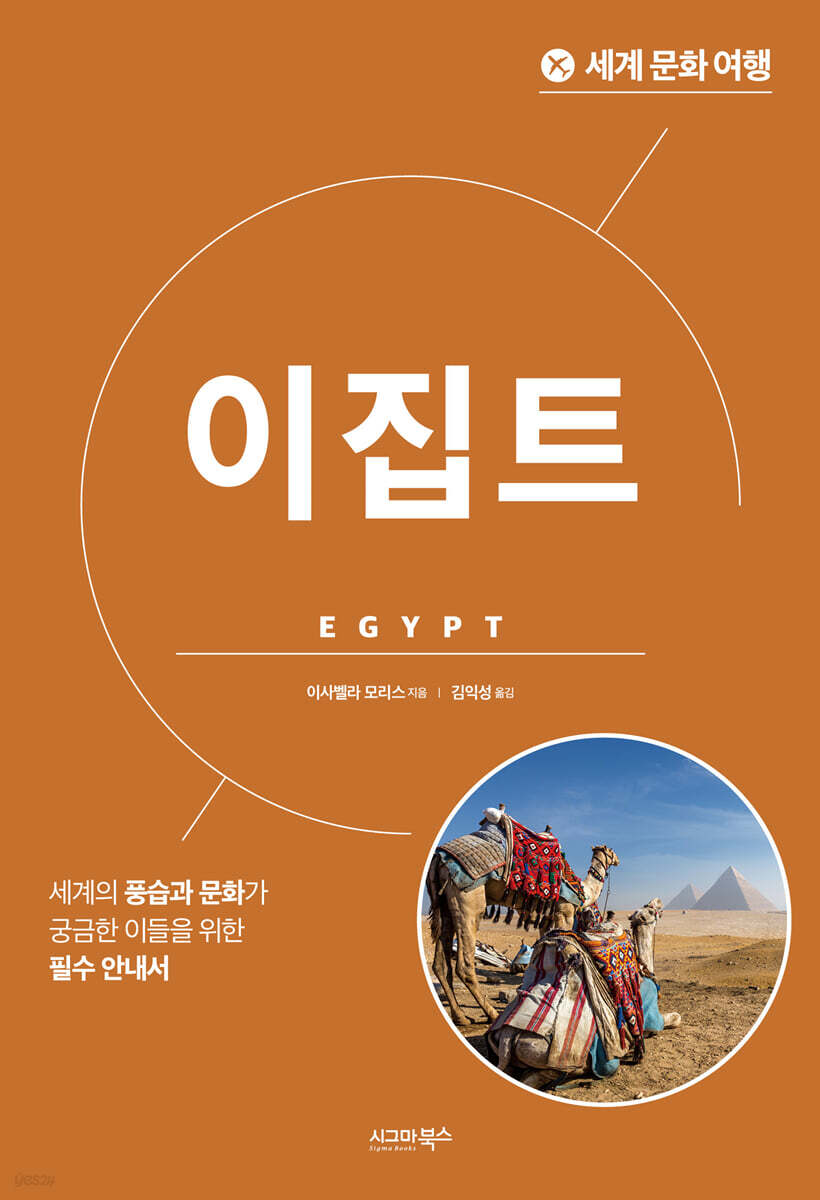
World Cultural Journey - Egypt
 |
Description
Book Introduction
Egypt's
customs, history, culture, lifestyle, life
This book is the Egypt edition of the World Cultural Journey series and covers the general aspects of Egyptian customs, history, culture, lifestyle, and life.
Whether you are visiting Egypt for business or simply for pleasure, we will help you make your time in Egypt more enriching and memorable.
This book contains information on local Egyptian customs and traditions, history, religion, politics, Egyptian families, work, leisure, food, clothing, shelter, and communication.
customs, history, culture, lifestyle, life
This book is the Egypt edition of the World Cultural Journey series and covers the general aspects of Egyptian customs, history, culture, lifestyle, and life.
Whether you are visiting Egypt for business or simply for pleasure, we will help you make your time in Egypt more enriching and memorable.
This book contains information on local Egyptian customs and traditions, history, religion, politics, Egyptian families, work, leisure, food, clothing, shelter, and communication.
- You can preview some of the book's contents.
Preview
index
· Evangelism in Egypt
· Entering
· Basic information
01 Territory and People
topography
climate
major cities
people
Egyptian identity
A Brief History of Egypt
Tahrir Square and Beyond
Government and Politics
economy
02 Values and Attitudes
social status and social structure
Egyptian pride
social network
religion
Attitudes toward women
Inshallah, God willing
back-end economy
Wasta
Tolerance and Prejudice
sense of humor
03 Customs and Traditions
calendar
National holiday
Ramadan
Other religious holidays
secular holidays
Other anniversaries
Maulid
superstition
04 Making Friends
Attitude toward foreigners
greeting
hospitality
Get invited to your home
Etiquette
date
05 Daily Life
home
Raising children
family events
Daily life
06 Leisure Life
Nile River
Shopping for fun
cultural activities
leisure
Eating out
Delivery service
Dining etiquette
Ahhh
drinkables
nightlife
sports
Out of the city
07 Travel Tips
Roads and Traffic
Local transportation
subway and tram
Microbus
Intercity travel
lodgment
health
safety
08 Business Status
Business environment
Working days
bureaucracy
Business culture
Business 'oil'
Egypt Standard Time
Business Etiquette
Dealing with the government
Presentation
negotiation
contract
working women
Workspace
Making friends
09 Communication
language
Etiquette
Media
Various services
conclusion
Useful apps
· References
· Entering
· Basic information
01 Territory and People
topography
climate
major cities
people
Egyptian identity
A Brief History of Egypt
Tahrir Square and Beyond
Government and Politics
economy
02 Values and Attitudes
social status and social structure
Egyptian pride
social network
religion
Attitudes toward women
Inshallah, God willing
back-end economy
Wasta
Tolerance and Prejudice
sense of humor
03 Customs and Traditions
calendar
National holiday
Ramadan
Other religious holidays
secular holidays
Other anniversaries
Maulid
superstition
04 Making Friends
Attitude toward foreigners
greeting
hospitality
Get invited to your home
Etiquette
date
05 Daily Life
home
Raising children
family events
Daily life
06 Leisure Life
Nile River
Shopping for fun
cultural activities
leisure
Eating out
Delivery service
Dining etiquette
Ahhh
drinkables
nightlife
sports
Out of the city
07 Travel Tips
Roads and Traffic
Local transportation
subway and tram
Microbus
Intercity travel
lodgment
health
safety
08 Business Status
Business environment
Working days
bureaucracy
Business culture
Business 'oil'
Egypt Standard Time
Business Etiquette
Dealing with the government
Presentation
negotiation
contract
working women
Workspace
Making friends
09 Communication
language
Etiquette
Media
Various services
conclusion
Useful apps
· References
Into the book
Egyptian history is conventionally divided into 31 dynasties.
If Narmer's First Dynasty opened the history of ancient Egypt, the 31st Dynasty ended in 332 BC when Alexander the Great conquered Egypt.
In the field of history, these dynasties are generally grouped together and defined as three kingdoms.
The 3rd to 6th dynasties are collectively called the Old Kingdom, the 11th to 13th dynasties are collectively called the Middle Kingdom, the 18th to 20th dynasties are collectively called the New Kingdom, and the 25th to 31st dynasties are collectively called the Late Kingdom.
Each of the three kingdoms lasted roughly four to five centuries.
The various pharaohs who ruled Egypt during this period and the monumental structures they built are among those most familiar to us today.
---From "Chapter 1 Territory and People"
Egypt is a society where the group is much more important than the individual.
Egyptians really enjoy making friends and even unmarried people are reluctant to live alone.
Social relationships are formed around social obligations.
When someone is sick, family and friends do not spare any effort to help that person.
Likewise, when someone returns from a trip, family and friends enthusiastically welcome their return.
---From "Chapter 2: Values and Attitudes"
In big cities, suhoor has transformed from a mandatory meal to a large-scale commercial event.
Today, hotels, businesses, and individuals set up Ramadan tents or large marquees and offer set menus, music, and live performances.
The price and extravagance of these events vary greatly.
Some of the larger venues offer all their programs in a luxurious setting, sometimes requiring wasta (connections) to get in.
---From "Chapter 3 Customs and Traditions"
The way the Westernized upper class interacts with people is not much different from the West.
Men and women mix freely and dating is not uncommon.
They go to parties together, hang out at bars, and even seek out desert or beach getaways on the weekends.
However, most people, especially in rural areas, are more conservative, and social activities are usually conducted in family units.
Families visit each other often, and the children know each other well from an early age.
In cities, it is common for friendships to be formed at school or university and to remain with the same group for many years.
---From "Chapter 4 Making Friends"
The wedding process begins with the groom's family making an appointment with the bride's family and proposing.
The groom must declare his income and the amount of muqaddam (dowry) he intends to pay, which must be paid before the marriage can take place.
If the bride's family accepts, the groom and bride read a specific verse from the Quran called fatha and contract the marriage.
Next, the parents of both families set an engagement date and hold a small banquet, usually at the bride's home.
---From "Chapter 5 Daily Life"
Because the requirements for specific jobs change frequently, some prospective employers handle the necessary documentation for the job themselves, but applicants are still required to submit official copies of their personal and job-related information.
It is always a good idea to keep the originals of these documents with you.
You should always keep copies of all documents you have signed, including apartment lease agreements, bank documents, and your employment contract.
Egyptians are adept at navigating unnecessary formalities and long lines at government offices.
---From "Chapter 8 Business Status"
Egyptian men are not allowed to open doors or pull out chairs for women.
The concept of respectful attention they show to women is a concept of protection.
Foreign women need not feel offended if their Egyptian male companion walks in front of them instead of next to them.
Because the man is trying to protect the foreign woman from the crowd.
Egyptian men are unlikely to allow women to walk home alone to their car after a night out or take a taxi home alone without a companion.
If Narmer's First Dynasty opened the history of ancient Egypt, the 31st Dynasty ended in 332 BC when Alexander the Great conquered Egypt.
In the field of history, these dynasties are generally grouped together and defined as three kingdoms.
The 3rd to 6th dynasties are collectively called the Old Kingdom, the 11th to 13th dynasties are collectively called the Middle Kingdom, the 18th to 20th dynasties are collectively called the New Kingdom, and the 25th to 31st dynasties are collectively called the Late Kingdom.
Each of the three kingdoms lasted roughly four to five centuries.
The various pharaohs who ruled Egypt during this period and the monumental structures they built are among those most familiar to us today.
---From "Chapter 1 Territory and People"
Egypt is a society where the group is much more important than the individual.
Egyptians really enjoy making friends and even unmarried people are reluctant to live alone.
Social relationships are formed around social obligations.
When someone is sick, family and friends do not spare any effort to help that person.
Likewise, when someone returns from a trip, family and friends enthusiastically welcome their return.
---From "Chapter 2: Values and Attitudes"
In big cities, suhoor has transformed from a mandatory meal to a large-scale commercial event.
Today, hotels, businesses, and individuals set up Ramadan tents or large marquees and offer set menus, music, and live performances.
The price and extravagance of these events vary greatly.
Some of the larger venues offer all their programs in a luxurious setting, sometimes requiring wasta (connections) to get in.
---From "Chapter 3 Customs and Traditions"
The way the Westernized upper class interacts with people is not much different from the West.
Men and women mix freely and dating is not uncommon.
They go to parties together, hang out at bars, and even seek out desert or beach getaways on the weekends.
However, most people, especially in rural areas, are more conservative, and social activities are usually conducted in family units.
Families visit each other often, and the children know each other well from an early age.
In cities, it is common for friendships to be formed at school or university and to remain with the same group for many years.
---From "Chapter 4 Making Friends"
The wedding process begins with the groom's family making an appointment with the bride's family and proposing.
The groom must declare his income and the amount of muqaddam (dowry) he intends to pay, which must be paid before the marriage can take place.
If the bride's family accepts, the groom and bride read a specific verse from the Quran called fatha and contract the marriage.
Next, the parents of both families set an engagement date and hold a small banquet, usually at the bride's home.
---From "Chapter 5 Daily Life"
Because the requirements for specific jobs change frequently, some prospective employers handle the necessary documentation for the job themselves, but applicants are still required to submit official copies of their personal and job-related information.
It is always a good idea to keep the originals of these documents with you.
You should always keep copies of all documents you have signed, including apartment lease agreements, bank documents, and your employment contract.
Egyptians are adept at navigating unnecessary formalities and long lines at government offices.
---From "Chapter 8 Business Status"
Egyptian men are not allowed to open doors or pull out chairs for women.
The concept of respectful attention they show to women is a concept of protection.
Foreign women need not feel offended if their Egyptian male companion walks in front of them instead of next to them.
Because the man is trying to protect the foreign woman from the crowd.
Egyptian men are unlikely to allow women to walk home alone to their car after a night out or take a taxi home alone without a companion.
---From Chapter 9: Communication
Publisher's Review
An essential guide for those curious about world customs and cultures.
The "World Cultural Journey" series is a guidebook that introduces the customs, culture, lifestyle, and life of various countries around the world.
It contains information about the beliefs, attitudes, and behaviors of people from various countries, allowing you to understand local etiquette and sensitive issues.
It will also help you avoid embarrassing mistakes abroad, build better relationships with locals, and maximize the effectiveness of your visit.
The 『World Cultural Journey』 series currently has 43 volumes published in Japan, China, Turkey, Portugal, Mongolia, Switzerland, Vietnam, Italy, Spain, Hong Kong, Cuba, Greece, New Zealand, Israel, Mexico, Austria, Hungary, Denmark, Norway, Netherlands, Singapore, Morocco, Laos, United Arab Emirates, Germany, France, Russia, Finland, Sweden, Iceland, Thailand, Philippines, Czech Republic, Belgium, Ethiopia, Canada, Poland, United States, Bulgaria, India, Saudi Arabia, Egypt, and Britain.
The oldest country in the world,
Egypt, a country that has influenced countless other cultures
Egypt is one of the oldest countries in the world.
Archaeological evidence suggests that agriculture on the banks of the Nile in Egypt began as early as 10,000 BC.
As befitting an ancient country on Earth, its history begins several thousand years BC.
As a result, many people only think of Egypt as an old country.
Or maybe you only think of the pyramids and the Sphinx, which have stood in the desert for thousands of years.
But if you visit Egypt today, you will see something completely different from that image, perhaps even something else.
Modern Egypt may seem like a chaotic and unruly place.
In the city, the sounds will be noisy and the smells will be overwhelmingly diverse.
In the meantime, countless sights that catch the eye of a foreigner will pass by.
This book shows not only Egypt, which is represented as an 'ancient civilization', but also a vividly living Egypt.
In particular, you can see the values, attitudes, customs and traditions, interpersonal relationships, daily life, leisure activities, and business environment of Egyptians living in present-day Egypt.
It also covers how the 2011 Egyptian Revolution and the changes brought about by COVID-19 are being addressed.
Beyond Egypt, which everyone knows,
A world culture guide that takes you to the real Egypt!
Egypt, which has inspired many conquerors, scholars, and artists throughout world history, is now home to 113 million people.
Like other developing countries, it is developing rapidly due to modernization, but it is still traditional and quite conservative.
You can drive on the newly paved highways, but the countryside is full of dirt roads, and while the televisions in cafes play football matches and music videos, loudspeakers blare the call to prayer five times a day.
Every Egyptian today strives to embrace change in his or her own way and maintain traditional values.
『World Cultural Journey_Egypt』 examines the relationships and paradoxes of Egyptian life.
We take a look at the history of how the Egyptians of today were created and explain their values and attitudes.
In this book, you will be able to go beyond the vague knowledge of Egypt and Egyptians and meet the real Egypt and Egyptians.
The "World Cultural Journey" series is a guidebook that introduces the customs, culture, lifestyle, and life of various countries around the world.
It contains information about the beliefs, attitudes, and behaviors of people from various countries, allowing you to understand local etiquette and sensitive issues.
It will also help you avoid embarrassing mistakes abroad, build better relationships with locals, and maximize the effectiveness of your visit.
The 『World Cultural Journey』 series currently has 43 volumes published in Japan, China, Turkey, Portugal, Mongolia, Switzerland, Vietnam, Italy, Spain, Hong Kong, Cuba, Greece, New Zealand, Israel, Mexico, Austria, Hungary, Denmark, Norway, Netherlands, Singapore, Morocco, Laos, United Arab Emirates, Germany, France, Russia, Finland, Sweden, Iceland, Thailand, Philippines, Czech Republic, Belgium, Ethiopia, Canada, Poland, United States, Bulgaria, India, Saudi Arabia, Egypt, and Britain.
The oldest country in the world,
Egypt, a country that has influenced countless other cultures
Egypt is one of the oldest countries in the world.
Archaeological evidence suggests that agriculture on the banks of the Nile in Egypt began as early as 10,000 BC.
As befitting an ancient country on Earth, its history begins several thousand years BC.
As a result, many people only think of Egypt as an old country.
Or maybe you only think of the pyramids and the Sphinx, which have stood in the desert for thousands of years.
But if you visit Egypt today, you will see something completely different from that image, perhaps even something else.
Modern Egypt may seem like a chaotic and unruly place.
In the city, the sounds will be noisy and the smells will be overwhelmingly diverse.
In the meantime, countless sights that catch the eye of a foreigner will pass by.
This book shows not only Egypt, which is represented as an 'ancient civilization', but also a vividly living Egypt.
In particular, you can see the values, attitudes, customs and traditions, interpersonal relationships, daily life, leisure activities, and business environment of Egyptians living in present-day Egypt.
It also covers how the 2011 Egyptian Revolution and the changes brought about by COVID-19 are being addressed.
Beyond Egypt, which everyone knows,
A world culture guide that takes you to the real Egypt!
Egypt, which has inspired many conquerors, scholars, and artists throughout world history, is now home to 113 million people.
Like other developing countries, it is developing rapidly due to modernization, but it is still traditional and quite conservative.
You can drive on the newly paved highways, but the countryside is full of dirt roads, and while the televisions in cafes play football matches and music videos, loudspeakers blare the call to prayer five times a day.
Every Egyptian today strives to embrace change in his or her own way and maintain traditional values.
『World Cultural Journey_Egypt』 examines the relationships and paradoxes of Egyptian life.
We take a look at the history of how the Egyptians of today were created and explain their values and attitudes.
In this book, you will be able to go beyond the vague knowledge of Egypt and Egyptians and meet the real Egypt and Egyptians.
GOODS SPECIFICS
- Date of issue: March 10, 2025
- Page count, weight, size: 296 pages | 130*190*17mm
- ISBN13: 9791168623347
- ISBN10: 1168623340
You may also like
카테고리
korean


korean

![GQ KOREA Mark (Monthly): December [2025]](http://librairie.coreenne.fr/cdn/shop/files/8ef265dbbfbf186523ed75ba7319009d.jpg?v=1765340328&width=3840)


