

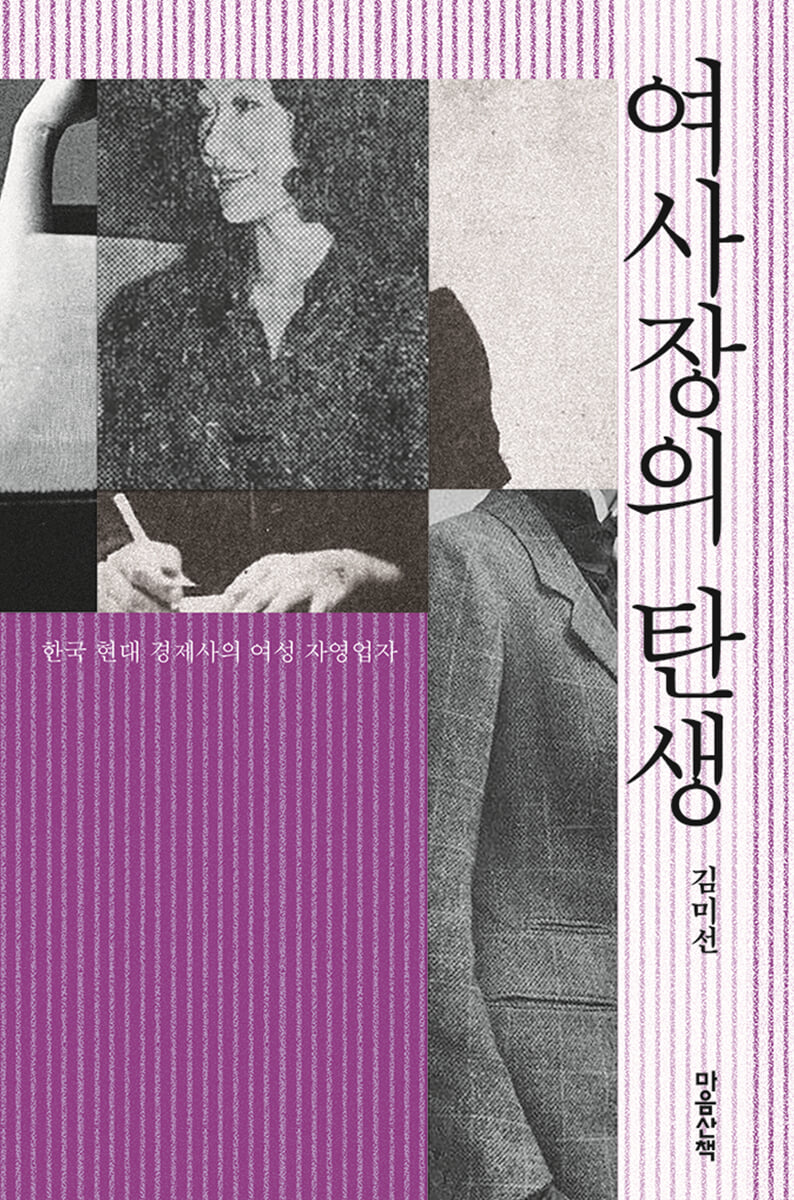
The Birth of a Female President
 |
Description
Book Introduction
Korea's 'female CEO', who has never been highlighted anywhere
Rewriting the History of Working Women
Kim Mi-seon, a research professor at Ewha Womans University and a doctor of women's studies, has published a new book, "The Birth of a Female President."
Kim Mi-seon, who reread Myeong-dong, previously referred to as a space for male writers in her previous work, “Myeong-dong Girl,” as a space for women, focuses on “female presidents,” who have been omitted from Korean economic history, in her new book, “The Birth of a Female President.”
For a long time, 'female CEOs' were easily excluded from the history of women's labor due to their position as CEO, and on the other hand, they were not properly discussed in Korean economic history due to the prejudice that CEOs of large corporations are usually male.
"The Birth of a Female President" is an attempt to unearth the traces of Korean female presidents who are subject to "double exclusion" and to rewrite the history of working women.
"The Birth of a Female President" is a monograph written by the author based on her doctoral dissertation, which won the Ewha Womans University Outstanding Dissertation Award, critically reexamining it and expanding the scope of the discussion.
Parts 1 and 2 of this book cover the evolution of female CEOs in Korea from the 1950s to the 1980s.
The author's gaze, which follows the rise of female CEOs and their emergence as independent business leaders, turns to contemporary young women in Part 3.
The struggles of a former female CEO, who had to occasionally give away her own earnings while balancing housework and work as a daughter, wife, mother, and daughter-in-law, resonate with the lives of modern young women who reject the gender wage gap and gender-based violence in the workplace and choose to start their own business.
"The Birth of a Female President" fills a gap in the history of Korean women's economics, while also offering a new perspective to young women living today.
Rewriting the History of Working Women
Kim Mi-seon, a research professor at Ewha Womans University and a doctor of women's studies, has published a new book, "The Birth of a Female President."
Kim Mi-seon, who reread Myeong-dong, previously referred to as a space for male writers in her previous work, “Myeong-dong Girl,” as a space for women, focuses on “female presidents,” who have been omitted from Korean economic history, in her new book, “The Birth of a Female President.”
For a long time, 'female CEOs' were easily excluded from the history of women's labor due to their position as CEO, and on the other hand, they were not properly discussed in Korean economic history due to the prejudice that CEOs of large corporations are usually male.
"The Birth of a Female President" is an attempt to unearth the traces of Korean female presidents who are subject to "double exclusion" and to rewrite the history of working women.
"The Birth of a Female President" is a monograph written by the author based on her doctoral dissertation, which won the Ewha Womans University Outstanding Dissertation Award, critically reexamining it and expanding the scope of the discussion.
Parts 1 and 2 of this book cover the evolution of female CEOs in Korea from the 1950s to the 1980s.
The author's gaze, which follows the rise of female CEOs and their emergence as independent business leaders, turns to contemporary young women in Part 3.
The struggles of a former female CEO, who had to occasionally give away her own earnings while balancing housework and work as a daughter, wife, mother, and daughter-in-law, resonate with the lives of modern young women who reject the gender wage gap and gender-based violence in the workplace and choose to start their own business.
"The Birth of a Female President" fills a gap in the history of Korean women's economics, while also offering a new perspective to young women living today.
- You can preview some of the book's contents.
Preview
index
Prologue: Standing at the Starting Point of the Female President's Visibility
Madam President, find, meet, listen, and record
Part 1: The Female President 'Born' by the Korean War
The Rise of the Business Woman: The Beginning of Self-Employment
The Birth of a Female President: The Process of Becoming a Female President
Why didn't female CEOs in the 1950s and 1960s become entrepreneurs?
From a female CEO to a female entrepreneur
The emergence of female entrepreneurs exporting products overseas during the industrialization period.
The emergence of female entrepreneurs in earnest since the 1980s
Women's economic activities, self-employment, forgotten in Korean economic history
Young women today who want to become the third-generation president
A female CEO practicing self-employment in the digital platform era
The barriers faced by young women in the labor market
Changing values about life and work
Epilogue: Current Issues: Becoming Economically Independent Women
main
Madam President, find, meet, listen, and record
Part 1: The Female President 'Born' by the Korean War
The Rise of the Business Woman: The Beginning of Self-Employment
The Birth of a Female President: The Process of Becoming a Female President
Why didn't female CEOs in the 1950s and 1960s become entrepreneurs?
From a female CEO to a female entrepreneur
The emergence of female entrepreneurs exporting products overseas during the industrialization period.
The emergence of female entrepreneurs in earnest since the 1980s
Women's economic activities, self-employment, forgotten in Korean economic history
Young women today who want to become the third-generation president
A female CEO practicing self-employment in the digital platform era
The barriers faced by young women in the labor market
Changing values about life and work
Epilogue: Current Issues: Becoming Economically Independent Women
main
Detailed image
Into the book
It was considered shameful for a married woman to work because it meant that her husband was either incompetent in his economic role or poor, meaning that he was of a lower social class.
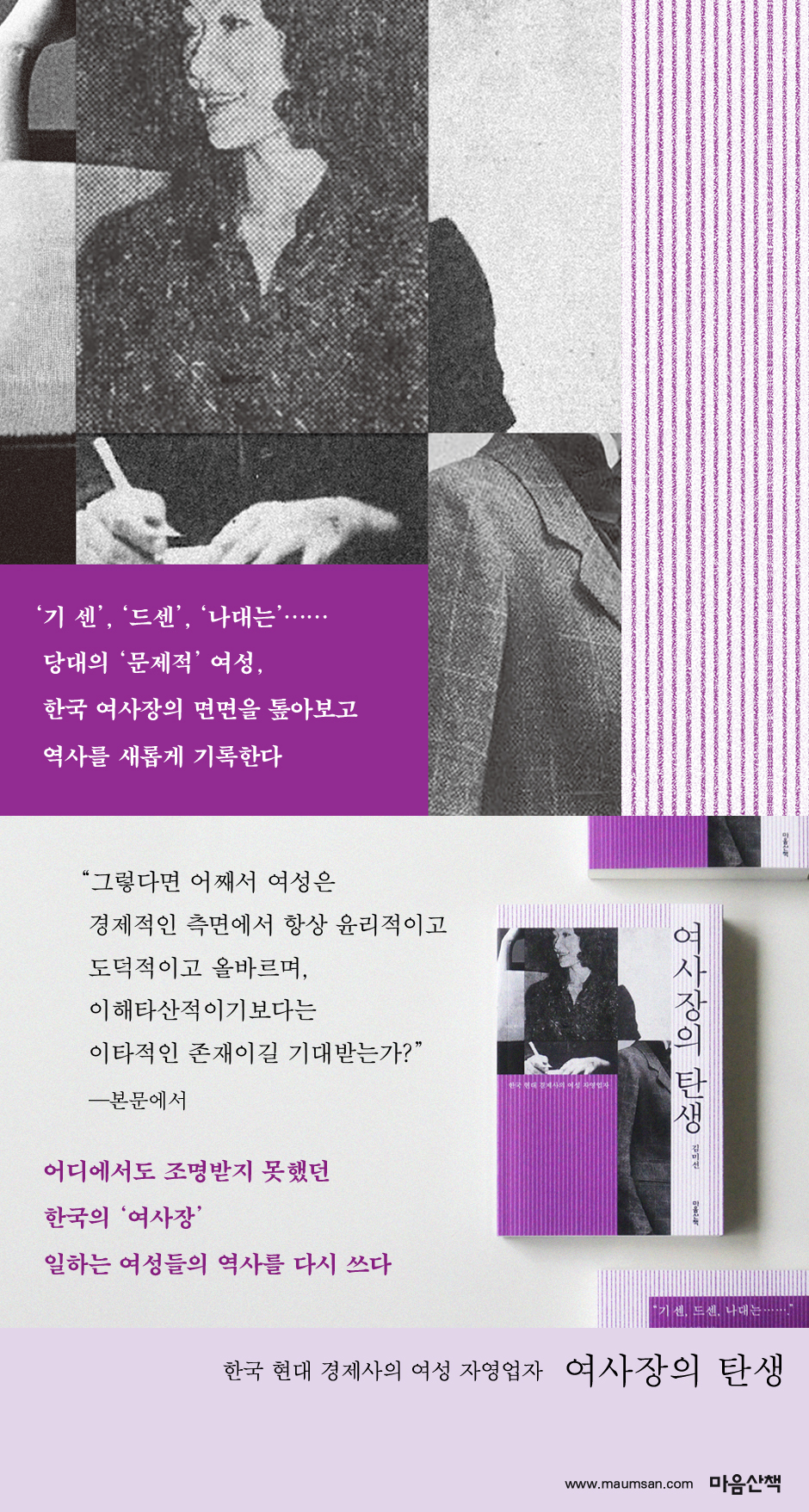
Also, socially, women who make money through business are portrayed as ‘problematic women’ (‘strong’, ‘intense’, ‘naive’…).
--- p.13
Lee Gyeong-sun started peddling in Daegu, carrying a tin bucket on her back.
He didn't even have money to buy a tin bucket, so he got a bucket with a hole in it and started selling the cabbages that were almost thrown away in the cabbage field, leaving out the good ones and picking out the bad ones for free.
--- p.60
The market was a man's space, a man's world.
So, the majority of women who were involved in business during the Korean War were women who had fled to South Korea.
Women in the North were doing business even before the Korean War.
Women in the northwestern regions, such as Hwanghae-do and Pyeongan-do, which were modernized early on with the idea of enlightenment, engaged in business and left behind many valuable works.
Seeing women from such North Korean regions defect to South Korea and do business, South Korean women also began to actively participate in business.
--- p.63~64
Tailor shops, which can be considered representative examples of self-employment by women, were often located next to houses.
Such a spatial structure allowed female tailor shop owners to take care of their families while working.
--- p.78
It can be seen that the term 'female president' in the early 1970s changed to 'housewife manager' in the mid-1970s. The term 'female president' does not reveal marital status, whereas the term 'housewife manager' clearly indicates that the person being referred to is a married woman.
This term clearly indicates that a business woman is a married person, but at the same time, it has the character of encouraging and visualizing married women's entry into business.
--- p.123
In a male-dominated corporate organization, Jang Young-shin faced many difficulties in the early days of her tenure because she was a woman, despite her position as chairman.
In her autobiography, Chairman Jang Young-shin states that after taking office, there were cases where male employees moved to another company because they felt hurt by having to get autographs from a female chairman.
--- p.142
The emergence of female business leaders leading large corporations has garnered significant attention in Korean society.
The woman who took over the company from her husband emphasized that she overcame the 'limitations' of her gender and demonstrated her abilities as a 'woman in a male-dominated field.'
--- p.143
As state power and large-scale capital expanded, Korean capitalism was reorganized into a male-dominated economic structure, which resulted in large corporations such as conglomerates dominating the economy amidst collusion between politics and business, which was dominated by men.
--- p.178
The Park Chung-hee regime's logic for overcoming the economic crisis in the early 1970s was combined with the economic role of housewives, which led to the 'household account bookkeeping movement.'
Since the responsibility for consumption and savings lay with women, keeping household accounts was emphasized for housewives to control this.
--- p.179
Although the creative economy, or the logic that young people can earn money while exercising their creative abilities, is criticized for exploiting young people, their actions are also a practice of self-employment in that they create jobs and generate income for themselves.
Also, socially, women who make money through business are portrayed as ‘problematic women’ (‘strong’, ‘intense’, ‘naive’…).
--- p.13
Lee Gyeong-sun started peddling in Daegu, carrying a tin bucket on her back.
He didn't even have money to buy a tin bucket, so he got a bucket with a hole in it and started selling the cabbages that were almost thrown away in the cabbage field, leaving out the good ones and picking out the bad ones for free.
--- p.60
The market was a man's space, a man's world.
So, the majority of women who were involved in business during the Korean War were women who had fled to South Korea.
Women in the North were doing business even before the Korean War.
Women in the northwestern regions, such as Hwanghae-do and Pyeongan-do, which were modernized early on with the idea of enlightenment, engaged in business and left behind many valuable works.
Seeing women from such North Korean regions defect to South Korea and do business, South Korean women also began to actively participate in business.
--- p.63~64
Tailor shops, which can be considered representative examples of self-employment by women, were often located next to houses.
Such a spatial structure allowed female tailor shop owners to take care of their families while working.
--- p.78
It can be seen that the term 'female president' in the early 1970s changed to 'housewife manager' in the mid-1970s. The term 'female president' does not reveal marital status, whereas the term 'housewife manager' clearly indicates that the person being referred to is a married woman.
This term clearly indicates that a business woman is a married person, but at the same time, it has the character of encouraging and visualizing married women's entry into business.
--- p.123
In a male-dominated corporate organization, Jang Young-shin faced many difficulties in the early days of her tenure because she was a woman, despite her position as chairman.
In her autobiography, Chairman Jang Young-shin states that after taking office, there were cases where male employees moved to another company because they felt hurt by having to get autographs from a female chairman.
--- p.142
The emergence of female business leaders leading large corporations has garnered significant attention in Korean society.
The woman who took over the company from her husband emphasized that she overcame the 'limitations' of her gender and demonstrated her abilities as a 'woman in a male-dominated field.'
--- p.143
As state power and large-scale capital expanded, Korean capitalism was reorganized into a male-dominated economic structure, which resulted in large corporations such as conglomerates dominating the economy amidst collusion between politics and business, which was dominated by men.
--- p.178
The Park Chung-hee regime's logic for overcoming the economic crisis in the early 1970s was combined with the economic role of housewives, which led to the 'household account bookkeeping movement.'
Since the responsibility for consumption and savings lay with women, keeping household accounts was emphasized for housewives to control this.
--- p.179
Although the creative economy, or the logic that young people can earn money while exercising their creative abilities, is criticized for exploiting young people, their actions are also a practice of self-employment in that they create jobs and generate income for themselves.
--- p.194
Publisher's Review
“The Korean War was a business for women.
It is no exaggeration to say that it was mass-produced.”
Men leave for the battlefield
Women became "female bosses" as they fought for their livelihoods.
Kim Mi-seon explains that the Korean War was the background to the birth of the female president.
When the extreme crisis of war caused the disappearance of the men who had been responsible for the economic activities of the household, women had no choice but to go into business to support themselves and their families.
Women in the 1950s, as they fled or came to Vietnam, encountered the unfamiliar world of 'money-making', and their experiences are brought to life through oral records of contemporary female business owners, collected by the author.
“I fled back then and even ran a tailor shop on the street.
(…) It was on the street, and there was a house right behind where I was selling.
“He’s talking nonsense about running a tailor shop or doing business on the street in front of his house.”
_Page 61, “The Appearance of a Business Woman”
The author also analyzes contemporary newspaper articles, films, and novels dealing with female presidents, and interprets the consciousness and unconsciousness of the times.
By examining the voices of individuals and cultural materials reflecting the social atmosphere, we historicize the previously unrecorded inside and out of the "female president."
A woman who hires herself,
Explore new possibilities
"The Birth of a Female President" restores the circumstances and social perspectives faced by women who worked as "self-employed" women, and unfolds them before the readers' eyes.
It contains the fields they chose when starting their businesses, the reasons for their choices, the social perceptions they received, and how they internalized or overcame those perceptions.
The author argues that understanding and questioning the various constraints surrounding female CEOs can yield seeds of change.
From women selling goods alone on the streets and in markets, to women running their own beauty salons or clothing stores, to women importing or exporting goods from overseas, to women running large corporations.
By following the footsteps of these "female bosses" who employed themselves in various ways, we can grasp the potential of women as future economic actors, something that male-centered historical narratives miss.
The production of negative perceptions about women's economic activities limits women's activities by making them invisible or framing them as problematic, such as running a business, a shop, or other economic activities.
(…) Then why are women always expected to be ethical, moral, righteous, and altruistic rather than economically self-interested?
_Page 179, “Forgotten Women’s Economic Activities in Korean Economic History: Self-Employment”
It is no exaggeration to say that it was mass-produced.”
Men leave for the battlefield
Women became "female bosses" as they fought for their livelihoods.
Kim Mi-seon explains that the Korean War was the background to the birth of the female president.
When the extreme crisis of war caused the disappearance of the men who had been responsible for the economic activities of the household, women had no choice but to go into business to support themselves and their families.
Women in the 1950s, as they fled or came to Vietnam, encountered the unfamiliar world of 'money-making', and their experiences are brought to life through oral records of contemporary female business owners, collected by the author.
“I fled back then and even ran a tailor shop on the street.
(…) It was on the street, and there was a house right behind where I was selling.
“He’s talking nonsense about running a tailor shop or doing business on the street in front of his house.”
_Page 61, “The Appearance of a Business Woman”
The author also analyzes contemporary newspaper articles, films, and novels dealing with female presidents, and interprets the consciousness and unconsciousness of the times.
By examining the voices of individuals and cultural materials reflecting the social atmosphere, we historicize the previously unrecorded inside and out of the "female president."
A woman who hires herself,
Explore new possibilities
"The Birth of a Female President" restores the circumstances and social perspectives faced by women who worked as "self-employed" women, and unfolds them before the readers' eyes.
It contains the fields they chose when starting their businesses, the reasons for their choices, the social perceptions they received, and how they internalized or overcame those perceptions.
The author argues that understanding and questioning the various constraints surrounding female CEOs can yield seeds of change.
From women selling goods alone on the streets and in markets, to women running their own beauty salons or clothing stores, to women importing or exporting goods from overseas, to women running large corporations.
By following the footsteps of these "female bosses" who employed themselves in various ways, we can grasp the potential of women as future economic actors, something that male-centered historical narratives miss.
The production of negative perceptions about women's economic activities limits women's activities by making them invisible or framing them as problematic, such as running a business, a shop, or other economic activities.
(…) Then why are women always expected to be ethical, moral, righteous, and altruistic rather than economically self-interested?
_Page 179, “Forgotten Women’s Economic Activities in Korean Economic History: Self-Employment”
GOODS SPECIFICS
- Date of issue: March 5, 2025
- Page count, weight, size: 252 pages | 133*201*20mm
- ISBN13: 9788960909212
You may also like
카테고리
korean


korean

![GQ KOREA Mark (Monthly): December [2025]](http://librairie.coreenne.fr/cdn/shop/files/8ef265dbbfbf186523ed75ba7319009d.jpg?v=1765340328&width=3840)


