

The End of the K-Democratic Civil War
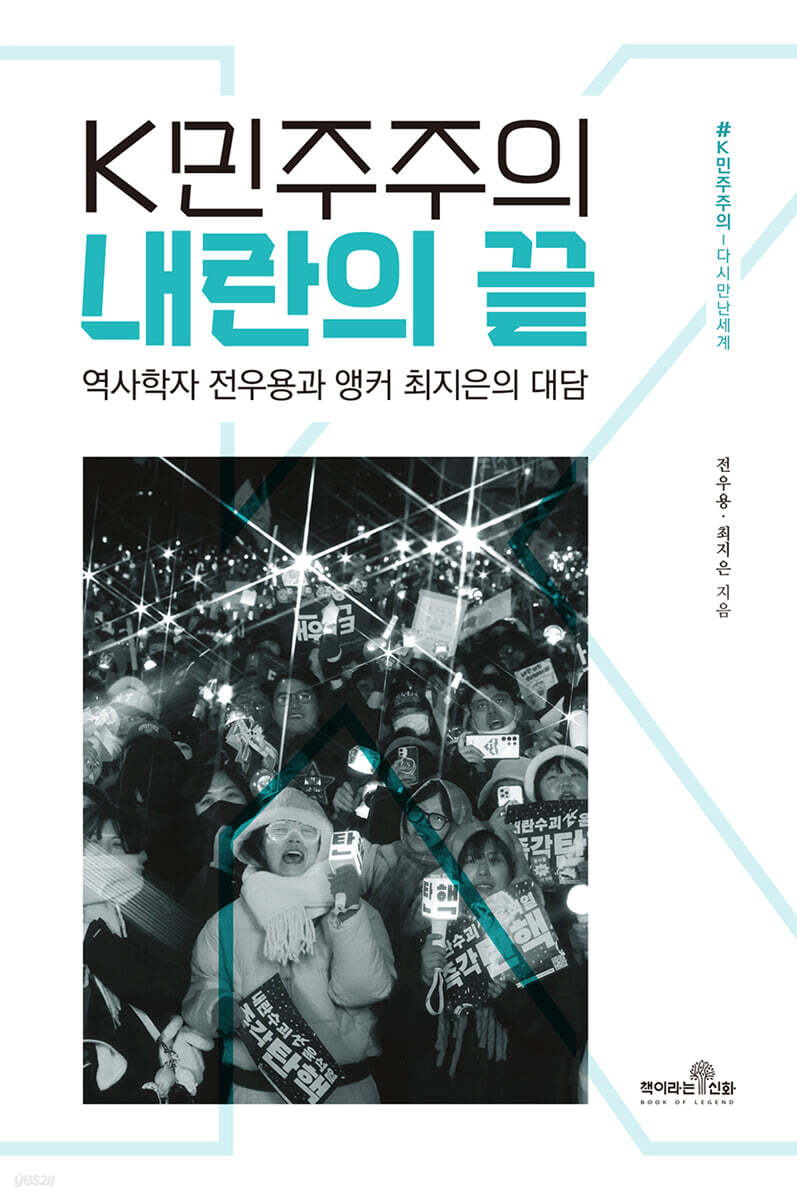 |
Description
Book Introduction
Enemies of the Republic Revealed Through the December 3rd Civil War
The mentality of royalists who deny democracy
K-Democracy saved through history
"The End of the Korean Democracy Civil War" is a book that diagnoses the crisis facing Korean democracy due to the December 3, 2024 civil war.
Historian Jeon Woo-yong meets with anchor Choi Ji-eun to review the history of Korean democracy, reveal who the enemies of the republic are, and why they reject democracy.
Professor Jeon Woo-yong explains the key reasons why the process of democracy's introduction and establishment in our country was so long and difficult.
'Democracy', which was translated by Japan as an ideology rather than a political system, was for that reason regarded as the opposite of 'communism' rather than a 'dictatorship' system.
The Japanese translation of the word "min" (民), which implies a rejection of democracy, caused the elites with vested interests to reject democracy even more.
Those who tried to protect their vested interests became royalists who supported dictatorship, and they opposed independence not because they were pro-Japanese, but because they were afraid that independence would lead to the loss of their vested interests.
The analysis is that their spirit continues to this day, and they became royalists who opposed democracy and eventually caused a civil war.
Mr. Jeon Woo-yong also explains why martial law and coups must never occur.
Martial law, declared under the premise of a wartime situation, will soon lead to the regression of society into a 'dirty war' (Guerra sucia: a policy of oppression of the left by right-wing dictatorships in Central and South America in the mid-to-late 20th century) that destroys humanity and the human rights of opponents.
The dirty war, explained based on our history and overseas cases, proves that it is a necessity that must be prevented to protect democracy.
The fact that we became a democratic nation and prevented the December 3rd civil war through democratic procedures is thanks to the history of democracy we have built up over the years.
However, our democracy still falls short of being on par with other democratic countries, known as K-democracy.
Because there are still forces that advocate civil war and seek to destroy democracy.
To understand the mentality of these anti-democratic forces and build a more robust democratic nation, we must ultimately draw upon our own history and foster a sense of community and democratic citizenship through the Constitution.
Professor Jeon Woo-yong, of course, reminds us of the history and lessons we have forgotten in concise yet persuasive words.
In this sense, "The End of K-Democracy's Civil War" will serve as Jeon Woo-yong's small lecture on democracy and a textbook for citizens to firmly defend democracy.
The mentality of royalists who deny democracy
K-Democracy saved through history
"The End of the Korean Democracy Civil War" is a book that diagnoses the crisis facing Korean democracy due to the December 3, 2024 civil war.
Historian Jeon Woo-yong meets with anchor Choi Ji-eun to review the history of Korean democracy, reveal who the enemies of the republic are, and why they reject democracy.
Professor Jeon Woo-yong explains the key reasons why the process of democracy's introduction and establishment in our country was so long and difficult.
'Democracy', which was translated by Japan as an ideology rather than a political system, was for that reason regarded as the opposite of 'communism' rather than a 'dictatorship' system.
The Japanese translation of the word "min" (民), which implies a rejection of democracy, caused the elites with vested interests to reject democracy even more.
Those who tried to protect their vested interests became royalists who supported dictatorship, and they opposed independence not because they were pro-Japanese, but because they were afraid that independence would lead to the loss of their vested interests.
The analysis is that their spirit continues to this day, and they became royalists who opposed democracy and eventually caused a civil war.
Mr. Jeon Woo-yong also explains why martial law and coups must never occur.
Martial law, declared under the premise of a wartime situation, will soon lead to the regression of society into a 'dirty war' (Guerra sucia: a policy of oppression of the left by right-wing dictatorships in Central and South America in the mid-to-late 20th century) that destroys humanity and the human rights of opponents.
The dirty war, explained based on our history and overseas cases, proves that it is a necessity that must be prevented to protect democracy.
The fact that we became a democratic nation and prevented the December 3rd civil war through democratic procedures is thanks to the history of democracy we have built up over the years.
However, our democracy still falls short of being on par with other democratic countries, known as K-democracy.
Because there are still forces that advocate civil war and seek to destroy democracy.
To understand the mentality of these anti-democratic forces and build a more robust democratic nation, we must ultimately draw upon our own history and foster a sense of community and democratic citizenship through the Constitution.
Professor Jeon Woo-yong, of course, reminds us of the history and lessons we have forgotten in concise yet persuasive words.
In this sense, "The End of K-Democracy's Civil War" will serve as Jeon Woo-yong's small lecture on democracy and a textbook for citizens to firmly defend democracy.
- You can preview some of the book's contents.
Preview
index
Preface - Jeon Woo-yong 06
Before the interview - Choi Ji-eun 11
#1.
What is Democracy? 23
#2.
Opposition to democracy, dictatorship 45
#3.
Fighting the Royalists 73
#4.
Martial Law 117
#5.
What if Yoon Seok-yeol's impeachment is dismissed? 151
#6.
Democratization is complete only when the level of the people is raised. 165
Concluding the Conversation - Choi Ji-eun, 194
Conclusion - Choi Ji-eun 207
Yoon Seok-yeol's Term Diary - Book of Myths Archive 209
Before the interview - Choi Ji-eun 11
#1.
What is Democracy? 23
#2.
Opposition to democracy, dictatorship 45
#3.
Fighting the Royalists 73
#4.
Martial Law 117
#5.
What if Yoon Seok-yeol's impeachment is dismissed? 151
#6.
Democratization is complete only when the level of the people is raised. 165
Concluding the Conversation - Choi Ji-eun, 194
Conclusion - Choi Ji-eun 207
Yoon Seok-yeol's Term Diary - Book of Myths Archive 209
Detailed image
.jpg)
Into the book
I am grateful to the citizens who rushed to the National Assembly and blocked the armed soldiers with their bare bodies as soon as Yoon Seok-yeol declared martial law, to the millions of citizens who waved cheering sticks in Yeouido and shouted for Yoon Seok-yeol's impeachment, to the citizens who stayed up all night with farmers in Namtaeryeong, to the citizens who braved the cold wave and heavy snow in Hannam-dong and stayed up all night looking like 'Kisses' chocolates, and to the other citizens who 'prepaid' at coffee shops and restaurants to share food and warmth with citizens fighting on the front lines.
--- p.8
If only those who wanted absolute power and were weak-willed existed in South Korea, I would have been crushed by the weight of the word "despair" after December 3rd.
But I saw hope even in despair.
The citizens I met at the weekly rallies demanding Yoon Seok-yeol's impeachment were different from those weak-willed people.
The people were strong.
--- p.14
The news that the president of South Korea, a democratic nation with the world's 12th-largest GDP and a nation with many assets that other countries envy, such as K-Pop and K-Dramas, declared martial law spread around the world.
First of all, I feel ashamed.
But we have a people who do not submit to those in power who are unreasonable and unreasonable.
The word 'proud' is not enough to describe it.
--- p.19
“In order to change the word ‘people’ into a positive one, we also had to raise the realistic status of ‘people.’
So, they asked the most despised Baekjeong to give the opening speech, but in fact, this is the essence of democracy.
(…) The opening speech by Park Seong-chun, who came from a Baekjeong background, could be said to be the first step on a long journey toward a better world, a world where even the voices of the humblest people can be heard.
It also laid the groundwork for the idea that democracy means leaving no one's voice behind.”
--- p.52~53
“‘Minjung’ means ‘a group of people.’
The use of the word ‘minjung’ instead of ‘people’ was an expression of the will to establish ‘a nation of the people where the people are the masters.’
Since the subject of the Declaration of Independence was the ‘people,’ the country they would establish had to be a ‘Republic.’
(…) It was possible to remove the letter ‘제’ from the Korean Empire and write it as ‘대한국 (大韓國)’.
However, the reason I named it ‘Republic of Korea’ is because I wanted to include in the national name the idea that the ‘people’ are the owners of the country.”
“A country of the people, created by our ancestors with blood, sweat, and tears.
“It makes me think again about the meaning of the character ‘min’ in ‘Republic of Korea.’”
--- p.61~62
“Not long ago, author Han Kang said this while announcing her acceptance speech for the Nobel Prize.
"Can the past help the present? Can the dead help the living?" It was a perceptive question, but on the other hand, it made me think there's a problem with our country's history education.
The first meaning of studying history is to make the past help the present.
The past just doesn't help the present.
“You have to ask people who remember you to help you.”
--- p.100~101
“Since Chun Doo-hwan withdrew his ‘constitutional protection’ and Roh Tae-woo accepted the direct election system, it could be said that it was a ‘victory of the democratization movement.’
But if they had really won, the new constitution should have been created by the people who won in 1987.
The current constitution was created as a compromise between the political forces that had enjoyed vested interests under the quasi-monarchical dictatorship and the pro-democracy movement.
If we view our modern and contemporary history as a history of struggles between royalists and republicans, then it was an armistice agreement, not a peace treaty.”
--- p.103
“Martial law has an ‘operating principle’ that is independent of the will of the person with the authority to declare it.
Declaring martial law is an act that destroys the constitutional order and tramples on the human rights of countless people.
Under martial law, countless people are unjustly arrested, tortured, and imprisoned.
Many people lose their lives.
In any country, martial law is followed by ‘crimes against humanity.’
--- p.131
“The reason why the current Constitution includes a clause that states, ‘When the National Assembly requests the lifting of martial law with the consent of a majority of its members, the President must lift it’ is because, excluding African countries, our country has declared martial law the most in the world.
It was the result of reflection on the history of maintaining a quasi-monarchical system of one-man lifelong rule or one-party permanent rule through repeated martial law.
(…) So, our history helped us through the entire process of lifting martial law.”
--- p.150
“Citizens who have no political power and therefore no responsibility are blocking armored vehicles and troops with their bare bodies, while those who should bear great responsibility for the fate of the country did nothing to stop Yoon Seok-yeol even though he was making decisions that would ruin the country.
“The history of the ruling class ruining the country and the ruled class saving it has repeated itself this time as well.”
--- p.175
“Now is a very important turning point in history.
(…) Each and every young woman who takes to the streets with a cheering stick on this cold day is the Yu Gwan-sun of old.
You never know when a tank might suddenly appear.
You never know when a soldier with a gun might suddenly appear.
They're waving their cheering sticks and laughing, making the protests a festival, but the threat of guns and swords is ever-present.
(…) It was thanks to the pure souls and passionate will of such people that our people were liberated from colonial rule and military dictatorship.”
--- p.176~177
“Democracy is not only difficult to create, but also difficult to maintain.
If you buy a ticket and get on the train, you will arrive at your destination even if you fall asleep, but democracy tends to take sleeping people to the wrong place.
The sovereign must not let his guard down.
You have to always stay awake.
We must constantly ‘democratize’ ourselves and our surroundings.
Whether you call it ‘democracy’ or ‘democracy,’ for it to continue to develop, the ‘people’ must constantly develop.”
--- p.189~190
Let us think back to our ‘people’ (民) in the past.
The people of the Republic of Korea did not easily surrender to the violence perpetrated by the state.
The people's cry to live like human beings resonated in every crisis.
The March 1st Movement was the first time that people stood up to the guns aimed at the unjust power group with their bare bodies.
Our peaceful protests were revived through the June 1987 People's Uprising and the December 2024 Cheerleading Rally.
The people of South Korea are now bringing out the brightest lights in their homes and creating a 'revolution of light.'
We can stop their 'runaway'.
--- p.8
If only those who wanted absolute power and were weak-willed existed in South Korea, I would have been crushed by the weight of the word "despair" after December 3rd.
But I saw hope even in despair.
The citizens I met at the weekly rallies demanding Yoon Seok-yeol's impeachment were different from those weak-willed people.
The people were strong.
--- p.14
The news that the president of South Korea, a democratic nation with the world's 12th-largest GDP and a nation with many assets that other countries envy, such as K-Pop and K-Dramas, declared martial law spread around the world.
First of all, I feel ashamed.
But we have a people who do not submit to those in power who are unreasonable and unreasonable.
The word 'proud' is not enough to describe it.
--- p.19
“In order to change the word ‘people’ into a positive one, we also had to raise the realistic status of ‘people.’
So, they asked the most despised Baekjeong to give the opening speech, but in fact, this is the essence of democracy.
(…) The opening speech by Park Seong-chun, who came from a Baekjeong background, could be said to be the first step on a long journey toward a better world, a world where even the voices of the humblest people can be heard.
It also laid the groundwork for the idea that democracy means leaving no one's voice behind.”
--- p.52~53
“‘Minjung’ means ‘a group of people.’
The use of the word ‘minjung’ instead of ‘people’ was an expression of the will to establish ‘a nation of the people where the people are the masters.’
Since the subject of the Declaration of Independence was the ‘people,’ the country they would establish had to be a ‘Republic.’
(…) It was possible to remove the letter ‘제’ from the Korean Empire and write it as ‘대한국 (大韓國)’.
However, the reason I named it ‘Republic of Korea’ is because I wanted to include in the national name the idea that the ‘people’ are the owners of the country.”
“A country of the people, created by our ancestors with blood, sweat, and tears.
“It makes me think again about the meaning of the character ‘min’ in ‘Republic of Korea.’”
--- p.61~62
“Not long ago, author Han Kang said this while announcing her acceptance speech for the Nobel Prize.
"Can the past help the present? Can the dead help the living?" It was a perceptive question, but on the other hand, it made me think there's a problem with our country's history education.
The first meaning of studying history is to make the past help the present.
The past just doesn't help the present.
“You have to ask people who remember you to help you.”
--- p.100~101
“Since Chun Doo-hwan withdrew his ‘constitutional protection’ and Roh Tae-woo accepted the direct election system, it could be said that it was a ‘victory of the democratization movement.’
But if they had really won, the new constitution should have been created by the people who won in 1987.
The current constitution was created as a compromise between the political forces that had enjoyed vested interests under the quasi-monarchical dictatorship and the pro-democracy movement.
If we view our modern and contemporary history as a history of struggles between royalists and republicans, then it was an armistice agreement, not a peace treaty.”
--- p.103
“Martial law has an ‘operating principle’ that is independent of the will of the person with the authority to declare it.
Declaring martial law is an act that destroys the constitutional order and tramples on the human rights of countless people.
Under martial law, countless people are unjustly arrested, tortured, and imprisoned.
Many people lose their lives.
In any country, martial law is followed by ‘crimes against humanity.’
--- p.131
“The reason why the current Constitution includes a clause that states, ‘When the National Assembly requests the lifting of martial law with the consent of a majority of its members, the President must lift it’ is because, excluding African countries, our country has declared martial law the most in the world.
It was the result of reflection on the history of maintaining a quasi-monarchical system of one-man lifelong rule or one-party permanent rule through repeated martial law.
(…) So, our history helped us through the entire process of lifting martial law.”
--- p.150
“Citizens who have no political power and therefore no responsibility are blocking armored vehicles and troops with their bare bodies, while those who should bear great responsibility for the fate of the country did nothing to stop Yoon Seok-yeol even though he was making decisions that would ruin the country.
“The history of the ruling class ruining the country and the ruled class saving it has repeated itself this time as well.”
--- p.175
“Now is a very important turning point in history.
(…) Each and every young woman who takes to the streets with a cheering stick on this cold day is the Yu Gwan-sun of old.
You never know when a tank might suddenly appear.
You never know when a soldier with a gun might suddenly appear.
They're waving their cheering sticks and laughing, making the protests a festival, but the threat of guns and swords is ever-present.
(…) It was thanks to the pure souls and passionate will of such people that our people were liberated from colonial rule and military dictatorship.”
--- p.176~177
“Democracy is not only difficult to create, but also difficult to maintain.
If you buy a ticket and get on the train, you will arrive at your destination even if you fall asleep, but democracy tends to take sleeping people to the wrong place.
The sovereign must not let his guard down.
You have to always stay awake.
We must constantly ‘democratize’ ourselves and our surroundings.
Whether you call it ‘democracy’ or ‘democracy,’ for it to continue to develop, the ‘people’ must constantly develop.”
--- p.189~190
Let us think back to our ‘people’ (民) in the past.
The people of the Republic of Korea did not easily surrender to the violence perpetrated by the state.
The people's cry to live like human beings resonated in every crisis.
The March 1st Movement was the first time that people stood up to the guns aimed at the unjust power group with their bare bodies.
Our peaceful protests were revived through the June 1987 People's Uprising and the December 2024 Cheerleading Rally.
The people of South Korea are now bringing out the brightest lights in their homes and creating a 'revolution of light.'
We can stop their 'runaway'.
--- p.204
Publisher's Review
A historian's warning about the unfinished December 3 civil war.
Did the December 3rd martial law and attempted rebellion end in failure? History warns otherwise.
Even if the instigators of the rebellion are punished, there are still royalist forces that support them.
For those who understand the world through the logic of vested interests rather than the law, democracy is nothing more than a cumbersome system that infringes on their rights.
This is the logic of those who oppose Yoon Seok-yeol's impeachment and support martial law.
For them, the state and the law exist for the king they recognize.
Those who support dictators such as Syngman Rhee, Park Chung-hee, and Chun Doo-hwan refer to democrats as communists and anti-state forces.
I believe that our country is in a state of war due to anti-state forces, and that human rights must be restricted and ruled by violence.
The country is the property of a few with vested interests, and anyone who raises objections to this is considered an enemy of the country.
The history of democracy is a struggle against those with this royalist mindset.
The republic, built with blood, sweat, and tears, is still fragile.
The April 19, May 18, and June Struggles prove this.
But our history also helps us today.
If there had been no past experience, the December 3rd Rebellion would not have been legally prevented.
This is how we became indebted to the past.
But also, our present now also becomes the past.
We must protect our democratic republic and pass it on to the future.
Because one day our future may owe us our present.
Historian Jeon Woo-yong shows through history that our democracy has continued from the past and will continue into the future.
But in order to send our proud past into the future, we must understand who the enemies of democracy we face today are and why they reject democracy.
If we clearly recognize this, Korea will be able to establish itself as a nation that ended the civil war and preserved K-democracy.
Finally, the appendix (page 207) includes a timeline of President Yoon Seok-yeol's term from March 10, 2022, the day of his election, to January 15, 2025, when he was arrested on charges of being the leader of an insurrection.
I hope this will serve as objective data to understand Yoon Seok-yeol's actions.
Recommended for readers
ㆍPeople who want to learn the historical significance of the December 3rd Martial Law and prepare for the future
ㆍPeople who want to share the historical significance and value of K-democracy while living in the present with their children and students
ㆍWorld citizens who earnestly desire the realization of K-democracy
Did the December 3rd martial law and attempted rebellion end in failure? History warns otherwise.
Even if the instigators of the rebellion are punished, there are still royalist forces that support them.
For those who understand the world through the logic of vested interests rather than the law, democracy is nothing more than a cumbersome system that infringes on their rights.
This is the logic of those who oppose Yoon Seok-yeol's impeachment and support martial law.
For them, the state and the law exist for the king they recognize.
Those who support dictators such as Syngman Rhee, Park Chung-hee, and Chun Doo-hwan refer to democrats as communists and anti-state forces.
I believe that our country is in a state of war due to anti-state forces, and that human rights must be restricted and ruled by violence.
The country is the property of a few with vested interests, and anyone who raises objections to this is considered an enemy of the country.
The history of democracy is a struggle against those with this royalist mindset.
The republic, built with blood, sweat, and tears, is still fragile.
The April 19, May 18, and June Struggles prove this.
But our history also helps us today.
If there had been no past experience, the December 3rd Rebellion would not have been legally prevented.
This is how we became indebted to the past.
But also, our present now also becomes the past.
We must protect our democratic republic and pass it on to the future.
Because one day our future may owe us our present.
Historian Jeon Woo-yong shows through history that our democracy has continued from the past and will continue into the future.
But in order to send our proud past into the future, we must understand who the enemies of democracy we face today are and why they reject democracy.
If we clearly recognize this, Korea will be able to establish itself as a nation that ended the civil war and preserved K-democracy.
Finally, the appendix (page 207) includes a timeline of President Yoon Seok-yeol's term from March 10, 2022, the day of his election, to January 15, 2025, when he was arrested on charges of being the leader of an insurrection.
I hope this will serve as objective data to understand Yoon Seok-yeol's actions.
Recommended for readers
ㆍPeople who want to learn the historical significance of the December 3rd Martial Law and prepare for the future
ㆍPeople who want to share the historical significance and value of K-democracy while living in the present with their children and students
ㆍWorld citizens who earnestly desire the realization of K-democracy
GOODS SPECIFICS
- Date of issue: January 20, 2025
- Page count, weight, size: 264 pages | 140*210*20mm
- ISBN13: 9791199025622
- ISBN10: 1199025623
You may also like
카테고리
korean


korean

![GQ KOREA Mark (Monthly): December [2025]](http://librairie.coreenne.fr/cdn/shop/files/8ef265dbbfbf186523ed75ba7319009d.jpg?v=1765340328&width=3840)


