

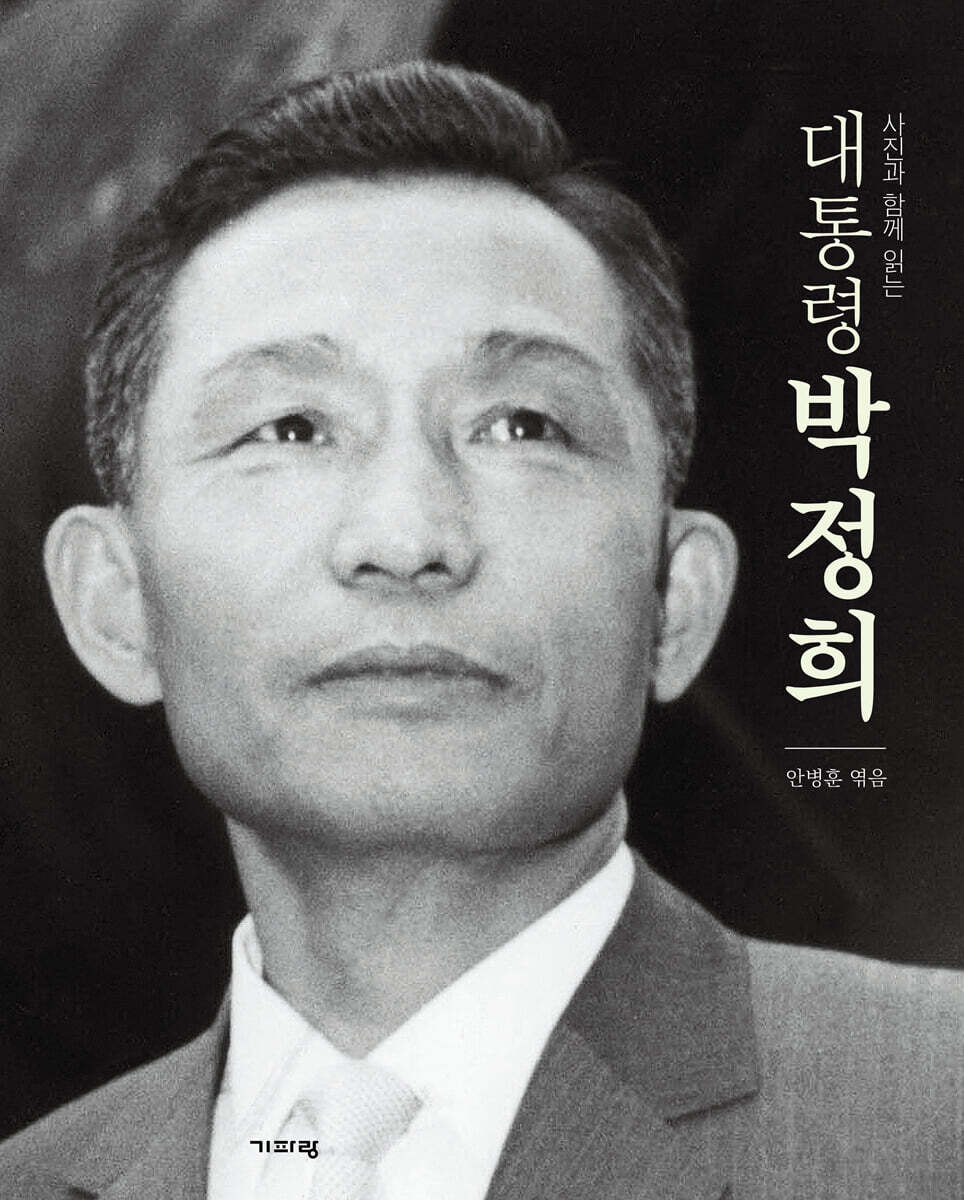
President Park Chung-hee
 |
Description
Book Introduction
Why a photo album organized by year?
Imagine you are a train driver driving a tram going at 100 km/h.
In the distance, five workers can be seen working on the tracks, but coincidentally, the brakes are broken.
Soon, we will have no choice but to hit them.
But isn't there an emergency rail next to it?
A worker is resting on the emergency railway.
What choice do you have now? Continue on your way, sacrificing five workers? Switch to the emergency line, sacrificing one worker? Or derail the train altogether, killing everyone on board?
This is one of the interesting examples that Professor Michael Sandel of Harvard University presented in his book "Justice: What's the Right Thing to Do?", which was a bestseller in 2010, to help us think together about what justice really is.
'Reading President Park Chung-hee with Photos' asks readers, through extensive photographic data, whether the choices Park Chung-hee made during his 18-year term were the best choices at the time, made after much deliberation.
This book aims to show the decisions Park Chung-hee had to make as a human being, a soldier, and a politician in the circumstances facing South Korea in the 1960s and 1970s, as well as the circumstances of the times that led to those decisions.
To this end, the editor, Ahn Byeong-hun, composed the photo album focusing on Park Chung-hee's chronology rather than his achievements.
For example, Emergency Measure No. 7, enacted on April 8, 1975, cannot be viewed separately from the discovery of North Korea's Second Tunnel a month earlier or the fall of South Vietnam that occurred that same month (pp. 347-349). However, the editor does not explain these connections in detail in this book.
The events that occurred during that time were presented in a simple, photographic format, allowing readers to understand the context of the times.
Imagine you are a train driver driving a tram going at 100 km/h.
In the distance, five workers can be seen working on the tracks, but coincidentally, the brakes are broken.
Soon, we will have no choice but to hit them.
But isn't there an emergency rail next to it?
A worker is resting on the emergency railway.
What choice do you have now? Continue on your way, sacrificing five workers? Switch to the emergency line, sacrificing one worker? Or derail the train altogether, killing everyone on board?
This is one of the interesting examples that Professor Michael Sandel of Harvard University presented in his book "Justice: What's the Right Thing to Do?", which was a bestseller in 2010, to help us think together about what justice really is.
'Reading President Park Chung-hee with Photos' asks readers, through extensive photographic data, whether the choices Park Chung-hee made during his 18-year term were the best choices at the time, made after much deliberation.
This book aims to show the decisions Park Chung-hee had to make as a human being, a soldier, and a politician in the circumstances facing South Korea in the 1960s and 1970s, as well as the circumstances of the times that led to those decisions.
To this end, the editor, Ahn Byeong-hun, composed the photo album focusing on Park Chung-hee's chronology rather than his achievements.
For example, Emergency Measure No. 7, enacted on April 8, 1975, cannot be viewed separately from the discovery of North Korea's Second Tunnel a month earlier or the fall of South Vietnam that occurred that same month (pp. 347-349). However, the editor does not explain these connections in detail in this book.
The events that occurred during that time were presented in a simple, photographic format, allowing readers to understand the context of the times.
- You can preview some of the book's contents.
Preview
index
When publishing a book
Part 1: 1961–1979: Revolutionaries Carry the Torch
Achieving national revival and modernization of the country
The Dawn of the Revolution in 1961
- "The die is cast!"
- “The military, which had been holding back, seized control of the three powers under the pretext of the Golden Jubilee…”
- Prime Minister Jang Myeon fled, cabinet members were arrested, and the Blue House was surrounded, but two days of anxiety followed.
- Magruder requests suppression from Yun Bo-seon: “I have no authority to command!”
- “It’s come!”
- Yun Bo-seon's first meeting with Park Chung-hee
- The success of the revolution was on May 18th
- President Yun Bo-seon, resignation in one day
- Launch of the Supreme Council for National Reconstruction and formation of a revolutionary cabinet
- First press conference
- The Supreme Council nests within the House of Representatives building.
Five days after the coup, over 2,000 communist sympathizers were arrested, and gangsters marched through the streets.
- Launching a national reconstruction movement, with Korea University President Yoo Jin-oh as the head of the headquarters.
- The "Rural Loan Clearance Ordinance" was announced nine days after May 16.
Jang Do-young castrated after 44 days
Park Chung-hee, the real power behind the military revolution, comes to the forefront.
- Park Chung-hee, from Major General to Lieutenant General in just 87 days after the revolution
- "We will transfer power to the civilian government after the general election."
- “Let’s banish the poverty that has lasted for 4,000 years!”
- I haven't missed a single year of rice planting or harvesting for 18 years.
- Kim Jong-pil secretly arranged a stopover in Japan on his way to the United States.
- South Korea and Japan leaders hold a one-on-one meeting immediately after meeting.
- Revealed willingness to send troops to Vietnam at summit with Kennedy
- “We will not extend the military government any longer than necessary.”
The birth of the Third Republic in 1962
- Abolish Dangi and adopt the Western Era
The "Miracle on the Han River" begins with the ambitious first five-year economic development plan.
- The dream of the Ulsan Industrial Complex spread along the Taehwa River
- “I came to Ulsan to wash away 4,000 years of poverty.”
- Our democracy is a Koreanized 'administrative democracy'
- President Yun Bo-seon resigns, political purification law is a failure
- Chairman Park moves into the Blue House as acting president.
- Plans for constitutional amendment revealed at the May 16th commemoration ceremony
- A simple and frugal president and farmer
- Four major suspicions, including the securities scandal, erupted.
- The only thing that changed was 'Hwan' to 'Won', a failed currency reform.
Kim Jong-pil and Ohira agreed on the principles of normalizing Korea-Japan relations.
- The Constitution of the Third Republic was confirmed through a national referendum.
- All members of the Supreme Council took off their military uniforms and participated in civil affairs.
- Meeting between the three leaders of the government and opposition parties
- National referendum on extending military rule postponed
Inaugurated as the 5th President in 1963
- Political activities resumed after 1 year and 7 months
- “If you accept military neutrality and non-retaliation in politics, I will not participate in civil affairs.”
Kim Jong-pil resigns from public office, saying, "I will become a free spirit!"
- Joint oath-taking ceremony to resolve the political situation
- Chairman Park proposes a four-year extension of military rule, saying, “If it is rejected, I will transfer power.”
- “Keep your promise to transfer civil affairs.”
- The first military demonstration since the founding of the country, “Extend the military government!”
- Supreme Council members also prepare for civil participation
Park Chung-hee? Yun Bo-seon, nominated as presidential candidates by both the ruling and opposition parties.
- General Park Chung-hee's discharge "Let's make sure that there are no more unfortunate soldiers like me in this country."
- Joined the Democratic Republican Party immediately after discharge, becoming the 706,611th member
- The start of an ideological debate
- Park Chung-hee won the presidency by a narrow margin of 150,000 votes.
- Attending Kennedy's funeral after he was assassinated
- Ruling party wins landslide victory in 6th National Assembly election
- Military rule ends, Supreme Council disbands
- Constitutional restoration after 946 days
The 3rd Republic was established and the 5th President took office.
Exports exceeded $100 million in 1964
- Promoting the Great Reform Movement to 'Eradicate Poverty and Embrace Modernization'
- U.S. Attorney General Kennedy visits Korea
A gift of my brother's book, "The Courageous"
- US Secretary of State Rusk's brief visit to Korea
Joint Statement for a Speedy Conclusion of Korea-Japan Talks
"Stop the Korea-Japan talks!" Demonstration in downtown Seoul
Over 4,000 college students clash with police, throwing stones
President Park meets with representatives from 11 universities and makes the unusual move of releasing the "Kim Ohira Memo."
- The emergence of Jeong Il-kwon's "bulletproof assault cabinet"
Martial law declared in Seoul… June 3 Incident
- A shabby journey with ordinary passengers
- Going to West Germany, a divided country
- “The Autobahn is a symbol of Germany’s economic revival.”
- Erhard's advice, “Germany and France have been at war 42 times.”
- The President, Mrs. Yuk, the miner, and the nurse all cried!
- The day when exports surpassed $100 million, designated as 'Export Day'
Normalization of diplomatic relations between Korea and Japan in 1965
- 'The New Year is a Year of Work': Increased production, exports, and construction are national indicators.
- “We will achieve food self-sufficiency within three years.”
The Japanese government, a signatory to the Japan-ROK Basic Treaty, issued its first apology for colonial rule.
- Visit to the United States, receiving a formal state guest treatment
Joint statement by Park and Johnson: "Close cooperation in supporting South Vietnam."
- Heroes' March in New York City
- Formal signing of the Korea-Japan Normalization Agreement
14 years of negotiations tied in blue with counter-demonstrations
- “How many years did it take to bring these documents…?”
- State of emergency declared in Seoul
- The 1st combat unit dispatched to Vietnam, the Blue Dragon Unit, was inaugurated.
- Completion of the 2nd Yeongwon Fire and Electricity Plant
- Completion of Seomjin River Dam
1966 Vietnam War
- “Let’s double the per capita national income in the 1970s.”
- Embarking on a tour of Southeast Asia
- The first signing of the ROK-US Administrative Agreement in 13 years
- "Come back victorious!" Farewell ceremony for the White Horse, Tiger, and Blue Dragon units.
- The first president from a participating country to visit the Vietnam front
- Manila Summit of the Seven Vietnam War Participating Countries
- Johnson arrives in Korea amidst enthusiastic cheers
- Park and Johnson's meeting continued even inside the special train
In 1967, Mt. Mindung became a beautiful land
- "Let's launch a full-scale industrialization operation."
- Ship 56 sunk by North Korean land-based artillery
- The opening of the Jeongseon Line, which crosses Taebaek Mountain.
- Republican Park Chung-hee and New Democratic Party Yun Bo-seon elected as presidential candidates
- West German President Lübke visits Korea
- The Prime Ministers of Thailand and Australia also visited Korea one after another.
- I was overcome with emotion upon visiting my alma mater, Gumi Elementary School.
- Lee Soo-geun's dramatic escape from Panmunjom, the third and fourth monuments completed one after another
- Completion of the Guro Export Industrial Complex, which houses 28 export-only factories.
- Ministry of Science and Technology opening ceremony
Another Year of Revolution, 'Turning Bare Mountains into a Beautiful River'
- Mrs. Yuk Young-soo secretly visited the campaign site.
- A landslide victory in the second match against Yun Bo-seon
- Poet Gu Sang, congratulatory poem recitation
- “I will build a democratic society that is simple, honest, and for the common people.”
1968 North Korean armed guerrillas raid the Blue House
This year is the 'Year of Construction'
31 North Korean armed guerrillas raid the Blue House.
- “I came to destroy the Blue House!”
- The US Navy intelligence ship Pueblo was hijacked.
- “There is a limit to patience!” - From the speech at the groundbreaking ceremony for the Gyeongbu Expressway
- The president who shoots also teaches his wife
- “We will arm 2.5 million local reserve forces.”
- Creation of the Homeland Reserve Forces in a month and a half
President Johnson dispatches special envoy Vance to appease South Korea.
- 1 squadron of Phantom fighters capable of bombing Pyongyang
- Exports are the only way to survive.
- Immediate joint action by South Korea and the United States against North Korea's invasion
Park Chung-hee-Johnson Summit in Honolulu
- Unveiling of the statues of Admiral Yi Sun-sin and King Sejong
- JP leaves the Republican Party, paving the way for Park Chung-hee to win a third term.
- Emperor Selassie of Ethiopia visits Korea
- Visit Australia and New Zealand
- Introduction of the resident registration system
- Jeju Island development
- Promulgation of the National Education Charter, "Education with Nationality."
- Gwanghwamun returns to its original location after 41 years
1969 referendum on the third constitutional amendment
- 'Defense on one side, construction on the other'
- The New Year's press conference left open the possibility of a third constitutional amendment.
- Launch of the Ministry of Unification
- Completion of Danginri Power Plant Unit 5
- “Build a fence around the outskirts of the Ulsan Industrial Complex.”
- Kim Soo-hwan, Korea's first cardinal
- Milk consumption increased from 100g in 1962 to 106 times in 1980.
- 3rd constitutional amendment, “I will ask for your confidence through a national referendum!”
- Proposed constitutional amendment to 'allow the current president to run for a third term'
- President Yoo Jin-oh: “I am confident that the constitutional amendment will be rejected in the National Assembly.”
- Man, standing on the moon
- Two summits with Nixon, joint statement on defense commitments
- Republican National Convention: 'Push for a Third-Term Constitutional Amendment'
- Sunday dawn surprise, 3rd term constitutional amendment passed irregularly at the 3rd annex of the National Assembly
- Namgang Dam completed after 7 years and 6 months of construction
- 3rd constitutional amendment passed
- Completion of the Korea Advanced Institute of Science and Technology (KIST)
- Opening of the Cheonan-Daejeon section of the Gyeongbu Expressway
Completion of the Gyeongbu Expressway in 1970
- “I will make the entire country a one-day living zone.”
- Pohang Iron and Steel Company groundbreaking ceremony
- Honam Expressway groundbreaking ceremony
- A time bomb was placed at the National Cemetery's Memorial Gate, and an assassination attempt was made on President Park.
- Opening of the Gyeongbu Expressway, construction of 9 other expressways during his term
- “It is the path to modernization of the fatherland and the path to national unification.”
- The Blue House office is covered with maps.
- Namsan Children's Center opens
- “Let’s compete to see which system is better: democracy or communist dictatorship.”
The reduction of US troops in Korea has become a reality.
- Partial withdrawal of US ground forces, permanent presence of Phantom squadron
- First meeting between the ruling and opposition party leaders in five years
President Park's first harvest of 'miracle rice seeds'
- Honam Expressway (Daejeon-Jeonju) opened
The 1971 Unification Rice Myth
- Considering the gradual withdrawal of South Korean troops from Vietnam
- Avoiding the hijacking of a KAL plane and preventing the dispatch of an Air Force plane
- 20,000 soldiers from the US 7th Division withdraw, attending a farewell ceremony.
- Move Seoul National University from Dongsoong-dong to the foot of Mt. Gwanak.
- Groundbreaking ceremony for Seoul Subway Line 1
President Park seeks a third term
Park Chung-hee and Kim Dae-jung's fierce power struggle in major cities
- “There will be no more elections like that!”
- Elected as the 7th President
- As soon as the president was elected, he campaigned for the 8th general election.
- A three-term president born to a poor rural family
- The road over Barley Pass, thinking of farmers day and night
- The Myth of Unification Rice “Without rice, there is no self-reliance.”
- President Park and his wife inspect flood-stricken areas
- First greenbelt designation in Korea
- Nixon's announcement of a visit to China that shocked the world
Choi Doo-sun, the president of the Korean National Assembly, proposes reuniting separated families in North and South Korea.
The first face-to-face meeting between North and South Korea in 26 years of division, the first preliminary meeting held at Panmunjom.
- 5?16 Plaza opening ceremony, now Yeouido Park
- “Expel those who destroy school order.”
- Indefinite closure order for 8 universities
- Garrison order issued in Seoul
- The title of 'flagship leader of the modernization of the country' was bestowed on the skilled worker.
- The first section of the Yeongdong Expressway opens.
- Declaration of national emergency
- The first civil defense training after liberation
Daeyeongak Hotel fire, the worst disaster
- The National Security Act, granting the president emergency powers, was passed at 3 a.m.
Yushin declared in October 1972
- “Let’s establish a total security system.”
- Construction of a large-scale shipyard begins in Ulsan.
- Domestic weapon preview
- Demand that the North abandon its four major military lines
- 135 consecutive export promotion expansion meetings
- “The dawn bell has rung.
“A new morning has dawned.”
- “A tree-cutter has no right to discuss patriotism!”
- "We'll take cyanide too." Lee Hu-rak, Director of the Intelligence Service, secretly travels to Pyongyang.
- "I went to Pyongyang." 7/4 Joint Statement between North and South Korea announced
- The '8?3 Private Loan Freeze' measure, unimaginable in a free market system.
Historic Opening of Inter-Korean Red Cross Talks in Pyongyang
- Second constitutional suspension, October 17 state of emergency
October Yushin Declaration
- “Korean democracy through the organization of national power and maximization of efficiency…”
The Yushin Constitution was confirmed, including the establishment of the National Unification Council and the indirect election of the president.
- “Let’s pass on drought-free farmland, just like we did with Barley Pass.”
All-weather farming is essential...Full-scale development of the Four Major Rivers Project is underway.
-Meeting with North Korean coordinators including Park Seong-cheol
- The 4th Republic was launched, and the 8th president was elected through indirect elections.
Completion of Pohang Iron and Steel Company in 1973
- “In the new year, I will implement the Yushin ideology and establish the Yushin order.”
- Declaration of 'heavy chemical industrialization' and 'scientization of the entire nation'
- The Yushin regime begins, with the ruling party split into two houses.
- Vietnam Armistice signed, ending 12 years of war
- Korean troops return to Vietnam, improvement after 8 years
- Second summit with Yoo Jin-san, leader of the New Democratic Party
- The June 23 Declaration, which rejected the Hallstein Doctrine
- Urging North Korea to join the UN simultaneously
- Completion of Pohang Iron and Steel Company, the first fruit of the heavy chemical industry declaration.
- The Pohang Iron and Steel Company, directed by Park Jung-hee and starring Park Tae-joon
- Kim Dae-jung was kidnapped in Tokyo and returned to his home in Seoul five days after disappearing.
"I had no prior knowledge or instructions," Kim Jong-pil said, expressing regret to Tanaka.
- The excavation of the Cheonmado (Heavenly Horse Painting), believed to be the oldest
- Completion of Soyang River multipurpose dam
- Inspection of the Jeongsu Vocational Training Center
- Honam-Namhae Expressway opening ceremony
The death of Mrs. Yuk Young-soo in 1974
- “The October Revitalization was not just for a specific regime!”
- People in the opposition resisted the Yushin regime
- Presidential Emergency Measures No. 1 and 2 declared
- Proposal for a North-South non-aggression agreement
- Emergency Measure No. 4 is activated at major universities in Seoul to protest the abolition of the Yushin regime.
- Incheon Port Dock 3 completed
- Asan, Namyang Bay breakwater completed
Paldang Dam completed after 8 years of construction
- Naming ceremony for the oil tanker Atlantic
- The president avoided being shot, but Mrs. Yuk was shot.
- Moon Se-gwang, entering without censorship
President Park ended his speech by saying, "I will continue what I was saying."
- The President's family receiving condolences
- Observe the state funeral of Mrs. Yuk Young-soo
- Special Envoy Shiina brought a personal letter from Prime Minister Tanaka
The subway era has finally begun.
- North Korean invasion tunnel discovered
- US President Ford's visit to Korea
- "No reduction in US troops in Korea." Promise of immediate support in case of invasion.
The fall of South Vietnam in 1975 and the Yushin Constitution referendum
"If we make it a point to divide the country, we will invite another invasion from North Korea."
"No constitutional amendments as long as the North Korean threat persists!" Stop blocking South Korea's UN membership.
- National referendum on the Yushin Constitution
73% of the people support the Yushin Constitution
- Meeting with former Japanese Prime Minister Kishi and others
North Korea's second tunnel discovered northeast of Cheorwon
- Emergency Measure No. 7: Korea University ordered to close
- The fall of South Vietnam, the bloodless entry of communist forces into Saigon
President Park's diary: "If we fail to protect it, we all have to die."
- Strict order to rescue the detained Lee Dae-yong
- If North Korea invades, they will self-destruct.
Address to the Nation the Day Before the Fall of South Vietnam
- Two-hour exclusive conversation with President Kim Young-sang
- Inspection of the ceasefire line unit
North Korean armored divisions gather at the Military Demarcation Line just before the fall of Saigon.
"If we invade, we'll hit the heart of the North," warn South Korean and US defense ministers.
- Special landslide prevention project in Yeongil region completed in 5 years
- Gabon, President Bongo visits Korea
- Emerging as the world's leading shipbuilding powerhouse
- A clean order to abandon nuclear development
Pressure from U.S. Secretary of Defense Schlesinger to give up nuclear weapons
- New National Assembly building in Yeouido
- Weak anti-communism is an illusion.
Armed Forces Day Commemorative Speech at May 16 Square
- Opening of Yeongdong-Donghae Expressway
- Dr. Kim Wan-hee of the Electronics Industry Department decides to return to Korea.
- Successful ship-to-ship missile test launch
- Implementation of a technical qualification examination system in 19 fields, including machinery and metal.
- On Christmas Eve, inspecting the trenches of the front-line infantry outpost.
1976 entry into the Middle East
- New Year's Address: Achieving Self-Reliance through Increased Production and Savings
- “Oil has been discovered in Yeongil Bay!” But…
- Saudi Arabia wins contract for Jubail Port construction, the world's largest single construction project
- First original model 'Pony' car goes on sale
- New Zealand Prime Minister Muldoon visits Korea
- At Ojukheon and Chilbaek Tomb
- Completion of Cheonho Bridge
- Two US officers killed at Panmunjom, 30 North Korean soldiers killed by axe
- A day before war... A tense 45-minute operation to remove the poplar tree
- “A mad dog needs a club.”
- Visits to the motherland by Koreans in Japan affiliated with the General Association of Korean Residents in Japan (Chongryon) begin.
Andong Dam completed, completing construction of multipurpose dams in the Four Major Rivers Basin.
Achieving $10 billion in exports in 1977
- “Creating a great tradition of a nation that works and works again.”
- Proposal of a North-South non-aggression agreement to North Korea
- Our military power is at a stage where it surpasses North Korea's.
Defense industry to be completed by the end of 1978
- Plan to build a temporary administrative capital
- My son, Jiman, was sent to the military academy.
- Simultaneous promotion of defense and heavy chemical industries
- All weapons except nuclear weapons and fighter jets entered the production phase in 1980.
- Attending the opening ceremony of the language center of Ji Man-gun's alma mater, Jungang High School
Carter unilaterally announces withdrawal of US troops from Korea.
Park Chung-hee demanded "reinforcement first, then withdrawal."
- “If you take nuclear weapons, we will develop them ourselves.”
- Director Single Love, interview with the Washington Post opposing troop withdrawal
- “He was fighting a truly lonely battle.”
As soon as Special Envoy Carter left, he met with Representative Lee Cheol-seung.
- Value-added tax prepared for six and a half years
- Achieving a new era in the medical welfare system
Carter's personal letter to President Park: "We are being invaded and need swift support."
- Establishment of the ROK-US Combined Forces Command, continued protection of the nuclear umbrella
The first withdrawal of 6,000 US troops in 1978
- Completion of Namhae Chemical's Yeosu plant (7th district)
Establishing a self-sufficiency system for fertilizer production for staple grain production
- Victory report of overcoming the year, the restoration of irrigation safety in all agricultural lands
- Byungin? Shinmiyangyo Battlefield Restoration and Purification
- Establish a unification hall in Gyeongju
- Attending the King Sejong Memorial Ceremony
- Promoting the nature conservation movement
- Exports exceeded $10 billion, 13 years after reaching $100 million.
- CEO of Outstanding Corporation Korea
- National Saemaul Leaders Conference
Establishment of the ROK-US Combined Forces Command in 1978
- Achieve new export targets and become a global economic powerhouse!
- “Our economy is 10 to 15 years ahead of North Korea, so the outcome is already decided.”
Mass production of helicopters and warships, and aircraft production in the mid-1980s
- Initial inspection, practical verification administration covering all fields
- 5/16 National Award to Dr. Hyun Shin-gyu
- 110,000 people participated in the 'Team Spirit 78' training.
- Mass production of domestically produced tanks begins, the 9th in the Free World.
- Opening of Sejong Center for the Performing Arts
- Stop by Seoul National University Gwanak Campus
- Inspection of Daedeok Research Complex
President Park's passion for science and technology development
- Namsan Tunnel No. 3 opens
- Rural housing improvement at the dawn of the new world
- Achieving self-sufficiency in staple grains and achieving the green revolution
- To the rice planting site on a rainy day after a long drought… .
- Opening of the Korean Spiritual Culture Research Institute
- Elected as the 9th President, launching the 2nd Yushin regime
Resistance from anti-Yushin forces is also growing stronger.
- Gori Nuclear Power Plant Unit 1 completed, becoming the 21st nuclear power plant
- The Prime Ministers of the Republic of Djibouti and the Kingdom of Swaziland visit Korea.
- Medal awarded to the overall winner of the Skills Olympics
Successful launch of the first domestically produced missile, the "Baekgom."
As the world's 7th country to develop guided missiles
North Korea's Third Tunnel Discovered at Panmunjom
- Establishment of the ROK-US Combined Forces Command
- Inaugurated on the same day, retired on the same day
Kim Jeong-ryeol and Nam Deok-woo, who helped create the "Miracle on the Han River"
- Inauguration of the 9th President
The fateful day of 1979
- 'The New Year is a watershed moment for our nation's destiny.'
- “Authorities of North and South Korea, let’s meet unconditionally!”
Park Chung-hee, the "science and technology president" who placed science and technology on a solid foundation
- U.S. President Carter's visit to Korea, first face-to-face meeting in Gimpo for 5 minutes
- Bad relationship with Carter
- Inspection of Onsan Industrial Complex
- Attending the completion ceremony of the Sapgyocheon breakwater, and that night…
- Prime Minister Choi Kyu-hah takes over as acting president following the death of President Park Chung-hee.
- Martial law declared nationwide
- President Park Chung-hee passed away after being shot by Kim Jae-gyu
- Planned crime, three shots fired at President Park
- The President's worn belt, a tie pin with peeling plating
- President Park Chung-hee as seen by scholars
Part 2: 1917–1960: A Journey Through the Eventful Years
A short school and a long military path
Born in this land 1917~60
- My boyhood
- During my time at Daegu Normal School
- When I was a teacher at Mungyeong Elementary School
- “Study hard and become a strong Joseon woman.”
- Manchurian Military Academy - Japanese Military Academy days
- Enter the Joseon Military Academy
- Arrested during the purge investigation
- Park Chung-hee and Yuk Young-soo's marriage
- The path of a poor soldier
- Park Chung-hee during the Korean War
Part 3: Yuk Young-soo, the First Lady who lived gracefully like a crane
As a mother of the common people… As the opposition party of the Blue House
Mrs. Yuk Young-soo
- The path Mrs. Yuk has walked
With family
With a reporter and attendant
supplement
1917~1979 Chronology
References
Part 1: 1961–1979: Revolutionaries Carry the Torch
Achieving national revival and modernization of the country
The Dawn of the Revolution in 1961
- "The die is cast!"
- “The military, which had been holding back, seized control of the three powers under the pretext of the Golden Jubilee…”
- Prime Minister Jang Myeon fled, cabinet members were arrested, and the Blue House was surrounded, but two days of anxiety followed.
- Magruder requests suppression from Yun Bo-seon: “I have no authority to command!”
- “It’s come!”
- Yun Bo-seon's first meeting with Park Chung-hee
- The success of the revolution was on May 18th
- President Yun Bo-seon, resignation in one day
- Launch of the Supreme Council for National Reconstruction and formation of a revolutionary cabinet
- First press conference
- The Supreme Council nests within the House of Representatives building.
Five days after the coup, over 2,000 communist sympathizers were arrested, and gangsters marched through the streets.
- Launching a national reconstruction movement, with Korea University President Yoo Jin-oh as the head of the headquarters.
- The "Rural Loan Clearance Ordinance" was announced nine days after May 16.
Jang Do-young castrated after 44 days
Park Chung-hee, the real power behind the military revolution, comes to the forefront.
- Park Chung-hee, from Major General to Lieutenant General in just 87 days after the revolution
- "We will transfer power to the civilian government after the general election."
- “Let’s banish the poverty that has lasted for 4,000 years!”
- I haven't missed a single year of rice planting or harvesting for 18 years.
- Kim Jong-pil secretly arranged a stopover in Japan on his way to the United States.
- South Korea and Japan leaders hold a one-on-one meeting immediately after meeting.
- Revealed willingness to send troops to Vietnam at summit with Kennedy
- “We will not extend the military government any longer than necessary.”
The birth of the Third Republic in 1962
- Abolish Dangi and adopt the Western Era
The "Miracle on the Han River" begins with the ambitious first five-year economic development plan.
- The dream of the Ulsan Industrial Complex spread along the Taehwa River
- “I came to Ulsan to wash away 4,000 years of poverty.”
- Our democracy is a Koreanized 'administrative democracy'
- President Yun Bo-seon resigns, political purification law is a failure
- Chairman Park moves into the Blue House as acting president.
- Plans for constitutional amendment revealed at the May 16th commemoration ceremony
- A simple and frugal president and farmer
- Four major suspicions, including the securities scandal, erupted.
- The only thing that changed was 'Hwan' to 'Won', a failed currency reform.
Kim Jong-pil and Ohira agreed on the principles of normalizing Korea-Japan relations.
- The Constitution of the Third Republic was confirmed through a national referendum.
- All members of the Supreme Council took off their military uniforms and participated in civil affairs.
- Meeting between the three leaders of the government and opposition parties
- National referendum on extending military rule postponed
Inaugurated as the 5th President in 1963
- Political activities resumed after 1 year and 7 months
- “If you accept military neutrality and non-retaliation in politics, I will not participate in civil affairs.”
Kim Jong-pil resigns from public office, saying, "I will become a free spirit!"
- Joint oath-taking ceremony to resolve the political situation
- Chairman Park proposes a four-year extension of military rule, saying, “If it is rejected, I will transfer power.”
- “Keep your promise to transfer civil affairs.”
- The first military demonstration since the founding of the country, “Extend the military government!”
- Supreme Council members also prepare for civil participation
Park Chung-hee? Yun Bo-seon, nominated as presidential candidates by both the ruling and opposition parties.
- General Park Chung-hee's discharge "Let's make sure that there are no more unfortunate soldiers like me in this country."
- Joined the Democratic Republican Party immediately after discharge, becoming the 706,611th member
- The start of an ideological debate
- Park Chung-hee won the presidency by a narrow margin of 150,000 votes.
- Attending Kennedy's funeral after he was assassinated
- Ruling party wins landslide victory in 6th National Assembly election
- Military rule ends, Supreme Council disbands
- Constitutional restoration after 946 days
The 3rd Republic was established and the 5th President took office.
Exports exceeded $100 million in 1964
- Promoting the Great Reform Movement to 'Eradicate Poverty and Embrace Modernization'
- U.S. Attorney General Kennedy visits Korea
A gift of my brother's book, "The Courageous"
- US Secretary of State Rusk's brief visit to Korea
Joint Statement for a Speedy Conclusion of Korea-Japan Talks
"Stop the Korea-Japan talks!" Demonstration in downtown Seoul
Over 4,000 college students clash with police, throwing stones
President Park meets with representatives from 11 universities and makes the unusual move of releasing the "Kim Ohira Memo."
- The emergence of Jeong Il-kwon's "bulletproof assault cabinet"
Martial law declared in Seoul… June 3 Incident
- A shabby journey with ordinary passengers
- Going to West Germany, a divided country
- “The Autobahn is a symbol of Germany’s economic revival.”
- Erhard's advice, “Germany and France have been at war 42 times.”
- The President, Mrs. Yuk, the miner, and the nurse all cried!
- The day when exports surpassed $100 million, designated as 'Export Day'
Normalization of diplomatic relations between Korea and Japan in 1965
- 'The New Year is a Year of Work': Increased production, exports, and construction are national indicators.
- “We will achieve food self-sufficiency within three years.”
The Japanese government, a signatory to the Japan-ROK Basic Treaty, issued its first apology for colonial rule.
- Visit to the United States, receiving a formal state guest treatment
Joint statement by Park and Johnson: "Close cooperation in supporting South Vietnam."
- Heroes' March in New York City
- Formal signing of the Korea-Japan Normalization Agreement
14 years of negotiations tied in blue with counter-demonstrations
- “How many years did it take to bring these documents…?”
- State of emergency declared in Seoul
- The 1st combat unit dispatched to Vietnam, the Blue Dragon Unit, was inaugurated.
- Completion of the 2nd Yeongwon Fire and Electricity Plant
- Completion of Seomjin River Dam
1966 Vietnam War
- “Let’s double the per capita national income in the 1970s.”
- Embarking on a tour of Southeast Asia
- The first signing of the ROK-US Administrative Agreement in 13 years
- "Come back victorious!" Farewell ceremony for the White Horse, Tiger, and Blue Dragon units.
- The first president from a participating country to visit the Vietnam front
- Manila Summit of the Seven Vietnam War Participating Countries
- Johnson arrives in Korea amidst enthusiastic cheers
- Park and Johnson's meeting continued even inside the special train
In 1967, Mt. Mindung became a beautiful land
- "Let's launch a full-scale industrialization operation."
- Ship 56 sunk by North Korean land-based artillery
- The opening of the Jeongseon Line, which crosses Taebaek Mountain.
- Republican Park Chung-hee and New Democratic Party Yun Bo-seon elected as presidential candidates
- West German President Lübke visits Korea
- The Prime Ministers of Thailand and Australia also visited Korea one after another.
- I was overcome with emotion upon visiting my alma mater, Gumi Elementary School.
- Lee Soo-geun's dramatic escape from Panmunjom, the third and fourth monuments completed one after another
- Completion of the Guro Export Industrial Complex, which houses 28 export-only factories.
- Ministry of Science and Technology opening ceremony
Another Year of Revolution, 'Turning Bare Mountains into a Beautiful River'
- Mrs. Yuk Young-soo secretly visited the campaign site.
- A landslide victory in the second match against Yun Bo-seon
- Poet Gu Sang, congratulatory poem recitation
- “I will build a democratic society that is simple, honest, and for the common people.”
1968 North Korean armed guerrillas raid the Blue House
This year is the 'Year of Construction'
31 North Korean armed guerrillas raid the Blue House.
- “I came to destroy the Blue House!”
- The US Navy intelligence ship Pueblo was hijacked.
- “There is a limit to patience!” - From the speech at the groundbreaking ceremony for the Gyeongbu Expressway
- The president who shoots also teaches his wife
- “We will arm 2.5 million local reserve forces.”
- Creation of the Homeland Reserve Forces in a month and a half
President Johnson dispatches special envoy Vance to appease South Korea.
- 1 squadron of Phantom fighters capable of bombing Pyongyang
- Exports are the only way to survive.
- Immediate joint action by South Korea and the United States against North Korea's invasion
Park Chung-hee-Johnson Summit in Honolulu
- Unveiling of the statues of Admiral Yi Sun-sin and King Sejong
- JP leaves the Republican Party, paving the way for Park Chung-hee to win a third term.
- Emperor Selassie of Ethiopia visits Korea
- Visit Australia and New Zealand
- Introduction of the resident registration system
- Jeju Island development
- Promulgation of the National Education Charter, "Education with Nationality."
- Gwanghwamun returns to its original location after 41 years
1969 referendum on the third constitutional amendment
- 'Defense on one side, construction on the other'
- The New Year's press conference left open the possibility of a third constitutional amendment.
- Launch of the Ministry of Unification
- Completion of Danginri Power Plant Unit 5
- “Build a fence around the outskirts of the Ulsan Industrial Complex.”
- Kim Soo-hwan, Korea's first cardinal
- Milk consumption increased from 100g in 1962 to 106 times in 1980.
- 3rd constitutional amendment, “I will ask for your confidence through a national referendum!”
- Proposed constitutional amendment to 'allow the current president to run for a third term'
- President Yoo Jin-oh: “I am confident that the constitutional amendment will be rejected in the National Assembly.”
- Man, standing on the moon
- Two summits with Nixon, joint statement on defense commitments
- Republican National Convention: 'Push for a Third-Term Constitutional Amendment'
- Sunday dawn surprise, 3rd term constitutional amendment passed irregularly at the 3rd annex of the National Assembly
- Namgang Dam completed after 7 years and 6 months of construction
- 3rd constitutional amendment passed
- Completion of the Korea Advanced Institute of Science and Technology (KIST)
- Opening of the Cheonan-Daejeon section of the Gyeongbu Expressway
Completion of the Gyeongbu Expressway in 1970
- “I will make the entire country a one-day living zone.”
- Pohang Iron and Steel Company groundbreaking ceremony
- Honam Expressway groundbreaking ceremony
- A time bomb was placed at the National Cemetery's Memorial Gate, and an assassination attempt was made on President Park.
- Opening of the Gyeongbu Expressway, construction of 9 other expressways during his term
- “It is the path to modernization of the fatherland and the path to national unification.”
- The Blue House office is covered with maps.
- Namsan Children's Center opens
- “Let’s compete to see which system is better: democracy or communist dictatorship.”
The reduction of US troops in Korea has become a reality.
- Partial withdrawal of US ground forces, permanent presence of Phantom squadron
- First meeting between the ruling and opposition party leaders in five years
President Park's first harvest of 'miracle rice seeds'
- Honam Expressway (Daejeon-Jeonju) opened
The 1971 Unification Rice Myth
- Considering the gradual withdrawal of South Korean troops from Vietnam
- Avoiding the hijacking of a KAL plane and preventing the dispatch of an Air Force plane
- 20,000 soldiers from the US 7th Division withdraw, attending a farewell ceremony.
- Move Seoul National University from Dongsoong-dong to the foot of Mt. Gwanak.
- Groundbreaking ceremony for Seoul Subway Line 1
President Park seeks a third term
Park Chung-hee and Kim Dae-jung's fierce power struggle in major cities
- “There will be no more elections like that!”
- Elected as the 7th President
- As soon as the president was elected, he campaigned for the 8th general election.
- A three-term president born to a poor rural family
- The road over Barley Pass, thinking of farmers day and night
- The Myth of Unification Rice “Without rice, there is no self-reliance.”
- President Park and his wife inspect flood-stricken areas
- First greenbelt designation in Korea
- Nixon's announcement of a visit to China that shocked the world
Choi Doo-sun, the president of the Korean National Assembly, proposes reuniting separated families in North and South Korea.
The first face-to-face meeting between North and South Korea in 26 years of division, the first preliminary meeting held at Panmunjom.
- 5?16 Plaza opening ceremony, now Yeouido Park
- “Expel those who destroy school order.”
- Indefinite closure order for 8 universities
- Garrison order issued in Seoul
- The title of 'flagship leader of the modernization of the country' was bestowed on the skilled worker.
- The first section of the Yeongdong Expressway opens.
- Declaration of national emergency
- The first civil defense training after liberation
Daeyeongak Hotel fire, the worst disaster
- The National Security Act, granting the president emergency powers, was passed at 3 a.m.
Yushin declared in October 1972
- “Let’s establish a total security system.”
- Construction of a large-scale shipyard begins in Ulsan.
- Domestic weapon preview
- Demand that the North abandon its four major military lines
- 135 consecutive export promotion expansion meetings
- “The dawn bell has rung.
“A new morning has dawned.”
- “A tree-cutter has no right to discuss patriotism!”
- "We'll take cyanide too." Lee Hu-rak, Director of the Intelligence Service, secretly travels to Pyongyang.
- "I went to Pyongyang." 7/4 Joint Statement between North and South Korea announced
- The '8?3 Private Loan Freeze' measure, unimaginable in a free market system.
Historic Opening of Inter-Korean Red Cross Talks in Pyongyang
- Second constitutional suspension, October 17 state of emergency
October Yushin Declaration
- “Korean democracy through the organization of national power and maximization of efficiency…”
The Yushin Constitution was confirmed, including the establishment of the National Unification Council and the indirect election of the president.
- “Let’s pass on drought-free farmland, just like we did with Barley Pass.”
All-weather farming is essential...Full-scale development of the Four Major Rivers Project is underway.
-Meeting with North Korean coordinators including Park Seong-cheol
- The 4th Republic was launched, and the 8th president was elected through indirect elections.
Completion of Pohang Iron and Steel Company in 1973
- “In the new year, I will implement the Yushin ideology and establish the Yushin order.”
- Declaration of 'heavy chemical industrialization' and 'scientization of the entire nation'
- The Yushin regime begins, with the ruling party split into two houses.
- Vietnam Armistice signed, ending 12 years of war
- Korean troops return to Vietnam, improvement after 8 years
- Second summit with Yoo Jin-san, leader of the New Democratic Party
- The June 23 Declaration, which rejected the Hallstein Doctrine
- Urging North Korea to join the UN simultaneously
- Completion of Pohang Iron and Steel Company, the first fruit of the heavy chemical industry declaration.
- The Pohang Iron and Steel Company, directed by Park Jung-hee and starring Park Tae-joon
- Kim Dae-jung was kidnapped in Tokyo and returned to his home in Seoul five days after disappearing.
"I had no prior knowledge or instructions," Kim Jong-pil said, expressing regret to Tanaka.
- The excavation of the Cheonmado (Heavenly Horse Painting), believed to be the oldest
- Completion of Soyang River multipurpose dam
- Inspection of the Jeongsu Vocational Training Center
- Honam-Namhae Expressway opening ceremony
The death of Mrs. Yuk Young-soo in 1974
- “The October Revitalization was not just for a specific regime!”
- People in the opposition resisted the Yushin regime
- Presidential Emergency Measures No. 1 and 2 declared
- Proposal for a North-South non-aggression agreement
- Emergency Measure No. 4 is activated at major universities in Seoul to protest the abolition of the Yushin regime.
- Incheon Port Dock 3 completed
- Asan, Namyang Bay breakwater completed
Paldang Dam completed after 8 years of construction
- Naming ceremony for the oil tanker Atlantic
- The president avoided being shot, but Mrs. Yuk was shot.
- Moon Se-gwang, entering without censorship
President Park ended his speech by saying, "I will continue what I was saying."
- The President's family receiving condolences
- Observe the state funeral of Mrs. Yuk Young-soo
- Special Envoy Shiina brought a personal letter from Prime Minister Tanaka
The subway era has finally begun.
- North Korean invasion tunnel discovered
- US President Ford's visit to Korea
- "No reduction in US troops in Korea." Promise of immediate support in case of invasion.
The fall of South Vietnam in 1975 and the Yushin Constitution referendum
"If we make it a point to divide the country, we will invite another invasion from North Korea."
"No constitutional amendments as long as the North Korean threat persists!" Stop blocking South Korea's UN membership.
- National referendum on the Yushin Constitution
73% of the people support the Yushin Constitution
- Meeting with former Japanese Prime Minister Kishi and others
North Korea's second tunnel discovered northeast of Cheorwon
- Emergency Measure No. 7: Korea University ordered to close
- The fall of South Vietnam, the bloodless entry of communist forces into Saigon
President Park's diary: "If we fail to protect it, we all have to die."
- Strict order to rescue the detained Lee Dae-yong
- If North Korea invades, they will self-destruct.
Address to the Nation the Day Before the Fall of South Vietnam
- Two-hour exclusive conversation with President Kim Young-sang
- Inspection of the ceasefire line unit
North Korean armored divisions gather at the Military Demarcation Line just before the fall of Saigon.
"If we invade, we'll hit the heart of the North," warn South Korean and US defense ministers.
- Special landslide prevention project in Yeongil region completed in 5 years
- Gabon, President Bongo visits Korea
- Emerging as the world's leading shipbuilding powerhouse
- A clean order to abandon nuclear development
Pressure from U.S. Secretary of Defense Schlesinger to give up nuclear weapons
- New National Assembly building in Yeouido
- Weak anti-communism is an illusion.
Armed Forces Day Commemorative Speech at May 16 Square
- Opening of Yeongdong-Donghae Expressway
- Dr. Kim Wan-hee of the Electronics Industry Department decides to return to Korea.
- Successful ship-to-ship missile test launch
- Implementation of a technical qualification examination system in 19 fields, including machinery and metal.
- On Christmas Eve, inspecting the trenches of the front-line infantry outpost.
1976 entry into the Middle East
- New Year's Address: Achieving Self-Reliance through Increased Production and Savings
- “Oil has been discovered in Yeongil Bay!” But…
- Saudi Arabia wins contract for Jubail Port construction, the world's largest single construction project
- First original model 'Pony' car goes on sale
- New Zealand Prime Minister Muldoon visits Korea
- At Ojukheon and Chilbaek Tomb
- Completion of Cheonho Bridge
- Two US officers killed at Panmunjom, 30 North Korean soldiers killed by axe
- A day before war... A tense 45-minute operation to remove the poplar tree
- “A mad dog needs a club.”
- Visits to the motherland by Koreans in Japan affiliated with the General Association of Korean Residents in Japan (Chongryon) begin.
Andong Dam completed, completing construction of multipurpose dams in the Four Major Rivers Basin.
Achieving $10 billion in exports in 1977
- “Creating a great tradition of a nation that works and works again.”
- Proposal of a North-South non-aggression agreement to North Korea
- Our military power is at a stage where it surpasses North Korea's.
Defense industry to be completed by the end of 1978
- Plan to build a temporary administrative capital
- My son, Jiman, was sent to the military academy.
- Simultaneous promotion of defense and heavy chemical industries
- All weapons except nuclear weapons and fighter jets entered the production phase in 1980.
- Attending the opening ceremony of the language center of Ji Man-gun's alma mater, Jungang High School
Carter unilaterally announces withdrawal of US troops from Korea.
Park Chung-hee demanded "reinforcement first, then withdrawal."
- “If you take nuclear weapons, we will develop them ourselves.”
- Director Single Love, interview with the Washington Post opposing troop withdrawal
- “He was fighting a truly lonely battle.”
As soon as Special Envoy Carter left, he met with Representative Lee Cheol-seung.
- Value-added tax prepared for six and a half years
- Achieving a new era in the medical welfare system
Carter's personal letter to President Park: "We are being invaded and need swift support."
- Establishment of the ROK-US Combined Forces Command, continued protection of the nuclear umbrella
The first withdrawal of 6,000 US troops in 1978
- Completion of Namhae Chemical's Yeosu plant (7th district)
Establishing a self-sufficiency system for fertilizer production for staple grain production
- Victory report of overcoming the year, the restoration of irrigation safety in all agricultural lands
- Byungin? Shinmiyangyo Battlefield Restoration and Purification
- Establish a unification hall in Gyeongju
- Attending the King Sejong Memorial Ceremony
- Promoting the nature conservation movement
- Exports exceeded $10 billion, 13 years after reaching $100 million.
- CEO of Outstanding Corporation Korea
- National Saemaul Leaders Conference
Establishment of the ROK-US Combined Forces Command in 1978
- Achieve new export targets and become a global economic powerhouse!
- “Our economy is 10 to 15 years ahead of North Korea, so the outcome is already decided.”
Mass production of helicopters and warships, and aircraft production in the mid-1980s
- Initial inspection, practical verification administration covering all fields
- 5/16 National Award to Dr. Hyun Shin-gyu
- 110,000 people participated in the 'Team Spirit 78' training.
- Mass production of domestically produced tanks begins, the 9th in the Free World.
- Opening of Sejong Center for the Performing Arts
- Stop by Seoul National University Gwanak Campus
- Inspection of Daedeok Research Complex
President Park's passion for science and technology development
- Namsan Tunnel No. 3 opens
- Rural housing improvement at the dawn of the new world
- Achieving self-sufficiency in staple grains and achieving the green revolution
- To the rice planting site on a rainy day after a long drought… .
- Opening of the Korean Spiritual Culture Research Institute
- Elected as the 9th President, launching the 2nd Yushin regime
Resistance from anti-Yushin forces is also growing stronger.
- Gori Nuclear Power Plant Unit 1 completed, becoming the 21st nuclear power plant
- The Prime Ministers of the Republic of Djibouti and the Kingdom of Swaziland visit Korea.
- Medal awarded to the overall winner of the Skills Olympics
Successful launch of the first domestically produced missile, the "Baekgom."
As the world's 7th country to develop guided missiles
North Korea's Third Tunnel Discovered at Panmunjom
- Establishment of the ROK-US Combined Forces Command
- Inaugurated on the same day, retired on the same day
Kim Jeong-ryeol and Nam Deok-woo, who helped create the "Miracle on the Han River"
- Inauguration of the 9th President
The fateful day of 1979
- 'The New Year is a watershed moment for our nation's destiny.'
- “Authorities of North and South Korea, let’s meet unconditionally!”
Park Chung-hee, the "science and technology president" who placed science and technology on a solid foundation
- U.S. President Carter's visit to Korea, first face-to-face meeting in Gimpo for 5 minutes
- Bad relationship with Carter
- Inspection of Onsan Industrial Complex
- Attending the completion ceremony of the Sapgyocheon breakwater, and that night…
- Prime Minister Choi Kyu-hah takes over as acting president following the death of President Park Chung-hee.
- Martial law declared nationwide
- President Park Chung-hee passed away after being shot by Kim Jae-gyu
- Planned crime, three shots fired at President Park
- The President's worn belt, a tie pin with peeling plating
- President Park Chung-hee as seen by scholars
Part 2: 1917–1960: A Journey Through the Eventful Years
A short school and a long military path
Born in this land 1917~60
- My boyhood
- During my time at Daegu Normal School
- When I was a teacher at Mungyeong Elementary School
- “Study hard and become a strong Joseon woman.”
- Manchurian Military Academy - Japanese Military Academy days
- Enter the Joseon Military Academy
- Arrested during the purge investigation
- Park Chung-hee and Yuk Young-soo's marriage
- The path of a poor soldier
- Park Chung-hee during the Korean War
Part 3: Yuk Young-soo, the First Lady who lived gracefully like a crane
As a mother of the common people… As the opposition party of the Blue House
Mrs. Yuk Young-soo
- The path Mrs. Yuk has walked
With family
With a reporter and attendant
supplement
1917~1979 Chronology
References
Publisher's Review
Interesting photos and facts
This book lists all the important events that occurred in South Korea in chronological order, starting from the year of the May 16 Incident in 1961 until the death of President Park Chung-hee in 1979.
Another charm of this book is that you will encounter interesting photos and facts along the way.
The scene of Park Chung-hee smoking a cigarette while wearing sunglasses indoors during the summit with US President Kennedy (p. 46) is an interesting scene that is hard to find in summits these days. It is also interesting that Kennedy and Park Chung-hee, who look much younger, were born in 1917 and are the same age.
(From page 47)
Another anecdote that is not widely known is that his habit of wearing sunglasses, which is always mentioned when he is portrayed negatively, is actually a behavior that he does to avoid showing his feelings on his face when having a difficult conversation with someone.
(72p)
There are many interesting stories, such as the fact that the president's obsession with science and technology was so strong that many of the KIST researchers in the mid-1960s received salaries higher than the president himself (p. 150).
Also, he liked taking pictures, so he is seen taking pictures of people around him (p. 540), playing an old organ that has been there since the days of President Syngman Rhee (p. 541), and he showed a special interest in painting, so he has sketches of his dog Bangul-i and his daughter Geun-yeong (p. 526-527), which show a new side of Park Chung-hee that was not known to the public.
The poems written by Mrs. Yuk Young-soo after her death are also interesting.
How many times have I promised myself that I would never be sad again...
(343p)
I won't be sad anymore
No matter how many times I've said this, your image suddenly comes to mind
That elegant look, that affectionate voice, that gentle smile
I had decided to forget the elegant elegance of a white magnolia.
The more I try to forget you, the more unforgettable you become.
Your shadow, your touch, your scent
The chair you sat on, the objects you touched, the clothes you wore,
The shoes you were wearing
The sound of your footsteps walking towards you
“Look at this.”
“Where are you?”
The person who never called me 'honey' in his entire life
24 years since the day we got married, every day is the same
As a quiet and kind wife, I have kept her
How can I forget the virtue of a good wife and wise mother?
How could I forget?
Photos of President-elect Geun-hye, the daughter of President-elect Geun-hye, also appear frequently, and in particular, in the color photo taken in the backyard of the Blue House (p. 522), Geun-hye has the same hairstyle and face as now, which even gives rise to the illusion that it is a composite photo with a recent photo of her and her deceased father.
Although this photo book focuses on President Park Chung-hee, it also shows the clothing and city scenery of the time, so it is expected to evoke nostalgia for those who lived through that era, just like its predecessor, "Reading President Syngman Rhee with Photos."
1,030 items were carefully selected from over 10,000 materials collected from home and abroad.
To produce the photo album, we first collected all the photos and materials related to Park Chung-hee scattered throughout the country and abroad.
First of all, all the photos and materials collected and used when opening the Park Chung-hee Memorial Library in Sangam-dong, Seoul were provided by the President Park Memorial Society, all the photos kept by the group that likes President Park Chung-hee and First Lady Yuk Young-soo that published a memorial photo book on the 20th anniversary of President Park Chung-hee's death, all the materials in the possession of the Jeongsu Scholarship Association that have been newly organized with President Park's photo materials that had been accumulated over time, all the photos in the Presidential Residence of the National Archives of Korea, photos and materials related to the exhibition [Our Story of 50 Years of the Republic of Korea] held by the Chosun Ilbo to commemorate the 50th anniversary of the founding of the nation in 1998, materials included in the calligraphy collection [Great Life] published by the National Restoration Association, President Park Chung-hee's newsletter, materials from the President Park Chung-hee Internet Memorial Hall, etc. I have collected almost all the photos that could be collected.
It was a valuable resource of over 10,000 items.
We carefully selected and included 1,300 items, including 919 photographs, 39 calligraphy pieces, and 72 materials, by checking each piece of data and taking pictures or scanning them.
The text about President Park, included with the photos, is mainly quoted from the Chosun Ilbo and [Park Chung-hee (朴正熙) Complete 13 Volumes] by Jo Gap-je, and excerpts are also taken from books and memoirs by about 60 people, including Lee Seok-je and Jeong Il-gwon, including [Ah, Park Chung-hee!] by former Chief of Staff to the President Kim Jeong-ryeol and [How Did Park Chung-hee Create an Economic Powerhouse] by Senior Secretary to the President for Economic Affairs Oh Won-cheol.
This book lists all the important events that occurred in South Korea in chronological order, starting from the year of the May 16 Incident in 1961 until the death of President Park Chung-hee in 1979.
Another charm of this book is that you will encounter interesting photos and facts along the way.
The scene of Park Chung-hee smoking a cigarette while wearing sunglasses indoors during the summit with US President Kennedy (p. 46) is an interesting scene that is hard to find in summits these days. It is also interesting that Kennedy and Park Chung-hee, who look much younger, were born in 1917 and are the same age.
(From page 47)
Another anecdote that is not widely known is that his habit of wearing sunglasses, which is always mentioned when he is portrayed negatively, is actually a behavior that he does to avoid showing his feelings on his face when having a difficult conversation with someone.
(72p)
There are many interesting stories, such as the fact that the president's obsession with science and technology was so strong that many of the KIST researchers in the mid-1960s received salaries higher than the president himself (p. 150).
Also, he liked taking pictures, so he is seen taking pictures of people around him (p. 540), playing an old organ that has been there since the days of President Syngman Rhee (p. 541), and he showed a special interest in painting, so he has sketches of his dog Bangul-i and his daughter Geun-yeong (p. 526-527), which show a new side of Park Chung-hee that was not known to the public.
The poems written by Mrs. Yuk Young-soo after her death are also interesting.
How many times have I promised myself that I would never be sad again...
(343p)
I won't be sad anymore
No matter how many times I've said this, your image suddenly comes to mind
That elegant look, that affectionate voice, that gentle smile
I had decided to forget the elegant elegance of a white magnolia.
The more I try to forget you, the more unforgettable you become.
Your shadow, your touch, your scent
The chair you sat on, the objects you touched, the clothes you wore,
The shoes you were wearing
The sound of your footsteps walking towards you
“Look at this.”
“Where are you?”
The person who never called me 'honey' in his entire life
24 years since the day we got married, every day is the same
As a quiet and kind wife, I have kept her
How can I forget the virtue of a good wife and wise mother?
How could I forget?
Photos of President-elect Geun-hye, the daughter of President-elect Geun-hye, also appear frequently, and in particular, in the color photo taken in the backyard of the Blue House (p. 522), Geun-hye has the same hairstyle and face as now, which even gives rise to the illusion that it is a composite photo with a recent photo of her and her deceased father.
Although this photo book focuses on President Park Chung-hee, it also shows the clothing and city scenery of the time, so it is expected to evoke nostalgia for those who lived through that era, just like its predecessor, "Reading President Syngman Rhee with Photos."
1,030 items were carefully selected from over 10,000 materials collected from home and abroad.
To produce the photo album, we first collected all the photos and materials related to Park Chung-hee scattered throughout the country and abroad.
First of all, all the photos and materials collected and used when opening the Park Chung-hee Memorial Library in Sangam-dong, Seoul were provided by the President Park Memorial Society, all the photos kept by the group that likes President Park Chung-hee and First Lady Yuk Young-soo that published a memorial photo book on the 20th anniversary of President Park Chung-hee's death, all the materials in the possession of the Jeongsu Scholarship Association that have been newly organized with President Park's photo materials that had been accumulated over time, all the photos in the Presidential Residence of the National Archives of Korea, photos and materials related to the exhibition [Our Story of 50 Years of the Republic of Korea] held by the Chosun Ilbo to commemorate the 50th anniversary of the founding of the nation in 1998, materials included in the calligraphy collection [Great Life] published by the National Restoration Association, President Park Chung-hee's newsletter, materials from the President Park Chung-hee Internet Memorial Hall, etc. I have collected almost all the photos that could be collected.
It was a valuable resource of over 10,000 items.
We carefully selected and included 1,300 items, including 919 photographs, 39 calligraphy pieces, and 72 materials, by checking each piece of data and taking pictures or scanning them.
The text about President Park, included with the photos, is mainly quoted from the Chosun Ilbo and [Park Chung-hee (朴正熙) Complete 13 Volumes] by Jo Gap-je, and excerpts are also taken from books and memoirs by about 60 people, including Lee Seok-je and Jeong Il-gwon, including [Ah, Park Chung-hee!] by former Chief of Staff to the President Kim Jeong-ryeol and [How Did Park Chung-hee Create an Economic Powerhouse] by Senior Secretary to the President for Economic Affairs Oh Won-cheol.
GOODS SPECIFICS
- Date of issue: December 20, 2024
- Page count, weight, size: 560 pages | 225*280*35mm
- ISBN13: 9788965234883
- ISBN10: 8965234883
You may also like
카테고리
korean


korean

![GQ KOREA Mark (Monthly): December [2025]](http://librairie.coreenne.fr/cdn/shop/files/8ef265dbbfbf186523ed75ba7319009d.jpg?v=1765340328&width=3840)


