

A delicious read on world history
 |
Description
Book Introduction
From the secrets of Yang Poppy's beauty to the McDonald brothers who built a fast food empire.
World history unfolded on the table
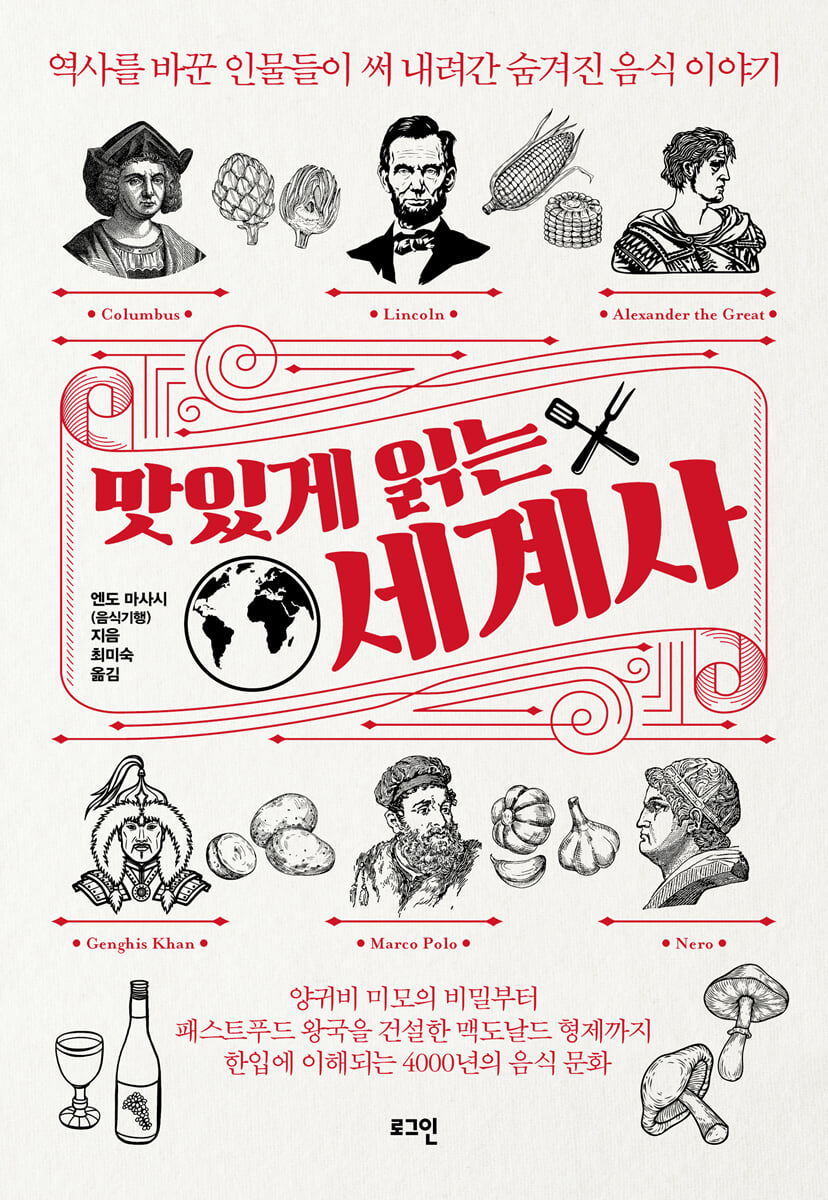
Why do we eat hamburgers and fries together? Is curry the national dish of England?! What was the diet of France's foodie king, Louis XIV? Wasn't it Marco Polo who introduced noodles to Italy?! What fruit did the beautiful Yang Guifei bring from thousands of miles away? This book, "A Tasty World History," explores the culinary history of iconic figures from ancient times to the modern era, exploring their diets through the stories of their experiences across 4,000 years of culinary history.
It was organized so that even first-time readers can easily understand it by connecting the food culture and history of the region at the time.
The book is organized so that not only are there food anecdotes related to each character, but the vast "stratum" of food history is organically connected, so you can read it chronologically or start with the character that interests you.
Now, let's embark on a journey through food history through the five senses.
World history unfolded on the table
Why do we eat hamburgers and fries together? Is curry the national dish of England?! What was the diet of France's foodie king, Louis XIV? Wasn't it Marco Polo who introduced noodles to Italy?! What fruit did the beautiful Yang Guifei bring from thousands of miles away? This book, "A Tasty World History," explores the culinary history of iconic figures from ancient times to the modern era, exploring their diets through the stories of their experiences across 4,000 years of culinary history.
It was organized so that even first-time readers can easily understand it by connecting the food culture and history of the region at the time.
The book is organized so that not only are there food anecdotes related to each character, but the vast "stratum" of food history is organically connected, so you can read it chronologically or start with the character that interests you.
Now, let's embark on a journey through food history through the five senses.
- You can preview some of the book's contents.
Preview
index
preface
CHAPTER 1 The Three Great Vegetables of Ancient Mesopotamia_ Hammurabi
CHAPTER 2 Simple meals, heavy drinking - Alexander III
CHAPTER 3 The Last Stem of an Endangered Plant_ Nero
CHAPTER 4 The Tropical Fruit She Loved_ Poppy
CHAPTER 5 The story begins in the marketplace_ Harun Al-Rasheed
CHAPTER 6 From Antiquity to the Middle Ages: The Changing Tables_ Basil I
CHAPTER 7 Red Food, White Food_ Genghis Khan
CHAPTER 8: Oriental Food Culture as Seen by a Traveler_ Marco Polo
CHAPTER 9: To the Modern Table_ Columbus
CHAPTER 10 The Age of Columbian Exchange_ Hernán Cortés
CHAPTER 11 The Ottoman Empire, which inherited a diverse food culture_ Suleiman I
CHAPTER 12: The Italian Woman Who Led French Cuisine: Catherine de Medici 189
CHAPTER 13 Eating Habits Contrary to Refined Dining Etiquette_Louis XIV
CHAPTER 14 Drink beer instead of coffee_ Frederick II
CHAPTER 15 Thanksgiving and Creole Cuisine_ Lincoln
CHAPTER 16 Curry in the British Empire_ Conan Doyle
CHAPTER 17 Taste the Food of the Ages_ Natsume Soseki
CHAPTER 18 The Birth of Fast Food_ The McDonald Brothers
Conclusion
CHAPTER 1 The Three Great Vegetables of Ancient Mesopotamia_ Hammurabi
CHAPTER 2 Simple meals, heavy drinking - Alexander III
CHAPTER 3 The Last Stem of an Endangered Plant_ Nero
CHAPTER 4 The Tropical Fruit She Loved_ Poppy
CHAPTER 5 The story begins in the marketplace_ Harun Al-Rasheed
CHAPTER 6 From Antiquity to the Middle Ages: The Changing Tables_ Basil I
CHAPTER 7 Red Food, White Food_ Genghis Khan
CHAPTER 8: Oriental Food Culture as Seen by a Traveler_ Marco Polo
CHAPTER 9: To the Modern Table_ Columbus
CHAPTER 10 The Age of Columbian Exchange_ Hernán Cortés
CHAPTER 11 The Ottoman Empire, which inherited a diverse food culture_ Suleiman I
CHAPTER 12: The Italian Woman Who Led French Cuisine: Catherine de Medici 189
CHAPTER 13 Eating Habits Contrary to Refined Dining Etiquette_Louis XIV
CHAPTER 14 Drink beer instead of coffee_ Frederick II
CHAPTER 15 Thanksgiving and Creole Cuisine_ Lincoln
CHAPTER 16 Curry in the British Empire_ Conan Doyle
CHAPTER 17 Taste the Food of the Ages_ Natsume Soseki
CHAPTER 18 The Birth of Fast Food_ The McDonald Brothers
Conclusion
Detailed image

Into the book
In fact, Alexander believed that it was his duty as a king to strictly control himself, including his meals.
I tried to have a light breakfast to have a delicious dinner and a night march to have a delicious breakfast.
--- p.31
Leek was known at the time as a vegetable that improved the voice.
Nero, who was proud to be an emperor, artist, and singer, was always concerned about the condition of his throat and ate only leeks and olive oil on a certain day every month.
It is said that on that day, he gave up bread and meat and ate only leeks.
--- p.53
Drinking wine was very important to the Byzantine people.
They drank wine mixed with water, as they had done since the ancient Greek times.
In ancient Rome, additives were added to wine to prevent it from spoiling quickly.
The types of additives were too varied to be called additives in a word, such as dyeing with aloe, saffron, or elderberry, adding juice diluted with water, adding spices, resins, or sea water, or mixing in pepper or honey.
--- p.92
There is an anecdote that says Marco Polo brought noodles from China to Italy, which led to the creation of pasta, but this story lacks credibility.
Pasta had already entered Italy via the Arabian Peninsula before Marco Polo returned to Venice in 1295.
--- p.122~123
Corn was an essential food for the Aztecs, as Cortes most often mentioned in his letters: "Water, corn, and salt, these are the three things that are essential to human life."
The Aztec people worshipped Chicomeco Atl, the goddess of agriculture in the mythology of the ancient Mexican Aztec people.
The Aztecs typically ate tortillas, which were made from cornmeal dough shaped into discs and lightly toasted on both sides.
--- p.159
When coffee was introduced to Istanbul and distribution channels were established, two Arabs from Aleppo opened a coffee shop called Kahve in the 1550s.
After that, a wave of coffee began to flood into the European world like a flood.
--- p.173~174
In Prussia, under the rule of Frederick the Great, coffee became a daily drink enjoyed not only by the big cities and the upper class, but also by the rural areas and common people.
The problem was that the rapid increase in demand for coffee meant an outflow of national wealth due to increased imports.
Due to financial difficulties caused by the War of the Austrian Succession and the Seven Years' War, Frederick the Great eventually issued a ban on coffee in 1777.
The 'Declaration on Coffee and Beer' called for limiting coffee consumption to prevent the outflow of national wealth.
Instead, they promoted beer by claiming that "victory was achieved thanks to soldiers who made their bodies with beer on the battlefield."
--- p.226
About 100 years before the era of Sherlock Holmes, the word curry had already become deeply ingrained among the British people.
This is because the royal cuisine and curry of the Nizam Kingdom in south-central India, which signed a friendship treaty with Britain, were introduced to Britain.
(Omitted) The publication of Indian cuisine recipes in 19th-century British popular magazines also contributed to the popularity of curry among the middle class.
Above all, the decisive factor in curry's popularity is that it is an economical food that does not burden the wallets of ordinary people.
--- p.258
At the time, French fries were more profitable than hamburgers, so they knew that this product held the key to their success.
Every day, the potatoes are peeled, cut into thin sticks, and fried until crispy in a special fryer.
And they focused on popular menu items such as hamburgers (1.5 ounces = about 45 grams of patty, ketchup, chopped onions, 2 pickles), cheeseburgers, french fries, shakes, and sodas, and this strategy worked well.
I tried to have a light breakfast to have a delicious dinner and a night march to have a delicious breakfast.
--- p.31
Leek was known at the time as a vegetable that improved the voice.
Nero, who was proud to be an emperor, artist, and singer, was always concerned about the condition of his throat and ate only leeks and olive oil on a certain day every month.
It is said that on that day, he gave up bread and meat and ate only leeks.
--- p.53
Drinking wine was very important to the Byzantine people.
They drank wine mixed with water, as they had done since the ancient Greek times.
In ancient Rome, additives were added to wine to prevent it from spoiling quickly.
The types of additives were too varied to be called additives in a word, such as dyeing with aloe, saffron, or elderberry, adding juice diluted with water, adding spices, resins, or sea water, or mixing in pepper or honey.
--- p.92
There is an anecdote that says Marco Polo brought noodles from China to Italy, which led to the creation of pasta, but this story lacks credibility.
Pasta had already entered Italy via the Arabian Peninsula before Marco Polo returned to Venice in 1295.
--- p.122~123
Corn was an essential food for the Aztecs, as Cortes most often mentioned in his letters: "Water, corn, and salt, these are the three things that are essential to human life."
The Aztec people worshipped Chicomeco Atl, the goddess of agriculture in the mythology of the ancient Mexican Aztec people.
The Aztecs typically ate tortillas, which were made from cornmeal dough shaped into discs and lightly toasted on both sides.
--- p.159
When coffee was introduced to Istanbul and distribution channels were established, two Arabs from Aleppo opened a coffee shop called Kahve in the 1550s.
After that, a wave of coffee began to flood into the European world like a flood.
--- p.173~174
In Prussia, under the rule of Frederick the Great, coffee became a daily drink enjoyed not only by the big cities and the upper class, but also by the rural areas and common people.
The problem was that the rapid increase in demand for coffee meant an outflow of national wealth due to increased imports.
Due to financial difficulties caused by the War of the Austrian Succession and the Seven Years' War, Frederick the Great eventually issued a ban on coffee in 1777.
The 'Declaration on Coffee and Beer' called for limiting coffee consumption to prevent the outflow of national wealth.
Instead, they promoted beer by claiming that "victory was achieved thanks to soldiers who made their bodies with beer on the battlefield."
--- p.226
About 100 years before the era of Sherlock Holmes, the word curry had already become deeply ingrained among the British people.
This is because the royal cuisine and curry of the Nizam Kingdom in south-central India, which signed a friendship treaty with Britain, were introduced to Britain.
(Omitted) The publication of Indian cuisine recipes in 19th-century British popular magazines also contributed to the popularity of curry among the middle class.
Above all, the decisive factor in curry's popularity is that it is an economical food that does not burden the wallets of ordinary people.
--- p.258
At the time, French fries were more profitable than hamburgers, so they knew that this product held the key to their success.
Every day, the potatoes are peeled, cut into thin sticks, and fried until crispy in a special fryer.
And they focused on popular menu items such as hamburgers (1.5 ounces = about 45 grams of patty, ketchup, chopped onions, 2 pickles), cheeseburgers, french fries, shakes, and sodas, and this strategy worked well.
--- p.281~282
Publisher's Review
4,000 Years of Food Culture Understood in One Bite
That food was right in the middle of history.
Food has played a very important role in human survival.
Throughout history, humans have lived by eating something.
That doesn't mean I ate food for no reason.
Humans have lived their lives creating food cultures for various purposes, such as to satisfy hunger, to be with someone, or sometimes to eat better food.
Therefore, each table reflects its own environment, its own history and tradition, and the individuality of each individual.
“Food inspiration comes from everything I see.
“I cook while thinking about the people I meet, life, and history.” These are the words of Edward Lee, who received a lot of attention from viewers for his “Tuna Caviar Bibimbap” in the semi-final mission “Cook Life” of “Black and White Chef” aired on Netflix.
In this way, food is closest to humans and continues to write history.
The Food Stories of 18 People Who Changed World History
What did they eat and how did they live?
#1 King Hammurabi, who unified all of ancient Mesopotamia, is famous for his "eye for an eye" policy, but it is difficult to find out what he actually did or what he ate for a living.
However, the food ingredients of the time are recorded in the Code of Hammurabi, a collection of laws he established.
Among the livestock, cows appear the most, while pigs appear only once.
The ancient Mesopotamians considered pigs unclean animals and did not enjoy them as food.
#2 The Arabian Nights, also known as The Thousand and One Nights, is the most famous story in the world.
The caliph appearing here is a real person, Harun al-Rashid, the fifth caliph of the Abbasid dynasty that ruled the Middle East.
Baghdad during his reign was an international trading city, with goods and products flowing in from all over the empire.
This may be why all the stories in 『A Thousand and One Nights』 begin in the marketplace.
#3 'The hero of Mongolia, the blue wolf, the god of light, Temujin...' These are the names of Genghis Khan, who conquered the Mongolian Plateau.
What he ate is recorded in the 『Original Secret History』.
Mutton, a meat product known as 'red food', is an essential food for Mongolians.
It still remains in modern times under the name 'Chanasung Mah'.
Dairy products, which supported the diet of the nomadic Mongolians, are referred to as 'white food'.
Both the mayuju and the tarak have been passed down and can still be enjoyed in modern times.
#4 What kind of food did Columbus, the discoverer of the New World, eat during his four Atlantic voyages to the new world? He sampled many local foods in the lands he discovered, and the most common of these was bread.
In his book, "Columbus's Voyage," there is a record of eating various types of bread, including bread made from other ingredients, in addition to bread made from wheat.
You could say it's a modern-day bread pilgrimage.
#5 When it comes to the world's three greatest cuisines, French, Chinese, and Turkish cuisine are often mentioned.
Among them, there was an Italian woman, Catherine de Medici, who had a great influence on the culinary culture of France, which is still called a country of gastronomy today due to its diverse range of ingredients.
When she married and moved to France, she brought with her acolytes including chefs, bakers, and dessert artisans, as well as ingredients and utensils such as parsley, lettuce, and forks.
Wouldn't a French person absolutely disagree with this?
From ancient times to modern times
The history of dietary changes
This book covers 18 representative figures from each era and anecdotes related to food, then connects them to the food culture and history of the region at the time, organically connecting the vast "stratum" of food history so that even first-time readers can easily understand it.
So, you can enjoy the fun of history no matter where you start, so start reading from wherever you like.
After reading it all, you will be able to see at a glance the history of changes in eating habits from ancient times to the Middle Ages and into the modern era.
That food was right in the middle of history.
Food has played a very important role in human survival.
Throughout history, humans have lived by eating something.
That doesn't mean I ate food for no reason.
Humans have lived their lives creating food cultures for various purposes, such as to satisfy hunger, to be with someone, or sometimes to eat better food.
Therefore, each table reflects its own environment, its own history and tradition, and the individuality of each individual.
“Food inspiration comes from everything I see.
“I cook while thinking about the people I meet, life, and history.” These are the words of Edward Lee, who received a lot of attention from viewers for his “Tuna Caviar Bibimbap” in the semi-final mission “Cook Life” of “Black and White Chef” aired on Netflix.
In this way, food is closest to humans and continues to write history.
The Food Stories of 18 People Who Changed World History
What did they eat and how did they live?
#1 King Hammurabi, who unified all of ancient Mesopotamia, is famous for his "eye for an eye" policy, but it is difficult to find out what he actually did or what he ate for a living.
However, the food ingredients of the time are recorded in the Code of Hammurabi, a collection of laws he established.
Among the livestock, cows appear the most, while pigs appear only once.
The ancient Mesopotamians considered pigs unclean animals and did not enjoy them as food.
#2 The Arabian Nights, also known as The Thousand and One Nights, is the most famous story in the world.
The caliph appearing here is a real person, Harun al-Rashid, the fifth caliph of the Abbasid dynasty that ruled the Middle East.
Baghdad during his reign was an international trading city, with goods and products flowing in from all over the empire.
This may be why all the stories in 『A Thousand and One Nights』 begin in the marketplace.
#3 'The hero of Mongolia, the blue wolf, the god of light, Temujin...' These are the names of Genghis Khan, who conquered the Mongolian Plateau.
What he ate is recorded in the 『Original Secret History』.
Mutton, a meat product known as 'red food', is an essential food for Mongolians.
It still remains in modern times under the name 'Chanasung Mah'.
Dairy products, which supported the diet of the nomadic Mongolians, are referred to as 'white food'.
Both the mayuju and the tarak have been passed down and can still be enjoyed in modern times.
#4 What kind of food did Columbus, the discoverer of the New World, eat during his four Atlantic voyages to the new world? He sampled many local foods in the lands he discovered, and the most common of these was bread.
In his book, "Columbus's Voyage," there is a record of eating various types of bread, including bread made from other ingredients, in addition to bread made from wheat.
You could say it's a modern-day bread pilgrimage.
#5 When it comes to the world's three greatest cuisines, French, Chinese, and Turkish cuisine are often mentioned.
Among them, there was an Italian woman, Catherine de Medici, who had a great influence on the culinary culture of France, which is still called a country of gastronomy today due to its diverse range of ingredients.
When she married and moved to France, she brought with her acolytes including chefs, bakers, and dessert artisans, as well as ingredients and utensils such as parsley, lettuce, and forks.
Wouldn't a French person absolutely disagree with this?
From ancient times to modern times
The history of dietary changes
This book covers 18 representative figures from each era and anecdotes related to food, then connects them to the food culture and history of the region at the time, organically connecting the vast "stratum" of food history so that even first-time readers can easily understand it.
So, you can enjoy the fun of history no matter where you start, so start reading from wherever you like.
After reading it all, you will be able to see at a glance the history of changes in eating habits from ancient times to the Middle Ages and into the modern era.
GOODS SPECIFICS
- Date of issue: October 25, 2024
- Page count, weight, size: 298 pages | 404g | 145*210*20mm
- ISBN13: 9791169518888
- ISBN10: 1169518885
You may also like
카테고리
korean


korean

![GQ KOREA Mark (Monthly): December [2025]](http://librairie.coreenne.fr/cdn/shop/files/8ef265dbbfbf186523ed75ba7319009d.jpg?v=1765340328&width=3840)


