

Maoism
 |
Description
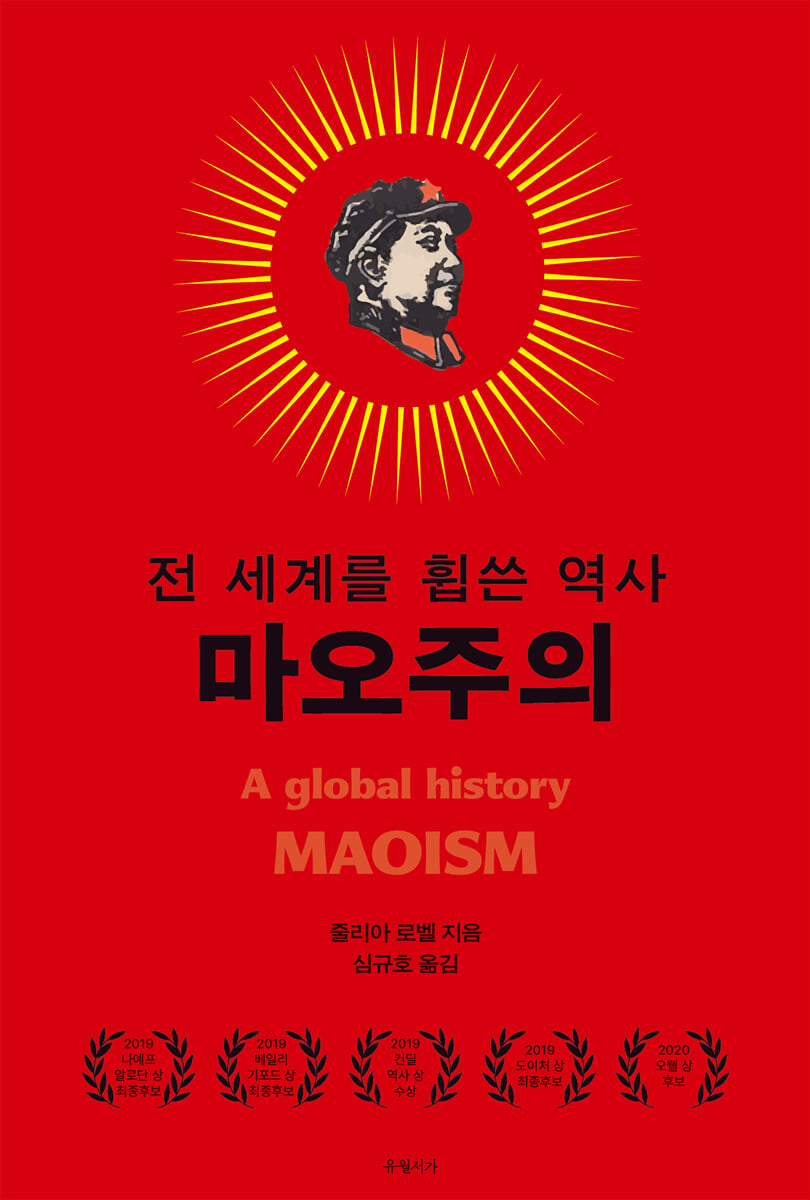
Book Introduction
The year 2024 is a monumental year in the history of communist parties around the world.
This is because China has surpassed the Soviet Union, which lasted 74 years since 1917, to become the world's longest-running communist country.
For decades, Western countries have had no doubt that China has gradually integrated itself into the world order by embracing capitalism.
Some even believed that the capitalist order would bring a wave of liberal democracy to China.
But it turned out to be a naive belief.
Now, China is moving beyond a period of hiding and building its power on the world stage and is attempting to rise again.
Since the mid-to-late 20th century, China has been hiding its diplomatic history from the Mao Zedong era to avoid revealing its ambitions on the world stage.
Because he knew very well how much the history of the time, which had made world leader Mao Zedong cry, would arouse his alarm.
And now the history that had been successfully concealed is being unsealed.
"Maoism" begins with a critical reinterpretation of "Red Star Over China," the dramatic world debut of Mao Zedong and the Chinese Communist Party, and traces the history that left a deep red mark on almost every continent, including Vietnam, Cambodia, Indonesia, India, Nepal, Western Europe, the United States, Tanzania, and Peru.
It is safe to say that "Maoism" is a groundbreaking and incisive historical critique that will open new eyes to the past and present of Chinese diplomacy.
This is because China has surpassed the Soviet Union, which lasted 74 years since 1917, to become the world's longest-running communist country.
For decades, Western countries have had no doubt that China has gradually integrated itself into the world order by embracing capitalism.
Some even believed that the capitalist order would bring a wave of liberal democracy to China.
But it turned out to be a naive belief.
Now, China is moving beyond a period of hiding and building its power on the world stage and is attempting to rise again.
Since the mid-to-late 20th century, China has been hiding its diplomatic history from the Mao Zedong era to avoid revealing its ambitions on the world stage.
Because he knew very well how much the history of the time, which had made world leader Mao Zedong cry, would arouse his alarm.
And now the history that had been successfully concealed is being unsealed.
"Maoism" begins with a critical reinterpretation of "Red Star Over China," the dramatic world debut of Mao Zedong and the Chinese Communist Party, and traces the history that left a deep red mark on almost every continent, including Vietnam, Cambodia, Indonesia, India, Nepal, Western Europe, the United States, Tanzania, and Peru.
It is safe to say that "Maoism" is a groundbreaking and incisive historical critique that will open new eyes to the past and present of Chinese diplomacy.
- You can preview some of the book's contents.
Preview
index
introduction
Chapter 1: What is Maoism?
Chapter 2: The Red Star: A Model of Revolution
Chapter 3: Brainwashing: China and the World in the 1950s
Chapter 4: World Revolution
Chapter 5: A Time of Crisis: The Relationship with Indonesia
Chapter 6 In Africa
Chapter 7: Mao Zedong's Dominoes? Vietnam and Cambodia
Chapter 8 You are old, we are young.
Mao Zedong!
Chapter 9: The Red Sun of Peru: A Shining Path
Chapter 10 China's Chairman is Our Chairman: Maoism in India
Chapter 11 Nepal: The Maoists Take Power
Chapter 12 Maoists' China
Conclusion
supplement
- Chronology
- Acknowledgements
- Translator's Note
- Index
- America
- References
Chapter 1: What is Maoism?
Chapter 2: The Red Star: A Model of Revolution
Chapter 3: Brainwashing: China and the World in the 1950s
Chapter 4: World Revolution
Chapter 5: A Time of Crisis: The Relationship with Indonesia
Chapter 6 In Africa
Chapter 7: Mao Zedong's Dominoes? Vietnam and Cambodia
Chapter 8 You are old, we are young.
Mao Zedong!
Chapter 9: The Red Sun of Peru: A Shining Path
Chapter 10 China's Chairman is Our Chairman: Maoism in India
Chapter 11 Nepal: The Maoists Take Power
Chapter 12 Maoists' China
Conclusion
supplement
- Chronology
- Acknowledgements
- Translator's Note
- Index
- America
- References
Detailed image

Into the book
The following year, Snow, fascinated by Mao Zedong, compiled his impressions of the Communist Party and interviews with its leaders into Red Star Over China.
In the book, Mao Zedong and his colleagues are portrayed as idealistic patriots, democrats with a sense of humor, and advocates for human equality.
--- p.98
But the influence of 『Red Star Over China』 did not stop there.
Translated into Chinese, the book persuaded young, educated liberals and patriots, both inland and abroad, to abandon the comforts of capitalist cities and make the long journey to the northwest to join Mao Zedong's revolution.
--- p.99
However, the credibility of 『Red Star Over China』 was damaged by the vested interests of the author and the protagonist.
Both wanted the book to resonate globally for different reasons.
--- p.121
Snow is a clumsy and compromising character, both as a happy-go-lucky boy adventurer and as a defender of indomitable revolutionaries.
His book, Red Star Over China, can be read as a concise and pure celebration of idealism, but it also reveals darker motivations: his own desire to create a global hit, his leftist leanings, and the secret ambitions and manipulations of those who invited him.
Nonetheless, Edgar Snow is praised by critics in both China and the West as the author of the most outstanding documentary literature written by an American correspondent in the 20th century.
--- p.135
Of the world's 2.7 billion people, one-third, or even half, could disappear.
… … If the worst happens and half of humanity dies and only the other half survives, imperialism will be scorched, the world will become socialist, and within a few years there will be 2.7 billion people again.
--- p.193
The crucial contradiction in the Cultural Revolution lies precisely here.
The Cultural Revolution, while aspiring for global solidarity and liberation, was an event that instead gave rise to ruthless xenophobia and authoritarianism.
--- p.210
In places like South Asia and Peru, Maoism persisted for decades after Mao Zedong's death.
Maoism has the talent to spread relentlessly throughout the world, like a virus dormant in the human body.
It is precisely this history, this very character, that we are now trying to trace around the world.
--- p.220
However, I believe that Mao Zedong and his ideas also had an impact on the tragedy at that time.
Indonesia was a country that China considered a touchstone for its foreign policy during the post-Soviet period (the period after China broke away from the Soviet Union).
This is because China has made Indonesia a key strategic target to export the wisdom and superiority of the Maoist model.
In the early 1960s, Indonesian Communist Party leaders were intoxicated by the bellicose rhetoric of Mao Zedong's revolution.
Maoism encouraged and inspired them to fight against the Indonesian military, which ultimately provided the pretext for the horrific events of 1965.
Without Maoism, the disaster in Indonesia in 1965 would have been difficult to imagine.
--- p.227
As the cases of Peru, India and Nepal have shown again and again, 'higher Maoism' provides an effective military strategy for overthrowing the state.
But once in power, there are many problems.
The Maoism that Tongogara and others learned in the 1960s left ZANU with a conspiracy-filled, totalitarian political model in which the party and its top leader were always right, could eliminate those the party designated as "enemies of the people," and military interests were paramount.
--- p.318
The communist country of China appeared to be actively pursuing modernization on the surface, but it was still stuck in its old ways.
For example, Vietnamese delegations that frequently visited Beijing often recalled the processions paying tribute to the empire.
In this way, China's attitude toward Vietnam was a mixture of socialist philanthropy and Confucian imperialism.
--- p.371
A similar argument could be made about the spread of the Cultural Revolution to Western Europe and North America.
Mao Zedong and his supporters envisioned the Cultural Revolution as a global grassroots movement capable of overthrowing "Yankee imperialism" and countries allied with the United States.
But in the long run, the fervor for the Cultural Revolution divided the radical left and, from the 1980s onwards, helped neoliberals consolidate their power.
In the late 1960s, political instability in the United States and parts of Europe led people to gradually shift their focus to maintaining order and to forming a consensus in favor of the long-standing right-wing regime.
Ultimately, this laid the foundation for the rise to power of Ronald Reagan in the United States and Margaret Thatcher in the United Kingdom.
Since then, this trend has not significantly reversed.
--- p.383
Had Majumdar not been so convinced of Maoist principles and so diligently promoted them, would China have so quickly hailed the May 1967 Naxalbari uprising as a triumph of the global Maoist revolution? Indeed, just five weeks after its occurrence, the People's Daily hailed the Naxalbari uprising as "the thunder of spring reverberating through India," and Beijing Radio called it "the forefoot of the revolution," praising it as proof that the application of Maoist strategy to the Indian revolution had been successful.
--- p.506
Those currently involved in or supporting the Maoist movement in India claim that they represent and mobilize those who have been forgotten or sacrificed by the Indian government and the powers that be (local lords, state-run and multinational corporations seeking to mine minerals in the jungles of central India).
--- p.521
The Indian government launched secret operations under code names such as 'Green Hunt', 'Greyhound' and 'Cobra', using special forces to root out the Maoists.
Using hunting or animal names as code names was tantamount to deliberately dehumanizing the target.
But the most vicious attack on the Maoists has been by the local self-defense force 'Salwa Judum', which was established in Chhattisgarh in 2005.
The Indian government translated Salwa Judum as 'Peace March', but Gondi experts said it is closer to 'Purification Hunt'.
--- p.524
Arundhati Roy's long essay, based on her own experiences, illustrates how India's jungle Maoists have conflated their struggle with the image of Maoism.
They promoted the ambiguous image and reputation of Mao Zedong as a rebel "leader" with a "vision," and used this to mobilize the indigenous people to fight against the government and corporations that had created the poor conditions for them.
--- p.528
Ten years later, the Maoists had gained decisive political power.
The People's Liberation Army, numbering around 10,000, was more than enough to suppress the firepower of the Nepalese police and military.
They soon gained control over an area equivalent to 80% of Nepal's territory.
The collapse of the Nepali monarchy and the establishment of a federal republic after 2006 was mainly due to their armed rebellion.
Between 2006 and 2016, two leaders of the Communist Party of Nepal (Maoist) served as prime minister of Nepal on three occasions, and other senior party members held key government posts.
Although Nepal has not achieved its original ambition of taking control of the country and wielding absolute power, as the Chinese Communist Party has, it is now the only country in the world ruled by a 'self-proclaimed Maoist'.
--- p.541
(Nepal) The Maoists claimed that their election victory was due to the support of the people, but in fact they only used terror to make them politically obedient.
--- p.569
The influence of Maoist ideology on Nepal's leaders should not be overestimated.
Because the most influential Maoists in Nepal are all pragmatists, for better or worse.
--- p.580
Neo-Maoists accused the post-Mao regime of using the Nazi propaganda tactic of "a lie repeated a thousand times becomes the truth" to ramp up its smear campaign against the Mao era.
Ultimately, their claims and interpretations of past and present, history, economy, society, and culture almost always boil down to nationalism, with anyone attacking Mao Zedong and his policies as a conspiracy to destroy Chinese pride.
In 2008, Zhang Hongliang argued that the greatest significance of the global economic crisis was to return the "Chinese nation" to its traditional position as the "center of the world."
--- p.609
Nationalist neo-Maoists have become a headache for the ruling Chinese Communist Party.
Although the Chinese Communist Party actively utilized Mao Zedong's image to strengthen its historical legitimacy, Mao Zedong's actual policies were far from the creed of prosperity and stability that the Chinese Communist Party adopted after Deng Xiaoping's rise to power.
However, the neo-Maoists, who had been detecting 'anti-communist propaganda' and had been calling themselves guardians of Mao Zedong's legacy and the Chinese Communist Party, could not easily remain silent in the face of political repression by the authorities.
A full-scale attack on the neo-Maoists would have risked provoking claims that the current Chinese Communist Party had betrayed Mao Zedong.
--- p.611
Behind this dazzling facade, many who lost out in China's money-making frenzy after 1992 were caught up in a chaotic socioeconomic atmosphere.
Because of this, Bo Xilai was able to successfully revive Mao Zedong.
During his four years in Chongqing, Bo Xilai created a political model that was fundamentally different from that of other regions of China during the Reform Era.
Bo Xilai launched the famous "Praise the Red, Strike Down Corruption" campaign, cracking down on corruption (except for himself) and wealthy businessmen, using some of the confiscated wealth to reduce urban and rural inequality, build social housing and infrastructure, and raise wages.
--- p.615
Contemporary neo-Maoism has many different voices, but despite these differences, it has one thing in common.
That is, while the Chinese Communist Party absolutely does not recognize non-partisan political organizations or the activism of other political factions within the political landscape, it is relatively tolerant of the existence of neo-Maoism.
--- p.634
Yet, having dedicated much of his first five years in office to controlling and strengthening the Chinese Communist Party, Xi remains steeped in Maoist legacies: its symbolic meaning and idolatry, its secretive and opaque party structure that relies on military might, its aversion to political dissent, and its ambition to make China a global leader.
In the book, Mao Zedong and his colleagues are portrayed as idealistic patriots, democrats with a sense of humor, and advocates for human equality.
--- p.98
But the influence of 『Red Star Over China』 did not stop there.
Translated into Chinese, the book persuaded young, educated liberals and patriots, both inland and abroad, to abandon the comforts of capitalist cities and make the long journey to the northwest to join Mao Zedong's revolution.
--- p.99
However, the credibility of 『Red Star Over China』 was damaged by the vested interests of the author and the protagonist.
Both wanted the book to resonate globally for different reasons.
--- p.121
Snow is a clumsy and compromising character, both as a happy-go-lucky boy adventurer and as a defender of indomitable revolutionaries.
His book, Red Star Over China, can be read as a concise and pure celebration of idealism, but it also reveals darker motivations: his own desire to create a global hit, his leftist leanings, and the secret ambitions and manipulations of those who invited him.
Nonetheless, Edgar Snow is praised by critics in both China and the West as the author of the most outstanding documentary literature written by an American correspondent in the 20th century.
--- p.135
Of the world's 2.7 billion people, one-third, or even half, could disappear.
… … If the worst happens and half of humanity dies and only the other half survives, imperialism will be scorched, the world will become socialist, and within a few years there will be 2.7 billion people again.
--- p.193
The crucial contradiction in the Cultural Revolution lies precisely here.
The Cultural Revolution, while aspiring for global solidarity and liberation, was an event that instead gave rise to ruthless xenophobia and authoritarianism.
--- p.210
In places like South Asia and Peru, Maoism persisted for decades after Mao Zedong's death.
Maoism has the talent to spread relentlessly throughout the world, like a virus dormant in the human body.
It is precisely this history, this very character, that we are now trying to trace around the world.
--- p.220
However, I believe that Mao Zedong and his ideas also had an impact on the tragedy at that time.
Indonesia was a country that China considered a touchstone for its foreign policy during the post-Soviet period (the period after China broke away from the Soviet Union).
This is because China has made Indonesia a key strategic target to export the wisdom and superiority of the Maoist model.
In the early 1960s, Indonesian Communist Party leaders were intoxicated by the bellicose rhetoric of Mao Zedong's revolution.
Maoism encouraged and inspired them to fight against the Indonesian military, which ultimately provided the pretext for the horrific events of 1965.
Without Maoism, the disaster in Indonesia in 1965 would have been difficult to imagine.
--- p.227
As the cases of Peru, India and Nepal have shown again and again, 'higher Maoism' provides an effective military strategy for overthrowing the state.
But once in power, there are many problems.
The Maoism that Tongogara and others learned in the 1960s left ZANU with a conspiracy-filled, totalitarian political model in which the party and its top leader were always right, could eliminate those the party designated as "enemies of the people," and military interests were paramount.
--- p.318
The communist country of China appeared to be actively pursuing modernization on the surface, but it was still stuck in its old ways.
For example, Vietnamese delegations that frequently visited Beijing often recalled the processions paying tribute to the empire.
In this way, China's attitude toward Vietnam was a mixture of socialist philanthropy and Confucian imperialism.
--- p.371
A similar argument could be made about the spread of the Cultural Revolution to Western Europe and North America.
Mao Zedong and his supporters envisioned the Cultural Revolution as a global grassroots movement capable of overthrowing "Yankee imperialism" and countries allied with the United States.
But in the long run, the fervor for the Cultural Revolution divided the radical left and, from the 1980s onwards, helped neoliberals consolidate their power.
In the late 1960s, political instability in the United States and parts of Europe led people to gradually shift their focus to maintaining order and to forming a consensus in favor of the long-standing right-wing regime.
Ultimately, this laid the foundation for the rise to power of Ronald Reagan in the United States and Margaret Thatcher in the United Kingdom.
Since then, this trend has not significantly reversed.
--- p.383
Had Majumdar not been so convinced of Maoist principles and so diligently promoted them, would China have so quickly hailed the May 1967 Naxalbari uprising as a triumph of the global Maoist revolution? Indeed, just five weeks after its occurrence, the People's Daily hailed the Naxalbari uprising as "the thunder of spring reverberating through India," and Beijing Radio called it "the forefoot of the revolution," praising it as proof that the application of Maoist strategy to the Indian revolution had been successful.
--- p.506
Those currently involved in or supporting the Maoist movement in India claim that they represent and mobilize those who have been forgotten or sacrificed by the Indian government and the powers that be (local lords, state-run and multinational corporations seeking to mine minerals in the jungles of central India).
--- p.521
The Indian government launched secret operations under code names such as 'Green Hunt', 'Greyhound' and 'Cobra', using special forces to root out the Maoists.
Using hunting or animal names as code names was tantamount to deliberately dehumanizing the target.
But the most vicious attack on the Maoists has been by the local self-defense force 'Salwa Judum', which was established in Chhattisgarh in 2005.
The Indian government translated Salwa Judum as 'Peace March', but Gondi experts said it is closer to 'Purification Hunt'.
--- p.524
Arundhati Roy's long essay, based on her own experiences, illustrates how India's jungle Maoists have conflated their struggle with the image of Maoism.
They promoted the ambiguous image and reputation of Mao Zedong as a rebel "leader" with a "vision," and used this to mobilize the indigenous people to fight against the government and corporations that had created the poor conditions for them.
--- p.528
Ten years later, the Maoists had gained decisive political power.
The People's Liberation Army, numbering around 10,000, was more than enough to suppress the firepower of the Nepalese police and military.
They soon gained control over an area equivalent to 80% of Nepal's territory.
The collapse of the Nepali monarchy and the establishment of a federal republic after 2006 was mainly due to their armed rebellion.
Between 2006 and 2016, two leaders of the Communist Party of Nepal (Maoist) served as prime minister of Nepal on three occasions, and other senior party members held key government posts.
Although Nepal has not achieved its original ambition of taking control of the country and wielding absolute power, as the Chinese Communist Party has, it is now the only country in the world ruled by a 'self-proclaimed Maoist'.
--- p.541
(Nepal) The Maoists claimed that their election victory was due to the support of the people, but in fact they only used terror to make them politically obedient.
--- p.569
The influence of Maoist ideology on Nepal's leaders should not be overestimated.
Because the most influential Maoists in Nepal are all pragmatists, for better or worse.
--- p.580
Neo-Maoists accused the post-Mao regime of using the Nazi propaganda tactic of "a lie repeated a thousand times becomes the truth" to ramp up its smear campaign against the Mao era.
Ultimately, their claims and interpretations of past and present, history, economy, society, and culture almost always boil down to nationalism, with anyone attacking Mao Zedong and his policies as a conspiracy to destroy Chinese pride.
In 2008, Zhang Hongliang argued that the greatest significance of the global economic crisis was to return the "Chinese nation" to its traditional position as the "center of the world."
--- p.609
Nationalist neo-Maoists have become a headache for the ruling Chinese Communist Party.
Although the Chinese Communist Party actively utilized Mao Zedong's image to strengthen its historical legitimacy, Mao Zedong's actual policies were far from the creed of prosperity and stability that the Chinese Communist Party adopted after Deng Xiaoping's rise to power.
However, the neo-Maoists, who had been detecting 'anti-communist propaganda' and had been calling themselves guardians of Mao Zedong's legacy and the Chinese Communist Party, could not easily remain silent in the face of political repression by the authorities.
A full-scale attack on the neo-Maoists would have risked provoking claims that the current Chinese Communist Party had betrayed Mao Zedong.
--- p.611
Behind this dazzling facade, many who lost out in China's money-making frenzy after 1992 were caught up in a chaotic socioeconomic atmosphere.
Because of this, Bo Xilai was able to successfully revive Mao Zedong.
During his four years in Chongqing, Bo Xilai created a political model that was fundamentally different from that of other regions of China during the Reform Era.
Bo Xilai launched the famous "Praise the Red, Strike Down Corruption" campaign, cracking down on corruption (except for himself) and wealthy businessmen, using some of the confiscated wealth to reduce urban and rural inequality, build social housing and infrastructure, and raise wages.
--- p.615
Contemporary neo-Maoism has many different voices, but despite these differences, it has one thing in common.
That is, while the Chinese Communist Party absolutely does not recognize non-partisan political organizations or the activism of other political factions within the political landscape, it is relatively tolerant of the existence of neo-Maoism.
--- p.634
Yet, having dedicated much of his first five years in office to controlling and strengthening the Chinese Communist Party, Xi remains steeped in Maoist legacies: its symbolic meaning and idolatry, its secretive and opaque party structure that relies on military might, its aversion to political dissent, and its ambition to make China a global leader.
--- p.646
Publisher's Review
It was the most deadly of the 20th century
The History of Maoism Around the World: A Thoroughly Hidden History
Modern Chinese diplomacy aimed at global hegemony
A sharp historical critique that provides insight into the past and present.
This book has many merits and features.
First of all, the fundamental purpose or motivation for writing this book is something that is not commonly found in existing books.
This is because, on the premise that Mao Zedong Thought, or Maoism, is not merely a historical phenomenon of the past, but continues to influence China and the world 47 years after his death, the intention is to reevaluate the evolution and legacy of Maoism worldwide, including in China.
In other words, Mao Zedong's thought remains a fundamental ideology in China today, and serves as a catalyst for movements (including anti-regime movements) and rebellions that still accompany us today. The author's ideas stimulate interest in an area that Western Chinese studies may have underestimated or simply overlooked.
-Excerpt from the translator's note
The year 2024 is a monumental year in the history of communist parties around the world.
This is because China has surpassed the Soviet Union, which lasted 74 years since 1917, to become the world's longest-running communist country.
In fact, China did not just survive.
At one time, it seemed as though the world was headed toward a unipolar system led by the United States.
But history is stirring again.
China now stands tall as the only country in the world capable of challenging the political and economic power of the United States on equal terms.
Today, China's ambitions are not limited to Northeast Asia, but extend to the entire world.
To understand China's current struggle for global dominance, we must examine the history of Maoism, which has commanded the world.
How did Maoism continue to live and breathe in every corner of China, haunting it like a ghost both during Mao Zedong's lifetime and long after his death?
Since Deng Xiaoping, China has adopted the diplomatic policy of "Taoguangyanghui," meaning to keep quiet and build up one's strength until the time is right.
The strategy was brilliant.
For decades, global allies, led by the United States, have had no doubt that China has gradually been incorporated into the world order by embracing capitalism.
The Chinese Communist Party has thoroughly concealed the diplomatic history of the Mao Zedong era.
This was because he knew very well what kind of wariness Mao Zedong's history of trying to make China the leader of world revolution would arouse in the West.
So, just how far did Mao Zedong's global influence extend? This book tells a truly remarkable story about the global reach of Maoism.
This book describes in detail and in a very interesting way the history that is not yet properly known in South Korea, such as Maoism as the background of the 68 revolution that swept the United States and Western Europe, the story of the Maoists who ended the Nepalese monarchy and took over the parliament, the Maoist rebellion in Naxalbari, India, which is still ongoing, the 20-year rebellion of the Peruvian Maoist party 'Shining Path' that resulted in tens of thousands of deaths, the painful history that led to numerous massacres in Malaysia, Cambodia, and Vietnam, and the subsequent support from China, and the Chinese funds and manpower that flowed into various parts of Africa.
Julia Lovell, with her masterful storytelling, has crafted a sweeping and enigmatic history of Maoism that reads as captivatingly as a novel, while simultaneously providing a historian's insight into Maoism and revealing the truth, skillfully leading the reader through the final chapter.
This book takes a very fresh approach.
This is because the starting point of international Maoism is found in 『Red Star Over China』.
Yes, that's right.
The bestseller, “Red Star Over China,” dramatically brought the existence of the Chinese Communist Party to the attention of countless people not only in Korea but around the world.
Red Star Over China has been praised by critics in China and the West as “the most outstanding piece of documentary literature written by an American correspondent in the 20th century.”
Author Julia Lovell takes a critical stance on this book, contrary to conventional views.
It is asserted that 『Red Star Over China』 contains a 'dark motive' that combines the author Edgar Snow's own 'desire' with the 'secret ambition and manipulation' of those who invited him, and that 『Red Star Over China』 served as a deliberate propaganda piece that glorified the Chinese Communist Party and Mao Zedong.
Through this critical interpretation, the reader is able to keenly see how Maoism has embraced not only the Chinese people but also foreign figures, how it has used them to spread Maoism globally, and furthermore, how this policy has left its mark on Chinese foreign policy today.
It is somewhat surprising that such a critical interpretation is only now being seen, considering that the book was translated into Korean about 40 years ago.
History is a work that reveals its true nature through constant critical interpretation.
But the fact that a work so far hailed as "the most outstanding documentary literature" has received so little critical interpretation suggests that we have been unable to truly grasp the true nature of the Chinese Communist Party at the time. This book sheds new light on a previously undiscovered dark side of history.
The past lies on the path to the future.
In a world engulfed in turmoil, where will China head?
A must-read history book for a glimpse into an unknown future: Maoism
In 2024, conflicts continue to rage around the world.
Wars continue in Europe and the Middle East, and the political landscape in Northeast Asia is also shaken by territorial disputes, ideological conflicts, and the threat of war.
In this situation, China is actively participating in international politics as a mediator or party to the conflict.
Considering the decades of silence that followed, China's actions can be seen as becoming more radical and radical almost every year.
What should we do in this situation? What wisdom should we seek?
History repeats itself.
The current Chinese politics, which has opened the way for a lifelong rule for the first time since Mao Zedong, is deeply imbued with the image of Mao Zedong, who claimed to be the leader of the world revolution.
Of course, China today is different from the era of Mao Zedong.
The citizens' level of education and economic power are particularly incomparable.
But when we look at the modern Chinese people and politicians who revere Mao Zedong as the father of the nation, it seems that the nostalgia for Mao Zedong's powerful leadership is still alive and well.
China's ambitions did not come out of nowhere.
Rather, it should be understood as the resurgence of the unrealized ambitions of the Mao Zedong era that had been dormant for a long time.
Again, history repeats itself.
To know the future, we must look back at the past, and the hidden past at that.
Readers of this book will learn about Chinese and world history previously unknown to South Korea, and will be able to view the present day with new eyes.
The History of Maoism Around the World: A Thoroughly Hidden History
Modern Chinese diplomacy aimed at global hegemony
A sharp historical critique that provides insight into the past and present.
This book has many merits and features.
First of all, the fundamental purpose or motivation for writing this book is something that is not commonly found in existing books.
This is because, on the premise that Mao Zedong Thought, or Maoism, is not merely a historical phenomenon of the past, but continues to influence China and the world 47 years after his death, the intention is to reevaluate the evolution and legacy of Maoism worldwide, including in China.
In other words, Mao Zedong's thought remains a fundamental ideology in China today, and serves as a catalyst for movements (including anti-regime movements) and rebellions that still accompany us today. The author's ideas stimulate interest in an area that Western Chinese studies may have underestimated or simply overlooked.
-Excerpt from the translator's note
The year 2024 is a monumental year in the history of communist parties around the world.
This is because China has surpassed the Soviet Union, which lasted 74 years since 1917, to become the world's longest-running communist country.
In fact, China did not just survive.
At one time, it seemed as though the world was headed toward a unipolar system led by the United States.
But history is stirring again.
China now stands tall as the only country in the world capable of challenging the political and economic power of the United States on equal terms.
Today, China's ambitions are not limited to Northeast Asia, but extend to the entire world.
To understand China's current struggle for global dominance, we must examine the history of Maoism, which has commanded the world.
How did Maoism continue to live and breathe in every corner of China, haunting it like a ghost both during Mao Zedong's lifetime and long after his death?
Since Deng Xiaoping, China has adopted the diplomatic policy of "Taoguangyanghui," meaning to keep quiet and build up one's strength until the time is right.
The strategy was brilliant.
For decades, global allies, led by the United States, have had no doubt that China has gradually been incorporated into the world order by embracing capitalism.
The Chinese Communist Party has thoroughly concealed the diplomatic history of the Mao Zedong era.
This was because he knew very well what kind of wariness Mao Zedong's history of trying to make China the leader of world revolution would arouse in the West.
So, just how far did Mao Zedong's global influence extend? This book tells a truly remarkable story about the global reach of Maoism.
This book describes in detail and in a very interesting way the history that is not yet properly known in South Korea, such as Maoism as the background of the 68 revolution that swept the United States and Western Europe, the story of the Maoists who ended the Nepalese monarchy and took over the parliament, the Maoist rebellion in Naxalbari, India, which is still ongoing, the 20-year rebellion of the Peruvian Maoist party 'Shining Path' that resulted in tens of thousands of deaths, the painful history that led to numerous massacres in Malaysia, Cambodia, and Vietnam, and the subsequent support from China, and the Chinese funds and manpower that flowed into various parts of Africa.
Julia Lovell, with her masterful storytelling, has crafted a sweeping and enigmatic history of Maoism that reads as captivatingly as a novel, while simultaneously providing a historian's insight into Maoism and revealing the truth, skillfully leading the reader through the final chapter.
This book takes a very fresh approach.
This is because the starting point of international Maoism is found in 『Red Star Over China』.
Yes, that's right.
The bestseller, “Red Star Over China,” dramatically brought the existence of the Chinese Communist Party to the attention of countless people not only in Korea but around the world.
Red Star Over China has been praised by critics in China and the West as “the most outstanding piece of documentary literature written by an American correspondent in the 20th century.”
Author Julia Lovell takes a critical stance on this book, contrary to conventional views.
It is asserted that 『Red Star Over China』 contains a 'dark motive' that combines the author Edgar Snow's own 'desire' with the 'secret ambition and manipulation' of those who invited him, and that 『Red Star Over China』 served as a deliberate propaganda piece that glorified the Chinese Communist Party and Mao Zedong.
Through this critical interpretation, the reader is able to keenly see how Maoism has embraced not only the Chinese people but also foreign figures, how it has used them to spread Maoism globally, and furthermore, how this policy has left its mark on Chinese foreign policy today.
It is somewhat surprising that such a critical interpretation is only now being seen, considering that the book was translated into Korean about 40 years ago.
History is a work that reveals its true nature through constant critical interpretation.
But the fact that a work so far hailed as "the most outstanding documentary literature" has received so little critical interpretation suggests that we have been unable to truly grasp the true nature of the Chinese Communist Party at the time. This book sheds new light on a previously undiscovered dark side of history.
The past lies on the path to the future.
In a world engulfed in turmoil, where will China head?
A must-read history book for a glimpse into an unknown future: Maoism
In 2024, conflicts continue to rage around the world.
Wars continue in Europe and the Middle East, and the political landscape in Northeast Asia is also shaken by territorial disputes, ideological conflicts, and the threat of war.
In this situation, China is actively participating in international politics as a mediator or party to the conflict.
Considering the decades of silence that followed, China's actions can be seen as becoming more radical and radical almost every year.
What should we do in this situation? What wisdom should we seek?
History repeats itself.
The current Chinese politics, which has opened the way for a lifelong rule for the first time since Mao Zedong, is deeply imbued with the image of Mao Zedong, who claimed to be the leader of the world revolution.
Of course, China today is different from the era of Mao Zedong.
The citizens' level of education and economic power are particularly incomparable.
But when we look at the modern Chinese people and politicians who revere Mao Zedong as the father of the nation, it seems that the nostalgia for Mao Zedong's powerful leadership is still alive and well.
China's ambitions did not come out of nowhere.
Rather, it should be understood as the resurgence of the unrealized ambitions of the Mao Zedong era that had been dormant for a long time.
Again, history repeats itself.
To know the future, we must look back at the past, and the hidden past at that.
Readers of this book will learn about Chinese and world history previously unknown to South Korea, and will be able to view the present day with new eyes.
GOODS SPECIFICS
- Date of issue: June 30, 2024
- Format: Hardcover book binding method guide
- Page count, weight, size: 792 pages | 152*223*41mm
- ISBN13: 9791198794307
You may also like
카테고리
korean


korean

![GQ KOREA Mark (Monthly): December [2025]](http://librairie.coreenne.fr/cdn/shop/files/8ef265dbbfbf186523ed75ba7319009d.jpg?v=1765340328&width=3840)


