

C++20
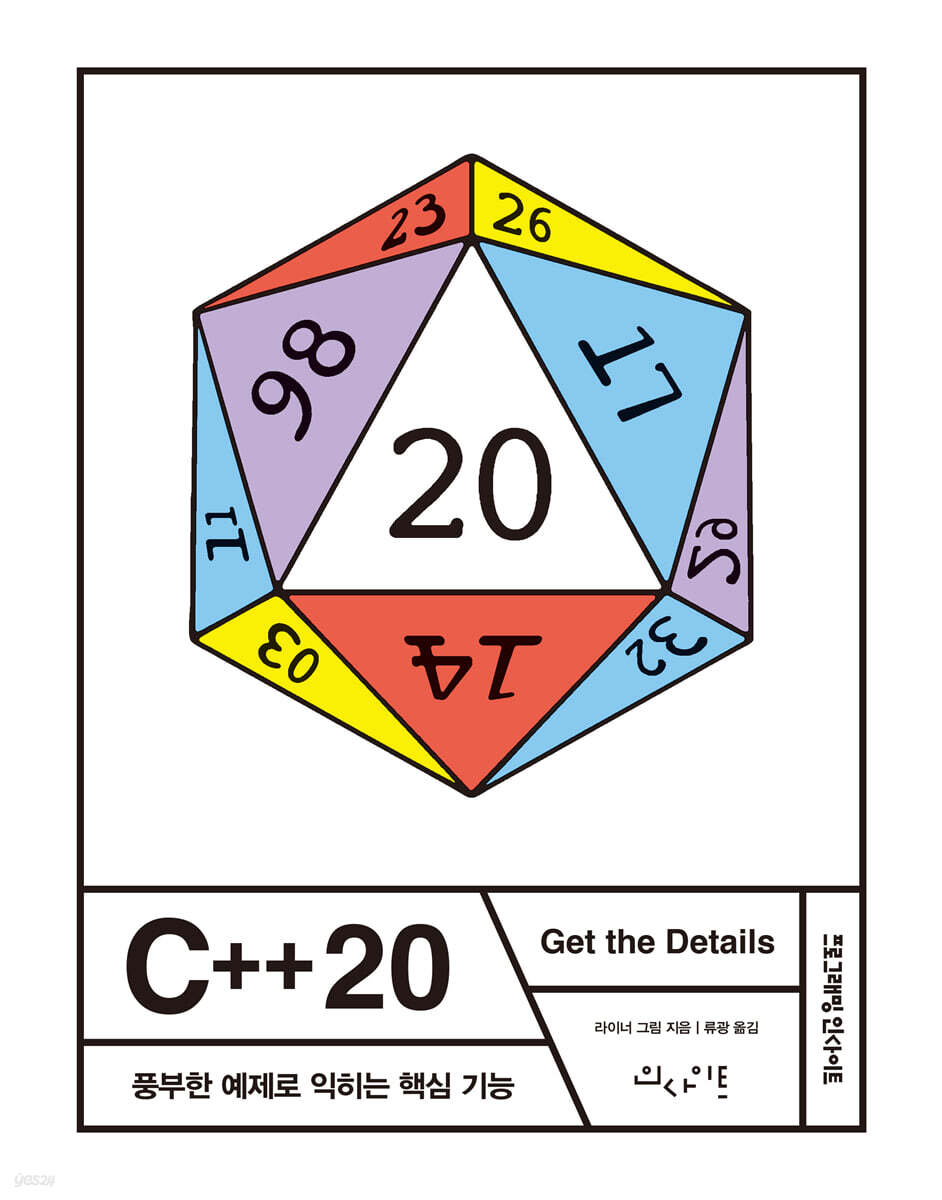 |
Description
Book Introduction
C++20 is the standard with the largest revision since C++11, the beginning of modern C++.
C++20 changes the very way modern C++ is programmed.
"C++20: Core Features with Rich Examples" explains the four key features at the heart of this revolutionary change: concepts, modules, interval libraries, and coroutines.
In addition, we have compiled a list of major features, libraries, and concurrency-related functions added to the language itself.
Rather than just listing the features, we provide examples for each feature to help you understand them clearly.
C++20 changes the very way modern C++ is programmed.
"C++20: Core Features with Rich Examples" explains the four key features at the heart of this revolutionary change: concepts, modules, interval libraries, and coroutines.
In addition, we have compiled a list of major features, libraries, and concurrency-related functions added to the language itself.
Rather than just listing the features, we provide examples for each feature to help you understand them clearly.
index
Part 1 Introduction
Chapter 1: Introduction to C++
1.1 History of the C++ Standard
1.2 Standardization
Chapter 2: A Look at C++20
2.1 Four major functions
2.2 Core Language
2.3 Standard Library
2.4 Concurrency
Part 2 Details
Chapter 3: Core Language
3.1 Concepts
3.2 Module
3.3 Triple comparison operator
3.4 Name Reset
3.5 consteval and constinit
3.6 Template Improvements
3.7 Lambda Improvements
3.8 New Features
3.9 Other Improvements
Chapter 4 Standard Library
4.1 Section Library
4.2 std::span
4.3 Container Improvements
4.4 Arithmetic Utilities
4.5 Calendar and Time Zone
4.6 Formatting Library
4.7 Other Improvements
Chapter 5 Concurrency
5.1 Coroutines
5.2 Atomic Operations
5.3 Semaphore
5.4 Locks and Barriers
5.5 Cooperative Interception
5.6 Joinable thread std::jthread
5.7 Synchronized Output Stream Objects
Chapter 6: Case Studies and Advanced Examples
6.1 Fast Thread Synchronization
6.2 Implementing Various Future Objects
6.3 Modification and generalization of the generator
6.4 Various Workflows
Conclusion
supplement
Appendix A C++23 and Beyond
A.1 C++23
A.2 C++23 or later
A.3 Additional Information About C++23
Appendix B Functional Testing
Appendix C Glossary
C.1 Four major functions
C.2 Six operations
C.3 POD
C.4 RAII
C.5 False Awakening
C.6 Object Format
C.7 Competition Conditions
C.8 Deadlock
C.9 Awakening Loss
C.10 Short-term evaluation
C.11 Data Competition
C.12 Concurrency
C.13 Dynamic storage period
C.14 Lambda Expressions
C.15 Literal Format
C.16 Memory Model
C.17 Memory Place
C.18 Unlocked
C.19 Undefined Actions
C.20 Translation Unit
C.21 Parallelism
C.22 Non-blocking
C.23 Mathematical Laws
C.24 Predicates
C.25 thread
C.26 Thread storage period
C.27 Scalar Format
C.28 Time Complexity
C.29 Launcher
C.30 Critical Area
C.31 Automatic storage period
C.32 Self-explanatory format
C.33 Regular Form
C.34 Static storage period
C.35 Hasty Evaluation
C.36 Semi-regular form
C.37 Delayed Assessment
C.38 aggregate
C.39 Standard Deployment Format
C.40 Function Objects
C.41 Callable Objects
Chapter 1: Introduction to C++
1.1 History of the C++ Standard
1.2 Standardization
Chapter 2: A Look at C++20
2.1 Four major functions
2.2 Core Language
2.3 Standard Library
2.4 Concurrency
Part 2 Details
Chapter 3: Core Language
3.1 Concepts
3.2 Module
3.3 Triple comparison operator
3.4 Name Reset
3.5 consteval and constinit
3.6 Template Improvements
3.7 Lambda Improvements
3.8 New Features
3.9 Other Improvements
Chapter 4 Standard Library
4.1 Section Library
4.2 std::span
4.3 Container Improvements
4.4 Arithmetic Utilities
4.5 Calendar and Time Zone
4.6 Formatting Library
4.7 Other Improvements
Chapter 5 Concurrency
5.1 Coroutines
5.2 Atomic Operations
5.3 Semaphore
5.4 Locks and Barriers
5.5 Cooperative Interception
5.6 Joinable thread std::jthread
5.7 Synchronized Output Stream Objects
Chapter 6: Case Studies and Advanced Examples
6.1 Fast Thread Synchronization
6.2 Implementing Various Future Objects
6.3 Modification and generalization of the generator
6.4 Various Workflows
Conclusion
supplement
Appendix A C++23 and Beyond
A.1 C++23
A.2 C++23 or later
A.3 Additional Information About C++23
Appendix B Functional Testing
Appendix C Glossary
C.1 Four major functions
C.2 Six operations
C.3 POD
C.4 RAII
C.5 False Awakening
C.6 Object Format
C.7 Competition Conditions
C.8 Deadlock
C.9 Awakening Loss
C.10 Short-term evaluation
C.11 Data Competition
C.12 Concurrency
C.13 Dynamic storage period
C.14 Lambda Expressions
C.15 Literal Format
C.16 Memory Model
C.17 Memory Place
C.18 Unlocked
C.19 Undefined Actions
C.20 Translation Unit
C.21 Parallelism
C.22 Non-blocking
C.23 Mathematical Laws
C.24 Predicates
C.25 thread
C.26 Thread storage period
C.27 Scalar Format
C.28 Time Complexity
C.29 Launcher
C.30 Critical Area
C.31 Automatic storage period
C.32 Self-explanatory format
C.33 Regular Form
C.34 Static storage period
C.35 Hasty Evaluation
C.36 Semi-regular form
C.37 Delayed Assessment
C.38 aggregate
C.39 Standard Deployment Format
C.40 Function Objects
C.41 Callable Objects
Publisher's Review
· Concepts
· Module
· Section library
· Coroutine
· Automatically generate comparison operators
· Calendar and time zone library
· Formatting library
· View on contiguous memory blocks
· Improved and interruptible threads
· Atomic smart pointers
· Semaphore
· Execution synchronization means such as latches and barriers
· Module
· Section library
· Coroutine
· Automatically generate comparison operators
· Calendar and time zone library
· Formatting library
· View on contiguous memory blocks
· Improved and interruptible threads
· Atomic smart pointers
· Semaphore
· Execution synchronization means such as latches and barriers
GOODS SPECIFICS
- Date of issue: January 14, 2022
- Page count, weight, size: 539 pages | 1,025g | 188*240*35mm
- ISBN13: 9788966263325
- ISBN10: 8966263321
You may also like
카테고리
korean


korean

![ELLE 엘르 A형 (여성월간) : 1월 [2026]](http://librairie.coreenne.fr/cdn/shop/files/3b70e1cf77cf67d6da56e0eb041901e8.jpg?v=1767265322&width=3840)


