

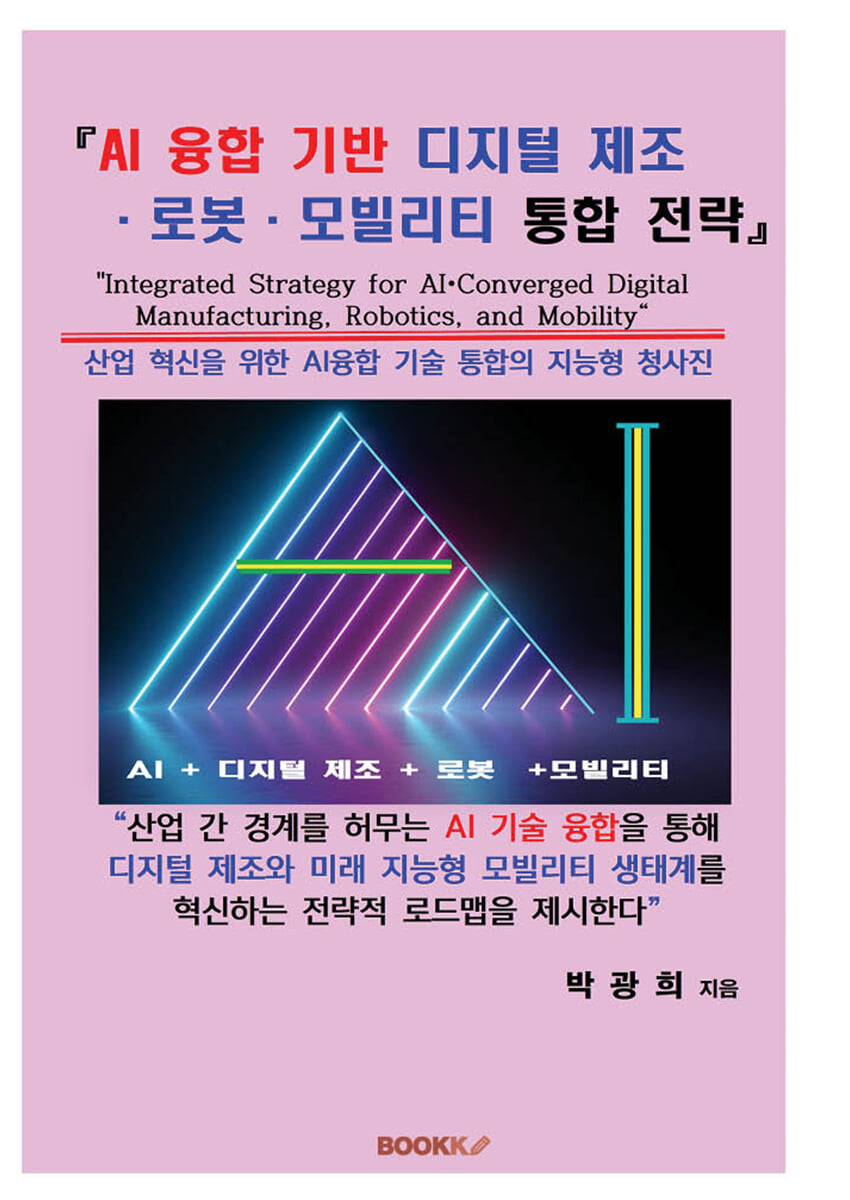
AI-based digital manufacturing, robotics, and mobility integration strategy
 |
Description
Book Introduction
The future of industries connected by AI convergence
“Strategic insights encompassing digital manufacturing, robotics, and mobility.”
『AI Convergence-Based Digital Manufacturing, Robotics, and Mobility Integration Strategy』
This is a practical strategy book for redesigning the industrial structure centered on AI technology.
This book is not just a simple technical guide.
Robots, mobility (EV, drone, UAM) centered on AI
How digital manufacturing is converging and how is it being applied in industrial settings?
A practical perspective on how people and technology can collaborate
Let's release it.
Professor Park Gwang-hee, the author, has worked as a field expert for 27 years at leading domestic manufacturing companies such as Samsung Electronics and LG Electronics, directly implementing smart factories, factory automation, and robotic systems. He later served as the director and general manager of the Technopark Center, leading the strengthening of technological competitiveness and policy coordination for small and medium-sized enterprises.
Currently, as a full-time professor in the Department of Artificial Intelligence and Big Data at Sehan University, he designs educational programs on the connection between AI and industry, technology and humans, and the field and creativity.
This book is based on the previously published 『Creative Utilization and Practice Strategies in the Age of AI Convergence』.
This is my third work following 『Life Design with AI Convergence Thinking』.
It presents a convergent strategy that goes beyond the principles of technology and changes the framework of thinking.
This book consists of a total of 15 chapters.
From understanding AI technology to smart factory design and robot automation,
Analysis of electric vehicle, drone, and UAM manufacturing processes
AI-based quality control, production planning, and predictive maintenance
And even organizational change and career roadmaps.
It contains integrated content encompassing industry, education, creation, and daily life.
This book is recommended for the following readers:
? Practitioners contemplating the future of manufacturing
Small business owners preparing to build smart factories
Students and educators interested in AI, robotics, and mobility
Strategists seeking to apply generative AI to industry
Technology changes quickly, but convergent thinking remains.
This book will serve as a strategic tool for designing thinking beyond technology and connecting people across industries.
“Strategic insights encompassing digital manufacturing, robotics, and mobility.”
『AI Convergence-Based Digital Manufacturing, Robotics, and Mobility Integration Strategy』
This is a practical strategy book for redesigning the industrial structure centered on AI technology.
This book is not just a simple technical guide.
Robots, mobility (EV, drone, UAM) centered on AI
How digital manufacturing is converging and how is it being applied in industrial settings?
A practical perspective on how people and technology can collaborate
Let's release it.
Professor Park Gwang-hee, the author, has worked as a field expert for 27 years at leading domestic manufacturing companies such as Samsung Electronics and LG Electronics, directly implementing smart factories, factory automation, and robotic systems. He later served as the director and general manager of the Technopark Center, leading the strengthening of technological competitiveness and policy coordination for small and medium-sized enterprises.
Currently, as a full-time professor in the Department of Artificial Intelligence and Big Data at Sehan University, he designs educational programs on the connection between AI and industry, technology and humans, and the field and creativity.
This book is based on the previously published 『Creative Utilization and Practice Strategies in the Age of AI Convergence』.
This is my third work following 『Life Design with AI Convergence Thinking』.
It presents a convergent strategy that goes beyond the principles of technology and changes the framework of thinking.
This book consists of a total of 15 chapters.
From understanding AI technology to smart factory design and robot automation,
Analysis of electric vehicle, drone, and UAM manufacturing processes
AI-based quality control, production planning, and predictive maintenance
And even organizational change and career roadmaps.
It contains integrated content encompassing industry, education, creation, and daily life.
This book is recommended for the following readers:
? Practitioners contemplating the future of manufacturing
Small business owners preparing to build smart factories
Students and educators interested in AI, robotics, and mobility
Strategists seeking to apply generative AI to industry
Technology changes quickly, but convergent thinking remains.
This book will serve as a strategic tool for designing thinking beyond technology and connecting people across industries.
index
Part 1: Understanding AI Convergence and the Underlying Technologies
Chapter 1. Industrial Changes in the AI Convergence Era ????????????????????????(13)
? Restructuring of industrial structure
Technological, organizational, and social transitions
Chapter 2. Classification and Convergence Structure of AI Technology ????????????????????????( 59)
Machine learning, deep learning, computer vision
? The Three Axis of Technological Convergence: Technology, Industry, and Humanity
Chapter 3. Connecting AI and Digital Manufacturing ???????????????????????????( 96)
? Core technologies of smart manufacturing
AI-based process optimization
Chapter 4. AI-Driven Smart Factory Design (116)
? IoT, MES, ERP, SCADA
Digital Twins and Real-Time Operations
Chapter 5. The Convergence of AI and Robotics ??????????????????????????(137)
Collaborative robots, autonomous mobile robots
AI-based robot control strategy
Part 2: AI Convergence and Future Mobility Manufacturing
Chapter 6. AI and Electric Vehicle (EV) Manufacturing (178)
? Battery quality inspection
? Predictive Maintenance of Battlefield Systems
? Self-driving cars
Chapter 7. Connecting AI with Drone and UAM Manufacturing (206)
The Rise of the Drone and UAM Industries and the Role of AI
AI Convergence in Drone Manufacturing
AI Convergence in UAM Manufacturing
Human-Robot Collaboration and Emotion Recognition
Chapter 8. AI and Urban Air Mobility (UAM) Manufacturing (263)
? Utilization of composite materials
Aviation Safety Standards and Robot Assembly
Chapter 9. AI-Based Digital Twins and Simulations (269)
? Virtual factory model
? Predictive analytics and simulation
Chapter 10. AI-Based Predictive Maintenance Strategy ???????????(273)
? Equipment anomaly detection
? Maintenance optimization algorithm
Part 3: Practical Strategies and Organizational Change for AI Convergence
Chapter 11. AI-Based Production Planning and Demand Forecasting (278)
? Calculating material requirements
? Process scheduling and supply chain response
Chapter 12. Quality Control through AI Image Analysis (281)
Image classification, defect detection
? Building learning data
Chapter 13. AI Convergence and Organizational Change (284)
Job redesign
Digital Leadership and Change Management
Chapter 14. Analysis of Successful Cases of AI Convergence (295)
? Domestic and international manufacturing company cases
? Deriving a benchmarking strategy
Chapter 15. Career Roadmap in the AI Convergence Era (302)
Smart Manufacturing Expert
AI analyst, robotics engineer
References and ??????????????????????????????(320)
Conclusion ?????????????????????????????????(331)
Chapter 1. Industrial Changes in the AI Convergence Era ????????????????????????(13)
? Restructuring of industrial structure
Technological, organizational, and social transitions
Chapter 2. Classification and Convergence Structure of AI Technology ????????????????????????( 59)
Machine learning, deep learning, computer vision
? The Three Axis of Technological Convergence: Technology, Industry, and Humanity
Chapter 3. Connecting AI and Digital Manufacturing ???????????????????????????( 96)
? Core technologies of smart manufacturing
AI-based process optimization
Chapter 4. AI-Driven Smart Factory Design (116)
? IoT, MES, ERP, SCADA
Digital Twins and Real-Time Operations
Chapter 5. The Convergence of AI and Robotics ??????????????????????????(137)
Collaborative robots, autonomous mobile robots
AI-based robot control strategy
Part 2: AI Convergence and Future Mobility Manufacturing
Chapter 6. AI and Electric Vehicle (EV) Manufacturing (178)
? Battery quality inspection
? Predictive Maintenance of Battlefield Systems
? Self-driving cars
Chapter 7. Connecting AI with Drone and UAM Manufacturing (206)
The Rise of the Drone and UAM Industries and the Role of AI
AI Convergence in Drone Manufacturing
AI Convergence in UAM Manufacturing
Human-Robot Collaboration and Emotion Recognition
Chapter 8. AI and Urban Air Mobility (UAM) Manufacturing (263)
? Utilization of composite materials
Aviation Safety Standards and Robot Assembly
Chapter 9. AI-Based Digital Twins and Simulations (269)
? Virtual factory model
? Predictive analytics and simulation
Chapter 10. AI-Based Predictive Maintenance Strategy ???????????(273)
? Equipment anomaly detection
? Maintenance optimization algorithm
Part 3: Practical Strategies and Organizational Change for AI Convergence
Chapter 11. AI-Based Production Planning and Demand Forecasting (278)
? Calculating material requirements
? Process scheduling and supply chain response
Chapter 12. Quality Control through AI Image Analysis (281)
Image classification, defect detection
? Building learning data
Chapter 13. AI Convergence and Organizational Change (284)
Job redesign
Digital Leadership and Change Management
Chapter 14. Analysis of Successful Cases of AI Convergence (295)
? Domestic and international manufacturing company cases
? Deriving a benchmarking strategy
Chapter 15. Career Roadmap in the AI Convergence Era (302)
Smart Manufacturing Expert
AI analyst, robotics engineer
References and ??????????????????????????????(320)
Conclusion ?????????????????????????????????(331)
GOODS SPECIFICS
- Date of issue: October 27, 2025
- Page count, weight, size: 337 pages | 182*257*30mm
- ISBN13: 9791112079619
You may also like
카테고리
korean


korean

![ELLE 엘르 A형 (여성월간) : 1월 [2026]](http://librairie.coreenne.fr/cdn/shop/files/3b70e1cf77cf67d6da56e0eb041901e8.jpg?v=1767265322&width=3840)


