

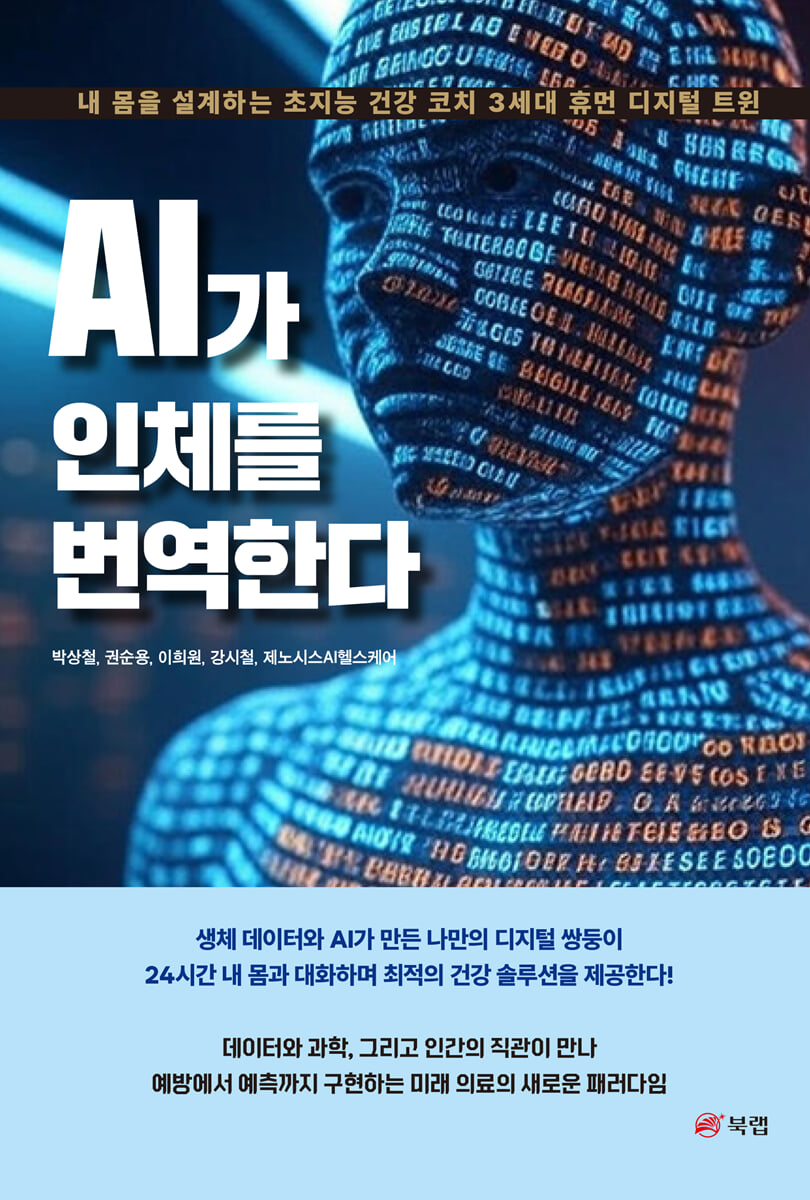
AI translates the human body
 |
Description
Book Introduction
My own digital twin created with biometric data and AI
Communicate with your body 24 hours a day and provide optimal health solutions!
Where data, science, and human intuition meet
A new paradigm for future healthcare, from prevention to prediction.
The era of curing diseases is over.
The door to the future of preventive and predictive medicine has opened!
Presented by the country's best medical team and AI healthcare research team
Everything You Need to Know About HDT, the Super-Intelligent Health Coach
HDT (Human Digital Twin) is a future mirror and companion reflecting human health, and is a core platform for inclusive and sustainable future healthcare that goes beyond technological advancement.
Future medical technologies that predict and manage individual health and shift the medical paradigm from treatment-centered to prevention-centered and personalized care can be the answer to dramatically improving the health and quality of life of the elderly in a rapidly aging society.
While there are many challenges to address, such as privacy protection, the digital divide, and AI reliability, HDT is a key technology that can realize the democratization of healthcare and a future of human-centered medicine. If technological advancements are accompanied by social cooperation and consensus, we will be able to live healthier and more autonomous lives.
This technology is a solution to the challenges facing modern medicine, including an aging population, the rise of chronic diseases, and skyrocketing medical costs, and is leading to a shift toward a prevention-focused healthcare model.
Moreover, as the transition from the traditional hospital-centered medical system to a patient-centered system accelerates, patients are no longer passive recipients of treatment, but are becoming active participants who proactively manage their own health.
The healthcare industry is rapidly being reshaped by AI-based healthcare, precision medicine, and digital therapeutics, and HDT is a key platform integrating these three trends.
We hope to contribute to understanding the present and future of superintelligent HDT technology and gaining insights that can be wisely applied in our lives.
In particular, as we enter a super-aged society, we hope that HDT technology will be actively utilized to address the potential health concerns and social isolation of the rapidly increasing number of seniors due to reduced activity, and to help them enjoy a dignified old age.
We hope this will serve as a starting point for continued communication and collaboration among technology developers, medical professionals, policymakers, and ordinary citizens to achieve this.
Communicate with your body 24 hours a day and provide optimal health solutions!
Where data, science, and human intuition meet
A new paradigm for future healthcare, from prevention to prediction.
The era of curing diseases is over.
The door to the future of preventive and predictive medicine has opened!
Presented by the country's best medical team and AI healthcare research team
Everything You Need to Know About HDT, the Super-Intelligent Health Coach
HDT (Human Digital Twin) is a future mirror and companion reflecting human health, and is a core platform for inclusive and sustainable future healthcare that goes beyond technological advancement.
Future medical technologies that predict and manage individual health and shift the medical paradigm from treatment-centered to prevention-centered and personalized care can be the answer to dramatically improving the health and quality of life of the elderly in a rapidly aging society.
While there are many challenges to address, such as privacy protection, the digital divide, and AI reliability, HDT is a key technology that can realize the democratization of healthcare and a future of human-centered medicine. If technological advancements are accompanied by social cooperation and consensus, we will be able to live healthier and more autonomous lives.
This technology is a solution to the challenges facing modern medicine, including an aging population, the rise of chronic diseases, and skyrocketing medical costs, and is leading to a shift toward a prevention-focused healthcare model.
Moreover, as the transition from the traditional hospital-centered medical system to a patient-centered system accelerates, patients are no longer passive recipients of treatment, but are becoming active participants who proactively manage their own health.
The healthcare industry is rapidly being reshaped by AI-based healthcare, precision medicine, and digital therapeutics, and HDT is a key platform integrating these three trends.
We hope to contribute to understanding the present and future of superintelligent HDT technology and gaining insights that can be wisely applied in our lives.
In particular, as we enter a super-aged society, we hope that HDT technology will be actively utilized to address the potential health concerns and social isolation of the rapidly increasing number of seniors due to reduced activity, and to help them enjoy a dignified old age.
We hope this will serve as a starting point for continued communication and collaboration among technology developers, medical professionals, policymakers, and ordinary citizens to achieve this.
- You can preview some of the book's contents.
Preview
index
introduction
prolog
Chapter 1: My Avatar, What is a Human Digital Twin?
1.
Basic Concepts of Digital Twins
2.
Real-World Use Cases and Core Values of Digital Twins
3.
The Emergence of Human Digital Twins
4. Three major challenges in modern medicine that HDT seeks to address
5. HDT's innovative solutions and practical applications
6. Current challenges and limitations of HDT
Chapter 2 HDT, How Far Have We Come?
1. Early appearance and limitations of HDT
2.
Review of famous HDT technology
2.1 Genome-based HDT
2.2 Real-time monitoring HDT
3.
Specific long-term HDT
3.1 Heart Digital Twin
3.2 Brain Tumor Digital Twin
3.3 Virtual Patient Simulation
3.4 Chronic Metabolic Disease Management HDT
4.
Common limitations of existing HDT technologies
5.
Current achievements and future challenges
Chapter 3: Why is the Super-Intelligent HDT a 3rd Generation?
1. Generational distinction of HDT technology
2.
Generational Advances in HDT Technology and Future Prospects
3.
Global Healthcare Equity and Accessibility
Chapter 4: The Secrets of Multi-Omics Data
1.
The Limitations of Reductionist Approaches and the Emergence of Systems Biology
2.
Genomics, the fundamental blueprint of life information
3.
The Limitations of Genomics and the Importance of Epigenetic Regulation
4.
Transcriptomics: A real-time snapshot of gene expression
5.
Proteomics, the practical performer of life activities
6.
Metabolomics, the final product of life activities
7.
Metagenomics: The Microbiome that Coexists with Humans
8.
Integrated Omics Map
9.
Explainable AI and Biological Interpretation
10.
Wearable technology and IoT-based environmental monitoring
Chapter 5: The Magic of Dynamic Simulation
1.
Wearable devices and sensors that capture my changing self in real time
2.
The Smart Ring: A Small Secretary on Your Finger
3.
A virtual intervention simulation that lets you experience the future in advance
4.
Disease subtyping
5.
My living, moving digital twin
Chapter 6: The Superintelligent Doctor Who Talks to Me
1.
A friendly conversation, not a stiff report
2.
Your own super-intelligent health coach
3.
A doctor's reliable assistant
4. LLM: The Future of Medicine Created by AI
Chapter 7: Safeguarding Your Information: The Promise of Blockchain
1.
The Limitations of the Current Healthcare System and the Need for Blockchain
2.
My health information, I am the owner.
3.
Transparent and trustworthy system
4.
Real-world implementation examples and technical challenges
5.
Legal and Ethical Considerations and Regulatory Responses
6.
Future prospects and development direction
Chapter 8: The Super-Intelligent Digital Twin Evolving Every Day
1.
Digital Twin: My Virtual Health Replica
2.
My health secretary who never sleeps
3. Health predictions explained by AI
4.
Integrated system architecture and implementation
5.
Future prospects and development direction
Chapter 9: Human Digital Twins: A New Hope for a Super-Aging Society
1.
Super-Aging Society: Challenges and Opportunities
2.
The Essence of Technological Innovation: Human Digital Twins
3.
Application of HDT in K-Senior Care
3.1 Remote health monitoring and proactive intervention
3.2 Preemptive medical intervention
4.
Prevention of death from loneliness and death in hospital beds
5.
Personalized health care and dementia prevention
6.
Strengthening social connectivity
7. Technical basis for HDT implementation
8.
Social significance and future prospects
Chapter 10: The Future Opened by HDT and the Role of Superintelligence Technology
1.
A world without disease, or a world where disease is managed
2.
The era of personalized medicine
3.
What the hospital of the future will look like
3.1 A Vision for Future Healthcare: Turning Crisis into Opportunity
3.2 Innovation in AI-based expert consultation
3.3 Improving the Efficiency of AI-Supported Clinical Work
3.4 AI Innovation in Medical Image Analysis
4.
Ethical Considerations and Future Challenges
Epilogue
prolog
Chapter 1: My Avatar, What is a Human Digital Twin?
1.
Basic Concepts of Digital Twins
2.
Real-World Use Cases and Core Values of Digital Twins
3.
The Emergence of Human Digital Twins
4. Three major challenges in modern medicine that HDT seeks to address
5. HDT's innovative solutions and practical applications
6. Current challenges and limitations of HDT
Chapter 2 HDT, How Far Have We Come?
1. Early appearance and limitations of HDT
2.
Review of famous HDT technology
2.1 Genome-based HDT
2.2 Real-time monitoring HDT
3.
Specific long-term HDT
3.1 Heart Digital Twin
3.2 Brain Tumor Digital Twin
3.3 Virtual Patient Simulation
3.4 Chronic Metabolic Disease Management HDT
4.
Common limitations of existing HDT technologies
5.
Current achievements and future challenges
Chapter 3: Why is the Super-Intelligent HDT a 3rd Generation?
1. Generational distinction of HDT technology
2.
Generational Advances in HDT Technology and Future Prospects
3.
Global Healthcare Equity and Accessibility
Chapter 4: The Secrets of Multi-Omics Data
1.
The Limitations of Reductionist Approaches and the Emergence of Systems Biology
2.
Genomics, the fundamental blueprint of life information
3.
The Limitations of Genomics and the Importance of Epigenetic Regulation
4.
Transcriptomics: A real-time snapshot of gene expression
5.
Proteomics, the practical performer of life activities
6.
Metabolomics, the final product of life activities
7.
Metagenomics: The Microbiome that Coexists with Humans
8.
Integrated Omics Map
9.
Explainable AI and Biological Interpretation
10.
Wearable technology and IoT-based environmental monitoring
Chapter 5: The Magic of Dynamic Simulation
1.
Wearable devices and sensors that capture my changing self in real time
2.
The Smart Ring: A Small Secretary on Your Finger
3.
A virtual intervention simulation that lets you experience the future in advance
4.
Disease subtyping
5.
My living, moving digital twin
Chapter 6: The Superintelligent Doctor Who Talks to Me
1.
A friendly conversation, not a stiff report
2.
Your own super-intelligent health coach
3.
A doctor's reliable assistant
4. LLM: The Future of Medicine Created by AI
Chapter 7: Safeguarding Your Information: The Promise of Blockchain
1.
The Limitations of the Current Healthcare System and the Need for Blockchain
2.
My health information, I am the owner.
3.
Transparent and trustworthy system
4.
Real-world implementation examples and technical challenges
5.
Legal and Ethical Considerations and Regulatory Responses
6.
Future prospects and development direction
Chapter 8: The Super-Intelligent Digital Twin Evolving Every Day
1.
Digital Twin: My Virtual Health Replica
2.
My health secretary who never sleeps
3. Health predictions explained by AI
4.
Integrated system architecture and implementation
5.
Future prospects and development direction
Chapter 9: Human Digital Twins: A New Hope for a Super-Aging Society
1.
Super-Aging Society: Challenges and Opportunities
2.
The Essence of Technological Innovation: Human Digital Twins
3.
Application of HDT in K-Senior Care
3.1 Remote health monitoring and proactive intervention
3.2 Preemptive medical intervention
4.
Prevention of death from loneliness and death in hospital beds
5.
Personalized health care and dementia prevention
6.
Strengthening social connectivity
7. Technical basis for HDT implementation
8.
Social significance and future prospects
Chapter 10: The Future Opened by HDT and the Role of Superintelligence Technology
1.
A world without disease, or a world where disease is managed
2.
The era of personalized medicine
3.
What the hospital of the future will look like
3.1 A Vision for Future Healthcare: Turning Crisis into Opportunity
3.2 Innovation in AI-based expert consultation
3.3 Improving the Efficiency of AI-Supported Clinical Work
3.4 AI Innovation in Medical Image Analysis
4.
Ethical Considerations and Future Challenges
Epilogue
Into the book
Epigenetic modifications, such as those of noncoding RNA, regulate gene expression, which ultimately influences protein production and metabolic pathways.
Third-generation HDT monitors and analyzes these epigenetic changes in real time, enabling us to understand at a molecular level the impact of environmental and lifestyle changes on an individual's health.
Integration of multi-omics data is a technically very complex process.
Each omics data has different scales and characteristics, and the interactions between them are nonlinear and dynamic.
Third-generation HDT addresses these complexities by leveraging advanced machine learning algorithms and artificial intelligence technologies.
In particular, deep learning-based integrated analysis methods can uncover hidden patterns and interactions between different omics data, enabling more accurate predictions of an individual's health status and disease risk.
--- p.75
My digital twin is not a static collection of information, but a dynamic entity that constantly updates itself by accepting data that changes in real time.
These dynamic characteristics are enabled by the massive amount of real-time data continuously flowing in from wearable devices and various biometric sensors.
A personal digital twin continuously receives and integrates biometric data measured by wearable devices, such as heart rate, activity level, sleep patterns, blood sugar, skin temperature, and blood oxygen saturation, to maintain a virtual model that most accurately and comprehensively reflects the current state of 'my' health.
--- p.153
In the healthcare field, this right takes on even greater significance.
This is because health information is directly related to an individual's life and is highly sensitive personal information.
Blockchain technology offers an innovative way to technically implement this self-determination.
While in traditional systems, patients would have to agree to a medical institution's privacy policy in a lump sum, blockchain-based systems allow for more granular and conditional consent.
Patients can specify who can access what, when, for what purpose, and what data, and these settings are recorded on the blockchain in a cryptographically secure and tamper-proof form.
Third-generation HDT monitors and analyzes these epigenetic changes in real time, enabling us to understand at a molecular level the impact of environmental and lifestyle changes on an individual's health.
Integration of multi-omics data is a technically very complex process.
Each omics data has different scales and characteristics, and the interactions between them are nonlinear and dynamic.
Third-generation HDT addresses these complexities by leveraging advanced machine learning algorithms and artificial intelligence technologies.
In particular, deep learning-based integrated analysis methods can uncover hidden patterns and interactions between different omics data, enabling more accurate predictions of an individual's health status and disease risk.
--- p.75
My digital twin is not a static collection of information, but a dynamic entity that constantly updates itself by accepting data that changes in real time.
These dynamic characteristics are enabled by the massive amount of real-time data continuously flowing in from wearable devices and various biometric sensors.
A personal digital twin continuously receives and integrates biometric data measured by wearable devices, such as heart rate, activity level, sleep patterns, blood sugar, skin temperature, and blood oxygen saturation, to maintain a virtual model that most accurately and comprehensively reflects the current state of 'my' health.
--- p.153
In the healthcare field, this right takes on even greater significance.
This is because health information is directly related to an individual's life and is highly sensitive personal information.
Blockchain technology offers an innovative way to technically implement this self-determination.
While in traditional systems, patients would have to agree to a medical institution's privacy policy in a lump sum, blockchain-based systems allow for more granular and conditional consent.
Patients can specify who can access what, when, for what purpose, and what data, and these settings are recorded on the blockchain in a cryptographically secure and tamper-proof form.
--- p.211
GOODS SPECIFICS
- Date of issue: September 12, 2025
- Page count, weight, size: 308 pages | 527g | 152*225*17mm
- ISBN13: 9791172248031
- ISBN10: 1172248036
You may also like
카테고리
korean


korean

![ELLE 엘르 A형 (여성월간) : 1월 [2026]](http://librairie.coreenne.fr/cdn/shop/files/3b70e1cf77cf67d6da56e0eb041901e8.jpg?v=1767265322&width=3840)


