

The taste of wood
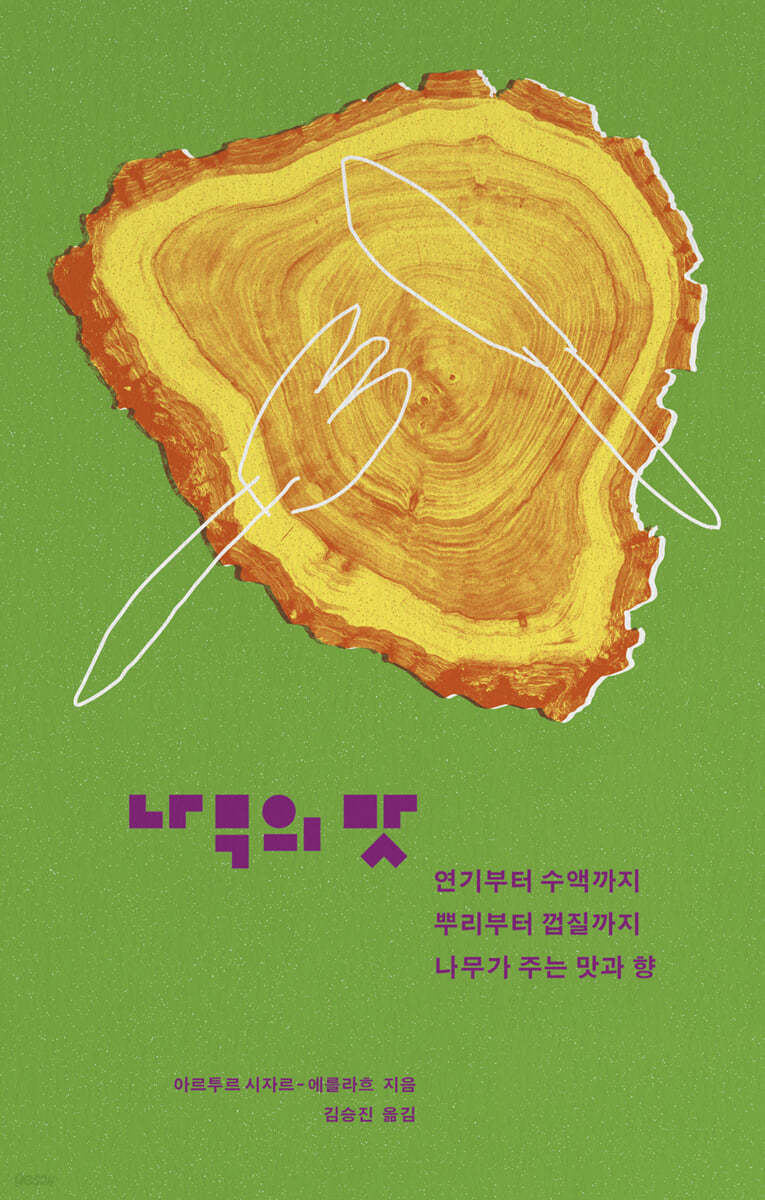 |
Description
Book Introduction
The author's occupation is a critic.
A food critic who discerns scent and taste.
If he were to simply go on a pilgrimage to a "good restaurant," his job satisfaction would undoubtedly be the highest, but he travels around the world in search of dishes imbued with the flavor, taste, and aroma of unfamiliar and new trees that are considered ingredients.
“The Taste of Wood” is a record of that experience.
A food critic who discerns scent and taste.
If he were to simply go on a pilgrimage to a "good restaurant," his job satisfaction would undoubtedly be the highest, but he travels around the world in search of dishes imbued with the flavor, taste, and aroma of unfamiliar and new trees that are considered ingredients.
“The Taste of Wood” is a record of that experience.
- You can preview some of the book's contents.
Preview
index
To Korean readers
Preface: On Trees
1 Tree, passion, taste
Inspiration from a beaver
A matter of taste
2 Delicious Trees
You too, beech pizza
Postcard from London
70 percent of the taste of whiskey
Secret Bar's Specialty Cocktails
Genoa Rum Tour
From Tree to Soul
The Soul of the Vietnamese Forest
A forest restaurant that cooks with pine trees
Blue yogurt
The Secret of Crispy Pickles
Wheat beer and larch
Numbers on balsamic vinegar
Sugar Moon is rising
Harmony of grapes and oak
Truffle hunting
Cheese hidden in tree bark
The disappearance of wooden cookies
3 The Future of Delicious Trees
Trees and Friends
Forest Revolution
Acknowledgements
main
Search
Preface: On Trees
1 Tree, passion, taste
Inspiration from a beaver
A matter of taste
2 Delicious Trees
You too, beech pizza
Postcard from London
70 percent of the taste of whiskey
Secret Bar's Specialty Cocktails
Genoa Rum Tour
From Tree to Soul
The Soul of the Vietnamese Forest
A forest restaurant that cooks with pine trees
Blue yogurt
The Secret of Crispy Pickles
Wheat beer and larch
Numbers on balsamic vinegar
Sugar Moon is rising
Harmony of grapes and oak
Truffle hunting
Cheese hidden in tree bark
The disappearance of wooden cookies
3 The Future of Delicious Trees
Trees and Friends
Forest Revolution
Acknowledgements
main
Search
Publisher's Review
The end of gastronomy is curiosity
His profession is a critic.
A food critic who discerns scent and taste.
If he were to simply go on a pilgrimage to a 'good restaurant', his job satisfaction would be the highest, but he wanders through valleys, forests, and canals, searching for trees.
This is the story of the author of “The Taste of Wood.”
The book begins with a heartfelt adventure where a beaver chews on a branch he has just eaten.
Artur-Cisar Erlach, a food critic with a master's degree from the University of Gastronomic Sciences in Pollenzo, Italy, often wonders why the beavers living near his lakeside home use some trees for food and others only for nesting.
Then, without hesitation, he finds a tree trunk with beaver teeth marks on it, cuts a little (apologizing for leaving a raw wound on the tree), eats it, and realizes.
Edible trees and construction trees are different!
There were trees with sticky, bitter brown sap, while there were trees with sweet, refreshing sap that came out the more you chewed it.
Arthur now dreams of being able to cook wood in the kitchen.
In pursuit of that day, I travel to Naples, Switzerland, Modena, Vienna, and Darjeeling in search of food rich in the flavor, taste, and aroma of wood.
“The Taste of Wood” is a record of that experience.
In search of chocolate flavor from sugar maple trees
Everyone knows that rich, sweet maple syrup is made from maple tree sap.
To be exact, the raw material is sugar maple tree sap.
The aura that the name gives off is already sweet.
Arthur sets out to meet a man who has long made a living tapping sugar maple sap, telling him a mythical tale of how he first distilled it into syrup.
As the ice melts and the streams flow, sap begins to flow under the bark of the sugar maple trees, and the pickers consider this the true beginning of spring.
The sap is extracted by pipes running throughout the forest and caramelized into syrup, but only 1 liter out of 40 liters of natural sap becomes syrup.
What does this golden, fresh, floral syrup taste like? A complex sweetness, a blend of premium dark chocolate, milk coffee, vanilla, and caramel.
As the author admits, the best way to explain unfamiliar tastes is to compare them to foods that have been processed multiple times.
The author envies Lao, which has words for "ssamgeopda" (flat, not salty enough), "ssamsahada" (flavored like mint), and "ssatteolhyeonhada" (like an unripe apple), citing the lack of vocabulary to describe taste, particularly in Western languages.
What about Korean? Part of the fun of this book is discovering what vocabulary was used to describe the flavor of an unfamiliar tree.
A unique guide to discovering the flavors of trees and the best dishes you've never known before.
This book, which contains the audacity of introducing larch into a distillery that has used only oak barrels for aging whiskey for generations, and the persistence of searching for a year to find a package of candied wood sent from Argentina, pokes me in the ribs by saying that the source of the exclamation, “It’s delicious!” was the wood.
It's quite interesting to discover the influence of wood and detect its flavor in familiar foods like pizza, wine, whiskey, and vinegar.
It's not just the silk tree that creates the flavor.
A recipe preserved for ages, efforts to restore the diversity lost during the war, and a grandmother's love for the food as it ripens in the attic, combined with the use of wood, create a flavor unparalleled in the world.
It's also fun to watch the unfamiliar encounter between trees and food.
Why wrap cheese in leaves? Mix ash in yogurt? This is where I really get hooked. In fact, even the author doesn't quite understand why, so he visits the production site, meets the artisans, and learns step by step.
Then, he returns home and sets up a makeshift laboratory in his kitchen to discover his own taste for wood.
I tried aging the obtained alcohol using other trees, and I also dried pine trees, ground them into powder, and made dough to bake cookies.
A delicious story that awakens your taste buds
Art, film, and music are difficult to write about.
How difficult it is to express in words the shape and color, the length of the shot and the use of light, the tone and rhythm.
The taste is also like that.
There's nothing we can do about it, since writing doesn't come from the senses.
These kinds of writings, which are difficult to get into with the senses, are therefore overflowing with stories.
The stories of the wine cooper, the London tea shop owner, and the Swiss cheese artisan the author met are gateways we must pass through at least once to discover the flavors of wood we have never experienced before.
A story of trees, or rather a story of taste, unfolds on a different level.
His profession is a critic.
A food critic who discerns scent and taste.
If he were to simply go on a pilgrimage to a 'good restaurant', his job satisfaction would be the highest, but he wanders through valleys, forests, and canals, searching for trees.
This is the story of the author of “The Taste of Wood.”
The book begins with a heartfelt adventure where a beaver chews on a branch he has just eaten.
Artur-Cisar Erlach, a food critic with a master's degree from the University of Gastronomic Sciences in Pollenzo, Italy, often wonders why the beavers living near his lakeside home use some trees for food and others only for nesting.
Then, without hesitation, he finds a tree trunk with beaver teeth marks on it, cuts a little (apologizing for leaving a raw wound on the tree), eats it, and realizes.
Edible trees and construction trees are different!
There were trees with sticky, bitter brown sap, while there were trees with sweet, refreshing sap that came out the more you chewed it.
Arthur now dreams of being able to cook wood in the kitchen.
In pursuit of that day, I travel to Naples, Switzerland, Modena, Vienna, and Darjeeling in search of food rich in the flavor, taste, and aroma of wood.
“The Taste of Wood” is a record of that experience.
In search of chocolate flavor from sugar maple trees
Everyone knows that rich, sweet maple syrup is made from maple tree sap.
To be exact, the raw material is sugar maple tree sap.
The aura that the name gives off is already sweet.
Arthur sets out to meet a man who has long made a living tapping sugar maple sap, telling him a mythical tale of how he first distilled it into syrup.
As the ice melts and the streams flow, sap begins to flow under the bark of the sugar maple trees, and the pickers consider this the true beginning of spring.
The sap is extracted by pipes running throughout the forest and caramelized into syrup, but only 1 liter out of 40 liters of natural sap becomes syrup.
What does this golden, fresh, floral syrup taste like? A complex sweetness, a blend of premium dark chocolate, milk coffee, vanilla, and caramel.
As the author admits, the best way to explain unfamiliar tastes is to compare them to foods that have been processed multiple times.
The author envies Lao, which has words for "ssamgeopda" (flat, not salty enough), "ssamsahada" (flavored like mint), and "ssatteolhyeonhada" (like an unripe apple), citing the lack of vocabulary to describe taste, particularly in Western languages.
What about Korean? Part of the fun of this book is discovering what vocabulary was used to describe the flavor of an unfamiliar tree.
A unique guide to discovering the flavors of trees and the best dishes you've never known before.
This book, which contains the audacity of introducing larch into a distillery that has used only oak barrels for aging whiskey for generations, and the persistence of searching for a year to find a package of candied wood sent from Argentina, pokes me in the ribs by saying that the source of the exclamation, “It’s delicious!” was the wood.
It's quite interesting to discover the influence of wood and detect its flavor in familiar foods like pizza, wine, whiskey, and vinegar.
It's not just the silk tree that creates the flavor.
A recipe preserved for ages, efforts to restore the diversity lost during the war, and a grandmother's love for the food as it ripens in the attic, combined with the use of wood, create a flavor unparalleled in the world.
It's also fun to watch the unfamiliar encounter between trees and food.
Why wrap cheese in leaves? Mix ash in yogurt? This is where I really get hooked. In fact, even the author doesn't quite understand why, so he visits the production site, meets the artisans, and learns step by step.
Then, he returns home and sets up a makeshift laboratory in his kitchen to discover his own taste for wood.
I tried aging the obtained alcohol using other trees, and I also dried pine trees, ground them into powder, and made dough to bake cookies.
A delicious story that awakens your taste buds
Art, film, and music are difficult to write about.
How difficult it is to express in words the shape and color, the length of the shot and the use of light, the tone and rhythm.
The taste is also like that.
There's nothing we can do about it, since writing doesn't come from the senses.
These kinds of writings, which are difficult to get into with the senses, are therefore overflowing with stories.
The stories of the wine cooper, the London tea shop owner, and the Swiss cheese artisan the author met are gateways we must pass through at least once to discover the flavors of wood we have never experienced before.
A story of trees, or rather a story of taste, unfolds on a different level.
GOODS SPECIFICS
- Publication date: November 10, 2021
- Page count, weight, size: 448 pages | 452g | 120*188*30mm
- ISBN13: 9791190853194
- ISBN10: 1190853191
You may also like
카테고리
korean


korean

![GQ KOREA Mark (Monthly): December [2025]](http://librairie.coreenne.fr/cdn/shop/files/8ef265dbbfbf186523ed75ba7319009d.jpg?v=1765340328&width=3840)


