

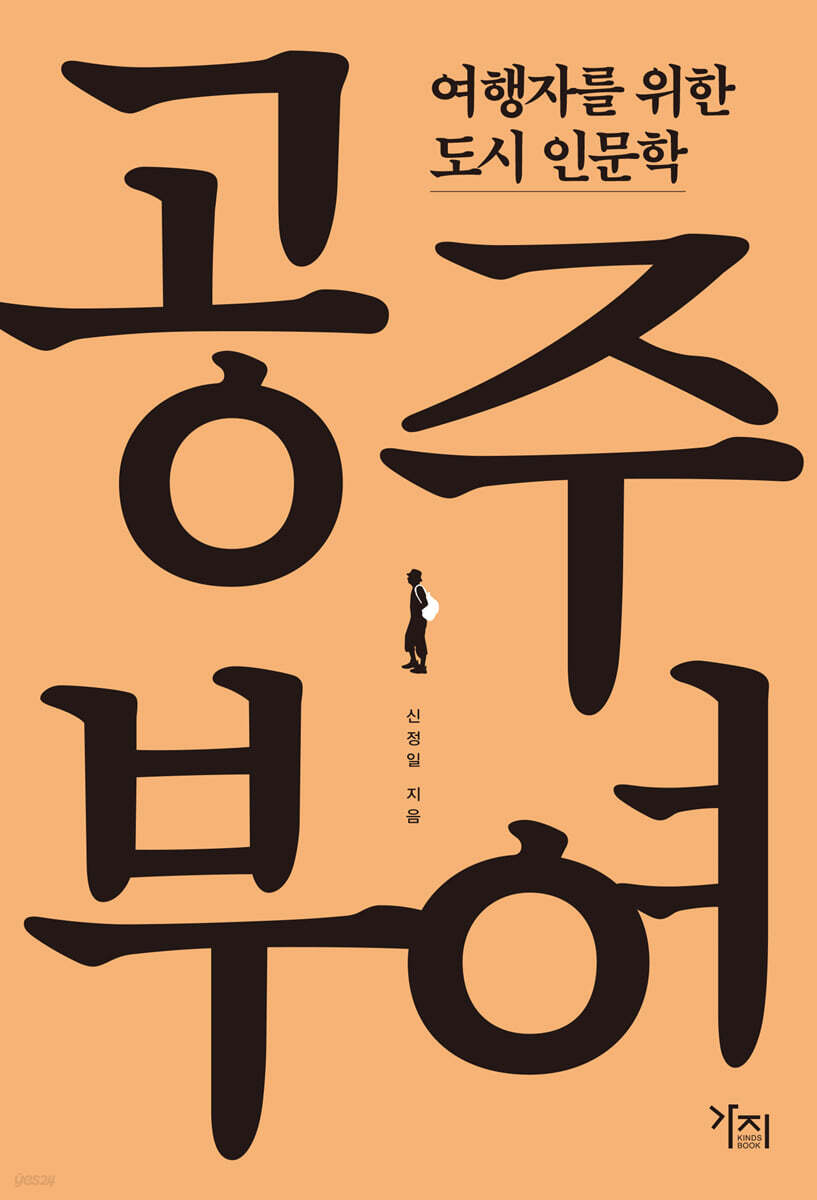
Princess Buyeo
 |
Description
Book Introduction
A Guide to the Humanities of Gongju and Buyeo for the Inquisitive City Traveler
A guide to Munsacheol's journey through time to ancient Baekje
Gongju and Buyeo are cities that fully embody the rise and fall of the Baekje kingdom.
Gongju, the second capital of Baekje, is home to numerous cultural heritage sites, including Gongsanseong Fortress and King Muryeong's Tomb. In addition, countless stories are piled up along Ugeumchi, the site of the fierce battles of the Donghak Peasant Revolution, and the Geumgang River, which has flowed for millennia.
Buyeo, the third capital of Baekje, contains numerous cultural heritages, including the Jeongnimsa Temple Site, Gungnamji Pond, Mt. Busosan, the Baekje Cultural Complex, and Seongheungsanseong Fortress.
The author, a cultural historian who has published over 70 books on Korean history and culture, has lived up to his nickname, “Philosopher on the Road,” by densely incorporating his vast philosophical knowledge into the historical sites of Baekje.
A fascinating docent tour of literature, history, and philosophy for time travelers unfolds, allowing you to reflect on yourself through conversations with the ancient people who lived in that land.
A guide to Munsacheol's journey through time to ancient Baekje
Gongju and Buyeo are cities that fully embody the rise and fall of the Baekje kingdom.
Gongju, the second capital of Baekje, is home to numerous cultural heritage sites, including Gongsanseong Fortress and King Muryeong's Tomb. In addition, countless stories are piled up along Ugeumchi, the site of the fierce battles of the Donghak Peasant Revolution, and the Geumgang River, which has flowed for millennia.
Buyeo, the third capital of Baekje, contains numerous cultural heritages, including the Jeongnimsa Temple Site, Gungnamji Pond, Mt. Busosan, the Baekje Cultural Complex, and Seongheungsanseong Fortress.
The author, a cultural historian who has published over 70 books on Korean history and culture, has lived up to his nickname, “Philosopher on the Road,” by densely incorporating his vast philosophical knowledge into the historical sites of Baekje.
A fascinating docent tour of literature, history, and philosophy for time travelers unfolds, allowing you to reflect on yourself through conversations with the ancient people who lived in that land.
- You can preview some of the book's contents.
Preview
index
introduction
Gongju and Buyeo Humanities Map
Part 1 / The Princess
Going to Baekje's second capital
1.
The capital of Baekje for over 60 years, the center of Chungcheong
2.
Baekje soldiers encountered while walking around Gongsanseong Fortress
3.
Geumgang, as beautiful as its name, ‘silk’
4.
Gomnaru, which blocked the Donghak Peasant Revolution in 1915
5.
Ugeumchi, the final battleground of the Donghak Peasant Army
6.
Shindonan, Gyeryongsan, dreaming of a new royal capital
7.
Jangan-guk, a country established in Gongju by Kim Heon-chang, a member of the Silla royal family
8.
National Treasure Discovered in Songsan-ri Tombs, King Muryeong's Tomb
9.
National Gongju Museum, where you can see the national treasure of King Muryeong's tomb
10.
Seokjang-ri site, showing life in the Paleolithic Age
11.
The Daetongsa Temple site in Banjuk-dong, traced through the remaining relics
12.
Chungcheong Gamyeong, where Chungcheong Province administration took place for 330 years
Walking through the four seasons of beautiful princess
1.
Chunmagoksa Temple, with its beautiful spring scenery
2.
Chugapsa Temple, with its beautiful autumn scenery
3.
A feast of Gyeryongsan Mountain, from Donghaksa Temple to Yongmun Falls
4.
Gongju's first cathedral, built in the late Joseon Dynasty, Jungdong Cathedral
5.
Stork Rock Holy Land, home to the largest number of martyrs in history
6.
Gongju Christian Museum: A Watchdog of Modern and Contemporary History
7.
Geumgang Nature Art Biennale, held at the foot of Yeonmisan Mountain
8.
See you at the Gongju Flower Literature Museum, Bonghwang-dong Urban Regeneration Project
9.
Sangsin-ri Stone Wall Village, a Tour with Gyeryongsan Ceramic Art Village
10.
Jangseung Village Light Festival, where you can enjoy the Jangseung that resembles you.
Part 2 / Buyeo
Climb Nakhwaam Rock and look out over the Baekma River
1.
Wherever you walk, you are surrounded by historical relics, the last capital of Baekje.
2.
Gungnamji Pond, home to the largest number of lotus species in the country
3.
Jeongnimsa Temple Site, home to the beautiful Baekje Five-Story Stone Pagoda
4.
Busosan, the guardian mountain of Buyeo
5.
Samchungsa Shrine, honoring the three loyal subjects of Baekje
6.
Pavilions and towers of Busosanseong Fortress, including Yeongilru and Gunchang Site
7.
Nakhwaam and Baekhwajeong, where the three thousand palace ladies fell like flower petals
8.
Daewangpo and Goransa Temple, which hold the sad legend of Baekma River
9.
Wangheungsa Temple Site, the only Baekje temple whose location has been precisely identified
Meet the culture and people of Buyeo
1.
Reviving a Lost Kingdom: Baekje Cultural Complex
2.
National Buyeo Museum, where you can see the Baekje Gilt-Bronze Incense Burner
3.
Neungsan-ri Ancient Tombs, where the kings of the Sabi era sleep
4.
Muryangsa Temple, a unique Buddhist architecture from the mid-Joseon period
5.
Kim Si-seup, who died at Muryangsa Temple
6.
The ancient towns of Buyeo that disappeared into history
7.
The Sorrow and Romance of Subukjeong and Jaondae: The Jaongil Project
8.
Shells gone, national poet Shin Dong-yup
9.
Busan (浮山), closely related to Joseon Dynasty scholar Lee Gyeong-yeo
10.
The sad story of a general who lost his country, Eunsan Byeolsinje
11.
Yuwangsan Mountain, where people lamented the loss of their country
supplement
Recommended Course for "Walking through Gongju and Buyeo Cultural Tour"
Princess #1 A beautiful walking path along the Gongsanseong Fortress
Princess #2 A historical walk through the city that transcends time and space
Princess #3 Standing in front of Magoksa Temple after returning to Taehwasan Mountain
Buyeo #1 A tour of Buyeo's downtown area, starting from Gungnamji Pond
Buyeo #2 Walking through the beautiful and historic Seongheungsanseong Fortress and Daejosa Temple
Buyeo #3 Walking into the old town of Hongsan
Search_Reading Princess and Buyeo by Keyword
Gongju and Buyeo Humanities Map
Part 1 / The Princess
Going to Baekje's second capital
1.
The capital of Baekje for over 60 years, the center of Chungcheong
2.
Baekje soldiers encountered while walking around Gongsanseong Fortress
3.
Geumgang, as beautiful as its name, ‘silk’
4.
Gomnaru, which blocked the Donghak Peasant Revolution in 1915
5.
Ugeumchi, the final battleground of the Donghak Peasant Army
6.
Shindonan, Gyeryongsan, dreaming of a new royal capital
7.
Jangan-guk, a country established in Gongju by Kim Heon-chang, a member of the Silla royal family
8.
National Treasure Discovered in Songsan-ri Tombs, King Muryeong's Tomb
9.
National Gongju Museum, where you can see the national treasure of King Muryeong's tomb
10.
Seokjang-ri site, showing life in the Paleolithic Age
11.
The Daetongsa Temple site in Banjuk-dong, traced through the remaining relics
12.
Chungcheong Gamyeong, where Chungcheong Province administration took place for 330 years
Walking through the four seasons of beautiful princess
1.
Chunmagoksa Temple, with its beautiful spring scenery
2.
Chugapsa Temple, with its beautiful autumn scenery
3.
A feast of Gyeryongsan Mountain, from Donghaksa Temple to Yongmun Falls
4.
Gongju's first cathedral, built in the late Joseon Dynasty, Jungdong Cathedral
5.
Stork Rock Holy Land, home to the largest number of martyrs in history
6.
Gongju Christian Museum: A Watchdog of Modern and Contemporary History
7.
Geumgang Nature Art Biennale, held at the foot of Yeonmisan Mountain
8.
See you at the Gongju Flower Literature Museum, Bonghwang-dong Urban Regeneration Project
9.
Sangsin-ri Stone Wall Village, a Tour with Gyeryongsan Ceramic Art Village
10.
Jangseung Village Light Festival, where you can enjoy the Jangseung that resembles you.
Part 2 / Buyeo
Climb Nakhwaam Rock and look out over the Baekma River
1.
Wherever you walk, you are surrounded by historical relics, the last capital of Baekje.
2.
Gungnamji Pond, home to the largest number of lotus species in the country
3.
Jeongnimsa Temple Site, home to the beautiful Baekje Five-Story Stone Pagoda
4.
Busosan, the guardian mountain of Buyeo
5.
Samchungsa Shrine, honoring the three loyal subjects of Baekje
6.
Pavilions and towers of Busosanseong Fortress, including Yeongilru and Gunchang Site
7.
Nakhwaam and Baekhwajeong, where the three thousand palace ladies fell like flower petals
8.
Daewangpo and Goransa Temple, which hold the sad legend of Baekma River
9.
Wangheungsa Temple Site, the only Baekje temple whose location has been precisely identified
Meet the culture and people of Buyeo
1.
Reviving a Lost Kingdom: Baekje Cultural Complex
2.
National Buyeo Museum, where you can see the Baekje Gilt-Bronze Incense Burner
3.
Neungsan-ri Ancient Tombs, where the kings of the Sabi era sleep
4.
Muryangsa Temple, a unique Buddhist architecture from the mid-Joseon period
5.
Kim Si-seup, who died at Muryangsa Temple
6.
The ancient towns of Buyeo that disappeared into history
7.
The Sorrow and Romance of Subukjeong and Jaondae: The Jaongil Project
8.
Shells gone, national poet Shin Dong-yup
9.
Busan (浮山), closely related to Joseon Dynasty scholar Lee Gyeong-yeo
10.
The sad story of a general who lost his country, Eunsan Byeolsinje
11.
Yuwangsan Mountain, where people lamented the loss of their country
supplement
Recommended Course for "Walking through Gongju and Buyeo Cultural Tour"
Princess #1 A beautiful walking path along the Gongsanseong Fortress
Princess #2 A historical walk through the city that transcends time and space
Princess #3 Standing in front of Magoksa Temple after returning to Taehwasan Mountain
Buyeo #1 A tour of Buyeo's downtown area, starting from Gungnamji Pond
Buyeo #2 Walking through the beautiful and historic Seongheungsanseong Fortress and Daejosa Temple
Buyeo #3 Walking into the old town of Hongsan
Search_Reading Princess and Buyeo by Keyword
Detailed image

Into the book
When King Injo stayed here, the Im family presented him with rice cakes soaked in soybean paste.
The story that the taste was so good that he asked for the name, but since no one knew, he named it 'Imjeolmi (任+絶味)' after that person's surname, and that is how it became the Injeolmi of today is said to have been created at Ssangsujeong.
--- p.30
The Gomnaru Geumgang River was the 38th parallel and the ceasefire line that could not be crossed in the winter of the year of Gap-o.
The Donghak Peasant Army's earnest wish to advance to Seoul, to conquer Gongju and open a new world by marching on Seoul with the lofty hope of "Tomorrow is Gongju, the day after tomorrow is Suwon, and finally Seoul," was washed away like the blue waters of the Geumgang River.
--- p.39
The coincidence happened again in 1971.
While construction was underway to prevent water from seeping between Tomb No. 5 and Tomb No. 6, a monumental tomb that will remain in the history of Korean archaeological excavations was discovered.
In 1940, when he was about to leave the princess, Karube Jion said, “I have investigated more than 1,000 Baekje tombs.” The tomb that survived the eyes of countless grave robbers, including Karube, was King Muryeong’s tomb.
--- p.58
It was in 1602 (the 35th year of King Seonjo's reign) that the military camp in Chungju was moved to Gongju.
The reason for the move was that while most of the Chungju area was reduced to ashes during the Imjin War, Gongju suffered less damage than Chungju, although it was temporarily captured during the Byeongja War.
In addition, while Chungju is located in the northeastern part of Chungcheong Province, Gongju is located at a transportation hub that connects the Geumgang River and other parts of Chungcheong Province.
--- p.84
A man named Lee Seo-bang whom he met at a temple out of the blue recommended Magoksa Temple, and that connection eventually led to Kim Gu shaving his head and entering the temple.
Three years later, Kim Gu left for Gyeongseong, saying, "I will go to Geumgangsan Mountain, study the meaning of the scriptures, and become a devoted Buddhist for the rest of my life." The following words he left in Baekbeom Ilji provide insight into his intentions.
--- p.96
The pagoda, quietly hidden under a banyan tree, is an octagonal round building with the base, body, and top all made of octagonal shapes. The base features celestial beings playing musical instruments on a waving cloud-patterned sculpture, which is unique.
The content of the sculptures is so diverse that it is considered one of the best relics among the stone pagodas from the Goryeo Dynasty.
--- p.103
The Stork Rock Holy Site on Wangneung-ro in Gongju-si is the place that produced the most martyrs in Korean history.
The name Stork Rock comes from the fact that pine trees grow over the rock, which is where many storks live. Another story says that criminals were dragged to the rock with a hangswae (a sword placed around their neck) and executed, so it is also called Hangswae Rock.
--- p.119
Buyeo, the land of dawn that witnessed the rise and fall of Baekje as the capital for 123 years, has few relics from Baekje.
As someone once said, "If you don't go to Buyeo with imagination, there's nothing to see," and there are no cultural heritage sites in Buyeo City or even in the Mt. Busosan area that convey the traces of that day.
Instead, Buyeo has the Eight Scenic Views of Buyeo.
--- p.143
It is presumed that Gungnamji was not only a place where the king and nobles enjoyed leisure activities, but also served as an outer moat to ward off enemies.
When examining the current ruins, it is believed that it was a natural curved site that preserved the natural topography.
In summer, the largest number of lotus species in the country, including white lotus, red lotus, water lily, and prickly lotus, bloom and fall here, and the Lotus Festival hosted by Buyeo County is held every summer.
--- p.149
As the nation fell, Baekje's capital, Sabi Castle, became a sea of fire. The only one to survive was the five-story stone pagoda at Jeongnimsa Temple, which boasts a beautiful, refined, and noble elegance.
The stone pagoda is 8.33 meters high, and its structure is similar to that of most stone pagodas: a foundation stone is built, a base is formed, a five-story tower body is placed on top of it, and a finial is formed at the top.
--- p.152
The fact that the nature of Busosanseong Fortress has been revealed as part of Sabi City, the last capital of Baekje during the Sabi period and as the royal palace of Baekje, has very important academic significance.
Judging from the presence of military depots and building sites inside, it is presumed that it was used for military purposes in times of emergency, but in peacetime, it served as a secret garden for the king and nobles to enjoy, taking advantage of the beautiful scenery of the Baekma River and Busosan Mountain.
--- p.159
The difference between the legend and the facts created later is this great.
It is thought that at that time, Baekje's national power did not even have 300 palace maids.
Considering the record that King Uija had 41 illegitimate children, and that he appointed them as Jwapyeong and granted them fiefs, it is estimated that he had over 100 children and even more palace maids.
--- p.174
The spring behind Goransa Temple, where Sangchon Shin Heum, a scholar-official of the mid-Joseon Dynasty, wrote a poem titled “Evening Scenery of Goransa Temple,” is famous as the water used by the kings of Baekje.
When the king drank the medicinal water, he floated a golani leaf on the water.
Regarding Gorancho, it is recorded in the “Hyangbangyakseongdaejeon” compiled during the reign of King Sejong of Joseon. It is a mysterious perennial plant that the great monk Wonhyo of Silla said he knew that Gorancho existed upstream from the taste of the water he drank from the lower reaches of the Baekma River.
--- p.178
The Baekje Gilt-Bronze Incense Burner was excavated from a rice paddy west of the Neungsan-ri Ancient Tombs on December 12, 1993.
It was truly a miracle that it had suddenly appeared from a mud pit, untouched by any damage, transcending 1,300 years of space and time.
This incense burner, which is believed to have been used in ceremonies related to Buddhism, the state religion, is made primarily of bronze and plated, and consists of a lid, body, and stand.
--- p.194
The last place that Kim Si-seup, who considered the world his home and wandered his entire life, visited was Muryangsa Temple on Mansusan Mountain in Oesan-myeon, Buyeo-gun.
Why did he choose Muryangsa Temple as the place to spend his final years? Little is known about his life at Muryangsa Temple.
It is said that he painted his own portrait here and evaluated himself by saying, “Your appearance is extremely weak and your words are unreasonable; you should be thrown into the pit.”
--- p.216
Young, ambitious writers came into the village one by one to 'warm themselves up', and the empty space began to transform into various cultural spaces.
It has been reborn with the warp of crafts and the weft of culture, including the workshops and showrooms of traditional craftsmen, local food restaurants, cafes and bookstores, and Hanok living experience centers.
--- p.232
Shin Dong-yup's [Geumgang], published in 1967 with a 50,000 won grant from his fan club, played a role in bringing the magnificent revolution of 100 years ago, which had been dormant for a long time, to the center of literature and history.
He, who formed the two axes of national literature together with Kim Su-yeong, passed away at the age of thirty-nine.
--- p.234
The Eunsan Byeolsinje is characterized by being a general's ritual related to the fall of Baekje.
The gods of Byeolsinje are Bokshin and Dochim, and the ritual includes a list of generals with the names of famous generals from ancient China and Korea, and their portraits are enshrined in Byeolsinje.
Because it tells the sad story of a general who lost his country, people on horseback appear, and rituals such as wearing yungbok (an old military uniform made of a cheollik and juju) and setting up camp are featured.
The story that the taste was so good that he asked for the name, but since no one knew, he named it 'Imjeolmi (任+絶味)' after that person's surname, and that is how it became the Injeolmi of today is said to have been created at Ssangsujeong.
--- p.30
The Gomnaru Geumgang River was the 38th parallel and the ceasefire line that could not be crossed in the winter of the year of Gap-o.
The Donghak Peasant Army's earnest wish to advance to Seoul, to conquer Gongju and open a new world by marching on Seoul with the lofty hope of "Tomorrow is Gongju, the day after tomorrow is Suwon, and finally Seoul," was washed away like the blue waters of the Geumgang River.
--- p.39
The coincidence happened again in 1971.
While construction was underway to prevent water from seeping between Tomb No. 5 and Tomb No. 6, a monumental tomb that will remain in the history of Korean archaeological excavations was discovered.
In 1940, when he was about to leave the princess, Karube Jion said, “I have investigated more than 1,000 Baekje tombs.” The tomb that survived the eyes of countless grave robbers, including Karube, was King Muryeong’s tomb.
--- p.58
It was in 1602 (the 35th year of King Seonjo's reign) that the military camp in Chungju was moved to Gongju.
The reason for the move was that while most of the Chungju area was reduced to ashes during the Imjin War, Gongju suffered less damage than Chungju, although it was temporarily captured during the Byeongja War.
In addition, while Chungju is located in the northeastern part of Chungcheong Province, Gongju is located at a transportation hub that connects the Geumgang River and other parts of Chungcheong Province.
--- p.84
A man named Lee Seo-bang whom he met at a temple out of the blue recommended Magoksa Temple, and that connection eventually led to Kim Gu shaving his head and entering the temple.
Three years later, Kim Gu left for Gyeongseong, saying, "I will go to Geumgangsan Mountain, study the meaning of the scriptures, and become a devoted Buddhist for the rest of my life." The following words he left in Baekbeom Ilji provide insight into his intentions.
--- p.96
The pagoda, quietly hidden under a banyan tree, is an octagonal round building with the base, body, and top all made of octagonal shapes. The base features celestial beings playing musical instruments on a waving cloud-patterned sculpture, which is unique.
The content of the sculptures is so diverse that it is considered one of the best relics among the stone pagodas from the Goryeo Dynasty.
--- p.103
The Stork Rock Holy Site on Wangneung-ro in Gongju-si is the place that produced the most martyrs in Korean history.
The name Stork Rock comes from the fact that pine trees grow over the rock, which is where many storks live. Another story says that criminals were dragged to the rock with a hangswae (a sword placed around their neck) and executed, so it is also called Hangswae Rock.
--- p.119
Buyeo, the land of dawn that witnessed the rise and fall of Baekje as the capital for 123 years, has few relics from Baekje.
As someone once said, "If you don't go to Buyeo with imagination, there's nothing to see," and there are no cultural heritage sites in Buyeo City or even in the Mt. Busosan area that convey the traces of that day.
Instead, Buyeo has the Eight Scenic Views of Buyeo.
--- p.143
It is presumed that Gungnamji was not only a place where the king and nobles enjoyed leisure activities, but also served as an outer moat to ward off enemies.
When examining the current ruins, it is believed that it was a natural curved site that preserved the natural topography.
In summer, the largest number of lotus species in the country, including white lotus, red lotus, water lily, and prickly lotus, bloom and fall here, and the Lotus Festival hosted by Buyeo County is held every summer.
--- p.149
As the nation fell, Baekje's capital, Sabi Castle, became a sea of fire. The only one to survive was the five-story stone pagoda at Jeongnimsa Temple, which boasts a beautiful, refined, and noble elegance.
The stone pagoda is 8.33 meters high, and its structure is similar to that of most stone pagodas: a foundation stone is built, a base is formed, a five-story tower body is placed on top of it, and a finial is formed at the top.
--- p.152
The fact that the nature of Busosanseong Fortress has been revealed as part of Sabi City, the last capital of Baekje during the Sabi period and as the royal palace of Baekje, has very important academic significance.
Judging from the presence of military depots and building sites inside, it is presumed that it was used for military purposes in times of emergency, but in peacetime, it served as a secret garden for the king and nobles to enjoy, taking advantage of the beautiful scenery of the Baekma River and Busosan Mountain.
--- p.159
The difference between the legend and the facts created later is this great.
It is thought that at that time, Baekje's national power did not even have 300 palace maids.
Considering the record that King Uija had 41 illegitimate children, and that he appointed them as Jwapyeong and granted them fiefs, it is estimated that he had over 100 children and even more palace maids.
--- p.174
The spring behind Goransa Temple, where Sangchon Shin Heum, a scholar-official of the mid-Joseon Dynasty, wrote a poem titled “Evening Scenery of Goransa Temple,” is famous as the water used by the kings of Baekje.
When the king drank the medicinal water, he floated a golani leaf on the water.
Regarding Gorancho, it is recorded in the “Hyangbangyakseongdaejeon” compiled during the reign of King Sejong of Joseon. It is a mysterious perennial plant that the great monk Wonhyo of Silla said he knew that Gorancho existed upstream from the taste of the water he drank from the lower reaches of the Baekma River.
--- p.178
The Baekje Gilt-Bronze Incense Burner was excavated from a rice paddy west of the Neungsan-ri Ancient Tombs on December 12, 1993.
It was truly a miracle that it had suddenly appeared from a mud pit, untouched by any damage, transcending 1,300 years of space and time.
This incense burner, which is believed to have been used in ceremonies related to Buddhism, the state religion, is made primarily of bronze and plated, and consists of a lid, body, and stand.
--- p.194
The last place that Kim Si-seup, who considered the world his home and wandered his entire life, visited was Muryangsa Temple on Mansusan Mountain in Oesan-myeon, Buyeo-gun.
Why did he choose Muryangsa Temple as the place to spend his final years? Little is known about his life at Muryangsa Temple.
It is said that he painted his own portrait here and evaluated himself by saying, “Your appearance is extremely weak and your words are unreasonable; you should be thrown into the pit.”
--- p.216
Young, ambitious writers came into the village one by one to 'warm themselves up', and the empty space began to transform into various cultural spaces.
It has been reborn with the warp of crafts and the weft of culture, including the workshops and showrooms of traditional craftsmen, local food restaurants, cafes and bookstores, and Hanok living experience centers.
--- p.232
Shin Dong-yup's [Geumgang], published in 1967 with a 50,000 won grant from his fan club, played a role in bringing the magnificent revolution of 100 years ago, which had been dormant for a long time, to the center of literature and history.
He, who formed the two axes of national literature together with Kim Su-yeong, passed away at the age of thirty-nine.
--- p.234
The Eunsan Byeolsinje is characterized by being a general's ritual related to the fall of Baekje.
The gods of Byeolsinje are Bokshin and Dochim, and the ritual includes a list of generals with the names of famous generals from ancient China and Korea, and their portraits are enshrined in Byeolsinje.
Because it tells the sad story of a general who lost his country, people on horseback appear, and rituals such as wearing yungbok (an old military uniform made of a cheollik and juju) and setting up camp are featured.
--- p.243
Publisher's Review
About the [Urban Humanities for Travelers] series
Rediscovering local culture that you'll love even more the more you know about it
[Urban Humanities for Travelers], abbreviated as 'Yedoin', is a cultural guidebook that takes a deeper look at cities across the country loved by domestic travelers through a humanistic perspective, and reads the roots and spirit behind the scenery.
Authors who were born in the city or have stayed there for a long time for various reasons and have witnessed the flow and changes of culture draw stories from the region's major historical and geographical backgrounds, unique foods and festivals, architecture and residential culture, local language and representative figures, and various customs and lifestyles, allowing readers to understand the uniqueness and differences of the region.
It was planned to provide the information necessary to discover and understand the narrative of space to those who enjoy slow city travel in search of humanistic stories, those who plan to live in or move to the city at least once, and today's young generation who are attempting to 'rediscover the local'.
The ancient capital where the rise and fall of Baekje remain intact
Historical figures add to the charm of a trip to Gongju and Buyeo.
There are many adjectives that come before the word travel.
Fun, exciting, beautiful, touching, relaxing… .
However, when we think of the names of our country's cities in connection with travel, the adjectives that come to mind are very limited.
It may be because the city's individuality and charm are not well known, or because it has not been sufficiently promoted with a specialized image.
In that respect, the princess and Buyeo have clear and accurate images.
Historical, pious, Baekje capital, ancient culture, royal tombs, museums… .
It's not a fun or exciting travel destination, but it's a place where you can have a fulfilling time with plenty to study and think about.
But wouldn't it be a bit boring?
Most of the image is correct.
Gongju and Buyeo are Korea's top-class historical and cultural tour sites, rich in history and cultural heritage.
Gongju, the second capital of Baekje for 64 years, is home to many cultural heritage sites, including the beautiful Gongsanseong Fortress and the Royal Tomb of King Muryeong, as well as a treasure trove of Buddhist cultural assets, including Magoksa Temple, Donghaksa Temple, and Gapsa Temple.
There are countless stories scattered around Ugeumchi, the battleground of the Donghak Peasant Revolution, and the Geumgang River, which has flowed for millennia.
What about Buyeo, Baekje's third capital for 123 years? Its cultural heritage includes the Jeongnimsa Temple site and Gungnamji Pond, where only pagodas and Buddhist statues remain; Busosan Mountain and the Baekje Cultural Complex, where Baekje's historical heritage is scattered; and the ancient towns of Hongsan, Imcheon, and Seokseong, including Seongheungsanseong Fortress.
The historic Muryangsa Temple and Daejosa Temple, where Kim Si-seup, an outsider of Joseon, spent his final days, are also located here.
There is endless stuff to study and think about.
But the image of it being boring is not correct.
If you know a little about the two cities before you leave, you won't be bored at all.
Walking through the castle walls of Gongju, you can picture King Injo gorging himself on injeolmi, and at Sabi Castle in Buyeo, you can follow the backs of King Mu and his son King Uija as they walk while talking, and you will never be bored.
A journey where Baekje soldiers and court ladies, modern-day Donghak Peasant Army members, and independence activists walk together and tell stories of the past—where else can you find such a wonderful travel destination!
This book is a must-read before traveling to either city.
It's like a secret sauce that will break the worries that it might be boring and turn your trip into an exciting historical drama.
The author, who has been creating and running cultural heritage tour programs since 1989, is a natural storyteller and expert in walking tours.
In this book, he cites Samguk Sagi, Samguk Yusa, Sinjeung Dongguk Yeoji Seungram, Jeonggamnok, Taekriji, and Injo Sillok to smoothly tell the story of Baekje, going back and forth between past and present, fiction and truth.
The story is enriched by bringing in German philosophers Nietzsche and Karl Jaspers, Portuguese writer Fernando Pessua, and ancient Roman politician Cicero into the conversations with ancestors.
The book is largely divided into the princess and buyeo chapters.
The princess series consists of two parts: Part 1, ‘Going to Baekje’s second capital’ and Part 2, ‘Walking through Gongju, a city beautiful in all four seasons.’
Part 1, which is a story from long ago, examines the position of Gongju, which served as the capital of Baekje and the center of the Chungcheong region from the reign of King Munju to King Seong, and introduces stories handed down in Geumgang, Gyeryongsan Mountain, Gongsanseong Fortress, Gomnaru, and Ugeumchi.
It also explains the National Gongju Museum, where you can see the Muryeong Royal Tomb, which miraculously survived the eyes of countless grave robbers, and the Muryeong Royal Tomb National Treasure.
Part 2, which is a story about the recent past and present, introduces the beautiful nature of Gongju, such as Magoksa Temple, Gapsa Temple, Gyeryongsan Mountain, and Donghaksa Temple, and places related to religious history, such as Jungdong Cathedral, Stork Rock Holy Land, and Gongju Christian Museum, as well as places related to culture and arts, such as Geumgang Nature Art Biennale, Bonghwang-dong Urban Regeneration Project, Sangsin-ri Stone Wall Village, and Jangseung Village Light Festival.
The Buyeo section consists of two parts: Part 1, ‘Climbing Nakhwaam and Looking at the Baekma River’ and Part 2, ‘Meeting the Culture and People of Buyeo.’
Buyeo, the last capital of Baekje, is a place where you can find historical relics wherever you go.
The ruins are concentrated in a close enough distance that you can walk around them.
Part 1 is a series of historical sites introduced by the author himself as he walks through them, including Gungnamji Pond, Jeongnimsa Temple Site, Busosan Mountain and Busosan Fortress, Samchungsa Temple, Gungnyeo Temple, Nakhwaam Hermitage, Baekhwajeong Pavilion, and Goransa Temple within Busosan Fortress, appearing and disappearing one after another.
Part 2 shows the essence of Baekje culture through historical figures and traditions, as well as the Baekje Cultural Complex, Buyeo National Museum, Neungsan-ri Ancient Tombs, Muryangsa Temple, and Busan (Busan).
True beauty is 'simple but not shabby (儉而不陋), splendid but not extravagant (華而不侈)'.
Rediscovering local culture that you'll love even more the more you know about it
[Urban Humanities for Travelers], abbreviated as 'Yedoin', is a cultural guidebook that takes a deeper look at cities across the country loved by domestic travelers through a humanistic perspective, and reads the roots and spirit behind the scenery.
Authors who were born in the city or have stayed there for a long time for various reasons and have witnessed the flow and changes of culture draw stories from the region's major historical and geographical backgrounds, unique foods and festivals, architecture and residential culture, local language and representative figures, and various customs and lifestyles, allowing readers to understand the uniqueness and differences of the region.
It was planned to provide the information necessary to discover and understand the narrative of space to those who enjoy slow city travel in search of humanistic stories, those who plan to live in or move to the city at least once, and today's young generation who are attempting to 'rediscover the local'.
The ancient capital where the rise and fall of Baekje remain intact
Historical figures add to the charm of a trip to Gongju and Buyeo.
There are many adjectives that come before the word travel.
Fun, exciting, beautiful, touching, relaxing… .
However, when we think of the names of our country's cities in connection with travel, the adjectives that come to mind are very limited.
It may be because the city's individuality and charm are not well known, or because it has not been sufficiently promoted with a specialized image.
In that respect, the princess and Buyeo have clear and accurate images.
Historical, pious, Baekje capital, ancient culture, royal tombs, museums… .
It's not a fun or exciting travel destination, but it's a place where you can have a fulfilling time with plenty to study and think about.
But wouldn't it be a bit boring?
Most of the image is correct.
Gongju and Buyeo are Korea's top-class historical and cultural tour sites, rich in history and cultural heritage.
Gongju, the second capital of Baekje for 64 years, is home to many cultural heritage sites, including the beautiful Gongsanseong Fortress and the Royal Tomb of King Muryeong, as well as a treasure trove of Buddhist cultural assets, including Magoksa Temple, Donghaksa Temple, and Gapsa Temple.
There are countless stories scattered around Ugeumchi, the battleground of the Donghak Peasant Revolution, and the Geumgang River, which has flowed for millennia.
What about Buyeo, Baekje's third capital for 123 years? Its cultural heritage includes the Jeongnimsa Temple site and Gungnamji Pond, where only pagodas and Buddhist statues remain; Busosan Mountain and the Baekje Cultural Complex, where Baekje's historical heritage is scattered; and the ancient towns of Hongsan, Imcheon, and Seokseong, including Seongheungsanseong Fortress.
The historic Muryangsa Temple and Daejosa Temple, where Kim Si-seup, an outsider of Joseon, spent his final days, are also located here.
There is endless stuff to study and think about.
But the image of it being boring is not correct.
If you know a little about the two cities before you leave, you won't be bored at all.
Walking through the castle walls of Gongju, you can picture King Injo gorging himself on injeolmi, and at Sabi Castle in Buyeo, you can follow the backs of King Mu and his son King Uija as they walk while talking, and you will never be bored.
A journey where Baekje soldiers and court ladies, modern-day Donghak Peasant Army members, and independence activists walk together and tell stories of the past—where else can you find such a wonderful travel destination!
This book is a must-read before traveling to either city.
It's like a secret sauce that will break the worries that it might be boring and turn your trip into an exciting historical drama.
The author, who has been creating and running cultural heritage tour programs since 1989, is a natural storyteller and expert in walking tours.
In this book, he cites Samguk Sagi, Samguk Yusa, Sinjeung Dongguk Yeoji Seungram, Jeonggamnok, Taekriji, and Injo Sillok to smoothly tell the story of Baekje, going back and forth between past and present, fiction and truth.
The story is enriched by bringing in German philosophers Nietzsche and Karl Jaspers, Portuguese writer Fernando Pessua, and ancient Roman politician Cicero into the conversations with ancestors.
The book is largely divided into the princess and buyeo chapters.
The princess series consists of two parts: Part 1, ‘Going to Baekje’s second capital’ and Part 2, ‘Walking through Gongju, a city beautiful in all four seasons.’
Part 1, which is a story from long ago, examines the position of Gongju, which served as the capital of Baekje and the center of the Chungcheong region from the reign of King Munju to King Seong, and introduces stories handed down in Geumgang, Gyeryongsan Mountain, Gongsanseong Fortress, Gomnaru, and Ugeumchi.
It also explains the National Gongju Museum, where you can see the Muryeong Royal Tomb, which miraculously survived the eyes of countless grave robbers, and the Muryeong Royal Tomb National Treasure.
Part 2, which is a story about the recent past and present, introduces the beautiful nature of Gongju, such as Magoksa Temple, Gapsa Temple, Gyeryongsan Mountain, and Donghaksa Temple, and places related to religious history, such as Jungdong Cathedral, Stork Rock Holy Land, and Gongju Christian Museum, as well as places related to culture and arts, such as Geumgang Nature Art Biennale, Bonghwang-dong Urban Regeneration Project, Sangsin-ri Stone Wall Village, and Jangseung Village Light Festival.
The Buyeo section consists of two parts: Part 1, ‘Climbing Nakhwaam and Looking at the Baekma River’ and Part 2, ‘Meeting the Culture and People of Buyeo.’
Buyeo, the last capital of Baekje, is a place where you can find historical relics wherever you go.
The ruins are concentrated in a close enough distance that you can walk around them.
Part 1 is a series of historical sites introduced by the author himself as he walks through them, including Gungnamji Pond, Jeongnimsa Temple Site, Busosan Mountain and Busosan Fortress, Samchungsa Temple, Gungnyeo Temple, Nakhwaam Hermitage, Baekhwajeong Pavilion, and Goransa Temple within Busosan Fortress, appearing and disappearing one after another.
Part 2 shows the essence of Baekje culture through historical figures and traditions, as well as the Baekje Cultural Complex, Buyeo National Museum, Neungsan-ri Ancient Tombs, Muryangsa Temple, and Busan (Busan).
True beauty is 'simple but not shabby (儉而不陋), splendid but not extravagant (華而不侈)'.
GOODS SPECIFICS
- Publication date: July 20, 2021
- Page count, weight, size: 272 pages | 288g | 128*188*17mm
- ISBN13: 9791186440681
- ISBN10: 1186440686
You may also like
카테고리
korean


korean

![GQ KOREA Mark (Monthly): December [2025]](http://librairie.coreenne.fr/cdn/shop/files/8ef265dbbfbf186523ed75ba7319009d.jpg?v=1765340328&width=3840)


