

Gangneung
 |
Description
Book Introduction
A Gangneung travel book full of stories
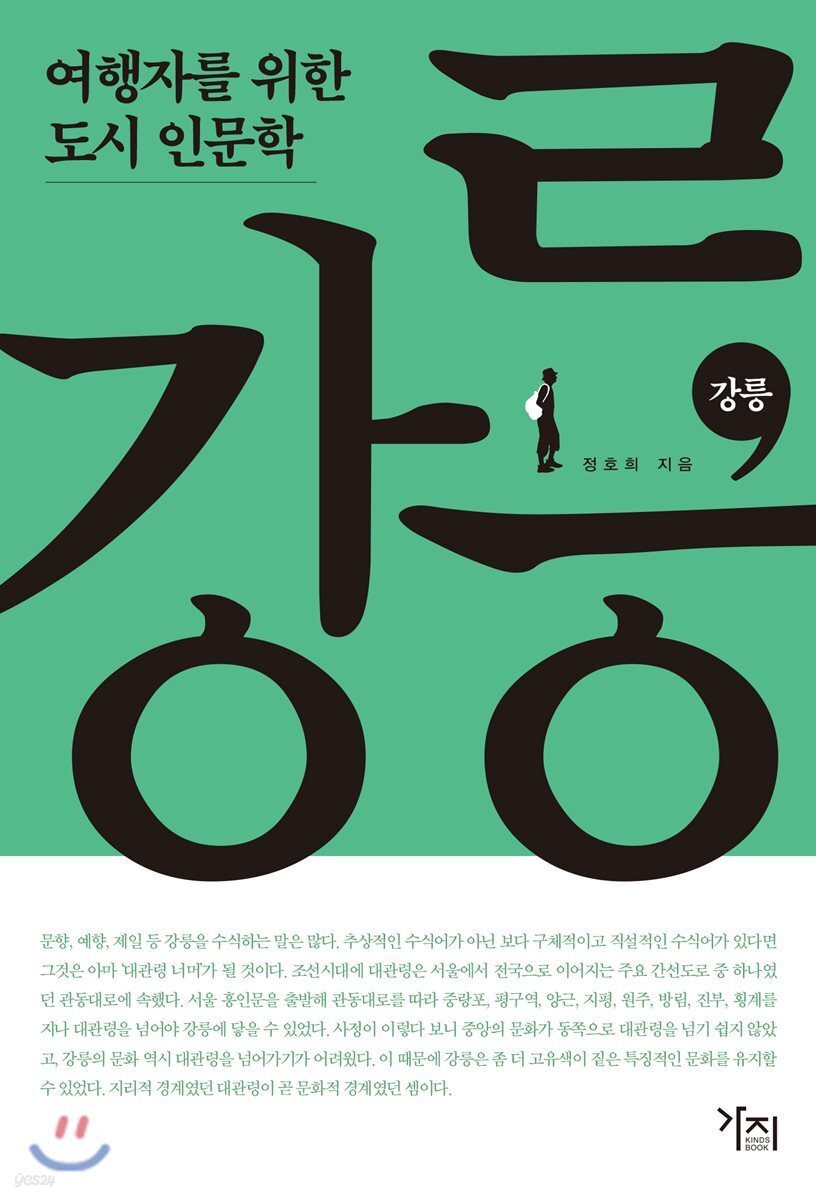
A humanistic guide to everything that makes up today's Gangneung
A guide to Gangneung's cultural travels for discerning city travelers.
This provides an opportunity to delve deeper into Gangneung, a beautiful seaside city and a historical city filled with the scent of literature, art, and pine trees, from a humanistic perspective.
A professional curator who has been in charge of artifact management and exhibition planning at Gangneung Ojukheon/City Museum for a long time wrote about Gangneung's major historical and geographical environments, old folk customs and changing spaces, unique foods and festivals, language, and memorable people, using around 50 keywords.
If coffee, Gyeongpo, and the Independent Film Festival are keywords that attract travelers to Gangneung today, then Ojukheon, Gangneung Danoje Festival, and Hansongjeong are keywords that reveal the roots of the city of Gangneung.
This book meticulously illuminates and explains how the old and the new coexist in one city, creating a robust cultural landscape, through the eyes of a cultural observer and cultural heritage manager who was born and raised here.
A humanistic guide to everything that makes up today's Gangneung
A guide to Gangneung's cultural travels for discerning city travelers.
This provides an opportunity to delve deeper into Gangneung, a beautiful seaside city and a historical city filled with the scent of literature, art, and pine trees, from a humanistic perspective.
A professional curator who has been in charge of artifact management and exhibition planning at Gangneung Ojukheon/City Museum for a long time wrote about Gangneung's major historical and geographical environments, old folk customs and changing spaces, unique foods and festivals, language, and memorable people, using around 50 keywords.
If coffee, Gyeongpo, and the Independent Film Festival are keywords that attract travelers to Gangneung today, then Ojukheon, Gangneung Danoje Festival, and Hansongjeong are keywords that reveal the roots of the city of Gangneung.
This book meticulously illuminates and explains how the old and the new coexist in one city, creating a robust cultural landscape, through the eyes of a cultural observer and cultural heritage manager who was born and raised here.
- You can preview some of the book's contents.
Preview
index
introduction
Gangneung Humanities Map
Part 1: Things that symbolize Gangneung
Daegwallyeong, the boundary that preserved Gangneung's unique culture
A pine-lined town where the scent of pine trees fills every corner of the town
A saying that was said when the wind was strong and it was snowing heavily
Gyeongpo, with its mirror-clear lake
Ojukheon, the house where black bamboo grows
Jeongdongjin, the easternmost point of the Korean Peninsula, where you can go to see the sunrise
Jumunjin Port, a village with a blue sea and a clear sky
Small Geumgangsan Sogeumgang
Baugil, a road that connects the entire perimeter of Gangneung
Green anbandegi spread over a ridge 1,100 meters above sea level
The Olympics and KTX: A Turning Point in Gangneung's History
Part 2: Walking Through Historical Sites
Traces of the people who lived in Gangneung in the past The entire city is a historic site
The Myeongju Royal Tomb, which shows the history of the struggle for royal power 1,200 years ago
The quiet, thousand-year-old temples of Gulsansa Temple, Hansongsa Temple, and Bohyeonsa Temple
Imyeonggwan, a guest house with a striking Sammun Gate, Gangneung's only national treasure
Gangneung Daedohobu government office reborn as a cultural space for citizens
Gangneung Hyanggyo, a traditional public middle school
Obong Seowon and Songdam Seowon, private educational institutions dedicated to Confucius and Yi I
Gyeongpodae, Haewunjeong, and Hohaejeong, pavilions imbued with the elegance of scholars
Hansongjeong, the oldest tea site in Korea
Beautiful Jangwon Missionary Field
Part 3: A City Walk with a Story
Myeongju-dong, an old downtown area where old fame and modern culture blend together
Jungang Market, a traditional market that represents the face of Gangneung
Wolhwa Street, the road of passionate love
What are you eating today? Gangneung food
A walk through a museum with a unique theme, only found in Gangneung
A Midsummer Night's Dream at the Jeongdongjin Independent Film Festival in August
A coffee city that rewrote Korean coffee history
If you are not ashamed of my flowers, then give them as a tribute.
Sea fan road with rough waves beneath your feet
Mother's Heart Piled Up in 3,000 Stone Towers on the Mother's Heart Road
Mountains in the city that feel like friends: Hwabusan, Woldaesan, and Mosanbong
The restored ecosystem blooms at the Gyeongpo Prickly Pear Practice Site.
A recreational forest and arboretum where you can learn about nature and relax your body and mind.
Part 4: Folklore and Customs of Gangneung
Gangneung Danoje Festival: A Space Where God and Humanity Meet
The Gangneung Gwanno Mask Dance brought peace to Gangneung after the suicide of a female retailer.
Kangmun Jinjjobaegi, the village guardian with outstanding sculptural beauty
Youth Senior Citizens Association that does not discriminate between social statuses
Joint New Year's bow with the village chief, Wichon-ri Dobae
The goddesses in the folktales stay at Daegwallyeong Guksa Seoseonang and Jumunjinjiniseonang
Part 5: Gangneung People, Gangneung Spirit
Shin Saimdang, a Joseon Dynasty painter with a distinct legacy
Yulgok Yi I, a leading figure in Neo-Confucianism born in Ojukheon
Heo Nanseolheon, whose poetry collections were published in China, Korea, and Japan
Heo Gyun, a genius ahead of his time, opened a public library.
Kim Si-seup, the Six Martyred Minister who wrote the Geumho Shinhwa
My heart is a lake, Kim Dong-myeong
Gangneung dialect, which captures the lives and emotions of Gangneung people
The proverb, "Alive, Haksan, dead, Seongsan"
A fiery soccer love match
People with strong in-group solidarity: "Since there are three of us, let's stick together."
Appendix_Recommended Course for a Walking Tour of Gangneung
#1 Walk along the lakeside path with historical figures
#2 Step into the old city center
#3 The scenery of the East Sea and the lives of the people living by the sea
#4 The majestic charm of a grove of pine trees
#5 Millennium Dano, Meet the Gods
Search_Read Gangneung by keyword
Gangneung Humanities Map
Part 1: Things that symbolize Gangneung
Daegwallyeong, the boundary that preserved Gangneung's unique culture
A pine-lined town where the scent of pine trees fills every corner of the town
A saying that was said when the wind was strong and it was snowing heavily
Gyeongpo, with its mirror-clear lake
Ojukheon, the house where black bamboo grows
Jeongdongjin, the easternmost point of the Korean Peninsula, where you can go to see the sunrise
Jumunjin Port, a village with a blue sea and a clear sky
Small Geumgangsan Sogeumgang
Baugil, a road that connects the entire perimeter of Gangneung
Green anbandegi spread over a ridge 1,100 meters above sea level
The Olympics and KTX: A Turning Point in Gangneung's History
Part 2: Walking Through Historical Sites
Traces of the people who lived in Gangneung in the past The entire city is a historic site
The Myeongju Royal Tomb, which shows the history of the struggle for royal power 1,200 years ago
The quiet, thousand-year-old temples of Gulsansa Temple, Hansongsa Temple, and Bohyeonsa Temple
Imyeonggwan, a guest house with a striking Sammun Gate, Gangneung's only national treasure
Gangneung Daedohobu government office reborn as a cultural space for citizens
Gangneung Hyanggyo, a traditional public middle school
Obong Seowon and Songdam Seowon, private educational institutions dedicated to Confucius and Yi I
Gyeongpodae, Haewunjeong, and Hohaejeong, pavilions imbued with the elegance of scholars
Hansongjeong, the oldest tea site in Korea
Beautiful Jangwon Missionary Field
Part 3: A City Walk with a Story
Myeongju-dong, an old downtown area where old fame and modern culture blend together
Jungang Market, a traditional market that represents the face of Gangneung
Wolhwa Street, the road of passionate love
What are you eating today? Gangneung food
A walk through a museum with a unique theme, only found in Gangneung
A Midsummer Night's Dream at the Jeongdongjin Independent Film Festival in August
A coffee city that rewrote Korean coffee history
If you are not ashamed of my flowers, then give them as a tribute.
Sea fan road with rough waves beneath your feet
Mother's Heart Piled Up in 3,000 Stone Towers on the Mother's Heart Road
Mountains in the city that feel like friends: Hwabusan, Woldaesan, and Mosanbong
The restored ecosystem blooms at the Gyeongpo Prickly Pear Practice Site.
A recreational forest and arboretum where you can learn about nature and relax your body and mind.
Part 4: Folklore and Customs of Gangneung
Gangneung Danoje Festival: A Space Where God and Humanity Meet
The Gangneung Gwanno Mask Dance brought peace to Gangneung after the suicide of a female retailer.
Kangmun Jinjjobaegi, the village guardian with outstanding sculptural beauty
Youth Senior Citizens Association that does not discriminate between social statuses
Joint New Year's bow with the village chief, Wichon-ri Dobae
The goddesses in the folktales stay at Daegwallyeong Guksa Seoseonang and Jumunjinjiniseonang
Part 5: Gangneung People, Gangneung Spirit
Shin Saimdang, a Joseon Dynasty painter with a distinct legacy
Yulgok Yi I, a leading figure in Neo-Confucianism born in Ojukheon
Heo Nanseolheon, whose poetry collections were published in China, Korea, and Japan
Heo Gyun, a genius ahead of his time, opened a public library.
Kim Si-seup, the Six Martyred Minister who wrote the Geumho Shinhwa
My heart is a lake, Kim Dong-myeong
Gangneung dialect, which captures the lives and emotions of Gangneung people
The proverb, "Alive, Haksan, dead, Seongsan"
A fiery soccer love match
People with strong in-group solidarity: "Since there are three of us, let's stick together."
Appendix_Recommended Course for a Walking Tour of Gangneung
#1 Walk along the lakeside path with historical figures
#2 Step into the old city center
#3 The scenery of the East Sea and the lives of the people living by the sea
#4 The majestic charm of a grove of pine trees
#5 Millennium Dano, Meet the Gods
Search_Read Gangneung by keyword
Detailed image

Into the book
Gangneung borders the East Sea to the east and the Baekdudaegan Mountains to the west.
Exchange between Yeongdong and Yeongseo had to pass through Daegwallyeong, which crosses the Baekdudaegan Mountain Range.
Perhaps that is why the people of Gangneung perceived the world in two ways.
‘Gangneung’ and ‘Beyond Yeong’ are examples.
Here, Young refers to Daegwallyeong.
--- p.19
In Gangneung, Gyeongpo is not simply a word that refers to a lake.
It includes Gyeongpo Beach, which Jeong Cheol sang about as a “white silk stretching ten li,” and Nujeong Gyeongpodae, known as Gangneung’s best scenic spot.
If someone asks you to meet them at Gyeongpo, you must specify the location clearly.
Otherwise, some people might go to the lake and some might go to the beach.
--- p.33
Gulsansa Temple is a temple from the Silla Dynasty located in Haksan-ri, Gujeong-myeon, and now only the site remains.
The towering stone pillars standing tall in the vast plains surrounded by the Baekdudaegan Mountain Range like a windbreak speak of the temple's majestic power.
This 5.4-meter-tall stone pillar, the largest in Korea, is engraved with rough, etched marks.
--- p.92
There are four prominent wooden structures from the Goryeo Dynasty that still exist in Korea.
These include the Geungnakjeon Hall of Bongjeongsa Temple, the Muryangsujeon Hall of Buseoksa Temple, the Daeungjeon Hall of Sudeoksa Temple, and the Sammun Gate of Imyeonggwan in Gangneung.
Unlike the three previous locations, which are temple buildings, Imyeonggwan Sammun is a government building.
--- p.100
A pavilion (樓亭, a building and a pavilion) is built in a place with good natural scenery, on a mountain or hill with a good view of the surrounding scenery, or on the shore of a lake or sea.
Therefore, the correct attitude toward a pavilion is not to look at the pavilion building from the outside, but to look at the outside scenery from inside the pavilion.
The eight scenic views of Gwandong are famous for their beautiful scenery, and there is always a pavilion there. However, what is more impressive is the view from there than the pavilion itself.
--- p.116
Hansongjeong is the oldest tea heritage site remaining in Korea.
It is said that there was a stone pond, a stone well, and a stone well where the Silla Hwarang Yeongrang made tea and drank it, and there are also records of envoys making tea and drinking it.
Now there are a stone well, a stone platform, and a restored stone monument.
--- p.124
In Hwalraejeong, there is a tea room between the room and the veranda.
If, in a good season, you can throw open the folding screen and be served a tea table with well-brewed tea and neatly arranged snacks, you can consider yourself to have enjoyed all the luxuries available at the missionary camp.
After passing Hwalraejeong, you will come across the tall gate, a symbol of upper-class houses during the Joseon Dynasty.
There is a signboard hanging here that reads, “Seongyoyugeo (仙嶠幽居),” meaning a secluded house where immortals reside, and it is in the handwriting of Lee Hee-su, a calligrapher from the late Joseon Dynasty.
--- p.127
In Gangneung, octopus is used not only for ancestral rites and ancestral rites, but also for important events such as weddings and funerals.
If octopus is not included in the table setting, it is considered as a lack of sincerity towards the guests or mourners.
It is said that because Gangneung is a nobleman's town, the octopus with the character for fish (魚) is used, but it seems to be widely used because it is a representative fish species caught in Gangneung.
--- p.137
When it comes to local foods that can be enjoyed in Gangneung, you can't leave out potato-based dishes and Chodang Tofu.
Potato pancakes and potato pancakes are foods that can be enjoyed as a meal without the burden of making them with crops grown in local soil.
The same goes for tofu.
Soybeans are processed in the Gangneung style and used as the main ingredient in preparing healthy side dishes.
--- p.143
Gangneung Subo is an embroidered wrapping cloth produced and collected in the Gwandong region centered around Gangneung.
It is called Gangneung Subo because it has unique formative characteristics that distinguish it from other local embroidered bojagi.
The Gangneung Subo pattern is expressive and colorful.
… When you look at the water droplets, you can feel the freshness even in the leaves, which is why Gangneung water droplets are also called ‘flower droplets.’
--- p.151
It's not often you get the chance to watch a movie in total comfort, with a cool drink in a mosquito net tent.
The Jeongdongjin Independent Film Festival, which allows you to enjoy the same fun as playing in the water at the beach while floating through a movie, offers freedom in viewing methods as well as themes and formats.
--- p.160 [Jeongdongjin Independent Film Festival]
Gangneung is a city with 'fragrance'.
From the scent of pine trees to the scent of tea from the oldest tea heritage site in Korea (Hansongjeong) and the scent of coffee that suits the global era, the scent of fragrance (香) has been added to the scent of hometown (鄕), which was called literary and artistic, creating another code that defines Gangneung.
--- p.162
There is a song that begins with the lyrics, 'The spring flowers of Hwabusan Mountain are blooming, so beautiful.'
This is the school song of Gangneung Girls' High School.
Gangneung Girls' High School opened in 1940 at Gangneung Hyanggyo at the foot of Mt. Hwabusan and moved to Okcheon-dong shortly thereafter.
Once you know the school's history, the lyrics "Hwabusan" in one of the school songs are not out of the blue.
--- p.177
It is said that Gyeongpo Lake was originally much larger than it is now.
The scale can be estimated through surrounding place names such as Jibyeon-dong and Seongyojang.
However, it appears that there was a major change in the ecosystem of Gyeongpo Lake as some of it was reclaimed and expanded into farmland.
It is said that thorny azaleas lived here about 50 years ago, but disappeared long ago, and then bloomed again as if by magic when a wetland was created.
--- p.183
In Gangneung, Dano is the biggest event of the year.
Just as people pay off their debts before the holidays, the people of Gangneung started paying off their debts as Dano approached.
And I drank makgeolli with friends, colleagues, and family at Dano Market with potato pancakes as an appetizer.
As everyone rushed to Dano Market, restaurant and bedding shop owners in Gangneung City grumbled that business was bad because of Dano.
--- p.205
The girl with the small face wears a mask with a smiling face and dances clumsily with the nobleman clown.
The dance moves of the bride wearing a yellow blouse and a crimson skirt with bright sleeves reveal a simple yet awkward charm.
Gwanno Mask Play is a Seonangje mask play performed during the Gangneung Danoje Festival.
In the past, it was performed by going around to various shrines, but now it is performed at the Dano Performance Hall during the Dano period.
--- p.208
The painting ceremony held in Wichon-ri, Seongsan-myeon has a history of over 350 years.
It started as a Daedonggye organized for all village residents in the mid-17th century and has continued to this day.
Until a few decades ago, when the village community was valued, it was common for people to bow to their elders on New Year's Day and then go from house to house to bow to the elders in the neighborhood.
On the other hand, Wichon-ri is a place where the tradition of villagers gathering in one place and exchanging New Year's greetings instead of going from house to house has been passed down for a long time.
--- p.220
Gangneung dialect is special.
Professor Lee Ik-seop, while introducing the characteristics of the Gangneung dialect, emphasized that it 'has long vowels and high tones.'
It was said that the only language in our country that has both of these characteristics is the Gangneung language.
Its major features include the presence of unique grammatical rules and a rich vocabulary.
Exchange between Yeongdong and Yeongseo had to pass through Daegwallyeong, which crosses the Baekdudaegan Mountain Range.
Perhaps that is why the people of Gangneung perceived the world in two ways.
‘Gangneung’ and ‘Beyond Yeong’ are examples.
Here, Young refers to Daegwallyeong.
--- p.19
In Gangneung, Gyeongpo is not simply a word that refers to a lake.
It includes Gyeongpo Beach, which Jeong Cheol sang about as a “white silk stretching ten li,” and Nujeong Gyeongpodae, known as Gangneung’s best scenic spot.
If someone asks you to meet them at Gyeongpo, you must specify the location clearly.
Otherwise, some people might go to the lake and some might go to the beach.
--- p.33
Gulsansa Temple is a temple from the Silla Dynasty located in Haksan-ri, Gujeong-myeon, and now only the site remains.
The towering stone pillars standing tall in the vast plains surrounded by the Baekdudaegan Mountain Range like a windbreak speak of the temple's majestic power.
This 5.4-meter-tall stone pillar, the largest in Korea, is engraved with rough, etched marks.
--- p.92
There are four prominent wooden structures from the Goryeo Dynasty that still exist in Korea.
These include the Geungnakjeon Hall of Bongjeongsa Temple, the Muryangsujeon Hall of Buseoksa Temple, the Daeungjeon Hall of Sudeoksa Temple, and the Sammun Gate of Imyeonggwan in Gangneung.
Unlike the three previous locations, which are temple buildings, Imyeonggwan Sammun is a government building.
--- p.100
A pavilion (樓亭, a building and a pavilion) is built in a place with good natural scenery, on a mountain or hill with a good view of the surrounding scenery, or on the shore of a lake or sea.
Therefore, the correct attitude toward a pavilion is not to look at the pavilion building from the outside, but to look at the outside scenery from inside the pavilion.
The eight scenic views of Gwandong are famous for their beautiful scenery, and there is always a pavilion there. However, what is more impressive is the view from there than the pavilion itself.
--- p.116
Hansongjeong is the oldest tea heritage site remaining in Korea.
It is said that there was a stone pond, a stone well, and a stone well where the Silla Hwarang Yeongrang made tea and drank it, and there are also records of envoys making tea and drinking it.
Now there are a stone well, a stone platform, and a restored stone monument.
--- p.124
In Hwalraejeong, there is a tea room between the room and the veranda.
If, in a good season, you can throw open the folding screen and be served a tea table with well-brewed tea and neatly arranged snacks, you can consider yourself to have enjoyed all the luxuries available at the missionary camp.
After passing Hwalraejeong, you will come across the tall gate, a symbol of upper-class houses during the Joseon Dynasty.
There is a signboard hanging here that reads, “Seongyoyugeo (仙嶠幽居),” meaning a secluded house where immortals reside, and it is in the handwriting of Lee Hee-su, a calligrapher from the late Joseon Dynasty.
--- p.127
In Gangneung, octopus is used not only for ancestral rites and ancestral rites, but also for important events such as weddings and funerals.
If octopus is not included in the table setting, it is considered as a lack of sincerity towards the guests or mourners.
It is said that because Gangneung is a nobleman's town, the octopus with the character for fish (魚) is used, but it seems to be widely used because it is a representative fish species caught in Gangneung.
--- p.137
When it comes to local foods that can be enjoyed in Gangneung, you can't leave out potato-based dishes and Chodang Tofu.
Potato pancakes and potato pancakes are foods that can be enjoyed as a meal without the burden of making them with crops grown in local soil.
The same goes for tofu.
Soybeans are processed in the Gangneung style and used as the main ingredient in preparing healthy side dishes.
--- p.143
Gangneung Subo is an embroidered wrapping cloth produced and collected in the Gwandong region centered around Gangneung.
It is called Gangneung Subo because it has unique formative characteristics that distinguish it from other local embroidered bojagi.
The Gangneung Subo pattern is expressive and colorful.
… When you look at the water droplets, you can feel the freshness even in the leaves, which is why Gangneung water droplets are also called ‘flower droplets.’
--- p.151
It's not often you get the chance to watch a movie in total comfort, with a cool drink in a mosquito net tent.
The Jeongdongjin Independent Film Festival, which allows you to enjoy the same fun as playing in the water at the beach while floating through a movie, offers freedom in viewing methods as well as themes and formats.
--- p.160 [Jeongdongjin Independent Film Festival]
Gangneung is a city with 'fragrance'.
From the scent of pine trees to the scent of tea from the oldest tea heritage site in Korea (Hansongjeong) and the scent of coffee that suits the global era, the scent of fragrance (香) has been added to the scent of hometown (鄕), which was called literary and artistic, creating another code that defines Gangneung.
--- p.162
There is a song that begins with the lyrics, 'The spring flowers of Hwabusan Mountain are blooming, so beautiful.'
This is the school song of Gangneung Girls' High School.
Gangneung Girls' High School opened in 1940 at Gangneung Hyanggyo at the foot of Mt. Hwabusan and moved to Okcheon-dong shortly thereafter.
Once you know the school's history, the lyrics "Hwabusan" in one of the school songs are not out of the blue.
--- p.177
It is said that Gyeongpo Lake was originally much larger than it is now.
The scale can be estimated through surrounding place names such as Jibyeon-dong and Seongyojang.
However, it appears that there was a major change in the ecosystem of Gyeongpo Lake as some of it was reclaimed and expanded into farmland.
It is said that thorny azaleas lived here about 50 years ago, but disappeared long ago, and then bloomed again as if by magic when a wetland was created.
--- p.183
In Gangneung, Dano is the biggest event of the year.
Just as people pay off their debts before the holidays, the people of Gangneung started paying off their debts as Dano approached.
And I drank makgeolli with friends, colleagues, and family at Dano Market with potato pancakes as an appetizer.
As everyone rushed to Dano Market, restaurant and bedding shop owners in Gangneung City grumbled that business was bad because of Dano.
--- p.205
The girl with the small face wears a mask with a smiling face and dances clumsily with the nobleman clown.
The dance moves of the bride wearing a yellow blouse and a crimson skirt with bright sleeves reveal a simple yet awkward charm.
Gwanno Mask Play is a Seonangje mask play performed during the Gangneung Danoje Festival.
In the past, it was performed by going around to various shrines, but now it is performed at the Dano Performance Hall during the Dano period.
--- p.208
The painting ceremony held in Wichon-ri, Seongsan-myeon has a history of over 350 years.
It started as a Daedonggye organized for all village residents in the mid-17th century and has continued to this day.
Until a few decades ago, when the village community was valued, it was common for people to bow to their elders on New Year's Day and then go from house to house to bow to the elders in the neighborhood.
On the other hand, Wichon-ri is a place where the tradition of villagers gathering in one place and exchanging New Year's greetings instead of going from house to house has been passed down for a long time.
--- p.220
Gangneung dialect is special.
Professor Lee Ik-seop, while introducing the characteristics of the Gangneung dialect, emphasized that it 'has long vowels and high tones.'
It was said that the only language in our country that has both of these characteristics is the Gangneung language.
Its major features include the presence of unique grammatical rules and a rich vocabulary.
--- p.259
Publisher's Review
Beyond Daegwallyeong, a historic city with as many stories as the stars
A narrative of Gangneung's captivating landscapes and charm, and its people and spaces.
When you think of Gangneung, Daegwallyeong Pass and pine trees come to mind.
Some may think of Gyeongpo, Jumunjin Port, and Jeongdongjin, which are filled with the scent of the sea.
Those who are well-versed in classical literature may think of Shin Saimdang, Yulgok Yi I, Heo Nanseolheon, Heo Gyun, and Maewoldang Kim Si-seup.
But what about today's young people? They might start their Gangneung story by noting that it's the final stop on the KTX Gangneung Line, a new development thanks to the 2018 Pyeongchang Winter Olympics.
This book vividly narrates the past and present of Gangneung, a new tourist destination in Korea, with the stories of the people who have settled there and lived there for a long time.
The book is divided into five parts.
The author, who has worked for a long time as a curator in charge of artifact management and exhibition planning at Gangneung Ojukheon/City Museum, has made full use of his expertise to describe Gangneung's history, people, and folk tales with particular fidelity.
Part 1 opens with keywords that anyone can easily think of when thinking of Gangneung.
Starting with the story of Daegwallyeong, a geographical boundary that historically separated Gangneung from centralized thinking and preserved its unique culture, it unfolds the historical stories of the pine trees that symbolize Gangneung, the word "Ilgujinanseol" that symbolizes the weather with strong winds and heavy snowfall, and the spectacular scenery and locations that represent Gangneung - Gyeongpo, Ojukheon, Jumunjin Port, Jeongdongjin, and Sogeumgang.
Part 2 is a historical exploration of Gangneung, where the entire city is a historic site.
You will encounter the royal tombs of Myeongju-gun, which show the history of the struggle for royal power 1,200 years ago, quiet thousand-year-old temples (Gulsansa Temple Site, Hansongsa Temple Site, Bohyeonsa Temple), Imyeonggwan, a guest house with a striking three-gate gate and the only national treasure of Gangneung, the government office of Gangneung Daedohobu, pavilions imbued with the elegance of scholars (Gyeongpodae, Haeunjeong, Hohaejeong), private educational institutions dedicated to Confucius and Yi I (Obongseowon, Songdamseowon), Hansongjeong, the oldest tea site in Korea, and the beautiful Jangwon Seonyojang.
Part 3 is a city walk filled with flavor, style, and stories.
Passing through the old downtown area of Myeongju-dong, where old fame and modern culture blend, we visit the central market, which is like the face of Gangneung, the coffee street of Anmok Beach, museums with unique themes, Heonhwa-ro and Badabuchae-gil, and the mountains in the city (Hwabusan, Woldaesan, Mosanbong), and guide you through the path of experiences that young city travelers today can follow, such as Gangneung's famous food and the Jeongdongjin Independent Film Festival.
Parts 4 and 5 are pieces that would not have been easy to compile if the author were not a native of Gangneung.
Part 4, 'Gangneung's Folklore and Customs', tells the story of Gangneung Danoje, one of Korea's representative ceremonies, the traditional play Gangneung Gwanno Gamyeongeuk, the village totem pole of exceptional sculptural beauty, the Wichon-ri Dobae custom of performing a joint New Year's bow with the village chief and the Youth Senior Citizens Association, which does not discriminate between social classes, and Daegwallyeong Guksa Yeoseo-nang and Jumunjin Jiniseonang, the places where goddesses in folktales reside.
Part 5, 'Gangneung People, Gangneung Spirit', begins with the story of historical figures from Gangneung, who produced two faces on Korean banknotes, and then provides an easy-to-understand explanation of the spirit and nature of Gangneung people, including the meaning behind the local saying, "Live, Haksan, die, Seongsan," the story of the traditional love of soccer, the 'Nongsangjeon,' and the solidarity of the Gangneung people who used to say, "Since the three of us are together, let's do it."
And finally, the author personally selected and recommended 5 courses for a ‘Gangneung Humanities Tour on Foot’ and introduced them as an appendix.
A narrative of Gangneung's captivating landscapes and charm, and its people and spaces.
When you think of Gangneung, Daegwallyeong Pass and pine trees come to mind.
Some may think of Gyeongpo, Jumunjin Port, and Jeongdongjin, which are filled with the scent of the sea.
Those who are well-versed in classical literature may think of Shin Saimdang, Yulgok Yi I, Heo Nanseolheon, Heo Gyun, and Maewoldang Kim Si-seup.
But what about today's young people? They might start their Gangneung story by noting that it's the final stop on the KTX Gangneung Line, a new development thanks to the 2018 Pyeongchang Winter Olympics.
This book vividly narrates the past and present of Gangneung, a new tourist destination in Korea, with the stories of the people who have settled there and lived there for a long time.
The book is divided into five parts.
The author, who has worked for a long time as a curator in charge of artifact management and exhibition planning at Gangneung Ojukheon/City Museum, has made full use of his expertise to describe Gangneung's history, people, and folk tales with particular fidelity.
Part 1 opens with keywords that anyone can easily think of when thinking of Gangneung.
Starting with the story of Daegwallyeong, a geographical boundary that historically separated Gangneung from centralized thinking and preserved its unique culture, it unfolds the historical stories of the pine trees that symbolize Gangneung, the word "Ilgujinanseol" that symbolizes the weather with strong winds and heavy snowfall, and the spectacular scenery and locations that represent Gangneung - Gyeongpo, Ojukheon, Jumunjin Port, Jeongdongjin, and Sogeumgang.
Part 2 is a historical exploration of Gangneung, where the entire city is a historic site.
You will encounter the royal tombs of Myeongju-gun, which show the history of the struggle for royal power 1,200 years ago, quiet thousand-year-old temples (Gulsansa Temple Site, Hansongsa Temple Site, Bohyeonsa Temple), Imyeonggwan, a guest house with a striking three-gate gate and the only national treasure of Gangneung, the government office of Gangneung Daedohobu, pavilions imbued with the elegance of scholars (Gyeongpodae, Haeunjeong, Hohaejeong), private educational institutions dedicated to Confucius and Yi I (Obongseowon, Songdamseowon), Hansongjeong, the oldest tea site in Korea, and the beautiful Jangwon Seonyojang.
Part 3 is a city walk filled with flavor, style, and stories.
Passing through the old downtown area of Myeongju-dong, where old fame and modern culture blend, we visit the central market, which is like the face of Gangneung, the coffee street of Anmok Beach, museums with unique themes, Heonhwa-ro and Badabuchae-gil, and the mountains in the city (Hwabusan, Woldaesan, Mosanbong), and guide you through the path of experiences that young city travelers today can follow, such as Gangneung's famous food and the Jeongdongjin Independent Film Festival.
Parts 4 and 5 are pieces that would not have been easy to compile if the author were not a native of Gangneung.
Part 4, 'Gangneung's Folklore and Customs', tells the story of Gangneung Danoje, one of Korea's representative ceremonies, the traditional play Gangneung Gwanno Gamyeongeuk, the village totem pole of exceptional sculptural beauty, the Wichon-ri Dobae custom of performing a joint New Year's bow with the village chief and the Youth Senior Citizens Association, which does not discriminate between social classes, and Daegwallyeong Guksa Yeoseo-nang and Jumunjin Jiniseonang, the places where goddesses in folktales reside.
Part 5, 'Gangneung People, Gangneung Spirit', begins with the story of historical figures from Gangneung, who produced two faces on Korean banknotes, and then provides an easy-to-understand explanation of the spirit and nature of Gangneung people, including the meaning behind the local saying, "Live, Haksan, die, Seongsan," the story of the traditional love of soccer, the 'Nongsangjeon,' and the solidarity of the Gangneung people who used to say, "Since the three of us are together, let's do it."
And finally, the author personally selected and recommended 5 courses for a ‘Gangneung Humanities Tour on Foot’ and introduced them as an appendix.
GOODS SPECIFICS
- Date of publication: July 8, 2019
- Page count, weight, size: 298 pages | 316g | 128*188*20mm
- ISBN13: 9791186440513
- ISBN10: 1186440511
You may also like
카테고리
korean


korean

![GQ KOREA Mark (Monthly): December [2025]](http://librairie.coreenne.fr/cdn/shop/files/8ef265dbbfbf186523ed75ba7319009d.jpg?v=1765340328&width=3840)


