

The Price of Poverty
 |
Description
Book Introduction
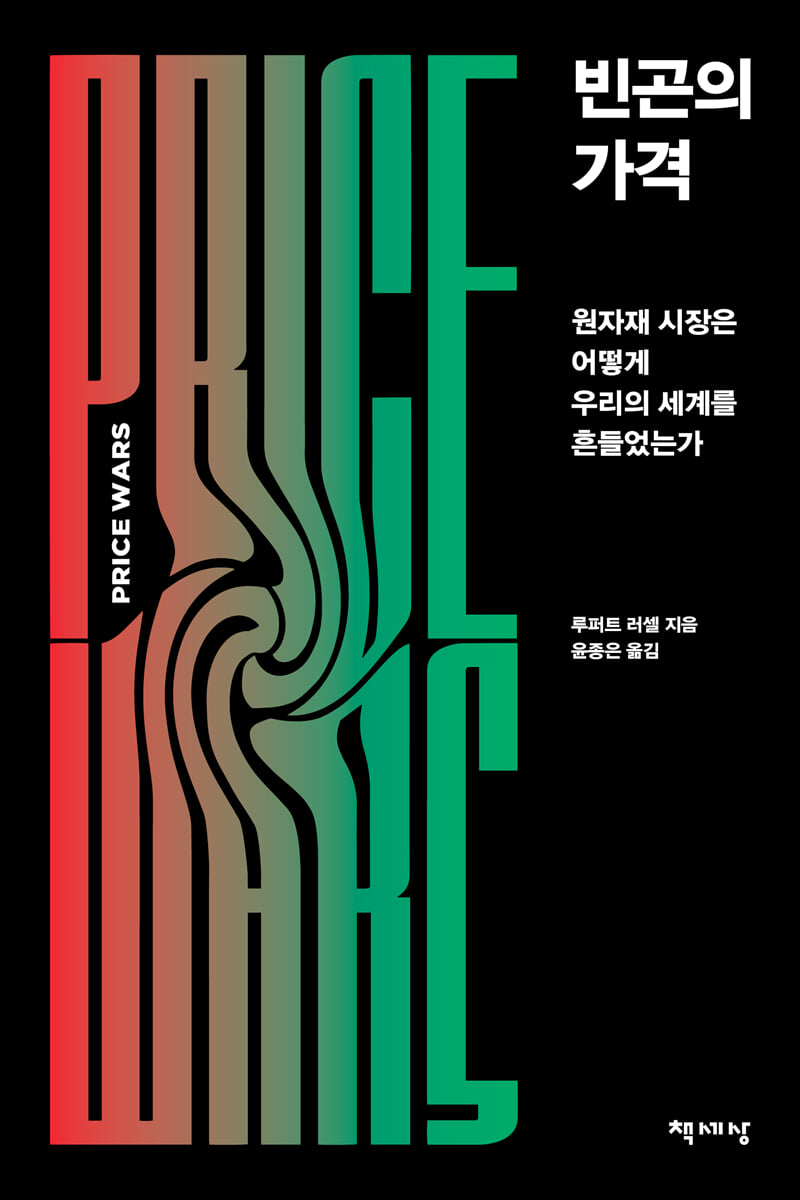
Wages are stagnant, but prices are skyrocketing. They say it's because of the rise in raw material prices, but even if raw material prices fall, prices don't stay in check. Who determines these prices, and how? Rupert Russell, a Harvard sociologist and documentary filmmaker, focuses on the raw materials market, the most fundamental sector of "price." The author travels to numerous countries, from Iraq to Ukraine, Venezuela, and Kenya, and interviews a diverse range of people at both ends of capitalism, including hedge fund managers, economists, and refugees, to vividly convey the "butterfly effect of prices." Price Wars - Teaser Trailer from Rupert Russell on Vimeo. |
- You can preview some of the book's contents.
Preview
index
Introduction: Monsters and Labyrinths
Part 1 price
Chapter 1: Chaos: Why Society Boils at 210 Degrees
Chapter 2: Magic: Fairy Tales, Financial Alchemy, and Cargo Faith
Part 2 War
Chapter 3: Awareness: What is the Price of ISIS's Aggression?
Chapter 4: Contagion: From the Eurofighter Typhoon to One-on-One
Chapter 5: Thriving: Putin's Arrogance and the Invasion of Ukraine
Chapter 6: Collapse: Venezuela's Fractal Catastrophe
Part 3 Climate
Chapter 7: Proliferation: From 'Dangerous Games' to 'Mad Max,' Kenya's Climate Chaos
Chapter 8: Arbitrage: Al-Shabaab or Terrorist Hedge Funds
Chapter 9 Auction: Coffee, Coyotes, and Caged Kids
Part 4: Fragments of Imagination
Chapter 10: COVID-19: The Detonation of the Climate-Finance Doomsday Machine
Conclusion: Markets and Madness
Review: The Giants and the Powerless
Acknowledgements
main
Part 1 price
Chapter 1: Chaos: Why Society Boils at 210 Degrees
Chapter 2: Magic: Fairy Tales, Financial Alchemy, and Cargo Faith
Part 2 War
Chapter 3: Awareness: What is the Price of ISIS's Aggression?
Chapter 4: Contagion: From the Eurofighter Typhoon to One-on-One
Chapter 5: Thriving: Putin's Arrogance and the Invasion of Ukraine
Chapter 6: Collapse: Venezuela's Fractal Catastrophe
Part 3 Climate
Chapter 7: Proliferation: From 'Dangerous Games' to 'Mad Max,' Kenya's Climate Chaos
Chapter 8: Arbitrage: Al-Shabaab or Terrorist Hedge Funds
Chapter 9 Auction: Coffee, Coyotes, and Caged Kids
Part 4: Fragments of Imagination
Chapter 10: COVID-19: The Detonation of the Climate-Finance Doomsday Machine
Conclusion: Markets and Madness
Review: The Giants and the Powerless
Acknowledgements
main
Detailed image

Into the book
Commodity prices began to run wild in the 2010s, a movement that ran counter to the "economic fundamentals" of real-world supply and demand.
People I met attributed the price fluctuations to a silent war waged by financial speculators.
Banks, hedge funds, and anyone with a robust portfolio could jump into this fray.
As in any war, the arms race intensified with each passing day, and new innovations and strategies and tactics emerged every year.
But all these inventions always produced the same result.
It's just a confusion of prices.
---From "Introduction: Monsters and Labyrinths, p. 16"
When I understood the Arab Spring in this way, my questions seemed to be answered.
This interpretation explains how a simple issue like food prices could spark chaos across an entire region, why revolutions erupted in a matter of months, and why so many countries were engulfed in civil war and so many people were forced to flee their homes.
There's a reason why immigration issues have dominated our feeds, with unprecedented numbers of immigrants, and why algorithmic media outlets have pandered to populism and fueled resentment against immigrants.
On the one hand, it was a frenetic, complex story, stretching from Tunis to Damascus, from Lesbos to Berlin, encompassing a dozen countries, thousands of militias, and tens of millions of immigrants.
But on the other hand, it was also a simple story of how a single number, the price of food, triggered a series of events.
---From "Chapter 1 Chaos: Why Society Boils at 210 Degrees, p. 48"
Meet and talk with Joseph Stiglitz at Columbia University.
“It was when the derivatives market was just starting to grow.
We learned that derivatives are potentially risky.”
The new derivatives were different from wheat or crude oil futures sold on exchanges.
The latter was regulated by the authorities, simple and standardized, and involved thousands of people in trading.
Both farmers and speculators understood the contract,
We knew what would happen if the farmer did not deliver the contracted amount of grain or if the delivered grain was of poor quality.
In contrast, the new derivatives market was unregulated, not publicly available, and not standardized.
The new financial products, called 'over-the-counter' derivatives, were traded privately between financial entities.
Moreover, the parties to the transaction created hundreds of pages of documents tailored to their needs, making it difficult even for experienced financial professionals to understand the contents.
---From "Chapter 2: Magic: Fairy Tales, Financial Alchemy, and Cargo Faith, p. 83"
We meet Jerry Parker at his office in Tampa, Florida.
He is the CEO of Chesapeake Asset Management, a trend-following CTA.
In the summer of 2008, Parker bet heavily that oil prices would continue their steep upward trend.
“I remember where I was, what I was doing, and what I was thinking.
The press reported that Paul Tudor Jones said, "Energy prices will crash and oil will not be able to hold $150."
My thoughts were like this.
'Hmm, don't worry about it.
Even if that guy is a famous trader and a billionaire with incredible brains, I won't give up trend-following.' And then, less than a day later, I regretted it."
Parker is convinced he is caught up in a speculative bubble.
“It was clearly speculators who caused the food and energy prices to rise.
This is an undeniable fact, as the prices of most raw materials plummeted shortly thereafter.”
---From "Chapter 2: Magic: Fairy Tales, Financial Alchemy, and Cargo Faith, p. 96"
As a result, huge amounts of wealth were quietly transferred as high oil prices continued.
It wasn't just the winners of the speculative games in the financial markets who made their fortunes.
Yani Bayam and his colleagues estimate that a decade of deregulation and financialization in commodity markets has resulted in unexpectedly large profits for oil-producing countries from rising commodity prices.
From 2002 to 2012, speculative finance generated excess profits of up to $820 billion for Saudi Arabia, $580 billion for Russia, $230 billion for Venezuela, $290 billion for Iran, and $190 billion for Kuwait.
The wealth was transferred directly to the most corrupt governments in the world.
And they were about to encourage the butterfly to flap its wings once more, creating a wave of chaos that would sweep the world.
---From "Chapter 4 Contagion: From Eurofighter Typhoon to One-on-One, p. 152"
But neither the EU nor Ukraine intended to remain dependent on Russia's pipeline forever.
In 2012, it was discovered that there were a staggering 2.3 trillion cubic meters of natural gas reserves in Ukraine's territorial waters in the Black Sea.
Russia tried to negotiate with Ukraine over mining rights for this deposit, but talks broke down.
In January 2013, Ukraine signed a contract with Royal Dutch Shell to extract natural gas in eastern Ukraine, where another large natural gas field had been discovered.
In April 2013, Ukraine's Minister of Energy and Coal Industry declared that the Black Sea region around eastern Ukraine and Crimea would produce so much natural gas that the country would no longer need to import it from Russia or any other country.
By 2020, Ukraine was expected to become a net energy exporter, supplying natural gas to Europe and competing with Russia.
---From "Chapter 5 Prosperity: Putin's Arrogance and the Invasion of Ukraine, p. 195"
“But when I investigated what really caused the 2008 food crisis, I realized that a crisis doesn’t have to be caused by an absolute shortage of something.
In 2007, the world food system produced more food than ever before.”
Some researchers, including Hendrix, have been looking at the climate-conflict issue from different angles and believe a different approach is needed.
“When we think about the threats to food systems and global agriculture, it’s easy to think of climate change, desertification, and worsening water shortages.
But the more important question is how food markets work, how they are designed to work, and what happens when they don't work properly.”
---From "Chapter 7: Proliferation: From 'Dangerous Games' to 'Mad Max', Kenya's Climate Chaos, p. 279"
Economists have long suspected a bubble in the coffee market.
In the coffee market, speculators have pushed up coffee prices regardless of underlying supply and demand.
But in 2018, hedge funds pushed coffee prices higher than necessary as rumors spread that there would be a global coffee glut.
If previous bubbles pushed up prices, this one pulled them down.
It was the same reverse bubble phenomenon we witnessed in 2014.
In 2014, rumors quickly spread that the shale oil boom, increased Saudi production, and decreased Chinese demand would lead to a glut in the crude oil market.
All these stories are rooted in reality, but the market mechanism does not end with gentle adjustments in price fluctuations, but amplifies them into sharp and destructive shocks.
---From "Chapter 9 Auction: Coffee, Coyotes, and Caged Children, p. 325"
Oil is the material foundation of the Putin regime.
Oil prices remained in the double digits for eight years, even falling into negative territory during the pandemic, but have steadily risen in 2021.
As oil prices rose, as Cullen Hendrix predicted, Russia's large tactical group appeared on the Ukrainian border.
And when it became known that Russian troops were stationed along the border, speculators pushed up oil prices to reflect a "geopolitical risk premium," and trend-following algorithms further fueled the upward price movement.
The prices were working exactly as described in this book.
Prices were a device that created chaos, a feedback loop that amplified the chaos of reality and the chaos of the market.
The market fueled Putin's arrogance, and as oil prices rose by the day, Putin was rewarded with huge profits.
Just as it invaded Afghanistan in 1979, Georgia in 2008, and Ukraine in 2014, Russian militarism flared up again as oil prices peaked.
People I met attributed the price fluctuations to a silent war waged by financial speculators.
Banks, hedge funds, and anyone with a robust portfolio could jump into this fray.
As in any war, the arms race intensified with each passing day, and new innovations and strategies and tactics emerged every year.
But all these inventions always produced the same result.
It's just a confusion of prices.
---From "Introduction: Monsters and Labyrinths, p. 16"
When I understood the Arab Spring in this way, my questions seemed to be answered.
This interpretation explains how a simple issue like food prices could spark chaos across an entire region, why revolutions erupted in a matter of months, and why so many countries were engulfed in civil war and so many people were forced to flee their homes.
There's a reason why immigration issues have dominated our feeds, with unprecedented numbers of immigrants, and why algorithmic media outlets have pandered to populism and fueled resentment against immigrants.
On the one hand, it was a frenetic, complex story, stretching from Tunis to Damascus, from Lesbos to Berlin, encompassing a dozen countries, thousands of militias, and tens of millions of immigrants.
But on the other hand, it was also a simple story of how a single number, the price of food, triggered a series of events.
---From "Chapter 1 Chaos: Why Society Boils at 210 Degrees, p. 48"
Meet and talk with Joseph Stiglitz at Columbia University.
“It was when the derivatives market was just starting to grow.
We learned that derivatives are potentially risky.”
The new derivatives were different from wheat or crude oil futures sold on exchanges.
The latter was regulated by the authorities, simple and standardized, and involved thousands of people in trading.
Both farmers and speculators understood the contract,
We knew what would happen if the farmer did not deliver the contracted amount of grain or if the delivered grain was of poor quality.
In contrast, the new derivatives market was unregulated, not publicly available, and not standardized.
The new financial products, called 'over-the-counter' derivatives, were traded privately between financial entities.
Moreover, the parties to the transaction created hundreds of pages of documents tailored to their needs, making it difficult even for experienced financial professionals to understand the contents.
---From "Chapter 2: Magic: Fairy Tales, Financial Alchemy, and Cargo Faith, p. 83"
We meet Jerry Parker at his office in Tampa, Florida.
He is the CEO of Chesapeake Asset Management, a trend-following CTA.
In the summer of 2008, Parker bet heavily that oil prices would continue their steep upward trend.
“I remember where I was, what I was doing, and what I was thinking.
The press reported that Paul Tudor Jones said, "Energy prices will crash and oil will not be able to hold $150."
My thoughts were like this.
'Hmm, don't worry about it.
Even if that guy is a famous trader and a billionaire with incredible brains, I won't give up trend-following.' And then, less than a day later, I regretted it."
Parker is convinced he is caught up in a speculative bubble.
“It was clearly speculators who caused the food and energy prices to rise.
This is an undeniable fact, as the prices of most raw materials plummeted shortly thereafter.”
---From "Chapter 2: Magic: Fairy Tales, Financial Alchemy, and Cargo Faith, p. 96"
As a result, huge amounts of wealth were quietly transferred as high oil prices continued.
It wasn't just the winners of the speculative games in the financial markets who made their fortunes.
Yani Bayam and his colleagues estimate that a decade of deregulation and financialization in commodity markets has resulted in unexpectedly large profits for oil-producing countries from rising commodity prices.
From 2002 to 2012, speculative finance generated excess profits of up to $820 billion for Saudi Arabia, $580 billion for Russia, $230 billion for Venezuela, $290 billion for Iran, and $190 billion for Kuwait.
The wealth was transferred directly to the most corrupt governments in the world.
And they were about to encourage the butterfly to flap its wings once more, creating a wave of chaos that would sweep the world.
---From "Chapter 4 Contagion: From Eurofighter Typhoon to One-on-One, p. 152"
But neither the EU nor Ukraine intended to remain dependent on Russia's pipeline forever.
In 2012, it was discovered that there were a staggering 2.3 trillion cubic meters of natural gas reserves in Ukraine's territorial waters in the Black Sea.
Russia tried to negotiate with Ukraine over mining rights for this deposit, but talks broke down.
In January 2013, Ukraine signed a contract with Royal Dutch Shell to extract natural gas in eastern Ukraine, where another large natural gas field had been discovered.
In April 2013, Ukraine's Minister of Energy and Coal Industry declared that the Black Sea region around eastern Ukraine and Crimea would produce so much natural gas that the country would no longer need to import it from Russia or any other country.
By 2020, Ukraine was expected to become a net energy exporter, supplying natural gas to Europe and competing with Russia.
---From "Chapter 5 Prosperity: Putin's Arrogance and the Invasion of Ukraine, p. 195"
“But when I investigated what really caused the 2008 food crisis, I realized that a crisis doesn’t have to be caused by an absolute shortage of something.
In 2007, the world food system produced more food than ever before.”
Some researchers, including Hendrix, have been looking at the climate-conflict issue from different angles and believe a different approach is needed.
“When we think about the threats to food systems and global agriculture, it’s easy to think of climate change, desertification, and worsening water shortages.
But the more important question is how food markets work, how they are designed to work, and what happens when they don't work properly.”
---From "Chapter 7: Proliferation: From 'Dangerous Games' to 'Mad Max', Kenya's Climate Chaos, p. 279"
Economists have long suspected a bubble in the coffee market.
In the coffee market, speculators have pushed up coffee prices regardless of underlying supply and demand.
But in 2018, hedge funds pushed coffee prices higher than necessary as rumors spread that there would be a global coffee glut.
If previous bubbles pushed up prices, this one pulled them down.
It was the same reverse bubble phenomenon we witnessed in 2014.
In 2014, rumors quickly spread that the shale oil boom, increased Saudi production, and decreased Chinese demand would lead to a glut in the crude oil market.
All these stories are rooted in reality, but the market mechanism does not end with gentle adjustments in price fluctuations, but amplifies them into sharp and destructive shocks.
---From "Chapter 9 Auction: Coffee, Coyotes, and Caged Children, p. 325"
Oil is the material foundation of the Putin regime.
Oil prices remained in the double digits for eight years, even falling into negative territory during the pandemic, but have steadily risen in 2021.
As oil prices rose, as Cullen Hendrix predicted, Russia's large tactical group appeared on the Ukrainian border.
And when it became known that Russian troops were stationed along the border, speculators pushed up oil prices to reflect a "geopolitical risk premium," and trend-following algorithms further fueled the upward price movement.
The prices were working exactly as described in this book.
Prices were a device that created chaos, a feedback loop that amplified the chaos of reality and the chaos of the market.
The market fueled Putin's arrogance, and as oil prices rose by the day, Putin was rewarded with huge profits.
Just as it invaded Afghanistan in 1979, Georgia in 2008, and Ukraine in 2014, Russian militarism flared up again as oil prices peaked.
---From "Exiting Words: The Giants and the Powerless, pp. 399-400"
Publisher's Review
Who set that 'equilibrium price'?
Our salaries remain the same, but prices are skyrocketing like a runaway calf.
Who, exactly, sets these prices? Economics textbooks teach that equilibrium prices are formed "at the point where supply and demand meet for rational economic agents." But are the prices we actually encounter truly "rational" and "balanced?" Rupert Russell, a Harvard sociologist and documentary filmmaker, focuses on the raw materials market, the most fundamental sector of "price."
Because when raw material prices fluctuate, famines, refugees, riots, revolutions, corruption and poverty are created.
The author travels to numerous countries, from Iraq, where the Arab Spring erupted, to Ukraine, Venezuela, and Kenya, and interviews a variety of people, including hedge fund managers, economists, and refugees, to vividly convey the "butterfly effect of prices."
From the financial crisis, to the Arab Spring, to the Russo-Russian War…
What is at the center of the global chaos?
The Great Recession of 2008, the Arab Spring and Iraqi Civil War of 2011, Brexit of 2016, and the Russo-Russian War of 2022.
In a series of events that threw the world into chaos, the author found a common thread.
It is precisely because these incidents are not unrelated to the rapid fluctuations in raw material prices.
We live in a world ruled by prices, but we don't really understand how these prices are formed.
Accordingly, with the support of ARTE, a French-German joint state-run broadcasting station, the author begins to cover the world in search of the dark side of 'price'.
Chapter 1 highlights the 'Arab Spring' that broke out in the Middle East in 2011.
Dictators in the Middle East, unable to solve the food problem, tried to suppress their people through fear, which resulted in the start of the Arab Spring.
But in reality, the world was experiencing a food shortage that was at its highest level in history.
What could have happened? In search of the causes of poverty in this age of abundance, the author turns to Nobel Prize winner in economics Joseph Stiglitz.
(Chapter 2) 'Raw materials' had already become prey to hedge funds dealing in the raw materials sector.
This included derivatives such as futures.
After the Great Recession, institutional investors seeking safe haven assets seized control of the "invisible hand" that dictated demand for raw materials, manipulating prices through "self-fulfilling prophecies" that drove them up even when there was no real reason for them to rise.
Chapter 3 expands the category of these "raw materials" from simple foods like wheat to include oil. As the violence of ISIS ushered in an era of high oil prices, the profits accrued to the winners of the speculative game in the oil market and to oil-producing countries.
But the dictators of those oil-producing countries followed suit with another 'chaos'.
Britain has fueled further chaos by selling fighter jets to Saudi Arabia, and China's Belt and Road Initiative is taking off as its raw materials pipelines become more important.
(Chapter 4) The Russo-Russian War fully demonstrated the expansionist policies of these raw material powers.
(Chapter 5) In fact, crude oil prices have been shown to be proportional to the probability of conflict around the world.
Russell finds himself in Venezuela, where dictators are intoxicated by the taste of financialization and speculation, while their people are starving.
(Chapter 6)
The aftermath of this chaos also extends to the opposite side of the Earth.
The author, who considered the climate crisis, a topic we all cannot ignore, visits Kenya in Chapter 7 and discovers a vicious feedback loop between climate change and conflict.
A single flap of wings that started in the Middle East, or rather, New York, brought an unexpected conflict to Africa on the other side of the world.
And the author finds that it is financialized markets that exacerbate existing conflicts more than climate change.
(Chapter 8) At the same time, talking to hedge fund managers, I see that the market makers are indifferent to the vicious cycle and even bet on 'conflict outbreaks'.
(Chapter 9)
Ultimately, this global chaos and amplification of confusion was due to the flapping of financial capital, something that chaos theory had not anticipated at first.
And that flapping of wings led to today's unlimited quantitative easing and its aftermath.
(Chapter 10)
The butterfly effect of poverty created by financial capitalism!
Rupert Russell has traveled across countries ravaged by landmines, terrorism, hunger, and displacement, witnessing firsthand the horrors wrought by the "almighty number" of price.
While people are tinkering with the risky commodity called futures on the financial exchange, in some places they are actually leading a very risky life.
And this precarious lifestyle will push the world to the edge of chaos, leading to inequality, financial instability, and climate change.
The author says that we should not ignore these facts.
“There is a belief in the myth of the market that the rulers of the universe still blindly follow.
The belief is that even if the Earth becomes uninhabitable, pieces of paper with symbols like £ and € on them will not lose their value.
(…) This is the Minotaur, the monster in the middle of the world’s labyrinth, and the true madness of the market.”
A comprehensive and thorough analysis of the global economy, marred by speculation.
A must-read for every reader!
- [Publisher's Weekly]
A book that exposes and freshens the dogma deeply ingrained in economics textbooks from various angles!
- [Kirkus Review]
One of the most important books of our time!
- [The Intercept]
Our salaries remain the same, but prices are skyrocketing like a runaway calf.
Who, exactly, sets these prices? Economics textbooks teach that equilibrium prices are formed "at the point where supply and demand meet for rational economic agents." But are the prices we actually encounter truly "rational" and "balanced?" Rupert Russell, a Harvard sociologist and documentary filmmaker, focuses on the raw materials market, the most fundamental sector of "price."
Because when raw material prices fluctuate, famines, refugees, riots, revolutions, corruption and poverty are created.
The author travels to numerous countries, from Iraq, where the Arab Spring erupted, to Ukraine, Venezuela, and Kenya, and interviews a variety of people, including hedge fund managers, economists, and refugees, to vividly convey the "butterfly effect of prices."
From the financial crisis, to the Arab Spring, to the Russo-Russian War…
What is at the center of the global chaos?
The Great Recession of 2008, the Arab Spring and Iraqi Civil War of 2011, Brexit of 2016, and the Russo-Russian War of 2022.
In a series of events that threw the world into chaos, the author found a common thread.
It is precisely because these incidents are not unrelated to the rapid fluctuations in raw material prices.
We live in a world ruled by prices, but we don't really understand how these prices are formed.
Accordingly, with the support of ARTE, a French-German joint state-run broadcasting station, the author begins to cover the world in search of the dark side of 'price'.
Chapter 1 highlights the 'Arab Spring' that broke out in the Middle East in 2011.
Dictators in the Middle East, unable to solve the food problem, tried to suppress their people through fear, which resulted in the start of the Arab Spring.
But in reality, the world was experiencing a food shortage that was at its highest level in history.
What could have happened? In search of the causes of poverty in this age of abundance, the author turns to Nobel Prize winner in economics Joseph Stiglitz.
(Chapter 2) 'Raw materials' had already become prey to hedge funds dealing in the raw materials sector.
This included derivatives such as futures.
After the Great Recession, institutional investors seeking safe haven assets seized control of the "invisible hand" that dictated demand for raw materials, manipulating prices through "self-fulfilling prophecies" that drove them up even when there was no real reason for them to rise.
Chapter 3 expands the category of these "raw materials" from simple foods like wheat to include oil. As the violence of ISIS ushered in an era of high oil prices, the profits accrued to the winners of the speculative game in the oil market and to oil-producing countries.
But the dictators of those oil-producing countries followed suit with another 'chaos'.
Britain has fueled further chaos by selling fighter jets to Saudi Arabia, and China's Belt and Road Initiative is taking off as its raw materials pipelines become more important.
(Chapter 4) The Russo-Russian War fully demonstrated the expansionist policies of these raw material powers.
(Chapter 5) In fact, crude oil prices have been shown to be proportional to the probability of conflict around the world.
Russell finds himself in Venezuela, where dictators are intoxicated by the taste of financialization and speculation, while their people are starving.
(Chapter 6)
The aftermath of this chaos also extends to the opposite side of the Earth.
The author, who considered the climate crisis, a topic we all cannot ignore, visits Kenya in Chapter 7 and discovers a vicious feedback loop between climate change and conflict.
A single flap of wings that started in the Middle East, or rather, New York, brought an unexpected conflict to Africa on the other side of the world.
And the author finds that it is financialized markets that exacerbate existing conflicts more than climate change.
(Chapter 8) At the same time, talking to hedge fund managers, I see that the market makers are indifferent to the vicious cycle and even bet on 'conflict outbreaks'.
(Chapter 9)
Ultimately, this global chaos and amplification of confusion was due to the flapping of financial capital, something that chaos theory had not anticipated at first.
And that flapping of wings led to today's unlimited quantitative easing and its aftermath.
(Chapter 10)
The butterfly effect of poverty created by financial capitalism!
Rupert Russell has traveled across countries ravaged by landmines, terrorism, hunger, and displacement, witnessing firsthand the horrors wrought by the "almighty number" of price.
While people are tinkering with the risky commodity called futures on the financial exchange, in some places they are actually leading a very risky life.
And this precarious lifestyle will push the world to the edge of chaos, leading to inequality, financial instability, and climate change.
The author says that we should not ignore these facts.
“There is a belief in the myth of the market that the rulers of the universe still blindly follow.
The belief is that even if the Earth becomes uninhabitable, pieces of paper with symbols like £ and € on them will not lose their value.
(…) This is the Minotaur, the monster in the middle of the world’s labyrinth, and the true madness of the market.”
A comprehensive and thorough analysis of the global economy, marred by speculation.
A must-read for every reader!
- [Publisher's Weekly]
A book that exposes and freshens the dogma deeply ingrained in economics textbooks from various angles!
- [Kirkus Review]
One of the most important books of our time!
- [The Intercept]
GOODS SPECIFICS
- Date of issue: March 25, 2023
- Page count, weight, size: 448 pages | 520g | 140*210*23mm
- ISBN13: 9791159319143
- ISBN10: 1159319146
You may also like
카테고리
korean


korean

![GQ KOREA Mark (Monthly): December [2025]](http://librairie.coreenne.fr/cdn/shop/files/8ef265dbbfbf186523ed75ba7319009d.jpg?v=1765340328&width=3840)


