

A Gourmet's Guide to Spanish
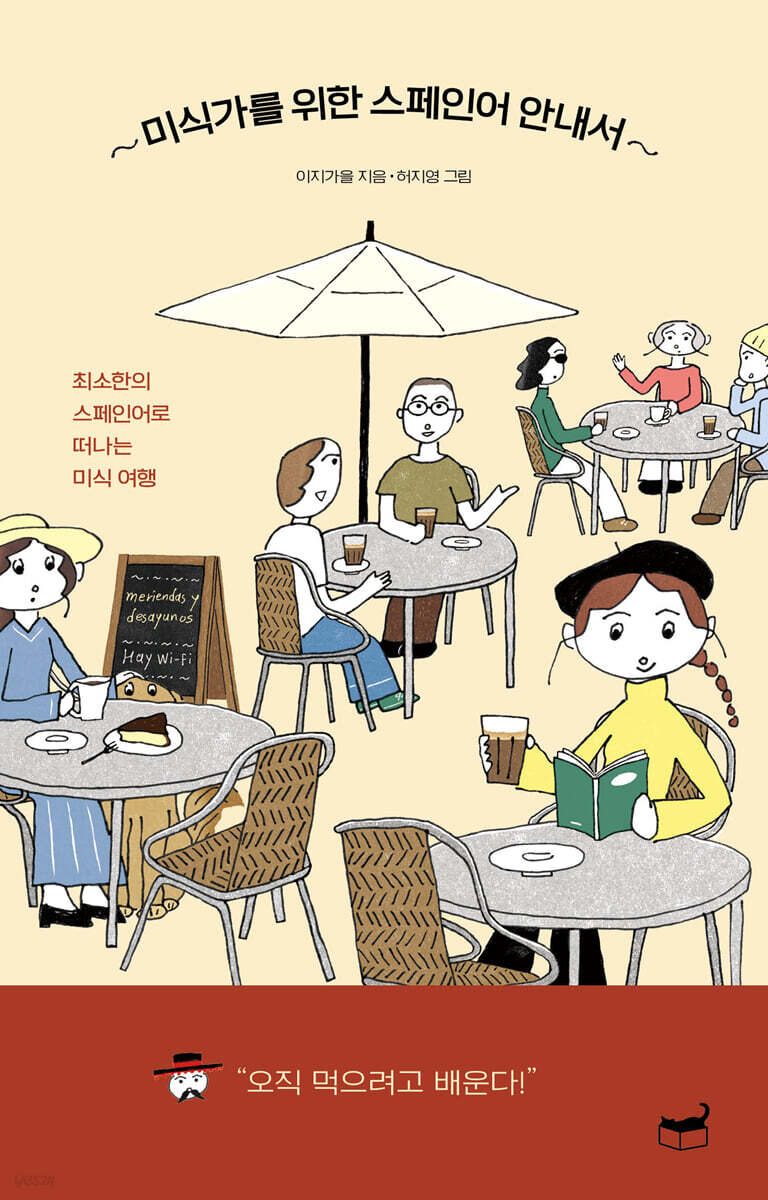 |
Description
Book Introduction
Minimum Spanish for a food tour!
Learn Spanish while on a culinary journey
A new concept in gastronomy language guide for those who are serious about eating.
Spain is famous in Europe for its delicious food, and some people even go there just to 'eat'.
This book contains the minimum Spanish needed for a food tour and stories about delicious Spanish food.
It's okay if you don't know a single letter of Spanish.
By simply following the book's three-course "READY, SET, GO" itinerary, you'll be well on your way to a culinary adventure. In READY, learn the Spanish alphabet through ingredients and food vocabulary. In SET, embark on an imaginary journey, simulating 10 scenes from a Spanish restaurant, from entry to checkout. In GO, a full-fledged culinary journey unfolds, encompassing 14 categories, from classic Spanish dishes like sangria, gambas al ajillo, and paella to supermarket shopping.
You can experience all of this with vivid illustrations, from the taste and origin of food to Spanish food culture and even recipes that can be made in Korea.
If you love travel, food, or are curious about new cultures and languages, this cute and delicious food language book is a must-have!
Learn Spanish while on a culinary journey
A new concept in gastronomy language guide for those who are serious about eating.
Spain is famous in Europe for its delicious food, and some people even go there just to 'eat'.
This book contains the minimum Spanish needed for a food tour and stories about delicious Spanish food.
It's okay if you don't know a single letter of Spanish.
By simply following the book's three-course "READY, SET, GO" itinerary, you'll be well on your way to a culinary adventure. In READY, learn the Spanish alphabet through ingredients and food vocabulary. In SET, embark on an imaginary journey, simulating 10 scenes from a Spanish restaurant, from entry to checkout. In GO, a full-fledged culinary journey unfolds, encompassing 14 categories, from classic Spanish dishes like sangria, gambas al ajillo, and paella to supermarket shopping.
You can experience all of this with vivid illustrations, from the taste and origin of food to Spanish food culture and even recipes that can be made in Korea.
If you love travel, food, or are curious about new cultures and languages, this cute and delicious food language book is a must-have!
- You can preview some of the book's contents.
Preview
index
Prologue
Ready.
Spanish Travel Essentials for Travelers
Ready 1.
Just imagine!
Ready 2.
Spanish Alphabet Diary
Ready 3.
Ten Points to Make Pronunciation Easier
Ready 4.
Three Magic Sentences
Ready 5.
Seven Basic Facts for Gourmets
Set.
Exploring imaginary restaurants
Set 1.
10 scene simulation from standpoint to calculation
Scene 1.
position
Scene 2.
Reservation and occupancy confirmation
Scene 3.
When there is no space
Scene 4.
Take a seat
Scene 5.
order
Scene 6.
Serving
Scene 7.
Eat a meal
Scene 8.
I ate well
Scene 9.
Request for invoice
Scene 10.
Pay and get a receipt
Set 2.
You can see the menu just by knowing the hints.
Hint 1.
Restaurant menu keywords
Hint 2.
Things you can see on the table
Hint 3.
Cooking terms attached to food names
Hint 4.
sauces and seasonings
Hint 5.
Reading the Ingredients - Meat
Hint 6.
Reading the ingredients - Seafood
Hint 7.
Reading the Materials - Vegetables and Fruits
Go.
I'm going to eat now
Go 1.
I'm going to drink sangria
Go 2.
I'm going to eat hornbeam
Go 3.
I'm going to eat paella
Go 4.
I'm going to eat gazpacho
Go 5.
I'm going to eat pan-fried tomatoes
Go 6.
I'm going to drink beer
Go 7.
Let's go eat gambas al ajillo
Go 8.
I'm going to eat tapas
Go 9.
I'm going to eat pinchos
Go 10.
I'm going to have coffee
Go 11.
I'm going to eat bocadillo
Go 12.
I'm going to eat churros
Go 13.
Let's go eat Menu del Dia
Go 14.
I'm going to the mart to go shopping
epilogue
Appendixes that are good to know
Ready.
Spanish Travel Essentials for Travelers
Ready 1.
Just imagine!
Ready 2.
Spanish Alphabet Diary
Ready 3.
Ten Points to Make Pronunciation Easier
Ready 4.
Three Magic Sentences
Ready 5.
Seven Basic Facts for Gourmets
Set.
Exploring imaginary restaurants
Set 1.
10 scene simulation from standpoint to calculation
Scene 1.
position
Scene 2.
Reservation and occupancy confirmation
Scene 3.
When there is no space
Scene 4.
Take a seat
Scene 5.
order
Scene 6.
Serving
Scene 7.
Eat a meal
Scene 8.
I ate well
Scene 9.
Request for invoice
Scene 10.
Pay and get a receipt
Set 2.
You can see the menu just by knowing the hints.
Hint 1.
Restaurant menu keywords
Hint 2.
Things you can see on the table
Hint 3.
Cooking terms attached to food names
Hint 4.
sauces and seasonings
Hint 5.
Reading the Ingredients - Meat
Hint 6.
Reading the ingredients - Seafood
Hint 7.
Reading the Materials - Vegetables and Fruits
Go.
I'm going to eat now
Go 1.
I'm going to drink sangria
Go 2.
I'm going to eat hornbeam
Go 3.
I'm going to eat paella
Go 4.
I'm going to eat gazpacho
Go 5.
I'm going to eat pan-fried tomatoes
Go 6.
I'm going to drink beer
Go 7.
Let's go eat gambas al ajillo
Go 8.
I'm going to eat tapas
Go 9.
I'm going to eat pinchos
Go 10.
I'm going to have coffee
Go 11.
I'm going to eat bocadillo
Go 12.
I'm going to eat churros
Go 13.
Let's go eat Menu del Dia
Go 14.
I'm going to the mart to go shopping
epilogue
Appendixes that are good to know
Detailed image

Into the book
This book is for those who long for memories of their trip to Spain or who excitedly imagine a trip to Spain someday.
So don't worry if you don't know any Spanish.
It's okay if you've never heard of paella or gambas, and of course, it's okay if you've never been to Spain.
If you're interested in Spanish food and the Spanish language, that's enough.
If you can just close your eyes for a moment, wherever you are, and imagine yourself in Spain, you don't need anything else.
---From the "Prologue"
Restaurants catering to foreigners in tourist areas or well-known fast-food chains might have English menus, but we might also go to authentic restaurants frequented by locals. Naturally, the menus there are likely to be in Spanish only.
At this time, we read the menu in a prepared posture without panicking.
By checking what the main ingredients are, how they are prepared, and giving a few tips, you can order the menu without any major mistakes.
--- p.75
If you don't like beer that much, try Clara.
Clara is a drink that mixes lemonade and beer.
'Clara' means 'bright, clear', and I think it got its name because the color of the drink becomes lighter when mixed with beer.
The taste is lighter and more refreshing than regular beer, making it especially good for drinking in the summer.
--- p.153
Gambas al Ajillo is really easy to make.
So I've been eagerly waiting for this moment to introduce this dish to you.
You can make it just as delicious as the Spanish version, if not even better, in Korea! The ingredients are simple, and the preparation is simple, too.
It's perfect for single-person households because you can enjoy at least two delicious meals with just one meal.
It's a versatile menu that's perfect for serving to guests, even if you don't pay much attention to plating.
--- p.161
Tapas, which is an absolute must when talking about Spanish food, is derived from the word tapa, which means 'lid'.
In the old days, when you ordered alcohol, they would give you a simple snack like bread or a slice of ham as a service, and people would put that on their glasses.
To prevent dust and bugs from getting into the alcohol.
So, all the simple foods eaten with alcohol came to be called ‘lid’ or ‘ttappa’.
Now there are hundreds of tapas options beyond just bread or slices of ham.
Going out to eat tapas has become a dining culture.
--- p.171
I can't be the only one who happily eats churros.
In Spain, they say they eat churros to cure a hangover, so young people who woke up with difficulty after drinking heavily the night before will probably do the same.
The same goes for hungry office workers who have a little free time on their way to work.
There is a churro restaurant in Madrid that opened in 1894.
(It's a restaurant called San Gines, and it's a famous restaurant with more celebrity photos and autographs than any other restaurant counter in Korea.) So, there must have been happy churro lovers a hundred years ago, too.
It is said that even before the Common Era, there was a fried food made by mixing flour, water, oil, salt, and sugar in Spain, so churros must have been a sweet breakfast and snack for the people living in this land for a very long time.
--- p.220
When I ask my Spanish friends what they miss the most, they all say “Mercadona!”
For Spaniards, it is a restaurant that is part of their daily routine.
If you're traveling to Spain and your accommodations allow you to cook, be sure to visit the nearby Mercadona! Just shopping there is a way to truly "travel like a local."
So don't worry if you don't know any Spanish.
It's okay if you've never heard of paella or gambas, and of course, it's okay if you've never been to Spain.
If you're interested in Spanish food and the Spanish language, that's enough.
If you can just close your eyes for a moment, wherever you are, and imagine yourself in Spain, you don't need anything else.
---From the "Prologue"
Restaurants catering to foreigners in tourist areas or well-known fast-food chains might have English menus, but we might also go to authentic restaurants frequented by locals. Naturally, the menus there are likely to be in Spanish only.
At this time, we read the menu in a prepared posture without panicking.
By checking what the main ingredients are, how they are prepared, and giving a few tips, you can order the menu without any major mistakes.
--- p.75
If you don't like beer that much, try Clara.
Clara is a drink that mixes lemonade and beer.
'Clara' means 'bright, clear', and I think it got its name because the color of the drink becomes lighter when mixed with beer.
The taste is lighter and more refreshing than regular beer, making it especially good for drinking in the summer.
--- p.153
Gambas al Ajillo is really easy to make.
So I've been eagerly waiting for this moment to introduce this dish to you.
You can make it just as delicious as the Spanish version, if not even better, in Korea! The ingredients are simple, and the preparation is simple, too.
It's perfect for single-person households because you can enjoy at least two delicious meals with just one meal.
It's a versatile menu that's perfect for serving to guests, even if you don't pay much attention to plating.
--- p.161
Tapas, which is an absolute must when talking about Spanish food, is derived from the word tapa, which means 'lid'.
In the old days, when you ordered alcohol, they would give you a simple snack like bread or a slice of ham as a service, and people would put that on their glasses.
To prevent dust and bugs from getting into the alcohol.
So, all the simple foods eaten with alcohol came to be called ‘lid’ or ‘ttappa’.
Now there are hundreds of tapas options beyond just bread or slices of ham.
Going out to eat tapas has become a dining culture.
--- p.171
I can't be the only one who happily eats churros.
In Spain, they say they eat churros to cure a hangover, so young people who woke up with difficulty after drinking heavily the night before will probably do the same.
The same goes for hungry office workers who have a little free time on their way to work.
There is a churro restaurant in Madrid that opened in 1894.
(It's a restaurant called San Gines, and it's a famous restaurant with more celebrity photos and autographs than any other restaurant counter in Korea.) So, there must have been happy churro lovers a hundred years ago, too.
It is said that even before the Common Era, there was a fried food made by mixing flour, water, oil, salt, and sugar in Spain, so churros must have been a sweet breakfast and snack for the people living in this land for a very long time.
--- p.220
When I ask my Spanish friends what they miss the most, they all say “Mercadona!”
For Spaniards, it is a restaurant that is part of their daily routine.
If you're traveling to Spain and your accommodations allow you to cook, be sure to visit the nearby Mercadona! Just shopping there is a way to truly "travel like a local."
--- p.240
Publisher's Review
For those of you who are traveling to Spain in search of gastronomy
A Minimal Guide to Learning Spanish 'Just for Eating'
If you're traveling to Europe, do you think you absolutely must visit Spain? If so, there's a good chance you're a serious foodie.
Spain is a country famous for its delicious food.
It is no exaggeration to say that people go there just to eat.
This book, "The Gourmet's Guide to Spanish," is a new concept gastronomic language guide for all those who enjoy "food travel."
If I could go on a trip and read a menu and order in Spanish without a translator or anyone else's help, my trip would be that much more special.
Now, let's begin our Spanish guide for foodies.
It's okay if it's your first time learning Spanish
〈Ready.
〉Spanish Preparations for Travelers〉
→ You've never learned Spanish before and it feels unfamiliar? That's okay.
Experience the special experience of learning a new language.
First, take a look at the “Alphabet Diary” at the beginning of the book.
Spanish uses the same alphabet as English, but has pronunciations, rules, and letters that are unique to Spanish.
I've broken down these features into easy-to-understand terms.
The pronunciation of each letter and the example words were all selected to be helpful for your 'gourmet journey'.
Don't be scared if this is your first time learning Spanish.
We also have a friendly audio lecture file prepared by the author, where you can hear the pronunciation of each word and example words.
It's okay if you don't memorize it all at once and don't master it perfectly.
All Spanish words in the book have Korean pronunciations to help you pronounce them as close to the original language as possible.
It's enough to just follow along and get used to it!
→ We've also prepared three magic phrases that will be very useful on your culinary tour of Spain, as well as basic common sense for gourmets, such as dining manners.
Cover most situations with just three sentences, and learn the common sense to become a well-mannered gourmet traveler.
What if I were actually in a Spanish restaurant?
Practice in your imagination first
〈SET.
Exploring Imaginary Restaurants〉
→ This is for those who say, “I want to try ordering food in Spanish!”
We've created a simulation of 10 scenes from the moment you enter a restaurant until you pay.
Read on while imagining, 'What if I were to go into a Spanish restaurant right now?'
If you pay close attention to the sentences and keywords introduced, it will be quite helpful in understanding what the salespeople are saying.
→ In Spain, there are restaurants that sell different menus every day, and there may be times when English is not spoken at all.
There are also ingredients that are only used in Spain.
To avoid any confusion, 〈SET 2.
In “You can see the menu just by knowing the hints,” we have compiled keywords that will help you figure out the menu.
Discover a variety of ingredients, sauces, and even food culture!
A culinary journey of chewing, tearing, and tasting
It starts now
〈Go.
I'm going to eat now.
→ Why do I swallow my saliva when I read a book?
Sangria, gambas al ajillo, tapas, ham, pulpo, beer, olives…
We've compiled a list of 14 must-try dishes for foodies traveling to Spain.
A variety of menus are available that you must enjoy and taste in Spain.
In the morning, enjoy a bite of hot churros dipped in sweet chocolate latte sauce with a Spanish coffee called "cortado." For lunch, try the daily special "Menu del Dia," and in the evening, head to the bar and order a "Caña Set" draft beer to enjoy with a tapas... All of this unfolds with vivid illustrations of Spanish scenery.
Enjoy a culinary journey that is a feast for both your eyes and your mouth.
→ Just like entering a restaurant that catches your eye on a street of delicious restaurants, choose your favorite menu first and open it.
It's delicious anywhere.
You don't have to read "GO Eat Now" in order.
Flip through the book, and if a menu item catches your eye, you can start reading from there.
It's packed with helpful tips, including the origins of the food, tips on ordering, how to make it more delicious, and recipes you can make in Korea.
Enjoy the joy of discovering your favorite foods.
→ An appendix that is even better to know!
As an appendix, I've compiled some helpful expressions to keep in mind and be careful about when traveling for culinary pleasure.
For example, if I or my companions are vegan, or if I become unwell while traveling or have a chronic illness, I need to be careful when ordering food.
In preparation for such situations, I have carefully included not only how to express my situation, but also how to check in advance whether a food contains a certain ingredient and how to order it if I have an allergy to that ingredient.
We will be your reliable guide for your safe and healthy culinary journey.
A Minimal Guide to Learning Spanish 'Just for Eating'
If you're traveling to Europe, do you think you absolutely must visit Spain? If so, there's a good chance you're a serious foodie.
Spain is a country famous for its delicious food.
It is no exaggeration to say that people go there just to eat.
This book, "The Gourmet's Guide to Spanish," is a new concept gastronomic language guide for all those who enjoy "food travel."
If I could go on a trip and read a menu and order in Spanish without a translator or anyone else's help, my trip would be that much more special.
Now, let's begin our Spanish guide for foodies.
It's okay if it's your first time learning Spanish
〈Ready.
〉Spanish Preparations for Travelers〉
→ You've never learned Spanish before and it feels unfamiliar? That's okay.
Experience the special experience of learning a new language.
First, take a look at the “Alphabet Diary” at the beginning of the book.
Spanish uses the same alphabet as English, but has pronunciations, rules, and letters that are unique to Spanish.
I've broken down these features into easy-to-understand terms.
The pronunciation of each letter and the example words were all selected to be helpful for your 'gourmet journey'.
Don't be scared if this is your first time learning Spanish.
We also have a friendly audio lecture file prepared by the author, where you can hear the pronunciation of each word and example words.
It's okay if you don't memorize it all at once and don't master it perfectly.
All Spanish words in the book have Korean pronunciations to help you pronounce them as close to the original language as possible.
It's enough to just follow along and get used to it!
→ We've also prepared three magic phrases that will be very useful on your culinary tour of Spain, as well as basic common sense for gourmets, such as dining manners.
Cover most situations with just three sentences, and learn the common sense to become a well-mannered gourmet traveler.
What if I were actually in a Spanish restaurant?
Practice in your imagination first
〈SET.
Exploring Imaginary Restaurants〉
→ This is for those who say, “I want to try ordering food in Spanish!”
We've created a simulation of 10 scenes from the moment you enter a restaurant until you pay.
Read on while imagining, 'What if I were to go into a Spanish restaurant right now?'
If you pay close attention to the sentences and keywords introduced, it will be quite helpful in understanding what the salespeople are saying.
→ In Spain, there are restaurants that sell different menus every day, and there may be times when English is not spoken at all.
There are also ingredients that are only used in Spain.
To avoid any confusion, 〈SET 2.
In “You can see the menu just by knowing the hints,” we have compiled keywords that will help you figure out the menu.
Discover a variety of ingredients, sauces, and even food culture!
A culinary journey of chewing, tearing, and tasting
It starts now
〈Go.
I'm going to eat now.
→ Why do I swallow my saliva when I read a book?
Sangria, gambas al ajillo, tapas, ham, pulpo, beer, olives…
We've compiled a list of 14 must-try dishes for foodies traveling to Spain.
A variety of menus are available that you must enjoy and taste in Spain.
In the morning, enjoy a bite of hot churros dipped in sweet chocolate latte sauce with a Spanish coffee called "cortado." For lunch, try the daily special "Menu del Dia," and in the evening, head to the bar and order a "Caña Set" draft beer to enjoy with a tapas... All of this unfolds with vivid illustrations of Spanish scenery.
Enjoy a culinary journey that is a feast for both your eyes and your mouth.
→ Just like entering a restaurant that catches your eye on a street of delicious restaurants, choose your favorite menu first and open it.
It's delicious anywhere.
You don't have to read "GO Eat Now" in order.
Flip through the book, and if a menu item catches your eye, you can start reading from there.
It's packed with helpful tips, including the origins of the food, tips on ordering, how to make it more delicious, and recipes you can make in Korea.
Enjoy the joy of discovering your favorite foods.
→ An appendix that is even better to know!
As an appendix, I've compiled some helpful expressions to keep in mind and be careful about when traveling for culinary pleasure.
For example, if I or my companions are vegan, or if I become unwell while traveling or have a chronic illness, I need to be careful when ordering food.
In preparation for such situations, I have carefully included not only how to express my situation, but also how to check in advance whether a food contains a certain ingredient and how to order it if I have an allergy to that ingredient.
We will be your reliable guide for your safe and healthy culinary journey.
GOODS SPECIFICS
- Date of issue: March 6, 2023
- Page count, weight, size: 264 pages | 366g | 128*200*16mm
- ISBN13: 9791160809688
- ISBN10: 1160809682
You may also like
카테고리
korean


korean

![GQ KOREA Mark (Monthly): December [2025]](http://librairie.coreenne.fr/cdn/shop/files/8ef265dbbfbf186523ed75ba7319009d.jpg?v=1765340328&width=3840)


