

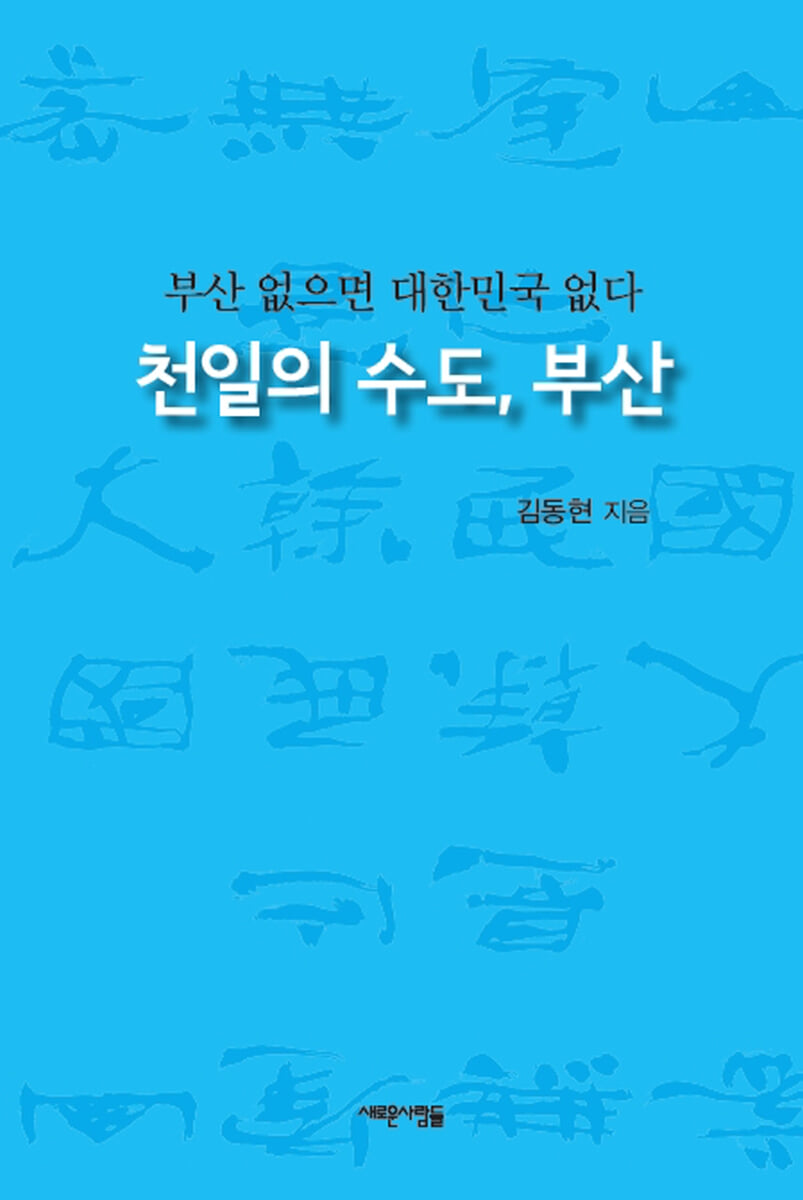
Busan, the capital of a thousand days
 |
Description
Book Introduction
Ibagu, woven with the weft of history and the warp of people, events, and customs
Although Busan is the second largest city in South Korea, few people know it in detail.
Even for natives born and raised in Busan, the city's overflowing 'Ibagu' is unfamiliar, so it's not like other people have to ask.
The virtue of 『Busan, the Capital of a Thousand Days』 is that it is overflowing with 'Ibagu', woven with the warp of people, events, and customs and the weft of history.
There is no 'Ibagu' that is not precious, but the fact that it was the 'capital of a thousand days' that was able to support the country when the Republic of Korea was in a crisis of imminent danger is the 'Ibagu' that should be mentioned first.
The 'Ibagu' carved into every corner of Busan, which will dazzle even the locals, is truly a natural monument and a cultural heritage of all time.
A comprehensive gift set for exploring Busan, faithful to the tradition of human geography.
There was once a model for human geography called 『Taekriji (擇里志)』, and 『Busan, the Capital of a Thousand Days』 not only carries on that tradition, but also seems to be sufficient to establish itself as a treasure trove of local culture.
In particular, sweet potato cultivation (origin), the first traditional liquor, Geumjeongsanseong Makgeolli, Fukuda Brewery, public bathhouses, banks (Japan First Bank Busan branch), local banks (Gupo Bank was the first), hospitals (Jesaeng Hospital, a modern Western medical institution), Haengjwa (Korea's first theater and movie theater), Joseon Kinema Co., Ltd. (the first film company), Buil Film Awards (1958, the first film festival), Busan International Film Festival (Korea's first international film festival), baseball (the mecca of early Korean baseball), Joseon Textile (the first modern cotton textile factory), Busan Munhwa Broadcasting Corporation (the first private commercial broadcasting), post office (1878, post office opened in the Japanese administrative agency), regular mail ship Ninawa (浪花號, the first regular route), Blue Cross Medical Insurance Association (the first private medical insurance association), Songdo (松島, the first public beach), Knowing that Busan is the birthplace of surfing (Songdo Beach), music boxes, karaoke, cigarettes, jjimjilbangs, Italian towels, charcoal, a bus-subway transportation card, the National Debt Redemption Movement, and the first train station (Busan Station) are some of the first things that originated in Korea, may help you understand what kind of city Busan is.
Although Busan is the second largest city in South Korea, few people know it in detail.
Even for natives born and raised in Busan, the city's overflowing 'Ibagu' is unfamiliar, so it's not like other people have to ask.
The virtue of 『Busan, the Capital of a Thousand Days』 is that it is overflowing with 'Ibagu', woven with the warp of people, events, and customs and the weft of history.
There is no 'Ibagu' that is not precious, but the fact that it was the 'capital of a thousand days' that was able to support the country when the Republic of Korea was in a crisis of imminent danger is the 'Ibagu' that should be mentioned first.
The 'Ibagu' carved into every corner of Busan, which will dazzle even the locals, is truly a natural monument and a cultural heritage of all time.
A comprehensive gift set for exploring Busan, faithful to the tradition of human geography.
There was once a model for human geography called 『Taekriji (擇里志)』, and 『Busan, the Capital of a Thousand Days』 not only carries on that tradition, but also seems to be sufficient to establish itself as a treasure trove of local culture.
In particular, sweet potato cultivation (origin), the first traditional liquor, Geumjeongsanseong Makgeolli, Fukuda Brewery, public bathhouses, banks (Japan First Bank Busan branch), local banks (Gupo Bank was the first), hospitals (Jesaeng Hospital, a modern Western medical institution), Haengjwa (Korea's first theater and movie theater), Joseon Kinema Co., Ltd. (the first film company), Buil Film Awards (1958, the first film festival), Busan International Film Festival (Korea's first international film festival), baseball (the mecca of early Korean baseball), Joseon Textile (the first modern cotton textile factory), Busan Munhwa Broadcasting Corporation (the first private commercial broadcasting), post office (1878, post office opened in the Japanese administrative agency), regular mail ship Ninawa (浪花號, the first regular route), Blue Cross Medical Insurance Association (the first private medical insurance association), Songdo (松島, the first public beach), Knowing that Busan is the birthplace of surfing (Songdo Beach), music boxes, karaoke, cigarettes, jjimjilbangs, Italian towels, charcoal, a bus-subway transportation card, the National Debt Redemption Movement, and the first train station (Busan Station) are some of the first things that originated in Korea, may help you understand what kind of city Busan is.
index
Recommendation/Reading 'Busan Story' - Gu Dae-yeol / 4
Recommended Article / Busan, That Busan-like Ibagu - Without Busan, there is no Republic of Korea - Yoo Ja-hyo / 7
Publishing a Book / Busan, a Lighthouse and Base Camp in the 21st Century Age of Exploration / 9
Busan, the refuge capital of a thousand days / 22
The Korean War and the turmoil in Busan
South Korea's dead-end temporary capital
Without Busan, there is no Republic of Korea / 32
Lively as a disaster utopia
Busan, home to an unusually high number of first-generation Koreans / 34
Cho Eom and Goguma from the news agency
Geumjeongsanseong Makgeolli, the No. 1 traditional liquor
Fukuda Brewery, the first in our country
Bathhouses and banks also started in Busan.
Ji Seok-yeong, a Western medical institution, and the smallpox method
Busan, the Mecca of the Film Industry: First Film-Related Records / 51
Busan's baseball stadium boasts the world's largest karaoke room / 58
Joseon Textile, Korea's first modern cotton textile factory / 67
Jobang, a favorite snack of Chosun Textile employees
Numerous records of firsts starting in Busan / 70
Busan Cultural Broadcasting, the pioneer of private commercial broadcasting
Post offices, regular shipping routes, and the first cargo ships
Medical Insurance and Dr. Jang Gi-ryeo, Father Lee Tae-seok, and the righteous Lee Su-hyeon
Songdo, Busan's first public beach
Busan was Japan's forward base for continental invasion / 80
Gadeokdo's Yesterday and Today
Gyeongbu Line railway and government-run ferry
The national debt redemption movement that started in Busan
A product of modernization with two faces: invasion and development
The starting point of the Gyeongbu Line is Busan Station
The story behind the Gyeongbu Line and the government-run ferry
The Voyage of the Bu-Gwan Perry and [Return to Busan Port]
A monster iron donkey that runs on lightning
The original spelling of Busan was 富山 / 106
Port opening according to the Ganghwa Island Treaty
The corruption of interpreters who frequented the palace
It's easy to fight and die, but it's hard to give way.
Waegwan, a Japanese-only village with over 200 years of history
Bokbyeongsan Reservoir and Seongjigok Reservoir
Traces of the Choryang Waegwan
The path to isolation and national ruin
The history of the matchlock gun and the smuggling of ginseng
There is also a pottery kiln inside the Choryang Waegwan.
Mandatory Shinto Shrine Worship During the Japanese Colonial Period / 144
Tram passengers salute as they pass Yongdusan Shrine.
Mecca of the movement against Shinto shrine worship
The body of Choi Ik-hyeon from Myeonam returns.
Traces of the anti-Japanese independence movement
The Front Lines of the Democratization Movement / 160
Korea's #1 Must-Visit Travel Destination
The world's only UN cemetery designated by the UN General Assembly / 166
At 11:00 AM on November 11th, a moment of silence for 'Turn Toward Busan'
The history of people who were forcibly mobilized
Someone else's land in the city center is returned to the citizens' arms.
Geoje-ri, where the POW camp was located
The History of Busan: The History of the Sea / 180
Our country's first trading port
Jagalchi Market
Jagalchi Ajumma, who wakes up Busan at dawn
Jagalchi Festival: "Oiso, Boiso, Saiso"
Kim Min-bu's "Jagalchi Ajumma," the longest-running current affairs cartoon program
The difficult lives of the squeamish ladies
Crowds of people flocked to see the Dogae Bridge
Refugees flock to Yeongdo Bridge, saying, "Let's meet at Yeongdo Bridge."
The City of Seven Bridges Landmark and [Busan March]
Oryukdo Island and Busan Lighthouse
Busan's beloved walking trails and national highways
Busan's 1,000-ri Road: A Walk You'll Want to Take
Haeundae, a representative landscape of Busan /218
Haeundae in the Guinness Book of Records
Moontan Road and Kim Seong-jong Mystery Literature Museum
Cheongsapo Story
Busan's three major beaches: Haeundae, Taejongdae, and Molundae
Morungwanhae, Eulsukdo, and Jeongun's martyrdom
Two parasites jumped into the sea while embracing the general.
Suyeong of defending the territory and courage
Shinsendae, where Choi Chi-won, a virtuous man, played as a virtuous man
Jeonggongdan, Songgongdan, Yungongdan, and Han Gwang-guk's memorial tablet
The unfortunate Busanjinseong Fortress, which was turned into a dwarf castle
People who lived like immortals even in the land of exile
Geumjeongsan Mountain and Beomeosa Temple, the guardian mountains of Busan / 254
A forest outing at Hwamyeong Arboretum and Ahopsan Forest is also a great experience.
Busan, reborn through land reclamation, and the mountainside road
22,000km Ibagu Road, Sanbok Road
Traces of loyal souls that have disappeared from our memories
Anchang Village in Beomnaegol, a remote area in Busan
The breathtaking Busan Fireworks Festival and its nightscape attractions on autumn nights.
BTS's hometown is Busan?
Busan, a mecca for anti-Japanese student movements /278
Foreigner streets in Busan
The Transformation of Baekje Hospital, a Private General Medical Institution
A traditional Japanese house known as the fairy house 'Jeongrangak'
Do you know about the Arirang Anti-Japanese Protests and the 'Nodai Incident'?
The March 1st Independence Movement in Busan began at Ilshin Girls' High School.
Dongrae High School, Busan 2nd Commercial School, and Myeongjeong School also followed suit with the Manse Movement.
The site of Sangjeonbyeokhae, a refugee village transformed into a cultural village / 294
"Busan's Santorini," Yeongdo's "Heunyeoul Cultural Village"
The Korean ceramics that refugee artists relied on and the [Mildawon period]
Shacks, teahouses, and street bookstores
Along with the history of Bosudong Book Alley
Japanese Wealthy People in Busan / 308
The Can Market, the Flea Market, and the 40 Steps
The international market has suffered five major fires.
Downtown creative spaces 'Ttotatoga' and 'Beacon Ground'
The only city where there were more Japanese than Koreans
Busan Middle School, a government-run school directly managed by the Governor-General
Protests against the relocation of the city hall, reminiscent of war
Japanese people who made a fortune in Busan
Busan's economy and enemy-owned companies after liberation
Busan is the home of rubber shoes and the mecca of the shoe industry.
Parkland, a local company that thrives amid corporate relocation
Busan, the City of Taste / 332
Common foods that emerged from refugee life, such as pork soup
Milmyeon, who changed his fate by moving to South Vietnam
Gupo noodles that filled the stomachs of refugees
Mackerel ribs made with Busan's city fish and national fish
When it comes to fish cakes, Busan
Grilled eel and lamb tripe at Jagalchi Market
Dongrae Pajeon, a perfect match for Sanseong Makgeolli
Anchovy sashimi and Gijang seaweed from Daebyeonhang, which even changed the name of the school
Wandang, salty tomatoes, and octopus
A city with a coffee aroma that attracts global attention
Gadeokdo's cod and Japanese-style salted pollack roe
The Busan Renovation Project: A Complete Transformation of Busan /357
Smart city development and financial hub
Efforts for the 2030 World Expo
Gadeok International Airport and the Aspiration for Globalization
Dynamic Busan, Globalization Begins with the MICE Industry
What Busan residents should worry about when it comes to work-life balance
Busan's Hottest YouTube Channel: The Cauldron City's People [Busan News]
Recommended Article / Busan, That Busan-like Ibagu - Without Busan, there is no Republic of Korea - Yoo Ja-hyo / 7
Publishing a Book / Busan, a Lighthouse and Base Camp in the 21st Century Age of Exploration / 9
Busan, the refuge capital of a thousand days / 22
The Korean War and the turmoil in Busan
South Korea's dead-end temporary capital
Without Busan, there is no Republic of Korea / 32
Lively as a disaster utopia
Busan, home to an unusually high number of first-generation Koreans / 34
Cho Eom and Goguma from the news agency
Geumjeongsanseong Makgeolli, the No. 1 traditional liquor
Fukuda Brewery, the first in our country
Bathhouses and banks also started in Busan.
Ji Seok-yeong, a Western medical institution, and the smallpox method
Busan, the Mecca of the Film Industry: First Film-Related Records / 51
Busan's baseball stadium boasts the world's largest karaoke room / 58
Joseon Textile, Korea's first modern cotton textile factory / 67
Jobang, a favorite snack of Chosun Textile employees
Numerous records of firsts starting in Busan / 70
Busan Cultural Broadcasting, the pioneer of private commercial broadcasting
Post offices, regular shipping routes, and the first cargo ships
Medical Insurance and Dr. Jang Gi-ryeo, Father Lee Tae-seok, and the righteous Lee Su-hyeon
Songdo, Busan's first public beach
Busan was Japan's forward base for continental invasion / 80
Gadeokdo's Yesterday and Today
Gyeongbu Line railway and government-run ferry
The national debt redemption movement that started in Busan
A product of modernization with two faces: invasion and development
The starting point of the Gyeongbu Line is Busan Station
The story behind the Gyeongbu Line and the government-run ferry
The Voyage of the Bu-Gwan Perry and [Return to Busan Port]
A monster iron donkey that runs on lightning
The original spelling of Busan was 富山 / 106
Port opening according to the Ganghwa Island Treaty
The corruption of interpreters who frequented the palace
It's easy to fight and die, but it's hard to give way.
Waegwan, a Japanese-only village with over 200 years of history
Bokbyeongsan Reservoir and Seongjigok Reservoir
Traces of the Choryang Waegwan
The path to isolation and national ruin
The history of the matchlock gun and the smuggling of ginseng
There is also a pottery kiln inside the Choryang Waegwan.
Mandatory Shinto Shrine Worship During the Japanese Colonial Period / 144
Tram passengers salute as they pass Yongdusan Shrine.
Mecca of the movement against Shinto shrine worship
The body of Choi Ik-hyeon from Myeonam returns.
Traces of the anti-Japanese independence movement
The Front Lines of the Democratization Movement / 160
Korea's #1 Must-Visit Travel Destination
The world's only UN cemetery designated by the UN General Assembly / 166
At 11:00 AM on November 11th, a moment of silence for 'Turn Toward Busan'
The history of people who were forcibly mobilized
Someone else's land in the city center is returned to the citizens' arms.
Geoje-ri, where the POW camp was located
The History of Busan: The History of the Sea / 180
Our country's first trading port
Jagalchi Market
Jagalchi Ajumma, who wakes up Busan at dawn
Jagalchi Festival: "Oiso, Boiso, Saiso"
Kim Min-bu's "Jagalchi Ajumma," the longest-running current affairs cartoon program
The difficult lives of the squeamish ladies
Crowds of people flocked to see the Dogae Bridge
Refugees flock to Yeongdo Bridge, saying, "Let's meet at Yeongdo Bridge."
The City of Seven Bridges Landmark and [Busan March]
Oryukdo Island and Busan Lighthouse
Busan's beloved walking trails and national highways
Busan's 1,000-ri Road: A Walk You'll Want to Take
Haeundae, a representative landscape of Busan /218
Haeundae in the Guinness Book of Records
Moontan Road and Kim Seong-jong Mystery Literature Museum
Cheongsapo Story
Busan's three major beaches: Haeundae, Taejongdae, and Molundae
Morungwanhae, Eulsukdo, and Jeongun's martyrdom
Two parasites jumped into the sea while embracing the general.
Suyeong of defending the territory and courage
Shinsendae, where Choi Chi-won, a virtuous man, played as a virtuous man
Jeonggongdan, Songgongdan, Yungongdan, and Han Gwang-guk's memorial tablet
The unfortunate Busanjinseong Fortress, which was turned into a dwarf castle
People who lived like immortals even in the land of exile
Geumjeongsan Mountain and Beomeosa Temple, the guardian mountains of Busan / 254
A forest outing at Hwamyeong Arboretum and Ahopsan Forest is also a great experience.
Busan, reborn through land reclamation, and the mountainside road
22,000km Ibagu Road, Sanbok Road
Traces of loyal souls that have disappeared from our memories
Anchang Village in Beomnaegol, a remote area in Busan
The breathtaking Busan Fireworks Festival and its nightscape attractions on autumn nights.
BTS's hometown is Busan?
Busan, a mecca for anti-Japanese student movements /278
Foreigner streets in Busan
The Transformation of Baekje Hospital, a Private General Medical Institution
A traditional Japanese house known as the fairy house 'Jeongrangak'
Do you know about the Arirang Anti-Japanese Protests and the 'Nodai Incident'?
The March 1st Independence Movement in Busan began at Ilshin Girls' High School.
Dongrae High School, Busan 2nd Commercial School, and Myeongjeong School also followed suit with the Manse Movement.
The site of Sangjeonbyeokhae, a refugee village transformed into a cultural village / 294
"Busan's Santorini," Yeongdo's "Heunyeoul Cultural Village"
The Korean ceramics that refugee artists relied on and the [Mildawon period]
Shacks, teahouses, and street bookstores
Along with the history of Bosudong Book Alley
Japanese Wealthy People in Busan / 308
The Can Market, the Flea Market, and the 40 Steps
The international market has suffered five major fires.
Downtown creative spaces 'Ttotatoga' and 'Beacon Ground'
The only city where there were more Japanese than Koreans
Busan Middle School, a government-run school directly managed by the Governor-General
Protests against the relocation of the city hall, reminiscent of war
Japanese people who made a fortune in Busan
Busan's economy and enemy-owned companies after liberation
Busan is the home of rubber shoes and the mecca of the shoe industry.
Parkland, a local company that thrives amid corporate relocation
Busan, the City of Taste / 332
Common foods that emerged from refugee life, such as pork soup
Milmyeon, who changed his fate by moving to South Vietnam
Gupo noodles that filled the stomachs of refugees
Mackerel ribs made with Busan's city fish and national fish
When it comes to fish cakes, Busan
Grilled eel and lamb tripe at Jagalchi Market
Dongrae Pajeon, a perfect match for Sanseong Makgeolli
Anchovy sashimi and Gijang seaweed from Daebyeonhang, which even changed the name of the school
Wandang, salty tomatoes, and octopus
A city with a coffee aroma that attracts global attention
Gadeokdo's cod and Japanese-style salted pollack roe
The Busan Renovation Project: A Complete Transformation of Busan /357
Smart city development and financial hub
Efforts for the 2030 World Expo
Gadeok International Airport and the Aspiration for Globalization
Dynamic Busan, Globalization Begins with the MICE Industry
What Busan residents should worry about when it comes to work-life balance
Busan's Hottest YouTube Channel: The Cauldron City's People [Busan News]
Publisher's Review
I hope Busan will not simply be a place to eat, drink, and feast your eyes, but rather a beacon and base camp for a new era of exploration in the 21st century, through the lives of the common people who have overcome the storms of history.
If a trip to Busan could become a 'dignified leisure activity' that inspires the future, just like the ancient Romans boasted, then I could ask for nothing more.
---Author: Kim Dong-hyun
If a trip to Busan could become a 'dignified leisure activity' that inspires the future, just like the ancient Romans boasted, then I could ask for nothing more.
---Author: Kim Dong-hyun
GOODS SPECIFICS
- Date of issue: March 31, 2022
- Page count, weight, size: 372 pages | 562g | 153*224*30mm
- ISBN13: 9788981206376
- ISBN10: 8981206376
You may also like
카테고리
korean


korean

![GQ KOREA Mark (Monthly): December [2025]](http://librairie.coreenne.fr/cdn/shop/files/8ef265dbbfbf186523ed75ba7319009d.jpg?v=1765340328&width=3840)


