

Archaeology in daily life, a solo trip I must take
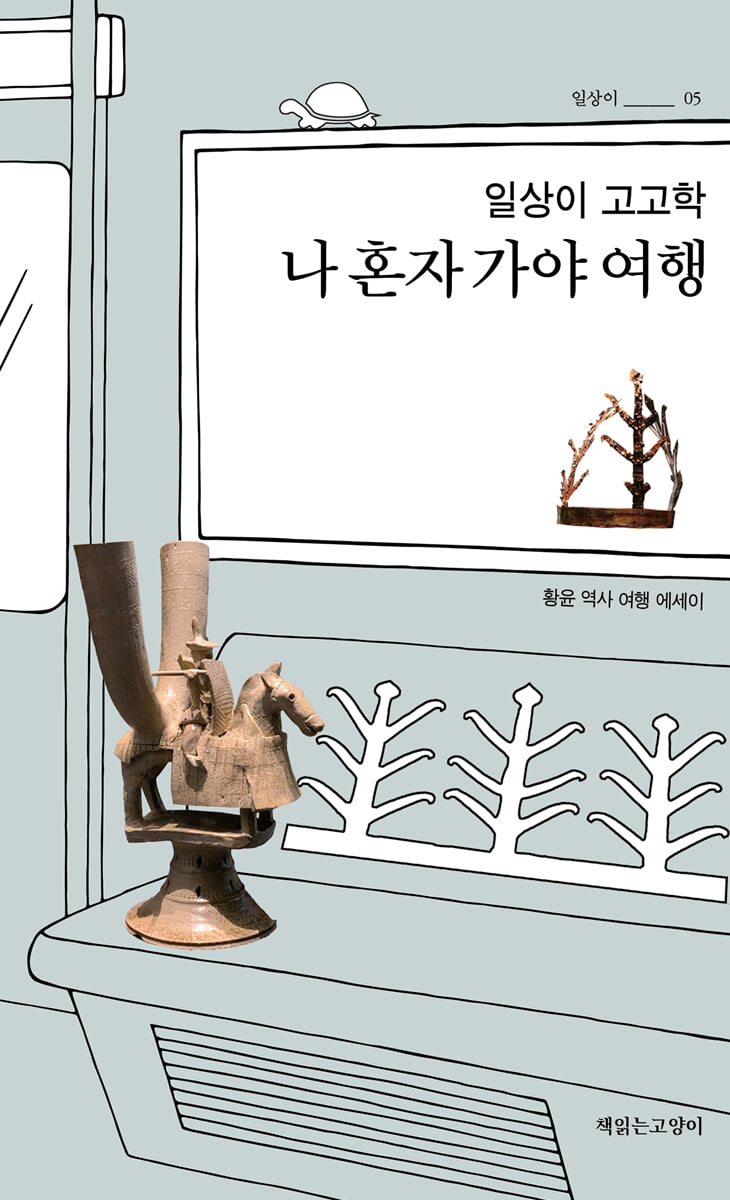 |
Description
Book Introduction
The first popular history book to attempt a new method of deriving historical facts through legends.
Gaya, which triggered the 'Imna Japan Theory' with the Gwanggaeto Stele inscription, also became a pretext for Japan's distortion of history.
The archaeological fun and pleasure of visiting the site and checking everything one by one
This book is a historical essay that traces back the ancient nation of Gaya, which had limitations in research due to its failure to leave its own records, through the Nansaeng story, the legend of King Suro, and searches for the true history hidden within it, one by one.
Gaya, which triggered the 'Imna Japan Theory' with the Gwanggaeto Stele inscription and became a pretext for distorting Japanese history, did not receive much attention in Korean history, being overshadowed by Goguryeo, Baekje, and Silla.
Nonetheless, the legend of King Suro and Gujiga have formed a common ground in popular perception that most Korean citizens remember.
Looking at the history of Gaya revealed through the unbiased hypotheses, various literature commentaries, and diligent work of historian Hwang Yun, who was a nerd, we can read that even though the name "Gaya" disappeared after its defeat by Silla, Gaya joined Silla's process of unifying the three kingdoms and showed a significant presence in history thereafter, finally becoming a history of unification.
The Gaya historical tour, which involves confirming and unraveling historical records that are sometimes distorted, sometimes exaggerated, and forced, and learning the meaning of each historical scene and name, is enough to stimulate interest in history and convey the fun and pleasure of archaeology.
Gaya, which triggered the 'Imna Japan Theory' with the Gwanggaeto Stele inscription, also became a pretext for Japan's distortion of history.
The archaeological fun and pleasure of visiting the site and checking everything one by one
This book is a historical essay that traces back the ancient nation of Gaya, which had limitations in research due to its failure to leave its own records, through the Nansaeng story, the legend of King Suro, and searches for the true history hidden within it, one by one.
Gaya, which triggered the 'Imna Japan Theory' with the Gwanggaeto Stele inscription and became a pretext for distorting Japanese history, did not receive much attention in Korean history, being overshadowed by Goguryeo, Baekje, and Silla.
Nonetheless, the legend of King Suro and Gujiga have formed a common ground in popular perception that most Korean citizens remember.
Looking at the history of Gaya revealed through the unbiased hypotheses, various literature commentaries, and diligent work of historian Hwang Yun, who was a nerd, we can read that even though the name "Gaya" disappeared after its defeat by Silla, Gaya joined Silla's process of unifying the three kingdoms and showed a significant presence in history thereafter, finally becoming a history of unification.
The Gaya historical tour, which involves confirming and unraveling historical records that are sometimes distorted, sometimes exaggerated, and forced, and learning the meaning of each historical scene and name, is enough to stimulate interest in history and convey the fun and pleasure of archaeology.
- You can preview some of the book's contents.
Preview
index
prolog
1.
Gwanggaeto the Great
Dong-A University Seokdang Museum
Gwanggaeto Stele
Then let's interpret it further
The real reason the monument was erected
Gwanggaeto the Great in the Samguk Sagi
2.
Let's go to Gimhae
Chinese restaurant Yeonguiru
Three things to check out in Gimhae
Daeseong-dong Ancient Tombs, especially Tomb No. 29
Because the country is full of iron
3.
Daeseong-dong Tomb Museum
A museum building with a handsome design
The evolution of the tomb
Artifacts gathered from various regions
Exchanges with Japan
4.
Gimhae National Museum
Building with a crimson surface
The various states of Gaya
The scope of Gimhae Gaya
Geumgwan Gaya as seen through Treasure No. 1922, the Gilt-Bronze Crown
Geumgwan Gaya's weapon system
Japan in the 4th century
Thinking again of the Gwanggaeto Stele
Specific appearance around 400 years ago
In the end, it contains the story I wanted to tell
5.
The Lost Secret Book, "The Gaehwangnyeok"
Gimhae Gusan-dong Ancient Tombs
Traces of Kim Gu-hae, the last king of Geumgwan Gaya
Samguk Yusa and Gaehwangnyeok
Tracing the Birth of a Myth
Kim Alji, the founder of the Silla Kim clan
What was King Suro's real name?
6.
Traces found in Gyeongju
The journey continues again
Daereungwon
The legendary lifespan of ancient kings
The emergence of the queen's tribe
A Revisit of King Suro and Empress Heo
7.
The surname Kim
Gyeongju National Museum
Silla, the golden kingdom
Silla King's name, Kim Jin-heung
Kim Alji's original name is Geum Alji?
Pronunciation name and meaning name
King Munmu's Stele and Soho Geumcheon
8.
Unification of the Three Kingdoms
Gaya people during the unification of the Three Kingdoms
I'll give you my old house, give me a new one.
The tomb of King Munmu, where he was cremated
The road to Sacheonwangsa Temple
Let's find the tombstone
The legend of Wang Geon at the end of Silla
A famous turtle story
Another turtle story that has been passed down
Finally, organize your trip
Epilogue
References
Search
1.
Gwanggaeto the Great
Dong-A University Seokdang Museum
Gwanggaeto Stele
Then let's interpret it further
The real reason the monument was erected
Gwanggaeto the Great in the Samguk Sagi
2.
Let's go to Gimhae
Chinese restaurant Yeonguiru
Three things to check out in Gimhae
Daeseong-dong Ancient Tombs, especially Tomb No. 29
Because the country is full of iron
3.
Daeseong-dong Tomb Museum
A museum building with a handsome design
The evolution of the tomb
Artifacts gathered from various regions
Exchanges with Japan
4.
Gimhae National Museum
Building with a crimson surface
The various states of Gaya
The scope of Gimhae Gaya
Geumgwan Gaya as seen through Treasure No. 1922, the Gilt-Bronze Crown
Geumgwan Gaya's weapon system
Japan in the 4th century
Thinking again of the Gwanggaeto Stele
Specific appearance around 400 years ago
In the end, it contains the story I wanted to tell
5.
The Lost Secret Book, "The Gaehwangnyeok"
Gimhae Gusan-dong Ancient Tombs
Traces of Kim Gu-hae, the last king of Geumgwan Gaya
Samguk Yusa and Gaehwangnyeok
Tracing the Birth of a Myth
Kim Alji, the founder of the Silla Kim clan
What was King Suro's real name?
6.
Traces found in Gyeongju
The journey continues again
Daereungwon
The legendary lifespan of ancient kings
The emergence of the queen's tribe
A Revisit of King Suro and Empress Heo
7.
The surname Kim
Gyeongju National Museum
Silla, the golden kingdom
Silla King's name, Kim Jin-heung
Kim Alji's original name is Geum Alji?
Pronunciation name and meaning name
King Munmu's Stele and Soho Geumcheon
8.
Unification of the Three Kingdoms
Gaya people during the unification of the Three Kingdoms
I'll give you my old house, give me a new one.
The tomb of King Munmu, where he was cremated
The road to Sacheonwangsa Temple
Let's find the tombstone
The legend of Wang Geon at the end of Silla
A famous turtle story
Another turtle story that has been passed down
Finally, organize your trip
Epilogue
References
Search
Detailed image

Publisher's Review
Gaya mentioned in the Gwanggaeto Stele
Refuting the Imna Japan Theory with Archaeology
The story begins with the Gwanggaeto Stele, which we found at the Seokdang Museum in Busan.
Baekje and Silla were once subjects of Goguryeo and paid tribute to it.
And Wa came in the year of Sinmyo, crossed the sea, conquered Baekjan ▨▨ Silla, and made it their subjects.
*Baekjan: a derogatory term for Baekje
The letters marked as ▨▨ in the second sentence are not clear due to the damaged part, but they are known as Gaya, and this sentence is used as decisive evidence in Japan's assertion of the Imna Japan theory.
Imna refers to the Gaya region, so the Gwanggaeto Stele supports the idea that Wa used Gaya as a base to occupy Baekje and Silla.
Is this really true? The author travels to Gimhae to find out.
The place we visited upon arriving in Gimhae was the Daeseong-dong Ancient Tombs.
Among them, the most striking tomb is Tomb No. 29.
Although the burial mound has disappeared, it is on display in its pre-excavation state. The artifacts unearthed, such as a large iron sword, arrows, a bronze cauldron, and especially a gilt-bronze crown, indicate that this was the first tomb to bury someone who could be called a king at the time.
It was a small peak, so it was built in the 3rd or 4th century, and therefore it is a tomb built before the arrival of the 50,000-strong Goguryeo army.
The Gwanggaeto Stele was erected in 414.
The year of the rabbit written on the stele is 391, and the year of the rabbit was 400 when Goguryeo, at the request of Silla, launched an expedition with 50,000 troops to subdue Baekje and Gaya.
Until 400 years ago, Wa had been receiving ironware and other advanced cultures from Baekje and Gaya, and only after the power of Gaya and Baekje weakened did ironware culture develop in earnest.
Artifacts excavated from Gaya prove this.
In other words, it is absurd to say that Japan occupied Baekje, Silla, and Gaya in 391.
There has been much discussion about the interpretation of this inscription since the late 19th century, and through the projection of nationalistic viewpoints between Korea and Japan, there has been a tendency to view it in a favorable light, and currently, scholars from Korea, China, and Japan have a strong tendency to read and interpret the sentence as it is.
The question of whether Japan at the time had the ability to cross the sea and conquer and rule Baekje, Silla, etc. is being addressed through archaeological comparisons to construct a logical argument.
If so, then in the Gwanggaeto Stele
Why? Would there be inscriptions denigrating Baekje and defending Wa?
The answer can be found in the invasion of Goguryeo by King Geunchogo of Baekje in 371.
Baekje, which was growing in power, sent 30,000 troops to Pyongyang, and King Gogukwon, the grandfather of King Gwanggaeto the Great, died in battle.
After King Gwanggaeto the Great came to power, Baekje was a constant target of attack, and in 396, Baekje finally surrendered to Goguryeo, but did not give up and attacked Silla, which had established diplomatic relations with Goguryeo.
And this led to Goguryeo's southern expedition of 50,000 troops.
It is natural that Goguryeo left behind a text that belittled Baekje and flaunted Goguryeo's power.
It must have been so bad that on the Gwanggaeto Stele, Baekje is called Baekjan (百殘) instead of Baekje, which is a very disparaging term.
Gaya, which does not even have its own history
But how did Kim Suro, a 1st century figure, survive?
Although it may not be as famous as Baekje, Silla, or Goguryeo, everyone has probably heard of Gaya and its founder, King Suro, at least once.
Kim Su-ro is also the founder of the Gimhae Kim clan, which has the largest number of clans.
So, how did Kim Suro, a 1st-century figure, survive when the Gaya lineage was cut off and no direct history was left behind? How did his birth story and the story of Gujiga reach us?
The section on the Garak Kingdom in the Samguk Yusa written by Iryeon in the 13th century is the only record of Gaya.
This is a summary of the Garakgukgi compiled by a scholar who was dispatched to Gimhae during the reign of King Munjong of Goryeo in the 11th century and served as a local official. It is said that this came from a book called Gaehwangryeok.
Since Gaehwang was used to mean “founding the imperial kingdom of Geumgwan Gaya,” we can see that the Gaehwangnyeok was compiled as a chronology centered on the founding legend of King Suro up to King Guhyeong, and that it was written in the late 6th century at the earliest, meaning that it was a record after the fall of Gaya.
If so, why did Iryeon leave behind only the story of Geumgwan Gaya among the six Gaya in the ‘Garakgaya Chronicles’ section of ‘Samguk Yusa’?
This is proven through the status of the Gaya people in Silla after the fall of Gaya.
General Kim Yu-sin's great-grandfather, who was of Gaya descent, was the last king of Geumgwan Gaya.
Also, his younger sister became the queen of King Taejong Muyeol and became a member of the royal family, and in the end, King Munmu, the king who unified the Three Kingdoms, was a king of the Gaya lineage.
This means that although Gaya has disappeared, the influence of the Geumgwan Gaya people has never disappeared.
Therefore, it can be inferred that the Gaya birth story was continuously supplemented after the fall of Gaya, and that the Geumgwan Gaya history book, Gaehwangnyeok, was able to remain as the only source for the Garak Kingdom.
Next is the surname issue.
When did the Kim clan appear on the Korean Peninsula?
Kim Suro, King Suro's surname is Kim.
This is not a problem in today's surname culture, but considering that there were no surnames in the 1st century when King Suro was alive, this story must have been added later.
In a passage citing the "Gaehwangnyeok," there is a statement that "King Suro's surname is Kim, meaning that the ancestor of the nation was born from a golden egg, so he made his surname gold."
Considering that the use of the surname dates back to the time of King Jinheung of Silla, it can be seen that the legend of King Suro, the founder of Gaya, was created after the mid-6th century, when King Jinheung's name was mentioned as Kim Jinheung.
Ultimately, when we look at the design format of King Suro's name, it is also proven that the "Gaehwangnyeok" that mentions King Suro was compiled at least after the late 6th century.
Even if we just look at the background of how King Suro came to have the surname Kim Suro, we can guess the position of the Gaya people within Silla.
Even the royal family of Silla was given the surname Kim.
This book offers the pleasure of reading together to discover the true history of Gaya, shrouded in mystery, by unraveling the stories that were added one by one to myths filled with the imagination and stories that the people of the time wanted to tell.
A huge trace of the Gaya people
Acting as the glue for the unification of the three kingdoms, and further becoming the starting point of national consciousness.
Geumgwan Gaya was destroyed in the 6th century, but it did not end there.
Those who achieved great feats during the unification of the Three Kingdoms were the Silla people of Gaya descent, namely Kim Yu-sin and King Munmu.
Choi Ji-won, a representative writer of the 9th century Unified Silla, said in a letter to the Grand Historian of the Tang Dynasty, “Samhan is the Three Kingdoms; Mahan is Goguryeo, Byeonhan is Baekje, and Jinhan is Silla.”
Silla, through its decisive battle with the Tang Dynasty, united the ethnic groups on the Korean Peninsula and placed a special emphasis on the idea of unifying the three kingdoms. This was the first instance of a unified ethnic consciousness on the Korean Peninsula.
In the biography of Kim Yu-sin in the Samguk Sagi, it is written, “The Three Hans became one family, and the people did not have two minds.”
This is a record by Kim Bu-sik, a Goryeo person, and shows that the perception of “Samhan = Three Kingdoms” continued through Silla and into the Goryeo Dynasty.
The perception of “Samhan = Three Kingdoms” that continued until the early Joseon Dynasty returned to “Samhan = Baekje, Silla, and Gaya” in the late Joseon Dynasty as interest in historical geography grew through Silhak (practical learning) and the history of Gaya was brought to the fore again.
The fact that the unification of the three kingdoms established by Silla was taken for granted for hundreds of years, from Goryeo to Joseon, is because it was the first national concept to appear in the history of the Korean Peninsula.
And at the starting point was none other than Gaya.
Refuting the Imna Japan Theory with Archaeology
The story begins with the Gwanggaeto Stele, which we found at the Seokdang Museum in Busan.
Baekje and Silla were once subjects of Goguryeo and paid tribute to it.
And Wa came in the year of Sinmyo, crossed the sea, conquered Baekjan ▨▨ Silla, and made it their subjects.
*Baekjan: a derogatory term for Baekje
The letters marked as ▨▨ in the second sentence are not clear due to the damaged part, but they are known as Gaya, and this sentence is used as decisive evidence in Japan's assertion of the Imna Japan theory.
Imna refers to the Gaya region, so the Gwanggaeto Stele supports the idea that Wa used Gaya as a base to occupy Baekje and Silla.
Is this really true? The author travels to Gimhae to find out.
The place we visited upon arriving in Gimhae was the Daeseong-dong Ancient Tombs.
Among them, the most striking tomb is Tomb No. 29.
Although the burial mound has disappeared, it is on display in its pre-excavation state. The artifacts unearthed, such as a large iron sword, arrows, a bronze cauldron, and especially a gilt-bronze crown, indicate that this was the first tomb to bury someone who could be called a king at the time.
It was a small peak, so it was built in the 3rd or 4th century, and therefore it is a tomb built before the arrival of the 50,000-strong Goguryeo army.
The Gwanggaeto Stele was erected in 414.
The year of the rabbit written on the stele is 391, and the year of the rabbit was 400 when Goguryeo, at the request of Silla, launched an expedition with 50,000 troops to subdue Baekje and Gaya.
Until 400 years ago, Wa had been receiving ironware and other advanced cultures from Baekje and Gaya, and only after the power of Gaya and Baekje weakened did ironware culture develop in earnest.
Artifacts excavated from Gaya prove this.
In other words, it is absurd to say that Japan occupied Baekje, Silla, and Gaya in 391.
There has been much discussion about the interpretation of this inscription since the late 19th century, and through the projection of nationalistic viewpoints between Korea and Japan, there has been a tendency to view it in a favorable light, and currently, scholars from Korea, China, and Japan have a strong tendency to read and interpret the sentence as it is.
The question of whether Japan at the time had the ability to cross the sea and conquer and rule Baekje, Silla, etc. is being addressed through archaeological comparisons to construct a logical argument.
If so, then in the Gwanggaeto Stele
Why? Would there be inscriptions denigrating Baekje and defending Wa?
The answer can be found in the invasion of Goguryeo by King Geunchogo of Baekje in 371.
Baekje, which was growing in power, sent 30,000 troops to Pyongyang, and King Gogukwon, the grandfather of King Gwanggaeto the Great, died in battle.
After King Gwanggaeto the Great came to power, Baekje was a constant target of attack, and in 396, Baekje finally surrendered to Goguryeo, but did not give up and attacked Silla, which had established diplomatic relations with Goguryeo.
And this led to Goguryeo's southern expedition of 50,000 troops.
It is natural that Goguryeo left behind a text that belittled Baekje and flaunted Goguryeo's power.
It must have been so bad that on the Gwanggaeto Stele, Baekje is called Baekjan (百殘) instead of Baekje, which is a very disparaging term.
Gaya, which does not even have its own history
But how did Kim Suro, a 1st century figure, survive?
Although it may not be as famous as Baekje, Silla, or Goguryeo, everyone has probably heard of Gaya and its founder, King Suro, at least once.
Kim Su-ro is also the founder of the Gimhae Kim clan, which has the largest number of clans.
So, how did Kim Suro, a 1st-century figure, survive when the Gaya lineage was cut off and no direct history was left behind? How did his birth story and the story of Gujiga reach us?
The section on the Garak Kingdom in the Samguk Yusa written by Iryeon in the 13th century is the only record of Gaya.
This is a summary of the Garakgukgi compiled by a scholar who was dispatched to Gimhae during the reign of King Munjong of Goryeo in the 11th century and served as a local official. It is said that this came from a book called Gaehwangryeok.
Since Gaehwang was used to mean “founding the imperial kingdom of Geumgwan Gaya,” we can see that the Gaehwangnyeok was compiled as a chronology centered on the founding legend of King Suro up to King Guhyeong, and that it was written in the late 6th century at the earliest, meaning that it was a record after the fall of Gaya.
If so, why did Iryeon leave behind only the story of Geumgwan Gaya among the six Gaya in the ‘Garakgaya Chronicles’ section of ‘Samguk Yusa’?
This is proven through the status of the Gaya people in Silla after the fall of Gaya.
General Kim Yu-sin's great-grandfather, who was of Gaya descent, was the last king of Geumgwan Gaya.
Also, his younger sister became the queen of King Taejong Muyeol and became a member of the royal family, and in the end, King Munmu, the king who unified the Three Kingdoms, was a king of the Gaya lineage.
This means that although Gaya has disappeared, the influence of the Geumgwan Gaya people has never disappeared.
Therefore, it can be inferred that the Gaya birth story was continuously supplemented after the fall of Gaya, and that the Geumgwan Gaya history book, Gaehwangnyeok, was able to remain as the only source for the Garak Kingdom.
Next is the surname issue.
When did the Kim clan appear on the Korean Peninsula?
Kim Suro, King Suro's surname is Kim.
This is not a problem in today's surname culture, but considering that there were no surnames in the 1st century when King Suro was alive, this story must have been added later.
In a passage citing the "Gaehwangnyeok," there is a statement that "King Suro's surname is Kim, meaning that the ancestor of the nation was born from a golden egg, so he made his surname gold."
Considering that the use of the surname dates back to the time of King Jinheung of Silla, it can be seen that the legend of King Suro, the founder of Gaya, was created after the mid-6th century, when King Jinheung's name was mentioned as Kim Jinheung.
Ultimately, when we look at the design format of King Suro's name, it is also proven that the "Gaehwangnyeok" that mentions King Suro was compiled at least after the late 6th century.
Even if we just look at the background of how King Suro came to have the surname Kim Suro, we can guess the position of the Gaya people within Silla.
Even the royal family of Silla was given the surname Kim.
This book offers the pleasure of reading together to discover the true history of Gaya, shrouded in mystery, by unraveling the stories that were added one by one to myths filled with the imagination and stories that the people of the time wanted to tell.
A huge trace of the Gaya people
Acting as the glue for the unification of the three kingdoms, and further becoming the starting point of national consciousness.
Geumgwan Gaya was destroyed in the 6th century, but it did not end there.
Those who achieved great feats during the unification of the Three Kingdoms were the Silla people of Gaya descent, namely Kim Yu-sin and King Munmu.
Choi Ji-won, a representative writer of the 9th century Unified Silla, said in a letter to the Grand Historian of the Tang Dynasty, “Samhan is the Three Kingdoms; Mahan is Goguryeo, Byeonhan is Baekje, and Jinhan is Silla.”
Silla, through its decisive battle with the Tang Dynasty, united the ethnic groups on the Korean Peninsula and placed a special emphasis on the idea of unifying the three kingdoms. This was the first instance of a unified ethnic consciousness on the Korean Peninsula.
In the biography of Kim Yu-sin in the Samguk Sagi, it is written, “The Three Hans became one family, and the people did not have two minds.”
This is a record by Kim Bu-sik, a Goryeo person, and shows that the perception of “Samhan = Three Kingdoms” continued through Silla and into the Goryeo Dynasty.
The perception of “Samhan = Three Kingdoms” that continued until the early Joseon Dynasty returned to “Samhan = Baekje, Silla, and Gaya” in the late Joseon Dynasty as interest in historical geography grew through Silhak (practical learning) and the history of Gaya was brought to the fore again.
The fact that the unification of the three kingdoms established by Silla was taken for granted for hundreds of years, from Goryeo to Joseon, is because it was the first national concept to appear in the history of the Korean Peninsula.
And at the starting point was none other than Gaya.
GOODS SPECIFICS
- Publication date: April 15, 2021
- Page count, weight, size: 320 pages | 304g | 112*184*21mm
- ISBN13: 9791186274804
- ISBN10: 1186274808
You may also like
카테고리
korean


korean

![GQ KOREA Mark (Monthly): December [2025]](http://librairie.coreenne.fr/cdn/shop/files/8ef265dbbfbf186523ed75ba7319009d.jpg?v=1765340328&width=3840)


