

A Month in Kyoto
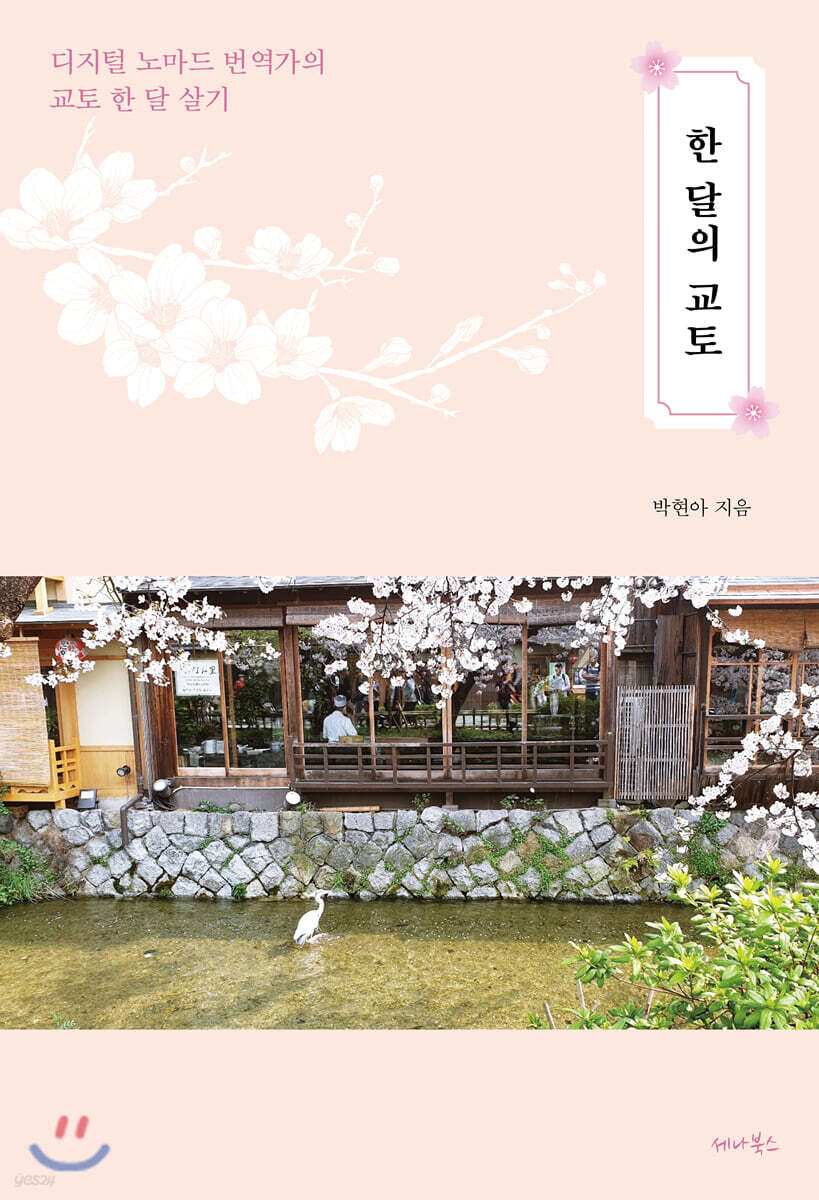 |
Description
Book Introduction
A month in which Kyoto slowly welcomes spring
Bringing back a piece of shining memory
A digital nomad translator's month-long stay in Kyoto!
I had the opportunity to live anywhere I wanted in Japan for a month.
Her choice is Kyoto, the millennium-old capital.
In Kyoto, a special city of wabi-sabi, where the old and the new coexist, the author experiences a true "month of living" rather than a "month of sightseeing and relaxation."
Sightseeing is a given, and living and working in Kyoto is also a breeze.
Her curious job is that she is a freelance Japanese translator who enjoys being a digital nomad.
This book is about her experience of Kyoto while touring and working there for a month.
Visiting Kyoto's famous tourist spots like Kinkaku-ji Temple, Fushimi Inari, and Kiyomizu-dera is a given, but I also go on a lot of unique cafe tours under the pretext of doing translation work, which isn't really an excuse.
In early April, when the cherry blossoms are just beginning to bloom in Kyoto, you can enjoy the flowers and enjoy a cup of tea while looking out at the tranquil Japanese garden.
Some people go on a vacation near Lake Biwa to experience an authentic Japanese tea ceremony.
With her extensive knowledge of history, she tells interesting stories of Japanese history at famous tourist destinations as a bonus.
While enjoying the night cherry blossoms at Nijo Castle, I sometimes turn on my laptop and work on a translation PM's email saying, "Please translate this right now!" Or, I work on a translation while looking out the window at a stylish cafe in beautiful Arashiyama and watching the cherry blossoms fluttering like snow.
Living in Kyoto for a month, where the lines between tourism, daily life, and work are blurred, was an enviable luxury and privilege, afforded only to professional freelance translators who truly enjoy the digital nomad experience.
As Kyoto slowly welcomes spring, I have captured a piece of shining memory.
This book, “A Month in Kyoto,” is filled with these dazzling pieces.
Bringing back a piece of shining memory
A digital nomad translator's month-long stay in Kyoto!
I had the opportunity to live anywhere I wanted in Japan for a month.
Her choice is Kyoto, the millennium-old capital.
In Kyoto, a special city of wabi-sabi, where the old and the new coexist, the author experiences a true "month of living" rather than a "month of sightseeing and relaxation."
Sightseeing is a given, and living and working in Kyoto is also a breeze.
Her curious job is that she is a freelance Japanese translator who enjoys being a digital nomad.
This book is about her experience of Kyoto while touring and working there for a month.
Visiting Kyoto's famous tourist spots like Kinkaku-ji Temple, Fushimi Inari, and Kiyomizu-dera is a given, but I also go on a lot of unique cafe tours under the pretext of doing translation work, which isn't really an excuse.
In early April, when the cherry blossoms are just beginning to bloom in Kyoto, you can enjoy the flowers and enjoy a cup of tea while looking out at the tranquil Japanese garden.
Some people go on a vacation near Lake Biwa to experience an authentic Japanese tea ceremony.
With her extensive knowledge of history, she tells interesting stories of Japanese history at famous tourist destinations as a bonus.
While enjoying the night cherry blossoms at Nijo Castle, I sometimes turn on my laptop and work on a translation PM's email saying, "Please translate this right now!" Or, I work on a translation while looking out the window at a stylish cafe in beautiful Arashiyama and watching the cherry blossoms fluttering like snow.
Living in Kyoto for a month, where the lines between tourism, daily life, and work are blurred, was an enviable luxury and privilege, afforded only to professional freelance translators who truly enjoy the digital nomad experience.
As Kyoto slowly welcomes spring, I have captured a piece of shining memory.
This book, “A Month in Kyoto,” is filled with these dazzling pieces.
- You can preview some of the book's contents.
Preview
index
Prologue / 014
I decided to go to Kyoto / 022
Day 1 April 5th: Living for a month, departing for Kyoto!
- Kyoto Station / 030
Day 2, April 6th, starts with cherry blossoms
- Philosophy's Path, Tea Ceremony Experience Genan / 034
Day 3, April 7th, before the cherry blossoms fall
- Heian Shrine, Gion Shirakawa, Gion Shijo, Kawaramachi / 052
Day 4, April 8th: Digital Nomad Experience at a former aristocratic villa
- Arashiyama / 080
Day 5, April 9th If you're a freelancer, you can enjoy cherry blossoms while working.
- Clamp Coffee Sarasa, Nijo Castle / 092
Day 6: Feeling BTS's Popularity in Kyoto on April 10th
- Pro Antique Com Kyoto, Gokenshimo, Blue Bottle / 108
Day 7, April 11th Market tour with food and drink
- Nishiki Market / 124
Day 8, April 12th: Is this the villa of the immortals or the shelter of the fairies?
- Kiyomizu-dera / 134
Day 11, April 14th: A cup of tea on the porch in the rainy garden
- Entokuin / 150
Day 12, April 15th: A place where cute foxes and cats welcome you
- Fushimi Inari / 166
Day 14, April 17th: A leisurely and peaceful afternoon spent at the old palace.
- Kyoto Imperial Palace / 182
Day 15, April 18th Now, Life is living you
- Higashi Honganji, Hibi Coffee / 190
Day 16 April 19 Is there nothing to see at Kinkaku-ji Temple other than Kinkaku-ji Temple?
- Kinkakuji Temple / 204
Day 17, April 20th, the enemy is at Honnoji.
- Honnoji, Cafe Koshi / 214
Day 18 (April 21st) - Day 20 (April 23rd) Horin Tour Hyodo Tourism
- A trip to Kyoto with my parents / 222
Day 21 (April 24th) - Day 22 (April 25th) Lake Biwa Vacation Tour
- Otsu Prince Hotel, Biwako Hotel / 226
Day 23, April 26th: Bees flock to beautiful flowers.
- Ishiyamadera / 236
Day 25, April 28th: A Different Experience: Japanese Sake Avocado
- Fushimi Brewery / 244
Day 26, April 29th: A welcome guest we met in Japan
- Tenryuji, Arashiyama Chikurin / 250
Day 29, May 2nd Another attraction of Kinkaku-ji Temple
- Ginkakuji Temple, Cafe Hanausagi / 256
Day 30: May 3rd: Embracing a Piece of Spring in Kyoto
- Shosei-en, Crafthouse Kyoto, Mama Coffee / 266
Day 31, May 4th: A Rice Cake Shop with a Thousand Years of History
- Imamiya Shrine, Ichimonjiya Wasuke / 274
Epilogue / 283
I decided to go to Kyoto / 022
Day 1 April 5th: Living for a month, departing for Kyoto!
- Kyoto Station / 030
Day 2, April 6th, starts with cherry blossoms
- Philosophy's Path, Tea Ceremony Experience Genan / 034
Day 3, April 7th, before the cherry blossoms fall
- Heian Shrine, Gion Shirakawa, Gion Shijo, Kawaramachi / 052
Day 4, April 8th: Digital Nomad Experience at a former aristocratic villa
- Arashiyama / 080
Day 5, April 9th If you're a freelancer, you can enjoy cherry blossoms while working.
- Clamp Coffee Sarasa, Nijo Castle / 092
Day 6: Feeling BTS's Popularity in Kyoto on April 10th
- Pro Antique Com Kyoto, Gokenshimo, Blue Bottle / 108
Day 7, April 11th Market tour with food and drink
- Nishiki Market / 124
Day 8, April 12th: Is this the villa of the immortals or the shelter of the fairies?
- Kiyomizu-dera / 134
Day 11, April 14th: A cup of tea on the porch in the rainy garden
- Entokuin / 150
Day 12, April 15th: A place where cute foxes and cats welcome you
- Fushimi Inari / 166
Day 14, April 17th: A leisurely and peaceful afternoon spent at the old palace.
- Kyoto Imperial Palace / 182
Day 15, April 18th Now, Life is living you
- Higashi Honganji, Hibi Coffee / 190
Day 16 April 19 Is there nothing to see at Kinkaku-ji Temple other than Kinkaku-ji Temple?
- Kinkakuji Temple / 204
Day 17, April 20th, the enemy is at Honnoji.
- Honnoji, Cafe Koshi / 214
Day 18 (April 21st) - Day 20 (April 23rd) Horin Tour Hyodo Tourism
- A trip to Kyoto with my parents / 222
Day 21 (April 24th) - Day 22 (April 25th) Lake Biwa Vacation Tour
- Otsu Prince Hotel, Biwako Hotel / 226
Day 23, April 26th: Bees flock to beautiful flowers.
- Ishiyamadera / 236
Day 25, April 28th: A Different Experience: Japanese Sake Avocado
- Fushimi Brewery / 244
Day 26, April 29th: A welcome guest we met in Japan
- Tenryuji, Arashiyama Chikurin / 250
Day 29, May 2nd Another attraction of Kinkaku-ji Temple
- Ginkakuji Temple, Cafe Hanausagi / 256
Day 30: May 3rd: Embracing a Piece of Spring in Kyoto
- Shosei-en, Crafthouse Kyoto, Mama Coffee / 266
Day 31, May 4th: A Rice Cake Shop with a Thousand Years of History
- Imamiya Shrine, Ichimonjiya Wasuke / 274
Epilogue / 283
Detailed image

Into the book
After the experience, as I was leaving the tea room, my legs were still incredibly numb.
If I hadn't sat down on the chair earlier and held on, I might not have been able to go home.
I cried out in pain to the teacher, “Sumimasen!”
The young and cute teacher, wearing a beautiful sky blue kimono, gave me a professional tourist sales smile and said it was okay, so take your time if your legs feel weak.
As expected, you're a veteran! After a brief rest, I left the tea room.
--- p.49
The weather is nice, the cherry blossoms are swaying in the wind, and I am drinking beer in front of Heian Shrine.
Yes, this is the picture that perfectly fits the title 'Living in Kyoto for a Month'.
I felt the happiness of that moment and the satisfaction of having something to write about in the book all at once.
On the one hand, I realized anew that I was alone in this good moment.
I posted a picture on Twitter, but I felt a little sad that I couldn't share the taste of the beer and hormones I was drinking, the feeling of the wind blowing now, and the scenery with anyone.
--- p.63
I turned on the translation program and started working by tapping away at the keyboard.
I gazed blankly at the Togetsukyo Bridge outside the window and admired the cherry blossoms.
I also watched people coming and going from Dogetsukyo Bridge.
As I was quietly listening to music and doing some work, I thought to myself that this situation was really cool.
Translation work while looking out the window of a stylish cafe in beautiful Arashiyama, the villas of nobles.
It's like a scene from a drama or novel.
Is this what it means to be a digital nomad?
--- p.89
If you think about it, my job is really convenient.
If I had been working, I wouldn't have been able to leave so easily to live for a month.
Since it was a job where I physically worked alone, I could just leave.
You can work from anywhere as long as you have internet access and a laptop.
In fact, that is why this one month in Kyoto could be a ‘one month living’ rather than a ‘one month vacation’.
Because I have to live and work in Kyoto all the time.
--- p.93
I got an email.
It was the cry of a PM (project manager) at a translation company I deal with.
To summarize the content, 'Translate this now! Right now!' I had no choice but to open my laptop in the souvenir shop and translate the file the PM had sent me.
Yes, that's right.
I carried my laptop with me.
It was heavy.
After I translated it frantically and delivered it safely, I received a call from another PM.
"This! Until 10 p.m. tonight!" Is this the joys and sorrows of being a freelancer? They call themselves digital nomads, but who would have thought they'd end up opening their laptops and doing translation work in the souvenir shop of Nijo Castle, a historic site that witnessed the beginning and end of the Edo shogunate?
--- p.106
After reading the sign and searching, I could see why.
This rock was the rock of love.
There is another identical rock about 10 meters away on the opposite side. It is said that if you close your eyes and walk safely to this rock and touch it, your love will come true.
I thought, 'Youth is good,' but this time, an older man was walking towards the rock with his eyes closed.
Are you hoping for love in your old age? As expected, love has no age or borders!
--- p.145
I walked through the spacious and leisurely grounds of Higashi Honganji Temple.
The spacious grounds, with their large Goeido and Amida-do, offer a clear view of Kyoto Tower, which is quite interesting.
You can enjoy the scenery of Kyoto, where old modern buildings that can never be called modern coexist with magnificent temples.
I wandered around the vast grounds, diligently studying the composition to take pictures of the scenery.
--- p.200
After asking permission to take pictures, I took some pictures of Honnoji from a distance and then got back on the bus home.
I made the right decision to buy a season ticket.
And I guess I'll have to meet Honnoji next time.
As I approached home, I saw Higaji Honganji Temple again through the bus window.
Even at that moment, at the large intersection in front of Kyoto Station, Higashi Honganji was constantly calling out to the people.
Life is living you.
--- p.201
A question that suddenly occurred to me while touring Kinkaku-ji Temple.
Of course, since I'm not a literary girl, my curiosity had nothing to do with the novel. 'Is that all pure gold?' I suddenly wondered if 18K or 14K were used.
If it's 14K, it seems like it would be more durable... .
--- p.210
I carried an eco bag with the words 'Dobby is free' printed on it throughout my trip to Kyoto, but seeing that I came all the way to Kyoto to work shows that I am not free.
Still, if you do this, you won't have financial difficulties when you return to your daily life after your trip.
--- p.216
These are the words that Akechi Mitsuhide is said to have said when he turned back to Honnoji.
The saying, "The enemy is at Honnoji Temple (敵は本能寺にあり)" is still used in Japan today to mean "pretending to do something else while trying to achieve your original goal."
There are numerous speculations and theories as to why Akechi Mitsuhide betrayed his lord Nobunaga.
--- p.217
I got off at Otsu Station, which was small and quiet compared to Kyoto Station.
The sky was dark and it looked like it was going to rain soon.
I took the hotel shuttle bus from a stop I had found out in advance by searching the Internet.
And I booked a hotel on that bus.
You can't book a hotel on the hotel shuttle bus.
I don't know why, but it felt spontaneous and I felt cool about it.
(I really don't know why it looked so cool) How could it be so unplanned!
--- p.231
I returned to my room and resumed my work, then gazed out from the terrace at Lake Biwa, which was becoming dark.
There was a fountain show going on at the time.
I watched the magnificent fountain show at Lake Biwa while listening to music flowing from my phone.
For a moment, I felt like I was the main character in a wonderful photo.
And I felt anew the importance of work and money.
If I hadn't decided to become a translator, if I hadn't written the book, if I hadn't stayed for a month, would I have been able to come all the way to Lake Biwa in Shiga and enjoy a staycation? The reason I can enjoy such luxury in a hotel like this is because I'm making money.
--- p.235
It is said that in that era, girls were only taught the Japanese alphabet, kana, and waka (a type of poetry), and not kanji. However, Murasaki Shikibu's father recognized his daughter's talent and taught her kanji as well.
Afterwards, she was recognized for her talents in poetry and writing, and it is said that she worked as a court lady who served the Emperor's wife like a tutor.
In our country, would it be equivalent to the highest ranking court lady in the palace?
--- p.241
In early April, the Philosopher's Path was filled with cherry blossoms, and in early May, the Philosopher's Path was filled with bright green leaves sparkling in the sunlight.
There were a lot of traces of Komorebi on the floor.
Komorebi (木漏れ日).
It is a Japanese word referring to sunlight shining through leaves.
I like this word because the pronunciation is somehow cute.
I walked slowly along the path of philosophy filled with Komorebi.
--- p.257
The Golden Pavilion showed off its splendid gold.
But the silver lining had no decoration.
But that appearance was truly noble.
I don't know if this analogy is appropriate, but if the Golden Pavilion was someone who wore beautiful, stylish, and cutting-edge clothes, the Silver Pavilion seemed like someone who looked classy even when wearing just anything.
--- p.261
I took a seat inside the store and opened my laptop.
Since I hadn't eaten lunch, I ordered pizza toast and started translating.
The pizza toast was so delicious that I ordered French toast as well, and it was just as delicious.
Listening to cafe music mixed with the sound of a flowing river, eating delicious food, and smelling the scent of spring... work! It was a wonderful afternoon that somehow made me regret leaving Kyoto.
--- p.272
As I headed home after working hard, I was reminded of the changes between April and May.
It was so cold that I only looked for warm coffee, but within a month I was drinking iced Americano, and the cherry blossoms had all fallen and were filled with green leaves.
Spring will bloom like this and then move into summer.
And I was able to spend a month with Kyoto as it slowly welcomed spring.
I felt like I had a piece of Kyoto's spring all to myself.
--- p.273
How on earth could they have managed to stay in business for 1,000 years? Oh, by the way, the Kazariya across the street also has a history of over 400 years, dating back to the Edo period.
In other places, 200 or 300 years is a lot, but in Kyoto, there are so many old shops that 100 or 200 years is nothing special.
Besides, I thought it was really amazing that Ichimonjiya Wasuke was a 1000 year old store.
--- p.278
Even if I were to go back to Kyoto again, I probably wouldn't be able to fully recapture the feeling I had in April 2019, when the cherry blossoms were in full bloom and I could see carp at the bus stop every day.
The Kyoto I experienced at that time remains in detail only as a deep memory in my abyss.
This book, “A Month in Kyoto,” contains those shining pieces.
I am happy to be able to share my memories of Kyoto with readers through this book.
If I hadn't sat down on the chair earlier and held on, I might not have been able to go home.
I cried out in pain to the teacher, “Sumimasen!”
The young and cute teacher, wearing a beautiful sky blue kimono, gave me a professional tourist sales smile and said it was okay, so take your time if your legs feel weak.
As expected, you're a veteran! After a brief rest, I left the tea room.
--- p.49
The weather is nice, the cherry blossoms are swaying in the wind, and I am drinking beer in front of Heian Shrine.
Yes, this is the picture that perfectly fits the title 'Living in Kyoto for a Month'.
I felt the happiness of that moment and the satisfaction of having something to write about in the book all at once.
On the one hand, I realized anew that I was alone in this good moment.
I posted a picture on Twitter, but I felt a little sad that I couldn't share the taste of the beer and hormones I was drinking, the feeling of the wind blowing now, and the scenery with anyone.
--- p.63
I turned on the translation program and started working by tapping away at the keyboard.
I gazed blankly at the Togetsukyo Bridge outside the window and admired the cherry blossoms.
I also watched people coming and going from Dogetsukyo Bridge.
As I was quietly listening to music and doing some work, I thought to myself that this situation was really cool.
Translation work while looking out the window of a stylish cafe in beautiful Arashiyama, the villas of nobles.
It's like a scene from a drama or novel.
Is this what it means to be a digital nomad?
--- p.89
If you think about it, my job is really convenient.
If I had been working, I wouldn't have been able to leave so easily to live for a month.
Since it was a job where I physically worked alone, I could just leave.
You can work from anywhere as long as you have internet access and a laptop.
In fact, that is why this one month in Kyoto could be a ‘one month living’ rather than a ‘one month vacation’.
Because I have to live and work in Kyoto all the time.
--- p.93
I got an email.
It was the cry of a PM (project manager) at a translation company I deal with.
To summarize the content, 'Translate this now! Right now!' I had no choice but to open my laptop in the souvenir shop and translate the file the PM had sent me.
Yes, that's right.
I carried my laptop with me.
It was heavy.
After I translated it frantically and delivered it safely, I received a call from another PM.
"This! Until 10 p.m. tonight!" Is this the joys and sorrows of being a freelancer? They call themselves digital nomads, but who would have thought they'd end up opening their laptops and doing translation work in the souvenir shop of Nijo Castle, a historic site that witnessed the beginning and end of the Edo shogunate?
--- p.106
After reading the sign and searching, I could see why.
This rock was the rock of love.
There is another identical rock about 10 meters away on the opposite side. It is said that if you close your eyes and walk safely to this rock and touch it, your love will come true.
I thought, 'Youth is good,' but this time, an older man was walking towards the rock with his eyes closed.
Are you hoping for love in your old age? As expected, love has no age or borders!
--- p.145
I walked through the spacious and leisurely grounds of Higashi Honganji Temple.
The spacious grounds, with their large Goeido and Amida-do, offer a clear view of Kyoto Tower, which is quite interesting.
You can enjoy the scenery of Kyoto, where old modern buildings that can never be called modern coexist with magnificent temples.
I wandered around the vast grounds, diligently studying the composition to take pictures of the scenery.
--- p.200
After asking permission to take pictures, I took some pictures of Honnoji from a distance and then got back on the bus home.
I made the right decision to buy a season ticket.
And I guess I'll have to meet Honnoji next time.
As I approached home, I saw Higaji Honganji Temple again through the bus window.
Even at that moment, at the large intersection in front of Kyoto Station, Higashi Honganji was constantly calling out to the people.
Life is living you.
--- p.201
A question that suddenly occurred to me while touring Kinkaku-ji Temple.
Of course, since I'm not a literary girl, my curiosity had nothing to do with the novel. 'Is that all pure gold?' I suddenly wondered if 18K or 14K were used.
If it's 14K, it seems like it would be more durable... .
--- p.210
I carried an eco bag with the words 'Dobby is free' printed on it throughout my trip to Kyoto, but seeing that I came all the way to Kyoto to work shows that I am not free.
Still, if you do this, you won't have financial difficulties when you return to your daily life after your trip.
--- p.216
These are the words that Akechi Mitsuhide is said to have said when he turned back to Honnoji.
The saying, "The enemy is at Honnoji Temple (敵は本能寺にあり)" is still used in Japan today to mean "pretending to do something else while trying to achieve your original goal."
There are numerous speculations and theories as to why Akechi Mitsuhide betrayed his lord Nobunaga.
--- p.217
I got off at Otsu Station, which was small and quiet compared to Kyoto Station.
The sky was dark and it looked like it was going to rain soon.
I took the hotel shuttle bus from a stop I had found out in advance by searching the Internet.
And I booked a hotel on that bus.
You can't book a hotel on the hotel shuttle bus.
I don't know why, but it felt spontaneous and I felt cool about it.
(I really don't know why it looked so cool) How could it be so unplanned!
--- p.231
I returned to my room and resumed my work, then gazed out from the terrace at Lake Biwa, which was becoming dark.
There was a fountain show going on at the time.
I watched the magnificent fountain show at Lake Biwa while listening to music flowing from my phone.
For a moment, I felt like I was the main character in a wonderful photo.
And I felt anew the importance of work and money.
If I hadn't decided to become a translator, if I hadn't written the book, if I hadn't stayed for a month, would I have been able to come all the way to Lake Biwa in Shiga and enjoy a staycation? The reason I can enjoy such luxury in a hotel like this is because I'm making money.
--- p.235
It is said that in that era, girls were only taught the Japanese alphabet, kana, and waka (a type of poetry), and not kanji. However, Murasaki Shikibu's father recognized his daughter's talent and taught her kanji as well.
Afterwards, she was recognized for her talents in poetry and writing, and it is said that she worked as a court lady who served the Emperor's wife like a tutor.
In our country, would it be equivalent to the highest ranking court lady in the palace?
--- p.241
In early April, the Philosopher's Path was filled with cherry blossoms, and in early May, the Philosopher's Path was filled with bright green leaves sparkling in the sunlight.
There were a lot of traces of Komorebi on the floor.
Komorebi (木漏れ日).
It is a Japanese word referring to sunlight shining through leaves.
I like this word because the pronunciation is somehow cute.
I walked slowly along the path of philosophy filled with Komorebi.
--- p.257
The Golden Pavilion showed off its splendid gold.
But the silver lining had no decoration.
But that appearance was truly noble.
I don't know if this analogy is appropriate, but if the Golden Pavilion was someone who wore beautiful, stylish, and cutting-edge clothes, the Silver Pavilion seemed like someone who looked classy even when wearing just anything.
--- p.261
I took a seat inside the store and opened my laptop.
Since I hadn't eaten lunch, I ordered pizza toast and started translating.
The pizza toast was so delicious that I ordered French toast as well, and it was just as delicious.
Listening to cafe music mixed with the sound of a flowing river, eating delicious food, and smelling the scent of spring... work! It was a wonderful afternoon that somehow made me regret leaving Kyoto.
--- p.272
As I headed home after working hard, I was reminded of the changes between April and May.
It was so cold that I only looked for warm coffee, but within a month I was drinking iced Americano, and the cherry blossoms had all fallen and were filled with green leaves.
Spring will bloom like this and then move into summer.
And I was able to spend a month with Kyoto as it slowly welcomed spring.
I felt like I had a piece of Kyoto's spring all to myself.
--- p.273
How on earth could they have managed to stay in business for 1,000 years? Oh, by the way, the Kazariya across the street also has a history of over 400 years, dating back to the Edo period.
In other places, 200 or 300 years is a lot, but in Kyoto, there are so many old shops that 100 or 200 years is nothing special.
Besides, I thought it was really amazing that Ichimonjiya Wasuke was a 1000 year old store.
--- p.278
Even if I were to go back to Kyoto again, I probably wouldn't be able to fully recapture the feeling I had in April 2019, when the cherry blossoms were in full bloom and I could see carp at the bus stop every day.
The Kyoto I experienced at that time remains in detail only as a deep memory in my abyss.
This book, “A Month in Kyoto,” contains those shining pieces.
I am happy to be able to share my memories of Kyoto with readers through this book.
--- p.285
GOODS SPECIFICS
- Date of issue: February 10, 2020
- Page count, weight, size: 288 pages | 448g | 140*205*18mm
- ISBN13: 9791187316589
- ISBN10: 118731658X
You may also like
카테고리
korean


korean

![GQ KOREA Mark (Monthly): December [2025]](http://librairie.coreenne.fr/cdn/shop/files/8ef265dbbfbf186523ed75ba7319009d.jpg?v=1765340328&width=3840)


