

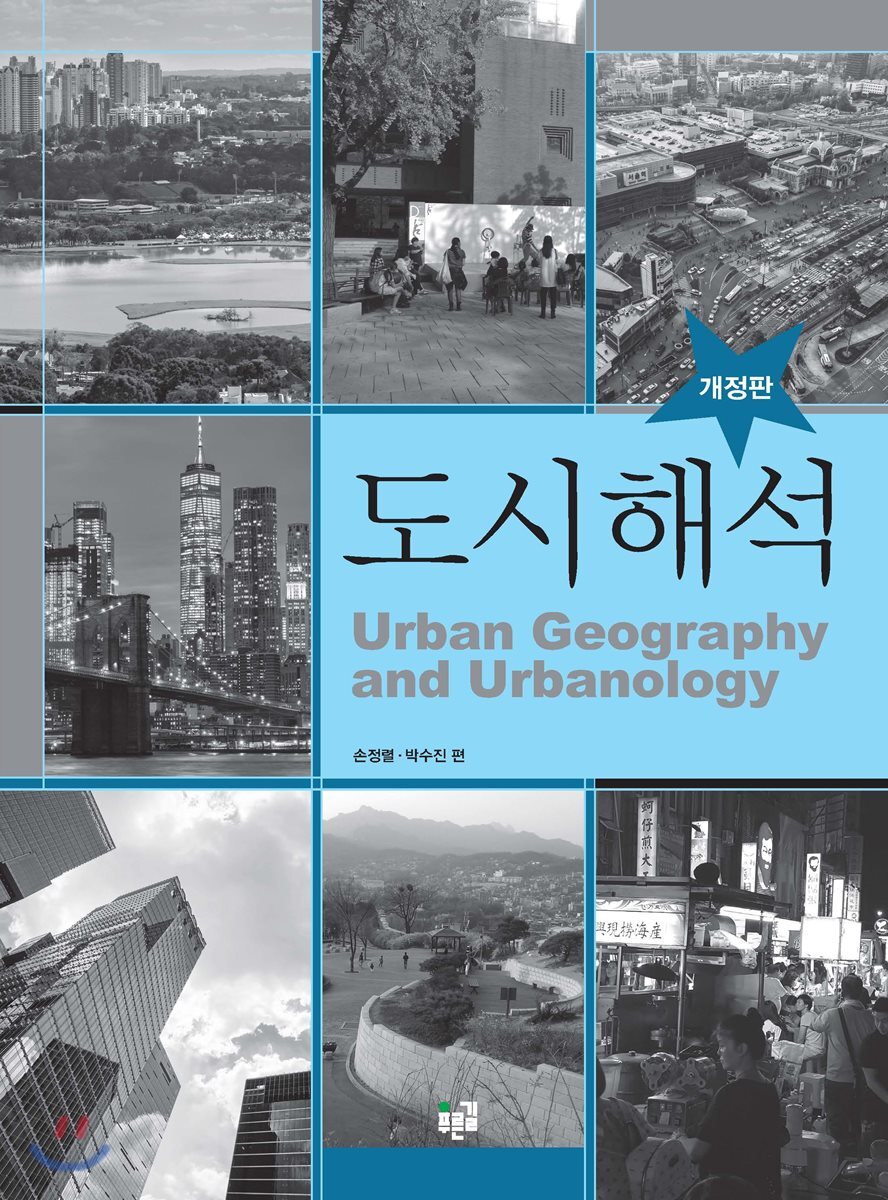
City interpretation
 |
Description
Book Introduction
Encyclopedia of Urban Studies: Urban Interpretation
Revised edition published after 13 years!
With the explosive growth of researchers and research topics dealing with cities, it has become practically impossible for one or two people to understand and overview cities.
With this problem in mind, a massive research project was launched in which urban experts from each field wrote manuscripts according to their own individual styles, collected them, and proceeded with editing them.
The book 『Urban Interpretation』, published in 2006, is the result of that massive research project.
And the research has continued to this day, leading to the publication of a revised edition after 13 years.
Revised edition published after 13 years!
With the explosive growth of researchers and research topics dealing with cities, it has become practically impossible for one or two people to understand and overview cities.
With this problem in mind, a massive research project was launched in which urban experts from each field wrote manuscripts according to their own individual styles, collected them, and proceeded with editing them.
The book 『Urban Interpretation』, published in 2006, is the result of that massive research project.
And the research has continued to this day, leading to the publication of a revised edition after 13 years.
- You can preview some of the book's contents.
Preview
index
_Preface to the Revised Edition
_Preface to the First Edition
Part 1: The City's Economic Environment
Chapter 1: Cities and Agglomeration Economies _Son Jeong-ryeol
Chapter 2: Cities and Innovation _Jeong Jun-ho
Chapter 3: Cities and (Producer) Service Industries _ Kim Dae-young
Chapter 4: Urban Development and the Political Economy of Land _ Kim Yong-chang
Chapter 5: Cities and Finance _ Park Won-seok
Chapter 6: Cities and Commuting _ Lee Wook
Chapter 7: Cities and ICT _ Kim Tae-hwan
Chapter 8: Cities and Globalization _ Yoo Hwan-jong
Part 2: The Social Environment of the City
Chapter 9: Cities and Housing _Ryu Yeon-taek
Chapter 10: Cities and Alienation _ Choi Byeong-du
Chapter 11: Urban Decline and Urban Regeneration _Lee Young-ah
Chapter 12: Cities and Politics _ Park Bae-gyun
Chapter 13: Cities and Social Networks _Nam Ki-beom
Chapter 14: Cities and Multicultural Societies _Shin Hye-ran
Chapter 15: Cities and Gentrification _ Kim Geol
Part 3: The Cultural Environment of the City
Chapter 16: Cities and Culture _ Lee Mu-yong
Chapter 17: Cities and History _Jeon Jong-han
Chapter 18: Cities and Old Maps: Interpreting the Waterways of the Hanyang Capital Map _Kim Ki-hyeok
Chapter 19: Cities and Landscapes _Jin Jong-heon
Chapter 20: Cities and Media _ Seung-gyu Park
Chapter 21: Cultural City _ Baek Seon-hye
Chapter 22: Creative City _ Park Kyung-hyun
Chapter 23: Urban Marketing _Lee Jeong-hoon
Chapter 24: Cities and Tourism _Shin Yong-seok
Part 4: The Natural Environment of the City
Chapter 25: Cities and Environmental Issues _ Park Kyung
Chapter 26: Cities and Climate _ Kwon Young-ah
Chapter 27: Cities and Topography _Kim Seong-hwan
Chapter 28: Cities and Soil _ Park Soo-jin and Lee Seung-jin
Chapter 29: Cities and Hydrology _Jang Hee-jun
Chapter 30: Cities and Ecosystems _Park Jeong-jae
Chapter 31: Cities and Ecosystem Services _Kim Il-kwon
_Preface to the First Edition
Part 1: The City's Economic Environment
Chapter 1: Cities and Agglomeration Economies _Son Jeong-ryeol
Chapter 2: Cities and Innovation _Jeong Jun-ho
Chapter 3: Cities and (Producer) Service Industries _ Kim Dae-young
Chapter 4: Urban Development and the Political Economy of Land _ Kim Yong-chang
Chapter 5: Cities and Finance _ Park Won-seok
Chapter 6: Cities and Commuting _ Lee Wook
Chapter 7: Cities and ICT _ Kim Tae-hwan
Chapter 8: Cities and Globalization _ Yoo Hwan-jong
Part 2: The Social Environment of the City
Chapter 9: Cities and Housing _Ryu Yeon-taek
Chapter 10: Cities and Alienation _ Choi Byeong-du
Chapter 11: Urban Decline and Urban Regeneration _Lee Young-ah
Chapter 12: Cities and Politics _ Park Bae-gyun
Chapter 13: Cities and Social Networks _Nam Ki-beom
Chapter 14: Cities and Multicultural Societies _Shin Hye-ran
Chapter 15: Cities and Gentrification _ Kim Geol
Part 3: The Cultural Environment of the City
Chapter 16: Cities and Culture _ Lee Mu-yong
Chapter 17: Cities and History _Jeon Jong-han
Chapter 18: Cities and Old Maps: Interpreting the Waterways of the Hanyang Capital Map _Kim Ki-hyeok
Chapter 19: Cities and Landscapes _Jin Jong-heon
Chapter 20: Cities and Media _ Seung-gyu Park
Chapter 21: Cultural City _ Baek Seon-hye
Chapter 22: Creative City _ Park Kyung-hyun
Chapter 23: Urban Marketing _Lee Jeong-hoon
Chapter 24: Cities and Tourism _Shin Yong-seok
Part 4: The Natural Environment of the City
Chapter 25: Cities and Environmental Issues _ Park Kyung
Chapter 26: Cities and Climate _ Kwon Young-ah
Chapter 27: Cities and Topography _Kim Seong-hwan
Chapter 28: Cities and Soil _ Park Soo-jin and Lee Seung-jin
Chapter 29: Cities and Hydrology _Jang Hee-jun
Chapter 30: Cities and Ecosystems _Park Jeong-jae
Chapter 31: Cities and Ecosystem Services _Kim Il-kwon
Publisher's Review
At the time of its publication, 『Urban Interpretation』 was a collection of 37 manuscripts from 39 urban experts, reminiscent of the Avengers, which brought together the heroes of the American Marvel Studios comic book series into a single movie.
The authors' passion to prepare everything city-loving readers might need was the greatest driving force behind publishing a book that captures the paradigm shift in cities in the 2000s, a time when conflicts arose between the competing elements of concentration and decentralization, economic growth and environmental conservation, efficiency and equality, and government and citizens.
Fortunately, the authors' message reached readers and garnered positive responses in various fields related to cities.
For readers seeking new knowledge about modern urban spaces, the newly published revised edition of "Urban Interpretation" continues to present a comprehensive approach, examining the city's economic, social, cultural, and natural environments.
Although the city is a space centered on humanities and social elements, it allows for a complete understanding of the city by sufficiently covering natural environmental elements.
Moreover, the contents of each chapter are distinctive in that they provide academic interpretations of recent urban-related phenomena in various fields.
It also introduces key concepts by field, summarizes the most important current issues, and guides you to find additional resources.
Because it comprehensively covers the diverse characteristics of cities, this book can fully serve as an academic encyclopedia that allows for relatively easy exploration of research findings in the field of cities.
About the Author (Alphabetical Order)
Kwon Young-ah, Researcher at the Climate Research Institute at Konkuk University
Kim Geol, Professor of Geography Education, Korea National University of Education
Kim Ki-hyeok, Professor Emeritus of Geography Education, Pusan National University
Kim Dae-young, Professor of Aviation Geography Information, Inha Technical College
Kim Seong-hwan, Professor of International Tourism Management, Silla University
Kim Yong-chang, Professor of Geography, Seoul National University
Kim Il-kwon, researcher at the National Institute of Ecology
Kim Tae-hwan, Director of the Balanced Development Support Center at the Korea Research Institute for Human Settlements
Nam Ki-beom, Professor of Urban Sociology, University of Seoul
Ryu Yeon-taek, Professor of Geography Education, Chungbuk National University
Park Kyung, Professor of Geography, Sungshin Women's University
Park Kyung-hyun, Team Leader, Planning and Management Division, Korea Research Institute for Human Settlements
Park Bae-gyun, Professor of Geography Education, Seoul National University
Park Soo-jin, Professor of Geography, Seoul National University
Park Seung-gyu, Professor of Social Studies Education, Chuncheon National University of Education
Park Won-seok, Professor of Real Estate at Daegu University
Park Jeong-jae, Professor of Geography, Seoul National University
Baek Seon-hye, Director of the Urban Society Research Lab at the Seoul Institute
Son Jeong-ryeol, Professor of Geography, Seoul National University
Shin Yong-seok, Associate Researcher, Korea Culture and Tourism Institute
Shin Hye-ran, Professor of Geography, Seoul National University
Yoo Hwan-jong, Professor of Intellectual Property, Myongji College
Lee Mu-yong, Dean of the Graduate School of Culture, Chonnam National University
Lee Seung-jin, Master's degree in Geography, Seoul National University
Lee Young-ah, Professor of Geography Education, Daegu University
Lee Wook, Professor of Geography, Edinboro University
Lee Jeong-hoon, Senior Researcher, Gyeonggi Research Institute
Jang Hee-jun, Professor of Geography, Portland State University
Jeon Jong-han, Professor of Social Studies Education, Gyeongin National University of Education
Jeong Jun-ho, Professor of Real Estate at Kangwon National University
Jin Jong-heon, Professor of Geography, Kongju National University
Choi Byeong-du, Professor Emeritus of Geography Education, Daegu University
The authors' passion to prepare everything city-loving readers might need was the greatest driving force behind publishing a book that captures the paradigm shift in cities in the 2000s, a time when conflicts arose between the competing elements of concentration and decentralization, economic growth and environmental conservation, efficiency and equality, and government and citizens.
Fortunately, the authors' message reached readers and garnered positive responses in various fields related to cities.
For readers seeking new knowledge about modern urban spaces, the newly published revised edition of "Urban Interpretation" continues to present a comprehensive approach, examining the city's economic, social, cultural, and natural environments.
Although the city is a space centered on humanities and social elements, it allows for a complete understanding of the city by sufficiently covering natural environmental elements.
Moreover, the contents of each chapter are distinctive in that they provide academic interpretations of recent urban-related phenomena in various fields.
It also introduces key concepts by field, summarizes the most important current issues, and guides you to find additional resources.
Because it comprehensively covers the diverse characteristics of cities, this book can fully serve as an academic encyclopedia that allows for relatively easy exploration of research findings in the field of cities.
About the Author (Alphabetical Order)
Kwon Young-ah, Researcher at the Climate Research Institute at Konkuk University
Kim Geol, Professor of Geography Education, Korea National University of Education
Kim Ki-hyeok, Professor Emeritus of Geography Education, Pusan National University
Kim Dae-young, Professor of Aviation Geography Information, Inha Technical College
Kim Seong-hwan, Professor of International Tourism Management, Silla University
Kim Yong-chang, Professor of Geography, Seoul National University
Kim Il-kwon, researcher at the National Institute of Ecology
Kim Tae-hwan, Director of the Balanced Development Support Center at the Korea Research Institute for Human Settlements
Nam Ki-beom, Professor of Urban Sociology, University of Seoul
Ryu Yeon-taek, Professor of Geography Education, Chungbuk National University
Park Kyung, Professor of Geography, Sungshin Women's University
Park Kyung-hyun, Team Leader, Planning and Management Division, Korea Research Institute for Human Settlements
Park Bae-gyun, Professor of Geography Education, Seoul National University
Park Soo-jin, Professor of Geography, Seoul National University
Park Seung-gyu, Professor of Social Studies Education, Chuncheon National University of Education
Park Won-seok, Professor of Real Estate at Daegu University
Park Jeong-jae, Professor of Geography, Seoul National University
Baek Seon-hye, Director of the Urban Society Research Lab at the Seoul Institute
Son Jeong-ryeol, Professor of Geography, Seoul National University
Shin Yong-seok, Associate Researcher, Korea Culture and Tourism Institute
Shin Hye-ran, Professor of Geography, Seoul National University
Yoo Hwan-jong, Professor of Intellectual Property, Myongji College
Lee Mu-yong, Dean of the Graduate School of Culture, Chonnam National University
Lee Seung-jin, Master's degree in Geography, Seoul National University
Lee Young-ah, Professor of Geography Education, Daegu University
Lee Wook, Professor of Geography, Edinboro University
Lee Jeong-hoon, Senior Researcher, Gyeonggi Research Institute
Jang Hee-jun, Professor of Geography, Portland State University
Jeon Jong-han, Professor of Social Studies Education, Gyeongin National University of Education
Jeong Jun-ho, Professor of Real Estate at Kangwon National University
Jin Jong-heon, Professor of Geography, Kongju National University
Choi Byeong-du, Professor Emeritus of Geography Education, Daegu University
GOODS SPECIFICS
- Date of issue: June 24, 2019
- Page count, weight, size: 504 pages | 1,022g | 188*254*24mm
- ISBN13: 9788962918052
- ISBN10: 8962918056
You may also like
카테고리
korean


korean

![GQ KOREA Mark (Monthly): December [2025]](http://librairie.coreenne.fr/cdn/shop/files/8ef265dbbfbf186523ed75ba7319009d.jpg?v=1765340328&width=3840)


