

Let's go to China for tea
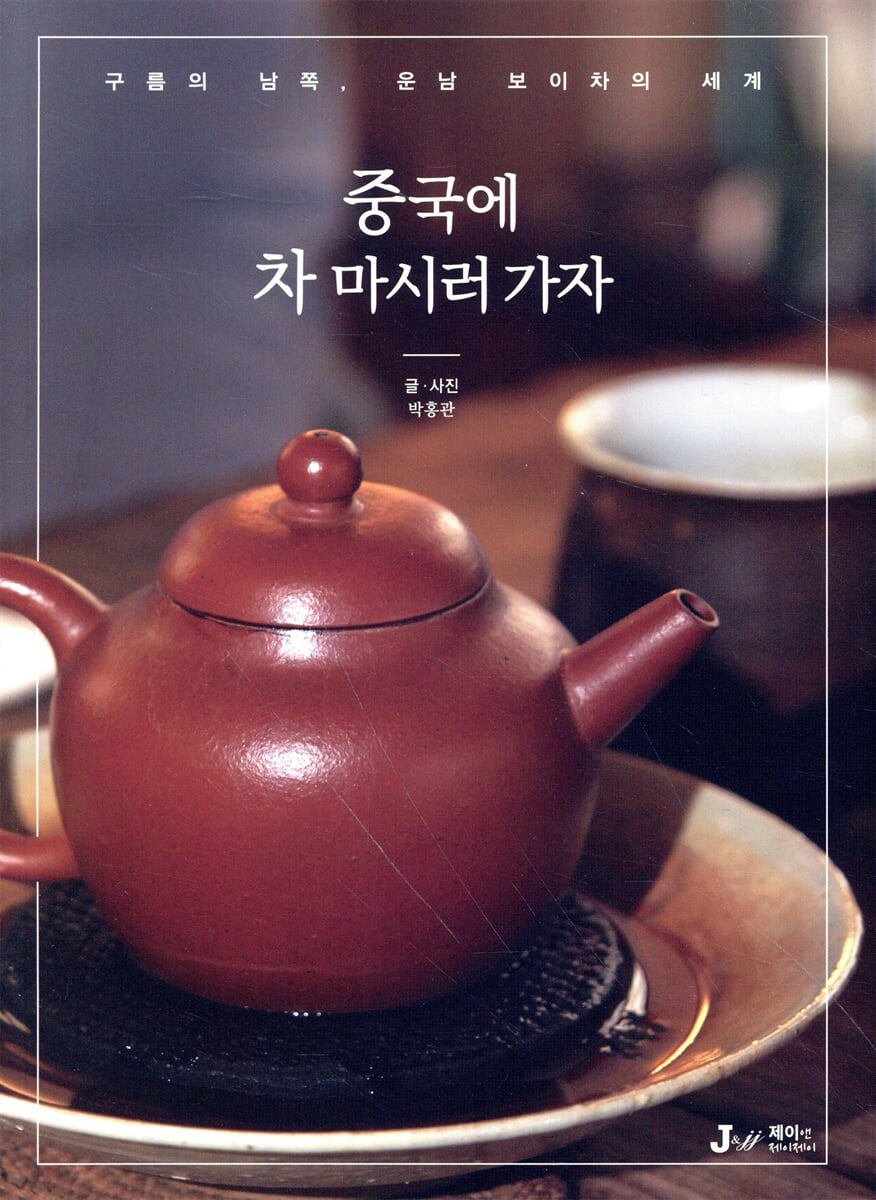 |
Description
Book Introduction
The fourteenth story of a humanities journey by theme!
South of the clouds, the world of Yunnan Pu'er tea!!
Experiencing China can be quite overwhelming.
China shows infinitely different aspects depending on the knowledge and perspective with which you approach it.
Among the many ways to view China, this book looks at China through the lens of 'tea'.
Tea, especially Pu-erh tea, is forming a huge market.
If it is coriander tea made from leaves picked from old trees, the economic value that can be produced from a single tree ranges from tens to hundreds of millions.
But economic value alone cannot explain a car.
Because there are people who have lived with tea and a culture that has changed along with them.
This book first introduces basic information about Yunnan Province, including population distribution, major tea-producing regions, and maps showing tea-producing regions, to enhance understanding.
And he talks about the tea farmers he met while traveling there, the ethnic minorities, and the natural beauty that holds the old tea trees.
We have also included an appendix for readers who wish to gain more knowledge about boy tea.
South of the clouds, the world of Yunnan Pu'er tea!!
Experiencing China can be quite overwhelming.
China shows infinitely different aspects depending on the knowledge and perspective with which you approach it.
Among the many ways to view China, this book looks at China through the lens of 'tea'.
Tea, especially Pu-erh tea, is forming a huge market.
If it is coriander tea made from leaves picked from old trees, the economic value that can be produced from a single tree ranges from tens to hundreds of millions.
But economic value alone cannot explain a car.
Because there are people who have lived with tea and a culture that has changed along with them.
This book first introduces basic information about Yunnan Province, including population distribution, major tea-producing regions, and maps showing tea-producing regions, to enhance understanding.
And he talks about the tea farmers he met while traveling there, the ethnic minorities, and the natural beauty that holds the old tea trees.
We have also included an appendix for readers who wish to gain more knowledge about boy tea.
index
Introduction - How to Save Happiness
1.
Yunnan Province, where warm air flows
1) Starting point of Yunnan
Yunnan Province starting from Kunming
- Kunming Ungdal Tea Market
- Kunming City Antique Shopping District
extra - nursing car met at a theater-style restaurant
2) Boyish
- Boy Saengcha, a gift from the wind and sun
extra - How to make raw tea
- Byeongbaecha to enjoy both spring and fall at the same time
extra - purple natural tea, golden yellow self-tea
Extra - Limited Edition Raw Tea Competition
- The obstacle I encountered at Gangmae Gochasan
- Brian, an American I met at an auction
2.
Chamagodo and Xishuangbanna
1) The starting point and people of Chamagodo
- Boycha advertisement seen at the airport
- Gyeonghong food culture and night market
extra - Kyunghong's food
- Gyeonghong's Gyeongran Tea Market
- A day of drinking bamboo tea and taking a deep breath at Namsan Mountain
- Nobanjang 800-year-old Chawangsu Village
- Nobanjang Village and Hekai Village
extra - number of boy tea
- Maenghae Tea House, which preserves the history of Pu-erh tea
- Jin Seung-cha window
- Urim High School Tea House
- 1300-year-old southern house of Maengsongsan Mountain
- Jinmiho
- Maenghae Tea Market
- Minorities and Boyicha
extra - How to make bamboo tea
2) A key city in Chamagodo
- The father of boy tea, Haemanchachang
- Agent and Baeknyeon Enterprise's lower-level car window
- World Cultural Heritage Site, Yeogang Castle
extra - Director Zhang Yimou's impression of Lijiang show
3) Imchang, the world's best tea master
- 3200 year old Hyangjukcheong Gochasu
- From Unhyeon (云玄) to Seokgwi (昔歸)
extra - On the way to Bingdo, a noodle restaurant
- On the way to Bingdo
- The Taejok and Inijok met on Bingdo Island
- Chanabu's report, Baekaksan
- Baekangsan 2800 year old black tea tree
- High-level person met by flying a drone
extra - Yunnan Dianhong, black tea from Yunnan Province
3.
supplement
1) Understanding Boy Tea
- What is Boyicha?
- The taste and flavor created over time
- Boy raw tea and aged tea
- Pu'er tea written along with Chinese history
- Boy tea that saves happiness
- The secret to choosing good pu-erh tea
- Pu-erh tea that you should not drink
- 70-year age difference, algebraic difference and land difference law
2) The world of diverse boy teas
- Boycha, the joy of collecting
- Boy tea written in numbers
- How to store, what kind of car is stored
- Between 3g and 5kg, the shape makes the boy tea
- Hardened Pu'er tea, Pu'er tea paste
- Boyicha made with perilla leaves
- Spring tea prices
Epilogue
1.
Yunnan Province, where warm air flows
1) Starting point of Yunnan
Yunnan Province starting from Kunming
- Kunming Ungdal Tea Market
- Kunming City Antique Shopping District
extra - nursing car met at a theater-style restaurant
2) Boyish
- Boy Saengcha, a gift from the wind and sun
extra - How to make raw tea
- Byeongbaecha to enjoy both spring and fall at the same time
extra - purple natural tea, golden yellow self-tea
Extra - Limited Edition Raw Tea Competition
- The obstacle I encountered at Gangmae Gochasan
- Brian, an American I met at an auction
2.
Chamagodo and Xishuangbanna
1) The starting point and people of Chamagodo
- Boycha advertisement seen at the airport
- Gyeonghong food culture and night market
extra - Kyunghong's food
- Gyeonghong's Gyeongran Tea Market
- A day of drinking bamboo tea and taking a deep breath at Namsan Mountain
- Nobanjang 800-year-old Chawangsu Village
- Nobanjang Village and Hekai Village
extra - number of boy tea
- Maenghae Tea House, which preserves the history of Pu-erh tea
- Jin Seung-cha window
- Urim High School Tea House
- 1300-year-old southern house of Maengsongsan Mountain
- Jinmiho
- Maenghae Tea Market
- Minorities and Boyicha
extra - How to make bamboo tea
2) A key city in Chamagodo
- The father of boy tea, Haemanchachang
- Agent and Baeknyeon Enterprise's lower-level car window
- World Cultural Heritage Site, Yeogang Castle
extra - Director Zhang Yimou's impression of Lijiang show
3) Imchang, the world's best tea master
- 3200 year old Hyangjukcheong Gochasu
- From Unhyeon (云玄) to Seokgwi (昔歸)
extra - On the way to Bingdo, a noodle restaurant
- On the way to Bingdo
- The Taejok and Inijok met on Bingdo Island
- Chanabu's report, Baekaksan
- Baekangsan 2800 year old black tea tree
- High-level person met by flying a drone
extra - Yunnan Dianhong, black tea from Yunnan Province
3.
supplement
1) Understanding Boy Tea
- What is Boyicha?
- The taste and flavor created over time
- Boy raw tea and aged tea
- Pu'er tea written along with Chinese history
- Boy tea that saves happiness
- The secret to choosing good pu-erh tea
- Pu-erh tea that you should not drink
- 70-year age difference, algebraic difference and land difference law
2) The world of diverse boy teas
- Boycha, the joy of collecting
- Boy tea written in numbers
- How to store, what kind of car is stored
- Between 3g and 5kg, the shape makes the boy tea
- Hardened Pu'er tea, Pu'er tea paste
- Boyicha made with perilla leaves
- Spring tea prices
Epilogue
GOODS SPECIFICS
- Date of issue: July 30, 2018
- Page count, weight, size: 224 pages | 152*210*15mm
- ISBN13: 9791186972366
- ISBN10: 118697236X
You may also like
카테고리
korean


korean

![GQ KOREA Mark (Monthly): December [2025]](http://librairie.coreenne.fr/cdn/shop/files/8ef265dbbfbf186523ed75ba7319009d.jpg?v=1765340328&width=3840)


