

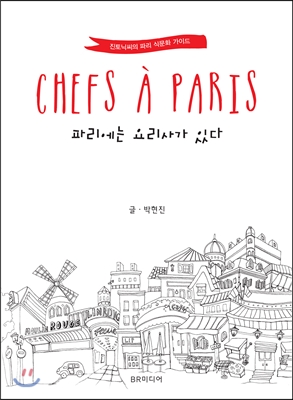
There is a chef in Paris
 |
Description
Book Introduction
A restaurant guide for foodies traveling to Paris.
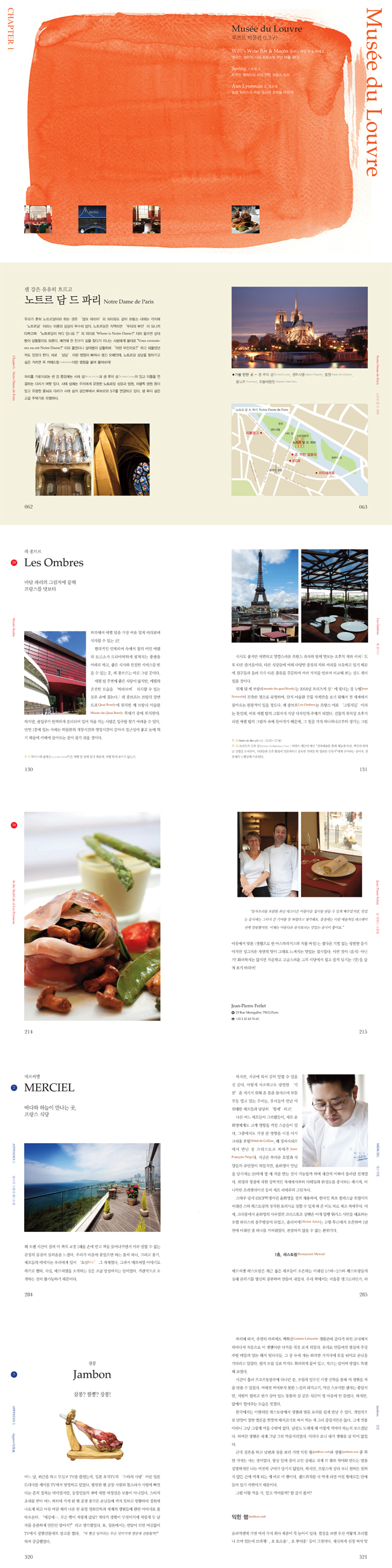
This book introduces 48 restaurants in Paris that offer high-quality cuisine at reasonable prices ranging from 30 to 50 euros. Park Hyun-jin, CEO of Merciel, who introduced various restaurants online under the name 'Gin and Tonic', interviews chefs of restaurants that impressed him while living in Paris with Chef Yoon Hwa-young and introduces them.
This book not only features the restaurant's signature dishes, but also includes insightful reviews and descriptions of the food, as well as interviews with chefs, making it a valuable guide for aspiring chefs.
In this book, you will find high-quality food prepared by truly talented chefs, not those from expensive Michelin-starred restaurants.
This guide will serve as a guide for true gourmets in Paris, introducing only restaurants that pursue high-quality cuisine, even if they are not on the famous Michelin or World's Best Award lists.
The author says that the story about people is important throughout the introduction of the restaurant.
From legendary chef Christian Constant's [Violon d'Angre], which marked the beginning of Parisian gastro-bistro, to chef Thierry Burlot's [Café Burlot], which returned to the Champs-Elysées, the story of various restaurants and chefs is introduced, but the 'chef' is always at the center.
That's why, in restaurant introductions, we always include important information about the chefs' culinary philosophy.
With the goal of writing in a way that even ordinary Koreans can easily understand, I tried to explain the seemingly complex subject of French cuisine in a light and easy-to-understand way.
Starting with how to read a menu at a local restaurant, the book also includes a wealth of information on ingredients that are essential when discussing French cuisine.
This book introduces 48 restaurants in Paris that offer high-quality cuisine at reasonable prices ranging from 30 to 50 euros. Park Hyun-jin, CEO of Merciel, who introduced various restaurants online under the name 'Gin and Tonic', interviews chefs of restaurants that impressed him while living in Paris with Chef Yoon Hwa-young and introduces them.
This book not only features the restaurant's signature dishes, but also includes insightful reviews and descriptions of the food, as well as interviews with chefs, making it a valuable guide for aspiring chefs.
In this book, you will find high-quality food prepared by truly talented chefs, not those from expensive Michelin-starred restaurants.
This guide will serve as a guide for true gourmets in Paris, introducing only restaurants that pursue high-quality cuisine, even if they are not on the famous Michelin or World's Best Award lists.
The author says that the story about people is important throughout the introduction of the restaurant.
From legendary chef Christian Constant's [Violon d'Angre], which marked the beginning of Parisian gastro-bistro, to chef Thierry Burlot's [Café Burlot], which returned to the Champs-Elysées, the story of various restaurants and chefs is introduced, but the 'chef' is always at the center.
That's why, in restaurant introductions, we always include important information about the chefs' culinary philosophy.
With the goal of writing in a way that even ordinary Koreans can easily understand, I tried to explain the seemingly complex subject of French cuisine in a light and easy-to-understand way.
Starting with how to read a menu at a local restaurant, the book also includes a wealth of information on ingredients that are essential when discussing French cuisine.
- You can preview some of the book's contents.
Preview
index
Chapter 1 The Louvre Museum (Arrondissements 1 and 2)
1.
Willis Wine Bar & Maceo
2.
Springg
3.
Orione
Chapter 2 Le Marais (3rd and 4th districts)
4.
Le Dome du Marais
5.
Bistro de Roulette
6.
Oh Vasco
Chapter 3 Notre Dame de Paris
7.
Rebuldangge
8.
Ritinerer
9.
Z Kitchen Galley
Chapter 4 Saint-Germain-des-Prés & Quartier Latin (5th and 6th arrondissements)
10.
Le Contoir du Relais
11.
Le Prévert
12.
Le Papi
13.
Le Tambre
14.
Lepi Dupin
Chapter 5 Rodin Museum (District 7)
15.
Christian Constant
16.
She Le Jangju
17.
Auguste
18.
She Ramy Chang
19.
Lapriole
20.
Les Ombres
21.
Le Clos des Gourmets
22.
Le Petit Troquet
23.
Sis New York
Chapter 6: Champs-Élysées (8th, 9th, 16th districts)
24.
Larom
25.
Les Fougeres
26.
Table de Lauriston
27.
Le Boudois
Chapter 7 Montmartre (9th, 10th, 17th, and 18th arrondissements)
28.
Shay Michelle
Chapter 8 Buttes-Chaumont Park (10th, 11th, 19th, and 20th arrondissements)
29.
Le Baratin
30.
Leboshua
31.
Bistro Paul Bert
32.
Villare
33.
Le Pare de Cartouche
Chapter 9: The Life of a Real Parisian (Archives 12, 13, 14, 15, 16, 17)
34.
Jean-Pierre Prellé
35.
Rurushin
36.
Labang-gu
37.
La Srieze
38.
Le Severo
39.
La Le Galade
40.
Le Troquet
41.
Le Beurre Noisette
42.
Los Amoel
43.
Le Belizeur
44.
Le Grand Pain
45.
Aparia
46.
Cafe Burlo
47.
Lantrerge
48.
La Breziere
APPENDIX 1 My Favorite French Restaurant in Korea
1.
Lespoir
2.
Merciel
APPENDIX 2 Ingredients
1.
foie gras
2.
truffle
3.
caviar
4.
olive oil
5.
Jangbong
6.
fish
7.
meat
8.
spices
9.
Fromage
APPENDIX 3 Grocers and Tool Shops in Paris
APPENDIX 4 Lunch in Paris for under €10!
French Chef Genealogy
About the Author
About the interviewer
1.
Willis Wine Bar & Maceo
2.
Springg
3.
Orione
Chapter 2 Le Marais (3rd and 4th districts)
4.
Le Dome du Marais
5.
Bistro de Roulette
6.
Oh Vasco
Chapter 3 Notre Dame de Paris
7.
Rebuldangge
8.
Ritinerer
9.
Z Kitchen Galley
Chapter 4 Saint-Germain-des-Prés & Quartier Latin (5th and 6th arrondissements)
10.
Le Contoir du Relais
11.
Le Prévert
12.
Le Papi
13.
Le Tambre
14.
Lepi Dupin
Chapter 5 Rodin Museum (District 7)
15.
Christian Constant
16.
She Le Jangju
17.
Auguste
18.
She Ramy Chang
19.
Lapriole
20.
Les Ombres
21.
Le Clos des Gourmets
22.
Le Petit Troquet
23.
Sis New York
Chapter 6: Champs-Élysées (8th, 9th, 16th districts)
24.
Larom
25.
Les Fougeres
26.
Table de Lauriston
27.
Le Boudois
Chapter 7 Montmartre (9th, 10th, 17th, and 18th arrondissements)
28.
Shay Michelle
Chapter 8 Buttes-Chaumont Park (10th, 11th, 19th, and 20th arrondissements)
29.
Le Baratin
30.
Leboshua
31.
Bistro Paul Bert
32.
Villare
33.
Le Pare de Cartouche
Chapter 9: The Life of a Real Parisian (Archives 12, 13, 14, 15, 16, 17)
34.
Jean-Pierre Prellé
35.
Rurushin
36.
Labang-gu
37.
La Srieze
38.
Le Severo
39.
La Le Galade
40.
Le Troquet
41.
Le Beurre Noisette
42.
Los Amoel
43.
Le Belizeur
44.
Le Grand Pain
45.
Aparia
46.
Cafe Burlo
47.
Lantrerge
48.
La Breziere
APPENDIX 1 My Favorite French Restaurant in Korea
1.
Lespoir
2.
Merciel
APPENDIX 2 Ingredients
1.
foie gras
2.
truffle
3.
caviar
4.
olive oil
5.
Jangbong
6.
fish
7.
meat
8.
spices
9.
Fromage
APPENDIX 3 Grocers and Tool Shops in Paris
APPENDIX 4 Lunch in Paris for under €10!
French Chef Genealogy
About the Author
About the interviewer
Detailed image
Publisher's Review
Author's Preface
The first thing that made me want to introduce restaurants in Paris was my friends' visit to Paris.
Perhaps because of the lack of interest and understanding of French culture in Korea, there was no restaurant guide in Korean, so very expensive Michelin restaurants and franchise sandwich shops were the main contents of the Korean guides published at the time of the interview.
So, going to restaurants with friends who visited Paris and seeing them having fun made me want more people to come to Paris and experience the delicious food.
I thought it would be a good idea to introduce restaurants where you can find good food without being too burdensome, for a price range of 30 to 50 euros. The support of my friends also helped me.
To write this book, my wife and I selected about 120 restaurants in Paris.
Among them, we sent official letters to about 80 places requesting interviews and received permission to film and use photos. Through interviews, we went through another selection process and ultimately published the stories of 49 restaurants and chefs.
In Korea, interest in food has grown, leading to a rise in the number of food bloggers and food-related TV programs.
Interest in chefs is growing, and chefs and restaurant owners are appearing on TV more frequently. Food and chefs are increasingly chosen as subjects for TV dramas, and it seems that food culture has become a growing part of people's lives in many ways.
On the other hand, many culinary students and aspiring service workers still face difficulties when running a restaurant directly in Korea.
Many dramas portray popular occupations in a distorted or exaggerated way, which seems to have a significant impact on young people's views on occupations.
Children's futures are often thrown into turmoil by unexpected stimuli, such as the sudden explosion of medical school applications right after a medical drama becomes popular, or the increase in applications to related departments after a pilot drama becomes popular.
The reality of being forced to set life goals and direction in your 20s can sometimes be overly harsh and murky, like wandering through a fog.
Although I was living in Paris, I had no knowledge or experience in cooking, and everything was unfamiliar to me, including the names of chefs, regional names, cooking methods, and classic recipes. It was quite difficult for me to write this in a way that even the average Korean person could easily understand.
However, the reason I, a person with no talent for writing, was able to write so diligently was because I wanted to show the lives of our wonderful interviewees to young Korean culinary students.
As with any job, cooking in particular has a target audience, and feedback from that target directly becomes the achievement.
If we consider art as merely 'a high level of skill' or 'a well-made work of art', then chefs can be artists, but if they have the artist's spirit of 'an expression of pure stubbornness', they will never be able to make good food.
In that case, it would be better to go into the mountains or eat alone on a deserted island.
There are few professions that allow one to communicate and share love as closely as a chef.
So, I want to show you, even if only briefly, the lives of these great chefs.
You will also discover that happiness and success in life are not determined by Michelin stars or World's Best Restaurant Awards, nor by the name or title of a top hotel.
And most importantly, cooking is not a 'creation by inspiration' that falls from the sky at any given moment.
The answer to this question will be confessed by our chefs in their own voices, sometimes sternly, sometimes gently, or shyly.
So I hope that young Koreans studying cooking can draw strength and courage from these great chefs who are living in the same era as us.
Chef Piège, whom Yoon Hwa-young respects, always said:
As a chef, you should always have the desire to 'feed your guests well'.
The first virtue of a chef is the desire to feed well.
That's why it's about learning the technique, and that's why 'a mother's heart' is the best seasoning.
I would like to express my deepest gratitude to Editor-in-Chief Kim Eun-jo, who has always supported and encouraged me with such a pure heart, and to Reporter Kim Seong-yoon, who introduced me to this wonderful publishing company.
On a plane to Paris in January 2014
Perhaps because of the lack of interest and understanding of French culture in Korea, there was no restaurant guide in Korean, so very expensive Michelin restaurants and franchise sandwich shops were the main contents of the Korean guides published at the time of the interview.
So, going to restaurants with friends who visited Paris and seeing them having fun made me want more people to come to Paris and experience the delicious food.
I thought it would be a good idea to introduce restaurants where you can find good food without being too burdensome, for a price range of 30 to 50 euros. The support of my friends also helped me.
To write this book, my wife and I selected about 120 restaurants in Paris.
Among them, we sent official letters to about 80 places requesting interviews and received permission to film and use photos. Through interviews, we went through another selection process and ultimately published the stories of 49 restaurants and chefs.
In Korea, interest in food has grown, leading to a rise in the number of food bloggers and food-related TV programs.
Interest in chefs is growing, and chefs and restaurant owners are appearing on TV more frequently. Food and chefs are increasingly chosen as subjects for TV dramas, and it seems that food culture has become a growing part of people's lives in many ways.
On the other hand, many culinary students and aspiring service workers still face difficulties when running a restaurant directly in Korea.
Many dramas portray popular occupations in a distorted or exaggerated way, which seems to have a significant impact on young people's views on occupations.
Children's futures are often thrown into turmoil by unexpected stimuli, such as the sudden explosion of medical school applications right after a medical drama becomes popular, or the increase in applications to related departments after a pilot drama becomes popular.
The reality of being forced to set life goals and direction in your 20s can sometimes be overly harsh and murky, like wandering through a fog.
Although I was living in Paris, I had no knowledge or experience in cooking, and everything was unfamiliar to me, including the names of chefs, regional names, cooking methods, and classic recipes. It was quite difficult for me to write this in a way that even the average Korean person could easily understand.
However, the reason I, a person with no talent for writing, was able to write so diligently was because I wanted to show the lives of our wonderful interviewees to young Korean culinary students.
As with any job, cooking in particular has a target audience, and feedback from that target directly becomes the achievement.
If we consider art as merely 'a high level of skill' or 'a well-made work of art', then chefs can be artists, but if they have the artist's spirit of 'an expression of pure stubbornness', they will never be able to make good food.
In that case, it would be better to go into the mountains or eat alone on a deserted island.
There are few professions that allow one to communicate and share love as closely as a chef.
So, I want to show you, even if only briefly, the lives of these great chefs.
You will also discover that happiness and success in life are not determined by Michelin stars or World's Best Restaurant Awards, nor by the name or title of a top hotel.
And most importantly, cooking is not a 'creation by inspiration' that falls from the sky at any given moment.
The answer to this question will be confessed by our chefs in their own voices, sometimes sternly, sometimes gently, or shyly.
So I hope that young Koreans studying cooking can draw strength and courage from these great chefs who are living in the same era as us.
Chef Piège, whom Yoon Hwa-young respects, always said:
As a chef, you should always have the desire to 'feed your guests well'.
The first virtue of a chef is the desire to feed well.
That's why it's about learning the technique, and that's why 'a mother's heart' is the best seasoning.
I would like to express my deepest gratitude to Editor-in-Chief Kim Eun-jo, who has always supported and encouraged me with such a pure heart, and to Reporter Kim Seong-yoon, who introduced me to this wonderful publishing company.
On a plane to Paris in January 2014
GOODS SPECIFICS
- Date of publication: November 20, 2014
- Page count, weight, size: 394 pages | 634g | 148*200*18mm
- ISBN13: 9788993508260
- ISBN10: 8993508267
You may also like
카테고리
korean


korean

![GQ KOREA Mark (Monthly): December [2025]](http://librairie.coreenne.fr/cdn/shop/files/8ef265dbbfbf186523ed75ba7319009d.jpg?v=1765340328&width=3840)


