

The Private Library of the Rich (20th Anniversary Edition)
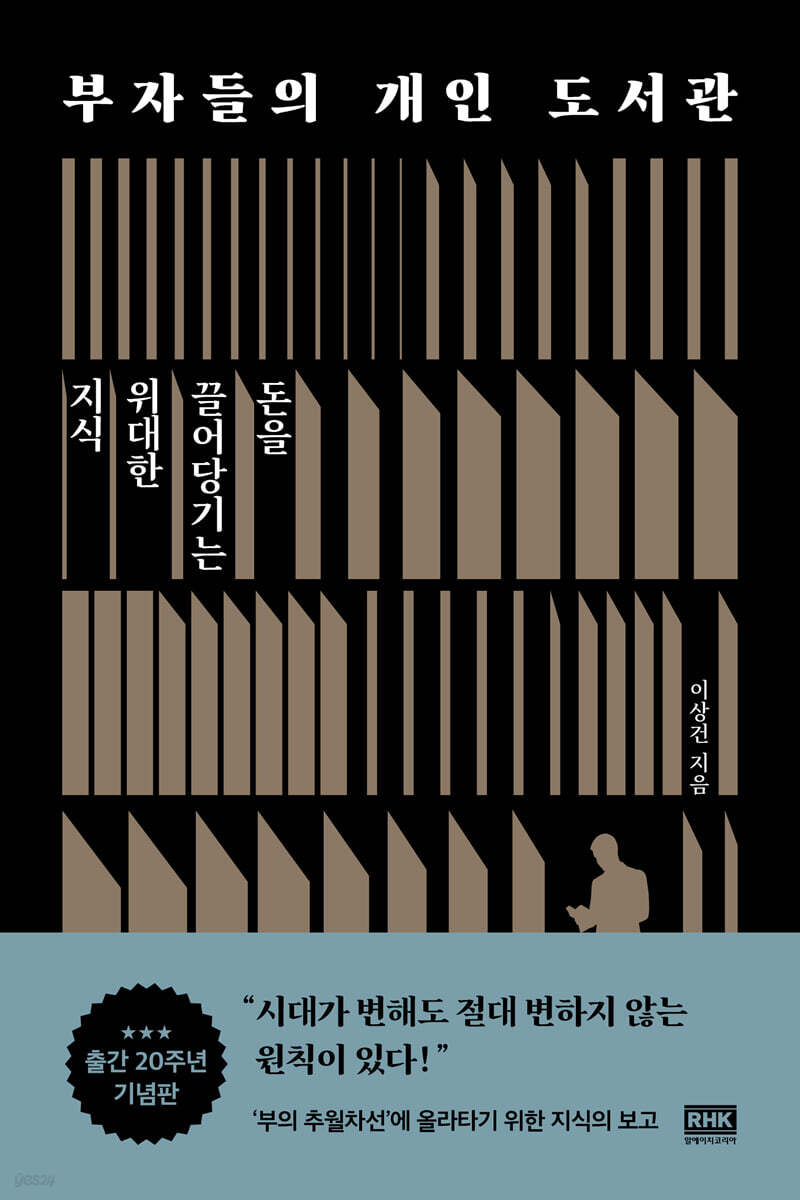 |
Description
Book Introduction
“If you want to be rich, learn how the rich think!”
The formula for getting rich that never changes, even with changing times, the 20th anniversary edition!
The words “financial management,” “investment,” and “economic freedom” have become necessities rather than options.
People no longer hesitate to talk about money.
They want to make more money and get on the fast lane of wealth where assets are called assets.
So, we are busy looking for so-called 'hot' stocks for each era.
Sometimes we dream of hitting the jackpot with stocks, sometimes with real estate, and sometimes with virtual currency.
But if you chase money like a moth to a flame, you will never get what you want.
Haven't we learned from past experience that there is no such thing as a magic key to financial success that always works?
Yet, some people continue to achieve amazing investment results and amass wealth.
What on earth was different about them?
This book, "The Personal Library of the Rich," starts right here.
This book analyzes the investment philosophies and lifestyles of famous investors and wealthy individuals, such as Warren Buffett, John Templeton, Charlie Munger, and Jim Rogers, from economic as well as various humanistic perspectives.
Above all, it is noteworthy that they were all voracious readers.
Based on this, the author borrows from their experience and wisdom to explain the basic principles of making money in an easy and clear way.
Thanks to this, even 20 years after its first publication, this book is still recognized as the definitive guide to the rich mindset and the best must-read for beginners in investing.
This newly published book, celebrating its 20th anniversary, will remind those seeking true financial freedom that there are principles that remain unchanged even as times change and circumstances shift.
The formula for getting rich that never changes, even with changing times, the 20th anniversary edition!
The words “financial management,” “investment,” and “economic freedom” have become necessities rather than options.
People no longer hesitate to talk about money.
They want to make more money and get on the fast lane of wealth where assets are called assets.
So, we are busy looking for so-called 'hot' stocks for each era.
Sometimes we dream of hitting the jackpot with stocks, sometimes with real estate, and sometimes with virtual currency.
But if you chase money like a moth to a flame, you will never get what you want.
Haven't we learned from past experience that there is no such thing as a magic key to financial success that always works?
Yet, some people continue to achieve amazing investment results and amass wealth.
What on earth was different about them?
This book, "The Personal Library of the Rich," starts right here.
This book analyzes the investment philosophies and lifestyles of famous investors and wealthy individuals, such as Warren Buffett, John Templeton, Charlie Munger, and Jim Rogers, from economic as well as various humanistic perspectives.
Above all, it is noteworthy that they were all voracious readers.
Based on this, the author borrows from their experience and wisdom to explain the basic principles of making money in an easy and clear way.
Thanks to this, even 20 years after its first publication, this book is still recognized as the definitive guide to the rich mindset and the best must-read for beginners in investing.
This newly published book, celebrating its 20th anniversary, will remind those seeking true financial freedom that there are principles that remain unchanged even as times change and circumstances shift.
- You can preview some of the book's contents.
Preview
index
Publishing the 20th Anniversary Edition
Republishing this book
preface
Chapter 1: Understanding the Principles of Capitalism: The Basic Principles of Making Money
The map to the Golden Cave is 'Knowledge'
Even studying has priorities
'Difference' is money
The less competition you avoid, the better.
The principle of monopoly rules the world.
Create a money-making 'system'
How you do something is more important than what you do.
Chapter 2: Overcoming Psychological Barriers: The Psychology of the Rich
If you want to make money, don't blame anyone.
Break free from the 'probation fantasy'
There is no romance in money.
Loss aversion is ruining you even more.
Are you also a shower idiot?
Let go of the sense of comparison and equality.
Don't get caught up in mind games
Don't be afraid to be alone
The hero the crowd wants is not a true hero.
Chapter 3: Develop the power to go against others: A reverse-thinking outlook on life and the principles of investment
Go against the flow, that's where the money is.
When the streets are muddy and bloody, go away
Buy '#1' when the price plummets
Go against what the media says
Buy when you feel the value is greater than the price
It's all about money, money, you idiot!
Don't believe the saying, "Investing is the art of timing."
Don't pretend to be smart, invest in what you know.
Make time your ally
The future is predicted by 'population variables'
Demographic changes change the wealth map.
Chapter 4: This is how to study history for profit: The principles of real estate investment
If you understand historicity, you won't fail.
Investment wisdom learned from 17th-century Netherlands
Money is in the path of people's movement.
Lessons from the History of Real Estate Speculation
Transportation Changes Real Estate Value
Real Estate Investing: Learning from Warren Buffett and Sir John Templeton
Chapter 5: The Power to Rise Again Even When You Lose Everything: The Wisdom of Jews and Chinese
How Jews and Chinese Controlled the World's Wealth
What makes modern-day nomads strong is an uncertain future.
Money may be lost, but knowledge is not.
The Basics of Jewish Commerce, The Law of 78:22
I can only trust my family
Rather than being better than others, be different from others.
Chapter 6: Great Investors Are Great Thinkers: A Perspective on the World and Life
The financial skills of great people
The great economist, Lord Keynes, made his fortune through speculation.
Investing is a fight against uncertainty.
David Ricardo, a millionaire who retired at age 42
Should we live like Picasso or like Gauguin?
How to Make Money: Learn from Marketing Guru Rubens
Mark Twain, the father of modern American literature, was a speculator?
Money! Money! Money! As philosopher Schopenhauer says!
Republishing this book
preface
Chapter 1: Understanding the Principles of Capitalism: The Basic Principles of Making Money
The map to the Golden Cave is 'Knowledge'
Even studying has priorities
'Difference' is money
The less competition you avoid, the better.
The principle of monopoly rules the world.
Create a money-making 'system'
How you do something is more important than what you do.
Chapter 2: Overcoming Psychological Barriers: The Psychology of the Rich
If you want to make money, don't blame anyone.
Break free from the 'probation fantasy'
There is no romance in money.
Loss aversion is ruining you even more.
Are you also a shower idiot?
Let go of the sense of comparison and equality.
Don't get caught up in mind games
Don't be afraid to be alone
The hero the crowd wants is not a true hero.
Chapter 3: Develop the power to go against others: A reverse-thinking outlook on life and the principles of investment
Go against the flow, that's where the money is.
When the streets are muddy and bloody, go away
Buy '#1' when the price plummets
Go against what the media says
Buy when you feel the value is greater than the price
It's all about money, money, you idiot!
Don't believe the saying, "Investing is the art of timing."
Don't pretend to be smart, invest in what you know.
Make time your ally
The future is predicted by 'population variables'
Demographic changes change the wealth map.
Chapter 4: This is how to study history for profit: The principles of real estate investment
If you understand historicity, you won't fail.
Investment wisdom learned from 17th-century Netherlands
Money is in the path of people's movement.
Lessons from the History of Real Estate Speculation
Transportation Changes Real Estate Value
Real Estate Investing: Learning from Warren Buffett and Sir John Templeton
Chapter 5: The Power to Rise Again Even When You Lose Everything: The Wisdom of Jews and Chinese
How Jews and Chinese Controlled the World's Wealth
What makes modern-day nomads strong is an uncertain future.
Money may be lost, but knowledge is not.
The Basics of Jewish Commerce, The Law of 78:22
I can only trust my family
Rather than being better than others, be different from others.
Chapter 6: Great Investors Are Great Thinkers: A Perspective on the World and Life
The financial skills of great people
The great economist, Lord Keynes, made his fortune through speculation.
Investing is a fight against uncertainty.
David Ricardo, a millionaire who retired at age 42
Should we live like Picasso or like Gauguin?
How to Make Money: Learn from Marketing Guru Rubens
Mark Twain, the father of modern American literature, was a speculator?
Money! Money! Money! As philosopher Schopenhauer says!
Into the book
Among them, the most powerful way to find a method that suits you is to find the path that suits you through study.
Here, study is a concept that encompasses reading, experience, and the attitude of learning from people who are better than me.
At the very least, you should be able to read books by top investors and master the economic terms found in economic newspapers.
--- p.14
Big money requires luck.
But I don't know when that will be.
To make luck work for you, you need a good combination of 'financial strategy', 'learning strategy', and 'analytical skills'.
To win in a world where luck is involved, you have to spend less than you earn, turn yourself into a learning machine, focus on what you know well, and be able to analyze it.
--- p.26
Oil tycoon Paul Getty, once ranked as the richest man in America by the American business magazine Forbes, said, “If you want to be rich, just copy what the rich people around you do.
If you do that, you will become rich before you know it,” he said.
To emulate the rich, you can't just chase money.
We also need to make an effort to understand their philosophy and attitude toward life.
Great investors are those who have made a name for themselves in the field of investing.
Getting rich through investing means you have a solid understanding of capitalism.
Warren Buffett, the great investor, says his strength is his "adaptability to a capitalist economy."
“I’m not good at running.
But he is second to none in his adaptability to the market economy, especially to the massive capitalist economy with its numerous activities.” Therefore, learning about his knowledge is not only about his achievements, but also about his adaptability to the capitalist economy.
And to learn the knowledge they have.
Because they are the people who believe in the power of knowledge more than anyone else.
--- p.46
If you want to become rich, you must learn how rich people think.
Likewise, to succeed in investing, we must learn from the thinking of great investors who have gone through the thorny path of failure before us and achieved success.
Embodiing that learning into your own body is the fastest way to success in investing.
--- p.50
While people are out and about looking for new items, those who understand the principles of competition work to improve existing ones.
Focus on 'how' rather than 'what'.
I have never seen anyone with this attitude suffer from money.
Even when temporary difficulties arise, most people succeed in recovering like Mr. Seongshinje.
The difference is not made in the 'what' but in the 'how'.
--- p.90
To become rich, you must keep in mind Jean-Jacques Rousseau's words: "The road to success is the road opposite to that taken by the crowd."
And we must exclude ourselves from the emotions felt at the extremes of boom and bust.
--- p.112
There are many people who are fools or idiots when it comes to investing.
The characteristics of people who are fools or idiots are that they interpret what others say to their own advantage, they accept without filter the words of so-called experts, and they give great authority to the words of people who often appear on television.
When it comes to money, the only true experts are the rich.
(…) The words of oil tycoon Paul Getty, who was the richest man in America in the mid-1970s, are absolutely correct.
“If you want to be rich, find someone who makes a lot of money and do what they do.”
--- p.125~126
Great investors are those who, even if they refer to chart movements, have thoroughly followed the basic principle of investing: "buy low and sell high."
In particular, they were those who were obsessed with 'buying cheaply' to an excessive degree.
--- p.137
The most accessible contrarian investment for individual investors is to focus on the assets most likely to survive a price crash, whether stocks, real estate, or bonds.
This means investing in the so-called 'first place'.
In the stock market, top companies are often called 'industry leaders'.
It is buying the best stock in the market when the stock market is in a downturn due to an economic recession, war, or financial crisis.
--- p.162
Buffett favored companies with strong monopoly positions in their markets.
And he made a lot of money by buying it when it was cheap and holding it for a long time.
Having a monopoly position means that supply must be limited.
If supply continues, prices will inevitably fall according to the principles of supply and demand.
Here, study is a concept that encompasses reading, experience, and the attitude of learning from people who are better than me.
At the very least, you should be able to read books by top investors and master the economic terms found in economic newspapers.
--- p.14
Big money requires luck.
But I don't know when that will be.
To make luck work for you, you need a good combination of 'financial strategy', 'learning strategy', and 'analytical skills'.
To win in a world where luck is involved, you have to spend less than you earn, turn yourself into a learning machine, focus on what you know well, and be able to analyze it.
--- p.26
Oil tycoon Paul Getty, once ranked as the richest man in America by the American business magazine Forbes, said, “If you want to be rich, just copy what the rich people around you do.
If you do that, you will become rich before you know it,” he said.
To emulate the rich, you can't just chase money.
We also need to make an effort to understand their philosophy and attitude toward life.
Great investors are those who have made a name for themselves in the field of investing.
Getting rich through investing means you have a solid understanding of capitalism.
Warren Buffett, the great investor, says his strength is his "adaptability to a capitalist economy."
“I’m not good at running.
But he is second to none in his adaptability to the market economy, especially to the massive capitalist economy with its numerous activities.” Therefore, learning about his knowledge is not only about his achievements, but also about his adaptability to the capitalist economy.
And to learn the knowledge they have.
Because they are the people who believe in the power of knowledge more than anyone else.
--- p.46
If you want to become rich, you must learn how rich people think.
Likewise, to succeed in investing, we must learn from the thinking of great investors who have gone through the thorny path of failure before us and achieved success.
Embodiing that learning into your own body is the fastest way to success in investing.
--- p.50
While people are out and about looking for new items, those who understand the principles of competition work to improve existing ones.
Focus on 'how' rather than 'what'.
I have never seen anyone with this attitude suffer from money.
Even when temporary difficulties arise, most people succeed in recovering like Mr. Seongshinje.
The difference is not made in the 'what' but in the 'how'.
--- p.90
To become rich, you must keep in mind Jean-Jacques Rousseau's words: "The road to success is the road opposite to that taken by the crowd."
And we must exclude ourselves from the emotions felt at the extremes of boom and bust.
--- p.112
There are many people who are fools or idiots when it comes to investing.
The characteristics of people who are fools or idiots are that they interpret what others say to their own advantage, they accept without filter the words of so-called experts, and they give great authority to the words of people who often appear on television.
When it comes to money, the only true experts are the rich.
(…) The words of oil tycoon Paul Getty, who was the richest man in America in the mid-1970s, are absolutely correct.
“If you want to be rich, find someone who makes a lot of money and do what they do.”
--- p.125~126
Great investors are those who, even if they refer to chart movements, have thoroughly followed the basic principle of investing: "buy low and sell high."
In particular, they were those who were obsessed with 'buying cheaply' to an excessive degree.
--- p.137
The most accessible contrarian investment for individual investors is to focus on the assets most likely to survive a price crash, whether stocks, real estate, or bonds.
This means investing in the so-called 'first place'.
In the stock market, top companies are often called 'industry leaders'.
It is buying the best stock in the market when the stock market is in a downturn due to an economic recession, war, or financial crisis.
--- p.162
Buffett favored companies with strong monopoly positions in their markets.
And he made a lot of money by buying it when it was cheap and holding it for a long time.
Having a monopoly position means that supply must be limited.
If supply continues, prices will inevitably fall according to the principles of supply and demand.
--- p.255
Publisher's Review
“The rich are those who study and research on their own!”
What great investors have in common is that they are voracious readers.
Bill Gates' nickname is "Bookworm," and Warren Buffett spends a third of his day reading.
This book is not a book that contains common investment methodologies.
Of course, this is not a story about someone who became rich, nor is it an interview with a rich person.
Some people might pick up this book just by looking at the title and wondering, "What kind of books do rich people read?"
But the title is closer to the meaning of a 'treasure trove of knowledge' that gathers together the principles and wisdom of the rich, that is, great investors.
However, it is not a simple summary or key points.
It systematically guides you through the fundamentals and knowledge needed to attract money, categorized into the principles of capitalism, the mindset of the wealthy, proper investment methods, and investment wisdom gleaned from history.
The author of this book, Lee Sang-geon, director of Mirae Asset Investment & Pension Center, was recognized for his articles that accurately reflected current realities while working as a financial technology journalist. He later transitioned into an investment education and economics expert, maintaining a field-oriented perspective.
He rebuked the book in its 20th anniversary edition:
“I now feel more keenly that long-term investment with simple rules produces much better results than complex investment techniques or formulas.” In other words, no matter how much the economic environment changes, the principles applied to achieving “economic freedom” remain unchanged.
In this book, the principles are organized into three categories: financial strategy, learning strategy, and analytical skills.
It's true that luck plays a role in becoming rich, but to be a winner in that world, that is, to become wealthy, you have to spend less than you earn, turn yourself into a learning machine, focus on what you know well, and be able to analyze it.
In particular, it introduces the investment principles of great investors such as Warren Buffett, Peter Lynch, and John Templeton, clearly showing how they were voracious bookworms and actively followed these three principles.
Those who have achieved financial success have all endlessly pursued knowledge, built a solid understanding of the capitalist system, and led the world of investment.
In other words, the source of wealth for great investors is ‘knowledge.’
This book also introduces how reading can be transformed into 'knowledge that can be used for money', and closely analyzes the process by which the rich collect and internalize information to create their own 'knowledge', such as how to understand the principles of capitalism and what makes the learning DNA of the rich different.
Through this, it guides everyone to embody the ‘basic principles of making money in a capitalist society.’
“The greatest enemy of investment is anxiety!”
The unwavering law of money even when the market is slumping
The principles emphasized in this book transcend time.
While much investment discussion revolves around stock investing, it's important to recognize that the principles behind these investments still hold true in other areas, such as real estate.
Ultimately, it means that understanding the principles and establishing them comes first.
The introduction first makes it clear that the history of capitalism is a history of ‘difference.’
It points out real-world examples of how the principle of 'difference' creates money, and furthermore, through the cases of wealthy people who went against the common sense that 'competition is always good,' it shows how the 'principle of monopoly' has dominated the market, and suggests how this principle of difference and competition should be applied to individual lives and investments.
Meanwhile, the part where this book reaches its peak is the part that summarizes the 'psychology of the rich' such as 'converse investment'.
The author emphasizes that the biggest obstacle to making money is not external factors such as economic trends or government investment policies, but rather oneself.
That you have to overcome your own anxiety.
Through the examples of the wealthy, he revealed how to overcome the 'loss aversion' that seeks to avoid losses by saying, 'If you want to make money, don't blame anyone,' and how to move forward with integrity without being swayed by crowd psychology and the media.
What's particularly impressive is the case study of people who waited for market pessimism to take hold and made huge fortunes.
In fact, we already know in our heads that when the market hits bottom, it is an opportunity.
But, anxious about the uncertain future, we tend to chase after so-called experts.
But what you really need in times like these is your own unwavering principles.
The author presents this as an investment philosophy: "Buy when the streets are muddy," "Go the opposite way of what the media is saying," "Don't pretend to be smart; invest in what you know," and "Buy first when the price crashes."
This book summarizes the investment philosophies of great investors, demonstrating why they go against the grain and the power of a counterintuitive investment philosophy and attitude toward life.
In addition, it offers investors valuable wisdom from various perspectives, including historical and cultural perspectives, guiding them in deciding what attitude to maintain even in uncertain times.
Additionally, it traces the true nature of Jews and Chinese, who control the wealth of the world, and importantly addresses their unique secrets. Through the wisdom of their people, who have grown stronger in the face of an uncertain future, it allows us to examine how to manage life and money in an 'uncertain future.'
This book doesn't provide any provocative financial know-how.
It doesn't even contain information that could be used to target the so-called 'one shot'.
But it's full of the most practical wisdom you need to make money.
From the most fundamental principles of saving and buying cheaply to the wisdom of not being swept away by trends and going against them, this book presents insights that encompass the thoughts of great investors and elements of economic and cultural history.
Paul Getty, an oil tycoon, said, “If you want to get rich, do what the rich people around you do.
If you do that, you will become rich before you know it!” he said.
Sir John Templeton, known as the father of investing, advised, “Make yourself a living library.”
All of this can be followed through The Personal Library of the Rich.
This book will help you develop the basic attitude and mindset you need to have before investing.
Above all, it will guide you on your own path to establishing unwavering investment principles.
What great investors have in common is that they are voracious readers.
Bill Gates' nickname is "Bookworm," and Warren Buffett spends a third of his day reading.
This book is not a book that contains common investment methodologies.
Of course, this is not a story about someone who became rich, nor is it an interview with a rich person.
Some people might pick up this book just by looking at the title and wondering, "What kind of books do rich people read?"
But the title is closer to the meaning of a 'treasure trove of knowledge' that gathers together the principles and wisdom of the rich, that is, great investors.
However, it is not a simple summary or key points.
It systematically guides you through the fundamentals and knowledge needed to attract money, categorized into the principles of capitalism, the mindset of the wealthy, proper investment methods, and investment wisdom gleaned from history.
The author of this book, Lee Sang-geon, director of Mirae Asset Investment & Pension Center, was recognized for his articles that accurately reflected current realities while working as a financial technology journalist. He later transitioned into an investment education and economics expert, maintaining a field-oriented perspective.
He rebuked the book in its 20th anniversary edition:
“I now feel more keenly that long-term investment with simple rules produces much better results than complex investment techniques or formulas.” In other words, no matter how much the economic environment changes, the principles applied to achieving “economic freedom” remain unchanged.
In this book, the principles are organized into three categories: financial strategy, learning strategy, and analytical skills.
It's true that luck plays a role in becoming rich, but to be a winner in that world, that is, to become wealthy, you have to spend less than you earn, turn yourself into a learning machine, focus on what you know well, and be able to analyze it.
In particular, it introduces the investment principles of great investors such as Warren Buffett, Peter Lynch, and John Templeton, clearly showing how they were voracious bookworms and actively followed these three principles.
Those who have achieved financial success have all endlessly pursued knowledge, built a solid understanding of the capitalist system, and led the world of investment.
In other words, the source of wealth for great investors is ‘knowledge.’
This book also introduces how reading can be transformed into 'knowledge that can be used for money', and closely analyzes the process by which the rich collect and internalize information to create their own 'knowledge', such as how to understand the principles of capitalism and what makes the learning DNA of the rich different.
Through this, it guides everyone to embody the ‘basic principles of making money in a capitalist society.’
“The greatest enemy of investment is anxiety!”
The unwavering law of money even when the market is slumping
The principles emphasized in this book transcend time.
While much investment discussion revolves around stock investing, it's important to recognize that the principles behind these investments still hold true in other areas, such as real estate.
Ultimately, it means that understanding the principles and establishing them comes first.
The introduction first makes it clear that the history of capitalism is a history of ‘difference.’
It points out real-world examples of how the principle of 'difference' creates money, and furthermore, through the cases of wealthy people who went against the common sense that 'competition is always good,' it shows how the 'principle of monopoly' has dominated the market, and suggests how this principle of difference and competition should be applied to individual lives and investments.
Meanwhile, the part where this book reaches its peak is the part that summarizes the 'psychology of the rich' such as 'converse investment'.
The author emphasizes that the biggest obstacle to making money is not external factors such as economic trends or government investment policies, but rather oneself.
That you have to overcome your own anxiety.
Through the examples of the wealthy, he revealed how to overcome the 'loss aversion' that seeks to avoid losses by saying, 'If you want to make money, don't blame anyone,' and how to move forward with integrity without being swayed by crowd psychology and the media.
What's particularly impressive is the case study of people who waited for market pessimism to take hold and made huge fortunes.
In fact, we already know in our heads that when the market hits bottom, it is an opportunity.
But, anxious about the uncertain future, we tend to chase after so-called experts.
But what you really need in times like these is your own unwavering principles.
The author presents this as an investment philosophy: "Buy when the streets are muddy," "Go the opposite way of what the media is saying," "Don't pretend to be smart; invest in what you know," and "Buy first when the price crashes."
This book summarizes the investment philosophies of great investors, demonstrating why they go against the grain and the power of a counterintuitive investment philosophy and attitude toward life.
In addition, it offers investors valuable wisdom from various perspectives, including historical and cultural perspectives, guiding them in deciding what attitude to maintain even in uncertain times.
Additionally, it traces the true nature of Jews and Chinese, who control the wealth of the world, and importantly addresses their unique secrets. Through the wisdom of their people, who have grown stronger in the face of an uncertain future, it allows us to examine how to manage life and money in an 'uncertain future.'
This book doesn't provide any provocative financial know-how.
It doesn't even contain information that could be used to target the so-called 'one shot'.
But it's full of the most practical wisdom you need to make money.
From the most fundamental principles of saving and buying cheaply to the wisdom of not being swept away by trends and going against them, this book presents insights that encompass the thoughts of great investors and elements of economic and cultural history.
Paul Getty, an oil tycoon, said, “If you want to get rich, do what the rich people around you do.
If you do that, you will become rich before you know it!” he said.
Sir John Templeton, known as the father of investing, advised, “Make yourself a living library.”
All of this can be followed through The Personal Library of the Rich.
This book will help you develop the basic attitude and mindset you need to have before investing.
Above all, it will guide you on your own path to establishing unwavering investment principles.
GOODS SPECIFICS
- Date of issue: December 5, 2025
- Page count, weight, size: 356 pages | 140*210*30mm
- ISBN13: 9788925572819
- ISBN10: 8925572818
You may also like
카테고리
korean


korean

![GQ KOREA Mark (Monthly): December [2025]](http://librairie.coreenne.fr/cdn/shop/files/8ef265dbbfbf186523ed75ba7319009d.jpg?v=1765340328&width=3840)


